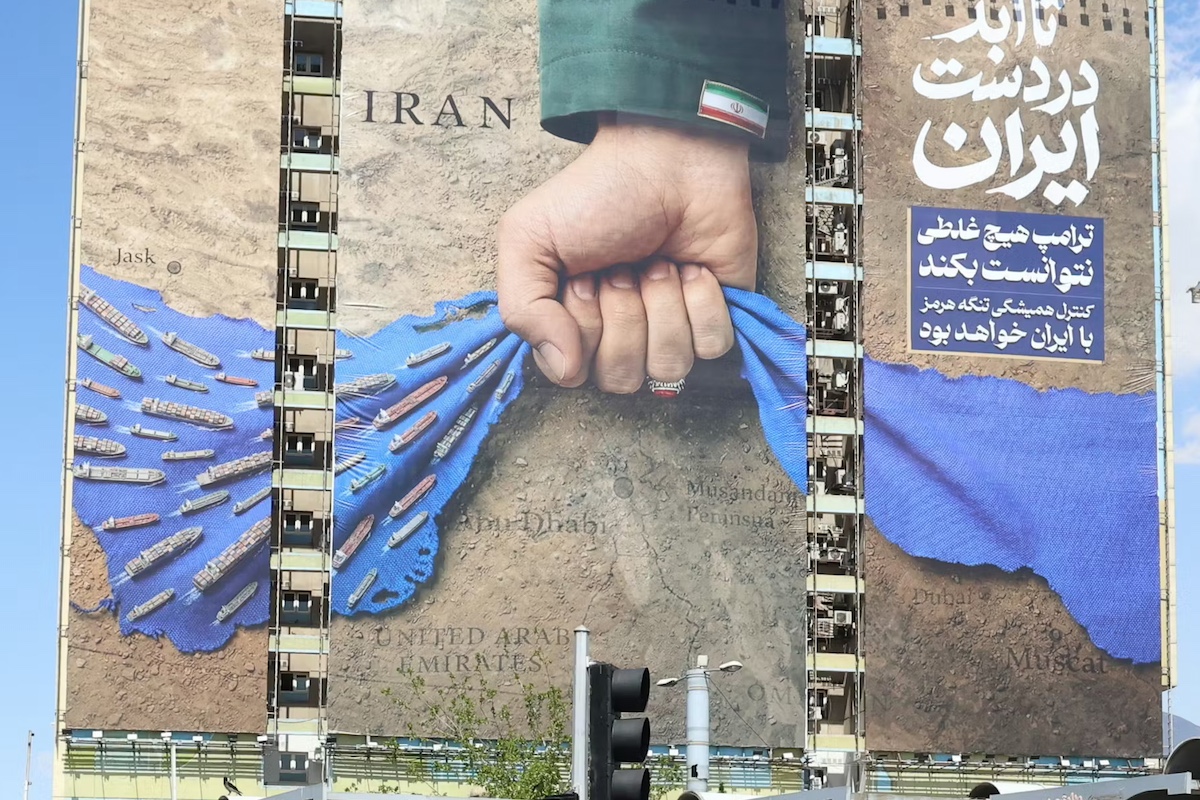
A months-long standoff over one of the world’s most critical energy chokepoints has shifted dramatically, with Tehran emerging as the clear long-term power holder in the Strait of Hormuz despite an ongoing U.S. blockade effort. The Trump administration has claimed early progress for its blockade, reporting that nine vessels, including the Chinese-owned tanker Rich Starry which reversed course in the Gulf of Oman Wednesday, have complied with its turn-around orders. But Iranian officials have pushed back forcefully, reiterating that Tehran retains full authority over the strait and reserves the right to approve all transiting vessels. In a stark warning, Iran added that if its own ports come under threat, every port across the Persian Gulf and Sea of Oman will lose security protections.
For decades, Iran has brandished the Strait of Hormuz as a potential bargaining chip against its adversaries, but it never moved to formalize control over the waterway until the current existential conflict with the U.S. and Israel. In an ironic turn, the joint U.S.-Israeli campaign to cripple Iran’s nuclear and missile programs has instead handed Tehran a transformative new strategic asset: unchallenged de facto control over the strait, through which 20% of global oil consumption passes daily. Tehran has already embedded this new control into its long-term strategic planning, going so far as to add formal recognition of Iranian sovereignty over the strait to its negotiating demands during recent indirect peace talks with Washington.
This new leverage delivers three key strategic and economic benefits for Iran. First, it opens a substantial new stream of revenue from transit tolls already imposed on vessels passing through the waterway. With tolls set at roughly $1 per barrel of oil and up to $2 million per fully loaded tanker, independent estimates project Iran could collect up to $600 million monthly from oil shipments and an additional $800 million from natural gas transits. Economists note that roughly 80% of these costs will ultimately be borne by Gulf Arab states, adding up to as much as $14 billion annually from oil tolls alone.
Second, control of the strait acts as a powerful asymmetric deterrent. By proving its ability to disrupt the world’s most vital energy artery, Iran has dramatically raised the economic cost of any future large-scale military action against it, creating deterrence through global economic risk rather than relying solely on its own military capabilities.
Third, the strait delivers major geopolitical clout, particularly for Iran’s outreach to Global South nations. Control over energy flows through the waterway allows Tehran to negotiate with energy-dependent states, offering reliable transit access in exchange for cooperation that circumvents U.S. sanctions and deepens bilateral economic ties.
The U.S. has moved to counter Iran’s new leverage with its own blockade, but this reciprocal campaign faces deep structural limitations that undermine long-term success. Unlike Iran, which can enforce its rules from its own adjacent coastline, the U.S. must maintain a blockade in open international waters, a logistically and financially draining operation that requires widespread allied support which has yet to materialize. Even with backing, sustaining a long-term blockade would impose massive costs on the U.S. military and trigger cascading disruptions to the global economy, making the status quo unsustainable for Washington. Many analysts now warn the strait could become “America’s Suez moment” — a strategic turning point that exposes the limits of U.S. power projection in the Middle East, rather than demonstrating its dominance.
A key question hanging over the standoff is how China, which purchases more than 80% of Iran’s crude oil exports and sees 40% of its total oil imports pass through the strait, will respond. So far, Beijing has shown no willingness to pressure Iran to roll back its new control regime, instead placing full blame on the U.S. for the crisis and rejecting the blockade as illegitimate. This week, Chinese Foreign Ministry spokesperson Guo Jiakun called the U.S. operation “dangerous and irresponsible” in blunt remarks. While one Chinese-owned tanker complied with U.S. orders to turn around, multiple other Chinese-flagged and Chinese-owned vessels have already completed transits through Iran’s new toll system, signaling Beijing’s willingness to abide by Tehran’s rules for the time being.
Although China is heavily dependent on Hormuz transit for its energy supplies, it has spent years preparing for this exact scenario. Beijing has systematically diversified its oil import sources to reduce overreliance on any single supplier, and is estimated to hold enough strategic petroleum reserves to replace Hormuz shipments for up to seven months. Even so, it remains unclear whether Beijing will support Iran’s permanent toll system long-term; while it has not publicly opposed the measure to date, many experts note China has repeatedly called for a return to unrestricted, normal passage through the strait as soon as possible.
Beyond the immediate standoff, the crisis is accelerating long-term geopolitical shifts in the Middle East that play to China’s expanding influence in the region. The ongoing conflict has convinced many Gulf Arab states that longstanding security alignment with the U.S. and normalization with Israel do not guarantee their national security, pushing regional leaders to diversify their diplomatic and economic partnerships. This trend was highlighted by this week’s visit of the Abu Dhabi Crown Prince to Beijing, a trip that underscores growing Gulf interest in deeper ties with China.
Bilateral trade between Gulf Cooperation Council states and China already hit roughly $257 billion in 2024, a total that narrowly outpaced the Gulf’s combined trade with major Western economies. Beijing has also steadily expanded its diplomatic footprint in the region, mediating the 2023 normalization agreement between longtime rivals Saudi Arabia and Iran, and playing an indirect facilitating role in recent indirect U.S.-Iran peace talks held in Pakistan to end the current conflict. Looking ahead, experts project Iran could push for a new region-led security framework with Gulf Arab states, with China stepping in as a neutral guarantor or facilitator — a shift that would end decades of U.S. dominance as the primary security provider in the Persian Gulf.