分类: politics

  • Israel to ‘control’ southern Lebanon as Smotrich urges border shift to Litani River

    Israel to ‘control’ southern Lebanon as Smotrich urges border shift to Litani River

    Israeli Defense Minister Israel Katz declared on Tuesday that military forces intend to establish control over southern Lebanon, following similar territorial assertions by Finance Minister Bezalel Smotrich who advocated for redrawing the border at the Litani River. Katz specified that hundreds of thousands of displaced Lebanese civilians would be prohibited from returning to their homes until Israel’s northern border security is fully guaranteed, with plans to maintain a security zone extending to the Litani River.

    ‘The fundamental principle remains unequivocal: areas harboring terror activities and missile launches will be cleared of residences and inhabitants, with IDF presence established throughout,’ Katz stated. These remarks follow his recent directive for military operations to destroy all bridges crossing the Litani River and accelerate the demolition of Lebanese properties near the boundary.

    Finance Minister Smotrich addressed the Knesset on Monday, emphasizing that the ongoing conflict should conclude with ‘radical transformation’ beyond defeating Hezbollah. He proposed establishing a ‘sterile security cordon’ deep within Lebanese territory, suggesting the Litani River should become Israel’s new border with Lebanon—comparable to the ‘Yellow Line’ in Gaza and the buffer zone on Mount Hermon in Syria.

    Israel has historically maintained undefined borders with Lebanon, Syria, and Palestinian territories, relying instead on ceasefire agreements from 1949 and 1967. The strategic Mount Hermon in Syria came under Israeli occupation in 2024 following the collapse of Bashar al-Assad’s government, while the unilaterally imposed ‘Yellow Line’ in Gaza has expanded to encompass over half the territory since its establishment during the US-brokered October ceasefire.

    These developments occur amid reports from Axios indicating Israel’s preparation for a substantial ground offensive into Lebanon, with objectives to capture all territories south of the Litani River—located approximately 30 kilometers north of the current border and serving as a vital connection between southern Lebanon and the remainder of the country. Recent military actions, including the destruction of key Litani River bridges and strikes on border-area residences, have prompted Lebanese President Joseph Aoun to warn of potential preliminary measures toward a full-scale ground invasion.

  • ‘Helpful’ and ‘scary’: Travellers react to ICE agents at airports

    ‘Helpful’ and ‘scary’: Travellers react to ICE agents at airports

    The deployment of Immigration and Customs Enforcement (ICE) officers to major U.S. airports has generated polarized responses from travelers during the ongoing partial government shutdown. While some passengers expressed appreciation for the additional security presence, others voiced significant concerns about encountering federal immigration authorities in aviation security contexts.

    This operational shift represents an unconventional staffing solution implemented during the budget impasse that has left approximately 800,000 federal workers either furloughed or working without pay. The Department of Homeland Security has temporarily reassigned ICE personnel from their regular immigration enforcement duties to assist Transportation Security Administration screeners who continue working without compensation.

    The visible presence of armed ICE agents at security checkpoints and terminal areas has created a complex dynamic within airport environments. Some travelers reported feeling reassured by the enhanced security visibility, characterizing the additional personnel as ‘helpful’ in maintaining order during potentially vulnerable periods. Conversely, numerous passengers described the experience as ‘scary’ and intimidating, particularly those from immigrant communities or mixed-status families who now navigate airport spaces with increased apprehension.

    This deployment highlights the broader operational challenges facing federal agencies during the longest government shutdown in U.S. history. Aviation security experts note that while the temporary reassignment provides logistical support for TSA operations, it raises questions about appropriate use of specialized immigration enforcement resources and potential impacts on community trust in transportation security systems.

    The situation remains fluid as congressional negotiations continue regarding border security funding and government reopening procedures. Travelers are advised to anticipate continued unusual security configurations at airports until normal appropriations resume and standard staffing protocols are restored.

  • Iran reserves ‘inalienable and natural’ right to defend territory: president

    Iran reserves ‘inalienable and natural’ right to defend territory: president

    In a significant diplomatic exchange, Iranian President Masoud Pezeshkian has emphatically declared Iran’s “inalienable and natural right” to protect its territorial integrity following coordinated military actions by the United States and Israel. The assertion came during a high-level telephone discussion with Pakistani Prime Minister Shehbaz Sharif on Monday, addressing the aftermath of what Iranian leadership characterizes as an “illegal” offensive against their nation.

    President Pezeshkian presented a detailed account of the events, stating that the military aggression occurred during sensitive nuclear negotiations, resulting in the tragic demise of then-Supreme Leader Ali Khamenei, numerous high-ranking military officials, and civilian casualties. The Iranian leader emphasized that his country did not initiate hostilities but found itself compelled to respond to external military actions that targeted both strategic infrastructure and populated areas.

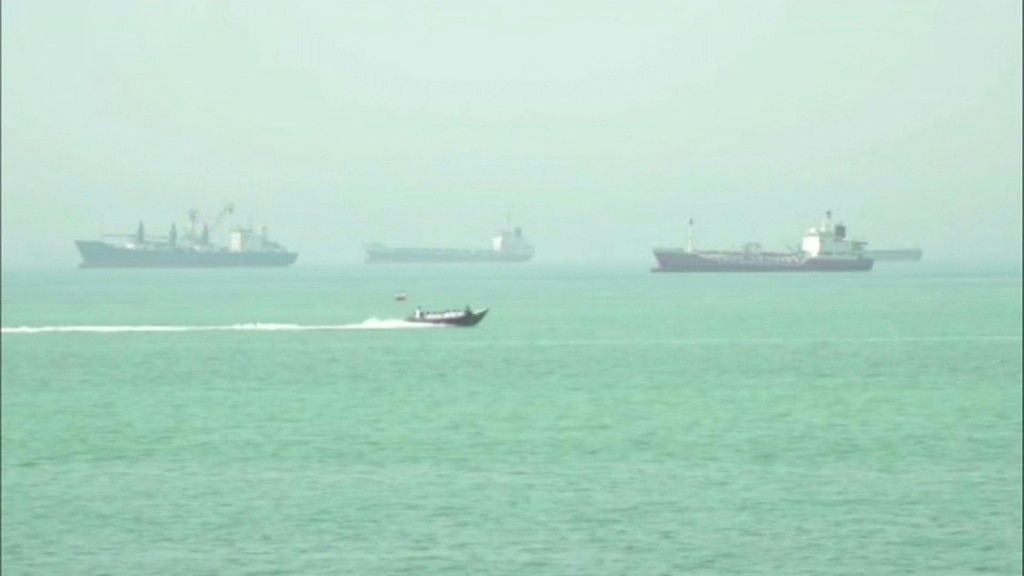
    The conversation between the two leaders extended beyond immediate security concerns to encompass broader regional stability and bilateral relations. President Pezeshkian articulated Iran’s ongoing commitment to regional security cooperation while addressing navigation safety in the Strait of Hormuz. He identified the strategic waterway’s current security challenges as direct consequences of the US-Israeli military operations, while simultaneously affirming Iran’s implementation of measures to guarantee safe maritime passage.

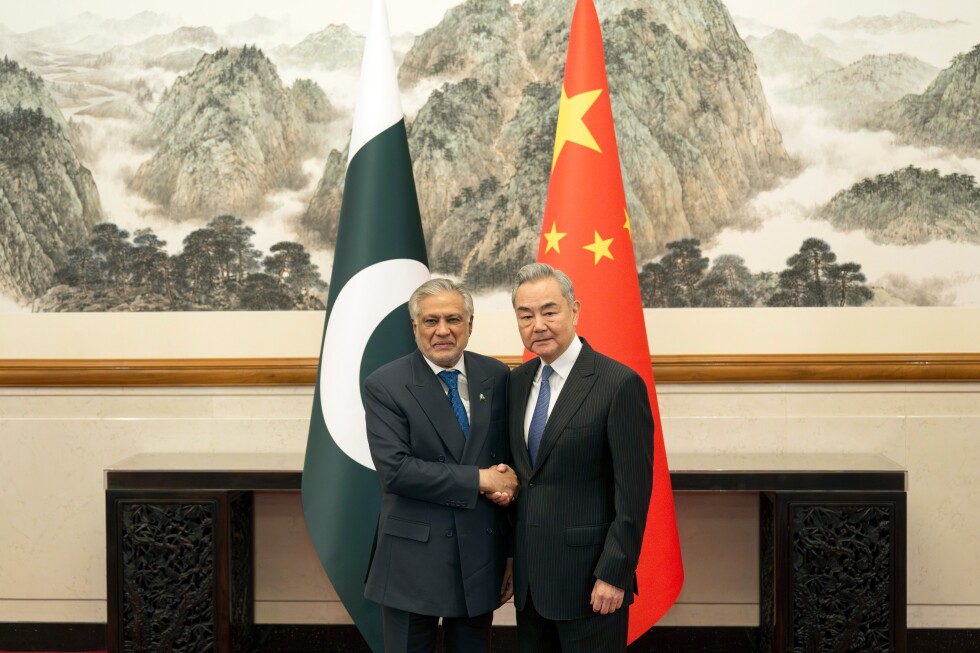
    Prime Minister Sharif responded with expressions of profound sympathy, conveying Pakistan’s official condolences for the loss of Iranian lives and leadership figures. The Pakistani leader acknowledged Iran’s facilitation of safe passage for Pakistani vessels through the Hormuz Strait and advocated for collaborative regional initiatives to reduce tensions and reestablish lasting peace. In a notable demonstration of diplomatic solidarity, Sharif unequivocally stated that “Pakistan has always been and will always be by the side of the Iranian government and nation,” signaling continued alignment with Tehran despite complex international pressures.

  • What to know about Cypriot calls for ‘frank’ talks over future of UK’s military bases

    What to know about Cypriot calls for ‘frank’ talks over future of UK’s military bases

    Cyprus has initiated calls for a comprehensive reassessment of Britain’s military presence on its territory following a significant security breach that exposed diplomatic tensions. The incident occurred on March 2 when an Iranian-manufactured Shahed drone struck a hangar at the RAF Akrotiri base, located along Cyprus’s southern coastline. British authorities had activated internal sirens to alert personnel but notably failed to notify Cypriot government officials about the imminent threat, leaving both the base and nearby civilian populations vulnerable.

    This security lapse has prompted Cypriot President Nikos Christodoulides to demand “frank and open discussions” regarding the future of Britain’s two sovereign base areas at Akrotiri and Dhekelia. These installations, spanning 99 square miles, remain vestiges of colonial-era agreements established after Cyprus gained independence in 1960. President Christodoulides characterized the bases as “colonial consequences” during remarks at the European Union leaders’ summit in Brussels on March 20.

    The diplomatic friction intensified following British Prime Minister Keir Starmer’s March 1 announcement that the United States would be permitted to use British bases for defensive operations against Iranian missile sites. Although British officials later clarified that these operations would not involve Cypriot territories, the statement generated considerable concern among Cypriot authorities. According to senior Cypriot officials speaking anonymously, British authorities provided no warning about the approaching drone or potential danger to adjacent villages housing approximately 1,000 residents.

    The British government has responded with reassurances, with Starmer’s office emphasizing that “Cyprus’ security was of utmost importance to the U.K.” and confirming that RAF Akrotiri would not be utilized for U.S. strikes against Iran. Meanwhile, the UK Ministry of Defence has enhanced regional security measures, deploying the warship HMS Dragon to waters near Cyprus.

    Historically, these bases have evolved beyond their original purpose of monitoring Suez Canal traffic. RAF Akrotiri now hosts U2 spy planes conducting Middle Eastern surveillance and has served as a critical logistical hub for operations in Iraq and against the Islamic State. While successive Cypriot governments have operated under gentlemen’s agreements regarding notification of military actions, the recent incident has exposed the limitations of these informal arrangements.

    Cyprus has explicitly stated that base abolition is not currently under consideration. Instead, negotiations will likely focus on increasing operational transparency, intelligence sharing, and potentially renegotiating the bases’ status following the model of the UK’s recent agreement with Mauritius regarding the Chagos Islands. That arrangement returned sovereignty while maintaining military leasing agreements, demonstrating a potential pathway for updated bilateral arrangements between Cyprus and the United Kingdom.

  • Rubio testifies in former congressman’s Venezuela lobbying trial

    Rubio testifies in former congressman’s Venezuela lobbying trial

    In an extraordinary courtroom appearance, U.S. Secretary of State Marco Rubio provided testimony Tuesday regarding his dealings with former Florida Congressman David Rivera, who faces serious charges of clandestine lobbying for Venezuela’s government. The federal trial, unfolding under tight security in Miami, centers on allegations that Rivera and an associate orchestrated a $50 million influence operation for Nicolás Maduro’s administration without proper registration as foreign agents.

    Rubio recounted his longstanding personal relationship with Rivera, detailing how the two politicians developed close ties during their overlapping service in Florida’s legislature and later in Washington. The Secretary described a pivotal July 2017 meeting where Rivera presented an unconventional proposal involving Venezuelan media magnate Raul Gorrin to facilitate Maduro’s departure from power.

    Despite expressing skepticism about the plan’s viability, Rubio acknowledged he pursued the opportunity on the remote chance it might yield diplomatic progress. Drawing on terminology supplied by Rivera, the then-senator delivered a carefully worded Senate address signaling Washington’s willingness to avoid retaliation against Venezuelan officials who might oppose Maduro.

    Prosecutors allege the defendants established elaborate communication protocols, including a coded chat group using Spanish-language cryptonyms such as ‘Little Cuban’ for Rubio and ‘The Lady in Red’ for Venezuela’s current acting president Delcy Rodríguez. The government contends the operation aimed to normalize U.S.-Venezuela relations during the Trump administration—an objective that has gained renewed relevance following recent political shifts in Caracas.

    Rivera’s defense team maintains their client’s consulting work focused exclusively on commercial matters involving Venezuela’s state oil company and was legally exempt from foreign agent registration requirements. They sharply distinguish this work from what they characterize as Rivera’s separate efforts to support Venezuelan opposition groups.

  • Rubio plans travel to France to sell Iran war to skeptical G7 allies

    Rubio plans travel to France to sell Iran war to skeptical G7 allies

    U.S. Secretary of State Marco Rubio is scheduled to visit France this week for critical diplomatic engagements with Group of Seven counterparts, attempting to build consensus around Washington’s controversial approach to the Iran conflict that has triggered worldwide energy market disruptions. The State Department confirmed Rubio’s participation in Friday’s ministerial gathering near Versailles, where he will advocate for American strategic interests amid growing international skepticism.

    The multilateral discussions will address pressing global security challenges, including the ongoing Russia-Ukraine war, Middle Eastern instability, and broader threats to international peace. This diplomatic initiative unfolds against contradictory narratives regarding potential U.S.-Iran negotiations, with President Trump asserting communication channels exist while Iranian officials deny such dialogue.

    Meanwhile, the strategic closure of the Strait of Hormuz to commercial tankers has precipitated dramatic oil price increases, creating urgent economic pressures worldwide. Most G7 members—including Britain, Canada, France, Germany, Italy, and Japan—have maintained cautious distance from U.S.-Israeli military operations against Iran, declining direct participation despite Trump’s public criticisms.

    The administration has particularly expressed frustration with NATO allies and G7 partners for their hesitant response to American calls for collaborative efforts to reopen the critical maritime passageway. Recent indications suggest some allies may be reconsidering their stance regarding potential measures to restore normal traffic through the vital oil transit corridor.

  • US Senate confirms Markwayne Mullin as Homeland Security Department secretary

    US Senate confirms Markwayne Mullin as Homeland Security Department secretary

    The United States Senate has formally confirmed Senator Markwayne Mullin as the new Secretary of the Department of Homeland Security, concluding a contentious confirmation process during an ongoing departmental shutdown. The upper chamber approved the 48-year-old Oklahoma Republican by a vote of 54-45 on Monday, with two Democrats crossing party lines to support the nomination while one Republican senator opposed it.

    Mullin’s appointment marks the first cabinet-level reshuffle of President Donald Trump’s second term, replacing former Secretary Kristi Noem who faced mounting bipartisan criticism. Noem’s tenure became increasingly untenable following January’s fatal shooting of two U.S. citizens by federal law enforcement officers in Minneapolis, compounded by her controversial handling of a $200 million advertising campaign during recent congressional hearings.

    The leadership transition occurs against the backdrop of a paralyzed Homeland Security Department, whose operations remain severely constrained due to funding lapses. Congressional deadlock over immigration enforcement regulations prompted Democrats to strip DHS funding from a comprehensive spending package, triggering a partial government shutdown from January 31 to February 3. Although Congress subsequently passed stopgap funding for other federal agencies, Homeland Security received only a two-week continuing resolution at existing funding levels.

    Despite ongoing negotiations between both parties and the White House, immigration enforcement discussions have yielded minimal progress. The Senate’s fifth rejection of DHS funding legislation on Friday has left critical agencies including the Transportation Security Administration, Coast Guard, and Federal Emergency Management Agency operating with severely limited capabilities.

  • China protests to Japan over alleged break-in at its embassy in Tokyo

    China protests to Japan over alleged break-in at its embassy in Tokyo

    China has issued a strong diplomatic protest to Japan following a security breach at its Tokyo embassy compound, allegedly involving a member of Japan’s Self-Defense Forces. The incident occurred Tuesday morning when an individual identified as a military officer scaled the embassy walls and forcibly entered the premises, according to Chinese Foreign Ministry spokesperson Lin Jian.

    Japanese media reports indicate the suspect was apprehended at the scene and transferred to Tokyo police custody for investigation. NHK public television reported the individual left a knife behind during the incident, while TBS television confirmed the suspect carried Self-Defense Forces identification. No injuries were reported during the breach.

    The incident exacerbates existing tensions between the Asian powers, which have escalated since November when Japanese Prime Minister Sanae Takaichi characterized potential Chinese military action against Taiwan as a “survival-threatening situation” for Japan that could warrant military response. Beijing, which considers Taiwan part of its territory, has implemented diplomatic and trade measures against Japan in response.

    Chinese officials expressed profound shock at the security violation and demanded comprehensive investigation and disciplinary action. “The Japanese side has failed to properly manage and discipline its Self-Defense Forces personnel and has not fulfilled its responsibility to ensure the security of Chinese embassies and consulates and their staff,” stated spokesperson Lin during a Beijing news conference.

    Tokyo police declined to confirm details of the ongoing investigation, while the Ground Self-Defense Force acknowledged awareness of the reports but offered no immediate comment. The case is being investigated as suspected trespass under Japanese law.

  • Danes vote as Mette Frederiksen seeks third term as PM

    Danes vote as Mette Frederiksen seeks third term as PM

    Denmark is holding a pivotal parliamentary election that will determine whether Prime Minister Mette Frederiksen secures an unprecedented third term for her Social Democrats. The 48-year-old leader called the snap election months ahead of schedule, capitalizing on a surge of popular support following her firm handling of former US President Donald Trump’s controversial proposal to annex Greenland, Denmark’s autonomous territory.

    Despite this ‘Trump bump’ in approval ratings, Frederiksen faces formidable challenges from center-right opponents, particularly Defence Minister Troels Lund Poulsen’s Liberal Venstre party. Current polling indicates the Social Democrats maintain a substantial lead with over 20% support, significantly ahead of both the Liberals and the Green Left party.

    The election campaign has largely centered on domestic issues rather than foreign policy, where broad consensus exists across Danish politics. Economic stability, rising living costs, and environmental concerns have dominated voter discussions. Frederiksen has proposed implementing a 0.5% wealth tax targeting Denmark’s wealthiest 20,000 citizens, while mounting worries about pesticide contamination in drinking water from agricultural activities have emerged as key environmental issues.

    However, electoral mathematics suggests neither the left-leaning ‘red’ bloc nor the right-leaning ‘blue’ bloc will secure the required 90 parliamentary seats for majority control. This deadlock positions Foreign Minister Lars Løkke Rasmussen’s centrist Moderates as potential kingmakers in coalition negotiations. Additionally, four parliamentary seats representing Greenland and the Faroe Islands could prove decisive, with indications that at least one Greenlandic seat might shift from left to right alignment for the first time in decades.

    Rasmussen, who garnered significant praise for his diplomatic handling of the Greenland standoff, has expressed interest in serving as royal investigator—a crucial role in forming governing coalitions—though he has explicitly denied aspirations to reclaim the prime minister’s office he held for two previous terms.

  • Nationalism in a ‘remade’ world: Labor’s rallying cry as fuel crisis worsens

    Nationalism in a ‘remade’ world: Labor’s rallying cry as fuel crisis worsens

    In a pivotal address to the National Press Club in Canberra, Industry Minister Tim Ayres issued a compelling summons for national unity as Australia navigates turbulent global energy disruptions. The minister characterized the current geopolitical landscape as one where established international norms are in flux, demanding urgent and coordinated action rather than passive observation.

    With approximately 8% of Australian service stations experiencing fuel shortages—primarily concentrated in New South Wales and Victoria—the Albanese government has implemented strategic measures including limited emergency fuel releases and temporary adjustments to sulfur and diesel standards. While avoiding fuel rationing thus far, the administration has significantly intensified its public messaging framework.

    Senator Ayres articulated a vision of ‘deliberate, constructive Australian nationalism,’ emphasizing that economic security constitutes national security in the contemporary global context. The minister framed this approach as essential for rebuilding industrial capacity and research capabilities through collaborative efforts across government tiers, private sector entities, research institutions, and workforce representatives.

    This national mobilization occurs against a backdrop of renewed trade tariff threats from both the United States and China, while the government simultaneously celebrates the recent signing of a landmark trade agreement with the European Union. Minister Ayres characterized these developments as occurring during a critical historical juncture requiring disciplined execution of what he termed ‘the largest pro-manufacturing industrial policy in Australian history.’

    The government’s rhetoric has evolved in parallel with the escalating fuel situation, with Prime Minister Anthony Albanese recently advocating for ‘progressive patriotism’—a concept further developed in Minister Ayres’ address as combining strategic capability development with economic resilience in an era of persistent global shocks.