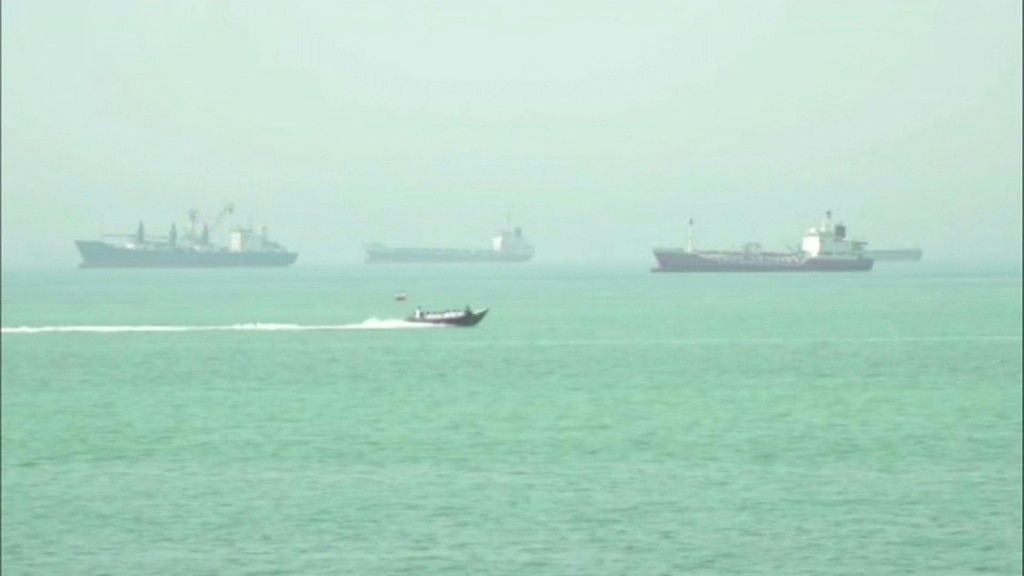
In the hours following fresh military activity across the Middle East that has sent shockwaves through global energy markets and sparked diplomatic fallout across continents, multiple world leaders have issued stark responses to unfolding events, while new economic and military data highlights the growing human and financial cost of ongoing conflict.
From southern Lebanon, where Israeli shelling has continued despite an existing ceasefire agreement, Lebanese President Joseph Aoun issued a firm condemnation of sustained Israeli incursions into the country’s southern territories. In his statement, Aoun detailed that ceasefire violations have included the destruction of civilian residential properties and religious sites, with casualty numbers climbing steadily each day. He called on the international community to bring coordinated pressure to bear on Israel, demanding that the country uphold longstanding international law and conventions, and end targeted attacks on civilian populations, medical first responders, civil defense teams, and humanitarian relief and health organizations. The strike on the village of Yohmor sent thick plumes of smoke visible across the border from the Lebanese district of Marjeyoun, underscoring the persistent risk of a wider regional spillover from ongoing hostilities.
Beyond the immediate military conflict, the upheaval has created major ripple effects for global energy markets and climate policy. Speaking at an International Energy Agency (IEA) event focused on energy transition in Paris, Turkey’s climate minister Murat Kurum—who is also the president-designate for the upcoming COP31 UN climate conference—argued that the current energy crisis triggered by Middle East conflict makes clear that the global economy must accelerate its shift away from fossil fuels to renewable clean energy. Kurum emphasized that the crisis has exposed the critical need for a complete overhaul of the global energy paradigm.
IEA executive director Fatih Birol echoed those concerns, warning that the world is currently grappling with one of the most severe energy and economic challenges in modern history. In the wake of Middle East hostilities, international oil prices have spiked dramatically, bringing unprecedented economic pressure to nations across every income bracket, Birol explained. As of Thursday, benchmark crude prices hit multi-year highs: Brent crude for June delivery jumped more than 7% to peak at $126.41 a barrel, while U.S. West Texas Intermediate crude climbed 3.4% to reach $110.31, before both benchmarks partially pulled back from their intraday gains.
Iranian President Masoud Pezeshkian pushed back against recent threats of a U.S. naval blockade of Iranian ports, arguing that any such restrictive measure would not only violate core principles of international law but also deepen regional instability in the Persian Gulf while failing to achieve Washington’s strategic goals. “Any attempt to impose a maritime blockade or restrictions is contrary to international law… and is doomed to fail,” Pezeshkian said in an official statement.
Diplomatic tensions have also spilled into transatlantic relations, with U.S. President Donald Trump confirming that Washington is considering significant cuts to its troop deployment in Germany over Chancellor Friedrich Merz’s refusal to join the U.S.-led conflict against Iran. Currently, the U.S. maintains between 35,000 and 50,000 military personnel stationed across Germany. The threat to draw down troops aligns with Trump’s long-running criticism of NATO burden-sharing, and was triggered after Merz claimed earlier this week that Iran was “humiliating” Washington at ongoing negotiating talks.
Shortly after Trump’s announcement, European Union officials pushed back on the suggestion of a drawdown. EU spokeswoman Anitta Hipper noted that the ongoing deployment of U.S. troops across Europe serves core national security interests for the United States, adding that NATO allies are already increasing their collective defense spending at a pace never seen before.
In a high-stakes phone conversation between Russian President Vladimir Putin and U.S. President Donald Trump on Wednesday, Putin issued a clear warning against any resumption of large-scale military attacks on Iran. Kremlin foreign policy aide Yuri Ushakov told reporters that Putin outlined that new military action would bring “inevitable and extremely damaging consequences” for the Middle East region and the entire global community. In his own remarks on the call, Trump claimed that Putin had offered to help mediate an end to the U.S.-Israeli conflict against Iran, but that he had demanded Russia first withdraw its military forces from Ukraine to move forward.
On Capitol Hill, U.S. Defense Secretary Pete Hegseth faced a fiery congressional hearing Wednesday where lawmakers pressed him on the financial cost of 60 days of ongoing U.S. military involvement in the conflict. Hegseth confirmed that total estimated costs to date have remained under $25 billion. He also pushed back against widespread concerns that the conflict has depleted the U.S.’s stockpiles of critical munitions to alarming levels, accusing critics of spreading misinformation that amounts to propaganda for U.S. adversaries.
In a closing provocative message posted to his Truth Social platform Thursday, Trump doubled down on his hardline stance toward Iran. “Iran can’t get their act together. They don’t know how to sign a nonnuclear deal. They better get smart soon!” he wrote, alongside a graphic of himself holding an assault rifle emblazoned with the caption “NO MORE MR. NICE GUY!”