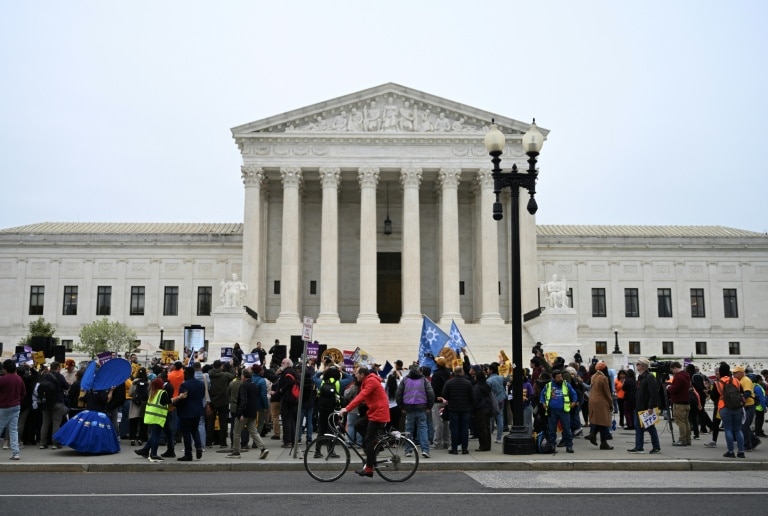
A recent landmark decision by the U.S. Supreme Court has dramatically reshaped the national fight over congressional redistricting, rolling back key protections for minority voters and setting off a frantic partisan scramble to redraw electoral boundaries that will determine partisan control of Capitol Hill for the next decade. The high court’s ruling, released Wednesday, significantly raises the legal bar for challenging partisan maps that dilute the voting power of racial minority groups — a move that weakens a core provision of the 1965 Voting Rights Act, the landmark civil rights legislation designed to dismantle the enduring legacy of systemic anti-Black disenfranchisement. The decision immediately emboldened Republican leaders across the American South to move forward with aggressive new district map proposals that are expected to tilt legislative power in the G.O.P.’s favor, though nonpartisan analysts widely agree the immediate impact on November’s upcoming midterm elections will be sharply limited. With party primaries already underway or scheduled imminently in most states, and protracted legal challenges all but guaranteed, there is virtually no time to implement sweeping redistricting changes before voters cast their ballots this fall. Even under the most aggressive partisan scenarios, political experts project the ruling could net Republicans just a handful of additional House seats in 2026. While that gain could be enough to tip control of the narrowly divided chamber, it falls far short of a transformative partisan shift. Analysts Amy Walters and Matthew Klein of the nonpartisan Cook Political Report described the new political landscape created by the ruling as “uncharted waters” in their post-decision analysis. They noted that while Republicans could gain a small number of seats through targeted redraws ahead of 2026, the ultimate number of new maps that actually take effect remains unclear given tight legal timelines and the wave of litigation that is expected to follow. Despite these constraints, the national partisan scramble to revise district lines is already underway. Republican officials in Southern states including Alabama, Tennessee, and South Carolina have already called for urgent special legislative sessions to redraw congressional maps, targeting majority-Black districts that were previously protected from partisan manipulation under the Voting Rights Act. Louisiana, the state at the center of the original Supreme Court case, has already suspended its upcoming primary elections to allow time for the legislature to pass a new electoral map, underscoring the urgency with which conservative leaders are moving to capitalize on the ruling. The decision is broadly viewed by political strategists on both sides as a significant long-term advantage for the Republican Party, particularly in the South, where majority-Black districts have for decades helped elect Democratic candidates to Congress. By weakening legal safeguards against vote dilution, the court has cleared the way for Republican-led legislatures to break apart or redraw these Democratic-leaning districts to benefit G.O.P. candidates. Veteran Republican political strategist Matt Klink called the ruling a transformative win for his party, noting that “if not for 2026, it is certainly huge for 2028. It will force states, primarily in the South, to redraw as many as 18 districts.” Democrats have already signaled they will respond in kind, indicating they may use the same legal logic established by the Supreme Court ruling to advance their own partisan redraws in blue-leaning states including New York and California to maximize their own congressional gains. Former President Donald Trump, whose party holds narrow majorities in both chambers of Congress, has publicly praised the ruling, though it remains unclear how aggressively he will pressure state Republican leaders to implement new maps ahead of November. Timing remains the single biggest constraint on immediate changes to district maps. In multiple key battleground states including Texas, North Carolina, and Mississippi, primaries have already concluded, effectively locking in current electoral boundaries for this cycle. Even in Alabama, a top target for Republican redistricting efforts, Governor Kay Ivey has acknowledged the state is “not in a position” to convene a special session to revise maps this year. Even in states where changes are still technically possible, steep legal and logistical barriers remain. Any new redistricting plan almost always triggers immediate court challenges, and federal judges are generally reluctant to approve last-minute map changes that would disrupt the orderly administration of upcoming elections. “With the midterm elections only six months away, the decision’s immediate impact will be muted,” Michael R. Dimino, a law professor at Pennsylvania’s Widener University, told Agence France-Presse. “But the decision is very significant for the future — particularly in the redistricting that will follow the 2030 census, as it will remove an unfair advantage for Democrats.” For Democratic and voting rights advocates, however, the ruling’s greatest danger lies not in its immediate electoral impact but in what it signals about the Supreme Court’s willingness to allow states to erode minority voting power. Caroline Welles, a Democratic political strategist focused on electing first-time women candidates to state office, argued the decision creates lasting structural barriers for Democrats and underrepresented communities. “Voting rights litigation has been the main way to challenge rigged maps since 2013. If that tool gets blunted, Democrats are looking at structural disadvantages that feel insurmountable,” she said. “Communities of color will continue to be systematically underrepresented in the places where they have the numbers to elect candidates of their choice.”
分类: politics
-
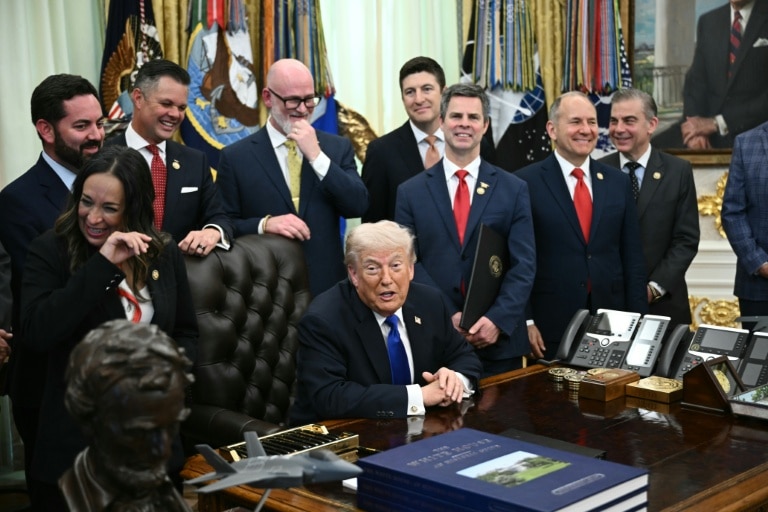
Wear a bulletproof vest? I don’t want to look fat, says Trump
U.S. President Donald Trump has publicly stated he is reluctant to adopt a bulletproof vest for personal protection, even after a third alleged assassination plot targeting him in just two years, citing concerns that the bulky protective gear would add unnecessary visual bulk to his frame.
During a press question-and-answer session Thursday, the 79-year-old Republican leader addressed growing speculation that the U.S. Secret Service had begun considering mandatory protective vest use following the foiled attack at a Washington D.C. gala over the weekend. When asked about internal discussions on the policy change, Trump told reporters: “I don’t know if I can handle looking 20 pounds heavier.”
The latest alleged assassination attempt unfolded Saturday night at the annual White House Correspondents’ Association Dinner held at the Washington Hilton hotel. Authorities confirm a male suspect was taken into custody before he could reach the event’s main ballroom, where Trump was in attendance, after Secret Service agents quickly intervened to tackle the would-be attacker. The suspect now faces formal charges related to the plot.
This foiled attempt marks the third time Trump has been targeted for assassination since 2023. The most severe incident occurred during a 2024 campaign rally in Butler, Pennsylvania, where a gunman struck Trump in the ear with a bullet and killed one member of the attending audience. Trump survived the attack and went on to win his second presidential term later that year.
Long known for his intense sensitivity around public perceptions of his appearance, Trump’s weight has long been a topic of public discussion. Though he has slimmed down since taking office for his second term, the president — who has openly described himself as a fast food enthusiast — recorded a weight of 224 pounds (around 101.6 kilograms) during his most recent full annual medical examination in April 2025. That marked a 19-pound drop from his recorded weight in 2019, during his first term in office.
Beyond appearance concerns, Trump also framed his reluctance around a broader ideological perspective, noting that agreeing to regular bulletproof vest use could be seen as giving in to dangerous extremist elements that oppose his presidency. “I guess it’s something you consider,” he said of the proposal. “In one way, you don’t like to do it because you’re giving in to a bad element. And so, I don’t know. But I have been asked about it.”
-
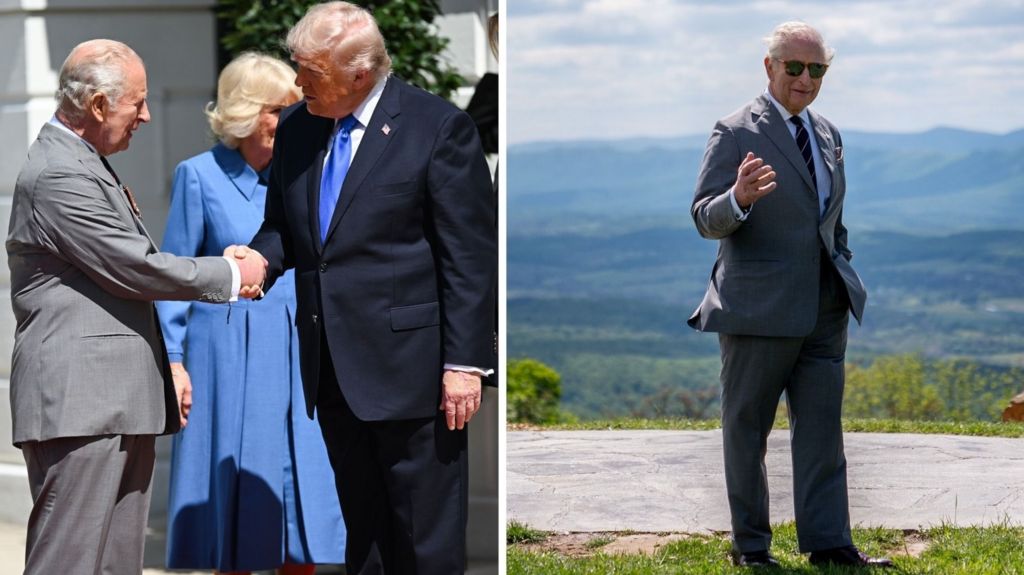
Royals bid farewell to US with visit to Arlington Cemetery and a block party
After days of high-level diplomatic engagements and landmark moments across the United States, King Charles III’s first state visit to the nation as British monarch has drawn to a close, with two distinct final events that blended solemn respect with warm public connection.
This four-day visit marks the first time a reigning British monarch has traveled to the US on an official state visit in more than 16 years, since the late Queen Elizabeth II’s 2007 trip, creating a moment of renewed focus on the long-standing special relationship between the two nations.
To kick off the final day of the visit, the royal party traveled to Arlington National Cemetery, one of America’s most sacred sites, where they laid a wreath at the Tomb of the Unknown Soldier to honor the countless service members who have sacrificed their lives in service of the United States. The quiet, respectful ceremony reflected the shared history of military cooperation and shared values that have defined transatlantic ties for generations.
Following the solemn memorial service, the royal couple shifted to a more casual, community-focused gathering: a neighborhood block party, where they mingled with local residents, community leaders, and families. The event was designed to highlight people-to-people connections between the UK and the US, moving beyond formal diplomatic meetings to showcase the everyday bonds that link the two nations.
Diplomatic observers note that this final schedule, pairing a respectful tribute to American fallen service members with an approachable public celebration, encapsulated the core goals of King Charles’ first state visit: to reinforce long-standing alliance ties, address shared global challenges from climate change to security, and reintroduce the British monarchy to the American public in a post-Queen Elizabeth II era.
-
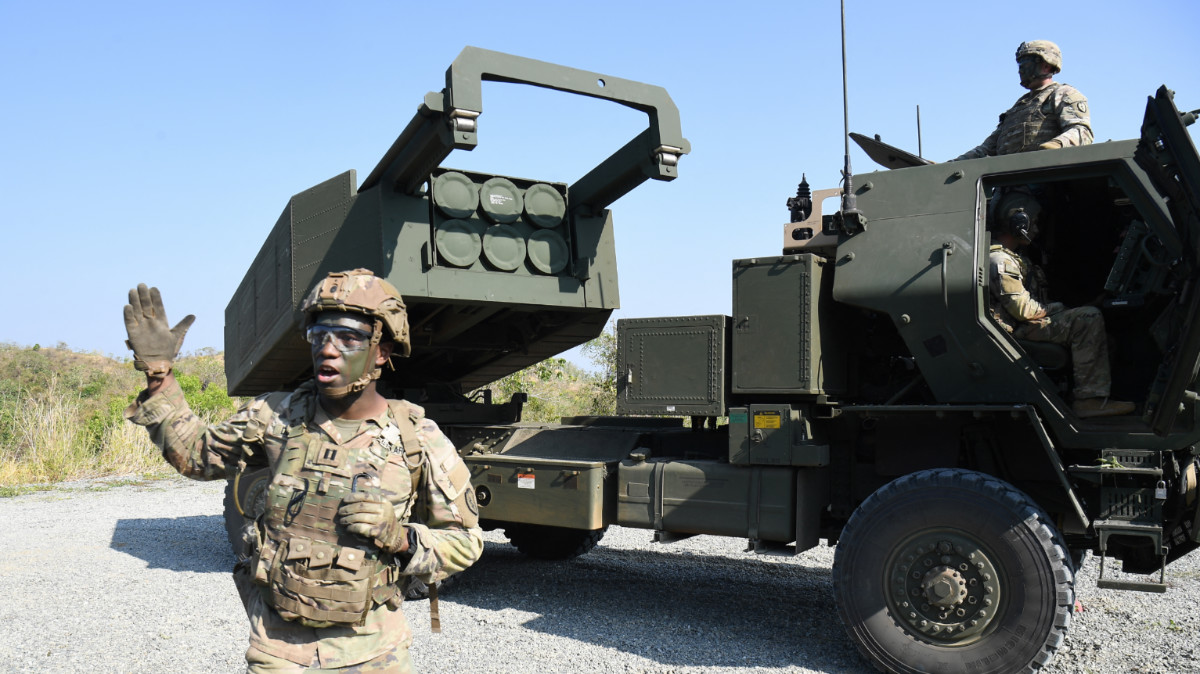
US may deploy new hypersonic missile against Iran as Trump weighs fresh strikes: Report
On Thursday, Bloomberg News reported that U.S. Central Command (Centcom) has formally requested authorization from the U.S. Department of Defense to deploy the U.S. military’s highly classified Dark Eagle hypersonic missile system to the Middle East. The request comes amid shifting military positioning from Iran that has outmaneuvered existing American strike capabilities, opening the door for a potential first-ever operational use of the long-delayed advanced weapon against targets deep within Iranian territory, while keeping U.S. deployment platforms well outside the range of Iran’s existing air defense networks.
The impetus for Centcom’s request traces to new intelligence confirming Iran has relocated its ballistic missile launch facilities beyond the strike range of the U.S. Precision Strike Missile, a supersonic surface-to-surface weapon fired from the Army’s High Mobility Artillery Rocket System (HIMARS). With these assets now out of reach of current conventional strike options, U.S. military leaders have turned to the untested Dark Eagle system, which boasts an officially cited range of more than 2,776 kilometers—more than enough to hit targets across Iran from regional deployment positions.
If the request gains approval, this deployment would mark the first operational fielding of the Dark Eagle, a program that has faced years of development delays. The weapon could see active combat use if the Trump administration moves forward with new offensive strikes against Iran. Parallel reporting from Axios on Thursday confirmed that President Donald Trump has already received briefings from Centcom outlining plans for a new round of attacks on Iranian targets. According to Axios’ sources, U.S. military planners have drafted proposals for “short and powerful” strikes focused on key Iranian infrastructure, a move shaped by the ongoing deadlock in diplomatic peace talks between the two sides.
The proposed deployment of the $15 million-per-unit Dark Eagle has already drawn skepticism from defense analysts. Originally designed to counter advanced integrated air defense systems operated by nuclear-armed major powers China and Russia, the weapon is vastly overengineered for the Iranian threat environment, experts note. This mismatch has raised questions about the strategic and financial wisdom of expending one of the U.S.’s limited stockpiles—currently only eight completed Dark Eagle missiles exist, per Bloomberg’s reporting—against a country President Trump has repeatedly publicly described as already militarily defeated.
Despite longstanding claims from the Trump administration that the U.S. maintains unchallenged air superiority across Iranian airspace, a recent incident underscores Iran’s still-functional defensive capabilities: earlier this month, Iranian air defenses successfully shot down a U.S. F-15E Strike Eagle fighter jet. At present, direct large-scale combat between U.S. and Iranian forces has paused under a fragile, informal ceasefire, with both sides shifting their focus to maritime pressure campaigns in strategic waterways. The U.S. and Iran have each seized commercial vessels in the Gulf of Oman and Indian Ocean in recent weeks as both seek to assert dominance over the Strait of Hormuz, the critical chokepoint through which roughly 20% of the world’s global oil supplies pass.
Military analysts widely agree that both powers are using the current ceasefire window to rearm, regroup, and reposition their forces for potential future conflict, as diplomatic efforts to reach a permanent end to hostilities remain completely deadlocked. In recent weeks, new reporting has shed light on external military support to Iran: Middle East Eye was the first outlet to confirm that Iran has received advanced air defense systems from China, and a subsequent New York Times report added that Beijing may also have shipped shoulder-fired anti-air missiles to Tehran.
The three-month-long conflict has already taken a significant toll on U.S. military capabilities, multiple official and media reports confirm. The New York Times reported earlier this month that sustained combat operations have drastically depleted U.S. global ammunition stockpiles, forcing the Pentagon to reallocate critical military stockpiles originally positioned for deterrence missions in Asia and Europe to the Middle East. Both offensive and defensive weapons systems have been drawn down, including the same Precision Strike missiles now rendered less effective by Iran’s relocation, as well as Patriot air defense interceptor missiles. On Wednesday, the Pentagon confirmed that direct war costs to the U.S. have already reached $25 billion.
This week, President Trump rejected a proposed peace deal put forward by Tehran that would have addressed non-nuclear disputes first while deferring negotiations over Iran’s nuclear program. As the conflict enters its third month, multiple diplomats and analysts speaking to Middle East Eye warn that a lasting negotiated resolution may be out of reach, largely due to the Trump administration’s refusal to offer the sanctions relief that Iran has made a core requirement for any final agreement.
-
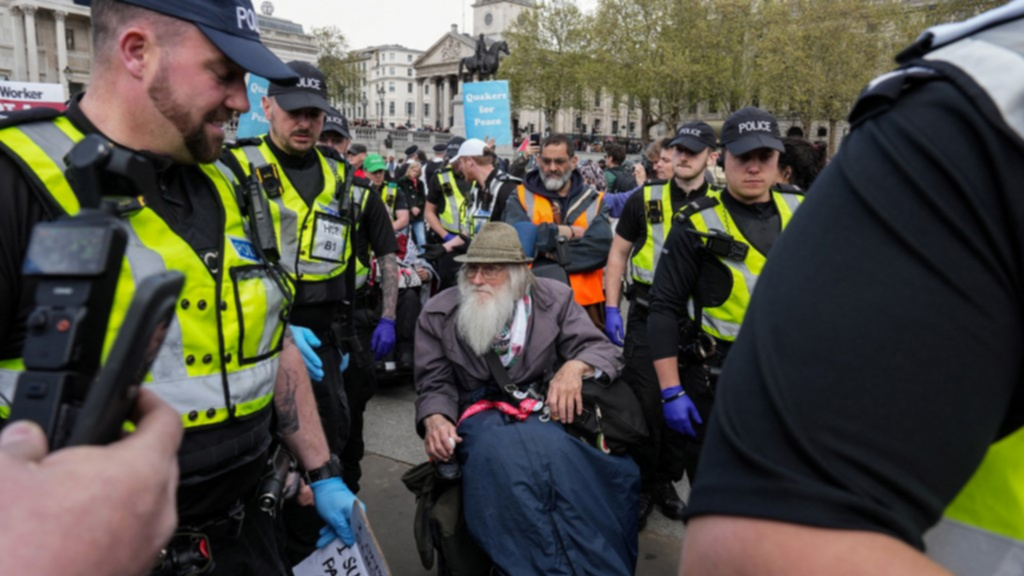
UK law professors set out why they signed open letter in support of Palestine Action
A high-stakes legal battle over the UK government’s effort to reinstate a terror ban on direct action group Palestine Action has drawn public support from more than 1,000 academics, activists and public intellectuals, led by over 100 UK-based law professors who have openly defended their solidarity with the group. When the Court of Appeal opened hearings on the government’s appeal this week, activists delivered a concise seven-word open letter signed by the group to the court: “We oppose genocide, we support Palestine Action.” Lady Chief Justice Sue Carr confirmed receipt of the correspondence and read its text aloud in open court.
In a joint statement emailed to independent news outlet Middle East Eye, seven of the signing law professors laid out their reasoning for the unprecedented public show of support. Coming of age in the decades following the Second World War, the academics emphasized that the post-Holocaust promise of “never again” must carry tangible meaning. As legal scholars, they added, they are bound to defend core principles of the UK judicial tradition: specifically, the long-held right of juries to hear the full facts of a case and deliver acquittals based on independent judgment and conscience, a right they argue is threatened by the blanket ban on the group.
The professors stressed that their support is limited to nonviolent action, framing their backing of Palestine Action as rooted in opposition to what they describe as genocide in Gaza. They noted that the group targets UK-based weapons manufacturers that supply components used in Israeli military operations, and called on all people of conscience to join their stand against the ban.
Beyond the 100+ law academics, the letter counts high-profile public figures among its signatories, including veteran leftist commentator Tariq Ali, philosopher Judith Butler, Irish author Sally Rooney, and climate activist Greta Thunberg.
The legal clash dates back to July 2024, when the UK Labour government designated Palestine Action as a proscribed terrorist organization. The designation criminalizes membership in the group and public expressions of support, with penalties reaching up to 14 years of prison time. In February of this year, a lower court ruled the initial ban unlawful, prompting the government to file the current appeal to reverse that ruling.
Since the ban first took effect, more than 3,000 people have been arrested for challenging the designation, with pensioners making up the overwhelming majority of those detained. Legal representatives for Palestine Action co-founder Huda Ammori argued this week that the ban has had a disproportionate discriminatory impact on British Palestinians who organize against Israeli military actions in Gaza. They also criticized the Home Office for failing to provide the group with advance notice of its proscription, a step required under the UK’s 2000 Terrorism Act.
James Eadie KC, the barrister representing the Home Office, pushed back against the criticism, arguing that prior notification was unnecessary in this case. He told the court that Palestine Action is a loose, decentralized grouping, creating practical barriers to identifying who should receive formal notice ahead of a ban, and that the court should accept these practical constraints as justification for skipping the requirement.
The proceedings include a controversial closed-door session held this Thursday, during which government lawyers will present classified evidence to judges that will not be made accessible to Palestine Action’s full legal team. While a security-cleared special advocate hired by the group will attend the session to argue on Palestine Action’s behalf, the advocate is barred from sharing any details of the classified evidence or discussion with the rest of the group’s legal team, even though they are employed by the organization.
The Court of Appeal is expected to deliver its final ruling on the government’s appeal in the coming weeks. The outcome of the case will carry major implications for the future of pro-Palestinian advocacy in the UK, as well as for the scope of government authority to designate activist groups as terrorist organizations under counter-terrorism law.
-
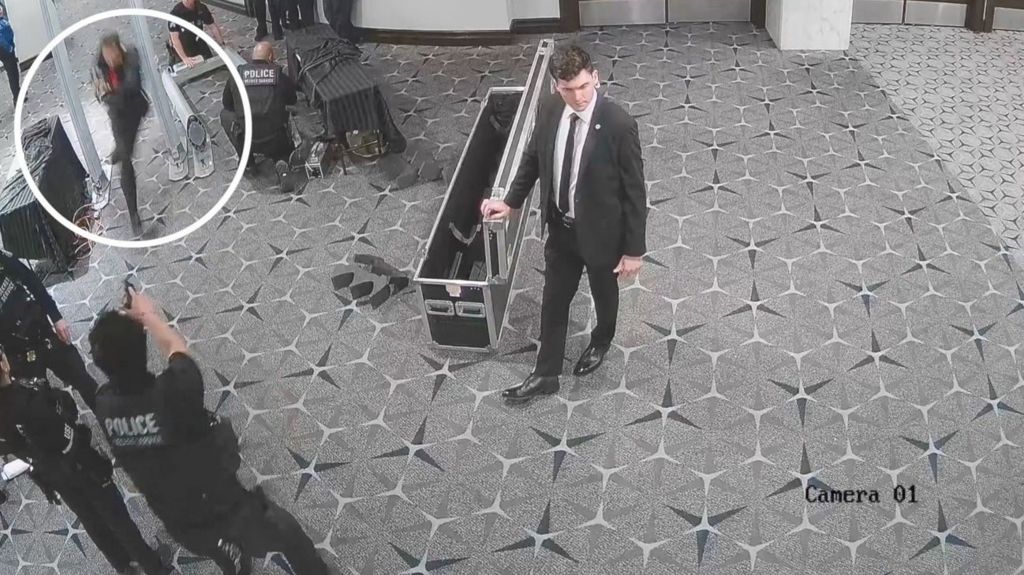
New footage shows how Trump dinner gunman charged through security in four seconds
Prosecutors have made public never-before-seen closed-circuit security footage that captures the chaotic four-second encounter of an alleged assassination attempt targeting former President Donald Trump during a high-profile Washington press gala. The incident unfolded Saturday at the Washington Hilton, where Trump was in attendance at the annual White House Correspondents’ Association dinner. The newly released video shows 31-year-old Cole Tomas Allen, the accused attacker, bursting out of a hotel doorway and charging straight through a secured checkpoint while carrying a long-barrelled weapon. The footage captures a responding security agent opening fire on the sprinting suspect as Allen raises his firearm. The short clip does not clarify whether Allen successfully discharged his weapon, nor does it include the sequence investigators previously described where the suspect was tackled and taken into custody. Prosecutors additionally confirmed that the CCTV footage also captured Allen conducting pre-attack surveillance of the venue one day before the dinner, which was hosted in the hotel’s basement ballroom. Court documents and official statements outline that Allen checked into the Washington Hilton as a paying guest 24 hours before he attempted to carry out the attack. Acting U.S. Attorney Todd Blanche explained that the suspect managed to run roughly 60 feet (18 meters) down the hotel corridor before law enforcement officers stopped and subdued him. Per official charging documents, one responding officer was struck by a single bullet fired from Allen’s weapon, though the round was stopped by the officer’s ballistic vest, preventing serious injury or death. Immediately after being hit, that same officer drew his service weapon and returned fire, shooting multiple rounds at Allen. Remarkably, none of the officer’s bullets struck Allen, Blanche confirmed. Allen has formally entered a plea of not guilty to the charge of attempted assassination of the former U.S. president. The release of the new footage comes as the legal process moves forward, offering new public context for the botched attack that unfolded near one of the nation’s most prominent sitting political leaders.
-
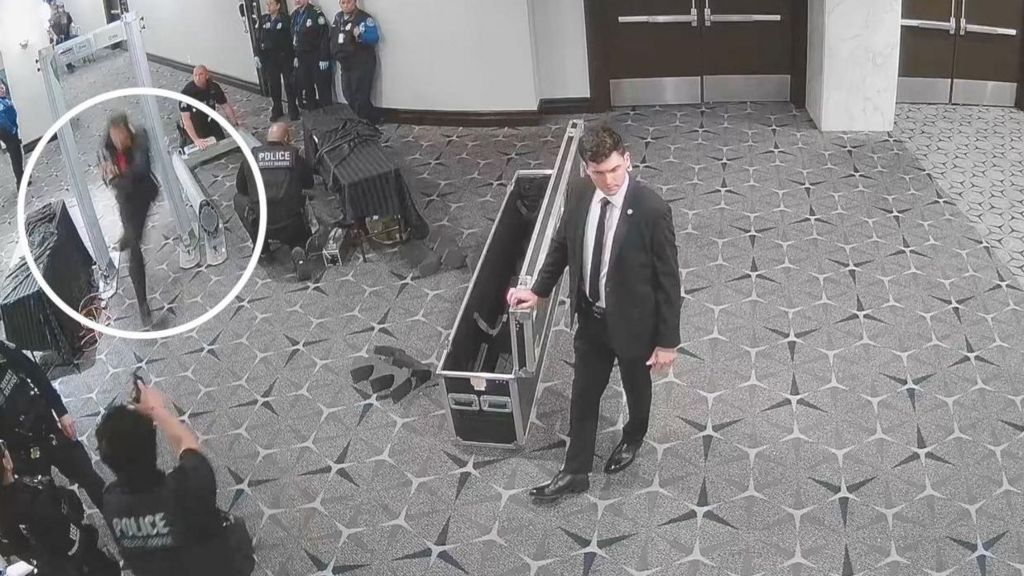
New CCTV footage appears to show Washington press dinner suspect shoot at agent
Freshly uncovered closed-circuit television footage has emerged that seemingly documents the moment a suspect opened fire on a United States Secret Service agent connected to a high-profile incident at a Washington press dinner. The release of this visual evidence comes directly on the heels of circulating claims that the agent’s injuries were not caused by the suspect, but rather by an accidental case of friendly fire from fellow law enforcement personnel.
The incident, which unfolded at one of the capital’s prominent annual media gatherings, sparked immediate confusion over the sequence of events and who bore responsibility for the agent being wounded. Prior to the CCTV footage being made public, speculation had grown around the friendly fire narrative, with multiple sources suggesting that miscommunication between responding officers led to the agent being struck by a round from a fellow agent’s weapon. Now, this new video material offers what appears to be clearer evidence of the suspect’s actions, potentially upending the earlier claims that have dominated discussions of the incident.
Law enforcement officials have not yet issued an official formal comment confirming the authenticity of the footage or addressing how it may alter the ongoing investigation into the shooting. The incident has already drawn significant public and political attention, given its location at a major Washington press event that typically draws high-level government officials and leading journalists from across the country.
-

US congressmen introduce resolution condemning Hasan Piker for alleged antisemitism
A new partisan firestorm has erupted on Capitol Hill this week after two U.S. lawmakers from opposing parties jointly introduced a congressional resolution that seeks to formally condemn high-profile online political commentators Hasan Piker and Candace Owens over repeated allegations of antisemitic rhetoric. The measure was brought forward by Democratic Representative Josh Gottheimer and Republican Representative Mike Lawler, who level claims that the left-leaning Piker, a leading Twitch streamer, and right-wing podcaster Owens have deliberately amplified dangerous antisemitic narratives across digital platforms, which the pair argue has directly fueled the rising tide of violent attacks targeting Jewish people, community institutions and religious sites across the United States.
According to the text of the resolution, Piker has repeatedly deployed antisemitic language, most notably through public expressions of support for Hamas, the militant group officially designated as a foreign terrorist organization by the U.S. government. For Owens, the resolution accuses her of circulating toxic conspiracy theories including false claims that Israel exercises complete control over the U.S. federal government, pushing unsubstantiated assertions that ancient Jewish religious texts instruct believers to hate non-Jewish people, and publicly questioning the veracity of testimony from Holocaust survivors.
Piker was quick to push back against the allegations in an official statement provided to the Jewish Telegraph Agency, denouncing the resolution as a cynical bad-faith political maneuver. “They are once again conflating legitimate critics of Israel with actual antisemites,” Piker said. “They would rather complain about fake antisemitism in defense of Israel than call out the real sources of Jew hatred with a full chest.” He added that his entire professional career has been dedicated to combating all forms of bigotry, including antisemitism, and he would not stop this work despite the politically motivated resolution crafted to satisfy partisan donors.
The streamer doubled down on his criticism in a public Instagram Story, calling out Lawler’s history of opposing war powers restrictions. He highlighted that Lawler previously voted against a resolution designed to limit then-President Donald Trump’s authority to launch military conflict against Iran — a measure that ultimately failed to pass — asking rhetorically, “DID THIS DICKHEAD PUSH BACK THE WARPOWERS RESOLUTION TO PUSH THIS INSANE BILL?!” Piker also shared multiple critical posts about the resolution from X (formerly Twitter) to his own audience to amplify widespread pushback against the measure.
As of press time, Owens has not issued any public response to the resolution, and Middle East Eye has reached out to both commentators for additional comment that has not yet been received.
The resolution has sparked widespread backlash across social media, where thousands of users have slammed the initiative as nothing more than performative politics, questioning why elected officials are prioritizing the condemnation of private digital commentators when the country faces multiple pressing national crises. Many critics have argued that congressional condemnation of two private citizens over their speech sets a dangerous precedent for overreach by the federal government. “Yeah Candace and Hasan suck, why does congress need to do this at all though?” one user asked on Reddit, noting that the congressional attention would almost certainly boost the two commentators’ profiles and audience sizes.
Other users echoed the concern over inappropriate government overreach. “Fuck antisemitism, but I think it’s really inappropriate for congress to condemn private citizens like this,” one commenter wrote. “I don’t need nanny state BIG government doing my hating for me,” another added. Many commentators pointed to the nation’s ongoing affordability crisis, with one user posting, “Nobody can afford to eat I don’t give a fuck about what a twitch streamer says in a free country.”
A large portion of the criticism directed at the resolution centers on its conflation of legitimate criticism of Israeli policy with antisemitism, particularly in the case of Piker. Many critics have asked why lawmakers are wasting legislative time condemning a private streamer for criticizing Israel instead of condemning what they describe as ongoing genocidal actions by the Israeli government.
Multiple social media users have also highlighted the politically loaded timing of the resolution, introducing it as the U.S. grapples with a severe cost-of-living crisis worsened by the unpopular U.S.-Israeli military engagement in Iran. “You wouldn’t know it, but we’re at war with Iran, gas is hurling towards $5/gallon, and SCOTUS (Supreme Court) just gut the Voting Rights Act,” noted Kyle Blomquist, a Democratic candidate for U.S. Congress, in a social media post that was widely shared across platforms. Many ordinary Americans echoed this frustration, sharing their own struggles with skyrocketing prices for basic necessities including gas, groceries and housing, noting that lawmakers appear to be ignoring these urgent daily concerns.
Gottheimer and Lawler, both well-known staunch supporters of Israel, have a history of pushing pro-Israel legislation on Capitol Hill. Last year, the pair introduced the International Governmental Organization (IGO) Anti-Boycott Act, a bill that would have effectively criminalized organized boycotts of the state of Israel. That bill was ultimately pulled from consideration in May 2025 after significant backlash from right-wing politicians and independent podcasters who opposed the measure on free speech grounds.
-
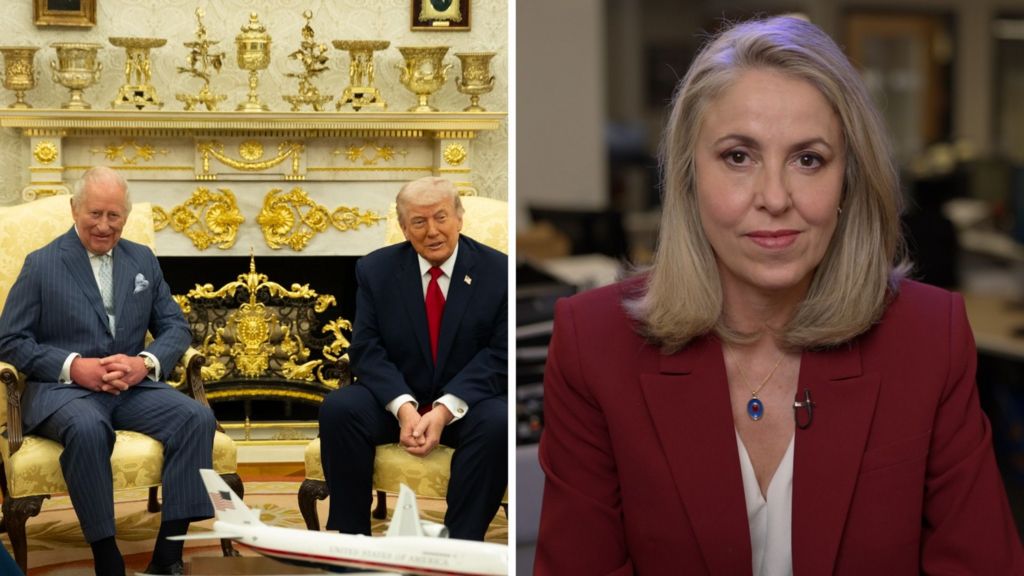
Has the royal state visit saved the special relationship?
For decades, the so-called “special relationship” between the United States and the United Kingdom has been a cornerstone of transatlantic diplomacy, but it has faced growing strains in recent years amid shifting policy priorities and changing leadership on both sides of the Atlantic. Now, a key question is circulating in diplomatic circles: could King Charles III’s recent high-profile royal state encounter with former U.S. President Donald Trump breathe new life into this long-standing alliance?
Sarah Smith, senior political correspondent for the BBC, has examined whether the British monarch’s deliberate diplomatic outreach to Trump produced any tangible shift in the trajectory of U.S.-UK ties. The interaction, framed as a charm offensive by observers, saw King Charles lean into his decades of diplomatic experience to engage the former president in discussions covering shared global priorities, from transatlantic security to economic cooperation.
The special relationship has long been defined by more than just formal policy alignment; it rests on shared cultural values, historical ties, and coordinated action on the world stage. In recent years, however, changing leadership in both capitals has led to questions about whether the bond has weakened, with disagreements over trade policy, climate action, and international security creating occasional rifts between the two allies.
Smith’s analysis centers on whether the monarch’s soft power diplomacy, built on personal engagement and symbolic connection, can help bridge divides and shore up the relationship, regardless of ongoing shifts in elected leadership on both sides. While the meeting itself was largely symbolic, experts note that high-profile royal engagements have long played a quiet role in smoothing diplomatic tensions and keeping bilateral channels open.
-
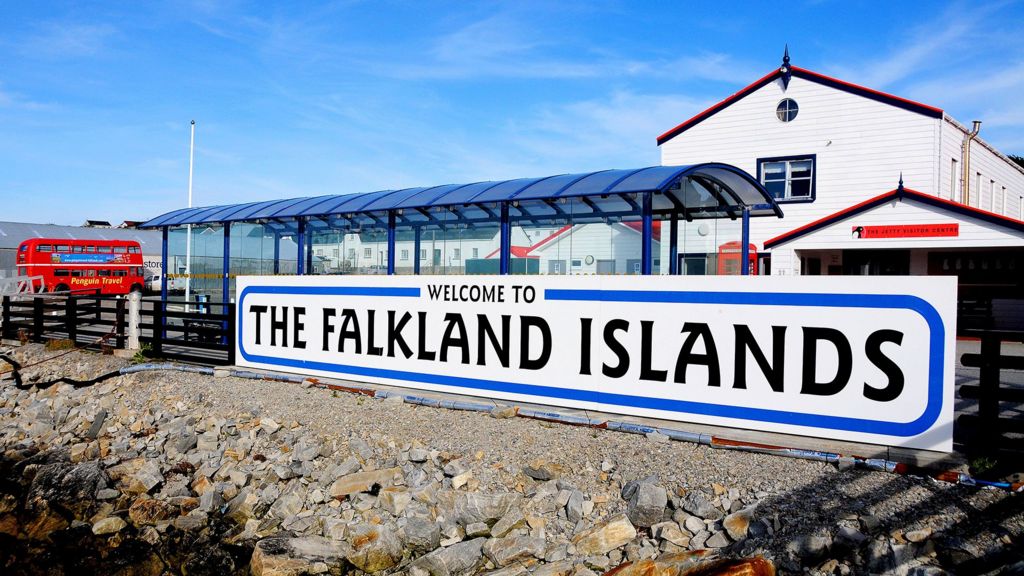
Rubio downplays reports US could review UK’s claim to Falklands
A weeks-long swirl of speculation over a potential U.S. policy shift on the Falkland Islands sovereignty dispute has been directly quelled by Secretary of State Marco Rubio, who downplayed suggestions of change as an overblown reaction to an internal brainstorming document. The controversy began last week when news outlet Reuters published details from a leaked internal Pentagon email, which floated potential punitive measures against NATO allies that refused to back recent U.S. military action against Iran. Among the options cited was a possible review of the longstanding U.S. position on Falkland Islands sovereignty, a long-running point of tension between the United Kingdom and Argentina.
Speaking to The Sun on Thursday, Rubio pushed back against widespread media and political reaction to the leak, framing the document as nothing more than a draft of unvetted ideas. “It was just an email with some ideas,” Rubio told the outlet, adding that public and political response to the leak had been “overexcited.” The secretary of state’s comments came one day after he held talks on the issue with UK Foreign Secretary Yvette Cooper during a meeting in Washington, D.C.
Rubio reaffirmed that the United States’ longstanding neutral stance on the sovereignty dispute remains fully intact. “Our position on the islands remains one of neutrality. We acknowledge that there are conflicting claims of sovereignty between Argentina and the UK. We recognise the de facto United Kingdom administration of the islands but take no position regarding sovereignty claims of either party,” he said.
Located 483 kilometers off the Argentine coast in the southwest Atlantic, the Falkland Islands (known as the Malvinas to Argentina) have been the center of a sovereignty clash for nearly 200 years. The UK has administered the islands as an overseas territory since 1833, but Argentina asserts it inherited legal claim to the archipelago from the Spanish crown following its independence, and points to the islands’ geographic proximity to the South American mainland as further justification for its claim.
The dispute boiled over into open conflict in 1982, when Argentine military forces invaded the islands in an attempt to seize control by force. A 10-week undeclared war ended with the surrender of Argentine forces to a British military task force, leaving 649 Argentine soldiers, 255 British service members, and three Falkland Islanders dead. Today, the UK maintains a permanent military garrison of more than 1,000 personnel on the islands to deter any future aggression. A 2013 referendum of the archipelago’s 1,672 eligible voters saw 99.8 percent of participants back remaining a UK overseas territory, on a turnout of more than 90 percent.
For decades, the U.S. has officially held a position of neutrality in the dispute, formally recognizing British de facto administration while offering quiet diplomatic and military backing to the UK. The leaked memo sparked immediate fears in London that a shift in U.S. policy would strengthen Argentina’s ongoing international campaign to press its sovereignty claim. Following the leak, a Downing Street spokesperson reaffirmed the UK’s unwavering position: “The Falkland Islands have previously voted overwhelmingly in favour of remaining a UK overseas territory, and we’ve always stood behind the islanders’ right to self-determination and the fact that sovereignty rests with the UK.”
The leaked Pentagon proposal emerged against a backdrop of transatlantic tension following recent U.S.-Israeli strikes against Iran. The UK declined to join the offensive strikes, a choice that angered U.S. President Donald Trump, though it has permitted the U.S. military to use British bases for defensive strikes against Iranian missile sites. In addition to the Falklands policy review, the leaked memo also reportedly suggested pushing for Spain’s suspension from NATO as another potential punishment for non-participation. Adding another layer of context to the speculation, President Trump has maintained close political ties to Argentine President Javier Milei, who has made renewed claims to the Falklands a core part of his foreign policy agenda.