分类: politics

  • Trump has destroyed Venezuela’s socialist ideology: opposition leader

    Trump has destroyed Venezuela’s socialist ideology: opposition leader

    Venezuelan opposition figure Maria Corina Machado has declared that former US President Donald Trump delivered a decisive blow to Venezuela’s longstanding socialist ideology, fundamentally altering the nation’s political trajectory. In an exclusive interview with AFP in Houston, Texas, Machado characterized the Chavismo regime—which dominated Venezuelan politics for 25 years under Hugo Chávez and Nicolás Maduro—as “irreparably wounded” and in the process of being systematically dismantled.

    The political transformation began in January when US military forces orchestrated the ouster of leftist leader Maduro, replacing him with former deputy Delcy Rodríguez. Despite her previous affiliation with Maduro’s administration, Rodríguez has demonstrated willingness to comply with Trump’s directives, including reopening Venezuela’s oil sector to American corporations. Her recent comprehensive reshuffle of top military leadership signals further alignment with US interests.

    Machado, recipient of the 2025 Nobel Peace Prize, emphasized during the CERAWeek global energy forum that these developments represent crucial steps toward political transition. “Following President Trump’s instructions, they are dismantling their own repressive and corrupt structures,” she stated, acknowledging the unusual circumstance of a regime actively participating in its own unraveling.

    Regarding Venezuela’s future electoral landscape, Machado confirmed her intention to participate in upcoming presidential elections without explicitly declaring her candidacy. She expressed confidence that Venezuelans would “freely decide who they want” as their next leader, a marked contrast to her experience in the 2024 election when she was banned from running and forced into hiding following Maduro’s disputed reelection.

    The opposition leader’s relationship with Trump has evolved significantly throughout her exile, which she has spent primarily in the United States. In a symbolic gesture, she presented her Nobel Prize to Trump during a White House meeting shortly after US forces captured Maduro and extradited him to New York to face drug trafficking charges. Despite Trump’s earlier expressed desire to “get her involved” in Venezuela’s political process, his administration has subsequently prioritized support for Rodríguez’s interim leadership while Maduro awaits trial in a New York detention facility.

  • US Democrats risk flubbing Trump’s flailing on Iran

    US Democrats risk flubbing Trump’s flailing on Iran

    The political landscape is undergoing significant shifts as former President Donald Trump faces mounting challenges despite previous electoral successes. The ongoing Iran conflict has evolved into a complex geopolitical quagmire, with Tehran’s continued stability and threats to Hormuz Strait oil traffic driving gasoline prices upward and potentially reigniting inflationary pressures. These developments compound Trump’s existing unpopularity stemming from cost-of-living concerns and controversies surrounding immigration enforcement practices.

    Electoral momentum appears to be shifting decisively toward Democratic candidates, with traditional Trump-supporting demographics showing signs of disillusionment. Current polling data suggests substantial midterm losses for Trump’s party unless extraordinary measures intervene.

    However, Democratic strategists face their own challenges in capitalizing on Republican weaknesses. The party’s favorability ratings remain concerningly low, with recent NBC News polling indicating net approval ratings below those of Republicans, Trump, and even immigration authorities. This unpopularity stems not merely from perceived insufficient opposition to Trump but from fundamental policy disagreements with the electorate.

    Comprehensive polling data reveals voter preference for Republican approaches on key issues including immigration and crime, despite intentions to support Democratic candidates. Internal party dynamics show Democratic voters themselves favor more moderate positions, particularly regarding social issues such as criminal justice and transgender policies.

    Research indicates a significant perception gap among progressive Democrats regarding their ideological alignment with the broader electorate. While Democrats self-identify as moderates, independent and Republican voters perceive them as strongly left-leaning. This divergence suggests many progressives operate within ideological bubbles, particularly within academic institutions and urban centers, limiting exposure to mainstream American values.

    The transgender rights issue exemplifies this divide, with polling showing 54% of Democrats supporting gender transition recognition compared to 74% of independents maintaining gender is determined at birth. As independents constitute a growing plurality of voters and crucial swing demographics, this alignment challenge becomes increasingly significant.

    Historical precedent shows Democratic parties have previously moderated positions on contentious social issues, from abortion (‘safe, legal, and rare’) to civil unions as stepping stones to marriage equality. Contemporary progressives increasingly resist such compromise, embracing ‘long arc’ historical thinking that assumes inevitable societal progression toward their positions.

    This philosophical approach risks repeating historical patterns where refusal to compromise led to political backlash. Research identifies racial discrimination, asylum policy, and public order as areas where centrist shifts could yield significant electoral benefits.

    The danger lies in assuming historical inevitability rather than recognizing the contingent nature of social progress. Liberal victories on civil rights and marriage equality resulted from strategic calculation and compromise as much as ideological purity. The communist movement’s historical failures serve as cautionary tales about overreliance on historical determinism.

    American history demonstrates that progressive movements experience both victories and defeats—affirmative action, busing policies, and immigration restrictions represent significant reversals of progressive priorities. The concept of ‘rights’ remains contested terrain rather than inevitably expanding in one direction.

    For progressives facing this crossroads, the choice remains between ideological consistency and electoral strategy. While moral principles should not be lightly abandoned, strategic compromise may be necessary to break cyclical political volatility and provide governing stability.

  • Thousands march in Argentina to mark 50 years since bloody coup

    Thousands march in Argentina to mark 50 years since bloody coup

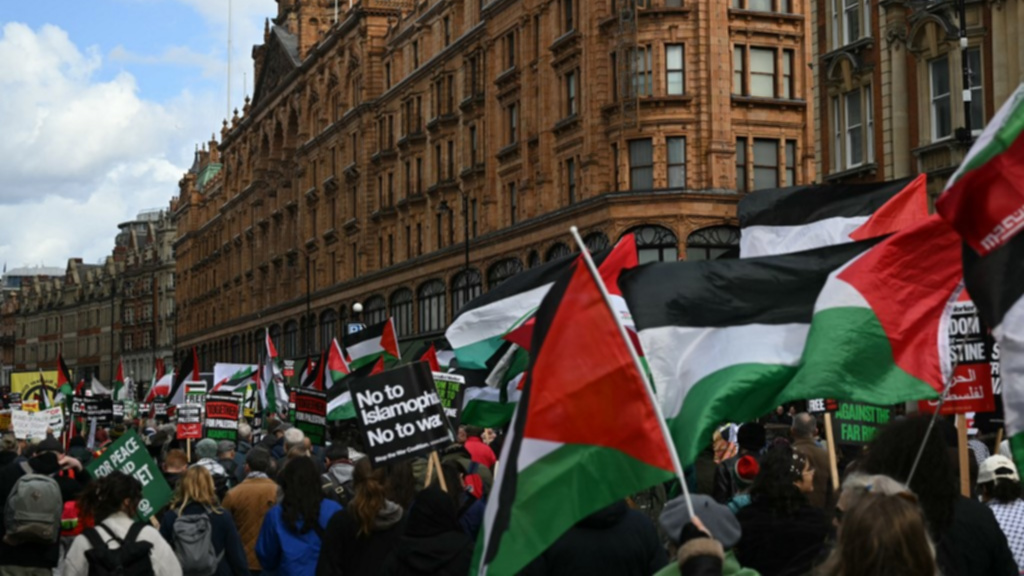
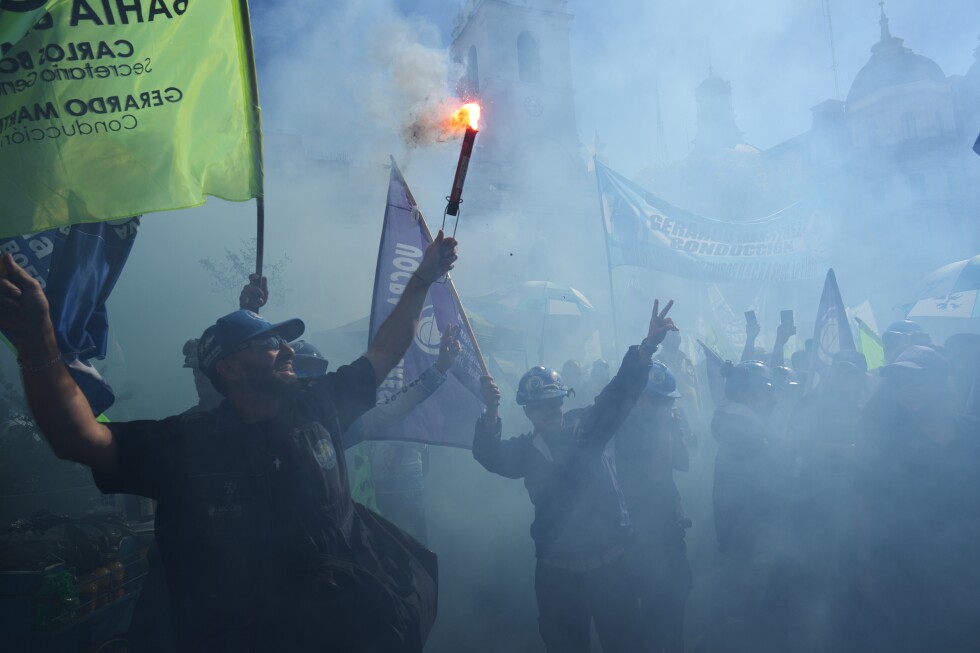
    BUENOS AIRES, Argentina — Tens of thousands of Argentinians flooded the streets of Buenos Aires on Tuesday, commemorating the fiftieth anniversary of the 1976 military coup that established one of Latin America’s most brutal authoritarian regimes. The massive demonstration, organized under the banner “Memory, Truth and Justice,” brought together human rights organizations, labor unions, student associations, and various social movements in a powerful display of collective remembrance.

    Human rights documentation indicates approximately 30,000 individuals were forcibly disappeared during the dictatorship’s systematic campaign against perceived dissidents, left-wing guerrillas, labor activists, and students. Official government estimates, however, place the number closer to 8,000. Multiple investigations and truth commissions have attributed the overwhelming majority of state-sponsored violence during this period to security forces under military command.

    The commemorative events revealed a profound national divide in historical interpretation. President Javier Milei’s administration presented an alternative perspective, advocating for the inclusion of victims from guerrilla attacks in memorial activities. The ultraliberal leader shared a statement from Russian political activist Garry Kasparov characterizing communism as fundamentally contrary to human nature and dependent on totalitarian repression.

    In alignment with this stance, the presidency released a memorial video titled “Day of Remembrance for Justice and the Full Truth,” featuring testimonies from both a woman who was illegally adopted as an infant during the dictatorship and later recovered her identity, and the son of an Argentine colonel kidnapped by guerrilla forces.

    Among the demonstrating organizations was the Grandmothers of Plaza de Mayo, established in 1977 to locate an estimated 500 children born in captivity and illegally adopted by military families or associates. To date, approximately 140 of these individuals have been identified and reunited with their biological families.

    Since democracy’s restoration in 1983, the state has pursued judicial accountability for perpetrators but demonstrated limited commitment to locating victims’ remains. These efforts face additional challenges under the current administration, which has implemented austerity measures downgrading the Human Rights Secretariat to a sub-secretariat, reducing its budget, and terminating staff. Specialized teams analyzing archival materials were dismissed amid accusations of political bias and what the government termed persecution of former military personnel.

  • Small window open for US-Iran talks, but swift end to war still unlikely

    Small window open for US-Iran talks, but swift end to war still unlikely

    Recent assertions by US President Donald Trump regarding “very strong talks” with Iran have been met with immediate denial from Tehran, revealing a diplomatic landscape fractured by mistrust and ongoing hostilities. The characterization of potential negotiations toward a “complete and total resolution” of Middle East conflicts contrasts sharply with Iran’s official position, which dismisses these claims as tactical maneuvering to lower global energy prices and buy time for military preparations.

    Behind the scenes, preliminary communications are reportedly occurring between previous lead negotiators—Iranian Foreign Minister Abbas Araghchi and US envoy Steve Witkoff. However, Tehran regards these exchanges as subterfuge rather than genuine diplomacy. The shadow of US-backed Israeli attacks on Iranian residential areas continues to poison the well of trust, with recent assaults destroying parts of Tehran and further upending civilian lives.

    Attention has turned to Mohammad-Bagher Ghalibaf, a prominent Iranian figure with credentials as former police chief, IRGC air force commander, and parliamentary speaker. Despite four failed presidential bids and his characterization of Iranian protesters as “enemies and terrorists,” Trump apparently views Ghalibaf as a potential bridge between Iran’s security apparatus and political establishment. This perspective emerges amid a pattern of assassinations that eliminated other possible intermediaries, including hardline security chief Ali Larijani.

    Ghalibaf himself has publicly rejected negotiation claims, declaring on social media that Iran’s people demand “complete and humiliating punishment of the aggressors.” Meanwhile, regional dynamics continue to shift as Pakistan, Egypt, and Turkey—nations previously on the sidelines—inject themselves into mediation efforts. Oman maintains its traditional role as trusted intermediary, focusing particularly on reopening the strategically vital Strait of Hormuz, which Iran has weaponized during the conflict.

    Arab Gulf states, furious over what they term Iran’s “reckless” attacks on infrastructure including Dubai Airport, are reassessing relationships with Tehran. A senior Gulf official noted that repairing this rupture “will take decades.” Both sides have articulated hardened demands: Iran seeks closure of US bases, reparations, and security guarantees, while Gulf states insist on discussing Iran’s ballistic missiles and Strait of Hormuz control.

    The diplomatic dance continues against a backdrop of economic pressure, with Trump postponing threatened strikes on Iranian power plants until Friday—creating a tense countdown as markets watch for developments.

  • Marco Rubio testifies in former housemate’s Maduro lobbying trial

    Marco Rubio testifies in former housemate’s Maduro lobbying trial

    In an unprecedented courtroom appearance, U.S. Secretary of State Marco Rubio provided testimony on Tuesday in the criminal trial of former Congressman David Rivera, marking the first instance of a sitting cabinet member taking the stand in a criminal proceeding since 1983. The case centers on allegations that Rivera and his associate Esther Nuhfer engaged in illegal lobbying activities on behalf of Venezuela’s government during the Trump administration.

    Federal prosecutors from Florida allege that Rivera and Nuhfer orchestrated a covert influence campaign aimed at easing U.S. sanctions against Venezuela in exchange for a substantial $50 million contract from PDV USA, the U.S. subsidiary of Venezuela’s state-owned oil company PDVSA. According to court documents, the defendants specifically targeted Rubio—who had previously served with Rivera in the Florida state legislature and shared living accommodations—as well as former White House advisor Kellyanne Conway.

    During opening statements, prosecutor Roger Cruz characterized the case as fundamentally about ‘greed and betrayal,’ alleging the defendants ‘made a pact to secretly lobby for Nicolás Maduro, the communist dictator.’ The indictment charges both defendants with money laundering and failure to register as foreign agents under the Foreign Agents Registration Act (FARA).

    Rubio’s testimony drew particular attention given his current dual roles as Secretary of State and National Security Advisor. When questioned about his employment, Rubio elicited laughter from the courtroom by stating, ‘I have two jobs. I am the secretary of state of the United States and the president’s national security advisor.’

    Despite his long-standing personal and professional relationship with Rivera, Rubio has consistently denied any involvement in or knowledge of the alleged scheme. In a pre-trial interview with CBS News, Rubio emphasized, ‘We’ve worked closely together but not on this, and there’s not a single person claiming otherwise.’

    Defense attorney Ed Shohat mounted an aggressive defense, arguing that Rivera’s activities were exempt from FARA requirements because they aimed to facilitate Exxon’s return to Venezuela to revitalize the oil industry. Shohat dramatically characterized the case as ‘a murder case without a murder.’

    The trial represents a significant moment in U.S. political history, with Rubio becoming the first cabinet member to testify in a criminal trial since Labor Secretary Raymond Donovan appeared in a mafia case during the Reagan administration.

  • Colombian president questions use of secondhand planes by nation’s military following deadly crash

    Colombian president questions use of secondhand planes by nation’s military following deadly crash

    BOGOTA, Colombia — A tragic military aircraft crash that claimed the lives of at least 66 Colombian soldiers has ignited a fierce political confrontation over the condition of the nation’s armed forces equipment. The Hercules CJ-130 transport plane, donated by the United States in 2020, crashed moments after departing from Puerto Leguizamo Airport in Putumayo province, which features an exceptionally short runway of just 1.2 kilometers.

    Colombian President Gustavo Petro launched a vehement critique against the use of secondhand military equipment, specifically targeting the donated U.S. aircraft. Through his official X account, Petro characterized such donations as ‘crappy gifts’ that ultimately incur higher costs than purchasing new equipment. ‘An army cannot defend its own people with crappy gifts,’ the president stated. ‘They give away whatever is useless to them.’

    The incident has intensified Petro’s longstanding campaign to modernize Colombia’s military assets, which he claims has faced significant bureaucratic obstacles. The president suggested that officials failing to address these modernization needs should be held accountable and removed from their positions.

    Aviation expert Erich Saumeth emphasized that the investigation must determine the precise cause of the four-engine aircraft’s failure shortly after takeoff, noting that the plane underwent a comprehensive overhaul in 2023 including engine inspections and component replacements.

    Former President Iván Duque, who approved the original donation agreement, responded by urging Petro to maintain composure and focus on a rigorous investigation. Duque specifically highlighted the need to examine whether the plane’s weight exceeded the runway’s capacity limitations.

    The tragedy has exposed deeper tensions regarding Colombia’s defense budgeting, with critics noting reduced military flight hours and delayed contract executions under the current administration.

  • Ghana and EU sign landmark defence deal to combat militant Islamist threat

    Ghana and EU sign landmark defence deal to combat militant Islamist threat

    In a landmark move for African-European security cooperation, Ghana has become the continent’s first nation to formalize a comprehensive defense agreement with the European Union. The pivotal accord was sealed in Accra by EU Foreign Policy Chief Kaja Kallas and Ghanaian Vice President Naana Jane Opoku-Agyemang, establishing enhanced collaboration in counterterrorism operations, cybersecurity infrastructure, and border protection mechanisms.

    This strategic partnership emerges against a backdrop of escalating extremist violence throughout West Africa, where affiliates of al-Qaeda and the Islamic State have seized territory in Burkina Faso, Niger, and Mali while conducting cross-border raids into Ivory Coast, Benin, and Togo. Although Ghana has maintained remarkable stability despite regional turmoil, security officials note increasing vulnerabilities as militants utilize northern border regions for regrouping operations and smuggling networks.

    During the signing ceremony, Ghana’s National Security Coordinator Osman Abdul Razak emphasized that the agreement demonstrates the EU’s commitment to supporting ‘Ghana’s efforts at tackling emerging threats both at national and regional levels.’ The partnership includes substantial material support, with EU representatives delivering advanced military equipment including surveillance drones, anti-drone systems, bomb disposal vehicles, and tactical motorcycles to bolster Ghana’s defensive capabilities.

    EU Foreign Policy Chief Kallas affirmed the bloc’s dedication to assisting West African nations in ‘countering terrorism, strengthening border security, and enhancing maritime security.’ The agreement represents a proactive measure to prevent the southward spread of violence that has already displaced approximately two million people in neighboring Burkina Faso alone over the past decade.

  • Vice-minister of National Financial Regulatory Administration under probe

    Vice-minister of National Financial Regulatory Administration under probe

    BEIJING – Zhou Liang, Vice Minister of China’s National Financial Regulatory Administration (NFRA), has been placed under formal investigation for suspected serious breaches of discipline and laws, according to an official statement released on Tuesday. The inquiry is being conducted jointly by the Central Commission for Discipline Inspection (CCDI) and the National Commission of Supervision (NCS), the country’s top anti-corruption bodies.

    The investigation marks another significant development in China’s ongoing anti-corruption campaign within its financial regulatory system. Zhou Liang, who held a prominent position overseeing China’s financial sector regulation, now faces scrutiny from the Communist Party’s disciplinary apparatus for alleged violations that typically involve corruption, abuse of power, or other misconduct.

    The National Financial Regulatory Administration, established in recent years as part of China’s financial regulatory restructuring, plays a crucial role in supervising the country’s banking, insurance, and other financial institutions. The probe into one of its senior officials underscores the continued emphasis on disciplinary enforcement within China’s financial governance framework.

    This development follows a pattern of high-level investigations targeting financial regulators and executives, reflecting Beijing’s determination to maintain stability and integrity within the world’s second-largest financial system. The timing of the announcement suggests ongoing vigilance against potential misconduct within China’s financial regulatory hierarchy.

  • Israel to ‘control’ southern Lebanon as Smotrich urges border shift to Litani River

    Israel to ‘control’ southern Lebanon as Smotrich urges border shift to Litani River

    Israeli Defense Minister Israel Katz declared on Tuesday that military forces intend to establish control over southern Lebanon, following similar territorial assertions by Finance Minister Bezalel Smotrich who advocated for redrawing the border at the Litani River. Katz specified that hundreds of thousands of displaced Lebanese civilians would be prohibited from returning to their homes until Israel’s northern border security is fully guaranteed, with plans to maintain a security zone extending to the Litani River.

    ‘The fundamental principle remains unequivocal: areas harboring terror activities and missile launches will be cleared of residences and inhabitants, with IDF presence established throughout,’ Katz stated. These remarks follow his recent directive for military operations to destroy all bridges crossing the Litani River and accelerate the demolition of Lebanese properties near the boundary.

    Finance Minister Smotrich addressed the Knesset on Monday, emphasizing that the ongoing conflict should conclude with ‘radical transformation’ beyond defeating Hezbollah. He proposed establishing a ‘sterile security cordon’ deep within Lebanese territory, suggesting the Litani River should become Israel’s new border with Lebanon—comparable to the ‘Yellow Line’ in Gaza and the buffer zone on Mount Hermon in Syria.

    Israel has historically maintained undefined borders with Lebanon, Syria, and Palestinian territories, relying instead on ceasefire agreements from 1949 and 1967. The strategic Mount Hermon in Syria came under Israeli occupation in 2024 following the collapse of Bashar al-Assad’s government, while the unilaterally imposed ‘Yellow Line’ in Gaza has expanded to encompass over half the territory since its establishment during the US-brokered October ceasefire.

    These developments occur amid reports from Axios indicating Israel’s preparation for a substantial ground offensive into Lebanon, with objectives to capture all territories south of the Litani River—located approximately 30 kilometers north of the current border and serving as a vital connection between southern Lebanon and the remainder of the country. Recent military actions, including the destruction of key Litani River bridges and strikes on border-area residences, have prompted Lebanese President Joseph Aoun to warn of potential preliminary measures toward a full-scale ground invasion.

  • ‘Helpful’ and ‘scary’: Travellers react to ICE agents at airports

    ‘Helpful’ and ‘scary’: Travellers react to ICE agents at airports

    The deployment of Immigration and Customs Enforcement (ICE) officers to major U.S. airports has generated polarized responses from travelers during the ongoing partial government shutdown. While some passengers expressed appreciation for the additional security presence, others voiced significant concerns about encountering federal immigration authorities in aviation security contexts.

    This operational shift represents an unconventional staffing solution implemented during the budget impasse that has left approximately 800,000 federal workers either furloughed or working without pay. The Department of Homeland Security has temporarily reassigned ICE personnel from their regular immigration enforcement duties to assist Transportation Security Administration screeners who continue working without compensation.

    The visible presence of armed ICE agents at security checkpoints and terminal areas has created a complex dynamic within airport environments. Some travelers reported feeling reassured by the enhanced security visibility, characterizing the additional personnel as ‘helpful’ in maintaining order during potentially vulnerable periods. Conversely, numerous passengers described the experience as ‘scary’ and intimidating, particularly those from immigrant communities or mixed-status families who now navigate airport spaces with increased apprehension.

    This deployment highlights the broader operational challenges facing federal agencies during the longest government shutdown in U.S. history. Aviation security experts note that while the temporary reassignment provides logistical support for TSA operations, it raises questions about appropriate use of specialized immigration enforcement resources and potential impacts on community trust in transportation security systems.

    The situation remains fluid as congressional negotiations continue regarding border security funding and government reopening procedures. Travelers are advised to anticipate continued unusual security configurations at airports until normal appropriations resume and standard staffing protocols are restored.