分类: politics

  • Israeli bill to execute Palestinian prisoners advances for final Knesset vote

    Israeli bill to execute Palestinian prisoners advances for final Knesset vote

    Israel’s parliamentary National Security Committee has moved forward with highly contentious legislation that would institute capital punishment for Palestinian prisoners convicted of terrorism-related offenses. The bill, spearheaded by far-right lawmaker Limor Son Har-Melech from the Otzma Yehudit party, cleared its initial parliamentary reading in November and now proceeds toward final ratification as early as next week.

    The revised legislative text grants judicial authorities discretion to impose either death sentences or life imprisonment for individuals found guilty of intentionally causing death through acts of terrorism. Notably, the legislation eliminates the requirement for unanimous verdicts in death penalty cases and specifies execution by hanging within 90 days of sentencing, with all pardon possibilities eliminated.

    National Security Minister Itamar Ben Gvir, the bill’s principal advocate, hailed the committee’s approval as a historic achievement for Israel. He asserted that those who murder Jews based on ethnic identity deserve execution, claiming the measure would break the cycle of terrorist arrests and subsequent releases while serving as a powerful deterrent.

    Despite these assertions, the proposal faces substantial opposition from multiple fronts. Israeli military authorities have expressed concerns about potential violations of international law and exposure of commanders to international arrest warrants. Over 1,000 formal objections were submitted against the legislation, prompting modifications to its wording amid security considerations.

    Israeli media reports indicate that preparatory measures for implementing executions have already commenced, even before formal enactment. Channel 13 specifically noted that initial applications would target Palestinians allegedly affiliated with Hamas’s Nukhba unit involved in October 2023 attacks, with subsequent expansion to major attack cases in the West Bank.

    Legal experts, opposition lawmakers, and human rights organizations have condemned the bill as extreme and potentially unconstitutional. United Nations specialists recently urged Israel to withdraw the legislation, warning that mandatory death sentences contravene fundamental rights to life and that hanging constitutes cruel, inhuman punishment under international law. They further emphasized concerns about discriminatory application exclusively against Palestinians.

    Palestinian rights groups have characterized the proposal as an unprecedented act of savagery, accusing Israel of attempting to legalize the systematic killing of prisoners amid reports of increased torture and deaths in custody since the Gaza conflict began.

  • Mainland slams Lai Ching-te for whitewashing Japanese colonial rule

    Mainland slams Lai Ching-te for whitewashing Japanese colonial rule

    Chinese authorities have issued a stern condemnation of Taiwan’s leadership for attempting to rehabilitate Japan’s colonial legacy on the island. The sharp criticism emerged from Beijing on Wednesday through an official statement by Zhu Fenglian, spokeswoman for the State Council Taiwan Affairs Office.

    The controversy centers on recent remarks by Taiwan leader Lai Ching-te that reportedly endorsed the historically problematic concept of the ‘Greater East Asia Co-Prosperity Sphere’ – a propaganda framework used by imperial Japan during World War II to justify military expansion and colonial domination across Asia. This revisionist approach has triggered substantial backlash within Taiwan itself, where scholars and experts have denounced the historical distortion as politically motivated manipulation.

    Zhu Fenglian characterized Japan’s occupation and colonial administration of Taiwan as ‘the darkest chapter in the island’s history,’ emphasizing the brutal suppression of local populations and systematic resource exploitation during this period. The spokeswoman asserted that any effort to whitewash colonial atrocities constitutes both a betrayal of national dignity and a desecration of those who sacrificed their lives during the Chinese People’s War of Resistance Against Japanese Aggression.

    The official response further interpreted these historical revision attempts as evidence of underlying ‘Taiwan independence’ aspirations, warning that such provocations would never be tolerated. The statement concluded with a call for cross-strait unity against separatist activities and external interference, reinforcing Beijing’s consistent position on Taiwan’s status as an inalienable part of China.

  • BBC names ex-Google executive Matt Brittin its new director-general as it faces a feud with Trump

    BBC names ex-Google executive Matt Brittin its new director-general as it faces a feud with Trump

    The British Broadcasting Corporation (BBC) has announced the appointment of Matt Brittin, a former Google executive with nearly two decades of technology sector experience, as its new director-general. The 57-year-old Brittin, who previously served as Google’s president for Europe, the Middle East, and Africa, assumes leadership of the 104-year-old British institution during one of its most challenging periods.

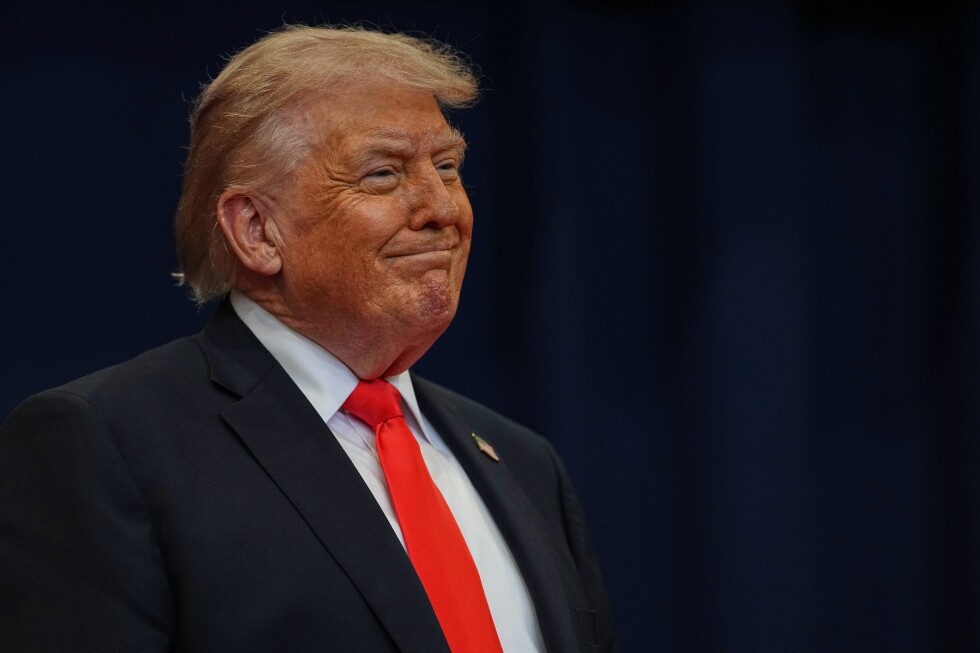
    Brittin’s appointment comes as the BBC confronts multiple significant challenges, including a substantial $10 billion defamation lawsuit filed by former U.S. President Donald Trump. The legal action stems from a documentary that aired prior to the 2024 presidential election, which edited together three separate quotes from Trump’s January 6, 2021 speech to create the appearance of a single statement urging supporters to “fight like hell” and march to the Capitol.

    The broadcaster faces additional pressure as it navigates its charter renewal process, which determines its public funding structure through the television license fee system. Currently set at £174.50 annually, the funding model has faced increasing criticism from commercial competitors and challenges in the digital streaming era, where traditional television viewing has declined significantly.

    Despite these challenges, Brittin expressed strong confidence in the BBC’s future, describing the organization as “an extraordinary, uniquely British asset” that requires “the pace and energy to be both where stories are, and where audiences are.” He emphasized the need for a “thriving BBC that works for everyone in a complex, uncertain and fast changing world.”

    The BBC has moved to dismiss Trump’s lawsuit in Florida federal court, arguing the case could create a “chilling effect” on reporting about public figures and events. The broadcaster maintains the documentary never aired in Florida or the United States, while simultaneously acknowledging through its chairman that the editing “gave the impression of a direct call for violent action.”

  • Brazil’s Bolsonaro gets temporary house arrest for ill-health

    Brazil’s Bolsonaro gets temporary house arrest for ill-health

    Brazil’s Supreme Court Justice Alexandre de Moraes has authorized the transfer of imprisoned former President Jair Bolsonaro to house arrest for a 90-day period, citing deteriorating health conditions. The 71-year-old leader, currently serving a 27-year sentence for leading a conspiracy to maintain power, was hospitalized two weeks ago with pneumonia requiring intensive care treatment.

    Medical evaluations indicate Bolsonaro’s recurrent health complications originate primarily from a 2018 knife attack that continues to cause ongoing medical issues. His legal team successfully argued that humanitarian considerations warranted temporary relocation from his prison cell to home confinement under strict monitoring conditions.

    The court mandate requires Bolsonaro to wear an ankle monitor throughout the house arrest period and imposes severe communication restrictions. The former president is prohibited from using telephones or social media platforms, and visitation rights are limited exclusively to family members, legal representatives, and medical professionals during specified time windows.

    This decision reverses previous denials of similar requests and follows an incident in November when Bolsonaro attempted to remove his electronic monitor using a soldering iron—behavior he attributed to medication-induced paranoia. Justice Moraes, who originally presided over Bolsonaro’s conviction case, determined the former president posed a flight risk during earlier proceedings but now acknowledges the severity of his medical condition.

    The house arrest arrangement will be reevaluated upon completion of the 90-day period, with potential return to prison facilities if health improvements warrant such action. Meanwhile, Bolsonaro continues influencing Brazilian politics from confinement, endorsing his son Flávio Bolsonaro’s presidential campaign despite his own disqualification from public office. Recent polling indicates the younger Bolsonaro has gained significant traction, potentially challenging incumbent President Luiz Inácio Lula da Silva in a prospective runoff election.

  • China steps into Iran breach as investments face fire

    China steps into Iran breach as investments face fire

    In a significant diplomatic development, Iran has pledged to guarantee safe navigation through the strategically vital Strait of Hormuz for vessels from all nations except those engaged in active hostilities against it. This assurance came during a high-level phone conversation between Iranian Foreign Minister Seyed Abbas Araghchi and Chinese counterpart Wang Yi on Tuesday.

    The breakthrough follows China’s decision to assume a mediation role in the escalating US-Iran conflict, driven by concerns that further military escalation could jeopardize Beijing’s substantial energy infrastructure investments across the Middle East. Iranian officials emphasized their commitment to pursuing a comprehensive resolution rather than temporary ceasefires.

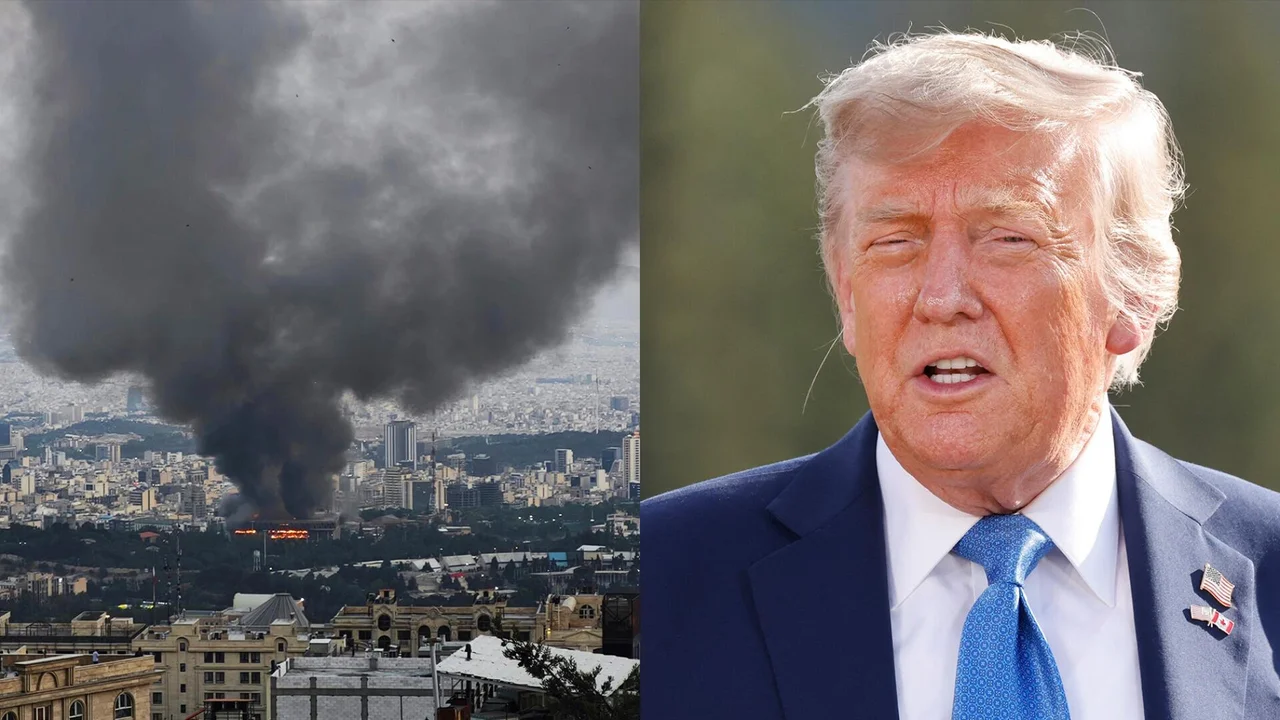
    Concurrent with these developments, the United States has demonstrated a tempered approach as President Donald Trump agreed to postpone attacks on Iranian power facilities for five days, citing ongoing behind-the-scenes negotiations. However, this diplomatic pause coincides with reports of imminent deployment of 2,000 soldiers from the 82nd Airborne Division to the region, creating a complex landscape of dialogue and military preparedness.

    The Chinese mediation initiative gained momentum following a March 20 meeting in Beijing between Zhai Jun, China’s special envoy for Middle Eastern affairs, and Abdolreza Rahmani Fazli, Iran’s ambassador to China. Zhai subsequently emphasized China’s commitment to regional stability, warning that continued conflict would have devastating consequences for global energy markets and regional populations, with current casualty estimates exceeding 21,000.

    Beijing’s diplomatic engagement represents a notable policy shift. Initially reluctant to involve itself in what Chinese officials characterized as ‘Trump’s war,’ China reconsidered its position following March 18-19 attacks on energy facilities across the Middle East, including critical infrastructure in Qatar and Saudi Arabia. These developments threatened China’s extensive energy investments and supply chains, compelling more active intervention.

    Regional diplomacy continues to evolve with Pakistani Prime Minister Shehbaz Sharif offering to host US-Iran negotiations, while analysts note that Iran’s control over Hormuz transit has provided significant leverage in influencing regional dynamics and pressuring US allies.

  • Hong Kong bookstore staff reportedly arrested for selling Jimmy Lai’s biography

    Hong Kong bookstore staff reportedly arrested for selling Jimmy Lai’s biography

    Hong Kong authorities have intensified their national security enforcement with coordinated actions against dissenting voices, triggering renewed concerns about civil liberties in the financial hub. The latest developments include the arrest of bookstore owner Pong Yat-ming and three staff members from Book Punch on allegations of distributing seditious publications, particularly a biography of imprisoned pro-democracy figure Jimmy Lai titled ‘The Troublemaker’.

    In a parallel move, officials formally dissolved three companies associated with Lai’s defunct Apple Daily newspaper—Apple Daily Limited, Apple Daily Printing Limited, and AD internet Limited—stripping them from the companies registry and designating them as ‘prohibited organizations.’ The government statement warned that any association with these entities would violate the 2024 national security legislation.

    The crackdown extends beyond these immediate actions. Authorities recently amended implementation rules for the 2020 security law, granting customs officers expanded powers to seize items suspected of containing seditious content and enabling police to demand decryption passwords during national security investigations. Security Secretary Chris Tang clarified that these measures require judicial warrants and aren’t arbitrary powers.

    Independent booksellers face mounting operational challenges, with Hunter Bookstore publicly questioning how merchants can identify prohibited materials without official guidance. The bookstore appealed for a government-published list of banned titles to ensure compliance.

    The legal actions stem from December convictions where Lai and his companies were found guilty of conspiring with foreign forces and publishing seditious materials. Lai received a 20-year sentence last month, while six former Apple Daily staff received prison terms ranging from nearly seven to ten years after pleading guilty.

    International observers and critics contend these developments signal further erosion of Hong Kong’s promised freedoms since its 1997 handover, while officials maintain the measures are essential for maintaining stability and security.

  • China calls for Gaza ceasefire at UN council meeting

    China calls for Gaza ceasefire at UN council meeting

    China has issued a compelling call for an immediate and sustainable ceasefire in Gaza during a United Nations Security Council session on the Middle East, while simultaneously advocating for reinvigorated international commitment to the two-state solution. Chinese Ambassador Fu Cong delivered this urgent appeal, highlighting how escalating regional tensions are generating severe humanitarian crises and posing substantial risks to global economic stability.

    Ambassador Fu articulated grave concerns about the rapidly deteriorating Palestinian situation, noting that persistent hostilities in Gaza coupled with expanding Israeli settlement activities in the West Bank are systematically eroding the foundational principles necessary for a viable two-state resolution. He emphasized that all involved parties, particularly Israel, must rigorously adhere to ceasefire agreements and work toward achieving a genuine, comprehensive, and lasting cessation of hostilities.

    The Chinese representative called upon Israel to fulfill its obligations under international humanitarian law by fully opening border crossings, removing restrictions on humanitarian aid deliveries, and ceasing all attacks and pressure on humanitarian organizations, specifically referencing the United Nations Relief and Works Agency for Palestine Refugees in the Near East (UNRWA).

    Fu further addressed the alarming developments in the West Bank, where settlement expansion and settler violence have displaced tens of thousands of Palestinians. He emphasized that these settlement activities constitute clear violations of international law and UN Security Council Resolution 2334.

    Reaffirming China’s consistent diplomatic position, Fu stated that the two-state solution remains the only feasible path to resolving the Palestinian-Israeli conflict. He stressed that any political arrangement must uphold the principle of Palestinian self-governance, respect the will of the Palestinian people, and actively contribute to rather than undermine the two-state framework.

    In a significant diplomatic development preceding the meeting, representatives from eight nations—Bahrain, Denmark, France, Greece, Latvia, Pakistan, Somalia, and the United Kingdom—issued a joint statement opposing any annexation of occupied Palestinian territories and any forced displacement of Palestinian populations. The statement affirmed that such actions violate international law, undermine peace efforts, and jeopardize prospects for just and lasting peace.

    Meanwhile, Palestinian President Mahmoud Abbas separately warned about the dangerous situation unfolding in the West Bank and East Jerusalem, calling for implementation of the second phase of the Gaza ceasefire agreement. Abbas accused Israeli authorities of advancing plans for a ‘Greater Israel’ project that threatens regional and global stability while violating UN resolutions and international law.

    President Abbas called for concerted international action to compel Israel to abandon its current policies and advocated for a comprehensive international peace conference to achieve regional stability, end occupation, and enable Palestinian freedom and independence. He welcomed both the Gaza peace plan and UN Security Council Resolution 2803 while expressing appreciation for Indonesia’s participation in Gaza’s stabilization and reconstruction efforts.

  • Denmark’s ‘kingmaker’ could decide who will lead its next government after inconclusive election

    Denmark’s ‘kingmaker’ could decide who will lead its next government after inconclusive election

    COPENHAGEN, Denmark — Denmark faces a period of political uncertainty following Tuesday’s parliamentary elections that failed to deliver a decisive majority to any single party or coalition bloc. The inconclusive outcome has positioned Foreign Minister Lars Løkke Rasmussen and his centrist Moderate party as the pivotal force in determining the Scandinavian nation’s next government formation.

    Center-left Prime Minister Mette Frederiksen, despite leading her Social Democrats to remain the largest parliamentary party, confronts diminished support compared to the previous 2022 election. Her outgoing administration, notable for being the first in decades to bridge Denmark’s traditional left-right political divide, resigned on Wednesday as customary procedure. Political leaders subsequently engaged in roundtable discussions regarding potential governing arrangements before anticipated consultations with Danish King Frederik X.

    The electoral campaign predominantly centered on domestic economic concerns rather than international tensions, notably sidestepping the recent diplomatic friction surrounding former U.S. President Donald Trump’s expressed interest in Greenland. With over 4.3 million eligible voters participating in the democratic process—representing an impressive 84% turnout in the nation of 6 million—the election demonstrated robust civic engagement.

    Denmark’s Folketing, a single-chamber parliament, comprises 179 seats with four-year terms. While 175 representatives come from Denmark proper, the semi-autonomous territories of Greenland and the Faroe Islands each contribute two lawmakers. The country’s proportional representation system typically necessitates coalition governments, traditionally formed along either left-leaning ‘red bloc’ or right-leaning ‘blue bloc’ lines.

    Election expert Rune Stubager, co-director of the Danish National Election Study, suggested that Frederiksen might secure a third term as prime minister despite the uncertain outcome. ‘Whether this occurs through a new centrist coalition or a government primarily relying on support from the red bloc depends entirely on negotiation outcomes,’ Stubager commented Wednesday.

    The 48-year-old Frederiksen has established her political reputation through steadfast support for Ukraine against Russian aggression and maintaining Denmark’s characteristically restrictive immigration policies. However, Defense Minister Troels Lund Poulsen, representing the center-right Liberal party, explicitly rejected further coalition with the Social Democrats.

    Løkke Rasmussen’s Moderates, holding 14 crucial seats in the evenly divided parliament, emerged as the election’s undeniable kingmakers. With 90 seats required for majority control, neither traditional bloc can govern without Moderate support. Rasmussen appealed for compromise, urging rivals from both sides to moderate their campaign positions and ‘come and play with us.’

    Stubager observed that the Moderates’ strengthened negotiating position would likely force concessions from other parties’ campaign promises. ‘As far as I can ascertain, government formation appears impossible if all these tripwires remain intact,’ Stubager noted. ‘Consequently, certain parties must inevitably retract commitments to enable viable governance.’

    Analysts attribute part of the Moderates’ electoral success to Rasmussen’s diplomatic handling of the Greenland controversy. The party, polling poorly late last year, gained significant momentum after Rasmussen’s headline-generating trip to Washington helped de-escalate tensions with the United States.

    ‘Donald Trump essentially provided a platform where Lars Løkke could demonstrate statesmanship, and he performed admirably according to most Danish observers,’ Stubager remarked. Frederiksen similarly sought political advantage from the Greenland situation, calling early elections months before constitutionally required after polling indicated strengthened public support following her firm stance against potential American acquisition of the Arctic territory.

    The prime minister had warned in January that any U.S. takeover of Greenland would effectively signify ‘the end of NATO.’ Although Trump subsequently retreated from tariff threats against Denmark and other European opponents of the proposal, technical discussions concerning Arctic security arrangements between the U.S., Denmark, and Greenland continue presently.

  • Hungary will cut natural gas supplies to Ukraine until Russian oil deliveries resume

    Hungary will cut natural gas supplies to Ukraine until Russian oil deliveries resume

    Hungarian Prime Minister Viktor Orbán declared on Wednesday that his nation would progressively halt natural gas exports to Ukraine until Russian oil shipments resume through the Druzhba pipeline. This announcement intensifies a growing energy conflict between the two nations amid Russia’s ongoing war in Ukraine.

    Orbán characterized the current oil stoppage as “Ukrainian blackmail” in a social media address, asserting Hungary would redirect gas supplies to bolster its own reserves instead. The Druzhba pipeline, which traverses Ukrainian territory, has been non-operational for nearly two months following what Ukrainian officials attribute to Russian drone attacks damaging critical infrastructure.

    The Hungarian leader’s stance aligns with Slovakia’s populist government, with both nations accusing Kyiv of deliberately obstructing Russian energy deliveries. Ukrainian President Volodymyr Zelenskyy has expressed reluctance to permit continued transit of Russian oil through his country’s territory.

    This energy confrontation carries significant implications for Ukraine’s energy security. According to Ukrainian energy consultancy EXPRO, Hungary supplied approximately 45% of Ukraine’s gas imports last year, though this figure declined to 38% by January 2024.

    The current announcement represents the latest in a series of retaliatory measures from Budapest. Last week, Orbán—considered the Kremlin’s most prominent EU advocate—blocked a €90 billion EU loan package for Ukraine and vowed to veto further pro-Ukraine decisions until oil flows resume. Previous actions included halting diesel shipments to Ukraine and opposing additional EU sanctions against Russia.

    With Hungarian elections approaching next month, Orbán has intensified an aggressive anti-Ukraine campaign, labeling the nation an “enemy” and accusing Zelenskyy of attempting to provoke an energy crisis to influence the electoral outcome. The Hungarian government has deployed military personnel to protect energy infrastructure, alleging Ukrainian plots without providing substantiating evidence.

    Both Hungary and Slovakia maintain temporary exemptions from the EU’s prohibition on Russian oil imports instituted following Russia’s February 2022 invasion of Ukraine.

  • South Africa arrests 12 senior police officers on suspicion of corruption

    South Africa arrests 12 senior police officers on suspicion of corruption

    In a significant escalation of South Africa’s anti-corruption campaign, authorities have detained twelve high-ranking police officials on charges of corruption and fraud. The arrests, confirmed by prosecutors on Wednesday, represent a direct response to mounting concerns about systemic graft within the nation’s law enforcement hierarchy.

    The detained officers, who appeared before the Pretoria Magistrates Court the same day, are implicated in a scandal involving a fraudulent health and wellness services contract awarded to Medicare24, a company with alleged connections to organized crime. Vusimuzi “Cat” Matlala, the company’s director who is currently incarcerated on unrelated attempted murder charges, was also arrested and appeared in court alongside the officers.

    This development occurs against the backdrop of two parallel investigations ordered by President Cyril Ramaphosa. The first presidential commission continues to examine corruption allegations within the police force, which previously led to the suspension of the police minister last year. Simultaneously, a parliamentary inquiry is investigating claims that senior officers maintained corrupt relationships with alleged crime bosses, including financial exchanges for preferential treatment.

    Prosecutors revealed that several arrested officers served on the bid evaluation committee that improperly awarded the contract to Medicare24. According to the National Prosecuting Authority’s investigative unit, these officers failed to disqualify the company’s application despite clear grounds for exclusion.

    All defendants have submitted affidavits supporting their bail applications, with prosecutors indicating they would not oppose temporary release pending further investigations. The case represents a critical test for Ramaphosa’s administration as it attempts to demonstrate tangible progress in combating institutional corruption.