分类: politics

  • Trump says he received Iranian ‘present’ as thousands of US troops head towards Gulf

    Trump says he received Iranian ‘present’ as thousands of US troops head towards Gulf

    In a statement delivered from the White House on Tuesday, President Donald Trump announced that Iran had presented the United States with a substantial “present” related to oil and gas resources, characterizing it as a positive development in ongoing negotiations to conclude the military conflict. Despite this diplomatic overture, the simultaneous deployment of thousands of U.S. troops to the region presents a contradictory narrative.

    Trump asserted American victory in the ongoing hostilities, stating, “We have won this war” and suggesting that the extensive targeting of Iranian officials amounted to effective “regime change.” He revealed that key administration figures, including son-in-law Jared Kushner, Special Envoy Steve Witkoff, Secretary of State Marco Rubio, and Vice President JD Vance, are actively engaged in negotiation efforts.

    Meanwhile, military mobilization continues unabated. The New York Times reported the imminent deployment of approximately 3,000 elite troops from the 82nd Airborne Division to the Middle East, supplemented by an additional 2,500 personnel redirected from Asia. Military analysts indicate these forces could potentially be utilized to seize Iranian islands and coastline assets, reasserting U.S. dominance over the critical Strait of Hormuz energy chokepoint.

    This dual approach of diplomacy and military posturing has created significant uncertainty among market analysts and regional diplomats. Amena Bakr, head of Middle East energy at analytics firm Kpler, emphasized on social media platform X that actions rather than words should be monitored, noting continued military movements and Iran’s maintained control over the Strait.

    Iranian officials have denied reports of direct negotiations, with Parliament Speaker Mohammad Bagher Ghalibaf dismissing them as “fake news.” However, Arab officials and Hebrew media sources indicate behind-the-scenes diplomatic efforts, including a purported 15-point peace plan presented by the U.S. Tehran remains skeptical of U.S. assurances, having suffered attacks during previous negotiation attempts in June 2025 and February 2026.

    The nature of Iran’s alleged “present” remains unclear, though Trump described it as “a very significant prize” worth “a tremendous amount of money” that demonstrated Iranian seriousness in negotiations. This development follows Trump’s recent threat to attack Iran’s energy infrastructure and his subsequent announcement of a five-day delay to allow for diplomatic resolution.

    Parallel developments include Iran’s circulation of a letter through the International Maritime Organization indicating coordination possibilities for “non-hostile vessels” transiting the Strait of Hormuz, and reports of successful tanker transits through the strategic waterway.

  • OSCE’s ‘chaotic’ Ukraine evacuation put staff at risk: leaked report

    OSCE’s ‘chaotic’ Ukraine evacuation put staff at risk: leaked report

    A confidential internal investigation has revealed severe operational failures within the Organization for Security and Cooperation in Europe (OSCE) during its emergency evacuation from Ukraine following Russia’s full-scale invasion in 2022. The leaked document, obtained by AFP, details how the organization’s “insufficient preparedness” and lack of contingency planning placed personnel at “serious security risk.

    The report highlights that approximately one month prior to the invasion, an explicit directive was issued to dismantle existing evacuation preparations and halt further planning to avoid creating panic within host nation Ukraine. This decision contributed to what the internal review characterizes as “chaotic movements of people and assets” during the actual evacuation, compounded by unclear roles, responsibilities, and decision-making authority among stakeholders.

    Tragically, the consequences of these failures were human. Ukrainian staff member Maryna Fenina lost her life during Russian bombardment of Kharkiv on March 1, 2022. Three other Ukrainian nationals who remained in eastern territories under rebel control—Dmytro Shabanov, Maxim Petrov, and Vadym Golda—were subsequently arrested on espionage charges disputed by the OSCE and remain detained in Russian prisons.

    The review further notes that sensitive records were left behind during the emergency withdrawal, creating ongoing concerns about potential persecution of locally hired national mission members. The evacuation complications were exacerbated when several member nations, including the United States, United Kingdom, Canada, and Denmark, independently decided to withdraw their contingents in mid-February 2022 without prior coordination with mission leadership.

    Despite these documented failures, the OSCE asserts it has implemented significant reforms in response to the lessons learned. The organization has strengthened its crisis response framework, introduced regular simulation exercises, and improved coordination between field operations and secretariat structures. These enhancements come as the OSCE positions itself to potentially deploy a new monitoring mission to Ukraine should ceasefire negotiations materialize.

  • Tough negotiations loom as Denmark’s Social Democrats fail to secure a majority

    Tough negotiations loom as Denmark’s Social Democrats fail to secure a majority

    Denmark’s political landscape has been reshaped by a general election that produced a fragmented parliament, leaving Prime Minister Mette Frederiksen’s Social Democrats victorious yet weakened. Despite securing 21.9% of the vote and 38 parliamentary seats—making them the largest party by a significant margin—the Social Democrats achieved their poorest electoral performance in over a century, falling far short of the 90-seat majority needed in the 179-seat Folketing.

    The election night at Christiansborg Palace saw mixed emotions as Frederiksen addressed supporters. ‘I’m sorry that we did not get more votes. I had also hoped for a better result,’ she acknowledged, while simultaneously celebrating that ‘the Social Democrats have once again become the Danes’ absolute favourite political party.’

    The electoral mathematics reveals a deeply divided nation. The left-leaning ‘red bloc’ commands 84 seats against the right-aligned ‘blue bloc’s’ 77 seats, with both coalitions failing to reach the majority threshold. This deadlock places unprecedented influence in the hands of the Moderates, a centrist party led by former Prime Minister Lars Løkke Rasmussen, which secured 14 seats and now holds the balance of power.

    Rasmussen, fresh from international attention following his diplomatic handling of the Greenland standoff with the United States and his viral fist-bump with Vice President JD Vance, declared his intention to form a government ‘across the centre.’ His position contrasts sharply with Troels Lund Poulsen of the Liberals, the blue bloc’s largest party, who has explicitly rejected governing with the Social Democrats.

    Political analysts, including DR’s Christine Cordsen, suggest the most plausible outcome involves a center-left coalition comprising the Social Democrats, Red-Greens, the Moderates, and the Danish Social Liberal Party. However, complex negotiations spanning days or weeks are anticipated.

    The election, called prematurely by Frederiksen hoping to capitalize on her handling of Trump’s threats to annex Greenland, ultimately turned on domestic concerns. Voters prioritized economic stability, cost of living pressures, welfare issues, and environmental concerns including pesticide contamination from pig farming and agriculture’s climate impact over geopolitical matters.

    Frederiksen, who has led Denmark for nearly seven years, affirmed her readiness to continue as prime minister, though her path to a third term depends on navigating the most complex government formation process in recent Danish history.

  • Federal Treasurer Jim Chalmers rules out fuel excise cut even as inflation tipped to worsen

    Federal Treasurer Jim Chalmers rules out fuel excise cut even as inflation tipped to worsen

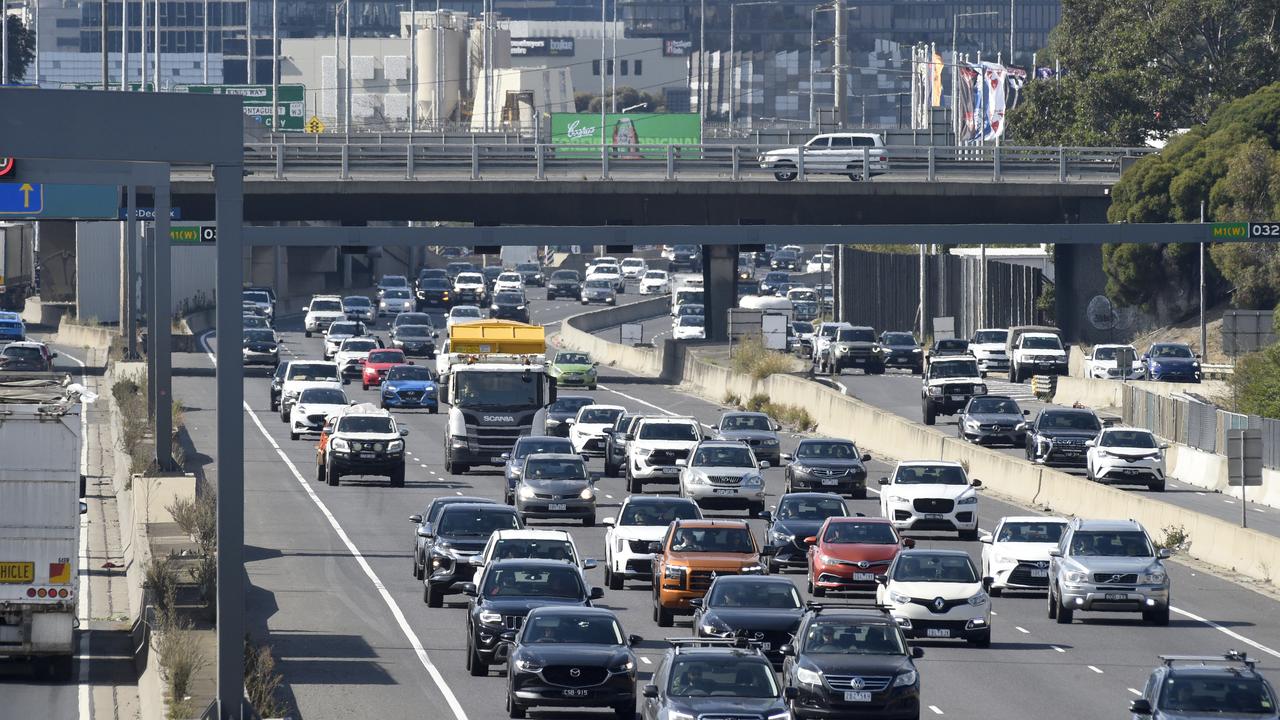
    Australian Treasurer Jim Chalmers has definitively rejected calls to modify the nation’s fuel excise system despite escalating inflationary pressures stemming from the Middle East conflict. The announcement comes as recent economic data reveals persistent inflation challenges, with the Consumer Price Index registering a 3.7% increase in February, remaining above the Reserve Bank’s target range.

    Addressing media concerns, Chalmers acknowledged that the Iran war, which commenced after the February reporting period, would significantly exacerbate inflation trends. “While it’s encouraging that inflation was moderating before the conflict,” Chalmers stated, “we recognize that price pressures were already elevated, and the Middle East situation will now prolong the period of higher inflation.”

    The current fuel excise structure imposes approximately 52 cents per liter on Australian consumers, a fixed rate that remains unchanged regardless of wholesale price fluctuations. Chalmers defended the government’s position by emphasizing alternative strategies: “Our focus remains on ensuring fair pricing at fuel stations, increasing supply availability—particularly in regional areas—and addressing supply chain vulnerabilities through international cooperation and industry engagement.”

    Treasury Department modeling, which previously projected inflation could approach 5% under fuel disruption scenarios, now appears “conservative” according to Chalmers, who has commissioned updated analyses to account for the rapidly evolving geopolitical landscape.

    The political opposition launched sharp criticisms against the government’s economic management. Shadow Treasurer Tim Wilson accused the Labor administration of pursuing an “inflation agenda” that was damaging household budgets through increased mortgage costs, grocery expenses, and energy bills. Wilson demanded greater fiscal discipline, productivity-enhancing policies, and reduced public spending.

    Independent economic analysis from KPMG chief economist Dr. Brendan Rynne suggested that while the February data indicated temporary economic resilience, the Middle East conflict’s impact on oil prices would soon permeate throughout the economy, affecting food, transportation, and construction costs. Rynne projected that subsequent data would provide clearer indications of the Reserve Bank’s interest rate trajectory, noting that the developing oil crisis would likely complicate inflation management efforts in the coming months.

  • IRGC Navy chief says ships need Iran approval to transit Hormuz Strait

    IRGC Navy chief says ships need Iran approval to transit Hormuz Strait

    In a significant maritime policy declaration, Rear Admiral Alireza Tangsiri, Commander of Iran’s Islamic Revolutionary Guard Corps Navy, asserted Tehran’s authority over the strategic Strait of Hormuz on Tuesday. The senior naval official stated that all vessels must obtain formal approval from Iranian authorities before transiting the critical waterway.

    The announcement came alongside revelations that IRGC naval forces had recently intercepted a foreign container vessel identified as the ‘SELEN’ for attempting passage without proper authorization. According to Tangsiri’s social media statement, the ship was prevented from proceeding after failing to comply with established protocols and not securing the necessary transit permit.

    This development underscores Iran’s continued assertion of control over the narrow strait, which serves as a global energy chokepoint through which approximately 21% of the world’s petroleum liquids pass. The statement reinforces Iran’s position that it maintains legitimate regulatory authority over maritime activities in what it considers its territorial waters.

    The enforcement action against the SELEN container ship represents a tangible demonstration of Iran’s willingness to exercise this claimed authority, potentially signaling a more assertive approach to maritime regulation in the region. This policy could have significant implications for international shipping and global energy markets that rely on unimpeded transit through the strategic corridor.

  • Democrats flip Florida  seat that includes Trump’s Mar-a-Lago home

    Democrats flip Florida seat that includes Trump’s Mar-a-Lago home

    In a politically symbolic upset, Democrats have captured a Florida legislative district encompassing former President Donald Trump’s Mar-a-Lago estate. First-time candidate Emily Gregory secured victory over Republican opponent Jon Maples, who had received explicit endorsement from Trump, in the special election for Florida’s District 87 state House seat.

    The outcome carries significant weight as Trump himself had won this specific Palm Beach district by a comfortable 11-point margin during the 2024 presidential election, according to data from The Downballot, a specialized political elections tracker.

    This triumph continues a pattern of Democratic successes in various special elections held throughout Trump’s second term. Political analysts are interpreting Gregory’s win as a potential indicator of shifting momentum and growing Democratic enthusiasm. The result arrives as both parties intensify their campaigning strategies ahead of the crucial midterm elections later this year, suggesting that even traditionally secure Republican strongholds may be contested.

  • US air superiority over Iran hobbled by lower-altitude threats, experts say

    US air superiority over Iran hobbled by lower-altitude threats, experts say

    Military analysts from the Middle East Institute revealed on Tuesday that Iran has effectively neutralized Washington’s aerial dominance through strategic exploitation of low-altitude warfare capabilities, exposing critical gaps in US defense investments. The assessment contradicts Trump administration claims of total victory against Iranian forces.

    Kelly Grieco, senior fellow at the Stimson Center’s “Reimagining US Grand Strategy” program, explained during a virtual panel that while US and Israeli forces excel in traditional high-altitude engagements against integrated air defenses, they remain vulnerable to Iran’s highly mobile low-altitude systems. “Where they’re struggling the most is where they’ve underinvested,” Grieco noted, emphasizing Iran’s calculated shift toward asymmetric warfare tactics.

    The comments contrasted sharply with President Trump’s earlier declaration to reporters that “We are roaming free over Tehran” and that Iran had lost all military capabilities since the conflict began on February 28.

    Experts characterized the conflict as a clash of fundamentally different military doctrines. While US and Israeli forces pursue a “war of destruction” targeting physical assets like missile stockpiles and launchers, Iran wages a “war of disruption” using cost-effective drones that exploit low-altitude airspace to inflict sustained damage on Gulf states.

    The strategic imbalance has proven economically unsustainable for defense systems. Michael O’Hanlon of the Brookings Institution warned that intercepting Iranian drones with high-end missile systems creates unsustainable cost ratios, noting: “We can afford to spend 10 times as much on every defensive intercept as the Iranians spend on every weapon, but we can’t afford to spend 100 or 1,000 times as much.”

    The depletion of interceptor inventories has reached critical levels, with Gulf partners reportedly becoming selective about which projectiles to engage due to shortages. This prompted the State Department to recently notify Congress of emergency munitions sales to UAE, Kuwait, and Jordan, with Secretary of State Marco Rubio waiving standard review requirements citing national security emergencies.

    O’Hanlon estimated that replenishing US stockpiles might require up to $75 billion, while recommending laser-based defense systems for drone interception in the Gulf’s generally clear weather conditions—though noting technological limitations regarding cloud penetration.

    Despite these challenges, analysts maintain confidence in US deterrence capabilities against more conventional threats from nations like China or North Korea. The conflict has evolved into a war of attrition, with Grieco observing that Iran’s strategy focuses on sustaining prolonged disruption rather than achieving daily tactical victories.

  • Saudi Arabia diverged with Turkey and Pakistan on condemning Iran

    Saudi Arabia diverged with Turkey and Pakistan on condemning Iran

    A significant diplomatic divergence has surfaced among key Muslim nations regarding the appropriate response to Iran’s military actions, with Turkey and Pakistan opposing stronger condemnation language sought by Saudi Arabia during a recent ministerial gathering in Riyadh. Multiple sources confirm that both nations resisted employing harsh rhetoric in the joint declaration until Iran’s missiles began flying over Saudi territory during the diplomatic meetings.

    The tension emerged during a conclave of Arab and Muslim foreign ministers where Saudi officials pressed for vigorous censure of Iran’s missile and drone attacks against the kingdom. According to Western officials familiar with the proceedings, the final statement reflected a compromise between competing security interests rather than unified condemnation.

    Turkish Foreign Minister Hakan Fidan reportedly expressed frustration to Iranian counterparts that Tehran should have suspended its attacks while diplomats were actively seeking conflict resolution. This diplomatic friction highlights how the US-Israeli campaign against Iran has created divergent responses among regional powers based on their distinct national security priorities.

    Notably, the three nations—Saudi Arabia, Pakistan, and Turkey—had been negotiating a trilateral security arrangement before the current conflict escalated. Sources indicate that without Turkish and Pakistani participation, the Riyadh declaration would have contained significantly stronger language against Iran.

    The eventually published statement did characterize Iran’s attacks as unjustifiable under any circumstances while reaffirming nations’ rights to self-defense. However, it notably omitted parallel calls for the US and Israel to cease their military operations against the Islamic Republic. The declaration included condemnation of Israel’s aggression against Lebanon only in its final paragraphs, reportedly due to Turkish insistence.

    The conflict has exposed fundamental differences in regional priorities: Saudi Arabia fears Iranian control of the Strait of Hormuz and attacks on energy infrastructure, while Turkey—a NATO member—remains less concerned about the strategic waterway. Pakistan, sharing a border with Iran and hosting the world’s second-largest Shia population, has positioned itself as a potential mediator, with President Shehbaz Sharif offering to host comprehensive settlement talks.

    Meanwhile, Saudi Arabia appears to be strengthening its decades-old security partnership with the United States despite previous reservations about Washington’s reliability as an ally. The kingdom has granted the US access to King Fahd Air Base and faces American pressure to join offensive operations against Iran.

    The evolving situation demonstrates how regional alliances are being tested and reconfigured under the pressure of escalating conflict, with each nation calibrating its response according to distinct geopolitical calculations and security imperatives.

  • New Sky News Pulse shows One Nation rapidly closes gap on Labor in primary vote

    New Sky News Pulse shows One Nation rapidly closes gap on Labor in primary vote

    Recent electoral data indicates a significant realignment within Australian politics, with Pauline Hanson’s One Nation party demonstrating remarkable gains against the governing Labor Party. The latest Sky News Pulse survey reveals One Nation’s national primary vote has reached 27%, trailing Labor by a mere two percentage points (29%)—a margin that signals the minor party’s transition from political fringe to mainstream contender.

    This polling surge follows the South Australian state election, where One Nation secured top-two placements in 32 of 47 electoral districts despite failing to capture any seats. The two-party preferred gap has concurrently narrowed to 53-47, suggesting evolving voter preferences ahead of the next federal election.

    Demographic analysis reveals One Nation’s particular strength among economically vulnerable Australians. The party leads Labor among households earning under $100,000 annually (52-48) and self-identified working-class voters (52-48) on a two-party preferred basis. This support appears driven primarily by economic anxieties, with cost-of-living pressures—especially fuel pricing and availability—dominating voter concerns.

    Public opinion remains divided on policy responses, with 32% of respondents advocating for enhanced onshore fuel reserves, 29% supporting anti-price-gouging measures, and 20% favoring reductions to fuel excise taxes. Concurrently, rising interest rates have intensified financial uncertainty, with 26% of Australians anticipating major budgetary adjustments should the Reserve Bank implement additional rate hikes this year. Among One Nation supporters, financial anxiety is even more pronounced, with 28% expecting significant spending cuts and 25% uncertain about their coping capacity.

    These developments suggest outer suburban and regional constituencies—previously considered Coalition strongholds—may emerge as critical battlegrounds where One Nation could capitalize on economic discontent and shifting political allegiances.

  • Australia ‘unprepared’ for Iran war world order, Liberal MP warns

    Australia ‘unprepared’ for Iran war world order, Liberal MP warns

    A senior Australian opposition figure has issued a stark warning about the nation’s vulnerability in the face of escalating global conflicts, declaring the post-Cold War era definitively over. Liberal MP Andrew Hastie, serving as opposition spokesperson for defence, delivered a compelling address at the Australian National University’s National Security College Conference, emphasizing the urgent need for national reindustrialization.

    Hastie characterized the current global situation as entering a period of ‘unrestrained strategic competition’ directly impacting Australian security and economic stability. The ongoing conflict involving Iran has triggered significant disruptions in global fuel markets, exposing critical vulnerabilities in Australia’s energy supply chain and defense preparedness.

    Recent research from ANU’s National Security College indicates a substantial shift in public perception, with 64% of Australians expressing heightened concerns about national security—a notable 20% increase from earlier this year. Furthermore, 68% of survey respondents believe military engagement with another nation within the next five years is probable.

    The MP criticized Australia’s decades-long trend of outsourcing industrial capacity and reducing domestic fuel refinement capabilities, noting the closure of numerous oil refineries has created dangerous dependencies. Hastie specifically highlighted concerns about solar technology reliance on China and advocated for maintaining multiple energy options, including petroleum-based fuels and coal-to-liquid conversion processes.

    Hastie challenged the government’s strategic focus on the Indo-Pacific region, arguing that this narrowed perspective failed to anticipate global supply chain vulnerabilities exemplified by Iran’s actions in the Strait of Hormuz. The address called for a comprehensive rebuilding of advanced manufacturing capabilities to enhance national resilience, productivity, and real wage growth across all employment sectors.