A high-stakes constitutional and political debate has erupted in Washington over President Donald Trump’s refusal to seek congressional approval to continue U.S. military operations against Iran, as the 60-day deadline mandated by the 1973 War Powers Resolution expired this Friday.
Speaking to reporters ahead of the deadline, Trump insisted that he has no legal requirement to secure congressional authorization for the ongoing conflict, claiming that no prior U.S. president has ever sought such approval for military action. “It’s never been used. It’s never been adhered to. Nobody’s ever asked for it before,” Trump said, adding that past commanders-in-chief have long viewed Congress’s claimed authority to limit presidential war powers as “totally unconstitutional.”
The reality of presidential compliance with the 1973 law, however, is far more nuanced than Trump’s framing. Enacted in the aftermath of the Vietnam War to curb unilateral executive war-making and restrict then-President Richard Nixon’s ability to escalate conflict without legislative backing, the War Powers Resolution requires the president to terminate any U.S. military engagement within 60 days of notifying Congress of its launch, unless lawmakers explicitly vote to extend the operation. This Friday marked exactly 60 days since the Trump administration notified Congress of the start of strikes against Tehran on February 28.
Both Trump and Defense Secretary Pete Hegseth argue that the 60-day clock was paused when the current ceasefire between U.S. and Iranian forces went into effect, triggering ongoing disagreement over whether ceasefire periods count towards the congressionally mandated deadline. Legal experts, however, reject this interpretation. “Nothing in the War Powers Act suggests a pause of hostilities changes the requirements of the law,” said David Schultz, a professor of political science and legal studies at Hamline University in Minnesota. “Just because other presidents haven’t invoked the law doesn’t mean that what Trump is doing here is correct. Here, Trump has basically committed us to combat without any support from Congress. And if we go back to the founding of this country, one of the core fears the framers had was a strong executive committing the nation to war without the support of the elected legislative branch.”
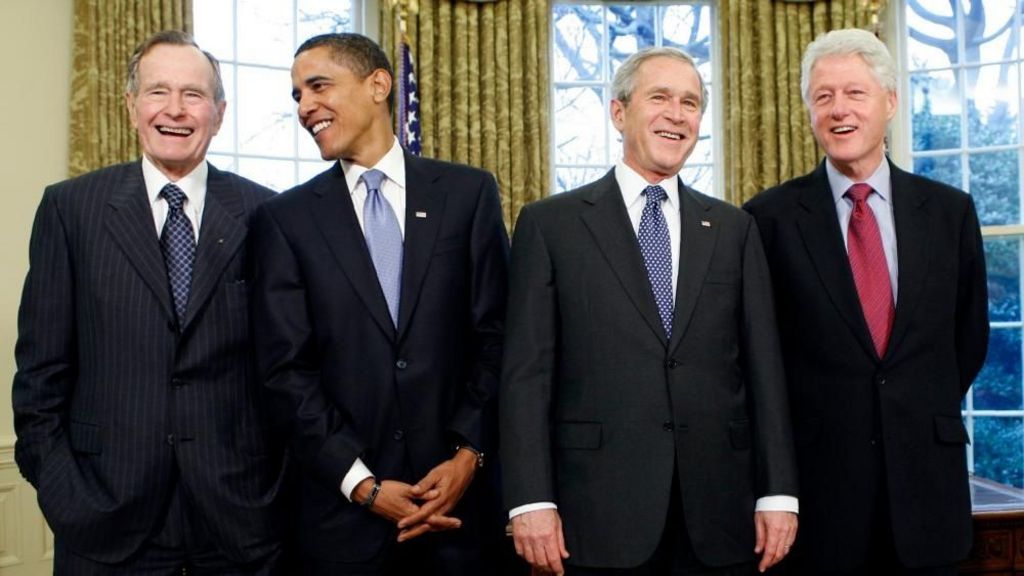
A look at modern U.S. history reveals that multiple of Trump’s predecessors did comply with the War Powers Resolution by securing congressional approval before launching large-scale military operations. In 1983, President Ronald Reagan obtained congressional approval to deploy U.S. Marines to Lebanon within the 60-day window, bringing his campaign into full compliance with the law. President George H.W. Bush sought and received congressional authorization for the 1991 Gulf War ahead of launching Operation Desert Storm, even as he maintained that he did not legally require the approval. His son, George W. Bush, won explicit congressional backing for the 2001 invasion of Afghanistan and the 2003 invasion of Iraq.
That said, Trump is correct that several past administrations did find ways to circumvent the 1973 law. President Bill Clinton allowed the 1999 NATO bombing campaign in Kosovo to run 18 days past the 60-day deadline without seeking congressional authorization, with the entire operation lasting 78 days. President Barack Obama argued that the 2011 U.S. military intervention in Libya did not qualify as “hostilities” under the War Powers Resolution, allowing the campaign to continue for more than seven months without congressional approval.
Trump has pushed back against criticism by noting that the current conflict with Iran has been far shorter in duration than many past U.S. wars, pointing to the 19-year Vietnam War, nearly nine-year Iraq War, six-year World War II, and three-year Korean War as points of comparison. Still, a clear path to ending the conflict remains elusive: Washington and Tehran remain deadlocked over two core issues, control of the strategic Strait of Hormuz and Iran’s nuclear program, leaving Trump’s exit strategy from the conflict unconfirmed. Echoing a line former President Barack Obama used in 2014 about the war in Afghanistan, ending the U.S. engagement in Iran appears far harder than starting it.