分类: politics

  • Former head of UK’s MI6 says Iran has ‘upper hand’ in war with US and Israel

    Former head of UK’s MI6 says Iran has ‘upper hand’ in war with US and Israel

    In a striking assessment of the ongoing Middle Eastern conflict, Sir Alex Younger, former head of Britain’s Secret Intelligence Service (MI6), has declared Iran holds the strategic advantage in its confrontation with the United States and Israel. Speaking on The Economist’s podcast, the intelligence veteran who led MI6 from 2014 to 2020 revealed that Washington fundamentally underestimated the challenge and has ceded operational initiative to Tehran within the past fortnight.

    Younger articulated that the Iranian regime has demonstrated remarkable resilience beyond Western expectations. This durability stems from strategic decisions made as early as June 2023, when Iranian military leadership dispersed their capabilities and delegated weapon deployment authority—a move that has effectively countered the overwhelming air superiority of US-Israeli forces.

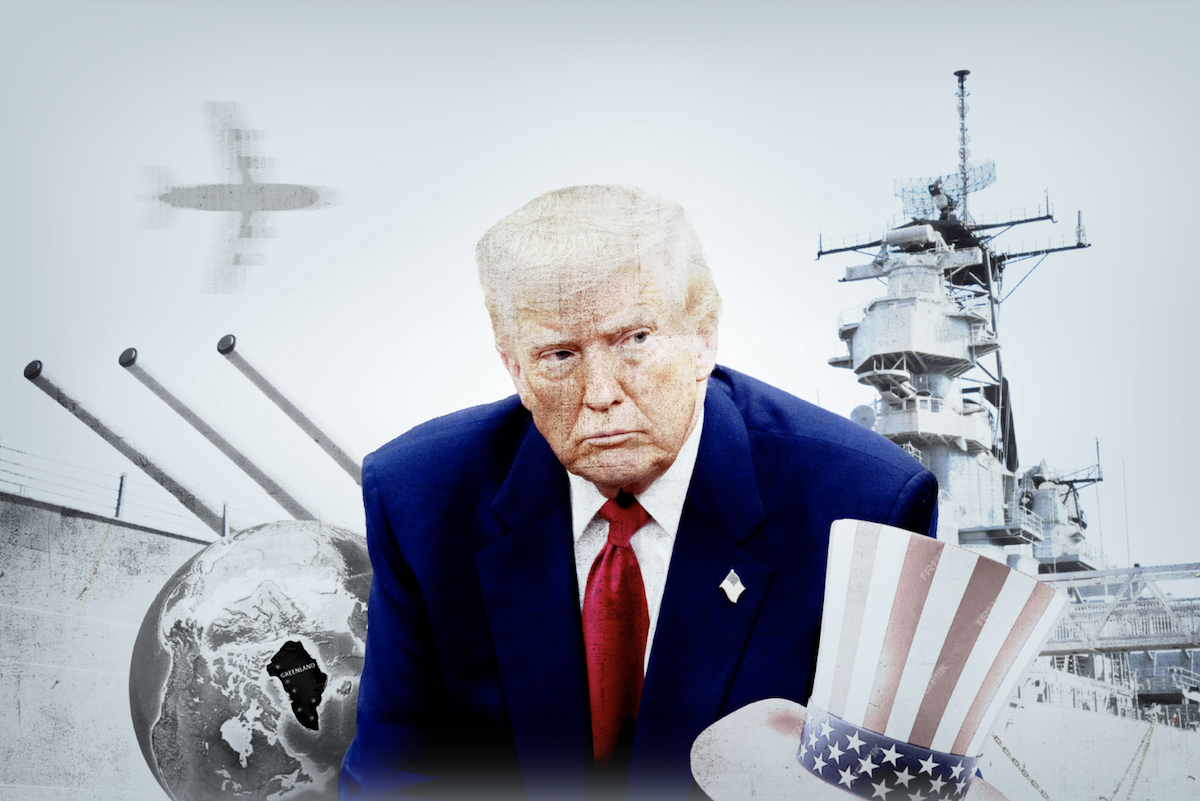
    The former spy chief presented a compelling analysis of the conflicting motivations driving the war. He suggested that statements from former US President Donald Trump have reinforced Tehran’s perception that they are engaged in an existential ‘civilizational war,’ while America pursues a ‘war of choice.’ This fundamental difference in perceived stakes has endowed Iran with significantly greater staying power than their American counterparts.

    The conflict, initiated by US-Israeli strikes on February 28th targeting Iranian facilities and officials including former Supreme Leader Ali Khamenei, has evolved into a complex regional confrontation. Iran has responded with strategic precision, launching retaliatory strikes against Gulf nations hosting US military installations and establishing firm control over the critical Strait of Hormuz—the vital maritime passage for 20% of the world’s oil supply.

    Younger described Iran’s strategy as ‘horizontal escalation,’ effectively globalizing the conflict by threatening global energy supplies and thereby gaining leverage against superior military forces. ‘They’ve played a weak hand well,’ acknowledged the intelligence veteran, noting that control of the strategic waterway has given Iran the ‘whip hand’ in the ongoing confrontation.

    The assessment comes amid revelations that Mossad, Israel’s external intelligence agency, had provided assessments about instigating regime change in Iran that helped convince the US to enter the conflict. However, Younger also highlighted significant intelligence failures, particularly regarding the October 7th, 2023 Hamas-led attacks, which he described as ‘an intelligence failure by any standard’ exacerbated by the Netanyahu government’s dismissal of warnings about Hamas capabilities.

    Despite his professional history confronting the ‘violence and brutality of the IRGC,’ Younger expressed regret at concluding that Iran currently holds the advantage in the devastating conflict that has already claimed thousands of lives through both military engagement and internal suppression of protests.

  • Confusion reigns over truce talks

    Confusion reigns over truce talks

    A significant diplomatic rift has emerged between the United States and Iran, casting serious doubt on the viability of proposed ceasefire negotiations. According to multiple media reports from March 25, the United States claimed to have presented Tehran with a comprehensive 15-point plan aimed at establishing a month-long truce. However, these assertions were promptly dismissed by Iranian officials, creating a cloud of uncertainty around the entire diplomatic process.

    A spokesperson representing Iran’s Khatam al-Anbia Central Headquarters categorically denied any knowledge of such a proposal, characterizing Washington’s position as an attempt to rebrand military setbacks as diplomatic achievements. Through statements published by Tasnim News Agency, the official mocked American claims, questioning whether the US had reached such a state of internal conflict that it was effectively “negotiating with itself.”

    The Iranian spokesperson emphasized Tehran’s unwavering position against engaging with what they termed an “aggressor,” stating: “Someone like us will not come to terms with someone like you. Not now, and not ever.” The official further warned that regional stability would remain elusive until Washington acknowledges that security in the area is fundamentally guaranteed by the strength of Iran’s armed forces.

    This diplomatic confusion extends beyond bilateral relations, affecting broader international perspectives. Al Jazeera reported considerable uncertainty within Iran regarding which entities the US was actually negotiating with, despite President Trump’s public assertions of “progress” in talks.

    International observers have highlighted structural problems underlying these negotiations. Abdul Wahed Jalal Nori, a Malaysian academic and author specializing in regional conflicts, identified the absence of a clearly defined Iranian negotiating channel as a fundamental obstacle. “Without clarity on counterparts,” Nori explained, “even a well-designed framework risks stalling at the implementation stage.”

    The situation has drawn concerned responses from global leaders. German President Frank-Walter Steinmeier condemned the US initiation of hostilities against Iran as “a politically disastrous mistake,” while Pakistani Prime Minister Shehbaz Sharif offered to host comprehensive peace talks.

    Regional stakeholders have also voiced their concerns. Omani Foreign Minister Badr Albusaidi emphasized the strong shared interest between Washington and Tehran in ending the conflict immediately. Meanwhile, Qatar’s former prime minister Hamad bin Jassim bin Jaber Al Thani asserted that Gulf Cooperation Council states must have a seat at any negotiating table where regional futures are being determined, particularly emphasizing the strategic importance of the Strait of Hormuz as an international passageway that must remain unconditionally open.

    As Nori concluded, any durable resolution will likely require a comprehensive regional security architecture rather than limited bilateral understandings, noting that initial assumptions about easily controlling the conflict have given way to unanticipated consequences.

  • Trump accused of showing classified map to passengers on private flight

    Trump accused of showing classified map to passengers on private flight

    A newly disclosed congressional memo has revealed explosive allegations regarding former President Donald Trump’s handling of highly classified materials during his post-presidency period. According to the document provided to Congress, Trump reportedly displayed a classified map to passengers aboard a private aircraft in 2022 and retained another record of such sensitivity that access was restricted to merely six government officials nationwide.

    Representative Jamie Raskin, the leading Democrat on the House Judiciary Committee, characterized the Justice Department memo as ‘damning’ evidence of Trump’s misconduct with classified documents. The 2023 document, originally prepared for Special Counsel Jack Smith’s investigation, further contends that Trump deliberately withheld certain records to advance his personal business interests.

    The memo specifically identifies a classified map that prosecutors believe Trump showed to individuals onboard a private flight, with Susan Wiles—currently serving as Trump’s chief of staff—reportedly among the passengers. These allegations formed part of Smith’s federal prosecution regarding Trump’s retention of classified materials after leaving office.

    The White House has vehemently rejected these claims, with spokesperson Abigail Jackson stating that Raskin possesses ‘zero credibility’ and asserting that President Trump ‘did nothing wrong.’ The Justice Department similarly dismissed the memo’s credibility while not disputing the accuracy of Raskin’s quotations from the document.

    The legal context surrounding these allegations has evolved significantly. A federal judge previously dismissed the case against Trump due to concerns about the propriety of Smith’s appointment. Following Trump’s re-election in 2024, Smith dropped his appeal in accordance with longstanding Justice Department policy against prosecuting sitting presidents.

    The Republican-controlled House Judiciary Committee has launched its own investigation into Smith’s prosecution of Trump, examining what they characterize as an ‘unprecedented lawfare campaign’ against the former president. The full memo remains confidential, with only excerpts being released to congressional oversight bodies.

  • Italy’s tourism minister resigns under pressure from Meloni after referendum defeat

    Italy’s tourism minister resigns under pressure from Meloni after referendum defeat

    ROME — Italy’s political landscape experienced significant tremors on Wednesday as Tourism Minister Daniela Santanchè tendered her resignation amidst mounting pressure from Premier Giorgia Meloni. This development follows the government’s stinging defeat in a crucial judicial reform referendum widely interpreted as a de facto confidence vote on Meloni’s leadership.

    The minister’s departure represents the third high-profile resignation this week after two justice ministry officials stepped down. Santanchè, a prominent figure within Meloni’s Brothers of Italy party, had been embroiled in multiple legal proceedings including allegations of false accounting and fraud, though she has consistently maintained her innocence.

    In a carefully worded resignation statement addressed to Meloni, Santanchè expressed “a degree of bitterness” about her departure while pledging to “obey” the premier’s wishes. She notably resisted being made “a scapegoat” for the referendum defeat, highlighting that the measure had actually passed in her home region of Lombardy.

    The rejected judicial reforms had been championed by Meloni’s coalition as essential for modernizing Italy’s notoriously slow and bureaucratic judicial system. However, opposition parties, legal associations, and civil society groups formed an unusual alliance, arguing the measures would dangerously concentrate power within the executive branch and undermine institutional checks and balances.

    This political setback raises substantive questions about the stability and cohesion of Italy’s 3½-year-old right-wing government, suggesting potential vulnerabilities in Meloni’s previously firm grip on power.

  • US says Iran talks continue, will ‘unleash hell’ if no deal

    US says Iran talks continue, will ‘unleash hell’ if no deal

    The White House has affirmed that diplomatic channels with Iran remain active despite Tehran’s purported rejection of a proposed U.S. peace framework, while simultaneously issuing stark warnings of military escalation should negotiations ultimately fail.

    White House Press Secretary Karoline Leavitt addressed reporters Wednesday, countering Iranian state media claims that Tehran had formally dismissed a 15-point American proposal to conclude the ongoing Middle East conflict. While acknowledging ‘elements of truth’ in media reports regarding the proposal’s contents, Leavitt characterized some details as ‘not entirely factual’ without specifying which elements were inaccurate.

    The proposed agreement, according to U.S. and Israeli media sources, would require Iran to completely abandon its nuclear development capabilities and dismantle its ballistic missile arsenal. These demands come amid significant leadership uncertainty within Iran following the assassination of Supreme Leader Ali Khamenei, with his designated successor Mojtaba Khamenei remaining absent from public view.

    Leavitt confirmed that discussions continue through Iranian parliamentary speaker Mohammad Bagher Ghalibaf, a prominent non-clerical figure who has emerged as a key interlocutor. The press secretary declined to verify reports that high-level talks involving Vice President JD Vance were scheduled to occur in Pakistan, which has positioned itself as a mediating party in the conflict.

    Despite maintaining diplomatic outreach, the administration delivered unequivocal warnings regarding military consequences. Leavitt stated that President Trump stands prepared to ‘unleash hell’ if Iran fails to recognize what the White House characterizes as their ‘military defeat.’ The comments coincide with substantial U.S. troop movements to the Gulf region, including thousands of airborne personnel and additional marine deployments.

    The administration maintains its previously stated timeline of four to six weeks for major combat operations, with Leavitt noting that President Trump has rescheduled his meeting with Chinese leader Xi Jinping for mid-May—approximately six weeks from the conflict’s initiation—underscoring the expected duration of military engagements.

  • Trump will travel to Beijing for rescheduled China trip May 14-15, after delay due to Iran war

    Trump will travel to Beijing for rescheduled China trip May 14-15, after delay due to Iran war

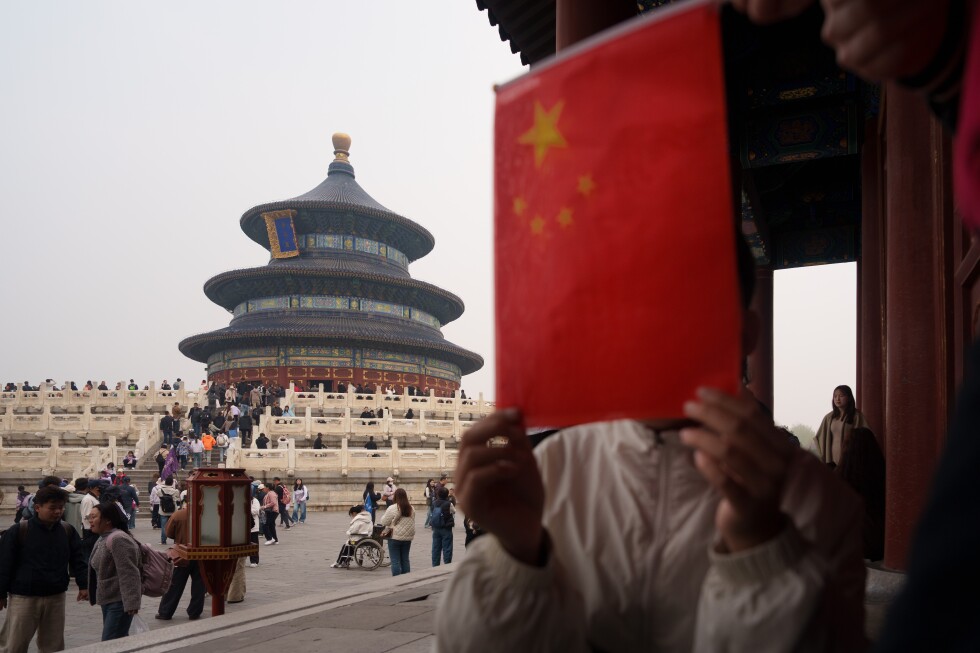
    WASHINGTON — The White House confirmed on Wednesday that President Donald Trump will visit Beijing for a highly anticipated summit with Chinese President Xi Jinping on May 14-15. This rescheduled meeting comes despite continuing military operations in Iran, where U.S. and Israeli forces launched attacks against Iranian targets on February 28.

    The originally planned China trip, months in preparation, was postponed as Trump focused on managing the escalating Middle Eastern conflict. The administration has been pressing Tehran to accept a ceasefire proposal while simultaneously urging China and other global powers to deploy naval forces to secure the Strait of Hormuz—a critical oil transit corridor that has seen significant disruption due to Iranian targeting of energy infrastructure.

    White House Press Secretary Karoline Leavitt struck an optimistic note regarding potential conflict resolution timing. When questioned whether the rescheduled summit suggested imminent de-escalation in Iran, Leavitt responded: ‘We’ve always estimated four to six weeks. So you could do the math on that.’

    Trump previously indicated during a meeting with Irish Prime Minister Micheál Martin that he would be ‘resetting’ his China visit for approximately five to six weeks later than originally planned. The President asserted that Chinese leadership had accommodated the scheduling change, noting: ‘We’re working with China—they were fine with it. I look forward to seeing President Xi. He looks forward to seeing me, I think.’

    The upcoming summit represents a crucial opportunity to strengthen the fragile trade understanding between the world’s two largest economies. However, diplomatic efforts have become increasingly complex as the administration seeks both economic cooperation with Beijing and military support for Middle Eastern security operations, despite Trump’s claim that the U.S. doesn’t require assistance from allies who previously declined such requests.

  • Iran ready to seize Bahrain and UAE coastlines if US ‘makes a mistake’, Iranian expert warns

    Iran ready to seize Bahrain and UAE coastlines if US ‘makes a mistake’, Iranian expert warns

    A prominent Iranian security analyst has issued a stark warning during a televised interview on state broadcaster IRIB, declaring Tehran’s military readiness to capture the coastlines of Bahrain and the United Arab Emirates. National security expert Morteza Simiari asserted that Iranian armed forces stand prepared to “fundamentally alter the regional landscape” should the United States commit any strategic missteps in the region.

    Simiari explicitly stated that “entering the coasts of the UAE and Bahrain is on the agenda,” framing the potential action as a retaliatory measure against perceived US provocations. These comments emerge amidst escalating tensions following UAE Foreign Minister Abdullah bin Zayed’s recent social media post denouncing Iranian attacks and vowing that his nation “will never be blackmailed by terrorists.”

    The diplomatic exchange originated from a discourse between former French Ambassador to the US Gerard Araud and UAE presidential adviser Anwar Gargash. Gargash had emphasized that “blatant Iranian aggression against Arab Gulf states carries deep geopolitical repercussions,” noting that this threat has become central to Gulf strategic thinking and necessitated strengthened security partnerships with Washington.

    Araud countered that such alignment deepens dependence on a nation that has previously led Gulf states into “disastrous conflict without caring about your interests.”

    Recent military data reveals the UAE has intercepted 338 ballistic missiles and 1,740 drones since hostilities began, with Iran conducting retaliatory strikes targeting US bases and energy infrastructure following US-Israeli attacks on February 28.

    Despite initially cautioning against military escalation, regional powers appear to be shifting positions. Saudi Arabia has reportedly made King Fahd Air Base available to American forces, while UAE officials have communicated to Washington their preparedness for a prolonged conflict potentially lasting up to nine months, according to diplomatic sources.

  • ‘Men need to be perp-walked’ after Epstein files release, Massie tells BBC

    ‘Men need to be perp-walked’ after Epstein files release, Massie tells BBC

    Republican Congressman Thomas Massie has expressed profound dissatisfaction with the limited disclosure of Jeffrey Epstein-related documents, declaring that true justice remains elusive until survivors feel vindicated. In a candid interview with BBC Newsnight, the West Virginia representative emphasized that the American justice system has failed until powerful accomplices face public accountability through criminal proceedings.

    The controversy centers on the Department of Justice’s implementation of the Epstein Documents Release Act—legislation co-authored by Massie and signed into law by President Trump. While the DOJ maintains it has released all non-exempt materials, Massie alleges improper redactions that exceed privacy protections for victims. The congressman, who has reviewed unredacted versions alongside fellow lawmakers, claims critical evidence remains concealed.

    This transatlantic scandal has taken dramatic turns with recent arrests in the United Kingdom. Andrew Mountbatten-Windsor and former US Ambassador Lord Peter Mandelson were detained on suspicion of misconduct in public office regarding their Epstein connections, though both were subsequently released pending investigation. Mountbatten-Windsor continues to deny any wrongdoing, while Mandelson maintains his actions weren’t criminal or for personal gain.

    Massie highlighted the ironic reversal of justice systems, noting that Britain—the nation from which America sought independence to establish better justice—is now demonstrating more robust accountability. He confirmed that unredacted documents should be shared with London’s Metropolitan Police to assist their ongoing investigations involving Epstein victims.

    Regarding potential testimony from high-profile figures, Massie suggested Mountbatten-Windsor could be compelled to testify if cases emerge in the United States, mirroring Britain’s requests for American cooperation.

    The Department of Justice, represented by Deputy Attorney General Todd Blanche, defends its handling of the release, citing three million items withheld due to medical privacy concerns, graphic abuse depictions, and ongoing investigation protections. Officials explicitly denied withholding documents based on embarrassment, reputational harm, or political sensitivity.

    Massie specifically seeks transparency regarding Epstein’s controversial 2008 plea deal, which many consider excessively lenient. The congressman’s comments followed a powerful Newsnight segment featuring five Epstein survivors sharing their traumatic experiences—from Epstein’s private island to his New Mexico ranch—highlighting the devastating power imbalance between the financier and his young victims.

  • UK bans crypto donations to political parties in bid to curb foreign influence

    UK bans crypto donations to political parties in bid to curb foreign influence

    LONDON — In a decisive move to safeguard electoral integrity, British Prime Minister Keir Starmer declared on Wednesday that political parties would be prohibited from accepting donations in cryptocurrencies. The announcement came during the weekly Prime Minister’s Questions session, where Starmer emphasized that illicit finance represents a “stark” threat to the nation’s democratic foundations.

    The new policy introduces an immediate moratorium on cryptocurrency contributions to political organizations and establishes an annual cap of £100,000 (approximately $134,000) for donations from British voters residing overseas. These measures are designed to prevent foreign actors from exploiting financial loopholes to influence UK politics.

    The ban presents particular challenges for Reform UK, the hard-right party led by Nigel Farage, which has been among the few political groups openly accepting digital currency donations. According to Electoral Commission data, the party received £12 million in the past year from Christopher Harborne, a British businessman based in Thailand.

    Reform UK deputy leader Richard Tice criticized the government’s decision, claiming it aimed to “stop the incredible progress of Reform.” Despite holding only eight seats in the 650-member House of Commons, Reform UK has consistently outperformed both the governing Labour Party and opposition Conservatives in recent opinion polls.

    The cryptocurrency ban follows a comprehensive review led by former senior civil servant Philip Rycroft, who expressed concerns that untraceable digital currencies could serve as conduits for foreign money entering the British political system. Rycroft’s report, commissioned in December after several high-profile incidents including the imprisonment of former Reform UK politician Nathan Gill for accepting bribes to make pro-Russian statements, recommended temporary restrictions until proper regulatory frameworks could be established.

    The proposed changes, which require parliamentary approval but will be backdated to take effect immediately, represent the latest in a series of democratic reforms introduced by Starmer’s center-left government. Previous measures include tightened corporate donation rules and proposals to lower the voting age from 18 to 16.

  • South Africa’s police chief to appear in court over controversial health contract

    South Africa’s police chief to appear in court over controversial health contract

    South Africa’s National Police Commissioner General Fannie Masemola has been formally summoned to appear in court on April 21st regarding his alleged involvement in a controversial health services contract worth $21 million. The 62-year-old law enforcement chief received official notification to present himself before judicial authorities, though specific charges remain undisclosed by investigating bodies.

    This development marks a significant moment in South Africa’s ongoing anti-corruption efforts, as Masemola becomes the third consecutive police commissioner to face criminal investigation while holding office. The controversial tender was awarded in 2024 to Medicare24 Tshwane District, a company owned by businessman Vusimuzi ‘Cat’ Matlala, with the intended purpose of providing healthcare services to police personnel.

    The contract has since been terminated following corruption allegations, resulting in formal charges against twelve senior police officers connected to the procurement process. Despite the serious nature of the allegations, President Cyril Ramaphosa has remained measured in his response, stating only that he will address the matter ‘in accordance with the law’ without indicating whether suspension proceedings might be initiated.

    Police spokesperson Brigadier Athlenda Mathe confirmed that Commissioner Masemola has acknowledged the charges and pledged his full cooperation with all legal processes. The case represents another chapter in South Africa’s continued struggle with high-level corruption allegations within law enforcement institutions, drawing significant public attention to the integrity of the country’s criminal justice leadership.