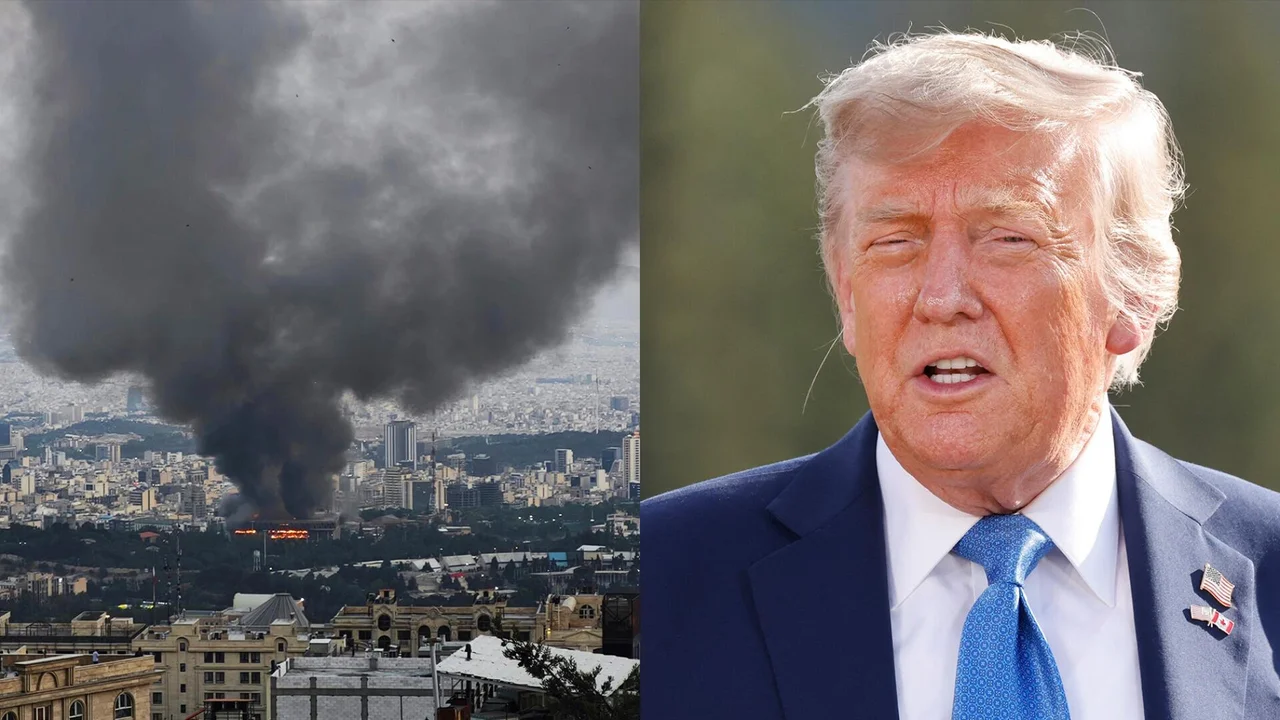
A new joint poll conducted by The Washington Post, ABC News and Ipsos, released Friday, has revealed that more than 60 percent of U.S. adults now view President Donald Trump’s military conflict in Iran as a fundamental mistake. What makes this shift in public opinion extraordinary is how rapidly it has occurred: in just two months since the war began, the conflict has already hit levels of public disapproval that took previous, widely discredited U.S. wars years to reach.
CNN senior political analyst Aaron Blake notes that polling data stretching back decades puts this rapid backlash in stark context. It took more than three years of the Iraq War for a 60-percent majority of Americans to label the conflict a mistake, while the Vietnam War required six years of continuous fighting and tens of thousands of American troop deaths to cross the same threshold.
To understand how unprecedented this speed of disapproval is, it is necessary to look back at public opinion at the start of past major conflicts. When the U.S. invaded Iraq in 2003 under President George W. Bush, even amid growing grassroots protest, 81 percent of voters backed the invasion in April 2003, with just 16 percent calling it a mistake. It was only as the occupation devolved into a years-long deadly quagmire, and it became clear the Bush administration’s justifications for the war – claims of weapons of mass destruction – were deliberate falsehoods, that public support eroded steadily, finally hitting 64 percent opposition by 2007.
Vietnam never commanded the overwhelming early backing that Iraq saw, but even so, 60 percent of Americans supported President Lyndon Johnson’s 1965 decision to deploy direct U.S. military intervention, with just 24 percent calling the move a mistake. While widespread anti-war protests became a defining cultural moment of the conflict, public opinion did not solidify against the war until 1968, and it was not until 1971 – after more than 50,000 U.S. troops had been killed in action – that a 61 percent majority called the war a mistake.
Unlike both Iraq and Vietnam, Trump’s Iran war has never enjoyed even a fleeting period of broad public consensus. Just days after the launch of the campaign, branded “Operation Epic Fury” by the Trump administration, a Reuters/Ipsos poll found only 27 percent of Americans approved of the opening strikes that killed 555 Iranians, including Supreme Leader Ayatollah Ali Khamenei and multiple senior Iranian officials. Even at that early stage, 43 percent already disapproved of the action, a gap far wider than that seen at the start of any prior major U.S. conflict, with the remaining 30 percent of respondents still undecided.
Over the following two months, that undecided bloc has swung firmly against the conflict. Multiple damaging developments have fueled the shift: public confirmation that a U.S. double-tap airstrike on an Iranian school killed at least 155 people, 120 of them children; Iranian retaliation that blocked oil shipments through the Strait of Hormuz, pushing U.S. gasoline prices soaring above $4 per gallon; and increasingly aggressive rhetoric from Trump that critics have labeled an overtly genocidal posture toward Iran, which has made any peaceful negotiated resolution increasingly remote even under the current fragile ceasefire.
Friday’s poll confirms that while the war retains a core loyal base of 36 percent of Americans who still view it as the right decision – nearly all of whom identify as Republican – this base is heavily outnumbered by the 61 percent who now call the conflict a mistake.
Majorities of respondents across all demographic groups also linked the war to a range of serious national risks: 61 percent said it has increased the threat of terrorist attacks targeting Americans, 60 percent said it raises the risk of the U.S. economy tipping into recession, and 56 percent said it has damaged the United States’ relationships with its key global allies.
A deeper breakdown of polling data exposes a particularly troubling trend for the Trump administration: the war has almost no support outside the president’s most dedicated base. 91 percent of self-identified Democrats now label the conflict a mistake, and 71 percent of independent voters – a large majority of whom were undecided when the war began – have also turned against it, leaving just 24 percent of independents in support.
Even within the Republican Party, the war has created a sharp divide. 86 percent of self-identified MAGA Republicans still back the conflict, but moderate non-MAGA Republicans are deeply split: 50 percent still call the war the right decision, while 49 percent now view it as a mistake. Many of these Republican skeptics were rattled by Trump’s threatening remark last month that “a whole civilization will die tonight” if Iran refused to accept a negotiating deal on his terms. A majority of all Republicans, 53 percent, said they viewed that incendiary threat negatively.
It remains unclear whether even Trump’s most loyal supporters will continue backing the war if the conflict drags on, and recent public remarks from top administration officials suggest the White House remains in denial about the scale of public opposition. On Thursday, Defense Secretary Pete Hegseth appeared before Congress, where Senator Kirsten Gillibrand, a New York Democrat, pressed him on the administration’s failure to build broad public support for the conflict, noting that three out of five Americans now oppose it. Hegseth rejected the premise outright, claiming “I believe we do have the support of the American people.” He pushed back on critics by noting the conflict is only two months old, arguing that calls for withdrawal are premature – a curious framing, given Trump himself initially claimed the war would last only four to five weeks.
During his testimony, Hegseth compared the Iran conflict to past long-running U.S. wars, arguing “Iraq took how many years? Afghanistan took how many years? And they were nebulous missions that people went along with. This is different.” That claim of a clear mission, however, falls flat: the Trump administration has offered a constantly shifting set of justifications for the war, ranging from regime change in Tehran, defending Iranian anti-government protesters, destroying Iran’s nuclear program, eliminating its ballistic missile arsenal, seizing Iranian oil fields, defending Israel, and reopening the Strait of Hormuz.