分类: politics

  • Djibouti holds presidential election with longtime ruler favored for a sixth term

    Djibouti holds presidential election with longtime ruler favored for a sixth term

    In the tiny Horn of Africa nation of Djibouti, presidential polling got underway on Friday, setting the stage for what analysts widely predict will be another term in office for the country’s 26-year incumbent leader Ismaïl Omar Guelleh. The 78-year-old Guelleh, who has governed Djibouti’s population of roughly 1 million since 1999, stands poised to claim a sixth consecutive term after national legislators eliminated the country’s previous presidential age cap last year.

    Guelleh’s path to reelection has been largely unobstructed. In the 2021 presidential contest, he secured nearly 99% of the popular vote, and this year he faces only one challenger: Mohamed Farah Samatar, a one-time member of Guelleh’s ruling party. Political analysts widely characterize the race as lacking meaningful competitive tension, a pattern that has defined Djibouti’s electoral politics for years. Opposition blocs have regularly boycotted national elections, citing systemic restrictions on political organizing and civil liberties. Critics maintain that the country’s political system is tightly controlled by the ruling establishment, while government officials counter that centralized governance has delivered consistent stability to a region plagued by conflict and unrest.

    Guelleh’s rise to the presidency followed the retirement of his uncle, founding leader Hassan Gouled Aptidon, cementing a decades-long family-led political order that remains the backbone of Djibouti’s public life today.

    Beyond its internal politics, Djibouti holds outsized global strategic importance, thanks to its location along the critical shipping corridor connecting the Red Sea and the Gulf of Aden. It currently hosts foreign military bases for major global powers including the United States, China, France, and Japan. Economic activity in the country relies heavily on two core revenue streams: income from hosting these military installations, and port service fees for landlocked neighboring Ethiopia, which depends on Djibouti’s infrastructure for nearly all its international trade.

    Yet this narrow economic model leaves Djibouti uniquely vulnerable to external disruptions. Overreliance on Ethiopia’s port usage means any economic or political volatility in Addis Ababa directly impacts Djibouti’s national income. The ongoing crisis of shipping insecurity in the Red Sea has further amplified these risks, while growing great power geopolitical competition in the region and high levels of national debt, much of it owed to China, have added long-term uncertainty to the country’s outlook.

    The election was monitored by regional observer delegations from the African Union and the Intergovernmental Authority on Development, the Horn of Africa’s leading regional bloc. Speaking to the Associated Press, Mohamed Husein Gaas, a senior analyst with the Raad Peace Research Institute, framed the elimination of presidential age limits as a move rooted in preserving the status quo rather than expanding democratic contestation. Gaas noted that while the change has sparked widespread concern about democratic backsliding in Djibouti, foreign powers are almost certain to prioritize political stability over democratic progress, given the country’s non-negotiable role in securing Red Sea trade routes and regional security at a time of escalating Middle East tensions.

  • Zelenskyy says Ukrainian forces shot down Shahed drones in Middle Eastern countries during Iran war

    Zelenskyy says Ukrainian forces shot down Shahed drones in Middle Eastern countries during Iran war

    In a groundbreaking public disclosure that illuminates Ukraine’s expanding global defense partnerships, President Volodymyr Zelenskyy has confirmed that Ukrainian military forces have shot down Iranian-designed Shahed drones during active operations across multiple unspecified Middle Eastern countries. The mission, Zelenskyy explained, is rooted in shared experience: Kyiv is helping regional partners counter the exact same unmanned weapons that Russia has relentlessly deployed against Ukrainian civilian and energy infrastructure since the start of its full-scale invasion.

    Zelenskyy first shared details of the operations with reporters on Wednesday, with a media embargo holding the announcement until Friday. He emphasized that these were not routine training exercises or simulated drills, but live defensive action. Ukrainian personnel used domestically produced interceptor drones, a system that has already been battle-tested in defending Ukrainian airspace against the Shahed drones Russia launches on a near-daily basis.

    “This was not about a training mission or exercises, but about support in building a modern air defense system that can actually work,” Zelenskyy stated. The operations took place ahead of the tentative ceasefire reached this week between Iran, the United States and Israel, the Ukrainian leader confirmed. While he declined to name the specific host countries involved, Zelenskyy noted that Ukrainian personnel operated across several nations to reinforce local air defense capabilities. He had previously revealed that 228 Ukrainian defense experts were already deployed to the Middle East region.

    In exchange for this defensive support, Zelenskyy said Ukraine receives tangible benefits that strengthen its own war effort: weapons systems designed to protect critical energy infrastructure, supplies of crude oil and diesel fuel, and in some arrangements, direct financial support. The agreements, he argued, do more than just fill immediate gaps: they shore up Ukraine’s long-term energy stability and lay the groundwork for Kyiv to expand its role as a formal exporter of defense technology and expertise to global partners.

    “We are helping strengthen their security in exchange for contributions to our country’s resilience,” Zelenskyy said. “This is far more than simply receiving money.”

    The public confirmation of Ukraine’s Middle East operations comes at a delicate moment, as widespread concerns have grown that escalating conflict in the region will draw international focus and divert critical Western military aid away from Ukraine, particularly the air defense interceptors Kyiv relies on to fend off Russian drone and missile strikes. But Zelenskyy sought to ease these worries, noting that international support for Ukraine’s air defense remains steady. He confirmed that a new shipment of missiles for U.S.-provided Patriot air defense systems arrived in Ukraine in recent days, and that Kyiv continues to work closely with all allies to maintain robust air defense coverage across the country.

    In additional remarks, Zelenskyy revealed that he has extended an open invitation to U.S. envoys Steve Witkoff and Jared Kushner to visit Kyiv, an offer extended before the recent Middle East ceasefire took hold. “I told them: ‘Come to us, and then go to Moscow. Let’s hold a trilateral meeting in this format,’” Zelenskyy recounted. He said the pair were receptive to the idea, but ultimately chose not to travel far from U.S. President Donald Trump at this time. It remains unclear whether the visit will still take place, or if any potential talks would be moved to a neutral third country, he added.

    On the diplomatic front, Zelenskyy said Ukraine is actively finalizing security guarantee proposals to present to the United States, and holds out hope that diplomatic progress can be made. To date, U.S.-led talks have failed to advance on core issues, with Washington’s policy focus having shifted to the Middle East even as Russian and Ukrainian forces remain locked in intense positional combat along the roughly 1,250-kilometer front line stretching across eastern and southern Ukraine.

    In a separate policy note, Zelenskyy called on Western allies to fully reimpose all sanctions on Russian crude oil, warning that any loosening of restrictions would allow Moscow to continue funding its war machine and offload critical energy assets. He pointed out that Russia has already seen a major boost in energy revenue, driven by spiking global oil prices triggered by recent damage to Gulf energy infrastructure and Iran’s temporary blockage of the Strait of Hormuz, the world’s most critical chokepoint for global oil shipments.

  • Taiwan’s opposition leader meets China’s Xi Jinping as both sides call for peace

    Taiwan’s opposition leader meets China’s Xi Jinping as both sides call for peace

    In a landmark event that marks the first high-level encounter between China’s ruling Communist Party and Taiwan’s main opposition Kuomintang (KMT) in more than a decade, Kuomintang chairperson Cheng Li-wun held a formal meeting with Chinese President Xi Jinping at Beijing’s Great Hall of the People on Friday. Both leaders used the historic gathering to issue joint commitments to upholding cross-strait peace across the Taiwan Strait and advancing the goal of eventual unification between mainland China and the self-governing island that Beijing claims as its sovereign territory.

    The meeting comes amid escalating cross-strait tensions in recent years. Beijing has ramped up military pressure on Taiwan, conducting regular large-scale military exercises that send warships and fighter jets into areas adjacent to the island, while steadily poaching the small number of diplomatic allies that still recognize Taipei’s sovereignty. Beijing has never renounced the option of using military force to bring Taiwan under its control, a stance that has fueled widespread international concern over potential conflict in the strategically vital region.

    Opening the meeting to a round of applause from delegates from both sides, President Xi welcomed Cheng and her KMT delegation, emphasizing the unshakable trajectory of closer ties between people on both sides of the Taiwan Strait. “The larger trend of compatriots on both sides of the strait walking nearer and nearer together will not change. This is a historical necessity. We have full confidence in this,” Xi stated.

    Cheng, who framed her five-day trip to mainland China as a “journey for peace” long before her arrival, struck a conciliatory tone in her remarks. “Although people on both sides of the Taiwan Strait live under different systems, we will respect each other and move towards each other,” she said, adding that the KMT’s core goal is to “seek systemic solutions to prevent and avoid war” across the Taiwan Strait.

    Cheng began her mainland visit on Tuesday, stopping first in Shanghai and Nanjing before traveling to the Chinese capital for Friday’s meeting. A longstanding advocate for peaceful cross-strait engagement, she has openly opposed large increases to Taiwan’s defense budget, and her KMT party currently holds enough legislative sway to block incumbent Taiwanese President Lai Ching-te’s proposed special defense allocation. The budget would fund major arms purchases, including the development of the “Taiwan Dome,” a domestically built air defense interception system.

    The historical context of cross-strait relations stretches back to the end of the Chinese Civil War in 1949. When Mao Zedong’s Communist Party seized control of mainland China, defeated KMT forces retreated across the Taiwan Strait to the island, where they established a separate governing administration that has remained in place ever since.

    A core point of agreement reaffirmed by both leaders at Friday’s meeting was commitment to the 1992 Consensus, the informal tacit agreement that underpinned decades of cross-strait engagement. While the agreement has never been formalized in a signed official document, both sides agree that it upholds the core principle that Taiwan and mainland China are part of a single “one China.” The two sides have long differed on interpretation, however: the KMT has long held that each side is free to interpret what “one China” means individually, a position Beijing has never formally recognized.

    In closing her remarks, Cheng emphasized that both parties would work together to ensure the Taiwan Strait is transformed from a potential conflict flashpoint into a region of lasting peace, and would prevent the island from becoming a geopolitical pawn manipulated by outside powers.

    This report was compiled with contributions from correspondent Wu reporting from Bangkok, Thailand.

  • In Pakistan’s mediation to end Mideast war, China may hold the key

    In Pakistan’s mediation to end Mideast war, China may hold the key

    As diplomatic envoys from the United States and Iran prepare to convene in Islamabad for high-stakes negotiations aimed at ending the ongoing Middle East conflict, official insiders and regional analysts agree: China’s behind-the-scenes influence cleared the path for the talks, and it will remain indispensable to securing a durable, long-term truce.

    Pakistan has earned international acclaim – and no small amount of surprise – for pulling off a last-minute temporary ceasefire between the warring parties, an achievement that looked all but impossible as late as Tuesday night. But senior Pakistani officials emphasize that China’s quieter, less publicized contribution was just as critical to securing the preliminary deal as Islamabad’s own frontline efforts.

    “By ceasefire night, hope was all but gone,” a senior anonymous Pakistani official with direct knowledge of the closed-door negotiations told Agence France-Presse. “It was China that stepped in and convinced Iran to sign on to the preliminary truce. Our work was central, but we were stuck without a breakthrough – that only came after Beijing’s intervention with Tehran.”

    This account echoes comments made by former U.S. President Donald Trump, who shortly after announcing the two-week ceasefire on social media confirmed to AFP that China had been the key factor in persuading Iran to join the negotiating table.

    The planned Islamabad talks have sparked fragile new optimism for ending a conflict that broke out in late February, when Israel and the U.S. launched strikes against Iran, prompting retaliatory attacks from Iran across the Persian Gulf and targeting Israeli cities. The war has already killed thousands of people and sent shockwaves through the global economy.

    Pakistan, which shares deep cultural and religious ties with Iran and has long-standing close personal relations between its leadership and former U.S. President Trump, was tapped to serve as the neutral facilitator for the talks. To reach a lasting peace deal, Islamabad will have to guide the two rival sides through a minefield of intractable issues, including the reopening of the strategically vital Strait of Hormuz and the future status of Iran’s nuclear program.

    According to a second anonymous diplomatic source, Pakistan has assembled a specialized team of technical experts to support negotiations on navigation, nuclear affairs, and other core contentious topics. As Islamabad lays the groundwork for the talks, the source and a cohort of regional experts and former officials agree that all attention remains focused on China’s upcoming role.

    “Iran has specifically requested that China act as a guarantor for any final deal – Iran needs a trusted third party to hold up its end of the agreement,” the source explained. The main alternative, Russia, remains bogged down in its ongoing war in Ukraine and was unacceptable to Western powers, particularly the European Union, leaving China as the only viable option.

    Beijing already maintains exceptionally close ties to both Islamabad and Tehran. For years amid crippling U.S.-led sanctions on Iran, China has been Tehran’s largest trading partner. In Pakistan, China has poured tens of billions of dollars into large-scale infrastructure projects under President Xi Jinping’s Belt and Road Initiative, a partnership so close the two countries refer to each other as “ironclad brothers.”

    Mushahid Hussain Sayed, a former Pakistani senator who previously chaired the upper house’s defence and foreign affairs committee, noted that Pakistan and China have coordinated closely on ceasefire efforts from the very start of the hostilities. “Given that Iran does not trust the Trump-Netanyahu duo,” Sayed said, referring to Israeli Prime Minister Benjamin Netanyahu, “China’s role as the ultimate guarantor will remain irreplaceable for reaching any final peace agreement.”

    Weeks ago, after Pakistan’s foreign minister held de-escalation talks with counterparts from Saudi Arabia, Turkey, and Egypt, he traveled directly to Beijing to coordinate strategy, after which China publicly expressed its full backing for Islamabad’s mediation efforts. More recently, Beijing has also stepped in to help ease Pakistan’s own escalating border conflict with Afghanistan, hosting peace talks between Afghan government delegates and Pakistani officials in Urumqi following weeks of cross-border fighting.

    Hours before the preliminary ceasefire was announced, China also joined Russia in vetoing a United Nations Security Council resolution that would have called for the immediate reopening of the Strait of Hormuz – a move widely viewed as a significant gesture of goodwill to Tehran, which had imposed an effective blockade on the strategic waterway since the war began.

    Unlike Pakistan’s high-profile mediation, China has intentionally avoided the public spotlight, only reiterating that it has worked behind the scenes to encourage an end to hostilities. A Chinese foreign ministry spokesperson noted that Foreign Minister Wang Yi has held 26 phone calls with counterparts from regional and world powers, while Beijing’s special Middle East envoy has shuttled repeatedly across the conflict zone to facilitate talks.

    Even so, analysts and officials remain uncertain whether China will agree to take on a formal, public guarantor role in the final peace deal. “China has its own strategic considerations,” the second diplomatic source said. “It does not want to be publicly dragged into this conflict,” even as it continues to play an outsized behind-the-scenes role.

    The negotiations themselves face steep odds to resolve the massive gaps between the two sides’ positions. One major unresolved sticking point is the inclusion of Lebanon in any permanent ceasefire: Pakistan’s prime minister and Iran have both insisted Lebanon must be covered by the truce, a demand Israel has rejected. Israel, which Pakistan does not formally recognize, has continued to carry out deadly airstrikes targeting the Iran-backed Hezbollah group in Lebanon, while the U.S. has announced it will host separate bilateral talks between Israeli and Lebanese officials in Washington next week.

    “These negotiations are incredibly complex and sensitive,” the second source added. “For all sides to reach a consensus, everyone will have to make painful compromises and difficult concessions.”

  • Taiwan opposition leader meets Xi Jinping in Beijing

    Taiwan opposition leader meets Xi Jinping in Beijing

    In a landmark meeting that marks the first high-level engagement between China’s ruling Communist Party and Taiwan’s main opposition Kuomintang in a decade, Chinese President Xi Jinping hosted Kuomintang chair Cheng Li-wun in Beijing’s Great Hall of the People on Friday, with both leaders centering their dialogue on a shared commitment to cross-strait peace. This meeting breaks a long period of limited formal interaction between Beijing and major Taiwanese opposition figures, and it comes at a time of heightened regional tensions over the Taiwan Strait status quo.

    Cheng Li-wun’s visit is the first by a sitting Kuomintang leader to mainland China since 2016. That same year, Beijing cut off all high-level official communications with Taiwan after Democratic Progressive Party candidate Tsai Ing-wen took the Taiwanese presidency, a move driven by Tsai’s refusal to publicly acknowledge the 1992 Consensus, the one-China principle that forms the baseline of cross-strait dialogue for Beijing. Cheng has framed her current trip as a mission for peace, but the ruling DPP in Taiwan has already lashed out at the visit, accusing Cheng of bowing to Beijing’s demands to undermine Taiwan’s sovereign status.

    Beijing has long maintained that Taiwan is an inalienable part of Chinese territory, and has repeatedly declined to rule out the use of military force to bring the self-governing island under its control if formal independence is declared. Speaking during the meeting, President Xi emphasized that the historic gathering of leaders from the two parties was intended to protect peace and stability across the Taiwan Strait, advance the peaceful development of cross-strait ties, and build a prosperous shared future for generations on both sides of the strait. He added that Beijing remains open to strengthening exchanges and dialogue with all major Taiwanese parties, including the Kuomintang, as long as both sides uphold the shared political foundation of opposing Taiwan independence. Xi also reiterated that people on both sides of the Taiwan Strait are ethnic Chinese who all share a common desire for lasting peace.

    In her response, Cheng echoed Xi’s remarks, noting that the rejuvenation of the Chinese nation is a common goal shared by people across both sides of the strait, and that stable cross-strait relations would represent a positive contribution to global peace and human progress. Political analysts note that while the Kuomintang has a long history of maintaining friendly, open ties with Beijing, Cheng’s willingness to pursue this high-profile meeting marks a departure from the more cautious approach taken by recent KMT leaders, who have sought to balance cross-strait engagement with domestic political pressure to protect Taiwan’s autonomous status.

    Beijing has refused to enter into any formal official dialogue with current Taiwanese President Lai Ching-te, who took office earlier this year, labeling Lai a committed separatist. Lai has repeatedly stated that he will maintain the current cross-strait status quo, but Chinese authorities and state-run media have launched relentless verbal attacks against him, referring to him as a troublemaker and a warmonger who risks dragging the region into conflict. Public opinion data from recent surveys in Taiwan shows that while a majority of Taiwanese residents identify as citizens of a sovereign nation, a large plurality still favors maintaining the current status quo—avoiding both immediate formal unification with China and a formal declaration of full independence that would trigger a strong response from Beijing.

  • ‘Heart is bloody breaking’: Qld MP reveals veterans have handed in medals after Ben Roberts-Smith arrest

    ‘Heart is bloody breaking’: Qld MP reveals veterans have handed in medals after Ben Roberts-Smith arrest

    The recent high-profile arrest of Ben Roberts-Smith, Australia’s most decorated current veteran accused of multiple war crimes, has sparked an extraordinary wave of disillusionment among former Australian service members, with dozens of veterans handing back their service medals in protest against what they describe as government betrayal and systemic failure of the nation’s support for military personnel.

    Queensland Liberal National Party MP Phillip Thompson, a veteran who served in East Timor and Afghanistan and was injured by an improvised explosive device during his deployment, has publicly opened up about the gut-wrenching moment he received a collection of returned medals from at least two separate veterans. In a raw, emotional social media post shared with his constituents, Thompson said his “heart is bloody breaking into a thousand pieces” over the gesture, which lays bare the deep-seated anger and hurt roiling Australia’s veteran community in the wake of Roberts-Smith’s arrest.

    Last week, Australian federal police formally charged Roberts-Smith with five counts of murder for alleged war crimes committed during his deployment to Afghanistan. The charges include one count of joint commission of murder and three counts of aiding, abetting, counselling or procuring murder. The arrest comes nearly four years after major Australian outlets first published the war crime allegations, and capped off a failed 2021 defamation lawsuit Roberts-Smith brought against The Age, The Sydney Morning Herald and The Canberra Times over their reporting.

    What makes the return of medals so striking is what the gesture represents for the veteran community. Thompson stressed that the medals handed to him are far more than decorative metal and ribbon. “They are years of service, sacrifice, mateship & moments most will never fully understand,” Thompson wrote. “They represent those who answered the call, who carried the weight of this country on their shoulders & who lived with the consequences long after the uniform came off. These are not political talking points. This is human. This is real. This is the hurt being carried by people who gave everything & are now left wondering where they stand in the country they served.”

    A handwritten note accompanying one set of medals, shared publicly by Thompson on his social media channels, laid bare the depth of the veterans’ broken trust. The note author, who is a second-generation veteran, wrote that they had lost “any trust I had in my government” and added, “I feel my service and my father’s service was for nothing.” Thompson noted that the pain woven into these notes has shaken him, saying the accounts highlight a widespread collapse of confidence and a pervasive “sense of betrayal” across the veteran community.

    This wave of medal returns is not isolated to Thompson. Another Queensland MP, Bob Katter, also received a request from a serving member to return his own set of medals to Canberra, according to a separate social media post. The short, blunt letter read: “Bob, give my medals back to Canberra. I no longer want them after seeing the way they treat veterans.” The returned medals sent to Katter included five distinct honors: an Australian Active Service Medal, the Defence Force Service Medal, the International Force East Timor Medal, the National Medal and an Australian Defence Medal. It remains unclear whether the letter was signed by the sender.

    As Roberts-Smith prepares to face court over the war crime charges, the protest gesture from veterans has drawn national attention to the unresolved grievances that continue to divide the Australian public and the veteran community over how military service, wartime accountability, and veteran welfare are addressed by the federal government.

  • With Middle East in flames, Trump eyes ‘next conquest’

    With Middle East in flames, Trump eyes ‘next conquest’

    Six weeks after former U.S. President Donald Trump partnered with Israeli Prime Minister Benjamin Netanyahu to launch a military conflict that has left the Middle East mired in deadly violence, the commander-in-chief has stoked global alarm with a provocative late-night boast that the U.S. military is already eyeing its “next conquest.”

    The controversial remark came in a Wednesday evening post to Trump’s Truth Social platform, where he outlined that U.S. forces would remain deployed near and within Iranian territory until Washington secures what he calls a “real agreement” to end the ongoing hostilities. The timeline of the comment comes just one day after a fragile two-week ceasefire between the U.S. and Iran was announced, a truce that already hangs in the balance following Israel’s large-scale bombardment of neighboring Lebanon.

    Trump doubled down on aggression in the same post, threatening that Washington would launch a “bigger, and better, and stronger” attack on Iran if negotiations fail to deliver his desired outcome. He then added that the U.S. military is “Loading Up and Resting, looking forward, actually, to its next Conquest.” The inflammatory statement has already sparked pushback even within his own administration, with multiple senior national security officials privately acknowledging that Trump’s claims of imminent victory in Iran are dangerously premature.

    International relations scholars and political observers have roundly condemned the president’s remarks. Branislav Slantchev, a political science professor specializing in global affairs at the University of California San Diego, wrote in response to the post that “this depraved idiot is out of control.” Journalist Marisa Kabas echoed that outrage, adding simply, “We cannot live this way.”

    Critics have long highlighted a stark contradiction in Trump’s foreign policy: despite running for office on a pledge of “no new wars,” he has ordered military strikes in more countries than any modern U.S. president in history. In his Wednesday post, Trump did not name a specific target for what he called the military’s “next conquest,” but context makes clear potential targets are no mystery. Over recent months, Trump has repeatedly issued violent threats against both Cuba and Greenland, openly threatening to seize both territories by force. In a separate Truth Social post the same night, Trump derided Greenland in all capital letters as a “BIG, POORLY RUN, PIECE OF ICE.”

    Just last week, Trump submitted a formal request to Congress for a $1.5 trillion military budget for the upcoming fiscal year, a proposal that allocates tens of billions of dollars for new battleships and fighter jets. The expansionist rhetoric lines up with comments he made one month prior at a Saudi-backed investment summit held in Miami, where he celebrated past U.S. military strikes on Venezuela and Iran before bluntly declaring, “Cuba is next.” He quickly added, “Pretend I didn’t say that,” after making the remark.

    Foreign policy analysts argue that Trump’s aggressive rhetoric is a reaction to a costly failure of his Iran war gambit. Brian Finucane, senior adviser to the U.S. Program at the International Crisis Group, explained that Trump is “lashing out because his war on a whim did not result in the hoped-for ‘Venezuela’ in Iran but a historic debacle instead.”

    Reporting from last month by The Intercept’s Nick Turse adds context to expanding U.S. military operations even beyond the Middle East. Turse revealed that amid the ongoing Iran conflict, a top Pentagon official unveiled a new Western Hemisphere initiative dubbed “Operation Total Extermination,” targeting armed groups across the Americas. Joseph Humire, the Pentagon’s acting assistant secretary for homeland defense and Americas security affairs, told Congress that the U.S. military backed joint kinetic strikes against cartel targets along the Colombia-Ecuador border in early March. Turse’s reporting confirmed that the cross-border campaign has already spilled into Colombian territory: on March 3, a Colombian farm was hit by errant fire or a ricochet from the strikes, leaving an unexploded 500-pound bomb abandoned in the country’s border region. Since taking office for his second term, Trump has launched offensive military operations not only in Iran but also in Iraq, Nigeria, Somalia, Syria, and Yemen — most of which were long-running theaters of conflict from the post-9/11 war on terror.

    Beyond his threats of new conquests, Trump has also lashed out at U.S. allies over their refusal to back his unauthorized Iran war, while simultaneously demanding they help clean up the geopolitical and economic disaster the conflict created. In his post attacking Greenland, he launched an all-caps tirade against NATO member states that declined to deploy troops to a conflict Trump launched without any prior consultation or alliance approval: “NATO WASN’T THERE WHEN WE NEEDED THEM, AND THEY WON’T BE THERE IF WE NEED THEM AGAIN.”

    Just hours after that tirade, multiple sources confirmed to Bloomberg that Trump is now demanding NATO allies draft concrete plans to mitigate the crisis he created. According to Thursday’s Bloomberg reporting, Washington is pushing for “specific commitments from European allies on their pledge to help secure the Strait of Hormuz after the fighting in Iran stops,” and has given allies just days to present detailed operational plans for guaranteeing open navigation through the strategic waterway. This is not the first time Trump has pressured allies to deploy forces to the strait: last month, he attempted to strong-arm European nations into sending their navies to the region to support commercial shipping security, but every participating nation rejected the request.

    Even the core objective of the ceasefire Trump announced last Tuesday remains unmet more than 24 hours later: the Strait of Hormuz, one of the world’s most critical energy chokepoints, remains completely closed to most commercial traffic, just as it has been since the war began more than a month ago. Bloomberg’s Thursday reporting confirmed that ship traffic through the strait has “remained blocked,” being “limited to a handful of Iran-linked ships, another sign that a fragile ceasefire between the US and Iran has yet to improve flows through the world’s key energy chokepoint.”

    The ongoing closure has already shaken global energy markets: Brent crude futures initially dropped sharply when the ceasefire was announced, but have steadily climbed back toward the $100 per barrel mark as the closure continues.

    Given that Trump has failed to deliver even the most basic outcome of his own ceasefire deal, many analysts and policymakers are questioning why U.S. allies should step in to resolve a crisis he created. Dominic Waghorn, international affairs editor at Sky News, observed that “neither a military escort nor military force can reopen the Strait, short of a full scale occupation of southern Iran – and even then insurgents could keep it closed with the threat of action.” Prominent economist Dean Baker has urged U.S. allies to outright reject Trump’s demand, writing that “The European countries should specifically commit to pay the toll Iran is requesting.” White House correspondent SV Dáte of HuffPost summed up Trump’s approach to the crisis in one blunt line: “I broke it, someone else can fix it.”

  • White House staff told not to place bets on prediction markets

    White House staff told not to place bets on prediction markets

    Last month, the White House issued a formal warning to all its employees prohibiting the use of non-public, insider information to place speculative trades on online prediction markets, according to multiple sources familiar with the internal communication. The cautionary email, first brought to public attention by the Wall Street Journal, was distributed to White House personnel on March 24. This timing came exactly one day after former U.S. President Donald Trump announced a five-day halt on his public threat to launch military strikes against Iranian power plants and national energy infrastructure. The advisory was prompted by existing press reporting that raised widespread alarms over potential improper activity by U.S. government officials on popular prediction platforms including Kalshi and Polymarket. When approached for comment by the BBC, White House spokesperson Davis Ingle pushed back on suggestions of any wrongdoing by administration members, noting that all insinuations of improper trading by current administration officials are unsubstantiated, baseless claims that amount to irresponsible journalism. Ingle further clarified that every federal employee working within the executive branch is already bound by strict federal government ethics regulations that explicitly ban the use of confidential insider information to secure personal financial gain. “The only special interest that will ever guide President Trump is the best interest of the American people,” Ingle added in his official statement. The BBC has reached out to both Kalshi and Polymarket to request their perspective on the warning and broader concerns around insider trading on their platforms, and as of this reporting, neither company has issued an official public response. This latest incident is not the first time prediction markets have come under regulatory and public scrutiny. Back in January, Polymarket faced intense public and congressional scrutiny after an anonymous gambler netted nearly half a million dollars from a bet that Venezuelan President Nicolás Maduro would be captured, placing the wager just hours before the capture was officially announced to the public. To date, the identity of the bettor remains unknown, with the only trace of the account being an alphanumeric blockchain identifier tied to the transaction. The unconfirmed but widely discussed incident sparked major questions over whether the anonymous bettor had obtained advance insider knowledge of the U.S. military operation that led to Maduro’s capture, profiting illegally from non-public information. Prediction markets, which have seen explosive growth in mainstream popularity over the past 12 months, currently host more than $44 billion (equivalent to roughly £33 billion) in total cumulative trades across major platforms. While the majority of bets placed on these platforms center on major sports events and entertainment outcomes, users increasingly trade on high-stakes political and economic events, ranging from whether the U.S. Federal Reserve will adjust benchmark interest rates to the projected outcomes of local, state, and national elections.

  • German leader says he does not want Nato to ‘split’ over war on Iran

    German leader says he does not want Nato to ‘split’ over war on Iran

    A growing rift is tearing at the foundations of the 76-year-old NATO alliance, after U.S. President Donald Trump escalated threats to impose consequences on member states that refuse to deploy military forces to the Strait of Hormuz amid America’s ongoing war with Iran, with German Chancellor Friedrich Merz publicly pushing back against any potential fragmentation of the bloc.

    In a press briefing Thursday, Merz stressed that maintaining NATO unity remains a top priority for Berlin, emphasizing the alliance’s non-negotiable role as the cornerstone of European security. “We do not want — I do not want — NATO to split. NATO is a guarantor of our security, including and above all in Europe,” Merz told reporters. His remarks underscore the unprecedented strain Trump’s push to drag the alliance into a Middle Eastern conflict has placed on the transatlantic security bloc.

    Tensions boiled over shortly after Trump held a White House meeting Wednesday with new NATO Secretary General Mark Rutte, with the U.S. president launching a blistering public attack on the alliance in a social media post. “NATO WASN’T THERE WHEN WE NEEDED THEM, AND THEY WON’T BE THERE IF WE NEED THEM AGAIN. REMEMBER GREENLAND, THAT BIG, POORLY RUN, PIECE OF ICE!!! President DJT,” the post read.

    Rutte, a former Dutch prime minister who took the alliance’s top job earlier this year, drew widespread backlash earlier this year after referring to Trump as “daddy” in a public remark. When pressed on the comment Thursday, the secretary general framed the choice of wording as a translation error, but did not back away from his warm stance toward the U.S. leader, adding “I like him so much.”

    Long labeled a “Trump whisperer” for his consistent approach of appeasing the U.S. president, Rutte faced renewed criticism this week for his response to questions about Trump’s public vow to destroy Iran’s civilization. Asked by CNN for his reaction, the NATO chief declined to criticize the remark, saying only: “I’m not commenting. I support the president.”

    Foreign policy analysts argue Rutte’s accommodating stance stems from a desperate bid to preserve the alliance amid broader tensions, as the Trump administration openly toys with cutting off U.S. military support for Ukraine amid Russia’s ongoing full-scale invasion. In comments after the White House meeting, Rutte acknowledged the discussions were tense, describing the talks as “very frank” and “very open” when addressing Trump’s long list of grievances against NATO members. “He is clearly disappointed with many NATO allies, and I can see his point,” Rutte told CNN.

    Trump first publicly demanded earlier this year that NATO contribute military forces to joint U.S. operations to seize control of the Strait of Hormuz from Iran. The U.S. president has repeatedly argued that since the U.S. imports very little Gulf energy, with Asian and European economies accounting for the vast majority of the region’s oil and gas exports, those states should take primary responsibility for securing the waterway. “You’ll have to start learning how to fight for yourself, the USA won’t be there to help you anymore, just like you weren’t there for us. Iran has been, essentially, decimated. The hard part is done. Go get your own oil!” Trump wrote in a social media post last month.

    The U.S. call for involvement has been met with sharp pushback from multiple major European NATO members, revealing deep divisions within the bloc. Spain has closed its airspace to U.S. warplanes bound for the Middle East, while Italy has denied U.S. military aircraft permission to land at a key Sicilian base en route to the region. According to Trump, France has also barred U.S. planes carrying military equipment to Israel from accessing its airspace. French President Emmanuel Macron has publicly rejected Trump’s push for NATO to join offensive operations in Hormuz, directly calling the proposal “unrealistic.”

    The Trump administration’s anger at reluctant members has grown in recent weeks, with senior U.S. officials already signaling breaks with long-standing NATO security commitments. Last week, U.S. Secretary of Defense Pete Hegseth declined to explicitly reaffirm U.S. commitment to NATO’s Article 5, the core collective defense provision that states an attack on one member is an attack on all.

    White House Press Secretary Karoline Leavitt doubled down on the administration’s criticism Wednesday, arguing that the Iran war has put NATO to the test — and that the alliance has failed. “NATO allies have turned their backs on the American people,” Leavitt said.

    Ian Lesser, vice president of the German Marshall Fund in the U.S., previously told Middle East Eye that the White House’s grievances are largely disconnected from the perspective of most European capitals. “There is a basic concern that Europe is being asked to contribute to and approve of operations they had no role in shaping and a strategy they had no role in shaping,” he explained. “That’s not a good recipe for cooperation.”

    Not all European states have rejected the U.S. push, however. The White House has singled out several members that have offered full cooperation, with Greece granting U.S. forces access to its airspace and strategic Mediterranean ports. After the USS Gerald R. Ford aircraft carrier departed the Red Sea following an unexplained fire, the vessel docked for repairs at Greece’s Souda Bay naval base in Crete. Similarly, Romania has allowed the U.S. to use key military facilities for operations targeting Iran, according to a Stars and Stripes report.

    A Wall Street Journal report published Wednesday evening revealed the Trump administration is now planning a system of rewards and punishments for NATO members based on their support for the Iran war. The report stated the U.S. could withdraw American troops from uncooperative states and reposition those forces in allied countries that have backed the campaign. Poland, Romania, Lithuania and Greece are expected to see increased U.S. military presence under the plan, while Spain and Germany could face full closure of existing American military bases.

    For most European governments, particularly Eastern European states that share a border with Russia, the U.S. military presence on their territory has long been viewed as a critical security guarantee against Russian aggression. Trump has spent years pressing European capitals to increase their own defense spending, arguing the U.S. carries too much of the alliance’s cost burden.

  • North Korea and China agree to deepen cooperation in talks between foreign ministers

    North Korea and China agree to deepen cooperation in talks between foreign ministers

    On Friday, state media outlets from both China and North Korea released details of a high-profile diplomatic meeting between the two nations’ top foreign policy officials, where the sides committed to expanding bilateral exchanges and holding extensive, targeted discussions on pressing global affairs.

    The meeting marked a key milestone for China-North Korea diplomacy: Chinese Foreign Minister Wang Yi arrived in Pyongyang on Thursday for his first visit to the country in seven years. According to China’s official Xinhua News Agency, Wang and his North Korean counterpart Choe Son Hui held in-depth talks on major current international and regional issues, though the specific subjects covered were not disclosed in the official readouts. North Korea’s state-run Korean Central News Agency added that the two ministers also agreed to reinforce strategic communication between their respective foreign affairs institutions. Notably, neither official release mentioned whether discussions touched on the United States or ongoing conflicts such as the Middle East war.

    Wang’s visit comes ahead of a widely anticipated rescheduled summit between U.S. President Donald Trump and Chinese President Xi Jinping, scheduled to take place in Beijing this May.

    The bilateral relationship between China and North Korea has long been framed by the iconic description “as close as lips and teeth,” but the stability of their ties has faced increased scrutiny in recent years. Over the course of Russia’s full-scale invasion of Ukraine, North Korea has moved to deepen its partnership with Moscow, reportedly providing troops and ammunition to support Russia’s military campaign. By contrast, China has signaled reluctance to enter a formal anti-Western alliance alongside North Korea and Russia.

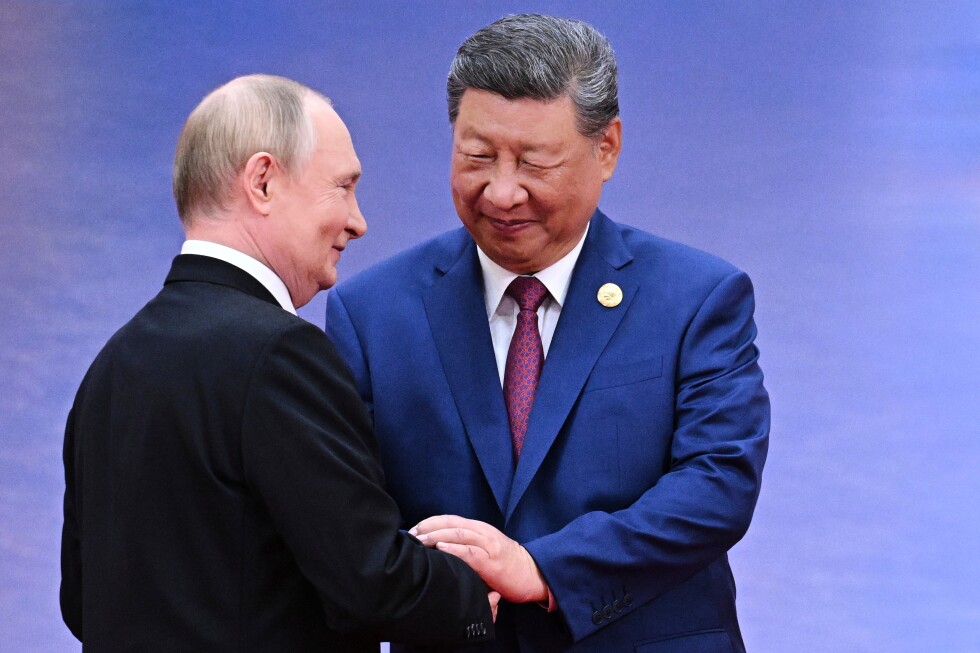
    Despite these shifting geopolitical currents, both Pyongyang and Beijing have made visible efforts to reinforce their bilateral alignment in recent months. Last September, North Korean leader Kim Jong Un and Chinese President Xi Jinping held their first bilateral summit in more than six years, during which the two leaders issued a formal pledge of mutual support. Just last month, the two countries also restored direct passenger flight and train services between their territories, which had been fully suspended after the onset of the COVID-19 pandemic in 2020.