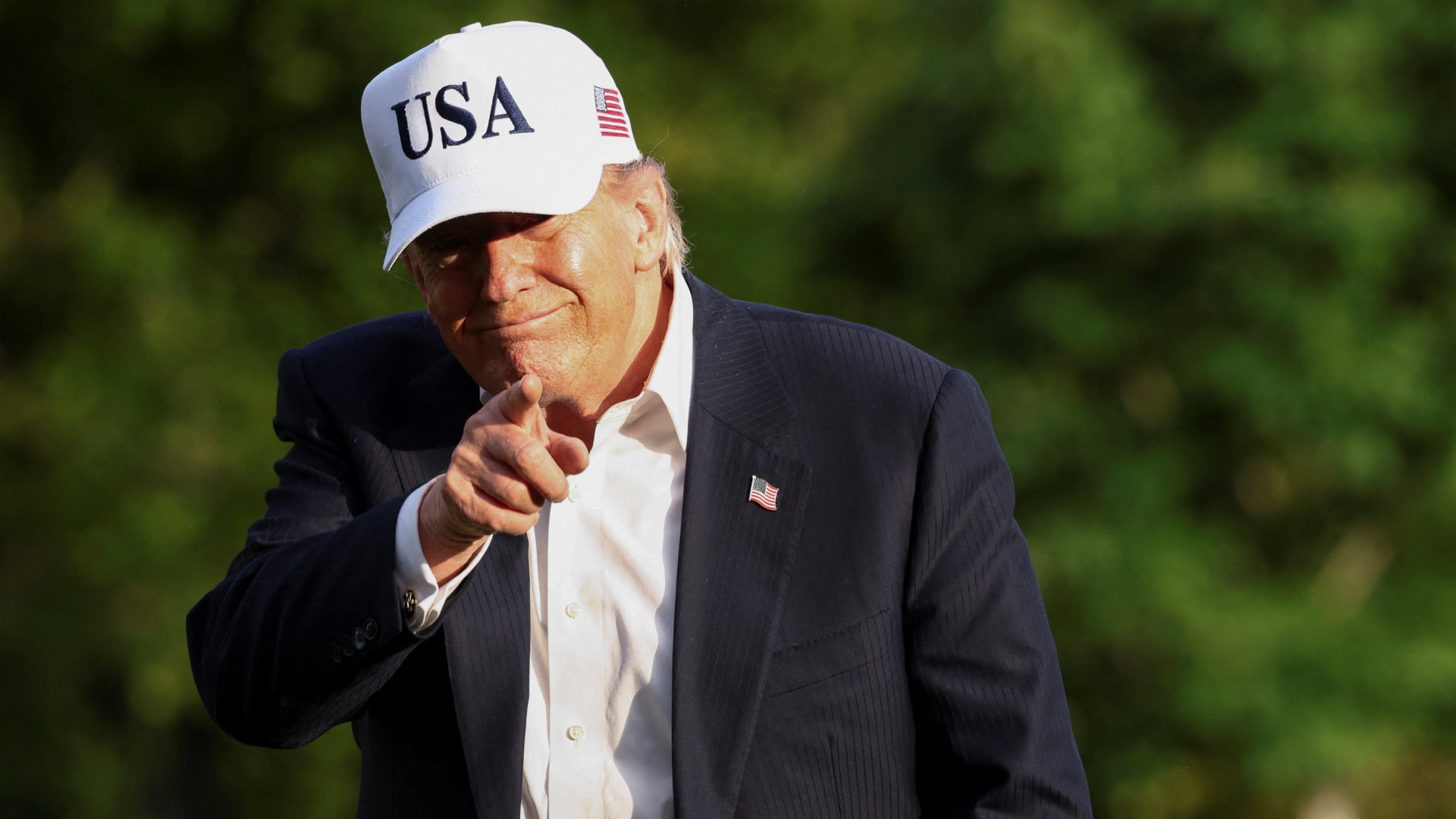
In a sudden announcement that has reshaped the trajectory of escalating tensions across the Persian Gulf, former US President Donald Trump revealed on Monday that Washington has scrapped plans to launch a full, large-scale military offensive against Iran, set to begin Tuesday. The decision came following a formal request from the top leaders of three key Gulf Arab allies to delay the attack amid ongoing diplomatic negotiations.
Trump made the announcement via his TruthSocial platform, stating that the Emir of Qatar Tamim bin Hamad Al Thani, Saudi Crown Prince Mohammed bin Salman Al Saud, and United Arab Emirates President Mohamed bin Zayed Al Nahyan all urged the US to hold off on its planned military strike. The leaders argued that serious diplomatic talks were already underway, and their assessment as close US allies was that a mutually acceptable negotiated agreement could be reached, according to Trump’s post.
The outgoing president added that any prospective final deal would be very favorable to US interests, with one critical non-negotiable provision: Iran will permanently be barred from developing nuclear weapons. Trump emphasized that his deep respect for the three Gulf leaders guided his choice to accommodate their request, but made clear that the pause on military action is not permanent. He warned that US military forces remain fully postured to launch the full-scale large-scale assault against Iran at a moment’s notice if a viable, acceptable agreement fails to materialize through negotiations.
This latest development comes on the heels of nearly two months of open conflict across the region, triggered by a joint US-Israeli strike on Iran on February 28. Iran retaliated immediately, launching thousands of missiles and drones targeting Gulf Arab states, with the UAE bearing the brunt of the attack after normalizing relations with Israel in 2020 under the Abraham Accords. Almost 3,000 Iranian projectiles struck UAE territory, according to regional reports.
In mid-April, Pakistan brokered a fragile ceasefire that has paused large-scale open fighting, though low-level tensions and limited military action have continued. On Friday, Bloomberg reported that the UAE had recently attempted to rally Saudi Arabia and Qatar to back a coordinated joint military offensive against Iran in response to Tehran’s attacks, but the bid ultimately failed.
Shortly after the February 28 US-Israeli strike, Mohamed bin Zayed held a series of urgent calls with fellow Gulf leaders to push for the coordinated military response. But Saudi Arabia’s crown prince and other Gulf leaders rejected the proposal, sources confirmed. Despite the rebuff of the joint offensive plan, both Saudi Arabia and the UAE have launched independent retaliatory strikes against Iranian targets, recent reporting confirms.
The Wall Street Journal reported that the UAE targeted key Iranian energy infrastructure, carrying out a strike on Iran’s Lavan Island, a major Persian Gulf oil export hub, in early April around the time the ceasefire was announced. Saudi Arabia, by contrast, carried out limited, measured retaliatory strikes before quickly shifting its focus to supporting Pakistan’s mediation efforts, regional analysts note.
Last week, the Financial Times reported that Saudi Arabia has also circulated a proposal for a region-wide non-aggression pact between Iran and other Middle Eastern states, modeled on the 1970s Helsinki Accords that de-escalated Cold War tensions in Europe. The Saudi initiative has already earned backing from major European capitals and EU institutions, though it remains unclear whether the US and Israel will support the proposed framework.
Parallel to shifting regional diplomatic efforts, the conflict has drawn Israel and the UAE even closer strategically. Middle East Eye reported on Monday that the two countries have launched a joint defense acquisition fund to jointly purchase and develop next-generation weapons systems, deepening their security cooperation amid rising regional tensions.