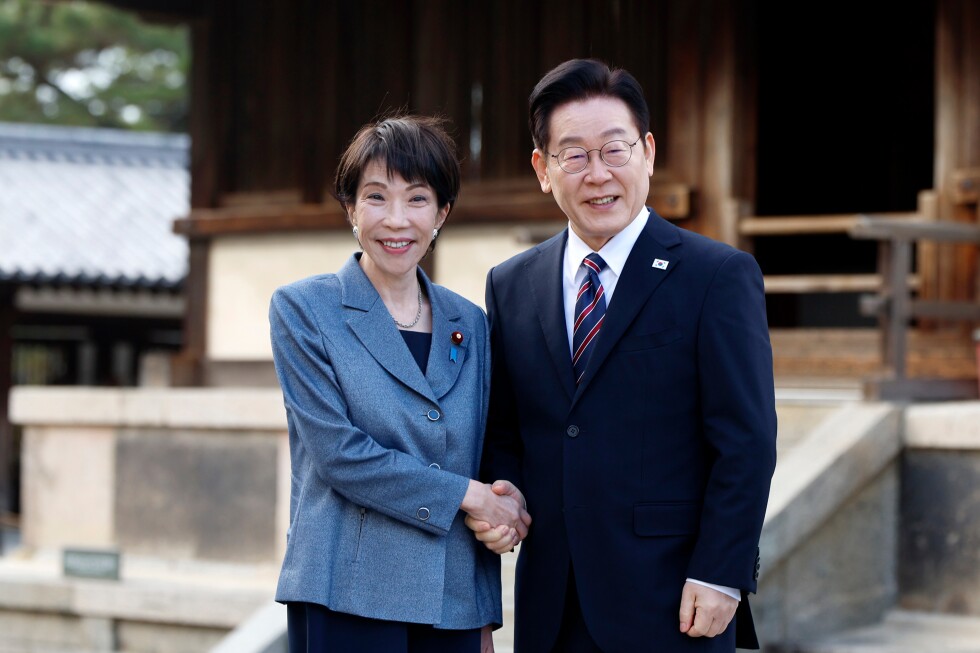
TOKYO/SEOUL – Six months after launching their unprecedented series of personal diplomatic engagements, South Korean President Lee Jae Myung and Japanese Prime Minister Sanae Takaichi prepared to convene their fourth bilateral summit on Tuesday, this time on South Korean soil. The meeting, held in Lee’s hometown of Andong, marks a groundbreaking milestone: the first time incumbent leaders of the two neighboring nations have exchanged reciprocal visits to their personal hometowns, a gesture crafted to build personal rapport and accelerate the gradual warming of a relationship long overshadowed by historical tension.
Andong, a quiet southeastern South Korean city, draws global cultural attention for its 500-year-old traditional folk village, a protected UNESCO World Heritage Site that preserves centuries of Korean Confucian culture and folk tradition. This choice of venue follows a similar precedent set in January, when Takaichi hosted Lee in her own hometown of Nara, Japan’s ancient imperial capital centuries before modern political divisions shaped the two nations’ relationship.
The summit comes at a moment of heightened global geopolitical volatility, with rising tensions across the Middle East, shifting power dynamics in the Indo-Pacific, and evolving security threats that have pushed both Seoul and Tokyo to prioritize cooperative engagement over historical disputes. Ahead of the meeting, South Korea’s presidential office emphasized that the gathering would center on deepening personal trust between the two leaders, while Takaichi told reporters Tuesday morning that the talks would focus on expanding cooperation “under the severe geopolitical conditions such as situations in the Middle East and the Indo-Pacific.”
Official agenda items for the one-day summit span a range of shared priorities: expanded economic and energy collaboration, coordinated responses to the ongoing conflict in Iran, and further progress in bilateral relationship-building. Observers and regional policy experts note there are no immediate contentious issues blocking progress, leading to widespread expectations that the meeting will proceed smoothly and keep the bilateral relationship on its current positive trajectory.
Choi Eunmi, a leading Japan specialist at the Seoul-based Asan Institute for Policy Studies, explained the shifting approach driving the current warming of ties: “The two countries put more emphasis on agenda for cooperation than contentious issues. They would now think scenes of constantly fluctuating relationship or eventually negative bilateral ties won’t be helpful to anyone now.”
The current progress in Seoul-Tokyo relations represents a dramatic shift from decades of friction. Both countries are major liberal democracies and key U.S. allies in the Indo-Pacific, but relations were repeatedly strained for generations by unresolved grievances rooted in Japan’s 35-year colonial occupation of the Korean Peninsula, which ended with Japan’s defeat in World War II. A sustained turn toward cooperation began in 2023, when the predecessors of Lee and Takaichi took deliberate steps to set aside intractable history disputes, framing closer alignment as a necessary response to shared regional challenges: growing U.S.-China strategic competition, global supply chain fragility, and North Korea’s accelerating nuclear and ballistic missile programs.
When Lee and Takaichi assumed office last year, many regional analysts predicted cooperation would stall. Takaichi carried a long public reputation as a right-wing security hawk, while Lee, a political liberal, was widely expected to shift South Korea’s foreign policy toward engagement with North Korea and China, moving away from alignment with the U.S. and Japan. Instead, the two leaders have doubled down on cooperation, even adopting unprecedented, informal diplomatic gestures to build personal chemistry.
Two months before Takaichi took office, Lee made a landmark move by choosing Japan as the first destination for his inaugural bilateral overseas summit. In January, at the close of their Nara meeting, the pair shared an informal jam session: Takaichi, a lifelong heavy metal fan who played drums in college, led the pair in drumming along to global K-pop hits including BTS’s chart-topping track “Dynamite.”
Lee has publicly noted that he and Takaichi share a core belief that sitting national leaders must prioritize pragmatic problem-solving over partisan or nationalist posturing common among ordinary politicians. But many observers argue the impetus for deeper cooperation also stems from new global pressures that were less acute for previous administrations, including the return of Donald Trump to U.S. leadership with his signature “America First” policy, and widespread global economic disruption stemming from the ongoing Iran war.
Both South Korea and Japan hold hundreds of billions of dollars in commercial and investment commitments to the U.S. economy. Yet Trump’s aggressive tariff policies and transactional approach to security alliances have eroded long-standing trust in U.S. commitment among political and business elites in both Seoul and Tokyo, pushing the two neighbors to build more robust bilateral coordination of their own.
Despite the current positive momentum, experts caution that the bilateral relationship remains fragile, and unresolved historical issues could trigger sudden setbacks. Disputes over Japan’s colonial-era forced mobilization of Korean laborers and sexual enslavement of Korean “comfort women” have not been permanently resolved, the two governments have simply agreed to set aside public debate on the issues to avoid derailing cooperation.
As Choi noted: “Both countries aren’t talking about how to resolve and prevent recurrences of conflicts over those issues and we don’t know when they could occur again.”
Associated Press reporter Mari Yamaguchi contributed reporting from Tokyo.