In a sudden policy shift that has reignited a high-stakes diplomatic dispute between Washington and Pretoria, the Trump administration announced Monday it will nearly double the number of white South African Afrikaner refugees admitted to the United States by the end of the current fiscal year in September, allowing up to 10,000 additional arrivals beyond an initial cap.
The emergency adjustment, outlined in a classified State Department notice to Congress obtained by The Associated Press and first reported by CNN, brings the total planned resettlement of Afrikaners to 17,500 for the 2025 fiscal year. The administration initially set a total cap of 7,500 for mostly Afrikaner refugees last year, a figure that already stood as the lowest annual refugee admissions target in U.S. history dating back to the program’s launch in 1980.
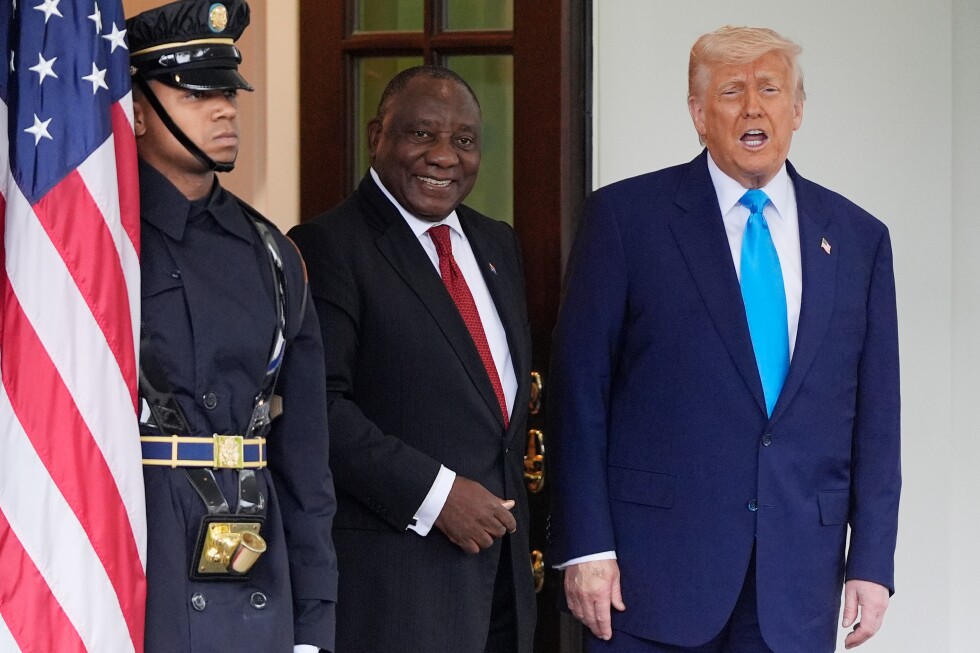
The White House has framed the expansion as a response to an urgent humanitarian crisis, claiming the white Afrikaner minority — descendants of 17th-century Dutch settlers in South Africa — faces systemic, state-backed racial discrimination and targeted violence, particularly against members of the country’s white farming community. President Trump has repeatedly amplified these claims, turning the issue into a major flashpoint in bilateral relations over the past year. The dispute has already led the Trump administration to cut bilateral aid to South Africa, sparked a heated face-to-face confrontation between Trump and South African President Cyril Ramaphosa in the Oval Office last year, and prompted Trump to boycott the 2024 Group of 20 summit hosted in Johannesburg.
In its Monday notice, the State Department argued that escalating tensions from South African government pushback against the resettlement program has created a new emergency that puts Afrikaners at greater risk. “This escalating hostility heightens the risks to Afrikaners in South Africa, who are already subject to far-reaching government-sponsored race-based discrimination,” the department wrote. Officials specifically pointed to public criticism of the U.S. resettlement plan from Ramaphosa and multiple South African political parties across the ideological spectrum, as well as a December 2024 raid by South African authorities on a U.S.-run refugee processing center operating inside the country — an action the U.S. previously labeled “unacceptable.”
The South African government has flatly rejected the Trump administration’s claims of systematic anti-white discrimination as entirely baseless. During his 2024 Oval Office visit, Ramaphosa pushed back forcefully against Trump’s allegations, telling the U.S. president that South African government policy explicitly condemns the violent rhetoric Trump highlighted, and that targeted persecution of white Afrikaners is not a reality in the country. Experts on South African crime and politics confirm there is no credible evidence to support the claim that white farmers are specifically targeted for violence because of their race. While South Africa faces a national crisis of violent crime that impacts farmers of all racial backgrounds consistently, analysts say there is no data to back up the narrative of systemic, state-tolerated anti-white violence pushed by the Trump administration.
The additional 10,000 resettlement slots will carry an estimated $100 million price tag for relocation and integration support, according to State Department estimates. Under U.S. refugee law, the administration is required to notify and consult with congressional lawmakers before finalizing annual refugee admission levels. A anonymous congressional aide confirmed that administration officials are scheduled to hold a formal consultation meeting with congressional leaders later this week to review the new policy.
The latest move on Afrikaner resettlement aligns with a broader restructuring of U.S. refugee policy under the Trump administration, which has drastically cut overall refugee admissions compared to prior Democratic and Republican administrations, while prioritizing certain groups aligned with the president’s political and policy priorities.