分类: politics

  • India proposes new rules to regulate news and political posts on social media

    India proposes new rules to regulate news and political posts on social media

    India’s federal Ministry of Electronics and Information Technology (MeitY) has tabled controversial amendments to the country’s digital governance framework that would extend government oversight of news and current affairs content far beyond traditional registered publishers to include independent influencers, podcasters, and ordinary social media users on platforms including Facebook, YouTube, and X. The proposal, which has already triggered sharp backlash from digital rights advocates and independent content creators, would require major social media platforms to adhere to the same code of ethics currently mandated for formal news outlets when hosting news-related content from non-publisher users. To retain their safe harbour protection — the legal immunity that shields platforms from liability for content posted by third-party users — platforms would be required to strictly comply with all government takedown and content removal orders under the new rules.

    The government frames the amendments as a necessary update to outdated digital regulation. Officials argue that as news and current affairs content is now widely shared by non-journalist users, a unified regulatory framework is needed to curb the spread of harmful content including disinformation, hate speech, and manipulated deepfake media. MeitY has opened a public comment period on the proposal, with feedback set to close on April 14. MeitY Secretary S Krishnan has defended the plan, emphasizing that the new guidelines align with India’s existing constitution and legal structure, and that evolving content sharing practices demand updated rules.

    Critics, however, warn the changes amount to a dramatic expansion of state power over online speech that will enable widespread censorship targeting political dissent. Digital rights activists point to a steady pattern of incremental regulatory changes stretching back to 2021 that have steadily eroded online free speech protections while expanding government control. A 2021 amendment first brought formal digital news outlets under government oversight, while a 2025 revision strengthened the federal Home Ministry’s Sahyog portal, a centralized platform that allows multiple state agencies to issue takedown notices to social media platforms with minimal transparency and few procedural safeguards for affected users. Early 2026 brought another change that cut the compliance window for platforms to execute government blocking orders from 36 hours to just three — a reduction that eliminates virtually all time for legal review before content is removed.

    Widespread concern that the rules will be used to target government critics gained fresh traction after a high-profile blocking incident in March. Acting on orders issued under Section 69A of India’s existing IT Act, X blocked roughly a dozen accounts, most of which hosted satirical or critical content about Prime Minister Narendra Modi’s ruling Bharatiya Janata Party (BJP). Among those affected was Kumar Nayan, whose satirical X account @Nehr_who? boasted more than 242,000 followers. Nayan told the BBC he received no prior warning or explanation when his account was blocked, and while a court order restored his account this week, 10 of his posts critical of Modi and the BJP remain blocked in India pending review by a government-appointed panel. All 10 posts are either satirical commentary or political criticism, none of which meet the official criteria for restricted content that threatens national security or communal harmony, Nayan argues. Challenging the blocking in court forced Nayan to reveal his public identity, forcing him to relocate over safety concerns and robbing him of the anonymity that protected him and other critics from harassment.

    Sandeep Singh, an activist whose 100,000-follower X account @ActivistSandeep was also blocked in March, has not yet regained access. Singh began posting critical content after concluding mainstream Indian media was disproportionately biased in favour of the BJP. “I stand for the truth and blocking my accounts or posts will not stop me from continuing speaking truth to power,” Singh told the BBC.

    Prominent independent creator Akash Banerjee, whose political commentary YouTube channel The Deshbhakt counts more than 6 million subscribers, warned the new rules will create a pervasive climate of self-censorship that will silence independent political discourse. Banerjee notes that despite India already having a raft of laws governing online content, levels of hate speech and disinformation have not declined — but critical content, even satirical criticism of the government, is increasingly targeted for removal. Digital rights activist Nikhil Pahwa, who co-authored an analysis of the regulatory changes for the *Times of India*, argues the proposed amendments only reinforce what is already a fully built “infrastructure for mass censorship” in India. Platforms typically comply with government orders quickly to protect their access to India’s large market, while affected users are left without notice, explanation, or any meaningful avenue to appeal, he explained.

    A recent U.S. government report has echoed these concerns, noting that since 2021, American social media companies have seen a steady rise in takedown requests for content and accounts that appear to be politically motivated. Even when users are able to challenge blocking orders in court, Nayan points out, most ordinary users lack the resources or willingness to go through the lengthy legal process to recover their content. “In a democracy, people should have the liberty to post what they want, with certain limitations of course, without fear. India is a democracy, so why has it become so difficult to do so?” Nayan asked. The BBC has submitted a list of questions to MeitY for comment on the specific blocking incidents, and the ministry has yet to issue a formal response beyond its broader defense of the new regulatory framework.

  • Beijing calculates its next steps in Iran ceasefire ahead of Trump’s trip to China

    Beijing calculates its next steps in Iran ceasefire ahead of Trump’s trip to China

    Amid a still-fragile temporary ceasefire between the United States and Iran, Beijing is carefully calibrating its next diplomatic moves to help forge a durable resolution to the spiraling Middle East conflict, according to senior diplomatic sources and global policy analysts.

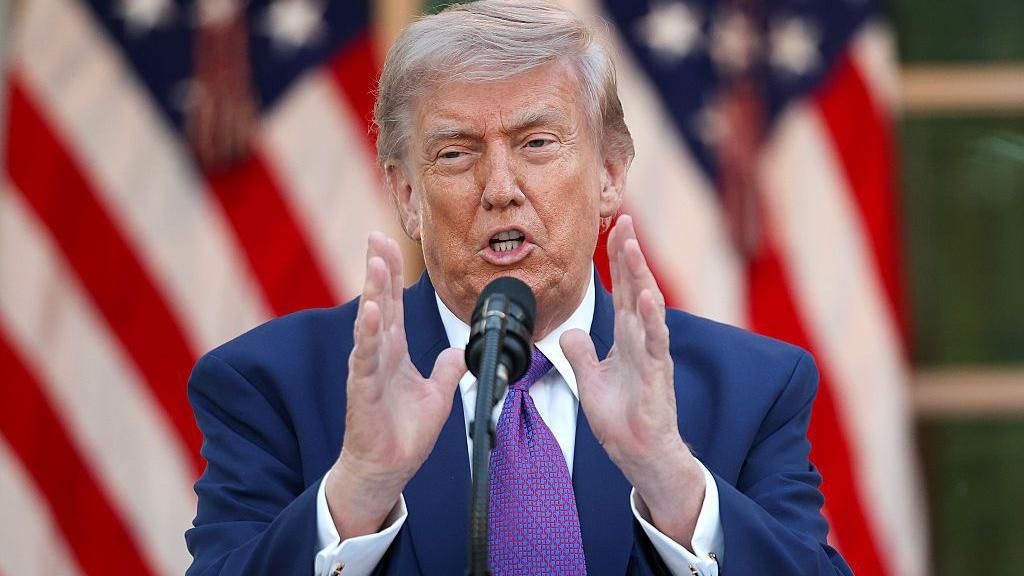
    U.S. President Donald Trump told Agence France-Presse earlier this week that he credits China’s behind-the-scenes influence with pushing Iran to accept the temporary truce that has halted open hostilities this week. Three anonymous diplomats familiar with Beijing’s private negotiations confirmed the assessment, noting that as the world’s largest buyer of Iranian crude and a nation far more dependent on Persian Gulf energy supplies than the U.S., China holds significant economic leverage over Tehran that it deployed to urge Iranian leadership back to the negotiating table. Prior to this direct diplomatic push, Beijing had already publicly decried U.S. and Israeli military operations against its key economic partner Iran as misadvised. Formal talks between the conflicting parties are scheduled to kick off this coming weekend in Pakistan, which took the lead in brokering the two-week ceasefire.

    The current precarious truce leaves China at a diplomatic crossroads, as its leadership weighs the costs and benefits of deeper engagement in Middle East peacemaking against its core domestic and global priorities. A prolonged full-scale war in the region runs directly counter to Beijing’s core economic interests, but successful mediation could also elevate China’s global standing and grant it valuable leverage ahead of Trump’s state visit to Beijing next month, a meeting that was delayed from its original schedule to allow Trump to oversee U.S. military strikes on Iran.

    China’s foreign ministry spokesperson Mao Ning confirmed to reporters this week that Beijing has “worked actively to help bring about an end to the conflict.” The country has already felt tangible economic pressure from Iran’s closure of the Strait of Hormuz — the critical shipping chokepoint through which roughly 20% of the world’s global crude oil supplies pass. The blockade has sent shockwaves across Asian energy markets, a key factor that pushed Beijing to work with Pakistan to facilitate the current ceasefire agreement.

    Despite its role in securing the temporary truce, China has shown no appetite to offer the long-term security guarantee for Iran that Tehran has repeatedly requested as a core condition for any permanent peace deal, meant to deter future U.S. and Israeli strikes. Iran’s ambassador to China recently suggested that Tehran would look to China, Russia and the United Nations to jointly provide such a guarantee, a demand that Beijing has not publicly committed to. When pressed for comment on the proposal, Mao only reaffirmed that China “hopes that all parties will resolve their disputes through dialogue and negotiation.”

    Chinese leadership is acutely aware that an extended conflict would severely damage its domestic economic agenda, which is already facing headwinds from a slumping domestic property sector and global uncertainty. Earlier this year, Premier Li Qiang set a modest 2024 growth target of 4.5% to 5% — the lowest official growth projection China has released since 1991. One anonymous diplomat familiar with China’s internal deliberations on the conflict confirmed that Beijing’s top priority remains “growth and development,” and a prolonged closure of the Strait of Hormuz undermines that goal on two fronts: it restricts critical crude imports to fuel China’s industrial economy, and blocks a key shipping route for Chinese exports bound for Middle Eastern markets.

    The developing Iran diplomacy is already shaping expectations for the high-profile upcoming Trump-Xi summit in Beijing. Experts note that Trump will almost certainly echo Beijing’s own concerns about the impact of continued conflict on energy markets and economic stability when he meets with Chinese President Xi Jinping. Ali Wyne, senior research and advocacy adviser for U.S.-China relations at the International Crisis Group, argues that the temporary ceasefire already marks a subtle win for Beijing’s diplomatic framing. “That the United States and Iran have at least temporarily edged away from the precipice of a catastrophic escalation owes in part to China’s support for the ceasefire that Pakistan brokered,” Wyne said. “Even if short-lived, that breakthrough affords Beijing another opportunity to present itself as a stabilizing force and Washington as a reckless one.”

    China’s approach to the conflict is also shaped by deep-rooted strategic skepticism of U.S. intentions in the region, diplomatic sources say. Many in Beijing view Trump’s decision to launch military operations against Iran, as well as the earlier January incursion to capture former Venezuelan President Nicolás Maduro, as at least partially driven by a broader strategy to contain Chinese global influence. Beijing has long been a major oil customer and investor in Venezuela’s energy sector, giving it direct exposure to U.S. actions in the Western Hemisphere.

    Privately, Chinese officials have made clear that both the U.S. and Iran will need to make substantive concessions for a permanent peace deal to take hold. Beijing is also pushing for the U.S. to roll back existing sanctions on Chinese companies that maintain commercial ties with Iran as a core condition of its continued participation in mediation, according to diplomatic sources. The current context already grants Xi significant leverage ahead of the summit. “Trump was in a crisis, and China helped,” said Sun Yun, director of the China program at the Washington-based Stimson Center think tank. “The optics of that alone helps to lighten the mood and sweeten the pot.”

    Danny Russel, a former senior U.S. diplomat under the Obama administration, noted that Beijing perceives Trump as weakened after he backed away from earlier threats to destroy Iranian power plants and critical infrastructure if Iran did not end its Hormuz blockade. The hashtag #HeChickenedOut trended on Chinese social media in discussions of the outcome, and China’s state-run media has pushed a narrative that Trump backed down in the face of Iranian resistance, Russel added.

    For his part, Xi has approached the moment with deliberate caution. Russel summed up Beijing’s current strategic calculation: “wait-and-see, safeguard Chinese energy and commercial interests, avoid direct confrontation with the United States, stay on good terms with its important Gulf partners like Saudi Arabia and UAE, and work with whoever ends up running Iran when the dust settles.”

    Former senior Trump White House adviser Steve Bannon argued in an episode of his “War Room” podcast this week that any durable peace deal will require Chinese buy-in. “Who can actually make a deal and enforce a deal? I know one group of people who can do it, and they live in Beijing,” Bannon said. “Let’s just go to Beijing and sit down with a guy who can actually make a deal — Xi — and enforce a deal.”

  • KMT chairwoman advocates for enhanced cross-Strait youth exchanges

    KMT chairwoman advocates for enhanced cross-Strait youth exchanges

    Amid ongoing cross-Strait people-to-people ties, the chairwoman of the Chinese Kuomintang (KMT), Cheng Li-wun, has publicly advocated for lowering barriers and deepening exchange opportunities for young people from both sides of the Taiwan Strait. The call came during a Shanghai-Taiwan youth cultural exchange activity held at a riverside book garden along Yangpu Riverside in Shanghai, in a gathering that brought together young creators and cultural enthusiasts from both regions.

    In her remarks to participating young people who have built lives and careers on the Chinese mainland, Cheng emphasized the energy and potential of cross-Strait youth engagement. “Seeing that you are living a vibrant life in the Chinese mainland, I think that’s so great,” Cheng said. “If cross-Strait exchanges could be more open, with fewer barriers, I believe young people’s creativity can find like-minded partners and shine on a bigger stage.”

    The event marks part of Cheng’s working visit to Shanghai, which also included a stop at the headquarters of Chinese tech giant Meituan, highlighting the KMT’s focus on both youth cultural exchange and cross-Strait industry collaboration. The proposal for enhanced youth exchange aligns with long-standing calls from communities on both sides of the Strait to expand people-to-people connections, particularly among younger generations who will shape the future of cross-Strait relations. Proponents of expanded exchanges argue that greater interaction fosters mutual understanding, breaks down stereotypes, and creates new collaborative opportunities in culture, innovation, business and other fields that benefit young people across both sides.

  • KMT chairwoman highlights industry insights during Meituan visit

    KMT chairwoman highlights industry insights during Meituan visit

    On Wednesday, Cheng Li-wun, Chairwoman of the Chinese Kuomintang (KMT), led a cross-party delegation on an official visit to the global headquarters of leading Chinese local lifestyle service platform Meituan in Shanghai, where the delegation got a first-hand look at the company’s cutting-edge drone delivery operations and core business strategies.

    During the visit, Cheng emphasized that the trip offered a rare, valuable opportunity to observe end-to-end on-ground operational processes, examine the internal policy frameworks that drive the company’s growth, and gain front-line perspective on the industry’s forward-looking strategic planning for future development. The on-site experience of Meituan’s autonomous drone delivery service, a breakthrough innovation in last-mile logistics that has reshaped urban consumer access to goods, gave the KMT delegation direct insight into the pace of digital innovation unfolding on the Chinese mainland.

    This visit comes as part of a broader series of cross-Strait exchanges focused on opening dialogue across multiple sectors, with the Meituan stop designed to deepen KMT leadership’s understanding of the mainland’s thriving digital economy and private sector innovation. The engagement reflects growing momentum for people-to-people and industry-focused exchanges between the two sides of the Taiwan Strait, creating space for shared understanding of emerging economic and technological trends.

  • Brazil’s Supreme Court postpones decision on how Rio picks a governor, extending political chaos

    Brazil’s Supreme Court postpones decision on how Rio picks a governor, extending political chaos

    RIO DE JANEIRO, BRAZIL – A weeks-long political standoff in one of Brazil’s most high-profile states has been extended, after the country’s Supreme Court announced a last-minute delay Thursday to a critical ruling on who will assume the Rio de Janeiro governorship. The vacancy, which opened three weeks ago, has left the state’s urgent policy matters, from public security funding to transit infrastructure and fuel pricing, in the hands of an interim caretaker with limited mandate to act.

    The opening for the governorship was created by law on March 23, when incumbent Cláudio Castro stepped down to launch his campaign for a Senate seat in Brazil’s October general election, a requirement under Brazilian electoral law. What was meant to be a straightforward succession has instead devolved into chaos, as every constitutionally next-in-line candidate is unable to take office.

    Thiago Pampolha, Castro’s former deputy governor, would have been the automatic replacement, but he resigned from the deputy role earlier in 2025 to take a position at a state government oversight agency, disqualifying him from the succession. The next candidate in line is Rodrigo Bacellar, speaker of the Rio state legislature, who was recently arrested on corruption charges and removed from his public post.

    The Supreme Court’s delay came after Justice Flávio Dino requested additional time to review the central legal question of the case: whether Castro’s interim replacement, who will serve only until January 2026, should be selected by a special early popular election or appointed by the state’s historically scandal-plagued legislative body. Dino will have up to 90 days to complete his review and return the case for a final court ruling. As of Thursday’s partial vote, the 10-member court is split 4-1 in favor of an appointment by the state legislature, with the remaining votes yet to be finalized.

    Currently, the top justice of Rio’s state judiciary, Ricardo Couto de Castro, is serving as acting governor on an emergency basis. Local media reports indicate that the interim role was never intended to be long-term, leaving Couto de Castro facing major pushback from state administrative officials who are unwilling to commit to major policy decisions under an unelected temporary leader.

    Notably, a new permanent governor will not take office until January regardless of the Supreme Court’s ruling, as Rio voters are already scheduled to elect their next full-term leader as part of October’s national general election. But the months-long leadership vacuum has already created tangible harm for Rio residents, political analysts warn.

    Thomas Traumann, a veteran political consultant and former Brazilian government minister, called the prolonged uncertainty not just a national embarrassment, but a public risk. “The federal government recently reached an agreement to bring down sky-high diesel prices, which have spiked because of ongoing conflict in the Middle East,” Traumann explained. “Rio is one of the only states that has not been able to sign on to the deal, because there is no sitting governor with the authority to approve it. That means Rio will now have the most expensive diesel in all of Brazil.” He added that the vacuum leaves the state vulnerable to security crises: “If criminal gang violence erupts tomorrow, who has the authority to order police to respond?”

    Local media also added that justices within Rio’s state judiciary are growing increasingly concerned that their core work will grind to a halt, as their leader is tied up managing the entire state’s executive branch with no clear end to his interim tenure in sight.

    The succession dispute has already become tangled up in national political tensions, with major partisan actors lining up behind opposing outcomes. Sen. Flávio Bolsonaro, son of former Brazilian President Jair Bolsonaro and a prominent conservative voice ahead of October’s election, has publicly pushed for the legislature to appoint state lawmaker Douglas Ruas to the interim post. On the opposing side, supporters of current President Luiz Inácio Lula da Silva — and Lula’s endorsed candidate for Rio governor, Eduardo Paes — have argued that the vacancy requires a direct popular vote to fill the interim role.

  • Melania Trump blasts ‘lies’ linking her to Epstein

    Melania Trump blasts ‘lies’ linking her to Epstein

    In an unexpected and rare public appearance at the White House on Thursday, U.S. First Lady Melania Trump delivered a forceful rejection of all lingering online claims that tie her to disgraced convicted sex offender Jeffrey Epstein, shutting down years of false speculation about her connections to the late financier’s sex trafficking scandal.

    The 55-year-old former model, who rarely makes unscripted on-camera statements of this nature, lashed out at the spread of misinformation linking her name to Epstein’s crimes. “The lies linking me with the disgraceful Jeffrey Epstein need to end today,” she stated firmly. “The individuals lying about me are devoid of ethical standards, humility and respect.”

    Addressing the most persistent false claims circulating across social media platforms, Melania Trump directly refuted the widespread rumor that Epstein introduced her to her husband, former President Donald Trump. “I am not Epstein’s victim. Epstein did not introduce me to Donald Trump,” she clarified, noting that she had begun her relationship with Donald Trump two full years before she ever encountered Epstein. For years, fake doctored images and baseless claims about her ties to Epstein have circulated online, she added, warning the public that “these images and stories are completely false.”

    The First Lady also addressed Epstein’s pattern of abuse, stating she had never had any awareness of his harm against victims, never participated in any of his activities, never traveled on his private plane, and never visited his infamous private island. “I have never been legally accused or convicted of a crime in connection with Epstein sex trafficking, abuse of minors and other repulsive behavior,” she emphasized.

    While Melania Trump did not reference any specific new allegations that prompted her sudden statement, her comments come amid a fresh wave of public attention on the Epstein case, after the U.S. Department of Justice released thousands of pages of court documents related to Epstein over the past year. A well-known photograph included in the released files shows Donald and Melania Trump alongside Epstein and his accomplice Ghislaine Maxwell at the Trumps’ Mar-a-Lago resort in Florida. Donald Trump has previously denied any connection to Epstein’s criminal activities, and the scandal has repeatedly disrupted his second presidential term.

    In a surprising turn, Melania Trump also called on congressional leaders to organize a public hearing for Epstein’s surviving victims, saying the move would “give these victims their opportunity to testify under oath.”

    Social media observers have been quick to speculate about the timing of the statement, which comes just two days after Donald Trump announced a ceasefire between Israeli and Iranian forces, a deal that has faced heavy criticism for failing to resolve the ongoing closure of the strategic Strait of Hormuz by Tehran. However, the First Lady has long maintained a relatively private, low-profile role during her time in the White House, and her public interventions are uncommon. Her last high-profile public appearance alongside the president was just three days prior, at the annual White House Easter Egg Roll with hundreds of children.

    Epstein, who was awaiting trial on federal sex trafficking charges involving underage minors, died by suicide in federal custody in 2019, but conspiracy theories and lingering connections to high-profile figures have kept the scandal in public view for more than five years.

  • Judge postpones termination of temporary status for Ethiopians

    Judge postpones termination of temporary status for Ethiopians

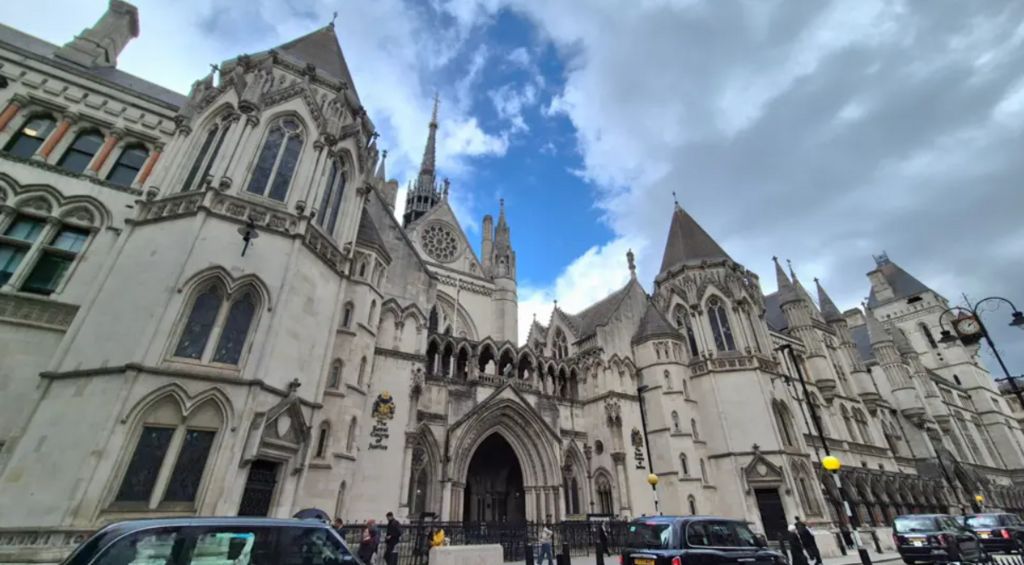
    MIAMI — In a sharp legal rebuke of the second Trump administration’s hardline immigration agenda, a federal judge has halted the White House’s move to end Temporary Protected Status (TPS) for more than 5,000 Ethiopian nationals living and working legally in the United States. The ruling marks the latest in a string of judicial setbacks for the administration’s broader push to wind down the decades-old humanitarian program, as hundreds of thousands of TPS holders from across the globe continue to challenge their status terminations in federal courts across the country.

    U.S. District Judge Brian Murphy, a Massachusetts-based jurist appointed by President Joe Biden, issued the ruling Wednesday, finding that the Trump administration’s termination of Ethiopian TPS violated congressionally mandated procedural rules. “Fundamental to this case — and indeed to our constitutional system — is the principle that the will of the President does not supersede that of Congress,” Murphy wrote in his 31-page decision. “Presidential whims do not and cannot supplant agencies’ statutory obligations.”

    Created by Congress in 1990, TPS was designed as a humanitarian safeguard: it prevents the deportation of migrants from countries grappling with armed conflict, natural disasters, or widespread humanitarian crisis, and grants recipients temporary authorization to work in 18-month increments. The Biden administration first granted TPS protection to Ethiopian residents of the U.S. in 2022, following the outbreak of devastating civil conflict in the country’s Tigray region, and extended that designation in 2024. But when Trump returned to the Oval Office in January 2025, his administration moved to wind down TPS protections for most designated countries: to date, the Department of Homeland Security (DHS) has terminated TPS for 13 of the 17 countries that held the designation during the Biden presidency, leaving just three nations with active protected status covering more than 1 million total beneficiaries, who come from Venezuela, Haiti, and El Salvador as the three largest groups.

    In December 2025, DHS officially ended TPS for Ethiopia, arguing that ongoing conflict and humanitarian need in the country no longer met the statutory threshold for continued designation. Murphy rejected that move, however, finding that DHS had failed to follow the explicit procedural framework Congress laid out for altering or ending TPS designations. “The administration terminated this status without regard for the process delineated by Congress,” Murphy wrote.

    The ruling comes just weeks ahead of a high-stakes Supreme Court hearing scheduled for April 29, where justices will hear arguments over the Trump administration’s efforts to end TPS for roughly 6,100 Syrian nationals and 350,000 Haitian nationals currently protected by the program. Hundreds of thousands of additional TPS holders from other nationalities have also filed legal challenges to their status terminations, making the Ethiopian ruling the latest defeat for the administration’s policy.

    Following the decision, DHS pushed back against the ruling in a statement, framing the judge’s action as an example of judicial overreach. DHS spokeswoman Lauren Bis argued that the decision “is just the latest example of judicial activists trying to prevent President Trump from restoring integrity to America’s legal immigration system.” The agency reiterated that TPS is intended to be a strictly temporary humanitarian program, consistent with the original text of the 1990 law that created it.

  • US has let in 4,499 refugees since October – all but three were South African

    US has let in 4,499 refugees since October – all but three were South African

    A dramatic shift in the demographic and geographic origin of refugees admitted to the United States has followed former President Donald Trump’s sweeping overhaul of American refugee policy, newly released U.S. government data confirms, triggering escalating diplomatic tensions between Washington and Pretoria over the targeted resettlement of white South African Afrikaners.

    According to data compiled by the U.S. Refugee Processing Center, between October 2025 and the end of the first quarter of 2026, just 4,499 refugees total have been resettled across the United States. Strikingly, all but three of these arrivals — who came from Afghanistan — are South African nationals. This data stands in stark contrast to the final full fiscal year of the Biden administration, which ran from October 2023 to September 2024, when the U.S. welcomed 125,000 refugees from 85 different countries across the globe.

    After returning to the presidency, Trump implemented a full pause on all refugee admissions to the U.S., even halting processing for applicants fleeing active war zones and humanitarian crises. The only explicit exception carved out in this policy was for Afrikaners, a white ethnic minority in South Africa who Trump has repeatedly claimed face systemic persecution. This framing has been uniformly rejected by the South African government, which has pushed back aggressively against the U.S. policy.

    When announcing the policy shift, Trump framed the change as a measure to bolster U.S. national security and protect domestic public safety. Official policy guidance issued by his administration specified that refugee processing priority would be granted to Afrikaner South Africans alongside what the order called “other victims of illegal or unjust discrimination in their respective homelands.”

    Diplomatic relations between the two countries have deteriorated rapidly since Trump’s second term began. Just over 12 months ago, South Africa’s ambassador to the U.S., Ebrahim Rasool, was expelled from the country after he publicly accused Trump of “mobilising supremacism” and using the narrative of white victimhood in South Africa as a racial dog whistle to energize his political base.

    Tensions boiled over into a high-profile public confrontation during a May 2025 Oval Office meeting between Trump and South African President Cyril Ramaphosa. During the talks, Trump repeated unsubstantiated claims that white South African farmers were the targets of systematic persecution and what he called “genocide.” Ramaphosa directly refuted these false claims, and received public backing from John Steenhuisen, the white leader of South Africa’s Democratic Alliance — a major political party that is part of the country’s current coalition government.

    Steenhuisen told Trump that the vast majority of both commercial and smallholder white farmers in South Africa have no intention of leaving the country, and remain committed to building their lives and livelihoods there. In October 2025, the South African government issued an official rebuke of the U.S. policy to prioritize Afrikaner refugee claims, noting that the widespread narrative of a so-called “white genocide” in South Africa has been repeatedly discredited by independent researchers and lacks any credible, verifiable evidence.

    The South African government further pointed to an open letter signed by prominent members of the Afrikaner community itself — including leading academics, business leaders, and even descendants of prominent apartheid-era political figures — that rejected the persecution narrative. Multiple signatories of the letter went so far as to label the U.S. resettlement scheme a fundamentally racist policy.

    The first cohort of resettled Afrikaner refugees, numbering 68 people, arrived in the U.S. in May 2025. Arrival numbers have surged sharply in early 2026, with 2,848 South African refugees entering the country between February and March alone. The resettled refugees have spread across the U.S., with the single largest concentration of 543 people establishing new homes in Texas.

  • International security cooperation seminar held in Beijing

    International security cooperation seminar held in Beijing

    Beijing has become the focal point of global military diplomacy this week, as China’s Ministry of National Defense convened its fourth annual international security cooperation seminar, bringing together senior defense stakeholders from across the world. The two-day gathering, held from Thursday to Friday at the International College of Defense Studies under the People’s Liberation Army National Defense University, drew attendance from foreign military attachés accredited to China and senior representatives from regional offices of major international organizations, ministry spokesperson Zhang Xiaogang confirmed during an online press briefing on the opening day of the event.

    To foster open dialogue and knowledge sharing, organizers invited a cohort of senior officials and subject matter experts from both Chinese civilian agencies and military institutions to deliver targeted keynote presentations centered on evolving global security dynamics. Following the formal addresses, participants engaged in extensive working discussions focused on identifying actionable pathways to expand collaborative military security initiatives between China and the international community. As a complement to policy-focused discussions, the seminar also included a structured site visit to a leading Chinese civilian internet technology company, giving international attendees a first-hand look at China’s civilian digital innovation ecosystem.

    Zhang emphasized that the core objectives of the recurring seminar extend far beyond theoretical dialogue. By creating an open, informal space for direct engagement between international defense representatives and Chinese stakeholders, the event is designed to break down misperceptions, build foundational mutual trust, deepen cross-border personal and professional friendships, and lay the groundwork for concrete, substantive security cooperation projects in the months ahead. As a long-standing platform for track-one military diplomacy, the seminar continues to serve as a key venue for advancing open, inclusive security cooperation in line with global efforts to address shared transnational security challenges.

  • Melania Trump says rumours linking her to Epstein ‘need to stop’

    Melania Trump says rumours linking her to Epstein ‘need to stop’

    In an unexpected, unscripted appearance at the White House on Thursday, former first lady Melania Trump issued a direct, public denial of any personal or professional connection to disgraced financier and convicted sex offender Jeffrey Epstein, demanding that all unsubstantiated rumors linking her to the case stop immediately.\n\nAddressing reporters on the South Lawn, Melania Trump pushed back against widespread online conspiracy theories that claim Epstein played a role in introducing her to her husband, former president Donald Trump. She labeled these claims as deliberately malicious attacks designed to damage her personal reputation, calling them “mean-spirited attempts to defame my reputation.”\n\nIn a clear, firm statement, she laid out her position on the Epstein case explicitly: “I have never had any knowledge of Epstein abuse of his victims. I was never involved in any capacity. I was not a participant.” She also confirmed that she herself was never victimized by Epstein, reiterating that her connection to the convicted trafficker is entirely non-existent, stating “I never had a relationship with Epstein” and adding that all claims suggesting otherwise “need to end today.”\n\nIn a surprising turn, the former first lady also used the appearance to call on Congress to launch formal hearings centered on the needs and testimonies of Epstein’s survivors of sex trafficking, a move that caught many political observers off guard. As of this report, no clear explanation has emerged for what prompted the sudden public statement, which comes amid renewed public interest in the Epstein case and lingering conspiracy theories surrounding his 2019 death in federal custody.\n\nThis is a developing story, with additional details expected to emerge in the coming hours as reporters follow up on the announcement and congressional leaders respond to Melania Trump’s call for hearings.