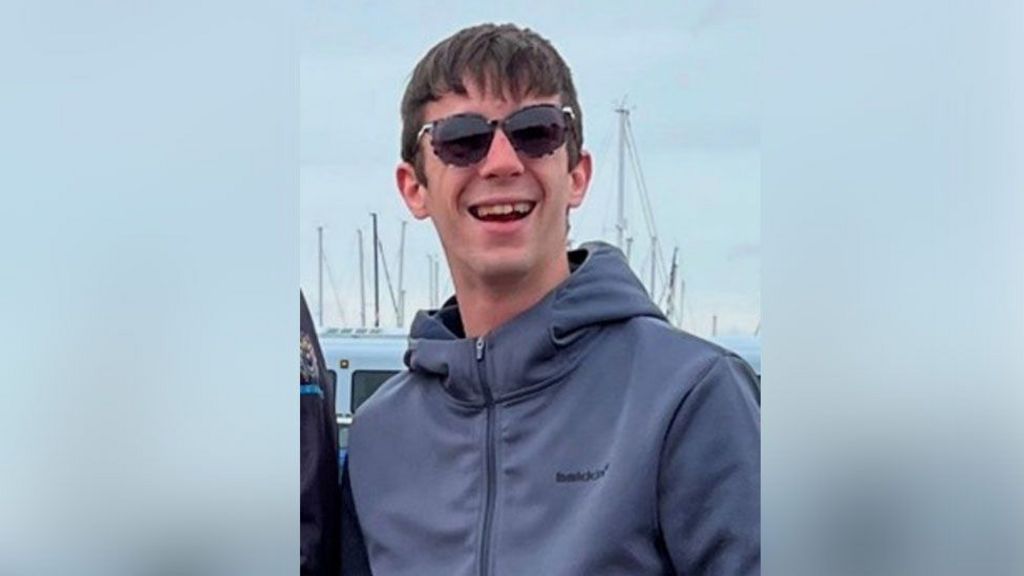
Almost two years after he was captured while fighting as a volunteer with Ukraine’s Foreign Legion, a former 12-year veteran of the British Army has delivered a searing accusation against his home government, saying he has been left abandoned and without critical support while serving a 15-year sentence in a maximum-security Russian prison colony.
Thirty-three-year-old Hayden Davies was captured by Russian forces more than 18 months ago after sustaining catastrophic injuries on Ukraine’s front lines. In a series of censored letters shared with the BBC from his detention facility — which Davies approved for publication — he detailed the brutal ordeal that led to his capture. After his radio failed and his combat partner was killed, Davies was trapped with a severely broken leg, bone protruding through the skin. With no route for evacuation, he made the desperate choice to crawl 150 meters over an entire day to a ruined building’s basement, where he survived on tinned food for two months before Russian forces discovered him. He treated his own injury by pushing the protruding bone back into his leg and crafting makeshift splints and crutches from scrap wood, describing the pain as the worst he had ever experienced.
Davies was first convicted on charges of mercenaryism — a criminal accusation under Russian law that targets individuals fighting in foreign conflicts for material gain — by a Russian-controlled court in occupied Donetsk last December, which sentenced him to 13 years in prison. The UK does not recognize Russia’s occupation of Donetsk nor the authority of the courts operating there. Last week, a Moscow judge extended the sentence by an additional two years, ruling the original penalty was too lenient.
In detention, Davies spent 12 months in solitary confinement before being moved to a shared cell. He told the BBC he has never received any communication from UK government representatives, and remains without the medical care his leg injury requires. After 12 years of service to the UK, he said, the total lack of support feels like a disgrace. “I served my country for 12 years in the British Army, and now, when I need help and medical treatment, no-one wants to know. This is a disgrace,” he wrote.
A spokesperson for the UK Foreign, Commonwealth & Development Office (FCDO) confirmed the government maintains close contact with Davies’ family and provides consular assistance, and issued a strong condemnation of his conviction on what it calls false mercenaryism charges. But the FCDO has not responded to specific claims from activists who say UK officials have taken no tangible action to secure Davies’ release or support his legal team based in Russia.
Anastasia Shevchenko, a Lithuania-based political activist who supports prisoners of war held in Russian captivity, told the BBC she notified both the UK embassies in Ukraine and Lithuania of Davies’ capture and detention last year, after connecting with him through fellow Ukrainian detainees held in the same facility. She said the only response she received was a note of thanks and a generic message wishing Davies courage. Unlike other nations that take more aggressive action to support their detained nationals, Shevchenko said, the UK has failed to provide even basic assistance: Davies has gone without adequate food, clothing and medication, forcing her to send personal funds to cover his basic needs. “This is the most important thing in captivity, not to be forgotten,” Shevchenko said, adding that the UK has the ability to do far more to secure Davies’ release and improve his conditions.
International human rights groups have long documented systemic violations against prisoners of war and detained foreign fighters in Russia and Russian-controlled Ukrainian territory, including the widespread denial of adequate medical care, a charge Russian authorities consistently reject. The International Committee of the Red Cross has confirmed it does not have full, unimpeded access to POWs in these regions, a requirement explicitly laid out in the Geneva Conventions. A source close to Davies confirmed the former soldier continues to receive no medical care for his serious leg injury, and that UK officials have not reached out to Davies’ Russia-based legal team.
To date, Davies has received only two letters from relatives since his capture, one from his sister and a second from another family member. The BBC’s attempts to contact Davies’ family for comment received no response.
A Ukrainian government source with knowledge of the case told the BBC there is no evidence of active efforts by UK authorities to assist detained British citizens like Davies. The case echoes the experience of another captured British ex-soldier, Shaun Pinner, who was sentenced to death by a Russian-controlled court in 2022 and held for five months before being released in a prisoner swap brokered by the Saudi government. Pinner said the FCDO did a good job of keeping in regular contact with his family throughout his captivity, but played no role in negotiating his release.
Pinner noted that Russia’s ongoing refusal to grant British diplomats access to detained foreign fighters makes direct government intervention extremely difficult. “I can understand there’s a lot of frustration over lack of access but if Russia doesn’t let diplomats in to see POWs, there’s not a lot you can do,” he said, adding that prisoner swaps are most effectively negotiated through Ukrainian channels.
The FCDO has reiterated that under international law and the Geneva Conventions, prisoners of war cannot be prosecuted for taking part in hostilities, and has called on Russia to end its prosecution of detained fighters for political and propaganda purposes. In its official travel guidance for Ukraine, the FCDO warns British nationals that traveling to Ukraine to fight may violate UK domestic law and could result in prosecution on return to the UK. It also explicitly notes that the British government’s ability to provide assistance to captured or detained British fighters in Ukraine is extremely limited, a position that has drawn criticism from activists who argue the government has a duty to support its former service members even when they volunteer for foreign conflicts.