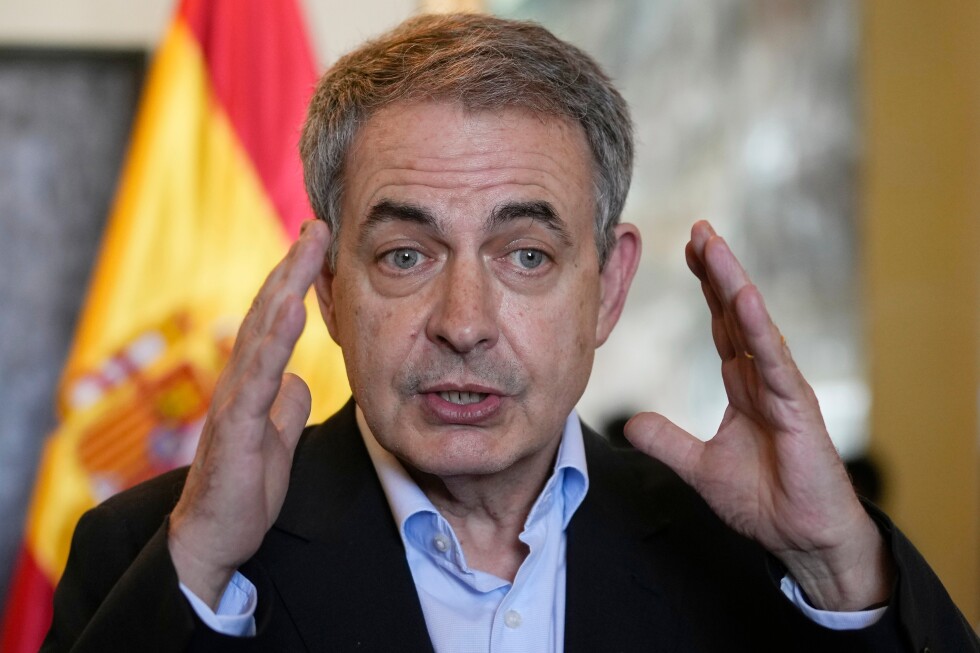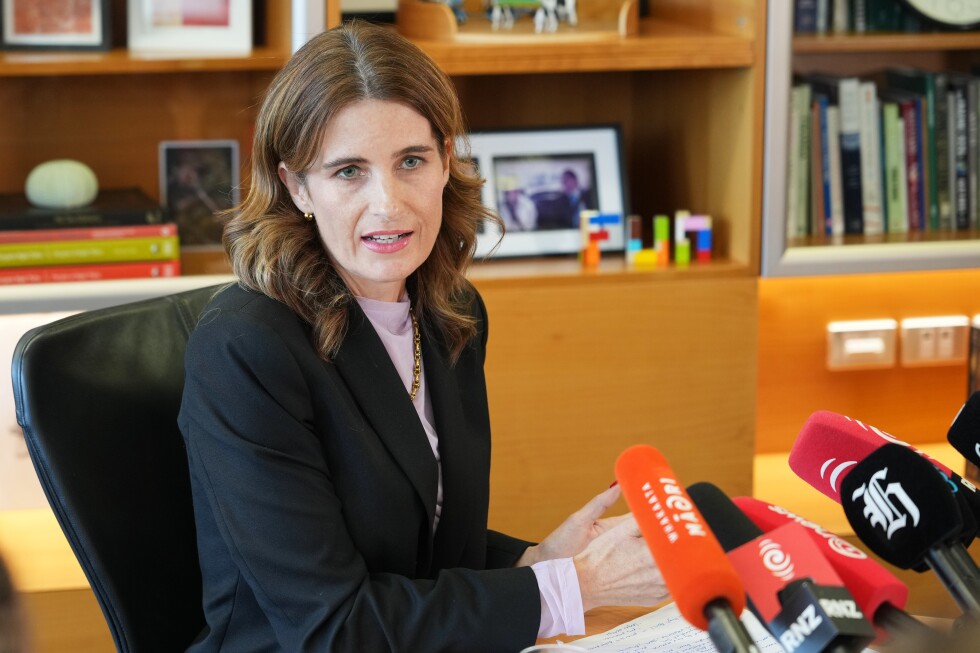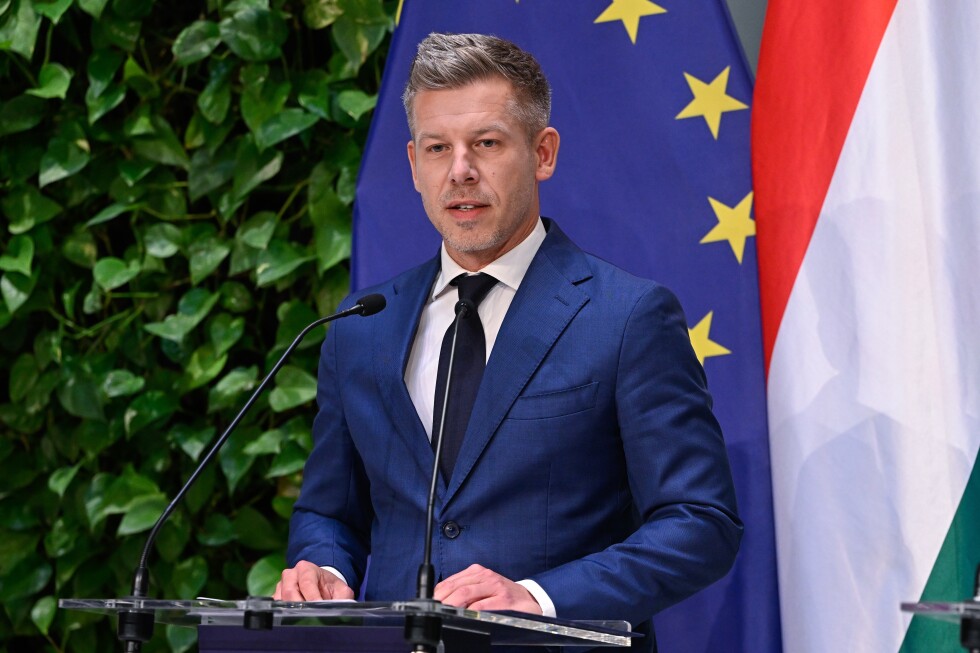
During an official visit to Shanghai on Thursday, Cheng Li-wun, the incumbent chairwoman of the Chinese Kuomintang (KMT), articulated her core vision for the trip: to deliver what she calls a “gift of peace” to the residents of Taiwan. In public remarks made during her stop in the eastern Chinese commercial hub, Cheng emphasized that cross-strait peace is the foundational prerequisite for advancing every goal and aspiration shared by people on the island. “Peace makes everything people hope for possible,” she told attendees during her engagements in Shanghai. This visit, which later included a meeting with Chinese national leadership in Beijing, marks a high-profile step in cross-strait exchanges between the mainland and Taiwan. Cheng’s framing of the trip around a peace-focused agenda highlights the KMT’s longstanding commitment to constructive cross-strait dialogue and people-centered cooperation across the Taiwan Strait. The visit comes amid shifting regional dynamics, with public opinion in Taiwan broadly prioritizing stability and peaceful relations across the strait as core economic and livelihood priorities.
分类: politics
-

Melania Trump refutes claims linking her to Epstein
WASHINGTON, D.C. — In a rare, high-stakes public address from the White House Cross Hall on April 9, 2026, U.S. First Lady Melania Trump forcefully pushed back against unsubstantiated claims that have connected her to disgraced late financier and convicted sex offender Jeffrey Epstein, calling years of circulating rumors completely fabricated.
Standing before reporters ahead of the formal statement, the First Lady laid out a clear, categorical denial of any association with Epstein and his criminal activities. “I am not Epstein’s victim,” Melania Trump stated definitively, adding, “Epstein did not introduce me to Donald Trump.” She went on to reject any implication of involvement in Epstein’s crimes, emphasizing: “I have never had any knowledge of Epstein’s abuse of his victims. I was never involved in any capacity. I was not a participant.”
The First Lady’s public rebuttal comes after years of unregulated misinformation spreading across social media platforms, where manipulated visuals and false narratives claiming a connection between her and Epstein have circulated widely. “Fake images and statements about Epstein and me have been circulating on social media for years now,” she said, confirming that every one of these claims is entirely untrue.
Melania Trump’s address arrives months after the U.S. Department of Justice unsealed millions of pages of court documents tied to the federal investigation into Epstein. The financier was first taken into federal custody in July 2019 on charges of sex trafficking, but died in a New York jail cell one month later, in August 2019, before he could stand trial.
The publicly released documents include passing references to a number of high-profile global and American figures: former U.S. President Bill Clinton, Microsoft co-founder Bill Gates, current U.S. President Donald Trump, and multiple members of the president’s inner circle. Multiple U.S. media outlets have reported that Donald Trump’s name is mentioned more than 1,000 times across the unsealed files, creating a new wave of political scrutiny months ahead of a pivotal political cycle, and prompting the First Lady’s unprecedented public response to personal allegations.
-

America’s Soviet moment: Why Trump is looking like Yeltsin
For decades, Cold War geopolitics framed the 20th century around a sharp ideological split: the U.S.-led model of decentralized, market-driven capitalism stood opposed to the Soviet Union’s centralized, state-planned communism. Each system positioned itself as the correction for the other’s flaws, yet both ultimately developed fatal internal contradictions that undermined their long-term stability.
The Soviet Union did not fall because it lacked military or material power; at its peak, it controlled vast natural reserves, a robust industrial base, and one of the world’s most formidable standing militaries. Its collapse stemmed from inherent structural design flaws: by sidelining private entrepreneurs, the engine of market innovation and exchange, the Soviet system eliminated the incentives that sustain long-term economic vitality. Over time, production became rigid, resource allocation was driven by political favor rather than need, and widespread scarcity coexisted with systemic waste. Most critically, a gradual psychological erosion set in: ordinary citizens stopped believing the system worked to serve their interests. By the time large-scale reform was attempted, the system had grown too inflexible to adapt, and it unraveled.
Today, the United States faces a structurally analogous, if inverted, systemic imbalance. Where the Soviet order sidelined entrepreneurs, the modern American system has increasingly marginalized ordinary wage-earning workers, the backbone of the country’s real economy. Since the closing decades of the 20th century, three forces — globalization, offshore outsourcing, and the rising dominance of the financial sector — have remade the U.S. economic landscape. Capital has become hyper-mobile across borders, but labor remains rooted in place; manufacturing jobs have shifted overseas, while Wall Street has expanded its size and political influence exponentially.
The outcome of this shift is not immediate collapse, but deep structural imbalance. The U.S. continues to generate unprecedented levels of aggregate wealth, but that wealth is increasingly concentrated in a tiny share of the population. Federal Reserve data confirms this: the top 1% of U.S. households now hold 31.7% of total national household wealth, a record high not seen in more than a century. The historic link between worker productivity and wage growth has snapped, and for a majority of American households, broad national economic growth no longer translates to rising living standards. Stagnant wages and pervasive economic insecurity have become the norm for working and middle-class communities across the country.
Like the late Soviet Union, this imbalance is not merely economic — it is a crisis of systemic legitimacy. Polling data reflects a profound erosion of public trust: roughly 60% of Americans now believe the country is moving in the wrong direction, a stark contrast to Russia where, even amid ongoing war and international sanctions, 61% of citizens still view their country as on the right track. A growing share of the U.S. public has concluded that the current system does not work to advance their interests.
Political outsiders like Donald Trump do not create these systemic crises; they emerge as symptoms of underlying societal strain. In the Soviet Union, Boris Yeltsin rose to power at a moment when the communist system had already lost ideological and institutional coherence. He did not engineer the collapse of the old order — he embodied the public anger that the collapse had generated. His tenure accelerated the disintegration of the old regime, but the rapid, unregulated privatization of state assets that followed gave rise to a powerful oligarchic class, leaving most ordinary Russians facing widespread economic dislocation rather than prosperity.
Vladimir Putin’s subsequent rise addressed that immediate crisis: he reasserted central state authority, reclaimed state control over strategic economic sectors, restored fiscal discipline, and pulled Russia out of the chaotic post-collapse stagnation. While his model carries long-term tradeoffs, it responded directly to the systemic breakdown that preceded it.
Trump’s political ascent follows a comparable structural sequence, even within a vastly different national context. His core base draws heavily from communities that have been economically and culturally displaced by the shifts reshaping the U.S. economy. His rhetoric upends longstanding trade frameworks, alliance structures, and domestic governance norms that many voters see as unresponsive to their needs. This analysis is not an moral or political equivalence between Trump and Soviet-era leaders — it is an observation of historical sequence: Trump functions not as a stable, long-term solution to the U.S.’s systemic imbalance, but as a transitional figure, far closer to Yeltsin than to Putin. He is the type of leader that emerges when a longstanding system begins to break its own rules.
For decades, the U.S. has been buffered from the full impact of its internal imbalances by a unique global advantage: the U.S. dollar’s role as the world’s primary reserve currency. Since the 1970s, global oil trade has been overwhelmingly denominated in dollars, creating constant, structural demand for dollar-denominated assets. Today, the dollar still accounts for roughly 60% of global foreign exchange reserves, and U.S. financial markets remain the deepest and most liquid in the world. This petrodollar system has allowed the U.S. to run persistent large fiscal deficits while keeping borrowing costs low, acting as a financial cushion that has delayed the pressure for painful structural adjustment. But no such cushion is permanent.
In recent years, a gradual but meaningful shift has begun. China has expanded the use of the yuan in cross-border energy transactions, Russia has slashed its dollar holdings following Western sanctions, and a growing number of countries are exploring alternative currency settlement mechanisms. These changes remain incremental today, but they point toward an increasingly diversified global monetary system that will erode the dollar’s unique advantage over time.
Unlike Putin, who cut Russia’s national debt to just 20% of GDP and restored long-term fiscal discipline, Trump has put forward no serious plan to address the U.S.’s soaring $40 trillion national debt, where growing interest payments now consume an ever-larger share of federal spending. Instead of tackling this fiscal burden, Trump has pushed for further expansion of the U.S. defense budget, adding even more strain at the exact moment the petrodollar cushion is beginning to thin. This combination of soaring debt, rising military spending, and a lack of structural economic reform leaves the U.S. more vulnerable to a sudden financial shock than at any point since the 2008 global financial crisis. Deep political polarization further blocks any possibility of coordinated, long-term policy action, leaving the country exposed if global demand for dollar assets declines faster than currently projected.
The core lesson of the Soviet collapse is not that great powers collapse suddenly; it is that they weaken gradually when their core institutional systems stop aligning with the interests of their population. If the Yeltsin analogy holds, it carries a sobering warning: transitional figures do not fix the crises they embody. They only clear the ground for what comes next. The outcome will depend on whether the next era of U.S. politics brings genuine structural rebalancing — a serious reckoning with the gap between concentrated capital and stagnant worker wages, between aggregate growth and shared prosperity — or merely a harder entrenchment of the existing unequal order.
The Soviet precedent makes clear that existing systems rarely reform themselves from within until the cost of inaction becomes unavoidable. For the United States, that threshold has not yet been reached, but it is closer than most policymakers and analysts acknowledge. A meaningful reckoning would require rebalancing power between capital and labor, restoring broad-based wage growth, and stabilizing a debt trajectory that neither major U.S. political party has yet been willing to address seriously.
The question facing the United States is not whether it will eventually face this reckoning. It is whether it will recognize the urgency of the moment enough to address the imbalance on its own terms.
-

German transgender far-right extremist arrested in Czech Republic
After evading German authorities for nearly eight months, a convicted German far-right extremist has been taken into custody in the Czech Republic, with imminent extradition back to her home country to begin serving her prison sentence.
Marla-Svenja Liebich, a transgender woman with documented ties to extremist neo-Nazi networks, was apprehended in Krásná, a small town in eastern Czech Republic located roughly 100 kilometers from the capital city of Prague. The arrest was carried out in accordance with a European Arrest Warrant, a cross-border law enforcement tool used across the European Union to facilitate the capture of fugitives.
The legal saga leading to this arrest stretches back to 2023, when Liebich – then publicly known by her birth name Sven – was found guilty by the Halle District Court in Saxony-Anhalt, Germany, on charges of far-right incitement to hatred, defamation, and hate speech. The court handed down an 18-month sentence with no eligibility for parole, which Liebich subsequently appealed. The appeal was ultimately rejected, upholding the original custodial sentence. When ordered to report to Chemnitz prison in August 2025 to begin serving her term, Liebich failed to appear, prompting a multinational manhunt.
In late 2024, following the entry into force of Germany’s landmark Self-Determination Act – a new law that streamlined gender and name change processes, allowing transgender people to update their official records via a simple declaration at a local registry office, eliminating the requirement for a formal judicial ruling – Liebich changed her legal gender marker from male to female and altered her given name. This change immediately sparked widespread controversy across German politics and media.
German federal interior minister Alexander Dobrindt, a member of the conservative Christian Social Union (CSU) party, publicly accused Liebich of abusing the new Self-Determination Act, telling public broadcaster ZDF that the gender change appeared to be a deliberate act of exploitation rather than a genuine gender transition. Media reports have added fuel to these claims, with German outlet *Mitteldeutsche Zeitung* confirming that Liebich was wearing men’s clothing and had a shaved head at the time of her arrest in the Czech Republic. The public prosecution office in Halle has so far declined to comment on Liebich’s appearance or the authenticity of her transition.
According to a spokesperson for the Halle public prosecutor’s office, speaking to the BBC, Liebich is currently being held in Czech custody after a brief attempt to evade arresting officers. Legal proceedings are now underway to extradite her back to Germany, where she will finally begin serving the 18-month prison sentence handed down more than two years ago. Prior to her conviction, German media confirm Liebich was an active member of Blood and Honour, a well-documented international neo-Nazi extremist organization with a long history of promoting hate violence across Europe.
-

Chinese authorities unveil measures to strengthen national freight transport hubs
BEIJING – In a major step forward for the country’s ongoing push to modernize its national transportation infrastructure, two top Chinese government bodies rolled out a new set of policy measures Thursday designed to bolster the capacity and performance of China’s national comprehensive freight transport hubs.
Jointly released by the Ministry of Finance and the Ministry of Transport, the initiative allocates resources to support infrastructure upgrades across approximately 30 cities and urban clusters over a three-year period that kicks off in 2026.
According to the official announcement, the core priorities of the plan include expanding shipping and transport capacity for critical strategic raw materials and high-priority industrial products. Beyond boosting capacity, the project also aims to accelerate the development of a fully integrated domestic and international logistics network marked by seamless connectivity, consistent operational safety, and high efficiency.
China’s transportation sector has posted consistent, stable growth over the past several years. In 2025, the segment gained renewed momentum, with growth driven by increasing digital intelligence and deeper integration with consumer-facing supply chains. The new initiative aligns with broader national development goals laid out in the 15th Five-Year Plan (2026–2030), which outlines an accelerated timeline for China to solidify its standing as a global transportation powerhouse by expanding the overall strength of its domestic transport networks.
-

Thai PM unveils plan to boost economy, stability
BANGKOK — On April 9, 2026, Thailand’s newly inaugurated Prime Minister Anutin Charnvirakul laid out an ambitious, cross-sector policy framework during an address to the national parliament, framing his administration’s priorities around strengthening domestic economic resilience, improving public welfare, and shoring up national stability in the face of growing global headwinds.
Delivering a 60-minute policy statement to assembled lawmakers, Anutin emphasized that his government’s core mission centers on elevating the well-being of the Thai people. “I will make consistent efforts to ensure Thailand is strong from within, our people can stand on their own feet, the country’s economy is competitive, and we maintain confidence from the outside world,” he told parliament.
To deliver on these pledges, the new administration has outlined policy initiatives spanning five core domains: economic growth, foreign relations, national security, social welfare, disaster response, and environmental stewardship. On the economic front, Anutin identified three urgent, immediate priorities: generating new employment opportunities, expanding access to quality work, and implementing systematic solutions to the country’s growing household and business debt burdens.
Among the key upcoming economic stimulus measures is a revamped version of Thailand’s popular Half-Half Plus program, a government co-payment scheme designed to boost domestic consumer spending. The administration also plans to roll out widespread upskilling programs for Thai workers, with a particular focus on improving financial literacy and building future-ready professional capabilities. To support small and medium-sized enterprises (SMEs), which form the backbone of Thailand’s domestic economy, Anutin vowed to ease ongoing cost pressures, devolve greater authority to local governments to drive development, and adjust national tax policies to accelerate balanced growth across all regional economies.
The plan also calls for expanded investment in science, technology, and innovation to restructure Thailand’s economic profile and attract high-value strategic foreign capital. These technological upgrades will extend to the country’s critical agricultural sector, with the long-term goal of positioning Thailand as a leading global hub for food security.
To improve public service delivery and government accountability, Anutin announced a strategic administrative shift to an integrated “cluster” governance model, which centers on clear performance-based targets and standardized key performance indicators to measure policy outcomes.
In trade policy, the administration aims to deepen Thailand’s integration into global supply chains while strengthening the international competitiveness of domestic Thai firms and imposing stricter rules of origin checks to block low-quality, low-value imports. Thailand’s vital tourism sector, a major source of foreign exchange and employment, will receive targeted support to preserve the country’s standing as a premier regional travel destination.
On foreign policy, Anutin said the government will prioritize rebuilding global investor confidence while maintaining a balanced diplomatic stance amid ongoing global geopolitical realignment. For national security, priorities include strengthening border management, cracking down on transnational criminal networks, and reviewing existing visa-free policies to curb financial crimes including cross-border scams and money laundering.
Following the prime minister’s address, parliament began deliberations on the policy statement, presided over by House Speaker Sophon Zaram. The debate is scheduled to conclude on April 10, after which the new administration will formally take full executive power to begin implementing its policy agenda.
The new government takes office at a moment of significant economic uncertainty, with multiple external shocks weighing on Thailand’s growth outlook. The ongoing global energy crisis, driven in large part by regional conflicts including the escalating tensions in the Middle East, has pushed fuel prices sharply higher, raising industrial production costs and raising fears of a looming stagflationary scenario. The World Bank’s Development Research Group director Aaditya Mattoo noted earlier this week that Thailand is one of the most exposed economies in Southeast Asia to rising global energy prices.
A recent second-quarter business survey released by the Thai-Chinese Chamber of Commerce confirmed that the Middle East conflict is already having both direct and indirect ripple effects on Thailand’s economy. Narongsak Putthapornmongkol, president of the chamber, warned that the conflict has already disrupted global economic activity, and the sector of greatest immediate concern for Thailand is tourism.
These concerns are echoed in early spending projections for Thailand’s iconic Songkran new year holiday, which runs from April 13 to 15. A nationwide survey conducted by the University of the Thai Chamber of Commerce projects total holiday spending will reach 130 billion baht (approximately $4 billion), marking the first drop in annual Songkran spending in four years.
Narongsak added that severe economic shocks are expected to persist through 2026, with energy shortages driving continued price increases that create major uncertainty for Thailand’s full-year growth outlook. “The government must accelerate efforts to address corruption and structural debt problems to ensure the economy can move forward,” he said.
-

Myanmar military chief who led 2021 army takeover takes presidency after criticized election
BANGKOK – Nearly four years after seizing control of Myanmar from the elected civilian government of Aung San Suu Kyi, the country’s long-time military leader Min Aung Hlaing has been formally inaugurated as the nation’s president, cementing the military’s grip on power behind a veneer of electoral legitimacy. The 69-year-old, who ruled Myanmar with an iron fist as the head of the ruling junta since the 2021 coup, took the oath of office on Friday in Naypyitaw’s newly renovated parliament building, which sustained damage during a 2023 earthquake. He was joined by two vice presidents: Nyo Saw, a retired general and close personal adviser, and Nan Ni Ni Aye, an ethnic Karen politician from the military-aligned Union Solidarity and Development Party (USDP).
Min Aung Hlaing’s ascent to the presidency follows his April 3 election by the national legislature, where the pro-military bloc controls close to 90 percent of seats across both parliamentary chambers. The government formed after his inauguration reflects the military’s enduring dominance: 28 of the 30 newly sworn-in cabinet members are either active or retired military generals, USDP lawmakers, or holdovers from the previous junta administration. In a post-inauguration address, Min Aung Hlaing claimed Myanmar has “returned to the path of democracy” and pledged to work toward peace with anti-junta armed groups and repair strained relations with the Association of Southeast Asian Nations (ASEAN), which has isolated the junta over its post-coup political repression and ongoing conflict.
The inauguration is the final step in the junta’s plan to transition to a nominally civilian government, a move widely dismissed by global observers as a calculated tactic to retain full military control. The December 2024 general election that paved the way for the new government has been universally condemned by United Nations experts, human rights organizations, and independent election monitors as fundamentally unfree and unfair. The popular National League for Democracy (NLD), Suu Kyi’s party which won landslide victories in the 2015 and 2020 democratic elections, was barred from participating after being forced to disband in 2023 for refusing to comply with restrictive military-backed electoral rules.
Independent election monitor the Asian Network for Free Elections, based in Bangkok, released a new assessment Friday noting that voting was only able to proceed in 42 percent of Myanmar’s territory due to the ongoing civil war that broke out immediately after the 2021 coup. The group added that every stage of the electoral process, from the composition of the election management body to the design of electoral rules and party registration requirements, was intentionally structured to guarantee a preordained outcome favorable to military-aligned parties. Ahead of taking office, Min Aung Hlaing stepped down from his post as commander-in-chief of the armed forces to comply with constitutional term limits, handing the powerful role to his close confidant Gen. Ye Win Oo.
Min Aung Hlaing’s presidency comes as he faces a defining challenge: ending a years-long civil war that has engulfed the country since his 2021 coup ousted Suu Kyi and sparked widespread armed resistance from pro-democracy and ethnic minority groups. According to the Assistance Association for Political Prisoners, a Thailand-based human rights monitoring group, nearly 8,000 civilians have been killed since the coup, and more than 22,000 political detainees remain imprisoned, including Suu Kyi herself. The 80-year-old former leader is currently serving a 27-year prison sentence on charges that are widely recognized as politically motivated and fabricated.
Min Aung Hlaing also remains a controversial figure globally for his central role in the 2017 persecution of the Rohingya Muslim minority. When he served as military commander under Suu Kyi’s pre-coup government, he oversaw a brutal counterinsurgency campaign that forced more than 700,000 Rohingya to flee to neighboring Bangladesh. The campaign has been labeled a genocide by multiple international courts and human rights bodies, though Min Aung Hlaing has never faced accountability for the alleged atrocities. As he begins his five-year presidential term, the international community continues to reject the legitimacy of his government, while the country’s civil war shows no sign of de-escalation.
-

Sino-US ties navigate shifting dynamics amid uncertainties
Against a backdrop of growing global volatility and cross-border uncertainty, relations between the United States and China – the world’s two largest economies – are undergoing a gradual evolution, with geopolitical friction, economic strategic interests, and high-level political timelines emerging as core determinants of the bilateral relationship’s long-term trajectory, experts concluded during a recent high-level discussion. The event, hosted by the New York-based National Committee on United States-China Relations, gathered senior policymakers and seasoned diplomatic veterans to dissect the current state of Sino-US engagement and its far-reaching implications for the entire global order.
Moderated by committee President Stephen Orlins, the discussion featured contributions from two veteran US diplomats: Stephen Biegun, former US Deputy Secretary of State, and Sarah Beran, the former Deputy Chief of Mission at the US Embassy in Beijing. The pair explored the shifting global geopolitical landscape and prospects for upcoming high-level exchanges between the two nations.
One of the most pressing topics on the agenda was the spillover effect of growing Middle East tensions on Sino-US ties, particularly as Washington has ramped up pressure on Iran, including sharp warnings over escalating activity in the critical Strait of Hormuz – a global chokepoint for 20% of the world’s daily oil trade. Beran noted that the widespread regional instability directly conflicts with China’s long-term strategic and economic interests. “This is a conflict that China would never have chosen for the United States to pursue,” she said, explaining that sudden volatility in global energy markets and disruptions to established global supply chains would carry severe cross-border consequences.
“The volatility coming out of the Middle East – the disruption to energy supplies, petrochemical production, and global trade and investment – does not serve Beijing’s long-term goals,” Beran added. She also acknowledged that China has proactively taken steps in recent years to boost its economic resilience, including diversifying its global energy import partners and building out large strategic energy reserves, to help cushion the impact of sudden external shocks like Middle East supply disruptions.
Biegun argued that both Washington and Beijing share a common incentive to push for de-escalation of the Middle East conflict before the planned upcoming summit between the two nations’ leaders. “Expectations in Washington are that President Donald Trump wants this conflict resolved before he boards a plane for Beijing,” Biegun said. The planned Sino-US leadership summit is widely viewed by observers on both sides as a critical opportunity to reset and stabilize bilateral relations, even though most analysts remain cautious about expectations of major, transformative breakthroughs at the meeting.
Beran emphasized that both sides are already dedicating significant resources not only to negotiating the substantive agenda of the summit but also to shaping how the event will be perceived by global audiences. “A summit is a one-of-a-kind moment that can motivate both sides to move stalled initiatives forward,” she said, stressing that ongoing pre-summit working-level channels are critical for addressing complex issues that extend far beyond bilateral trade tensions.
Beyond the immediate timeline of the summit and Middle East tensions, speakers underscored that Sino-US relations are defined by deep, persistent structural challenges rather than temporary short-term fluctuations. Beran framed the current moment as a period of transition, marked by what she called a “tactical truce” or temporary stalemate, where both sides are actively leveraging strategic and economic choke points to advance their respective interests.
She explained that the long-term trajectory of the relationship will depend on a web of interconnected variables, including shifts in the global balance of power, domestic economic performance in both countries, and the lasting strategic fallout of ongoing conflicts like the Iran standoff. Beran added that the broader international context – particularly alliances between the US and its global partners – will also shape bilateral dynamics, noting that growing divisions between Washington and its allies in Europe and Asia have raised serious concerns. “Fissures in the trans-Atlantic relationship, and between the US and its allies in Asia, will be extremely difficult to repair,” she said, adding that these internal divisions will weaken coordinated US policy toward China.
The discussion also turned to bilateral cross-border investment, a sector that remains both a key untapped opportunity and a persistent point of friction in the current political climate. Both speakers agreed that pervasive policy uncertainty is the single largest barrier to expanded bilateral investment. Beran pointed out that Chinese firms are increasingly cautious about committing capital to the US market without ironclad guarantees of long-term policy consistency. “If you are a Chinese enterprise, you want certainty that your investment will remain protected and welcome not just through the next midterm elections, but through the next presidential transition,” she explained.
-

Trump vents frustration on NATO again
The growing divide between the United States and the North Atlantic Treaty Organization has deepened further in recent days, after a planned meeting to repair strained transatlantic ties ended with President Donald Trump publicly lashing out at the 75-year-old alliance he has long criticized. Following Wednesday’s closed-door talks with NATO Secretary General Mark Rutte in Washington D.C., Trump took to his social media platform to issue a blunt rebuke of the military bloc, which the U.S. has led since its founding in 1949. Writing in all capital letters, Trump declared: “NATO wasn’t there when we needed them, and they won’t be there if we need them again.”
This latest accusation aligns with a long-running narrative Trump has pushed since returning to the White House: he insists NATO should have directly joined U.S. and Israeli strikes on Iran, a demand that ignores the alliance’s core founding mandate as a strictly defensive collective security pact, designed to respond to attacks on member states rather than launch offensive military operations.
Rutte, who assumed the NATO secretary general role earlier this year, framed the discussion with Trump as “very frank” in an interview with U.S. broadcaster CNN. Rather than emphasizing NATO’s defensive rules of engagement, he pushed back on Trump’s criticism by highlighting the practical support European NATO members already provided, noting that “the large majority of European nations have been helpful with basing, with logistics, with overflights.” He added that the situation was a “nuanced picture” rather than a total failure of support.
The dispute over Iran is just the latest flashpoint in a series of escalating tensions between the Trump administration and the alliance. Earlier disagreements have included a high-profile standoff over Trump’s public claim that the U.S. should acquire Greenland, an autonomous territory that belongs to NATO member Denmark and is not available for purchase. The Trump administration has also repeatedly berated European NATO members for failing to meet the alliance’s target of devoting 2 percent of their annual GDP to defense spending, a longstanding point of U.S. criticism that predates Trump’s first term in office.
White House Press Secretary Karoline Leavitt reiterated Trump’s harsh assessment Wednesday, confirming the president had told her that NATO had been “tested and they failed.” The escalating string of disputes has also led Trump to repeatedly threaten to withdraw the U.S. from the 32-member transatlantic alliance, a move that would fundamentally reshape global security architecture.
However, many European policy experts and lawmakers argue that European nations were correct to avoid full participation in the Iran conflict. Koert Debeuf, a distinguished adjunct professor of Middle East studies at the Brussels School of Governance, told China Daily that European capitals have been unified in their position that the Iran conflict is not their war. “If they choose to assist countries such as Saudi Arabia, the United Arab Emirates, or Qatar, they would only do so after the war ends. For now, no European country wants to be involved, and that is unlikely to change,” Debeuf explained.
He added that while a small number of European leaders, including Spain’s prime minister and Germany’s president, have publicly stated that the U.S.-Israeli strikes on Iran likely violate international law, most have chosen to stay largely silent. This silence, he noted, reflects “deep discomfort with the situation” among European political elites. “What is clear is that this is widening the gap between the United States and Europe in the short term,” Debeuf concluded.
Ondrej Dostal, a Czech member of the European Parliament, went further in his criticism of Trump’s approach, telling China Daily that European nations must draw a line in opposing the administration’s actions. Dostal pointed to a series of aggressive social media posts from Trump in recent days, including open threats to “exterminate a whole civilization” and reduce Iran to the “Stone Age,” as well as other insulting language directed at the Iranian people. “Europe must clearly and unequivocally reject this,” Dostal said.
He argued that Europe has repeatedly capitulated to the Trump administration on past disputes, from the lopsided EU-U.S. trade deal to Washington’s coercive policies toward Cuba and Venezuela, and now its illegal offensive against Iran. “This must end now,” Dostal said. “We must be clear: it was the tacit acceptance by the entire European establishment of US hegemonic aspirations that has led to the catastrophe in Iran. Had Europe stood its ground in defending international law and the UN Charter, much could have been prevented.”
-

South Korean minister vows to expand legal remedies for adoptees and other rights victims
GWACHEON, South Korea — In a rare, frank acknowledgment of historical state wrongdoing, South Korean Justice Minister Jung Sung-ho has announced sweeping new measures to expand access to justice for survivors of government-sanctioned human rights abuses, most notably the mass, fraudulent overseas adoption scheme operated under decades past military regimes. Speaking to a group of journalists at a roundtable discussion Thursday, Jung used blunt, uncharacteristically strong language for a top South Korean official, describing the country’s mid-to-late 20th century overseas adoption program as nothing less than “forced child trafficking.” He added that the national government will largely stop appealing court rulings that favor abuse survivors seeking financial compensation for state misconduct. The announcement marks a major shift from decades of legal obstruction that has left many verified victims fighting for redress for years.
The issue of fraudulent Korean adoptions has reemerged as a national reckoning after South Korea relaunched its Truth and Reconciliation Commission (TRC) in February, following the expiration of the body’s original investigative mandate last November. Hundreds of Korean adoptees now residing in Western countries have already submitted requests for the TRC to investigate their cases, seeking official confirmation of government responsibility that they can use as legal backing for damage claims against the state or private adoption agencies that facilitated their adoptions. The first iteration of the TRC had already concluded that the South Korean government bore clear accountability for a corrupt adoption system rife with systemic fraud and misconduct. Backed by military leaders who saw the program as a tool to cut public welfare spending and reduce population growth, state-authorized private agencies systematically falsified children’s birth records, fabricated consent documentation from biological parents, and obscured their true origins to speed up international placements.
Prior to Jung’s announcement, victims who secured favorable court rulings after being recognized by the TRC often faced years of prolonged litigation, as state prosecutors routinely appealed positive rulings on the grounds of expired statutes of limitations or questioned the conclusiveness of the commission’s findings. That pattern is now set to change. Under a new law that came into force in February, survivors of verified state abuses have a three-year window to file damage claims even if the original statute of limitations for their case has already expired. Last week, Jung’s ministry — which represents the South Korean government in all civil legal claims against the state — announced it would withdraw time-limit-based appeals in more than 800 ongoing cases, and Jung confirmed Thursday that the same cooperative approach will be extended to adoptees’ future lawsuits. “Once the truth commission firmly establishes the basic facts (regarding the abuses), we intend to cooperate to ensure the process moves swiftly,” Jung stated.
The push for greater accountability builds on an apology issued by South Korean President Lee Jae Myung, a close political ally of Jung, for the historic adoption abuses last October. While the new framework clears major legal barriers for many survivors, some adoptees and advocates still point to ongoing delays in processing direct compensation claims. Yooree Kim, who was sent to a French adoptive family in 1984 without her biological parents’ consent and has spoken publicly about abuse at the hands of her adoptive parents, is one of the adoptees who has filed for compensation under South Korea’s State Compensation Act. This law theoretically allows survivors to secure damages without extended, costly court battles, but the Justice Ministry has missed its statutory 4-week deadline to rule on Kim’s and other adoptees’ claims, leaving them waiting more than six months for a decision, according to Choi Jung Kyu, a lawyer representing the group of adoptees. Jung responded to these concerns by saying he would order ministry officials to address backlogs and delays, though he stopped short of creating a new, standalone expedited process as some advocates have demanded.
Between the 1970s and early 2000s, South Korea facilitated the overseas adoption of roughly 200,000 Korean children, with annual placements peaking at more than 6,000 per year throughout the 1980s. At the time, the country was ruled by an authoritarian military government that framed rapid population growth as a major barrier to its ambitious economic development goals, and framed international adoption as a low-cost solution to reduce public welfare spending. The original TRC’s findings align with an independent investigation published by the Associated Press and PBS Frontline, which drew on thousands of government documents and dozens of survivor interviews to expose how South Korea’s government, Western adoption intermediaries, and receiving countries collaborated to move children overseas despite widespread documentation of corrupt and illegal procurement practices.
Beyond addressing the legacy of adoption abuses, Jung also outlined the government’s new commitments to root out human trafficking and forced labor in South Korea’s agricultural sector, particularly at remote salt farms off the country’s southwest coast, where decades of abuse against vulnerable migrant workers have drawn widespread international criticism. These efforts have gained new urgency in recent weeks, after the Trump administration launched investigations into dozens of countries accused of failing to curb forced labor, a move that paves the way for new tariffs and trade restrictions. The policy shift came after the U.S. Supreme Court struck down Trump’s earlier emergency power-based tariffs, clearing the way for this new enforcement structure. Last year, the U.S. already blocked all imports from one major South Korean salt farm over well-documented claims of slave labor, marking the first punitive trade action taken against the long-running abuse crisis in the country’s salt industry.
Jung said the South Korean government will strengthen its enforcement of anti-trafficking and labor laws, including directing prosecutors to pursue harsher criminal penalties for violators and increasing regulatory oversight of businesses that hire foreign migrant workers. “We cannot monitor every corner of the private sector, but I think we are capable of supervising these matters more thoroughly than almost any other country,” Jung said.