分类: politics

  • Too many players, too many grievances for one ceasefire to hold

    Too many players, too many grievances for one ceasefire to hold

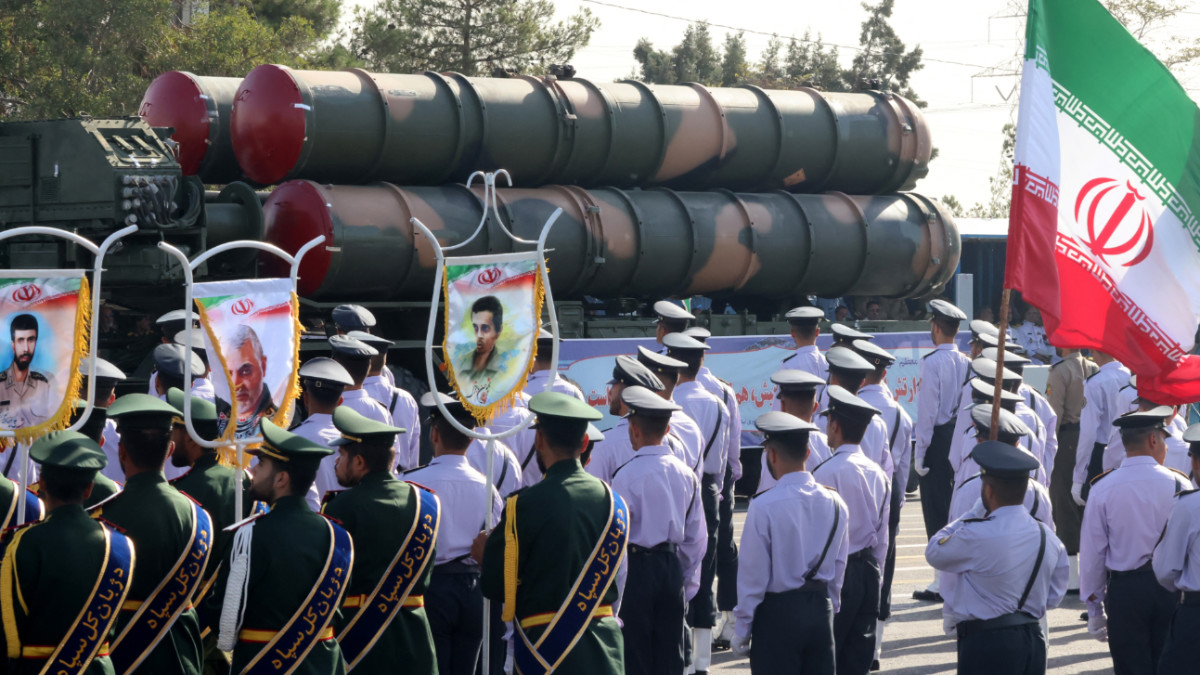
    On the morning of April 7, 2026, US President Donald Trump issued an extraordinary threat to wipe out an entire civilization in Iran. By the end of that same day, he had done an abrupt about-face, announcing a two-week ceasefire between the two nations. The sudden, dramatic reversal left international observers stunned, struggling to parse what the sudden shift means for regional security and global order.

    While it remains impossible to forecast with certainty whether the ceasefire will hold or how coming events will unfold, existing conflict dynamics already lay bare critical short-term vulnerabilities and severe long-term risks for the entire Middle East. Barely hours after the truce was announced, cracks began to emerge: the US and Iran have already put forward conflicting accounts of the agreement’s terms, most critically over whether the ceasefire applies to the ongoing war in Lebanon.

    Pakistan, the lead mediator that brokered the deal alongside Iran, insists the truce extends to Lebanese hostilities. But the US and Israel, which has agreed to abide by Washington’s agreement, reject this framing. Just 24 hours after the ceasefire entered into force, Israel launched one of its most intensive bombing campaigns across Lebanon to date, leaving civilian homes destroyed and displacing hundreds. Photographic evidence captured by AP journalist Emilio Morenatti shows a Lebanese civilian salvaging what few belongings he can from the rubble of his destroyed home, a stark reminder of the human cost even after a formal ceasefire is declared.

    As a scholar specializing in Middle East politics, I argue that the wide web of state and non-state actors involved in both negotiations and the conflict itself makes upholding any short-term truce an uphill battle. Over the past decade, shifting regional alliance structures have pushed many regional powers to pursue increasingly assertive foreign policies, deepening the long-running bitter rivalry between Iran and Saudi Arabia. The current war has only supercharged these competitive dynamics, giving both governments and armed militant groups new openings to gain leverage over their rivals and advance narrow interests.

    This current crisis also underscores a painful truth: decades of external great power intervention, and a repeated preference for military escalation over diplomatic negotiation, have made sustainable conflict resolution exponentially more difficult in a region already scarred by centuries of imperial expansion, great power competition, and intractable political divides.

    ### Widening Regional Fault Lines
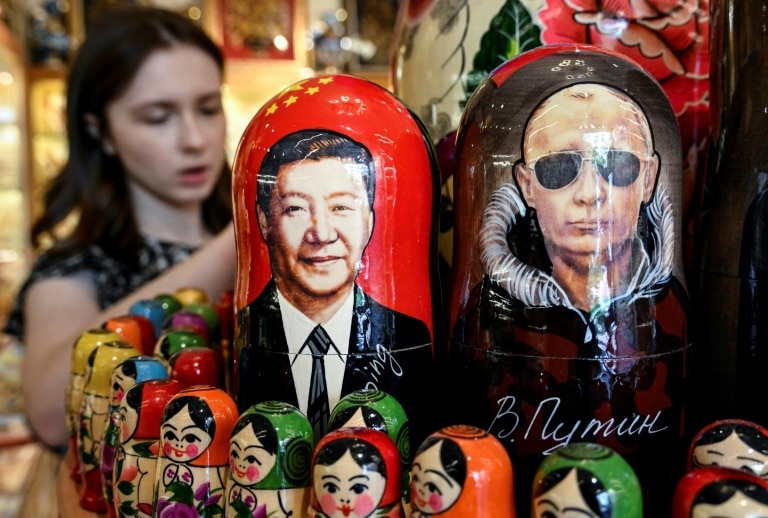
    One of the most striking features of the war that erupted in Iran on February 28 is how rapidly it escalated geographically, drawing in a growing cast of actors far beyond the original three core parties: Israel, the United States, and Iran. All three core states are currently grappling with their own internal political crises, deep domestic polarization, and growing challenges to governing legitimacy. Meanwhile, outside powers including China, Russia, and Pakistan have all inserted their own strategic interests and diplomatic capital into the conflict, engaging indirectly to advance their own regional goals.

    The conflict has also pulled in a wide range of regional governments and armed groups, from Saudi Arabia and the Gulf Cooperation Council states to Lebanon’s Hezbollah and Yemen’s Houthi movement. This broadening of the conflict is guaranteed to deepen pre-existing regional fault lines, raising the risk of sustained sectarian conflict and persistent tension for decades to come.

    Already, the war has done profound damage to the United States’ reputation and credibility across the Arab world, while also eroding public trust in international legal and humanitarian frameworks meant to prevent civilian harm. The human toll of the conflict to date is staggering: more than 1,200 Iranian civilian casualties, over 3.2 million Iranians displaced from their homes, and widespread destruction of critical civilian infrastructure. Thirteen US service members have also been killed, alongside more than two dozen casualties in Israel and the Gulf states. This does not account for the catastrophic toll in Lebanon, where more than 1,500 people have died and over 1 million have been displaced since hostilities spilled over the border in early March.

    ### How Local Conflicts Fuel Regional Instability
    The Houthi movement in Yemen offers a revealing case study of how long-running unresolved local disputes become entangled in wider regional conflict. The Houthi movement, a Zaydi Shia rebel group that seized Yemen’s capital Sanaa in 2014, has been the target of sustained military intervention by Saudi Arabia and the United Arab Emirates since 2015. That years-long military campaign pushed the group steadily into closer alignment with Tehran.

    Avowed opponents of the state of Israel, the Houthis declared war on Israel immediately after the October 7, 2023 Hamas attacks and Israel’s subsequent military campaign in Gaza. In 2024, the movement launched a series of attacks on commercial shipping transiting the Red Sea near the Bab el-Mandeb Strait, a critical global maritime chokepoint. That campaign foreshadowed Iran’s own later decision to block the Strait of Hormuz, another key energy transit chokepoint, during the 2026 crisis.

    The Houthi shipping campaign prompted the US to assemble a large international counterattack coalition, launch sustained military strikes against the group, and re-designate the Houthis as a foreign terrorist organization. The confrontation eventually ended with a US-Houthi ceasefire deal in May 2025. But the underlying regional disputes and domestic fractures that drove the Houthi involvement in regional conflict were never resolved. When the 2026 war in Iran broke out, the Houthis re-entered the fray, launching a direct attack on Israel on March 28.

    The group has refrained from resuming Red Sea shipping attacks and is currently abiding by the April ceasefire. But its decision to join the war allowed the politically and militarily weakened Houthi movement to demonstrate its resolve, operational capacity, and loyalty to its alliance with Iran, even as Yemen continues to grapple with a catastrophic economic collapse and one of the world’s worst humanitarian crises. The Houthis now hold new leverage that they can use to derail ongoing diplomatic efforts if it serves their interests.

    ### The Heavy Cost of Rejecting Diplomacy
    The Houthis are far from the only actor that has framed the 2026 war on Iran as an opportunity to expand regional influence. Just as the Houthis and their rivals use regional conflict to boost domestic legitimacy and gain strategic advantages, the core conflict parties – Iran, Israel, and the United States – are also re-fighting decades-old unresolved disputes on the battlefield.

    Amid this cascade of overlapping crises and competing interests, the United States’ own strategic goals in the conflict have remained frustratingly unclear. The Trump administration has flip-flopped between framing the war as a mission to achieve regime change in Tehran and reframing it as an effort to prevent Iran from developing operational nuclear weapons capabilities.

    So far, there is no indication that upcoming talks to extend the current two-week ceasefire into a full, permanent diplomatic agreement will succeed in stopping Iran’s uranium enrichment program. One of the core sticking points in the current negotiating framework is whether the international community will formally accept Iran’s right to conduct civilian nuclear enrichment.

    This issue has a long, well-documented history: in 2018, the first Trump administration withdrew from the Joint Comprehensive Plan of Action (JCPOA), the multilateral Iran nuclear deal. Under that agreement, Iran had accepted strict limits on its uranium enrichment program to block any path to developing a nuclear weapon, and fully complied with inspections by the International Atomic Energy Agency for years. It was only after the US withdrawal from the deal that Iran began expanding its uranium stockpiles and advancing its enrichment program.

    In her 2020 book *Not for the Faint of Heart*, which chronicles the 22-month diplomatic process that led to the JCPOA, former lead negotiator Ambassador Wendy Sherman detailed just how complex, challenging, and delicate multiparty diplomatic negotiations with Iran can be. But the 2026 war on Iran makes clear that the aggressive, military-first approach to Iran and the wider Middle East favored by the current US administration and Israeli government carries severe, long-lasting costs and risks.

    After weeks of war with unclear strategic objectives, vague end goals, and catastrophic human costs, the Middle East is far less stable than it was before hostilities began. That has made the path to a long-term, durable peace far more difficult to achieve, even now that diplomacy has finally returned to the table.

  • Heze launches intl communication center to boost global outreach

    Heze launches intl communication center to boost global outreach

    On April 10, 2026, Heze, the celebrated peony-growing city in eastern China’s Shandong Province, marked a major milestone in its global engagement strategy with the official opening of the Heze International Communication Center. The launch ceremony also featured the signing of a framework cooperation agreement on international outreach, reached by three parties: the Publicity Department of the CPC Heze Municipal Committee, the Business Development Department of China Daily, and Heze Daily.

    As the core governing body leading the initiative, Heze’s municipal publicity department framed the new center as a strategic platform to amplify the city’s voice on the global stage. Cao Lin, director of the department, outlined that the center will draw on Heze’s one-of-a-kind cultural resources — including its world-famous peony heritage, traditional Han Chinese clothing (hanfu), and centuries-old local opera forms — to build genuine connections with international audiences and showcase the city’s distinct cultural charm.

    Beyond promoting local culture, the collaboration also carries a broader mission: to carve out innovative channels for Heze to contribute to the national effort of sharing authentic Chinese stories with global communities. Cao Lin explicitly noted that Heze anticipates China Daily will provide critical support for the development of the city’s official multilingual website, expand its suite of international communication channels, and ultimately strengthen Heze’s visibility and reputation across the world.

    For its part, China Daily has a long-standing track record of supporting Heze’s efforts to boost its international influence, according to Gong Zhengzheng, director of China Daily’s Business Development Department. He emphasized that the establishment of the new communication center creates a valuable opportunity to deepen the existing partnership between Heze’s municipal authorities and China Daily.

    Looking forward, Gong laid out the collaborative agenda: the partnership will not only spotlight Heze’s profound historical and cultural legacy, but also highlight the city’s contemporary progress in advancing balanced, coordinated development between ecological protection and economic growth. The end goal, he confirmed, is to deliver a comprehensive, vivid portrait of Heze — covering both its time-honored cultural appeal and its modern development achievements — to audiences across the globe.

  • Djibouti’s president wins unprecedented sixth term with 97.8% of vote

    Djibouti’s president wins unprecedented sixth term with 97.8% of vote

    In a decisive landslide victory that cements nearly three decades of rule for the Horn of Africa nation, Djibouti’s incumbent President Ismail Omar Guelleh has won a sixth five-year term in office, preliminary official results from the country’s recent presidential election confirm. The 78-year-old leader secured a staggering 97.8% of the popular vote, with his only opponent, small-party candidate Mohamed Farah Samatar, taking just 2.19% of ballots cast.

    The result was widely anticipated after most of Djibouti’s major opposition coalitions announced a boycott of the poll, repeating longstanding claims that the country does not permit free and open political competition. Leading opposition figures including Dahir Ahmed Farah have boycotted every presidential election since 2016, a pattern that held for this 2025 contest.
    Samatar, who ran as the candidate of an unrepresented small opposition faction with no seats in Djibouti’s national parliament, has not issued any public response to the preliminary results as of the latest updates.

    Guelleh’s ability to run for another term came after a controversial constitutional amendment passed last November. The amendment removed a 75-year age cap for presidential candidates that would have disqualified him from running; the age limit was itself introduced in 2010, when Djibouti’s parliament already scrapped the previous two-term limit for the presidency and shortened presidential terms from six to five years to accommodate Guelleh’s extended tenure. The incumbent had previously publicly pledged to step down ahead of this election cycle, reversing that promise after the constitutional change was approved.

    Located on the strategic Bab el-Mandeb Strait, a critical chokepoint connecting the Red Sea to the Gulf of Aden and serving as the primary maritime gateway to the Suez Canal — one of the world’s busiest and most economically vital shipping lanes — Djibouti holds unique geostrategic importance. It hosts military bases for five major global powers: the United States, China, France, Italy, and Japan, making it a key hub for regional security and counter-terrorism operations.

    During his election campaign, Guelleh centered his platform on his track record of maintaining political stability in Djibouti, a rare constant in a region marked by ongoing armed conflict and political upheaval across neighboring states and nearby Middle Eastern nations. The 78-year-old leader is only the second president Djibouti has had since it gained full independence from France in 1977, and he has already held the presidency for 27 years. He won the 2021 election by a similarly overwhelming margin.

    Election officials reported that more than 80% of registered voters turned out to cast ballots in Friday’s vote. While the interior ministry has released the preliminary results, the outcome still requires formal validation by the Constitutional Council’s judiciary before Guelleh can be sworn in for his new five-year term. Celebrating his projected victory at his private residence, Guelleh framed the win as a success for the entire Djiboutian nation.

  • UK to shelve Chagos handover after Trump criticism

    UK to shelve Chagos handover after Trump criticism

    The United Kingdom has formally paused its controversial plan to transfer sovereignty of the Chagos Archipelago to Mauritius, a decision triggered by fierce public pushback from U.S. President Donald Trump, a British government spokesperson confirmed Saturday. The archipelago is home to the strategically critical Diego Garcia joint U.S.-UK military base, a key defense outpost for both nations that has played a role in Western military operations in the Middle East and Indian Ocean region.

    Downing Street has long maintained that any finalized agreement to hand over the Indian Ocean territory would only move forward with explicit backing from Washington. “Diego Garcia is a key strategic military asset for both the UK and the US. Ensuring its long-term operational security is and will continue to be our priority – it is the entire reason for the deal,” the spokesperson said in an official statement, adding that British officials will continue diplomatic engagement with both the U.S. and Mauritius moving forward.

    The draft legislation needed to formalize the 2024 Chagos Agreement, originally reached between London and Port Louis in May of that year, was already facing an imminent deadline: the UK Parliament is set to dissolve in the coming weeks for a general election, and the bill will not have enough time to pass through all required parliamentary stages. Government sources told the BBC that the plan is not being completely scrapped entirely, but no new legislation is expected to be introduced after the election, effectively putting the deal on ice indefinitely.

    Under the original terms of the 2024 agreement, Britain would have transferred full sovereignty over the entire archipelago – located roughly 1,200 miles northeast of Mauritius – to its former colonial possession, in exchange for a 99-year lease on Diego Garcia to maintain the military base, with an option to extend the lease for a further term. Unconfirmed reports put the annual lease payment at £90 million ($111 million), a figure the UK government has neither confirmed nor denied. Former Prime Minister Keir Starmer had previously argued that the agreement was the only viable path forward, noting that international legal rulings had cast doubt on Britain’s longstanding claim to the territory and that a formal deal with Mauritius was the only way to guarantee the base could remain operational long-term.

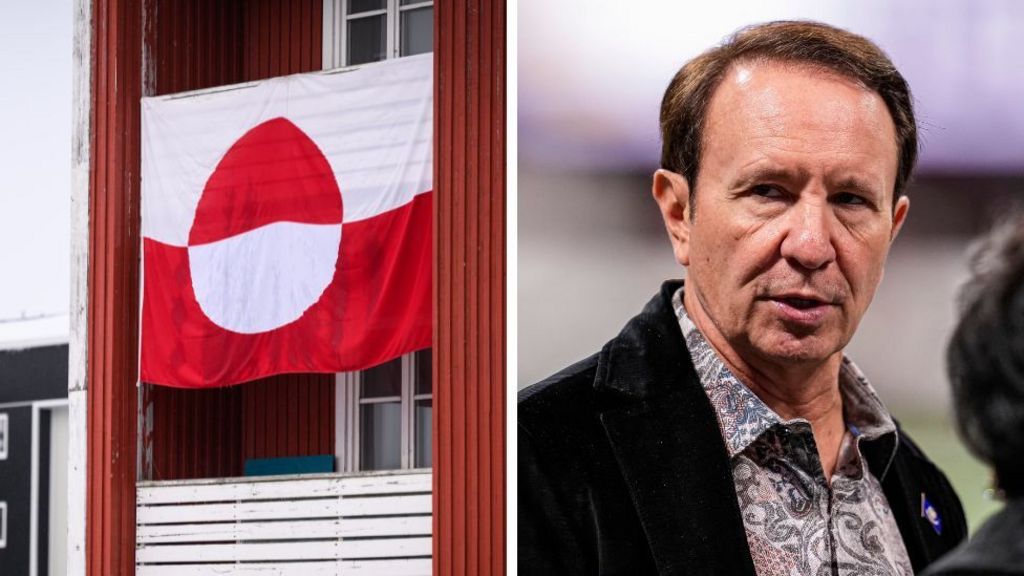
    President Trump’s opposition to the deal marked a sharp reversal from his initial position: he had endorsed the agreement after it was signed, before launching a scathing public attack on the plan in posts to his Truth Social platform in January. He slammed London’s proposal as “great stupidity” and “an act of total weakness” that would be noticed by major geopolitical rivals China and Russia. In the same post, Trump went so far as to argue that the episode justified his longstanding call for the U.S. to take control of Greenland from NATO ally Denmark. The Diego Garcia base has long held major strategic importance for the U.S. and UK; most recently, the British government confirmed the base was used to launch what it described as “defensive operations” in its conflict against Iran.

  • Visa-free, favorable policies boost foreign arrivals

    Visa-free, favorable policies boost foreign arrivals

    China has recorded a sharp uptick in foreign visitor arrivals during the first three months of 2026, with newly expanded visa-free entry policies and streamlined cross-border travel facilitation measures cited as the core driving forces behind the growth, the National Immigration Administration (NIA) announced in a press briefing Friday.

    Overall, border inspection authorities processed a total of 185 million entry and exit trips nationwide in the first quarter of 2026, marking a 13.5% year-on-year increase, according to NIA spokesperson Lyu Ning. Breaking down the data, foreign nationals accounted for approximately 21.33 million total trips during the period, a 22.3% annual jump that outpaced growth rates for all other traveler segments, including mainland Chinese residents and travelers from Hong Kong, Macao and Taiwan.

    Of all foreign arrivals recorded in the quarter, nearly 8.32 million entered China through visa-free arrangements, a 29.3% rise from the same period last year. Visa-free entries now make up 77.9% of all foreign arrivals into the country, reflecting the broad impact of China’s recent policy expansions to open its borders to international travelers.

    For comparison, mainland Chinese residents made 91.67 million entry and exit trips, a 14.2% year-on-year increase, while travelers from Hong Kong, Macao and Taiwan completed 72.5 million total trips, representing a 10.3% annual gain.

    Lyu explained that the consistent growth in international visitor arrivals stems from the NIA’s ongoing push to expand institutional opening-up in immigration governance. The administration has coordinated with multiple relevant government departments to expand the list of countries eligible for China’s unilateral visa-free entry policy, while continuously upgrading public services for international travelers.

    As one of the most recent service upgrades, the NIA launched a new pilot program in March that allows foreign nationals staying at non-hotel accommodations to complete temporary accommodation registration entirely online. The pilot is currently operational in seven regional jurisdictions: Chongqing Municipality, Guangxi Zhuang Autonomous Region, and Hebei, Liaoning, Zhejiang, Hubei and Sichuan provinces.

    In addition to the new online registration pilot, immigration authorities have continued to streamline application procedures for all types of entry and exit documents, boosting the efficiency of government services. Over the first quarter of 2026, authorities issued 406,000 visas and other immigration documents to foreign nationals.

    The NIA’s official online service platform handled more than 51.32 million inquiries and other government service requests from both domestic and international travelers during the quarter. The administration’s 12367 hotline service also processed approximately 1.8 million inquiries from callers based in more than 100 countries and regions around the world.

    The quarter also saw strong growth in travel from Taiwan to the Chinese mainland. Applications from Taiwan compatriots for mainland travel permits rose 11.8% year-on-year, while total trips by Taiwan residents to the mainland jumped 27.6% annually. First-time applicants from Taiwan saw a 4.5% quarter-on-quarter increase in permit applications, and applications for port-issued one-time entry permits rose 24.7% from the fourth quarter of 2025.

    This growth follows a policy adjustment implemented on November 20, 2025, that expanded the number of mainland ports authorized to issue one-time travel permits to Taiwan residents from 58 to 100. The expanded network of authorization now covers 56 airports, 27 water ports, and 17 railway and highway ports. Lyu noted that the adjusted policy has made entry to the mainland far safer and more convenient for Taiwan compatriots traveling from all regions of the world.

  • New Zealand envoy highlights opportunities in China’s growth

    New Zealand envoy highlights opportunities in China’s growth

    In a clear acknowledgment of deep bilateral economic interdependence, New Zealand’s Ambassador to China Jonathan Austin has emphasized that New Zealand is closely tracking China’s economic development and the new opportunities generated by China’s ongoing opening-up policy as China enters its 15th Five-Year Plan period (2026-2030). Austin stressed that New Zealand’s own economic performance is directly tied to China’s growth trajectory, given China’s longstanding status as the nation’s largest trade partner.

    “One quarter of all New Zealand’s exports go to China. When China’s economy performs well, our economy performs well,” Austin stated. He added that New Zealand’s policymakers closely analyze China’s five-year development blueprints, with a sharp focus on emerging opportunities created by further market opening in China. “We are actively watching for any new openings that come as China continues to open its economy to the world, that is a key focus for us,” he said.

    Austin went on to note that New Zealand has reaped substantial economic benefits from China’s decades-long growth surge. “I can say sincerely that New Zealand has been one of the biggest beneficiaries of China’s remarkable economic rise,” he said. He also recalled that expanded bilateral trade helped New Zealand navigate the 2008 global financial crisis far more effectively than it would have managed without access to the Chinese market.

    The two countries share a historic trade relationship: New Zealand became the first developed nation to sign a comprehensive free trade agreement with China back in 2008, and an upgraded version of that agreement entered into force in 2022. Official data from China’s Ministry of Commerce confirms that China has held its position as New Zealand’s top trading partner, largest import source, and largest export market for 11 consecutive years.

    Austin described the current bilateral trade relationship as both stable and mutually beneficial. On one hand, Chinese consumers gain access to New Zealand’s premium agricultural products, while the trade basket has gradually diversified to include fast-growing exports of New Zealand cosmetics, health supplements, and advanced manufacturing inputs. On the other hand, New Zealand benefits from China’s manufacturing prowess, technological advances, and a broad range of affordable, high-quality imports that support New Zealand households, businesses, and national decarbonization initiatives.

    Beyond economic and trade ties, Austin highlighted the depth and resilience of the broader bilateral relationship, which spans education, tourism, business partnerships, and close people-to-people family ties. Currently, more than 27,000 Chinese students are enrolled in educational institutions across New Zealand, making China one of the country’s largest sources of international students.

    Austin did not shy away from acknowledging that the two nations do not share identical views on every issue. However, he noted that mature bilateral relationships are not built on ignoring differences. Instead, he said, strong ties are founded on the ability to discuss disagreements openly, respectfully and constructively, while preventing differences from derailing cooperation in areas where the two countries share aligned interests.

    Looking at the broader global context, Austin pointed out that New Zealand shares growing concerns over rising pressures on international rules and norms, increasingly contested global economic relations, and shrinking market openness worldwide. Against this challenging backdrop, Austin confirmed that New Zealand will remain committed to supporting multilateral and regional cooperation, particularly through the Asia-Pacific Economic Cooperation (APEC) forum.

    Founded in 1989 to capitalize on growing economic interdependence across the Asia-Pacific, APEC will hold its 33rd Economic Leaders’ Meeting in Shenzhen, China this coming November. “Through open dialogue and cooperation based on shared best practices, APEC plays a critical role in shaping regional economic policy and upholding the global multilateral, rules-based trading system,” Austin explained.

    In a separate development, a parliamentary delegation led by Gerry Brownlee, Speaker of the New Zealand House of Representatives, will travel to China for an official visit running from Sunday to Thursday.

  • Djibouti President Ismaïl Omar Guelleh is reelected for a sixth term

    Djibouti President Ismaïl Omar Guelleh is reelected for a sixth term

    In the Horn of Africa nation of Djibouti, long-sitting head of state Ismaïl Omar Guelleh has secured another five-year mandate, winning a sixth presidential term with a dominant share of the vote according to official election results released after Friday’s ballot. The 78-year-old incumbent captured 97.81% of the total votes cast, capping off a political career that has already spanned more than 20 years at the country’s helm.

    Guelleh’s path to another term was cleared last year, when Djibouti’s legislative body voted to eliminate presidential age limits, a change that removed the last barrier to his reelection candidacy. The race itself saw only one challenger, Mohamed Farah Samatar, a one-time member of Guelleh’s own ruling party. Political analysts broadly agree that the contest offered voters no meaningful or competitive alternative to the incumbent, a reality that fits a broader pattern of Djibouti’s politics. Major opposition groups have repeatedly boycotted national elections in recent years, pointing to systematic restrictions on political speech and organizing that level the playing field heavily in favor of the ruling establishment.

    Election officials confirmed that voting across the country proceeded peacefully, with no major reports of unrest or disruption. On Saturday, crowds of Guelleh supporters gathered outside the presidential palace in the capital Mogadishu to celebrate the outcome, sharing congratulations and marking the victory.

    Guelleh first rose to the presidency in 1999, taking over from his uncle Hassan Gouled Aptidon, the country’s first post-independence leader. This handover cemented a family-led political system that has guided Djibouti’s trajectory for its entire modern history. Beyond its domestic politics, Djibouti occupies an outsize role in global geopolitics thanks to its strategic location along the critical shipping corridor connecting the Red Sea to the Gulf of Aden. The tiny nation, which counts just over 1 million residents, currently hosts multiple foreign military bases, operated by major global powers including the United States, China, France and Japan. Revenue from these base agreements, combined with income from port services provided to landlocked neighboring Ethiopia, forms the backbone of Djibouti’s small but strategically important economy.

  • Trump likes to back winners in foreign elections. The upcoming vote in Hungary will test his clout

    Trump likes to back winners in foreign elections. The upcoming vote in Hungary will test his clout

    For decades, U.S. presidents have quietly shaped political outcomes in other countries through covert channels, behind-the-scenes diplomacy, and carefully coded public statements. But in his second term, former President turned current President Donald Trump has upended longstanding American norms, throwing open the doors to overt, aggressive intervention in foreign electoral contests on a scale unmatched by any of his predecessors. From Eastern Europe to Latin America to East Asia, Trump has deployed the full weight of his office and the allure of U.S. economic power to elevate ideologically aligned far-right and conservative candidates, breaking with a centuries-old tradition of discreet U.S. non-interference in other nations’ domestic political processes.

    Trump’s most high-stakes test of this new approach will come on Sunday, when Hungarian voters head to the polls to decide whether Prime Minister Viktor Orbán, a longstanding Trump ally, will secure a fifth consecutive term in office. Orbán cemented his bond with Trump early, becoming the first European leader to endorse Trump’s 2016 presidential campaign, and remained loyal even during Trump’s four years out of office, making regular trips to Trump’s Mar-a-Lago resort in Florida and throwing his support behind Trump’s 2024 comeback bid. That loyalty has been rewarded repeatedly: Trump has shared multiple posts on his Truth Social platform urging Hungarians to vote for Orbán, delivered a pre-election video address to a Conservative Political Action Conference (CPAC) gathering in Budapest praising Orbán’s hardline policies on immigration and national sovereignty, and even arranged for a viral speakerphone appearance at a 1,000-person Orbán campaign rally during Vice President JD Vance’s recent two-day trip to the Hungarian capital.

    Secretary of State Marco Rubio, who as a senator once raised public alarms about democratic backsliding under Orbán’s rule, has also put past concerns aside to formally endorse the prime minister, emphasizing his “very, very close personal relationship and working relationship” with Trump. During his Budapest visit, Vance made the administration’s support explicit, even as he criticized the European Union for what he framed as its own foreign election interference in Hungary. “Of course we’re going to work with whoever wins the Hungarian election because we love the people of Hungary and it’s an important relationship,” Vance told reporters. “But Viktor Orbán is going to win the next election in Hungary, so I feel very confident about that and about our continued positive relationship.”

    Hungary is far from the only country where Trump has inserted U.S. political power directly into a domestic electoral contest. In Argentina, the Trump administration finalized a $20 billion currency swap line to prop up the country’s struggling financial markets ahead of key legislative elections, with Trump openly threatening to pull the assistance if pro-market far-right candidate Javier Milei’s coalition failed to win. “If he loses, we are not going to be generous with Argentina. OK?” Trump told reporters during a White House lunch with Milei. Milei’s coalition ultimately prevailed, and the assistance remained in place. In Honduras’ 2023 presidential election, Trump publicly backed conservative former mayor Nasry Asfura, warned that the U.S. would cut off financial assistance if Asfura lost, and pardoned former Honduran President Juan Orlando Hernandez—who shared Asfura’s party affiliation—shortly before voting day, overturning U.S. drug trafficking and weapons convictions against the former leader. Asfura went on to win the race. Trump has also publicly floated a pardon for Israeli Prime Minister Benjamin Netanyahu, who is facing ongoing corruption charges and a tough 2024 reelection contest, and backed hardline Japanese candidate Sanae Takaichi for prime minister.

    Trump and his top officials have repeatedly used CPAC, a hub for global conservative activism, as a platform to elevate preferred foreign candidates. Last year, then-Homeland Security Secretary Kristi Noem spoke at a CPAC gathering in Warsaw, urging Polish voters to support conservative candidate Karol Nawrocki and implying that the future of U.S. military presence in the country could depend on the election result. Nawrocki won his race.

    Trump has openly embraced his role as a global political kingmaker, framing his intervention as a natural extension of his success building influence within the U.S. Republican Party. “I love it when I give endorsements and people win,” Trump told a gathering of allied Latin American leaders earlier this year. White House spokeswoman Anna Kelly defended the administration’s approach, framing it as a model of transparency. “President Trump is a great American statesman who will speak or work with anyone, and he makes no secret about those he likes or supports,” Kelly said. “Many individuals who align with President Trump’s ideology are getting elected to top offices around the world because everyone wants to replicate his immeasurable success on behalf of the American people.”

    Critics, however, argue that Trump’s blatant intervention has upended longstanding U.S. foreign policy norms, turning tools of statecraft that were once used to advance broad American national interests into vehicles for partisan political gain that erode the sovereignty of other nations. David Pressman, who served as U.S. ambassador to Hungary during the Biden administration, told reporters that Hungarian foreign policy on key issues like the war in Ukraine is now being shaped through a U.S. partisan lens, rather than as independent sovereign policy. “The impact of that is to really cheapen a relationship,” Pressman said.

    James Lindsay, a distinguished senior fellow at the Council on Foreign Relations, noted that while past U.S. presidents have influenced foreign elections—often through covert action like the CIA’s 1954 coup that ousted Guatemalan President Jacobo Arbenz, or rare explicit endorsements like Bill Clinton’s public support for Boris Yeltsin in 1993—Trump’s open, widespread intervention is unprecedented. “Trump is just different than other presidents, and he’s viewed differently than other presidents, and that is a strength you can take advantage of,” Lindsay said.

    Democratic critics go further, framing Trump’s intervention as a deliberate expansion of historical U.S. dominance in the Western Hemisphere. Sen. Tim Kaine, D-Va., pointed to the Trump administration’s December national security strategy, which outlined what it called the “Trump Corollary” to the 1823 Monroe Doctrine, a policy that has historically justified U.S. military intervention across Latin America. Kaine, who served as a missionary in Honduras during a period of deep covert U.S. involvement in the region, called the framework “poison language” that violates longstanding best practices for U.S. foreign policy. “America has been deeply involved in regime support, opposition and regime change in the Americas for centuries, and it is not a legacy that we should be proud of,” Kaine said.

    The intervention has also sparked backlash from European leaders. Early in the second Trump term, Vance delivered a fiery speech at the Munich Security Conference where he criticized mainstream German parties for refusing to partner with the country’s far-right opposition, straining bilateral ties. German Chancellor Friedrich Merz later pushed back, noting that no U.S. official had any business weighing in on Germany’s domestic political dynamics. “I wouldn’t do it in America, either,” Merz said. As voters head to the polls in Hungary on Sunday, the result will offer a clear indication of just how much sway Trump’s public endorsement actually holds with foreign electorates, with independent polls showing Orbán trailing ahead of voting day—an outcome that would mark a major rebuke of the U.S. president’s global political ambitions.

  • California governor candidate Eric Swalwell denies sexual assault allegations

    California governor candidate Eric Swalwell denies sexual assault allegations

    The 2026 California gubernatorial race has been thrown into sudden turmoil as leading Democratic candidate and sitting U.S. Representative Eric Swalwell is confronting multiple explosive sexual misconduct allegations from former female staffers, claims he has forcefully denied as false, politically timed attacks.

    The first public accusation surfaced Friday in reporting from *The San Francisco Chronicle*, coming from an anonymous former employee who worked in Swalwell’s Castro Valley district office. The woman told the outlet that inappropriate behavior began almost immediately after she was hired, with Swalwell making unwanted sexual comments, soliciting sexual encounters, and sending unsolicited sexual messages. The most serious allegation dates back to September 2019, when she says she woke up naked in Swalwell’s hotel room with only fragmented memory of the previous night. Five years later, after she had left Swalwell’s staff, the woman reported a second incident at a gala where she recalled pushing Swalwell away after he advanced on her, and woke up the next morning with physical signs of sexual trauma. Her account has been corroborated by contemporaneous text messages she shared with friends at the time of the alleged incident, as well as testimony from her former boyfriend, who told the Chronicle he encouraged her to file a police report.

    Hours after the Chronicle’s initial report, CNN published additional accusations from four more former female staffers, all alleging varying degrees of sexual misconduct from Swalwell. The outlet also confirmed that Swalwell’s legal team had sent cease-and-desist letters to two of the accusers just one day before the first allegations became public.

    In an official statement released Friday, Swalwell pushed back hard against all claims, framing the allegations as a last-minute smear campaign timed to derail his campaign just months ahead of the state’s Democratic primary. “These allegations are false and come on the eve of an election against the front-runner for governor,” he wrote. The congressman, who has built a 20-year public service career as a prosecutor and federal legislator, emphasized his long record of advocating for and protecting women, adding that he would “defend myself with the facts and where necessary bring legal action.” He also noted that his immediate focus would be on supporting his wife and children while pushing back against what he called lies targeting his years of public service.

    The accusations have prompted immediate calls from top California Democratic figures for Swalwell to suspend his gubernatorial campaign. House Democratic Leader Hakeem Jeffries was among the first high-profile party members to urge Swalwell to step aside, and he was quickly joined by other prominent state Democrats including Senator Adam Schiff and former House Speaker Nancy Pelosi. In her public statement, Pelosi argued that “this extremely sensitive matter must be appropriately investigated with full transparency and accountability. As I discussed with Congressman Swalwell, it is clear that is best done outside of a gubernatorial campaign.”

    California’s Democratic primary is scheduled for June 2, where party voters will select their nominee for the November general election. Given California’s heavy Democratic lean, the winner of the primary is widely expected to secure the governorship in the fall general election. As of now, Swalwell remains in the race, but the growing pressure from within his own party has thrown his campaign’s future into question ahead of the critical primary vote.

  • ‘Every drop of water counts’: Fear for the future of Argentina’s glaciers

    ‘Every drop of water counts’: Fear for the future of Argentina’s glaciers

    Nestled in the shadow of the snow-capped Andes, Virginia de Valle walks through her family’s 16-hectare Bodega Gieco vineyard in Argentina’s renowned wine hub Mendoza, gesturing to the rows of grapevines that produce 100,000 litres of premium wine annually. Her opening remark carries unshakable gravity: “Without water, there would be no wine.” For Mendoza’s winemaking community, every drop of irrigation water traces back to the Andes’ winter snowpack and ancient glaciers – natural reserves that now sit at the center of a fierce national debate following recent parliamentary approval of sweeping reforms to Argentina’s landmark 2010 glacial protection law.

    For generations, Mendoza’s identity has been tied to its glacial water supply. Residents call the region “the daughter of the Andes’ water,” and as droughts grow more frequent and severe across the semi-arid province, glacial melt has become a critical buffer that keeps vineyards productive and household taps running. De Valle’s fear is shared by millions across the country: the rolled-back protections will open vulnerable glacial ecosystems to destructive large-scale mining, putting vital water sources at irreversible risk. “Every drop of water counts,” she emphasizes, a warning that resonates far beyond Mendoza’s vine rows.

    Argentina was a global pioneer in glacial conservation when it passed the 2010 Glacier Law, the first national legislation in the world dedicated specifically to protecting these critical frozen water reserves. The original law designated all glaciers and surrounding periglacial environments – including permafrost that traps billions of liters of frozen water – as strategic national reserves, banning any commercial activity that would damage them, and required a full national inventory maintained by the country’s leading glacial research body, the Argentine Institute of Snow Research, Glaciology and Environmental Sciences (Ianigla).

    The new reforms shift all decision-making power to provincial governments, which will now determine which glaciers within their borders qualify as “strategic” – defined as reserves that provide water for consumption, agriculture, biodiversity, scientific research or tourism. Glaciers deemed non-strategic can be removed from the national protected inventory, stripping them of all legal environmental safeguards. Proponents of the changes, led by President Javier Milei’s libertarian administration La Libertad Avanza, frame the original 2010 law as an unnecessary regulatory barrier that has blocked Argentina from unlocking its vast mineral wealth. They argue that opening glacial regions to copper and lithium mining will catalyze regional economic growth and accelerate the global transition to clean energy, which depends heavily on both minerals. Milei, who has campaigned on cutting red tape to attract foreign investment, has pointed to neighboring Chile, which shares the Andes mountain range and exports $20 billion worth of copper annually, while Argentina currently exports no copper at all. According to Bloomberg reporting, major global mining firms including Glencore, Lundin and BHP Group have already met with Milei, with plans to invest roughly $40 billion into Argentina’s untapped copper reserves if regulations are loosened.

    Opposition to the reforms has erupted across the country, from Mendoza’s wine valleys to Patagonia’s popular hiking destination El Chaltén, with the rallying cry “Los glaciares no se tocan” (Hands off our glaciers) painted on walls and sidewalks nationwide. More than 100,000 people registered to participate in a public hearing on the reforms in March, though fewer than 400 were able to speak during the two-day session. Agostina Rossi Serra, a biologist with environmental advocacy group Greenpeace, argues that widespread public opposition demonstrates this is not just an environmentalist cause – it is a fight for public water security. “It made clear that it’s not just environmental organisations who were asking for this law not to be amended; it was the people, the public, who were asking for water to continue to be protected,” she says.

    Many of the provincial governments pushing for the reforms, including Mendoza and neighboring San Juan, are located in arid and semi-arid regions where water is already a scarce, highly contested resource. Serra accuses these regional governments of prioritizing mining revenue over the long-term well-being of local ecosystems and communities: “They are provinces that believe mining development is far more important than ecosystems and the communities themselves.”

    Leading glaciologists have also pushed back on the core justifications for the reform, calling its central claims fundamentally flawed. Lucas Ruiz, an independent glaciologist researcher at Ianigla, explains that the argument that some glaciers do not contribute to river systems is scientifically baseless. “The most false part of it all is the claim that there are glaciers that do not contribute to rivers. If it’s a glacier, it has ice and contributes water. It’s very basic,” he says. Ruiz adds that the reform’s vague language creates massive uncertainty: “We are left not knowing what criteria will be used, not knowing which technical bodies will be involved, and clearly, any glacier and any periglacial environment could be at risk.”

    Ruiz also acknowledges a painful paradox at the heart of the debate that complicates the scientific community’s position: glacial melt is accelerating globally due to climate change, driven by fossil fuel emissions. Avoiding the worst-case scenarios requires a rapid global energy transition to renewables – a transition that depends entirely on large-scale extraction of copper and lithium for batteries, transmission infrastructure and clean energy technology. “It is a stark paradox, hard to accept, but it is the reality. Because the message from science is that energy transition is necessary,” he says. The solution, he argues, is not to roll back protections entirely, but to require rigorous environmental impact assessments for any mining project that would affect glacial ecosystems, and ensure all development is conducted responsibly.

    Greenpeace remains deeply concerned that the profit motive will push provinces to weaken protections to attract investment. “If I have an international company looking for a place to develop a project, I’ll probably choose the province with the fewest environmental restrictions. That’s the concern we’re going to face,” Serra says.

    Supporters of the reform argue that provincial control is the most fair and effective governance structure. Federico Palavecino, a Buenos Aires-based lawyer who advises mining projects on glacial regulation, says that since provincial communities will bear the consequences of any mismanagement, they should have the right to set their own rules. “Why should we tell them how to live?” he asks, arguing that removing regulatory barriers will bring much-needed economic investment to struggling rural communities.

    Back in her Mendoza vineyard, De Valle is working to educate visitors about the potential consequences of the reform, framing the fight as one that affects all Argentines, not just winemakers. “It will affect wineries, but first, it will affect life,” she says. With more than 16,900 glaciers across Argentina feeding 36 river basins that supply water to seven million people across 12 provinces, the outcome of this debate will shape the country’s water security, economic future and environmental legacy for generations to come.