分类: politics

  • Hungarian election rivals Orbán and Magyar make final push for votes on eve of poll

    Hungarian election rivals Orbán and Magyar make final push for votes on eve of poll

    On the eve of Hungary’s most consequential national election in over a decade, the country’s two largest political factions wrapped up chaotic, high-stakes campaign seasons Saturday with closing rallies that laid bare the stark divides shaping Sunday’s vote. For incumbent Prime Minister Viktor Orbán, the ballot box marks the greatest existential threat to his 16-year grip on national power, as challenger Péter Magyar’s upstart center-right Tisza Party has surged to double-digit leads in most independent public opinion surveys. A Tisza victory would oust Orbán in one of the most dramatic political upsets in modern Hungarian history, though many analysts caution the final result could be far closer than polling suggests, noting Orbán’s ruling Fidesz party retains a deeply loyal, highly mobilized base across rural Hungary.

    Magyar, a 45-year-old lawyer and one-time insider within Fidesz’s own political circle, has spent the past two years crisscrossing the country, stopping in hundreds of small towns and rural communities to court voters who have long backed Orbán. Saturday, he brought his closing argument to Debrecen, Hungary’s second-largest city and a longstanding Fidesz stronghold, where thousands of cheering Tisza supporters packed University Square to hear him speak.

    Striking an optimistic, defiant tone, Magyar framed Sunday’s vote as a defining turning point for the nation. “This election will enter Hungarian history books as the day of resurrection, the renewal of the Hungarian nation, and of the real change of regime,” he told the crowd. Rejecting the divisive rhetoric that has defined Orbán’s tenure, Magyar extended an olive branch to Fidesz voters, promising his first act in office would be to pursue national reconciliation. “As the winner of the election, we will have to extend a hand to our fellow countrymen,” he said, outlining a plan to reunite a country split by years of polarized rule.

    Addressing one of the core pillars of his campaign, Magyar reaffirmed his commitment to keeping Hungary anchored in the European Union, reversing Orbán’s gradual shift toward closer political and economic ties to Moscow. As supporters waved Hungarian flags and chanted “Európa! Európa!”, he declared, “many millions” of voters would confirm on Sunday that “Hungary’s place was, is, and will be in Europe.”

    Annamária Matkovics, a 50-year-old farmer and local Tisza activist in the eastern Hungarian town of Balmazújváros, who joined the party when it launched in 2024, said even in traditional Fidesz heartland, discontent with the incumbent has reached a breaking point. While many voters report fears of retaliation — including losing their state-supported jobs — if they are caught backing the opposition, Matkovics said most dissidents are still prepared to vote for change. “When we’re campaigning on the street, people tell us that they’re worried that they’ll lose their jobs if they don’t vote for Fidesz, and they’re still planning to vote for Tisza,” she said. “They’ve had enough of the division.”

    A few hundred kilometers away in Budapest, Orbán closed his campaign to thousands of supporters on the city’s historic Castle Hill, doubling down on the core message that has defined his reelection bid: framing the election as a choice between stability and risky change, amid what he calls a wave of external threats endangering the Hungarian people. With Russia’s ongoing full-scale war in neighboring Ukraine top of mind, Orbán warned the country could not afford to hand power to an inexperienced newcomer.

    “We are in an age of danger,” Orbán told the crowd. “Hungary is facing serious challenges. We need to say no to major power groups in the world in order to defend ourselves, and this requires knowledge, experience and routine. Now is not the time to take risks, to change, to renew and to adventure. Now we need to protect and secure what we have.”

    Orbán’s campaign has been hobbled by multiple headwinds this cycle: stubbornly poor economic performance that has driven high inflation and rising living costs for ordinary Hungarians, growing public scrutiny of his administration’s increasingly close ties to the Kremlin, and persistent allegations of systemic corruption that benefit a small circle of political allies close to the prime minister. To shore up support, Orbán has leaned heavily on his high-profile relationship with former U.S. President Donald Trump, who has repeatedly endorsed his reelection. Earlier this week, U.S. Vice President JD Vance traveled to Budapest for a two-day campaign stop, headlining a publicly funded rally alongside Orbán to boost his bid for a fifth term.

    In contrast to Orbán’s focus on external threats and geopolitical risk, Magyar has centered his campaign on bread-and-butter issues that directly impact Hungarian households: soaring inflation, skyrocketing living costs, and the crumbling state of public healthcare and transportation infrastructure. He has also made a core campaign promise to root out what he calls endemic government corruption that has enriched a tiny elite at the public’s expense — allegations Orbán has repeatedly denied. With turnout expected to be high across the country, all eyes now turn to Sunday, when Hungarian voters will decide whether to extend Orbán’s 16-year tenure or usher in the most sweeping political change the country has seen in a generation.

  • Germany’s far-right AfD adopts ‘radical’ manifesto ahead of key polls

    Germany’s far-right AfD adopts ‘radical’ manifesto ahead of key polls

    As Germany prepares for regional elections this September, the far-right Alternative für Deutschland (AfD) is positioned to make unprecedented political history, holding a strong lead in opinion polls in the eastern state of Saxony-Anhalt that could deliver the party its first outright state-level majority since the end of World War II.

    At a party conference held this weekend in Magdeburg, the state’s capital, AfD delegates formally adopted a 150-page government platform widely labeled as radical and centered on pro-ethnic German policy priorities. Leading the party’s state ticket is Ulrich Siegmund, a popular TikTok political personality who received a standing ovation from conference attendees, framed the upcoming vote as a turning point for not just Saxony-Anhalt, but the entire nation and beyond.

    “The whole of Germany is watching this historic election. Parts of Europe are watching this historic election. Parts of the world are watching this historic election, because from here, finally, the political turnaround can also happen here in Germany,” Siegmund told the crowd. He emphasized that AfD is the only major party willing to openly address widespread public grievances, stating, “that we don’t feel safe anymore, that we scarcely feel at home anymore, that we don’t recognise our homeland anymore.” Closing his remarks, he issued a rallying cry: “Let’s take back our country.”

    The party’s policy platform lays out sweeping changes for Saxony-Anhalt, with hardline restrictions on immigration and targeted support for ethnically German families at its core. A central pillar of the plan is aggressive implementation of deportation and “remigration” policies — a controversial term referring to the mass relocation of people with non-German backgrounds, which has been openly embraced by the party following a 2024 leak revealing senior AfD figures attended a private discussion on mass expulsion proposals. Notably, the platform even calls for an end to recognizing Ukrainians as war refugees and demands their remigration, a policy that directly clashes with the federal German government’s staunch support for Kyiv amid Russia’s ongoing invasion.

    Beyond immigration, the platform takes a strongly pro-Russia stance, calling for an immediate end to energy sanctions on Moscow, expanded Russian language education in German schools, and argues that the current Berlin-led anti-Russia policy runs counter to German national interests. To address Saxony-Anhalt’s status as Germany’s oldest state with a rapidly aging population, AfD proposes tax breaks for large ethnically German families and universal free childcare, framed as a push to prevent what the party calls the “extinction of the German people.” The platform also enshrines a conservative vision of the nuclear family as “a father, a mother and as many children as possible,” blames low birth rates on what it terms “sexual deviations and non-reproductive lifestyles,” and proposes a ban on gay pride flags in public schools. Additional proposals include cutting public funding for regional public broadcasting.

    While some of AfD’s proposals require federal approval and cannot be implemented at the state level alone, a large portion of the platform’s provisions are feasible under state governance. Political opponents have issued stark warnings about the party’s agenda. Eva von Angern, parliamentary group leader for the left-wing Die Linke party in Saxony-Anhalt, described AfD’s plans as a “nightmare scenario for Saxony-Anhalt and for our democracy.” She accused the party of advancing an authoritarian vision that would severely erode fundamental civil rights, saying, “the public must be made aware of the AfD’s ‘ugly truths’ and the ‘very negative consequences for them personally if the AfD were to govern in Saxony-Anhalt.’”

    The AfD has held major support in former East German states including Saxony-Anhalt for years, but the party has seen rising support across the entire country in recent cycles. In last year’s federal elections, AfD secured a second-place finish, winning a historic 20.8% of the national vote and 152 seats in the 630-seat Bundestag. Domestically, intelligence officials have flagged the party as an extremist threat: the Saxony-Anhalt state branch of AfD was formally classified as a “far-right extremist organisation” by the state’s Office for the Protection of the Constitution in 2023, and the national party received the same classification from federal domestic intelligence last year. That federal classification drew criticism from the White House, and AfD has since mounted a legal challenge, resulting in a temporary court injunction that bars use of the label until a final ruling is issued.

    Outside the Magdeburg party conference this weekend, hundreds of demonstrators gathered to protest the AfD and its agenda. Political observers across Europe now view the Saxony-Anhalt election and the party’s newly released platform as a clear indication of the national agenda AfD would pursue if it continues to gain power across Germany.

  • London police arrest more than 200 at protest backing banned group Palestine Action

    London police arrest more than 200 at protest backing banned group Palestine Action

    LONDON – A mass demonstration against the UK government’s controversial classification of the protest group Palestine Action as a terrorist organization ended with over 200 people taken into custody by London’s Metropolitan Police on Saturday.

    Law enforcement confirmed that 212 protesters, ranging in age from 27 to 82 years old, were detained on charges of supporting an outlawed proscribed group. The demonstration was organized by Defend Our Juries, a grassroots group that had been publicly warned ahead of time by police that any participation in support of Palestine Action would lead to arrest. Hundreds of demonstrators converged on central London’s iconic Trafalgar Square, many carrying handmade placards reading statements such as “I oppose genocide. I support Palestine Action” to signal their solidarity with the banned group.

    The legal battle over the government’s ban has been fraught with tension since February, when Britain’s High Court ruled that the Home Office’s decision to designate Palestine Action as a terrorist organization was unlawful. Despite the ruling, the ban remained in effect while the government pursues an appeal to the higher courts, creating a confusing legal landscape that left protesters vulnerable to arrest despite the original ruling against the ban.

    Among the high-profile participants was Robert Del Naja, a founding member of the renowned British trip-hop collective Massive Attack. Del Naja told reporters he chose to openly hold a pro-Palestine Action sign despite the clear risk of arrest, which could impact his ability to cross international borders for work and travel. “I thought this is ridiculous and then the police making that U-turn to arrest people again, I thought that is even more ridiculous,” he said, explaining his decision to participate. “So I’m going to hold a sign today.”

    As officers led detained protesters away to waiting police vans, crowd members jeered law enforcement, chanting “shame on you” and calling out the arrest of elderly and disabled demonstrators. When police escorted an elderly protester using a walking stick to custody, one attendee shouted to officers, “Yeah, she looks like a terrorist, doesn’t she mate?” highlighting what protesters see as the excessive and unreasonable nature of the government’s crackdown on pro-Palestine advocacy.

  • KMT chairwoman hails meeting between party leaders as pivotal

    KMT chairwoman hails meeting between party leaders as pivotal

    During an official visit to the Chinese mainland, chairwoman of the Chinese Kuomintang (KMT) Cheng Li-wun framed a recent meeting between the top leaders of the Communist Party of China (CPC) and the KMT as a pivotal moment for cross-Strait relations in remarks made in Beijing on Friday. Cheng emphasized that when both sides anchor cooperation in a shared, correct starting point that upholds cross-Strait peace and the one-China principle, the outlook for stable, positive development across the Taiwan Strait remains distinctly optimistic. This high-stakes meeting marks a key step in renewed cross-party dialogue between the two major political groups across the Taiwan Strait, coming amid ongoing efforts to foster communication and reduce tensions in the region. The meeting, which was officially confirmed in State Council announcements, caps Cheng’s activities in Beijing that also included a tribute to Sun Yat-sen at the city’s cenotaph, reinforcing shared historical foundations between the two parties.

  • Djibouti president Guelleh claims landslide election win

    Djibouti president Guelleh claims landslide election win

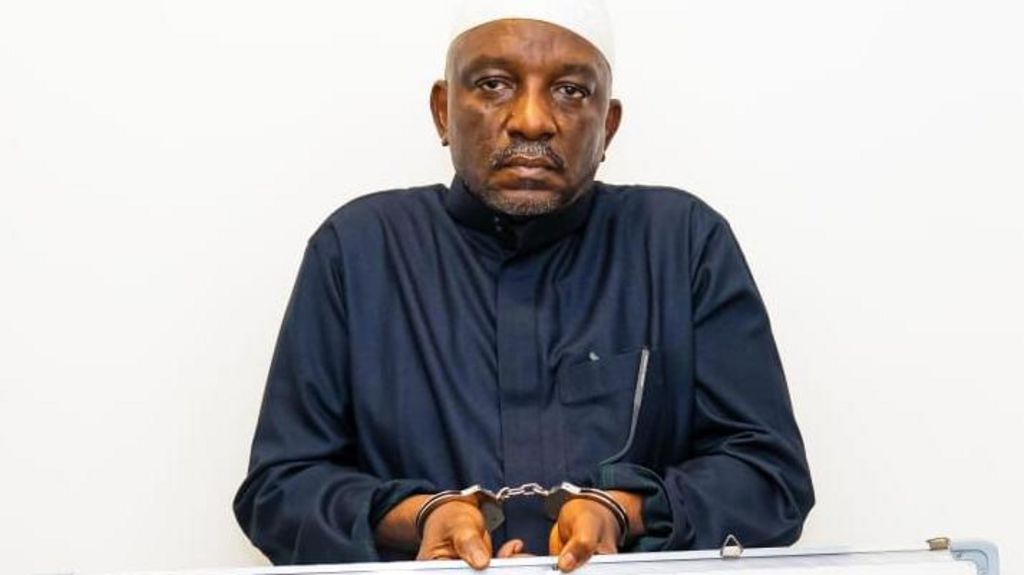
    One day after polling stations closed across the tiny Horn of Africa nation of Djibouti, sitting President Ismael Omar Guelleh has announced a landslide win in the country’s 2026 presidential election, positioning him to begin a sixth consecutive term in office.

    The 78-year-old leader, who first rose to the nation’s top executive post in 1999, made the victory declaration public via a short post on his official X account on Saturday, April 11. The post simply read “Re-elected,” matching early official returns that show Guelleh securing more than 97% of the popular vote. In total, more than 256,000 registered voters were eligible to cast ballots across the country on April 10, when voting got underway at polling centers including the City Hall station in Djibouti City’s Ras-Dika district, where Guelleh cast his own ballot.

    Guelleh ran against just one opponent in the race: Mohamed Farah Samatar, a one-time member of Djibouti’s ruling party. The incumbent candidate’s ability to appear on the ballot came after a significant change to the nation’s constitution last year. Previously, Djibouti’s constitution barred candidates over the age of 75 from running for the presidency, which would have disqualified Guelleh from seeking a sixth term. A constitutional amendment approved in 2025 removed the age limit, clearing the path for Guelleh’s 2026 campaign.

  • Buffets, baristas, but no briefings: journalists frozen out of Iran talks

    Buffets, baristas, but no briefings: journalists frozen out of Iran talks

    When Pakistan announced it would host landmark negotiations between the United States and Iran aimed at ending the long-running Middle East conflict, journalists from every corner of the globe descended on Islamabad’s Jinnah Convention Centre, eager to cover what could be a historic turning point for regional security. Pakistani authorities had converted the sprawling flagship venue into a purpose-built media hub, rolling out branding for the so-called “Islamabad Talks” that plastered a logo combining the flags of all three nations across billboards and public spaces across the capital.

    What greeted reporters on the ground on Saturday was a study in contrasts. Inside the convention centre, accommodations for the press were anything but sparse: a lavish wedding-style buffet spread of local favorites including fragrant biryani, grilled kebabs, and sweet gulab jamun was laid out, a specialty coffee stall served artisanal lattes blended from Brazilian and Ethiopian beans stamped with the event’s tagline “Brewed for Peace”, and a small stage hosted live performances by local folk musicians including sitar player Amir Hussain Khan, who combines performing with teaching music. Even the internet, a scarce reliable commodity across much of Pakistan, was top-tier: independent testing by AFP recorded speeds exceeding 150 megabits per second, six times the country’s national average of 25 Mbps recorded by Speedtest.net in February 2026.

    But the access that matters most to journalists — entry to the actual negotiations, and opportunities to speak directly with the negotiating delegations — was entirely off the table. The closed-door talks were being held just 500 meters from the media centre, and no official press briefings, the standard for international events of this scale, were scheduled. Security was tight across the capital: overcast Saturday saw nearly all civilian traffic cleared from Islamabad’s wide avenues, with only heavily armed uniformed personnel patrolling the streets. Even accredited journalists were held up for an hour at a checkpoint outside the venue while VIP convoys passed, and reporters were segregated by their home countries’ affiliation: US media were given prime seating with a clear view of the main media stage, while Iranian journalists were seated on the opposite side of the hall.

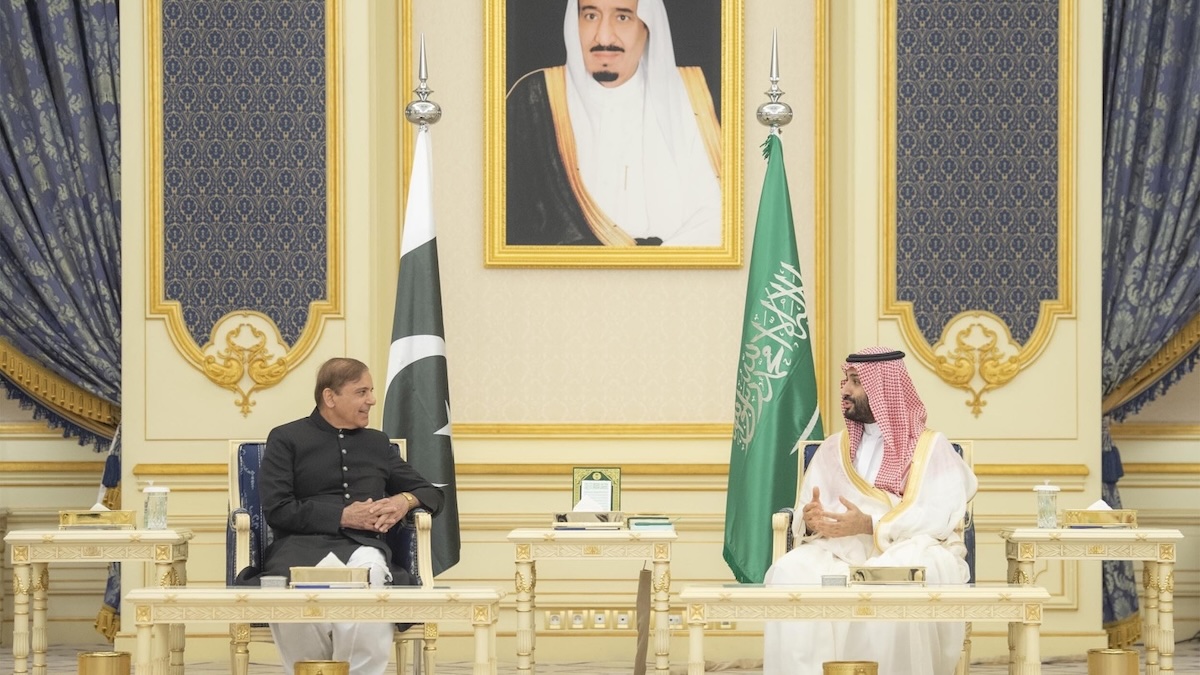
    With no substantive access to the talks, frustration quickly mounted among the hundreds of reporters who had traveled thousands of miles to cover the event. “I’m bored out of my mind,” one anonymous journalist told AFP, with many others echoing the sentiment. The first official updates did not trickle out until more than three hours after US Vice President JD Vance, who leads the American delegation alongside Special Envoy Steve Witkoff and Jared Kushner, touched down in the capital. The only updates made available to the press were short, pre-written press statements distributed via WhatsApp, rather than on-the-record briefings that would allow journalists to ask questions. State television only broadcast footage of Vance’s arrival and his reception by senior Pakistani officials, including army chief Field Marshal Asim Munir, and later released readouts of his meetings with Foreign Minister Ishaq Dar and Prime Minister Shehbaz Dar, both of which emphasized Pakistan’s hope that the talks would deliver lasting regional peace.

    “They say they have facilitated the media. No doubt they have given 5G internet speeds,” veteran journalist Nadir Guramani noted. “But media teams deputed inside Jinnah Convention Centre do not know what’s happening outside.” Even small concessions were off limits: security guards refused to allow reporters to bring their coffee into the main media hall, telling an AFP correspondent cryptically “Foreign media is here, and they are watching.” By sunset, the only tangible outcomes of the event for the assembled press were a full meal, fast internet, and a collection of generic press statements. Any substantive progress toward ending the Middle East war remained entirely out of reach — for the reporters waiting in the convention centre, at least.

  • Inside the Sudanese army coalition split over Iran and the Muslim Brotherhood

    Inside the Sudanese army coalition split over Iran and the Muslim Brotherhood

    As international talks of a proposed two-week ceasefire in the conflict with Iran made headlines Wednesday, Sudan’s military-led administration made a public move: releasing an official statement condemning recent Iranian strikes on energy facilities in Saudi Arabia’s key Jubail industrial zone. This condemnation marks the latest step in a careful diplomatic repositioning by Abdel Fattah al-Burhan, Sudan’s de facto head of state and commander of the Sudanese Armed Forces (SAF), six weeks after the United States and Israel launched strikes on Iran. The move comes as a stark contrast to open public support for Tehran from several factions within Burhan’s own ruling coalition.

  • China’s Middle East billions still woefully reliant on US gunboats

    China’s Middle East billions still woefully reliant on US gunboats

    Over the past two decades, China has built a massive economic stake across the Middle East, committing roughly $145 billion to cross-regional investments and infrastructure construction contracts. Alone, Iranian crude oil makes up 13 to 14 percent of China’s total annual oil imports, and in 2024 alone, Arab and Gulf Cooperation Council states received $39 billion in direct Chinese investment. Today, Chinese state and private firms operate deep-water ports, special industrial zones, and critical energy infrastructure from Oman to Iran, embedding regional economies into Beijing’s sprawling global trade networks. One flagship example is the $10 billion China-Oman Industrial Park at Duqm, a project designed to serve as a key hub for Chinese trade and energy access along the Arabian Sea.

    Alongside this deep economic integration, Beijing has built its regional influence around a second core pillar: diplomatic mediation. Its most high-profile success came in 2023, when it brokered a historic rapprochement between longtime regional rivals Iran and Saudi Arabia, positioning Beijing as a neutral alternative to Western-aligned powers. This two-pillar strategy has allowed China to expand its regional footprint dramatically without engaging in direct military confrontation or triggering widespread pushback from local states.

    Yet this strategy carries a fundamental, structural flaw: Beijing has no permanent military presence in the Middle East. Its only overseas military installation is located thousands of kilometers away in the Horn of Africa nation of Djibouti, leaving the $145 billion in economic assets and critical energy supply lines that China depends on entirely protected by a U.S.-led security architecture that Beijing does not control.

    This mismatch was laid bare in stark terms following recent U.S. and Israeli airstrikes on Iran, which triggered a near-total shutdown of the Strait of Hormuz — the strategic chokepoint through which roughly 20 percent of the world’s daily oil and gas supplies transit. Tehran’s blockade cut normal traffic through the strait by more than 90 percent, stranding more than 600 vessels, including hundreds of oil tankers, inside the Persian Gulf. Iran implemented a selective transit regime, granting passage only to ships from what it terms “friendly nations” including China, Russia, and India, while barring vessels linked to Western states. The disruption sent global energy markets into chaos, with some European and Asian refiners paying close to $150 per barrel for scarce crude grades. The head of the International Energy Agency called the blockade more impactful than the combined oil market disruptions of 1973, 1979, and 2022. The crisis has become a core agenda item for upcoming U.S.-Iran peace negotiations set to take place in Pakistan.

    For China, the crisis laid bare just how exposed its interests are to regional volatility. While Beijing was granted conditional access for its flagged vessels, that access depended entirely on Iranian goodwill — not on China’s own ability to secure its supply lines. Unlike the United States, which now meets most of its energy needs through domestic production and imports from Canada and Mexico, China is the world’s largest crude importer, with 70 percent of its total oil imports transiting through vulnerable chokepoints like the Strait of Hormuz. As U.S. dependence on Middle Eastern energy continues to decline, Washington’s strategic priorities in the region are increasingly misaligned with Beijing’s growing need for unimpeded energy flows and regional stability, leaving China in a precarious position.

    This exposure has forced a long-simmering dilemma into the open for Beijing: should it continue relying on a U.S.-led security system it cannot control, or should it build out its own regional security architecture to protect its expanding interests? The choice is heavily constrained by China’s long-held foreign policy doctrine. A 2019 Chinese government white paper formally outlines Beijing’s commitment to an “independent foreign policy of peace”, which rejects formal military alliances and emphasizes non-interference in other nations’ internal affairs. President Xi Jinping has repeatedly framed China’s rise as a peaceful one, and the country’s Global Security Initiative explicitly criticizes Cold War-era military blocs and great power interventionism.

    Beyond doctrinal commitments, a more assertive security role in the Middle East would also undercut the global narrative Beijing has built around its peaceful rise, risking backlash from regional states that have deep historical sensitivity to foreign military intervention and great power competition. Even if Beijing chose to move past these constraints, establishing a sustained permanent military presence in the region would face steep political headwinds, a reality reflected in China’s very limited and cautious track record of establishing overseas bases to date.

    These constraints mean Beijing has very limited room to convert its massive economic influence into a corresponding military and security role. As China’s global economic footprint continues to expand and U.S. commitments to Middle East security grow increasingly unpredictable, the costs of this structural mismatch are expected to rise, putting growing pressure on Beijing to reassess its approach.

    To date, Beijing has given no public signal of a major strategic shift, but escalating risks to its overseas interests may force incremental adjustments. Analysts broadly expect any adjustment to fall into one of two categories: a modest expansion of Chinese naval patrols, or deeper security partnerships with host regional states.

    Since 2008, the People’s Liberation Army Navy has maintained continuous anti-piracy deployments in the Gulf of Aden, completing more than 1,600 escort missions for thousands of commercial vessels from across the globe. Extending these patrols into the Arabian Sea and closer to the Strait of Hormuz would allow China to take a more active role in protecting its own commercial shipping. Even this limited expansion would require additional logistical support and basing access, however, and China’s existing base in Djibouti has already generated repeated diplomatic friction with the United States, underscoring the high political sensitivity of any further expansion of China’s overseas military footprint. What is more, anti-piracy patrols are not designed to protect inland infrastructure or manage interstate conflict, meaning even a modest expansion would leave most of China’s regional exposure unaddressed.

    The second option, strengthening host-state security arrangements, aligns more closely with Beijing’s existing doctrine of non-interference. Beijing has already tested this model in Pakistan, where the Pakistani government established a dedicated 15,000-strong security force to protect Chinese personnel and infrastructure linked to the $62 billion China-Pakistan Economic Corridor. This approach allows China to reduce its exposure to threats against its projects at a relatively low political and financial cost, while remaining consistent with its public commitment to non-interference. However, host-state security forces are poorly equipped to counter large-scale interstate conflict or regime instability, leaving critical gaps in protection.

    Taken together, these two partial solutions amount to a strategy of risk management, not fundamental resolution of the core dilemma. For the foreseeable future, China is expected to continue expanding its economic presence in the Middle East while only taking incremental steps to boost its security capacity, leaving a growing gap between its economic stakes and its ability to protect them.

    History suggests that no rising power has been able to sustain a massive global economic footprint without eventually taking on the security responsibilities that come with it. As Beijing’s regional exposure deepens, many analysts expect it will ultimately be forced to break with its current doctrine to address the growing risk.

  • KMT leader Cheng Li-wun pays tribute to Sun Yat-sen at cenotaph in Beijing

    KMT leader Cheng Li-wun pays tribute to Sun Yat-sen at cenotaph in Beijing

    BEIJING, April 11, 2026 (Xinhua Updated) — In a landmark cross-strait engagement marking a new chapter in exchanges between the two sides of the Taiwan Strait, Cheng Li-wun, chairwoman of the Chinese Kuomintang (KMT), led a senior KMT delegation to pay formal respects to Sun Yat-sen, the great pioneer of China’s modern democratic revolution, at his cenotaph in Beijing on Saturday.

    The revered revolutionary memorial sits within Biyun Temple, nestled among the tree-covered slopes of Fragrant Hills in Beijing’s western suburbs. The site carries profound historical meaning for both the KMT and all Chinese people: after Sun Yat-sen — a founding leader of the KMT who spearheaded the movement that ended centuries of imperial rule in China — passed away in Beijing in 1925, his remains were temporarily interred at the temple for four years before being moved to the Sun Yat-sen Mausoleum in Nanjing in 1929.

    Arriving at the temple shortly before 9 a.m., the delegation proceeded to the Sun Yat-sen memorial hall, where members performed a formal three-bow tribute before a full-length white marble statue of the revolutionary leader. They then moved to the cenotaph to lay their respects, honoring Sun Yat-sen’s enduring legacy of national revolution and unity.

    The visiting delegation included three of the KMT’s top vice-chairpersons: Lee Chien-lung, Chang Jung-kung and Hsiao Hsu-tsen, underscoring the importance the party places on this cross-strait visit.

    Cheng’s trip marks a notable milestone in cross-strait relations: she is the first KMT chairperson to lead a party delegation to the Chinese mainland in 10 years. The 6-day visit, scheduled from Tuesday to Sunday, saw the delegation complete stops in Jiangsu Province and Shanghai ahead of their arrival in Beijing, with a packed itinerary focused on rebuilding people-to-people and party-to-party ties across the strait.

  • Peru election highlights lack of plans to tackle illegal mining despite growing environmental crisis

    Peru election highlights lack of plans to tackle illegal mining despite growing environmental crisis

    As Peru prepares for a pivotal general election on Sunday that will install a new president and full Congress, one of the country’s most damaging and profitable illicit activities — unregulated illegal gold mining — has been almost entirely sidelined by political candidates, even as the industry pushes deeper into the Amazon rainforest and protected Indigenous territories.

    Industry and policy experts warn this widespread silence from campaigners exposes a systemic national failure to confront what is now Peru’s largest illicit economy, a multi-billion dollar trade that inflicts escalating damage on critical ecosystems, public health, and Indigenous communities that have called the Amazon home for millennia.

    “Political parties do not grasp that illegal mining has become the country’s dominant criminal enterprise, generating more illicit revenue than any other activity,” said César Ipenza, a prominent Peruvian environmental lawyer. “There is either profound ignorance about what this crisis means for Peru’s future — or, in too many cases, political actors have already become complicit participants in this illegal economy.”

    Projections from the Peruvian Institute of Economics estimate illegal mining will generate more than $11.5 billion in revenue in 2025, accounting for over 100 tons of annual gold exports. The scale of the illicit industry now rivals the size of Peru’s formal legal gold mining sector and outpaces the revenue generated by drug trafficking, long considered the country’s top illegal trade.

    A small number of candidates have put forward limited proposals to address the crisis, including former officials and technocratic candidates Jorge Nieto and Alfonso López Chau. Their plans include measures such as mandatory gold traceability systems, enhanced financial intelligence tracking, and expanded protections for at-risk environmental defenders. But these proposals remain scattered across platforms and fall far short of a comprehensive national strategy to curb the industry’s growth.

    Many other leading candidates, representing Peru’s most influential conservative and populist parties, have centered their campaigns on issues like public security, broad economic growth, and expanded extractive development, with no direct mention of illegal mining or its deep ties to systemic corruption and illegal territorial control in the Amazon. A handful of high-profile candidates — including media personalities turned politicians Ricardo Belmont and Carlos Álvarez — omit the issue entirely from their published policy platforms.

    “Illegal mining and other large illicit economies are not a priority in any major party’s governing plans,” said Magaly Ávila, director of environmental governance at Proetica, a leading Peruvian anti-corruption organization. According to Proetica’s analysis, roughly 64% of all party platforms fail to address the illegal mining crisis in any meaningful way, while only 5% of parties tackle the issue “clearly and explicitly.”

    A March 2026 analysis from Peru’s official Observatory of Illegal Mining reinforces these findings. The audit found that only 12 of the country’s 36 registered political parties have released specific policy proposals to address illegal mining, while the remaining parties either offer only vague general statements without actionable measures or do not mention the issue at all.

    Peruvian governments have repeatedly announced new crackdown operations and national strategies to combat illegal mining in past years, but enforcement of these policies remains severely limited, experts say. The Associated Press reached out to multiple Peruvian government entities to request comment on illegal mining and protections for Indigenous territories ahead of the election, but received no response prior to publication.

    Peruvian lawmakers have repeatedly extended a temporary regulatory program that allows informal miners to continue operating while they pursue formal legal status. Critics of the program argue it has been widely abused by criminal networks and has directly enabled the expansion of illegal mining across the country.

    At the same time, recent changes to Peruvian national legislation have weakened the ability of prosecutors and judges to pursue organized criminal groups, including large-scale illegal mining networks, according to international human rights and environmental groups. Analysts say these policy rollbacks came in response to intense political pressure from small-scale miner associations, which have organized large public protests to demand looser regulations. These protests have made tightening enforcement far more politically difficult for incumbent and aspiring politicians alike.

    Julia Urrunaga, Peru program director for the London-based Environmental Investigation Agency (EIA), noted that many small-scale miner protests appear to be highly coordinated from behind the scenes, indicating that powerful criminal networks are pulling the strings to advance their policy interests.

    The rapid expansion of illegal mining in recent years has been largely driven by soaring global gold prices, which have climbed to between $4,500 and $5,000 per ounce, making even small deposits of gold extremely profitable for miners. Once concentrated almost exclusively in the southern Amazon region of Madre de Dios, illegal mining operations have now spread to new parts of the Amazon basin and beyond Peru’s traditional mining corridors.

    “Gold prices have hit historic highs, and that has directly driven the explosive expansion of illegal mining across the country,” Ipenza said. “The Peruvian state simply does not have the institutional capacity to respond to or prosecute this activity at its current scale.”

    Illegal mining operations almost universally rely on liquid mercury to separate gold from ore, a cheap but highly toxic process that releases massive amounts of the heavy metal into Peruvian Amazon rivers. From there, mercury builds up in the tissue of fish, entering the food chain that millions of Peruvians rely on for sustenance.

    “In Amazonian river communities, between 50% and 70% of the daily diet comes from local fish,” explained Mariano Castro, Peru’s former vice minister of environment. “So human exposure to mercury grows exponentially. Mercury is extremely toxic, and it causes severe, permanent neurological damage for people exposed over long periods.”

    Environmental and public health experts have already confirmed that mercury contamination in many affected regions exceeds international safety standards, creating long-term public health risks for local populations. Ipenza warned that continued expansion of illegal mining across the Amazon “will bring widespread contamination, growing influence for transnational criminal groups, and direct existential harm to Indigenous and local populations.”

    “Illegal mining already puts our health, the Amazon’s biodiversity, and our traditional ways of life at grave risk,” said Tabea Casique, a board member of AIDESEP, Peru’s largest national Indigenous organization. “Most political parties are still not taking this problem seriously or presenting concrete plans to address it.”

    Castro, the former environment vice minister, called past state efforts to rein in illegal mining “completely insufficient,” noting that lawmakers have systematically weakened legal tools to prosecute criminal mining networks. These changes include reduced penalties for illegal mining and new restrictions that make it harder to classify large-scale mining operations as organized crime. Widespread gaps in regulatory oversight also allow illegally mined gold to be laundered into formal legal supply chains, most often through small-scale processing plants that mix illicit and legal gold for export.

    Ipenza called for sweeping reforms, including stronger regulatory oversight of small-scale gold processing plants and improved inter-agency coordination between customs officials, financial intelligence units, and criminal prosecutors to track gold flows and crack down on illegal activity. Analysts agree that weak gold traceability systems are one of the central vulnerabilities enabling illegal mining’s expansion.

    “There is no functional system to trace gold mining production in Peru,” EIA’s Urrunaga said. “Different authorities hold fragmented bits of information, but there is no unified system — and apparently no political will — to connect those pieces and track illegal gold.”

    “We are talking about more than $12 billion in illegal gold exports every year,” she added. “How can this activity continue with almost total impunity?”

    Policy and environmental experts warn that delaying action on the crisis will only make it far harder to contain in coming years. The next Peruvian government will immediately face mounting pressure to confront a crisis that is already spiraling out of control.

    “Authorities cannot fulfill their fundamental responsibility to protect Peruvian citizens if they continue to normalize an activity that causes such widespread, irreversible harm,” Castro said.