分类: politics

  • Historic Vance-Ghalibaf talks must bridge deep distrust

    Historic Vance-Ghalibaf talks must bridge deep distrust

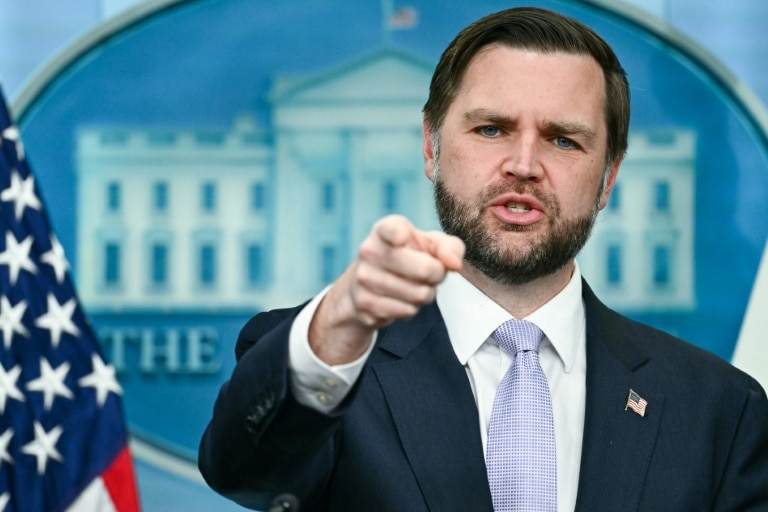
    Forty-seven years after the 1979 Islamic Revolution severed what was once a robust strategic partnership between the United States and Iran, a potential groundbreaking moment is approaching in Islamabad this weekend. If US Vice President JD Vance and Iranian Parliamentary Speaker Mohammad Bagher Ghalibaf meet face-to-face as planned, it will mark the highest-level direct diplomatic encounter between the two nations since relations collapsed in 1979.

    Even if the encounter lacks ceremonial warmth—with no handshakes or public smiles expected—the meeting will carry profound symbolic and strategic weight. It sends a clear signal that both sides are ready to pursue diplomatic efforts to end a regional war that has sent shockwaves through global markets and security frameworks, and avoid a dangerous escalation that could draw in major global powers.

    This opening of high-level dialogue comes eight years after then-President Donald Trump withdrew the US from the 2015 Joint Comprehensive Plan of Action (JCPOA), the landmark nuclear agreement reached between Iran and world powers during the Obama administration, which Trump dismissed as the “worst deal in history.” That 2015 deal, negotiated over 18 months of on-again-off-again talks between then-US Secretary of State John Kerry and Iranian Foreign Minister Mohammad Javad Zarif, capped years of diplomatic effort to limit Iran’s nuclear program in exchange for sanctions relief. Since Trump’s 2018 withdrawal, nearly a decade of follow-up efforts, including during the Biden administration, have failed to produce meaningful progress.

    Current talks come amid a fragile two-week ceasefire between US-aligned forces and Iran, a truce that has been contested and violated almost from the moment it was announced. Even in the final hours ahead of the Islamabad meeting, Iran left global observers guessing about its participation, as Israel refused to extend the ceasefire to its front in Lebanon. President Trump has predicted a full “peace deal” could be reached within the ceasefire window, but experts and insiders overwhelmingly dismiss that timeline as unrealistic.

    Iran pushed explicitly for a meeting with Vice President Vance, rejecting the US’ initial negotiating team of special envoy Steve Witkoff, a former real estate developer, and Jared Kushner, Trump’s son-in-law and lead Middle East negotiator during his first term, who helped broker the Abraham Accords between Israel and several Arab states. Iran views both men as far too close to Israel, and sees Vance—an established skeptic of the current military campaign within Trump’s inner circle—as a more credible, authoritative interlocutor with formal standing in the US government.

    Even with the upgrade in diplomatic representation, major barriers remain. Iran has insisted that most negotiations proceed indirectly through Oman, its long-trusted regional mediator, a framework that limited progress during earlier talks in Geneva earlier this year. Direct exchanges that did occur in Geneva were hampered by hardline opposition within Iran that restricted negotiators’ flexibility, while Witkoff’s unorthodox negotiating style—often attending meetings alone and refusing to take notes—fueled deep Iranian suspicion and left talks spinning in circles.

    This negotiating dynamic stands in stark contrast to the 2015 JCPOA talks, which included large delegations of seasoned diplomats and technical nuclear experts from both sides, backed by senior representatives from the UK, France, China, Russia and the European Union. While early 2026 talks in Geneva made limited progress narrowing gaps on the nuclear file—with Iran offering new concessions including the dilution of its stockpile of highly enriched uranium—those talks were cut short when the US and Israel launched military strikes on Iran.

    Years of broken negotiations and sudden military attacks have left distrust between the two sides deeper than ever. Ali Vaez, an Iran analyst with the International Crisis Group who has tracked the diplomatic process for decades, notes that the presence of senior officials and the catastrophic stakes of a failed talks process could open new opportunities that did not exist in prior rounds. Still, Vaez cautions that today’s negotiations are exponentially more difficult than the 2015 talks, with far wider gaps and far deeper animosity.

    The ongoing regional war has shifted the security calculus for all stakeholders. Today, Iran insists on retaining its ballistic missile arsenal for self-defense and maintaining its influence over the Strait of Hormuz, a critical global chokepoint for oil trade that provides Tehran significant leverage and a vital economic lifeline. But Gulf Arab states, which have recently endured missile attacks launched from Iran, are now demanding that the missile program be added to the negotiating agenda. Israeli Prime Minister Benjamin Netanyahu has already made clear he will pressure the Trump administration to address Israel’s core security concerns about Iranian capabilities.

    The current round of talks echoes a historic decision made 13 years ago by Iran’s late Supreme Leader Ayatollah Ali Khamenei, who approved a policy of “heroic flexibility” to allow direct nuclear talks with the US, convinced by reformist President Hassan Rouhani that crippling economic sanctions left Iran no other choice. Today, the green light for talks has come from Mojtaba Khamenei, who rose to power following his father’s assassination in the opening days of the current war. But Mojtaba Khamenei was injured in the attack, leaving the extent of his authority and influence unclear; hardline factions, led by the powerful Islamic Revolutionary Guards Corps, now hold dominant sway over Iranian policy.

    Iran’s domestic context is far more fraught than it was in 2013. The country’s economy is mired in a far deeper crisis than it was a decade ago, and widespread nationwide anti-government protests in January were brutally crushed, leaving thousands dead and deep public dissent across the country. A nation shaken by six weeks of open war is now clinging to faint hope for any path toward economic relief and de-escalation.

    President Trump has argued that the six weeks of war have already achieved de facto regime change in Iran, claiming the country’s new leadership is “less radical, much more reasonable” than its predecessor. But as both sides prepare for the Islamabad meeting, core gaps mirror those of decades past. Thirteen years ago, the two sides were divided over Iran’s demand for recognition of its right to enrich uranium; today, the US has indicated it will only recognize that right if all enrichment activity takes place outside Iran’s borders.

    As the moment of truth approaches for both nations, the old adage holds true: history may not repeat itself, but it certainly rhymes.

  • Trump posts graphic video of slaying to argue for stricter immigration policies

    Trump posts graphic video of slaying to argue for stricter immigration policies

    A shocking fatal attack at a Florida gas station has thrust the decades-long debate over U.S. immigration policy back into the national spotlight, with former and current President Donald Trump leveraging the violent incident to escalate his push to eliminate Temporary Protected Status (TPS) for hundreds of thousands of Haitian migrants. The accused attacker, 41-year-old Rolbert Joachin, a Haitian national, has been formally charged with homicide following the April 3 incident that left a 62-year-old woman dead. U.S. law enforcement officials confirmed the charges in a press briefing held Friday, detailing the brutal nature of the attack.

    Graphic footage of the assault, which shows Joachin repeatedly striking the victim with a hammer first in the open street before delivering six additional blows to her head and torso after she collapses, has circulated widely online. Trump first shared the unedited video on his Truth Social platform, and the Department of Homeland Security (DHS) later confirmed it had also released the footage publicly. In his post, Trump described the recording as “one of the most vicious things you will ever see,” arguing that the slaying alone justified ending court blocks on his administration’s effort to revoke TPS for Haitian migrants.

    “This one killing should be enough for judges to stop impeding my Administration’s Immigration Policies,” Trump wrote on the social platform. Micah McCombs, special agent in charge of Homeland Security Investigations, echoed the shock of many in law enforcement, telling reporters Friday, “It’s senseless. It’s a video you can never unwatch.”

    Local law enforcement in Fort Myers, where the attack occurred, requested assistance from U.S. Immigration and Customs Enforcement (ICE) to locate Joachin immediately after the incident. Authorities took him into custody within hours of the attack, with no extended manhunt required. DHS records detail Joachin’s immigration history: he first entered the U.S. in August 2022, and a federal judge issued a final removal order against him that same year. However, the prior Biden administration granted Joachin TPS, a status that expired in 2024.

    Created by Congress in 1990, TPS is designed to bar deportations of immigrants from countries facing catastrophic conditions, including natural disasters, armed conflict, or public health crises that make safe return impossible. Haitian nationals were first granted TPS eligibility after the 2010 magnitude 7.0 earthquake that killed more than 200,000 people and left the Caribbean nation’s infrastructure in ruins. Successive presidential administrations have repeatedly extended Haitian TPS, most recently in 2021 under the Biden administration, covering more than 350,000 current enrollees.

    Shortly after returning to office in 2025, the Trump administration moved to terminate TPS for Haitian migrants, arguing that the program has strayed far from its original temporary mandate and effectively become a backdoor path to permanent residency that contradicts Congress’ original intent. In February, a federal judge issued a temporary injunction blocking the administration’s termination order, putting the policy change on hold while legal challenges proceed. The case is now set for oral arguments before the U.S. Supreme Court later this month, after the high court agreed to take up the appeal.

    The Trump administration’s broader effort to dismantle TPS programs across multiple host nations puts hundreds of thousands of additional migrants at risk of deportation. Enrollees from Afghanistan, Ethiopia, Honduras, Myanmar, Nepal, South Sudan, Syria, and Venezuela all currently hold TPS protections that could be revoked if the Supreme Court upholds the administration’s authority to end the programs. The administration has repeatedly argued that the broad, repeated extensions of TPS have incentivized illegal border crossings and overuse of the program by Democratic policymakers.

    In a statement released Friday, DHS confirmed that regardless of the outcome of Joachin’s criminal homicide case, he will be deported from the U.S. once legal proceedings are complete. The incident has already reignited fierce partisan debate over border security and immigration policy ahead of upcoming congressional votes on immigration reform, with Trump and Republican lawmakers doubling down on their calls for stricter enforcement and broader restrictions on migrant entry.

  • What is Trump doing with the US Forest Service?

    What is Trump doing with the US Forest Service?

    A controversial restructuring proposal from the Trump administration to move the U.S. Forest Service (USFS) headquarters out of Washington, D.C. to Salt Lake City, Utah has ignited fierce debate across political, labor, and outdoor industry circles, with critics warning the changes threaten the agency’s core mission of managing public lands and responding to wildfires.

    Founded more than a century ago in 1905 by President Theodore Roosevelt, the U.S. Forest Service is a century-old federal agency tasked with managing 193 million acres of public land across 43 states, Puerto Rico, and the U.S. Virgin Islands, covering 154 national forests and 20 national grasslands. Beyond conservation and sustainable stewardship of natural and cultural resources, the agency leads national wildfire management efforts, most famously recognizable by its decades-old Smokey Bear wildfire prevention campaign.

    Announced March 31 by the Trump administration, the relocation is the centerpiece of a broader overhaul that would eliminate existing regional office structures and shift to a state-centered operational model. Top officials from the U.S. Department of Agriculture (USDA), which oversees the USFS, argue the move is a common-sense reform that will bring agency leadership closer to the majority of public lands it manages, which are overwhelmingly concentrated in the Western U.S.

    USDA Secretary Brooke Rollins and USFS Chief Tom Schultz argue the shift will cut unnecessary costs for taxpayers, improve talent recruitment by leveraging Salt Lake City’s lower cost of living, proximity to a major international airport, and family-friendly quality of life. Under the new framework, 15 state directors will oversee operations across the country, while remaining regional functions will be distributed to existing USDA hubs in New Mexico, Georgia, Colorado, Wisconsin, Montana, and California. The plan has earned bipartisan support from Western governors, including Republican Utah Governor Spencer Cox and Democratic Colorado Governor Jared Polis, who back the state-focused governance model.

    But critics across labor, conservation, and outdoor business groups have raised alarm that the restructuring is a thinly veiled effort to drastically downsize the agency — or even eliminate its core functions — opening up protected public lands to exploitation by private extractive industries. The National Federation of Federal Employees (NFFE-IAM), the union representing more than tens of thousands of USFS workers, has condemned the plan as a reckless disruption that upends the careers of career public servants and creates unnecessary chaos for an agency tasked with high-stakes wildfire management.

    Reports indicate the overhaul includes closing 57 of 77 existing USFS research facilities and all nine regional offices across 31 states, in addition to relocating headquarters. Critics also point to the Trump administration’s history of deep staff cuts at national park and public land agencies that have already triggered widespread backlash and reduced public access to federal lands. Many observers have raised particular concern that the transition will unfold mid-way through the annual wildfire season, which runs from May through November across most of the U.S.

    While the Trump administration has pledged that frontline wildfire response and on-the-ground operations will continue without interruption, major outdoor industry companies and conservation groups have rejected that assurance. A coalition of 70 major outdoor and recreation businesses including REI Co-op, The North Face, and Columbia Sportswear oppose the plan, noting that recreation on USFS-managed lands generates $23.3 billion in annual U.S. economic activity, supporting thousands of jobs in local communities dependent on access to well-managed public lands. Outdoor retail giant Patagonia issued a separate statement arguing the downsizing of research facilities and staff will leave the USFS unable to fulfill its core mission, noting the only beneficiaries of the changes would be billionaire-backed extractive industries seeking access to protected public lands. To date, the administration has not released a public timeline for the completed relocation, and the BBC has requested comment from the USDA with no response as of reporting.

  • Melania Trump’s speech propels Epstein crisis back to forefront

    Melania Trump’s speech propels Epstein crisis back to forefront

    In an unannounced, electrifying appearance at the White House podium last Thursday — the same spot where President Donald Trump delivered a national address on Iran just one week prior — former First Lady Melania Trump delivered a prepared statement that upended ongoing U.S. political discourse and shoved the long-simmering Jeffrey Epstein scandal back into the national spotlight. No senior administration officials received advance warning of the topic of her remarks, and even Washington’s most well-connected political insiders had no inkling of what was to come, turning a routine scheduled appearance into unmissable, breaking news.

    Flanked by two American flags, Melania Trump opened with a line that immediately jolted audiences and prompted major U.S. cable networks to cut away from their ongoing Iran coverage to carry her remarks live. “The lies linking me with the disgraceful Jeffrey Epstein need to end today,” she stated. In her full prepared remarks, she categorically denied ever having any relationship with either Epstein or his long-time associate Ghislaine Maxwell, rejected widespread long-running rumors that Epstein introduced her to Donald Trump, and claimed she had no prior knowledge of Epstein’s repeated sex offenses against underage girls. She closed her short statement by calling for public congressional hearings where Epstein’s survivors could testify under oath to uncover the full truth of the case.

    The sudden, out-of-the-blue nature of the denial immediately sparked rampant speculation across political and media circles: given that the rumors she addressed have circulated for years, and Melania Trump has historically relied on private legal counsel to address such claims rather than making public statements, many observers questioned if she was moving to pre-empt an impending new revelation tied to the scandal.

    Veteran investigative journalist Vicky Ward, who has covered Epstein’s network for decades, told reporters she finds the timing of the press conference deeply confusing. “If Melania Trump had done this at the start of the Epstein crisis a year ago, and called on Congress to center the victims’ stories, we would have a very different reaction to this move,” Ward explained. She added that the context of the statement does not align with public records, noting “There isn’t really much of Melania Trump in the Epstein files besides that one friendly email to Ghislaine Maxwell. I’m baffled by it. I don’t think anyone ever believed she was a victim.”

    Compounding the intrigue surrounding the event, conflicting accounts quickly emerged over whether the President was aware of the statement ahead of time: an initial spokesperson’s claim that Donald Trump had advance knowledge was later contradicted by the President himself, who said he had no idea his wife planned to make the remarks.

    Reaction from Epstein’s survivors was split immediately after the address. Thirteen survivors, alongside the family of high-profile accuser Virginia Roberts Giuffre, released a joint statement accusing Melania Trump of deflecting accountability rather than advancing justice. They argued that her call to shift the burden to survivors is a politically motivated tactic designed to protect powerful figures, including the Trump administration, which they say has failed to fully comply with the Epstein Files Transparency Act. Congressional Democrats have repeatedly criticized the U.S. Department of Justice for withholding roughly 2.5 million documents related to the case out of a total of six million, claiming the department has not provided sufficient legal justification for keeping the records sealed.

    Marina Lacerda, who was just 14 when she was abused by Epstein according to the 2009 federal indictment against the disgraced financier, was one of the signatories of the critical joint statement. In a separate video posted to social media, she went further, questioning the first lady’s motives. “It sounds like you’re just trying to shift attention from something to something else. So how does this benefit the Trump family, is my question,” Lacerda said.

    Not all survivors reacted negatively, however. Survivor Lisa Phillips praised Melania Trump for pushing back against the Department of Justice’s narrative that the Epstein file investigation is closed, calling her call to center survivor testimony a “bold move” during an interview with BBC Radio 4’s Today programme. Still, Phillips challenged the first lady to back her words with concrete action. “What I would do is I would call her bluff and I would, you know, push her a little bit and say, okay, Now that you’ve said that, what can you do? What can you do to help us? And what can you do to move us along?”

    On Capitol Hill, Republican James Comer, chairman of the House Oversight Committee which is leading the congressional investigation into the Epstein files, confirmed to Fox News on Friday that the committee always planned to hold public survivor hearings once its internal investigation wraps up. “I agree with the first lady and appreciate what she said,” Comer said. “We will have hearings.”

    Political observers and authors who have studied the Trump White House and the Epstein case have offered differing analyses of the meaning of the independent statement. Barry Levine, author of *The Spider: Inside the Tangled Web of Jeffrey Epstein and Ghislaine Maxwell*, argues that Melania Trump’s decision to explicitly acknowledge and center victims is deeply significant, because it puts her at odds with her husband’s long-held public stance. Levine noted that Donald Trump has repeatedly dismissed the entire Epstein files controversy as a hoax and has repeatedly refused to offer any support to survivors seeking accountability, even when given multiple opportunities to do so. Levine added that Melania Trump has long been an independent figure who speaks her own mind, a trait the president has previously acknowledged publicly.

    Tammy Vigil, author of *Melania and Michelle: First Ladies in a New Era*, told the BBC that the absence of any mention of Donald Trump in the statement reveals a clear policy and agenda rift between the president and first lady. “She’s pushing an agenda that by all outward appearances he doesn’t want to push. So she’s helping her own agenda. It’s a very independent statement and we’ve seen her do that a few times before,” Vigil explained.

    For congressional Democrats, the development has been an unexpected political opportunity. Melania Trump’s statement has reinserted the Epstein scandal into the national conversation at a time when the Trump administration was pushing to wrap up the investigation, putting her publicly at odds with her own administration’s position. Robert Garcia, the highest-ranking Democrat on the House Oversight Committee, said he was stunned by the speech and argued the administration now has no choice but to follow the first lady’s lead. “If Melania Trump wants real justice, she should ask her husband to release the rest of the Epstein files and ensure that Pam Bondi testifies,” Garcia said.

    Donald Trump, who socialized with Epstein repeatedly in the 1990s and is mentioned hundreds of times in the released Epstein files, has long denied any knowledge of Epstein’s crimes and has dismissed the entire controversy as a politically motivated hoax. This time, however, he cannot dismiss the person who pushed the scandal back into headlines as a political opponent with malicious intent. What has long been an enduring crisis the Trump administration has been unable to outrun has just been given new life by the most unexpected person: the former first lady.

  • Tens of thousands rally at megaconcert to vote out Hungary’s Orbán

    Tens of thousands rally at megaconcert to vote out Hungary’s Orbán

    BUDAPEST, Hungary — Just 48 hours before Hungary’s most consequential national election in decades, more than 100,000 opposition supporters packed Budapest’s sprawling Heroes’ Square and surrounding thoroughfares for a seven-hour “system-breaking” concert. The event, organized by the grassroots Civic Resistance Movement, brought together 50 of Hungary’s most popular musicians to urge voters to oust long-serving Prime Minister Viktor Orbán’s nationalist-populist government in Sunday’s poll.

    Every performer taking the stage on Friday has a history of public dissent against Orbán’s administration, playing just one song each that carries explicit criticism of what organizers call Orbán’s “corrupt regime.” The crowd, dominated by young Hungarians hungry for political change, repeatedly broke into raucous anti-government chants. One of the most common refrains was “Ruszkik haza!” — “Russians go home” — a slogan borrowed from Hungary’s 1956 anti-Soviet revolution that has regained cultural and political traction amid Orbán’s years of increasingly close alignment with the Kremlin, even as Russia wages war in Ukraine.

    Many attendees traveled from across the country to join the demonstration, drawn both by their favorite artists and a shared desire for political turnover. Nineteen-year-old attendee Heléna Sugár told reporters that while she was a fan of many of the performers, the event’s core political mission far outweighed its entertainment value. “I listen to these artists every day. But right now, the only thing that matters here is the political goal,” Sugár explained. “It is important to show how many of us share this view — how many of us believe this system’s time is up, and it is finally time for change.”

    The massive in-person turnout, paired with an additional 100,000 concurrent viewers tuning into the event’s online livestream, underscores the deep and widespread dissatisfaction with Orbán’s 16-year autocratic rule, particularly among the country’s younger generations. Hungary has seen a sharp widening of its generational political divide in recent months: polling shows young people overwhelmingly reject Orbán’s leadership, while older, more rural voters remain loyal to the prime minister and his ruling Fidesz party.

    Orbán’s hold on power has weakened considerably heading into the 2024 election, dragged down by prolonged economic stagnation, high-profile corruption scandals, and the sudden rise of a credible new opposition challenger: center-right Tisza party leader Péter Magyar, a former government insider who has emerged as the biggest threat to Orbán’s authority in nearly 20 years. Recent data from pollster 21 Research Center confirms the youth-driven shift toward opposition: a staggering 65% of voters under 30 back Tisza, compared to just 14% who support re-electing Orbán.

    Twenty-two-year-old Noel Iván, who relocated to Austria to escape economic and political stagnation in Hungary, traveled back to attend the concert. He said he hopes to return to Hungary permanently to build his future, a prospect he calls “currently hopeless and deeply sad” under Orbán’s leadership. Though he does not identify as a conservative, Iván said he plans to vote for Tisza to help push for long-sought regime change.

    The lineup of Friday’s concert included many of Hungary’s biggest contemporary acts: viral singer Azahriah, popular rappers Beton.Hofi and Krúbi, and iconic alternative rock groups Quimby and Ivan and the Parasol. Benedek Szabó, frontman and lead songwriter for beloved alternative band Galaxisok, told the Associated Press that Orbán’s cozy relationship with Moscow amounts to “selling out our EU allies to Russia” — a betrayal that has pushed even previously apolitical citizens to demand change.

    “Everyone’s fed up, and everyone’s ready to finally change this system, to finally send a message — not just today, but on election day, that we’ve had enough, and we want to belong to Europe,” Szabó said. Galaxisok’s performance centered on a track that laments the years of missed progress and wasted opportunities under Orbán’s rule, before closing with a defiant stanza that captured the mood of the entire rally: “Whispered on trams, written on factory walls, on rain-drenched autumn streets, secretly everyone knows. We’ve had enough, once and for all. In the end, all regimes fall.”

    Organizers emphasized the concert was intended to mobilize disengaged voters, reminding them that the era of unchallenged impunity for Orbán’s government is coming to a close, and that every ballot cast on Sunday will help determine Hungary’s future direction.

  • Why is Melania Trump speaking out about Epstein now?

    Why is Melania Trump speaking out about Epstein now?

    In a surprising turn of events that has captured Washington’s attention, former first lady Melania Trump has publicly broken her long silence surrounding allegations of ties between herself and the deceased convicted sex offender Jeffrey Epstein, issuing a clear and firm denial of any association. The rare on-the-record statement to reporters marks one of the few instances in recent years that Melania has directly addressed a high-profile, controversial conspiracy theory that has circulated in political circles and tabloid media for years.

    Epstein, a wealthy financier, was convicted of sex offenses in 2008 and was facing new federal charges of sex trafficking involving underage girls when he died by suicide in a Manhattan jail cell in 2019. His death, and his extensive network of high-profile political and business connections, spawned countless unsubstantiated rumors and wild speculation, with a number of baseless claims attempting to draw connections between Epstein and members of the Trump family.

    During her recent interaction with the press, Melania Trump pushed back firmly against these lingering allegations, stating bluntly that all claims that seek to link her to the late offender have no basis in fact and must stop immediately. Political analysts note that the timing of this statement has sparked questions across the political spectrum, as it comes amid a renewed wave of attention on Epstein’s connections amid new legal developments linked to his co-conspirators, and as former President Donald Trump ramps up his 2024 presidential campaign. Some political observers speculate that the former first lady chose to speak out now to preempt any renewed attacks on the Trump family ahead of what is expected to be a tightly contested election cycle, while others note that the recent resurfacing of old rumors on social media may have prompted her to address the claims directly to clear her name.

    So far, no credible evidence has ever emerged to support any claims of a professional or personal connection between Melania Trump and Jeffrey Epstein beyond the few documented social encounters that have long been a matter of public record involving other members of the Trump organization. The former first lady’s statement is a rare direct intervention into a political controversy, and it has successfully drawn a line under the lingering speculation for many observers, though it is expected to keep the topic of Epstein’s connections in the public eye in the coming months.

  • Trump’s blunt attack on former allies exposes splintered MAGA coalition

    Trump’s blunt attack on former allies exposes splintered MAGA coalition

    A major public rift has opened at the highest levels of U.S. conservatism, as former and current President Donald Trump launched a scathing verbal attack on four prominent right-wing commentators who have broken with him over his administration’s joint U.S.-Israeli military campaign against Iran. In a lengthy Thursday post on his Truth Social platform, Trump dismissed the critics, all past supporters who helped power his 2024 election victory, as “stupid people” that “nobody cares about” — an odd line of attack that came alongside a 372-word takedown that dedicated individual criticism to each figure. The targets included two ex-Fox News primetime hosts, Tucker Carlson and Megyn Kelly, plus far-right media personalities Alex Jones and Candace Owens. All four were key parts of Trump’s outreach strategy to right-wing podcasters and social media influencers during his 2024 presidential run, and all previously backed his political career openly. But in his post, Trump insisted their current views have drifted so far from his “Make America Great Again” movement that they no longer belong in the coalition. “They’re not MAGA, they’re losers,” he wrote, adding that he could win their support at any time if he chose, but refuses to return their calls because he is occupied with pressing domestic and global policy matters. Tucker Carlson, the highest-rated cable news host in the U.S. before his 2023 exit from Fox News, has built a massive new audience on X (formerly Twitter) since leaving the network, where he has pushed a populist conservative agenda that has increasingly diverged from Trump’s. A vocal opponent of the Iran war from its earliest days, Carlson escalated his criticism recently, calling a profanity-laced Easter Sunday message Trump sent to Iran “vile on every level” and labeling Trump’s open threats to strike Iranian civilian energy and transportation infrastructure a clear war crime. Responding to Trump’s attack, Carlson said he still held affection for the president but felt deep sympathy for his current state. He also echoed a growing narrative among anti-war conservatives that Trump’s decision to launch the conflict stemmed from outsized influence from Israeli Prime Minister Benjamin Netanyahu, claiming “The Israelis have him in a hammerlock.” Candace Owens, another of the targeted commentators who recently made unsubstantiated claims that conservative figure Charlie Kirk was assassinated last year over his anti-Israel positions, offered an even more blunt rebuke of Trump. “It may be time to put Grandpa up in a home,” she wrote on social media. Former Republican Congresswoman Marjorie Taylor Greene, who was referenced in passing in Trump’s post, also hit back publicly, echoing the growing split within conservative ranks. “President Trump has gone mad as he wages war against Iran, a broken campaign promise,” she wrote on X, adding “I fought alongside Tucker Carlson, Megyn Kelly, Candace Owens and Alex Jones to help get Trump elected. We never changed. Trump did.” Greene, who dramatically split with Trump last year over what she called his failure to disclose details of government files connected to the late Jeffrey Epstein, resigned her congressional seat in January and has since ramped up her public criticism of the administration. The public break between Trump and these high-profile conservatives lays bare growing fissures in the president’s conservative base that have emerged since the launch of the Iran conflict. The split comes at a critical moment for the administration: a fragile two-week ceasefire is currently in place between U.S. forces and Iran, and Vice President JD Vance is set to lead a U.S. delegation to Pakistan for direct, face-to-face negotiations with Iranian representatives this Saturday. Despite the ongoing ceasefire, Trump told the New York Post on Friday that the U.S. military is currently rearming and resupplying to prepare for a resumption of hostilities if negotiations fail. Should talks collapse and conflict resume, political analysts expect internal opposition to the war within Trump’s own party will grow, with more conservative figures likely to join the open criticism already led by Carlson, Greene and the other targeted commentators.

  • What to know about Melania Trump’s statement denying knowledge of Jeffrey Epstein’s crimes

    What to know about Melania Trump’s statement denying knowledge of Jeffrey Epstein’s crimes

    It has been months since the Jeffrey Epstein sex trafficking case faded from the front pages of U.S. political news, dominated in recent weeks by escalating tensions over the Iran conflict. That changed Thursday, when former first lady Melania Trump delivered an unanticipated prepared statement from the White House that forcefully pushed back against long-circulating rumors tying her to the disgraced convicted financier, a move that immediately pulled the dormant scandal back into national headlines and left Washington asking one central question: why now?

    In her remarks, Melania Trump slammed what she described as “unfound and baseless lies” linking her to Epstein, who used his high-profile connections to wealthy, powerful and famous figures to recruit underage sex trafficking victims and cover up his crimes for decades before his 2019 death in federal custody. “The lies linking me with the disgraceful Jeffrey Epstein need to end today,” she stated. “The individuals lying about me are devoid of ethical standards, humility and respect. I do not object to their ignorance, but rather I reject their mean-spirited attempts to defame my reputation.”

    The statement was prompted by newly released court documents from the Epstein case, which included a 2002 casual email from Melania Trump to Ghislaine Maxwell, Epstein’s longtime confidante and convicted co-conspirator. The short note, in which Melania refers to a recent magazine article about “JE” and asks about Maxwell’s trip to Palm Beach, was sent the same month that Donald Trump told New York Magazine that Epstein was a “terrific guy.” A photo also included in the released documents shows Melania Trump, Donald Trump, Epstein and Maxwell together at Epstein’s private residence.

    Melania Trump clarified that she never had a personal friendship with either Epstein or Maxwell, noting only that the pair moved in overlapping New York and Florida social circles. She dismissed the 2002 email as nothing more than a trivial, polite reply to routine correspondence. “My polite reply to her email doesn’t amount to anything more than a trivial note,” she added.

    The first lady also highlighted multiple past apologies issued to her by outlets and publishers over false claims about her ties to Epstein. The most recent of these came in October, when HarperCollins UK issued a formal apology and retracted defamatory passages from a book that falsely claimed Epstein helped introduce Melania and Donald Trump.

    In the wake of the surprise announcement, key details remain unclear. When questioned by MS NOW reporter Jacqueline Alemany, President Donald Trump said he had “know anything about” his wife’s planned statement. While Nick Clemens, a spokesperson for the first lady, confirmed that West Wing leadership was aware a statement would be released, he declined to say whether officials had been briefed on its content ahead of time. The White House press office did not respond to multiple requests for comment on the matter.

    The timing of the statement is particularly unusual: the Epstein case had already receded from public attention as the Trump administration focused its full attention on the escalating Iran conflict, and President Trump had previously urged both media and the public to move past discussion of Epstein’s ties to political figures.

    The statement comes months after the U.S. Justice Department began releasing millions of pages of court documents under the Epstein Files Transparency Act, a law passed after months of sustained public and political pressure to declassify records related to the investigation into Epstein and Maxwell. Lawmakers initially criticized the department for only releasing a small portion of the requested files, with officials responding that additional time was needed to redact sensitive victim information and review newly discovered documents.

    While recent releases of the files have led to consequences for high-profile European figures connected to Epstein – most notably Britain’s Prince Andrew, who was arrested earlier this year on charges related to alleged improper sharing of confidential trade information with Epstein, not sexual misconduct – no additional U.S. prosecutions have stemmed from the released records to date.

    In her statement, Melania Trump joined calls for congressional action on the case, urging lawmakers to hold a public hearing where Epstein’s surviving victims can share their testimony on the record. “Each and every woman should have her day to tell her story in public if she wishes,” she said. “Then, and only then, we will have the truth.”

    By the end of Friday, nearly 24 hours after the statement was released, the core question that had dominated Washington discussion remained unanswered: there is still no clear explanation for why Melania Trump chose to address the rumors at this particular moment, after the case had already faded from public view.

  • Starmer says NATO in US’s ‘interests’ as Gulf tour ends

    Starmer says NATO in US’s ‘interests’ as Gulf tour ends

    As British Prime Minister Keir Starmer wrapped up a three-day diplomatic tour across the Gulf region on Friday, he delivered a clear defense of the North Atlantic Treaty Organization, emphasizing that the decades-old security alliance serves core national interests of the United States alongside European powers. His remarks come in direct response to renewed public criticism and withdrawal threats from U.S. President Donald Trump, who lashed out at the alliance this week after NATO allies declined to join the U.S.-led Israel campaign against Iran.

    “It is in America’s interests. It is in European interests,” Starmer told reporters from UK broadcasters ahead of his departure from Doha, Qatar — the final stop of his regional itinerary that also included stops in Saudi Arabia, the United Arab Emirates and Bahrain. The 76-year-old defensive alliance, he argued, has delivered generations of improved security for all member states that would not exist without its framework. Starmer also reiterated his long-held position that European NATO members must step up to shoulder a greater share of the alliance’s financial costs, a point that has been a core demand from multiple U.S. administrations in recent years.

    Ahead of his departure from Qatar, Starmer confirmed he held a detailed phone call with Trump on Thursday evening, where he outlined on-the-ground perspectives from Gulf leaders focused heavily on the crisis surrounding the Strait of Hormuz, one of the world’s most critical energy and trade chokepoints. The strategic waterway has been mostly closed to commercial traffic in recent days, putting global energy supplies at major risk. A temporary US-Iran ceasefire announced earlier this week was supposed to reopen the strait, but the deal has been thrown into jeopardy following Israeli strikes on Lebanon and widespread accusations from both sides that the truce terms are not being honored.

    Starmer noted that the bulk of his conversation with Trump centered on developing a coordinated practical plan to restore free navigation through the strait, and outlined the United Kingdom’s leading role in the emerging response. “We spent most of the time on the call talking about the practical plan that’s going to be needed to get navigation through the strait and the role that the UK is playing,” Starmer said. He confirmed London is currently assembling a coalition of more than 30 countries to develop both diplomatic and military frameworks to reopen the waterway to commercial vessel traffic.

    The tour also revealed Starmer’s growing frustration with the economic fallout of ongoing regional conflicts, with the British leader drawing sharp criticism of both Trump and Russian President Vladimir Putin for the volatility driving global energy costs. “I’m fed up with the fact that families across the country see their bills go up and down on energy, businesses’ bills go up and down on energy, because of the actions of Putin or Trump,” he said in an earlier interview during the tour, connecting geopolitical conflict directly to household economic strain in the UK.

    In additional diplomatic activity before wrapping up his trip, Starmer held a separate phone call with Pakistani Prime Minister Shehbaz Sharif, ahead of upcoming ceasefire negotiations scheduled to take place in Pakistan. A Downing Street readout of the call confirmed that Starmer thanked Sharif for his “critical role” in negotiating the existing temporary two-week truce that is currently holding in the region, as international actors work toward a longer-term de-escalation.

  • Top DPRK leader meets Chinese FM

    Top DPRK leader meets Chinese FM

    PYONGYANG – A high-profile diplomatic engagement took place in the DPRK capital on Friday, where Kim Jong-un, General Secretary of the Workers’ Party of Korea and President of the State Affairs of the Democratic People’s Republic of Korea (DPRK), held formal talks with visiting Chinese Foreign Minister Wang Yi. Wang, who also serves as a member of the Political Bureau of the Communist Party of China Central Committee, used the meeting to outline key priorities for bilateral cooperation between the two neighboring nations. During the discussion, Wang stated that China remains fully committed to collaborating with the DPRK to turn the important consensus reached by the top leadership of both countries and ruling parties into tangible progress, advancing mutually beneficial practical cooperation across multiple sectors. Against the backdrop of a shifting global landscape marked by overlapping geopolitical shifts and widespread uncertainty, Wang also emphasized the growing need for deeper communication and coordinated policy between Beijing and Pyongyang on major international and regional issues. This meeting marks a key milestone in ongoing diplomatic exchanges between China and the DPRK, coming as both countries navigate an increasingly complex global order.