New intelligence assessments from anonymous U.S. officials have cast significant doubt on the Trump administration’s public claims that Iran’s military capabilities have been completely destroyed after weeks of open conflict, revealing that Iranian commanders have likely tracked and mapped consistent flight patterns of American fighter jets and bombers operating over Iranian airspace. This development substantially increases the operational risks to U.S. military personnel if President Donald Trump follows through on his recent threat to resume large-scale offensive attacks against the Islamic Republic.
The current state of Iran’s integrated air defense network has emerged as a core factor driving Trump’s ongoing deliberations over whether to restart offensive operations. In comments to reporters earlier this week, Trump confirmed he had approved plans for a major new attack on Iran set to launch just one day after his initial announcement, only to call off the strike at the eleventh hour following lobbying from three key U.S. partners in the Gulf region: Saudi Arabia, Qatar, and the United Arab Emirates. “We were getting ready to do a very major attack tomorrow, and I put it off for a little while, hopefully maybe forever, but possibly for a little while, because we’ve had very big discussions with Iran, and we’ll see what they amount to,” Trump told reporters.
Both Trump and his Secretary of War Pete Hegseth have repeatedly asserted that Iran’s military is crippled and lacks functional air defense capabilities. While U.S. aircraft have generally been able to carry out sorties over Iranian territory without sustained interference, U.S. intelligence confirms American forces do not hold total, unchallenged dominance of Iranian airspace.
Just days before the two sides reached a fragile ceasefire following the June 2025 conflict, Iranian air defenses successfully shot down a U.S. F-15E Strike Eagle, triggering a large-scale joint operation to recover the downed aircraft’s pilots. Military analysts note that if Iranian forces had captured the surviving pilots alive, Tehran would have gained substantial diplomatic leverage to pressure Washington into concessions. A senior U.S. official told The New York Times the successful downing of the F-15E serves as clear evidence that Iranian forces have learned to identify and predict recurring U.S. flight routes. As the six-week conflict progressed, Iranian defenses grew increasingly adept at targeting and downing U.S. military aircraft.
Tensions around this capability were already rising earlier this year: multiple defense outlets reported that an F-35 stealth fighter jet suffered damage from Iranian anti-aircraft fire in March, and CBS News confirmed that U.S. forces have lost at least 16 MQ-9 Reaper surveillance and combat drones operating over Iranian territory since the start of hostilities.
The New York Times also cites U.S. intelligence suggesting Russia may have provided critical assistance to Iran in mapping U.S. flight patterns, allowing Tehran to reposition its air defense assets for more effective interception. This collaboration aligns with a long-standing security partnership between Moscow and Tehran. Multiple independent U.S. media outlets have previously confirmed that Russia has shared valuable satellite intelligence with Iran, including detailed imagery of U.S. warship deployments and military personnel positions in the region.
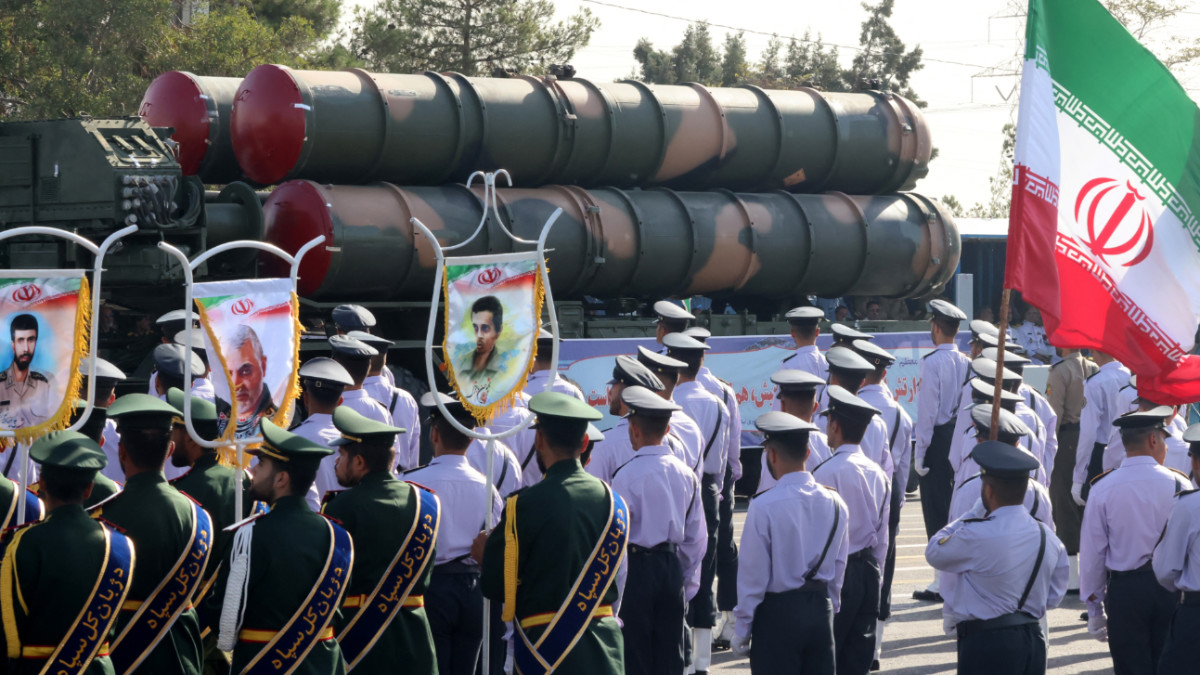
Iran’s current air defense architecture combines domestically manufactured systems with advanced hardware purchased from both Russia and China. Middle East Eye was the first outlet to confirm that China supplied integrated air defense batteries to Iran in the aftermath of the June 2025 war, which saw U.S. forces carry out targeted bombing runs on three Iranian nuclear sites.
The Trump administration’s narrative that Iran’s military has been “decimated” directly contradicts a growing body of leaked U.S. intelligence assessments, which indicate the Islamic Republic’s armed forces retain far more operational capacity than senior White House officials have publicly acknowledged. Just last week, The New York Times reported that Iran still controls approximately 70 percent of its pre-war mobile missile launchers and holds roughly 70 percent of its original missile stockpile. U.S. offensive strikes targeted heavily fortified missile sites hidden deep in underground mountain caves, but the ceasefire has allowed Iranian crews to clear rubble from these facilities and return the undamaged weapons systems to operational status, the report found.