分类: politics

  • Bolivia says protesters trying to ‘disrupt democratic order’

    Bolivia says protesters trying to ‘disrupt democratic order’

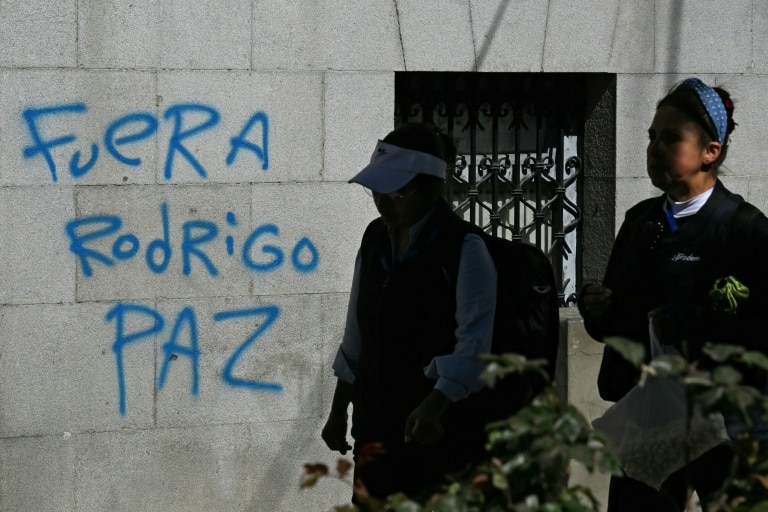
    Bolivia is currently grappling with a deepening political crisis, as weeks of mass anti-government demonstrations have pushed the new center-right administration of President Rodrigo Paz into a defensive standoff with opposition groups and even neighboring nations. In an official address to the Organization of American States (OAS) on Wednesday, Bolivian Foreign Minister Fernando Aramayo issued a sharp rebuke of protesters demanding Paz’s resignation, claiming their coordinated actions — including widespread roadblocks and mass marches — are a deliberate attempt to destabilize the country’s democratic institutions.

    The unrest, which has stretched on for weeks, has drawn participation from thousands of farmers, unionized laborers, miners, and public school teachers across the Andean nation. Protesters have coalesced around a list of grievances: galloping inflation that has eroded household purchasing power, persistent fuel shortages that have crippled daily life, and widespread opposition to what they frame as Paz’s pro-business free-market policy agenda, a sharp departure from the 20 years of socialist rule that preceded his administration.

    Paz, who took office less than six months ago after winning a national election, campaigned on a pledge to pull Bolivia out of its worst economic crisis in four decades. In a controversial policy move aimed at shoring up the country’s plummeting dollar reserves, he eliminated long-standing, generous government fuel subsidies. To date, however, the reform has failed to deliver on its core promise of stabilizing fuel supplies — a key campaign issue that has become the most visible flashpoint of public anger.

    Tensions boiled over on Monday in the capital city of La Paz, where riot police clashed with thousands of demonstrators attempting to march on government buildings to demand the president step down. Running battles between officers and protesters stretched on for hours. While a fragile calm has returned to La Paz in the days since, the broader national situation remains deeply tense and unstable.

    The current crisis also carries the lingering shadow of former socialist president Evo Morales, the Indigenous coca farmer who launched Bolivia’s decades-long left-wing shift in the mid-2000s. Paz’s administration has directly accused Morales of fomenting a coup to overthrow the new government. Morales, 66, who served three terms in office before attempting an unsuccessful political comeback last year, currently lives as a fugitive in his coca-growing stronghold of Chapare, where he has hidden since late 2024. He is wanted by Bolivian authorities on charges of having a sexual relationship with a minor during his time in office, which he has denied. Morales has publicly expressed solidarity with the ongoing protests, and his supporters fear authorities are preparing imminently to move to arrest him.

    International tensions have also flared alongside the domestic unrest. The United States has thrown its full weight behind Paz, who is part of a growing wave of newly elected right-wing leaders across Latin America, and has echoed the Bolivian government’s claims that the demonstrations amount to an illegal coup. On Wednesday, the Bolivian government announced it would expel Colombia’s ambassador to the country, citing unacceptable interference in Bolivian internal affairs by Colombian left-wing President Gustavo Petro. Petro had previously taken to social media to frame the Bolivian protests as a “popular insurrection” against “geopolitical arrogance”, a remark that drew fierce condemnation from La Paz. In response to the expulsion, Petro slammed the move, arguing it was evidence of ideological extremism on the part of Paz’s government.

    Beyond the political sparring, the unrest has inflicted severe harm on ordinary Bolivians. Widespread roadblocks erected by demonstrators have severed supply chains across the country, disrupting the transport of fuel, food, and critical medicine, leading to acute shortages in urban and rural areas alike. “We have almost nothing left,” 43-year-old Sheyla Caya told AFP while waiting in a long queue to buy chicken in La Paz this week. “It’s impossible to even find an egg.”
  • Russian jets ‘dangerously’ intercept RAF spy plane over Black Sea

    Russian jets ‘dangerously’ intercept RAF spy plane over Black Sea

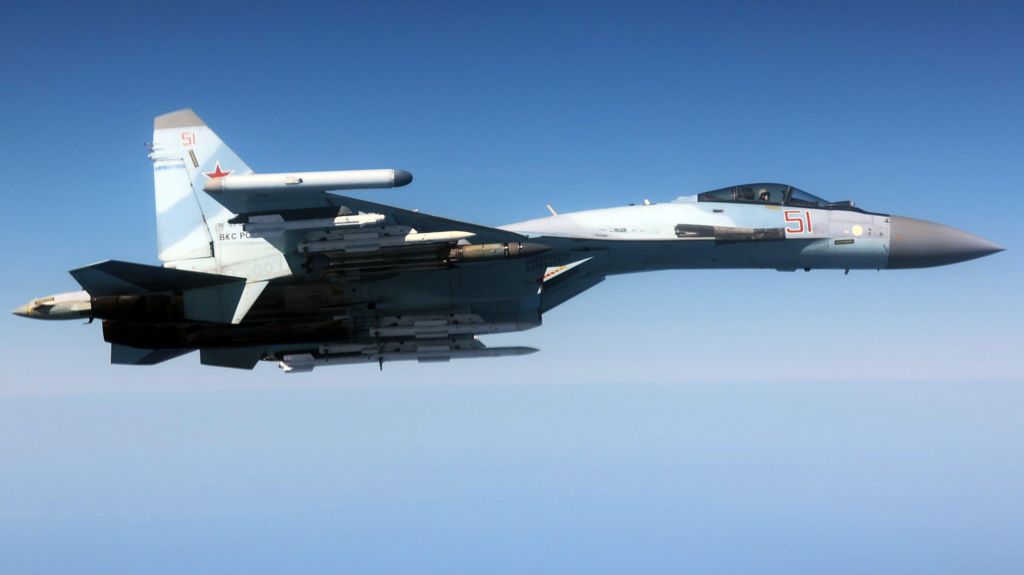
    In an incident that marks the most aggressive Russian aerial action against a British military aircraft since 2022, two Russian fighter jets carried out repeated, high-risk intercepts of an unarmed Royal Air Force (RAF) surveillance plane over the Black Sea last month, the United Kingdom’s Ministry of Defence (MoD) has confirmed.

    The close-proximity encounters forced the RAF RC-135W Rivet Joint aircraft into a dangerous situation: one Russian Su-35 fighter closed in so rapidly that it triggered the spy plane’s onboard emergency safety systems and forced its autopilot to disengage, leaving the crew to manually regain control of the aircraft. A second Russian jet, a Su-27, conducted six separate low-altitude passes directly in front of the RAF aircraft, coming within just six meters (19 feet) of the plane’s nose.

    UK Defence Secretary John Healey has publicly condemned the intercepts as “unacceptable”, while praising the RAF crew for what he called their “outstanding professionalism” in navigating the life-threatening encounter without incident. The MoD emphasized that this encounter represents the gravest escalation in Russian aerial aggression against NATO-aligned aircraft in the Black Sea region since September 2022, when a Russian pilot fired two air-to-air missiles at an RAF Rivet Joint operating in the same international airspace.

    Officials confirmed that the RAF spy plane was carrying out a routine, pre-planned international flight when the interception occurred, as part of NATO’s ongoing mission to reinforce security along the alliance’s eastern flank. Healey stressed that the reckless actions of the Russian pilots created a clear and unnecessary risk of catastrophic aerial accident, with the potential to rapidly escalate tensions between Russia and the NATO alliance.

    “This incident is another example of dangerous and unacceptable behaviour by Russian pilots, towards an unarmed aircraft operating in international airspace,” Healey said in a statement. “These actions create a serious risk of accidents and potential escalation. This incident will not deter the UK’s commitment to defend Nato, our allies and our interests from Russian aggression.”

    Both the MoD and the UK Foreign Office have formally contacted the Russian embassy in London to protest the encounter and demand condemnation of the pilots’ actions. The MoD noted that the intercept comes amid a broader pattern of growing Russian aggression near critical European infrastructure, pointing to recent increased Russian submarine activity around undersea British energy and communications cables in the North Sea.

    The 2022 missile incident, which Russia initially tried to blame on an accidental technical malfunction, has since been confirmed by three senior Western defence sources to have been a deliberate, if misordered, attack. The sources told the BBC that the Russian pilot launched the two missiles after receiving an unclear command from a Russian ground control station; the first missile missed the RAF aircraft, contradicting Moscow’s original claims of a system malfunction. At the time, the UK publicly accepted Russia’s explanation to avoid immediate escalation.

    The RAF’s RC-135W Rivet Joint, operated by the service’s No. 51 Squadron from its base in Lincolnshire, is a specialized signals intelligence platform. According to RAF official documentation, the aircraft is fitted with cutting-edge sensor technology designed to intercept and analyze electromagnetic signals across a wide spectrum, delivering real-time strategic and tactical intelligence to NATO and UK military command.

  • US military jets and drones tracked near Cuba as tensions continue

    US military jets and drones tracked near Cuba as tensions continue

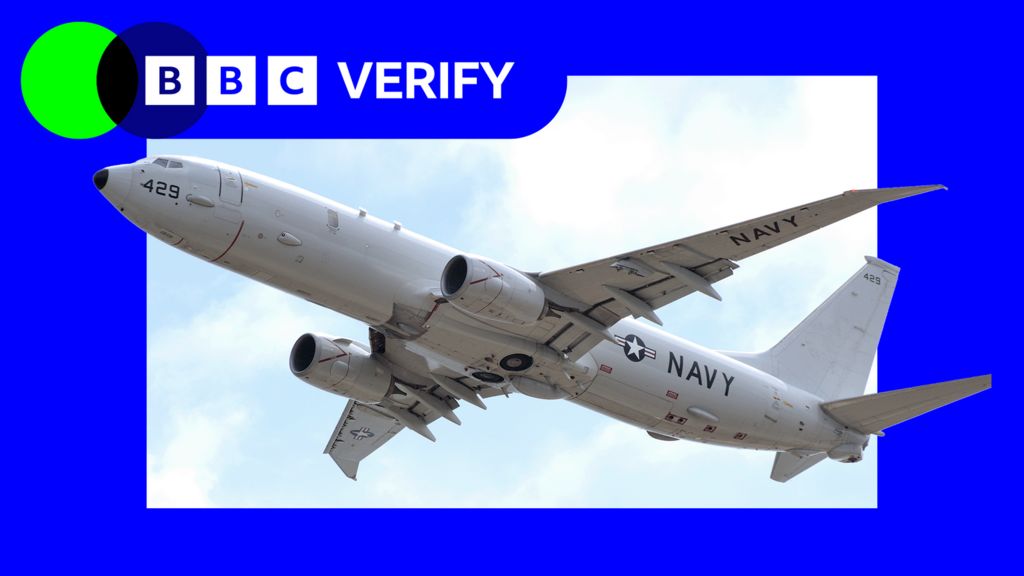
    In a deliberate show of pressure targeting Cuba’s communist government, the United States military has openly broadcast the position of its surveillance aircraft operating near the island via public plane-tracking platforms, in a move that comes as bilateral tensions between the two nations surge to multi-year highs. Analysis of open flight data from Flightradar24 conducted by BBC Verify confirms that since May 11, at least five U.S. Navy P-8A Poseidon surveillance planes and three MQ-4C Triton surveillance drones have conducted regular operations in Caribbean airspace close to Cuba, with some missions bringing the aircraft within just 50 miles (80 kilometers) of the island’s coastline.

    Military aircraft do not always broadcast their position during all stages of flight, meaning public flight tracking data cannot capture the full scope of U.S. surveillance activity off Cuba’s coast. This stepped-up deployment of intelligence-gathering assets follows a sharp escalation of tensions in recent months, after Washington imposed a de facto oil blockade on the Caribbean island nation. Recent reporting from news outlet Axios has further stoked friction, claiming Havana has obtained drones capable of striking the U.S. mainland. Cuba’s foreign minister has rejected the claim, stating the country “neither threatens nor desires war” and accusing Washington of constructing a “fraudulent case” to justify military intervention.

    In a direct address to the Cuban people delivered on Wednesday, the anniversary of Cuba’s independence from the United States, U.S. Secretary of State Marco Rubio framed a “new relationship” for the Cuban public, blaming the island’s “unimaginable hardships” on its communist leadership rather than the U.S.-led fuel blockade. Security analysts say the intentional decision to keep flight transponders active — making the missions visible to the public — is a core part of the U.S. strategy. UK-based drone expert Dr. Steve Wright notes that the move is almost certainly deliberate, designed to send a clear signal that the U.S. maintains constant surveillance to sustain its pressure campaign.

    The ongoing oil blockade has already triggered a severe humanitarian and economic crisis on the island, with widespread fuel shortages sparking rolling national power blackouts and small-scale public protests. U.S. President Donald Trump has ramped up pressure on Havana further, calling on the Cuban government to “make a deal” and threatening that the U.S. could intervene in the country just as it did in Venezuela earlier this year, when it captured sitting President Nicolás Maduro.

    BBC Verify’s tracking of the flights details the pattern of surveillance operations: on May 11, one P-8A Poseidon reached the 50-mile mark off southern Cuba, continuing operations into the following day when it flew north of Havana before returning to its home base in Jacksonville, Florida. On May 15, two MQ-4C Triton drones carried out operations off southern Cuba, following a flight path nearly identical to one previously used by a P-8A Poseidon.

    Mark Cancian, a retired U.S. Marine Corps colonel and senior adviser at the Center for Strategic and International Studies (CSIS), told BBC Verify that the repeated, consistent flight routes are primarily intended to spot incoming fuel ships approaching Cuba from the south, with a secondary focus on vessels approaching from the north. He emphasized that none of the surveillance flights have entered Cuban airspace over land, so the operations do not represent preparation for a full-scale invasion. Cancian also added that the increased frequency of the missions is almost certainly not routine, as the U.S. military has a limited number of P-8A and MQ-4C assets available for deployment globally.

    To contextualize the current surge in activity, BBC Verify compared recent data to operations between February 1 and 7 of this year, when only one P-8A flew near Cuba, with no comparable MQ-4C Triton activity recorded off the island’s coast. A U.S. Air Force RC-135V Rivet Joint reconnaissance aircraft did carry out two passes near the island during that February period, but operations were far less frequent than they have been since mid-May.

    Wright echoed the broader assessment that the surveillance is targeted at preventing Venezuela — a key ally of Cuba — from breaking the blockade and shipping fuel to the island. Analysts from defense intelligence firm Janes reached the same conclusion, noting that there has been a general uptick in U.S. intelligence, surveillance and reconnaissance sorties near Cuba since February. “The fact that these flights are visible through open-source tracking tools suggests they are intended to deter attempts to break the oil blockade and apply pressure on the Cuban government,” Janes told BBC Verify.

  • Barney Frank: One of the first openly gay US congressmen dies aged 86

    Barney Frank: One of the first openly gay US congressmen dies aged 86

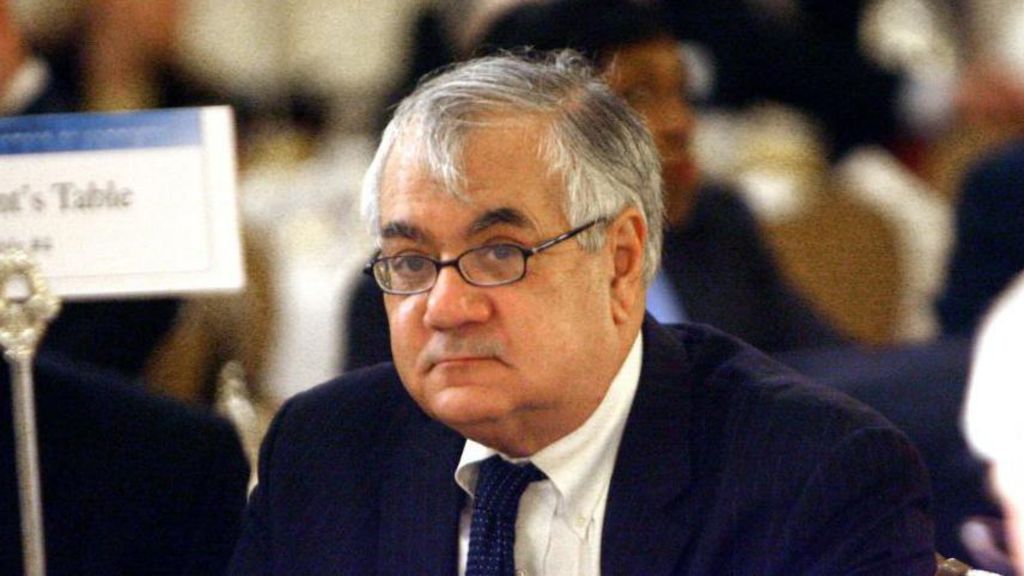
    Veteran American politician Barney Frank, a transformative figure who reshaped both national financial policy and LGBTQ+ representation in Congress, has passed away at the age of 86. Multiple U.S. media outlets confirmed the former Democratic congressman died peacefully Tuesday night, months after entering hospice care at his Maine residence in April.

    Over his 32-year tenure representing southern Massachusetts in the U.S. House of Representatives (1981–2013), Frank built a legacy defined by two landmark contributions: advancing civil rights for marginalized communities and leading post-2008 financial regulatory overhaul. As one of the first openly gay members of Congress and the first to enter a same-sex marriage while in office, he broke long-standing barriers for LGBTQ+ representation in American politics.

    Frank’s most consequential policy work came in response to the 2008 Great Recession, triggered by the subprime mortgage collapse. He co-authored the landmark Dodd-Frank Wall Street Reform and Consumer Protection Act alongside former Connecticut Senator Chris Dodd. Signed into law by President Barack Obama in 2010, the legislation created new independent regulatory bodies, tightened oversight of large financial institutions, and implemented sweeping protections for consumers – the most comprehensive update to U.S. banking rules since the Great Depression. In 2018, the Donald Trump administration rolled back a portion of Dodd-Frank’s restrictions, a change Time Magazine labeled the decade’s “biggest rollback of bank rules.”

    On civil rights, Frank was a vocal critic of the military’s “don’t ask, don’t tell” policy, which banned openly gay and lesbian service members from serving, and lobbied aggressively for its repeal. He also led a years-long push for federal legislation to outlaw workplace discrimination against LGBTQ+ workers, a goal that was not achieved during his time in office. In a 2011 interview with The Boston Globe ahead of his retirement, Frank summed up his approach to combating prejudice: “Prejudice is based on ignorance, and the best way to counterbalance it is with a living example, with reality.”

    Close associates remembered Frank as a principled leader committed to public service. “He was, above all else, a wonderful brother. I was lucky to be his sister,” Frank’s sister Doris Breay told NBC Boston. Jim Segel, Frank’s former campaign manager, confirmed the former congressman had accepted his declining health and was at peace in his final months. “He certainly left a mark, and he was a leader on civil rights, on gay rights, on leading other marginalized communities, and then he helped the country get through the 2008 financial crisis, which was the most significant recession, almost since 1930,” Segel told Axios.

    In the weeks before his death, while receiving hospice care, Frank spoke with multiple national media outlets to reflect on his decades of public service, assess the current political climate, and share his thoughts on the future of the American left. Even amid frustration with contemporary politics, he retained a measured hopefulness: “I’m filled with disgust at the current state, but optimism that it’s going to get better,” he told CNN’s Jake Tapper earlier this month.

  • UK eases sanctions on Russian jet fuel and diesel imports

    UK eases sanctions on Russian jet fuel and diesel imports

    In a politically charged move that has drawn sharp criticism from domestic opponents and global allies alike, Prime Minister Keir Starmer’s newly elected Labour government has moved to ease sanctions on imports of Russian-derived jet fuel and diesel, framing the policy as a necessary buffer to shield British consumers from skyrocketing energy costs amplified by ongoing Middle East conflict.

    The newly approved indefinite trade licence, which permits imports of Russian crude oil processed through refineries in third countries like India, is set to undergo periodic reviews, according to the UK’s Department of Business and Trade. Alongside this, the government issued a temporary licence that relaxes existing sanctions on liquefied natural gas originating from specific Russian production facilities. This adjustment comes as the government prepares to fully implement a previously announced ban on Russian crude-derived imports, first unveiled in October 2024.

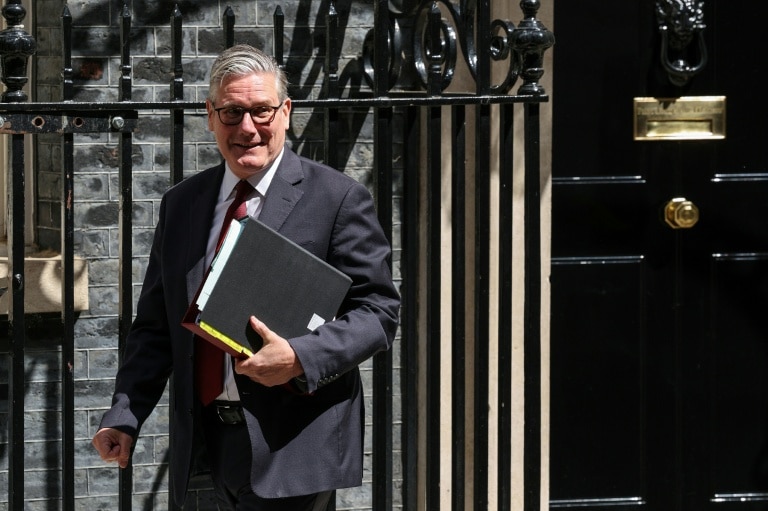
    Starmer defended the adjustment during a press briefing Wednesday, stressing that the targeted changes do not represent a rollback of existing sanctions against Moscow. “This is not a question of lifting existing sanctions in any way whatsoever, and we will continue to work with our allies on further sanction packages,” he stated, adding that the two short-term licences are designed to phase in the full ban gradually while avoiding sudden price shocks for UK households and businesses.

    The decision has immediately ignited fierce domestic political pushback. Conservative Party leader Kemi Badenoch condemned the move, accusing Starmer of “choosing to buy dirty Russian oil” and arguing that revenue from these fuel sales will directly fund Moscow’s military offensive against Ukraine, where thousands of Ukrainian soldiers have been killed since the 2022 full-scale invasion.

    The controversy also extends to the international stage. The policy aligns with a similar decision from the United States, which last Monday extended a sanctions waiver for Russian oil cargoes already in transit for a second time. That waiver was put in place after escalating Middle East tensions — driven by the conflict between Israel and Iran that has disrupted global energy supplies — pushed crude prices to multi-year highs. However, the EU has openly criticized the US waiver extension, with EU economics commissioner Valdis Dombrovskis noting at a recent G7 finance ministers meeting that the current moment is not the time to reduce economic pressure on Russia. The UK was a participant in that meeting, where the policy drew international scrutiny.

    UK officials have offered conflicting framing of the change in recent days. Treasury minister Dan Tomlinson defended the adjustment to Sky News, framing it as a step to protect core UK national interest amid the current global energy crisis. “The government has announced this time-limited change to the rules around oil and refining given the extremes of the impacts of the conflict in Iran, and the impact of it washing up on our shores,” he said. That framing was later echoed by trade minister Chris Bryant, who apologized to Members of Parliament for the government’s “clumsy” rollout of the new policy, and committed to keeping the approved licences as “temporary as possible.”

    The current energy market volatility traces back to Iran’s decision to effectively close the Strait of Hormuz — a critical chokepoint that carries roughly 20% of the world’s daily oil supplies — in retaliation for US-Israeli strikes launched in February. While commercial traffic has slowly resumed in the waterway during a recent ceasefire, market uncertainty has kept prices elevated. As of Wednesday, Brent North Sea crude, the global benchmark for oil prices, was trading close to $110 per barrel, a level far above pre-Middle East conflict averages.

    The UK first imposed a sweeping sanctions regime against Russia shortly after Moscow launched its full-scale invasion of Ukraine in 2022. Those measures included restrictions on Russian oil and energy exports, alongside sanctions targeting more than 3,000 Russian individuals and business entities. Wednesday’s policy adjustment has reopened fierce debate over how Western nations balance energy security for domestic consumers with the goal of maintaining collective pressure on Russia over its war in Ukraine.

  • Rubio offers Cubans ‘new path’ in special video address

    Rubio offers Cubans ‘new path’ in special video address

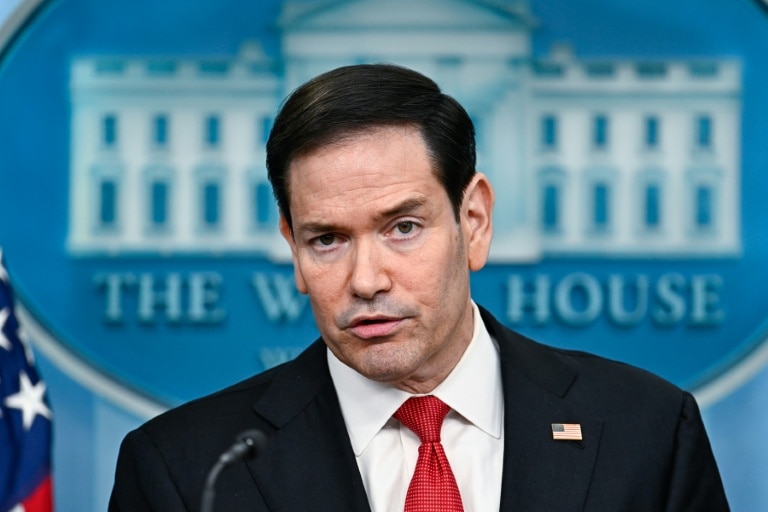
    In a pre-announcement video address delivered Wednesday, U.S. Secretary of State Marco Rubio, a second-generation Cuban-American, laid out a purported “new path” for the Cuban people, just hours before the U.S. Department of Justice was scheduled to unseal criminal indictments against former Cuban President Raul Castro.

    Speaking directly to Cuban citizens in Spanish, Rubio launched sharp criticism at Cuba’s ruling communist government, leveling accusations of systemic theft, deep-seated corruption, and widespread political oppression. As the child of Cuban immigrants who built a life in the United States, Rubio framed the proposal as an initiative backed by the Trump administration: “President Donald Trump is offering a new path between the U.S. and a new Cuba, a nation where you will hold the real power to choose your leaders, and vote them out if they fail to deliver for you.”

    Worsening bilateral friction has defined relations between Washington and Havana in recent months, sparked by two key escalations: a U.S.-backed military operation that ousted long-time Cuban ally Nicolas Maduro from Venezuela’s presidency, followed by a sweeping U.S. energy blockade that has compounded already severe economic struggles on the Caribbean island. Trump has repeatedly hinted that the current Cuban government is the next target for regime change, and earlier this month made an extraordinary public statement claiming the U.S. would “take over” the island — located just 90 miles off the coast of Florida — “almost immediately.”

    Per an official English translation of the speech released by the State Department, Rubio emphasized that Washington was prepared to reset relations between the two countries. “In the U.S., we are ready to open a new chapter in the relationship between our people and our countries, and currently, the only thing standing in the way of a better future are those who control your country,” he said.

    Rubio reserved particular criticism for GAESA, the military-linked business conglomerate that analysts estimate controls roughly 40 percent of Cuba’s total economic activity. He described the entity as a “state within the state” that operates with no accountability to the Cuban public, hoarding profits from its vast commercial holdings to benefit a tiny ruling elite while ordinary Cubans bear the cost. Rubio added that the nominal Cuban government’s primary function is to force continued public sacrifice and crack down on any dissenting voices that speak out against the status quo.

    The 94-year-old Raul Castro, who succeeded his older brother Fidel Castro as Cuba’s head of state and oversaw the landmark 2015 normalization of diplomatic relations with Washington under the Obama administration — a deal Trump reversed after taking office — was set to face criminal charges announced by the U.S. Justice Department Wednesday. According to reporting from CBS News, which cited unnamed U.S. officials briefed on the investigation, the pending indictment centers on the 1996 downing of two civilian aircraft flown by anti-Castro activists.

  • Watch: Did Trump and Putin get the same treatment in China?

    Watch: Did Trump and Putin get the same treatment in China?

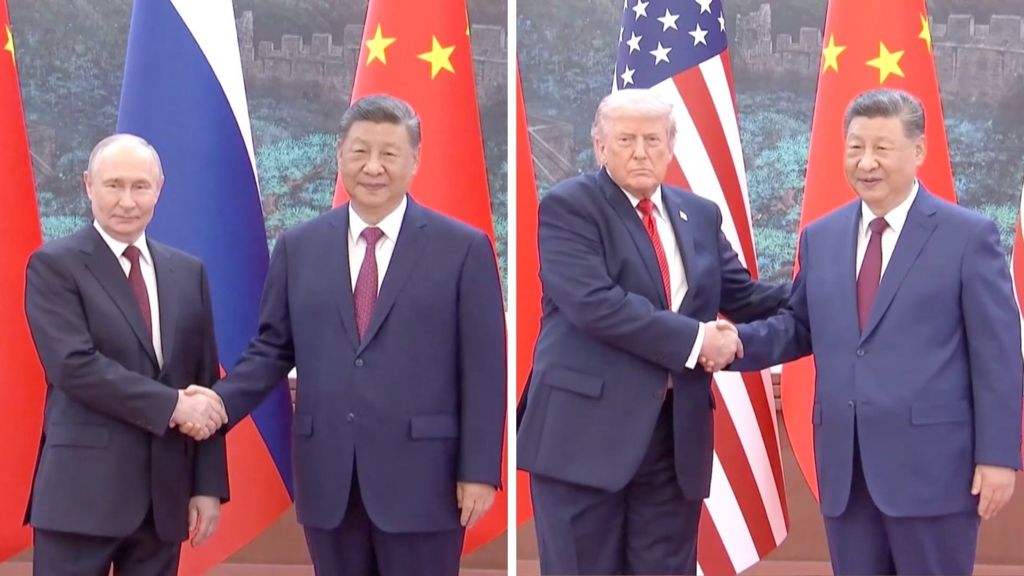
    When it comes to diplomatic protocol, the order of a state visit often follows established, consistent standards that apply equally to leaders from all major nations. Recent observations have highlighted that when Chinese President Xi Jinping welcomed Russian President Vladimir Ping to Beijing, the official welcoming ceremony bore a striking similarity to the one extended to former U.S. President Donald Trump during his visit just one week prior.

    Diplomatic analysts note that this level of uniformity in ceremonial arrangements is not unusual for Beijing’s hosting of foreign heads of state, as the country adheres to strict standardized protocols to ensure equal respect for every visiting leader, regardless of their country’s geopolitical alignment. The identical pageantry includes the same arrangement of honor guards, the same playing of national anthems, and the same formal welcoming process that marks a standard high-level state visit.

    This consistency in diplomatic practice underscores China’s commitment to upholding equal diplomatic treatment for all visiting world leaders, reflecting its long-standing approach to state-to-state interactions based on mutual respect and standardized protocol. Experts point out that such uniform ceremonies are a core part of diplomatic etiquette, designed to avoid any perception of preferential treatment or bias, and to maintain the dignity of all participating nations.

  • Poland welcomes U.S. statements that troop reduction there is temporary

    Poland welcomes U.S. statements that troop reduction there is temporary

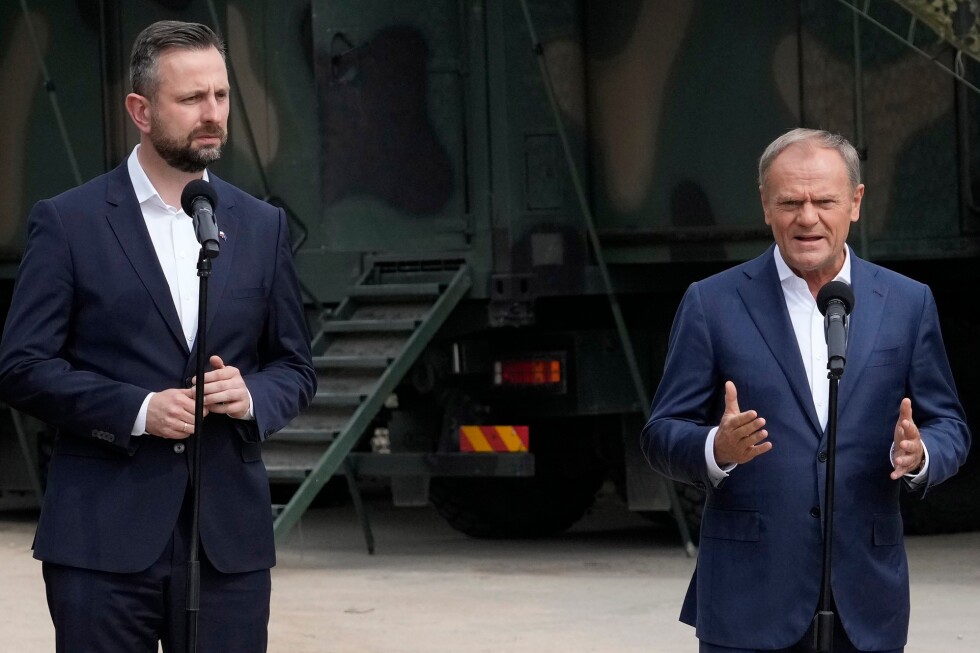
    In a development that reshapes current discussions of U.S. military posture across Europe, Polish government leaders confirmed Wednesday that they have accepted Washington’s clarification that the canceled deployment of 4,000 American troops to the Central European nation is only a temporary hold, rather than a permanent drawdown.

    The announcement came after a wave of surprise and unease rippled through Warsaw last week, when officials learned that the 2nd Armored Brigade Combat Team of the U.S. Army’s 1st Cavalry Division — originally scheduled to rotate into Poland, a frontline NATO member sharing a border with war-torn Ukraine — would not arrive as planned. The reaction set off heightened transatlantic tensions, coming on the heels of the Trump administration’s previously announced plan to cut U.S. troop levels stationed in Germany, a decision that already stirred criticism and anxiety on both sides of the Atlantic.

    By Tuesday evening, top U.S. defense officials moved to ease those concerns. Pentagon chief spokesperson Sean Parnell framed the halted deployment to Poland as a “temporary delay,” adding that Warsaw has long served as a “model U.S. ally” within the NATO alliance. Poland currently stands out among NATO members for its defense spending commitment, allocating roughly 4.7% of its national GDP to military outlays in 2025 — the highest proportional share of any alliance member.

    Parnell explained that the delay stems from a broader restructuring of U.S. ground forces in Europe, where the Pentagon is reducing the number of active brigade combat teams from four to three, and is still in the process of finalizing new basing assignments across the continent. U.S. Vice President JD Vance also pushed back against assumptions of a permanent drawdown in Poland, telling reporters Tuesday that “That’s not a reduction. That’s just a standard delay in rotation that sometimes happens in these situations.”

    Top Polish leaders echoed the U.S.’s framing on Wednesday. Prime Minister Donald Tusk said he was pleased to receive “Washington’s declaration that Poland will be treated as it deserves.” Polish Defense Minister Władysław Kosiniak-Kamysz, who held a call with U.S. Defense Secretary Pete Hegseth Tuesday night, noted that the updated U.S. assurances confirm that the overall “U.S. presence is maintained” in Poland. He added that shifting rotational deployments into a permanent U.S. troop presence has long been a Polish priority, and such an outcome would be “always much better.”

    Currently, around 10,000 U.S. troops are based in Poland, the vast majority of whom serve on rotational deployment cycles. Polish officials also confirmed that Warsaw will be included in all upcoming discussions about the ongoing restructuring of U.S. military forces across Europe. To date, U.S. officials have not publicly disclosed how long the deployment delay will last, and Kosiniak-Kamysz said he expects to receive additional clarification on the future U.S. troop footprint in the coming weeks.

    Even as Warsaw accepts the temporary delay, Tusk warned that European nations cannot afford to ignore the clear signal from Washington that the U.S. intends to reduce its long-term military footprint on the continent, and that European states must increase their own defense commitments to fill the gap.

    NATO Secretary-General Mark Rutte backed that assessment Wednesday, noting that alliance members have been aware for roughly a year of the Trump administration’s plan to withdraw some U.S. troops from Europe. Rutte said it is “rightly” expected that European nations and Canada will take on greater responsibility for conventional deterrence and defense across the NATO alliance, particularly in its European theater. While the U.S. “will stay involved” in transatlantic security, Rutte acknowledged that over time, Washington may reorient its military resources to other global hotspots.

    The Trump administration has repeatedly warned European allies in recent months that they must take greater ownership of their own security, including the defense of Ukraine against Russian aggression. The planned drawdown of at least 5,000 U.S. troops from Germany followed public comments from German Chancellor Friedrich Merz, who claimed the U.S. had been “humiliated” by Iran’s leadership and criticized what he called a U.S. “lack of strategy in the war” in the Middle East.

    Associated Press correspondent Lorne Cook contributed reporting from Brussels, Belgium.

  • Xi basks in spotlight as he hosts Putin days after Trump

    Xi basks in spotlight as he hosts Putin days after Trump

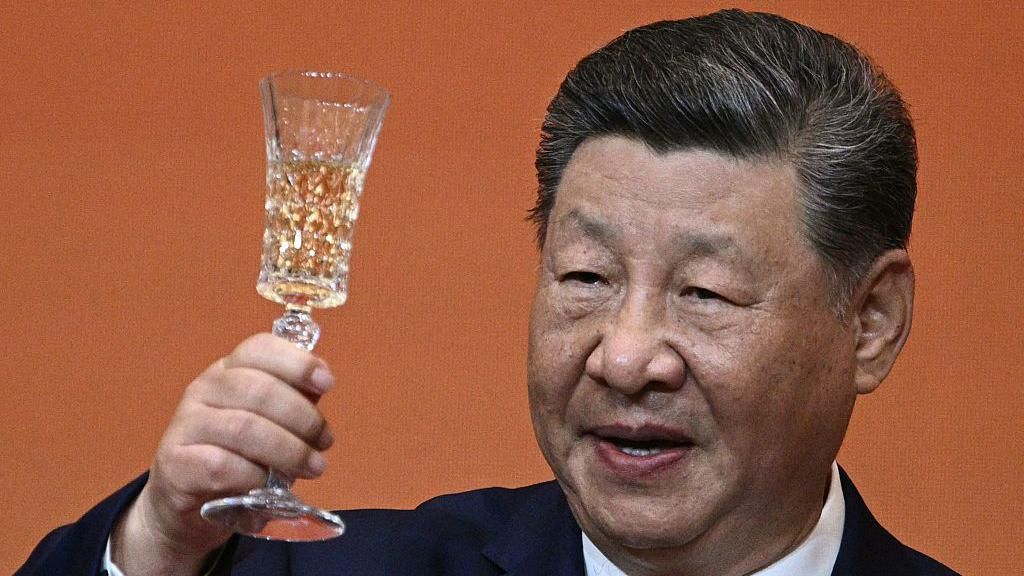
    Over the course of just seven days, Beijing rolled out the full red carpet for two consecutive heads of state: first former U.S. President Donald Trump, followed by Russian President Vladimir Putin. Each arrival mirrored the other in ceremonial grandeur: cheering crowds of schoolchildren, full military honor guards, cannon salutes, and marching bands escorting the visiting leaders to the Great Hall of the People. For China’s top leader Xi Jinping, this back-to-back display of high-profile diplomacy was far from a coincidence – it was a deliberate projection of a new global posture: Beijing is open to dialogue with all major powers, and bound to none.

  • US test fires mobile rocket system near Mount Fuji in rapid ‘shoot and scoot’ drill

    US test fires mobile rocket system near Mount Fuji in rapid ‘shoot and scoot’ drill

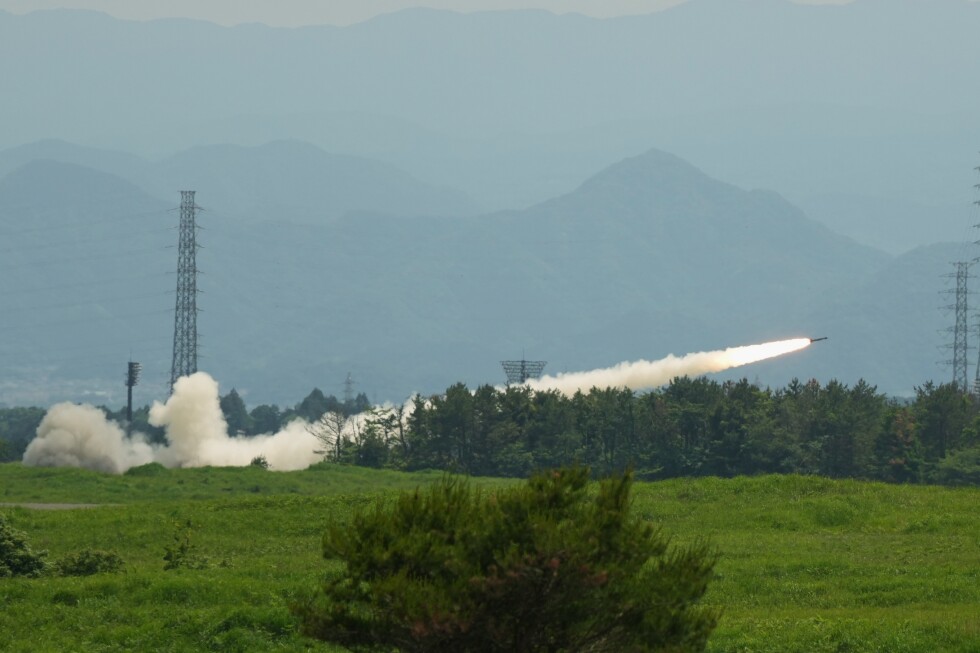
    GOTEMBA, Japan — In a high-stakes military demonstration focused on bolstering operational readiness in the Indo-Pacific, U.S. Marines carried out a test firing of 12 rockets from a mobile HIMARS launcher Wednesday at a training range tucked into the foothills of Mount Fuji, Japan’s most recognizable natural landmark. The exercise was designed to maintain proficiency with a weapons system that has rapidly grown in strategic importance for the United States military.

    The High Mobility Artillery Rocket System, better known as HIMARS, is a wheeled launcher mounted onto a heavy-duty military truck, engineered for rapid deployment and stealth operations. Its core tactical advantage lies in its ability to be pulled out of hidden cover, unleash its payload, and reposition to an alternative site in minutes to evade enemy counter-battery fire. This “shoot and scoot” strategy has grown even more critical in modern warfare, as the widespread use of reconnaissance drones on battlefields has left stationary artillery positions far more vulnerable to detection and attack.

    U.S. armed forces have already deployed HIMARS in combat operations across Iraq and Afghanistan. Most recently, U.S. Central Command confirmed the system was used in an opening strike against Iranian targets, where it utilized a new precision-guided long-range missile capable of hitting targets hundreds of miles away from its launch position.

    This live-fire exercise carries outsized strategic significance for the U.S. in the Pacific region, where Washington’s top defense priority is deterring a potential Chinese military operation to seize control of Taiwan. China claims the self-governing democratic island as an inalienable part of its territory and has repeatedly refused to rule out the use of force to achieve unification. If HIMARS systems equipped with the latest long-range missiles are deployed on Japanese territory or other nearby allied islands, the system would easily be able to strike targets across the entire Taiwan Strait, according to defense analysts.

    Despite this strategic context, the Camp Fuji exercise only utilized dummy projectiles, as the system is most commonly configured to field shorter-range rockets for standard training operations. Located roughly a two-hour drive from Tokyo, Camp Fuji is a permanent U.S. military training facility in Japan. This test marked only the second time U.S. forces have conducted HIMARS trials at the base, and the drill was planned and executed in close coordination with Japan’s Self-Defense Forces. As a safety precaution, local authorities closed a public roadway that ran between the launch site and the target impact zone for the duration of the exercise.