作者: admin

  • World Cup 2026: For Iran, politics and football collide again

    World Cup 2026: For Iran, politics and football collide again

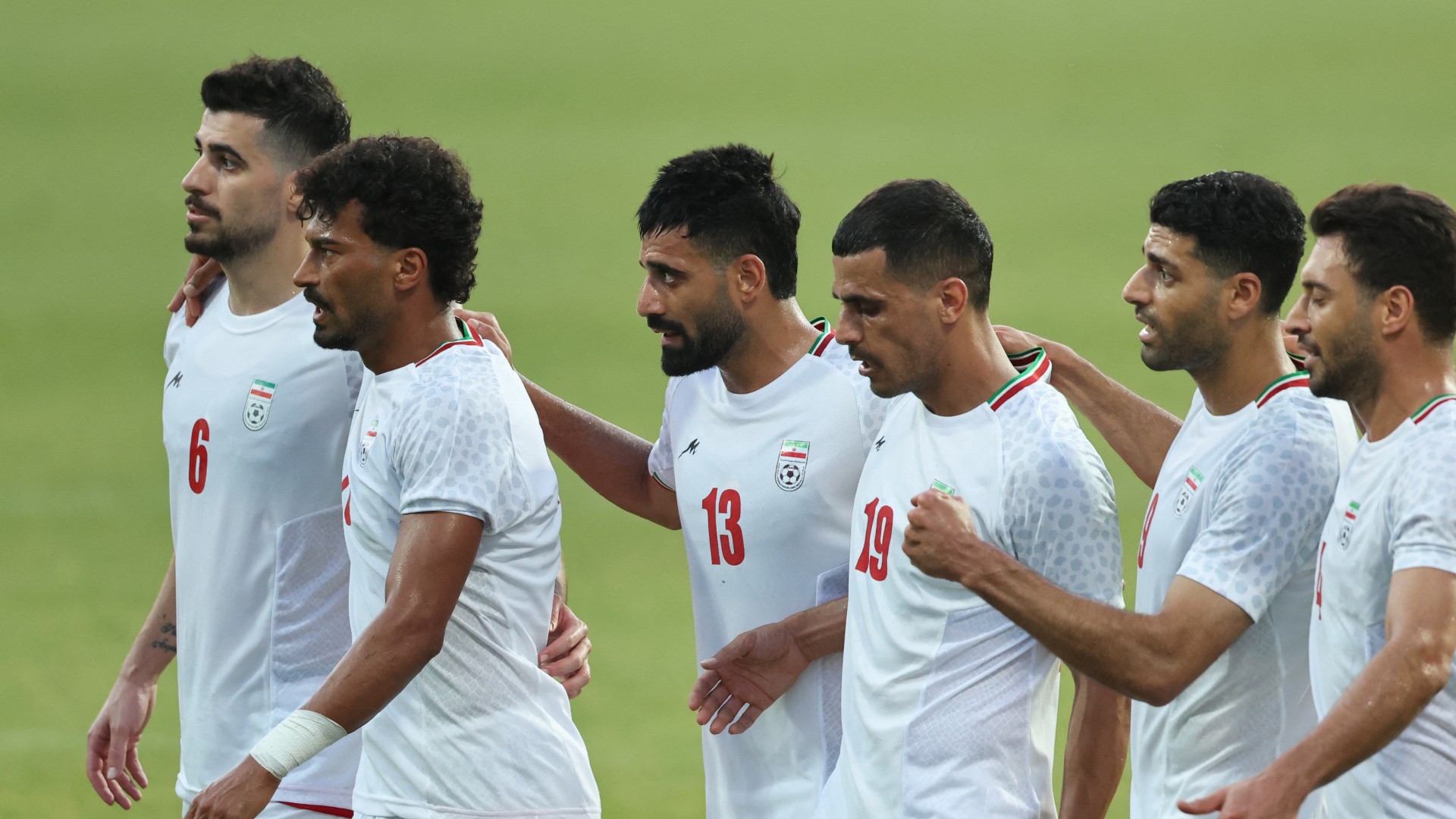
    For decades, Iran’s journey in the FIFA World Cup has been inextricably intertwined with the nation’s political and social upheavals. But the 2026 tournament, hosted in part by the United States, has brought the country’s national team, Team Melli, into an uncharted maelstrom of competing pressures that no other side in the competition’s history has had to navigate.

    Team Melli’s opening match against New Zealand in Los Angeles falls just one day after former U.S. President Donald Trump announced a landmark tentative deal with Iran’s government, a development that could bring a close to three and a half months of open conflict. The location of the match alone adds layers of tension: Los Angeles is widely nicknamed “Tehrangeles,” home to one of the largest Iranian diaspora communities in the world, the majority of which hold staunch anti-regime views. Back in Iran, public support for the national team is deeply divided, with many Iranians viewing the side as a symbol of the ruling government rather than a unifying national representative. This rift has deepened dramatically after the government’s reported crackdown on mass anti-government protests earlier this year that left thousands of demonstrators dead.

    “There is a long history of politics mixing with football in Iran,” explained Jahanyar Mohebbi, a former head coach of Iran Pro League side Foolad FC. “The players feel the pressure from all sides – the politicians, the fans in the U.S. and at home.” This pattern of political entanglement stretches back to Iran’s very first World Cup appearance in 1978. As the squad traveled to Argentina for the tournament, revolution was already sweeping across the country, and the Shah’s government tried to insulate the team from growing domestic unrest. Iran’s star player Parviz Ghleechkhani, who passed away just last month, was barred from the tournament after the Shah’s secret police detained and questioned him over his outspoken political views. Even the team’s legendary goalkeeper Nasser Hejazi, who turned heads with his standout performances in Argentina, missed out on a historic transfer to English powerhouse Manchester United after the revolution disrupted all transfer negotiations.

    After the 1979 revolution established the Islamic Republic, the new government under Ayatollah Ali Khomeini remained wary of football, recognizing the sport’s unmatched ability to mobilize mass passion and public discontent. That wariness was validated in 1997, when Iran defeated Australia in a playoff in Melbourne to qualify for the 1998 World Cup. Widespread spontaneous celebrations across Iran grew so large that the team was ordered to delay their return home to let public tensions subside. That qualification set the stage for one of the most politically charged matches in World Cup history: Iran’s group stage clash with the United States in Lyon. Ahead of the game, then-U.S. President Bill Clinton released a public message of goodwill, and Iranian players presented flowers to their American opponents before securing a 2-1 victory. “Every day somebody from the government, from sports officials, they were asking about the game and demanding a win,” recalled Jalal Talebi, Iran’s head coach at the 1998 tournament. “What I tried to tell the players was, ‘Forget what they said – it’s all politics.’ I knew exactly how much pressure they were carrying.”

    In the decades that followed, political undertones remained a constant in Iran’s World Cup campaigns. The 2006 tournament brought less international tension, but controversy emerged from within the squad, with reported deep divisions between supporters of star players Ali Daei and Ali Karimi. Karimi later made headlines during 2010 World Cup qualifiers when he and several other players wore green armbands, a gesture widely interpreted as a show of support for opposition protesters contesting the disputed re-election of President Mahmoud Ahmadinejad. Most recently, at the 2022 Qatar World Cup, protest took center stage again: following the death of 22-year-old Mahsa Amini in morality police custody for allegedly violating hijab laws, the entire Iranian squad refused to sing the national anthem before their opening match against England, a silent rebuke of the government that drew global attention.

    Beyond the political and social pressures, longstanding international isolation has systematically held Iranian football back. On a practical level, the Iranian Football Federation frequently struggles to access prize money and funding from international governing bodies held in overseas accounts. There has been chronic underinvestment in training facilities and international training camps for the national team, the domestic league has fallen behind other top leagues in the Middle East, and leading international nations routinely refuse to schedule friendly matches against Iran. While Japan, the first team to qualify for 2026, has prepared for the tournament with high-profile tune-up matches against Brazil, England, the U.S. and Mexico, Iran has only been able to arrange warm-up games against Russia, Tanzania, Costarica, Nigeria and Gambia.

    Yet for all these systemic obstacles, Iran has consistently qualified for World Cup tournaments and remains the second-highest ranked men’s national team in Asia, trailing only Japan. The 2026 campaign, however, represents the most daunting challenge the side has ever faced. Until just days before the tournament, there was open uncertainty over whether the entire Iranian squad would even be granted entry to the United States, forcing the team to relocate its pre-tournament training camp from Arizona to Tijuana, Mexico, on the U.S. border.

    Mohebbi noted that the chaotic preparation has brought one unexpected upside: “Usually national teams arrive at the tournament exhausted after a long domestic season, but Iran have had a long break and have been training almost like a club side.” That advantage is outweighed by significant drawbacks, though: the Iranian domestic league was canceled back in February, leaving players without competitive match action for months, and constant logistical uncertainty has created pervasive anxiety. “The most challenging thing is the logistics,” Mohebbi added. “Will they even be allowed to train at the stadium a day in advance, or will they just show up for the match? That uncertainty makes everything much harder.”

    Team captain Mehdi Taremi, who is competing at his third World Cup, echoed those frustrations after several members of the Iranian delegation were denied U.S. visas. “I’ve been to three World Cups, and they always say once you get off the plane and enter the host country, there’s just a unique atmosphere of friendliness and global connection,” Taremi told ESPN. “Unfortunately, I’m not feeling it right now. There’s a lot of tension right now in this World Cup, you can feel it in the atmosphere, and it’s because of actions like these visa denials.” Still, Taremi emphasized that the squad remains united, regardless of differing views on the Iranian government. “Obviously some people outside Iran, many here, are against the government, but we are all Iranian,” he said. “We are united and we are looking for peace. I think they will come there to support us, and we have to bring them joy.”

    For the players, anxiety extends far beyond logistics and visa issues, as they remain constantly concerned about loved ones back in Iran amid ongoing unrest. “It’s been very difficult, I’ll be honest with you, for every single one of us with the whole situation back home,” said winger Alireza Jahanbakhsh. “You have to keep checking on your family, on your loved ones, on your people back home, and of course it’s affecting the whole group.” As the team takes the pitch in Los Angeles, all eyes will be on how the 11 players caught in the middle of global political conflict will perform under the weight of unprecedented pressure.
  • US star Gaethje wins at Trump’s UFC White House show

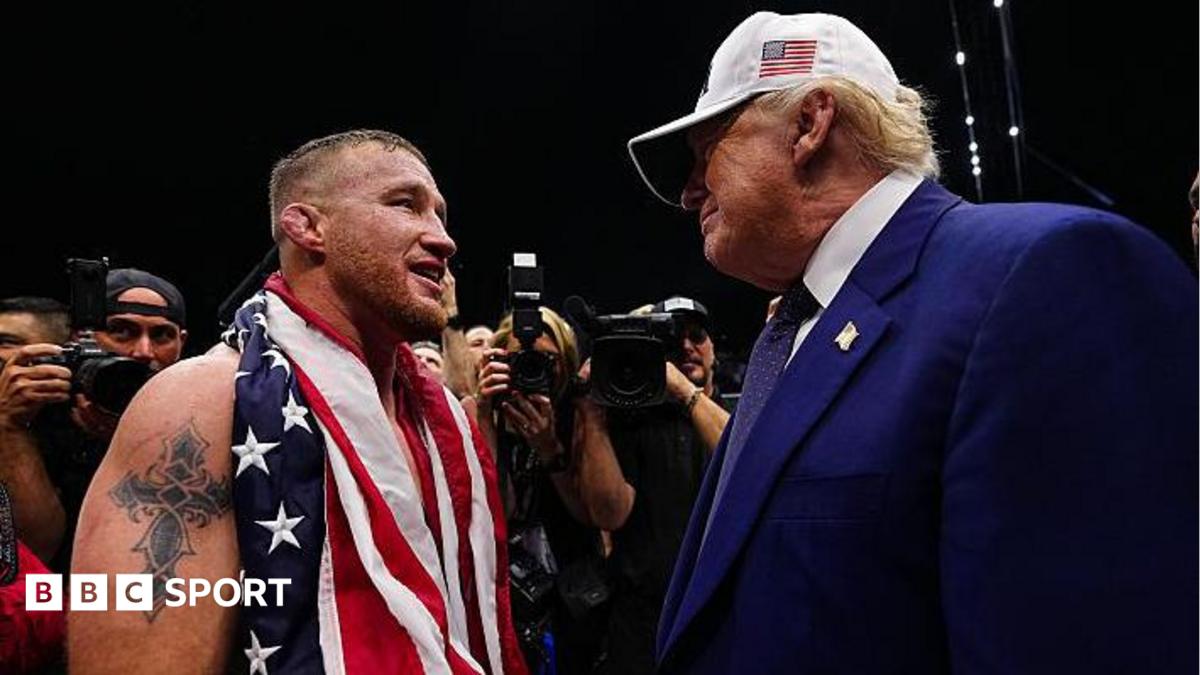
    US star Gaethje wins at Trump’s UFC White House show

    In a landmark moment that blends elite mixed martial arts competition with United States national celebration, the UFC has made history by hosting the first-ever professional live sporting event on the White House South Lawn. Billed as UFC Freedom 250, the blockbuster card was timed to coincide with both the 250th anniversary of American independence and former President Donald Trump’s 80th birthday, drawing a crowd of more than 89,000 spectators across the South Lawn and nearby Ellipse Park, with the majority of in-person attendees being active-duty and veteran U.S. military members.

    Leading up to the event, organizers faced minor disruption concerns when forecasts called for severe thunderstorms across Washington, D.C. A brief half-hour delay to the opening bell caused by passing rain did little to dampen the mood of the crowd, and the rest of the fight card proceeded without issue. The event opened with a ceremonial procession that saw Trump and UFC CEO Dana White walk from inside the White House to the Truman Balcony overlooking the octagon, followed by a performance of the U.S. national anthem accompanied by a flyover from U.S. Air Force fighter jets. In a unique touch, all main card fighters began their walkouts from inside the White House, with the Marine Band providing musical accompaniment — headliner Justin Gaethje even started his entrance in the Oval Office, pausing to take in the historic setting before passing portraits of former U.S. presidents en route to the cage.

    The main event delivered on every bit of the hype, delivering what UFC commentator Joe Rogan called one of the greatest upsets in the sport’s history. Thirty-seven-year-old American underdog Gaethje entered the bout facing undefeated Ilia Topuria, the Georgian-Spaniard incumbent lightweight champion who carried an unblemished 17-0 professional record into the octagon after moving up from the featherweight division. From the opening bell, the bout was a brutal back-and-forth striking contest. Topuria drew first blood in the second round, dropping Gaethje with a series of sharp body shots, but the American weathered the storm and seized control of the fight from that point onward.

    Gaethje landed a devastating right hand that put Topuria on the canvas in the third round, then followed up with relentless punishment via uppercuts and knee strikes that left Topuria bloodied and badly swollen. The challenger’s pace never let up through the fourth round, and despite a doctor clearing Topuria to continue between rounds, the champion’s corner made the call to pull him from the bout before the fifth round, handing Gaethje a fourth-round stoppage victory. It is the first undisputed UFC lightweight title of Gaethje’s career, coming on his third attempt at the belt, and he was awarded a custom red, white, and blue commemorative belt to mark the historic occasion.

    In his rousing post-fight interview, Gaethje leaned into the event’s patriotic theme, drawing a parallel between his underdog status going into the bout and the odds facing America’s founding fighters 250 years prior. “I’m from America, 250 years ago we were way bigger than 6-1 dogs, and look at us thriving now,” Gaethje said. He also closed his remarks with a tribute to U.S. service members, saying “To all the current, former and future military service members, thank you so much.” After the interview, Gaethje completed his signature post-victory backflip from the top of the octagon cage before meeting and being congratulated by Trump at ringside. Entering the event with a professional record of 27 wins and 5 losses, the victory pushes Gaethje’s career mark to 28-5, cementing his reputation as one of the most exciting competitors in UFC history.

    The co-main event also delivered a stunning upset, as Ciryl Gane halted Alex Pereira’s quest to become the first fighter in UFC history to claim titles in three different weight divisions. Pereira, who already held belts at middleweight and light heavyweight, was challenging for the interim heavyweight crown, but Gane’s signature fluid footwork and sharp striking proved too much for the Brazilian. Gane hurt Pereira with jabs and body kicks in the first round, consistently evading his opponent’s power shots to control the distance. In the second round, Gane landed a perfectly timed counter jab as Pereira stepped in to attack, dropping the 38-year-old. Though Pereira returned to his feet quickly, Gane swarmed his dazed opponent, forcing the referee to stop the contest.

    The win makes Gane a two-time interim heavyweight champion, and marks his first successful bout since a controversial no contest against British champion Tom Aspinall last October. That bout was called off after repeated eye pokes from Gane left Aspinall unable to continue, and Gane used his post-fight interview to call for a rematch with Aspinall this October. “I just want to see thank you to Dana and the UFC, thank you to Pereira,” Gane said after the win.

    The historic event generated immediate buzz across combat sports, with additional breaking stories emerging in the hours after the main event, including a clarification from Eric Trump that social media messages claiming the fight was rigged were fabricated using artificial intelligence. Tyson Fury also appeared at the event, teasing a potential future bout with Anthony Joshua that would be held under the UFC banner alongside Dana White.

  • Prominent Cambodian opposition politician seeks Supreme Court reversal of incitement conviction

    Prominent Cambodian opposition politician seeks Supreme Court reversal of incitement conviction

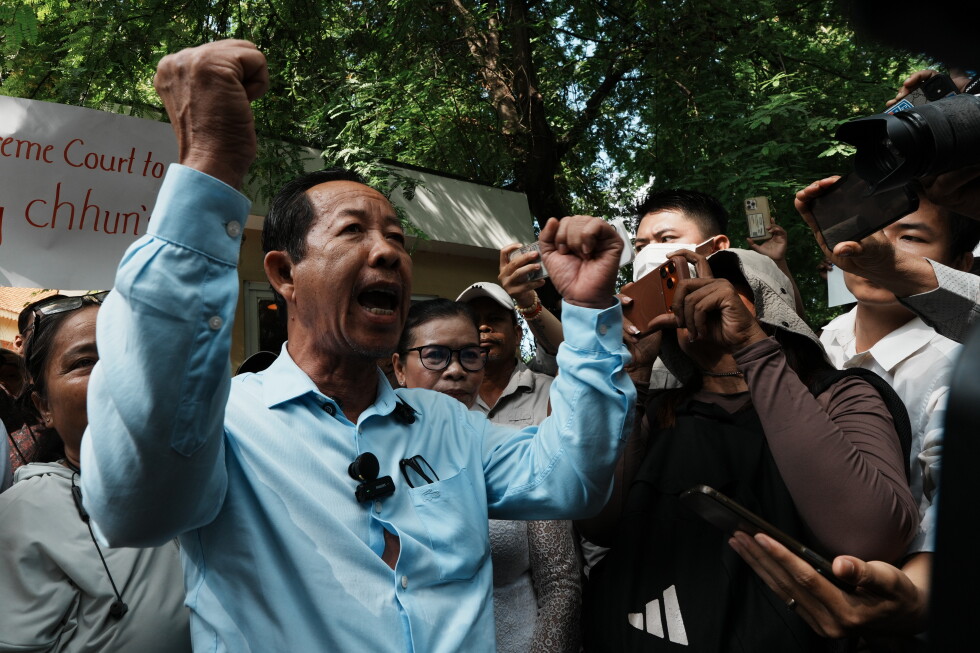
    PHNOM PENH, CAMBODIA — As hundreds of chanting supporters gathered outside Cambodia’s Supreme Court on Monday, prominent opposition political figure Rong Chhun emerged from his appeal hearing voicing urgent hope that judges would toss out a controversial incitement conviction that has sidelined him from national politics, clearing the way for his return to public life.

    Rong Chhun, 56, a senior policy adviser to the opposition-aligned Nation Power Party, was found guilty of inciting civil disorder last year following his meetings with local villagers displaced by state-backed infrastructure development projects. His conviction is widely categorized as one of a series of coordinated legal actions targeting government critics under the administration of newly installed Prime Minister Hun Manet. The ruling handed down last year sentenced him to four years behind bars and imposed a lifetime ban on his right to run for public office and cast a ballot. Throughout his original trial, Rong Chhun maintained he had done nothing illegal, noting his only public action was sharing photos of his meetings with affected villagers alongside commentary on his Facebook page.

    After closing Monday’s morning appeal session, Rong Chhun stepped out of the courthouse to a crowd of roughly 300 supporters, who waved homemade signs calling for his freedom and chanted in unison, “Drop the charges, free Rong Chhun!”

    Addressing the gathered crowd, Rong Chhun emphasized that as Cambodia navigates rising border tensions with neighboring Thailand, a sagging national economy, and a host of unresolved domestic challenges, he is committed to advancing a platform of national reconciliation and unity for the country’s 17 million residents. “I hope the court will grant me freedom and justice so that I can continue to practice politics in the future,” he said.

    In a sign of the government’s sensitivity to public displays of support for the opposition figure, access roads leading to the Supreme Court compound were blocked by dozens of uniformed police officers manning concrete barricades. Despite the security presence, Rong Chhun walked the final stretch to the courthouse alongside a contingent of supporters that included both local and international human rights defenders.

    “We are not worried about going to prison,” he told the crowd. “We are willing to sacrifice everything, and we are determined to use the lives our parents gave us to work toward a Cambodia that achieves true freedom and democracy.”

    Incitement charges have become a routine tool for Cambodian authorities to target political opponents, a pattern that predates Hun Manet’s premiership. Rong Chhun was previously handed a two-year prison sentence on identical incitement charges in 2021, after he was accused of spreading misinformation about Cambodia’s shared border with Vietnam during meetings with border-region farmers. That conviction was ultimately overturned by an appeals court later the same year, and he was released from custody.

    International observers and rights groups have long documented a pattern of systematic political suppression in Cambodia. The Cambodian government publicly maintains it upholds the rule of law within a functioning electoral democracy, but any independent political party deemed a credible threat to the long-ruling Cambodian People’s Party (CPP) has either been forcibly dissolved by the country’s courts or seen its leaders targeted with imprisonment, legal harassment, or punitive bans from political life.

    For nearly four decades, former autocratic Prime Minister Hun Sen oversaw a regime that drew widespread international condemnation for systematic human rights abuses, including widespread crackdowns on freedom of speech and freedom of association. Hun Sen handed power to his American-educated son Hun Manet in August 2023, but to date, analysts and activists have recorded almost no visible progress toward political liberalization or improved respect for civil liberties under the new administration.

    Among the supporters who traveled to Phnom Penh to rally for Rong Chhun on Monday was Tim Ratha, a 55-year-old vegetable vendor who made the multi-hour drive from her home in Siem Reap province in northern Cambodia to attend the hearing. “He has devoted everything to us,” she told the Associated Press. “He had no wife, no children — his whole life is dedicated to our cause.”

    The Supreme Court has scheduled its final verdict in the appeal for June 19, leaving Rong Chhun and his supporters waiting weeks to learn the outcome of the case.

    The Associated Press’s report on the hearing was contributed by correspondents based in Bangkok, Thailand.

  • West Indies beat Sri Lanka by 5 wickets to clinch the T20 series

    West Indies beat Sri Lanka by 5 wickets to clinch the T20 series

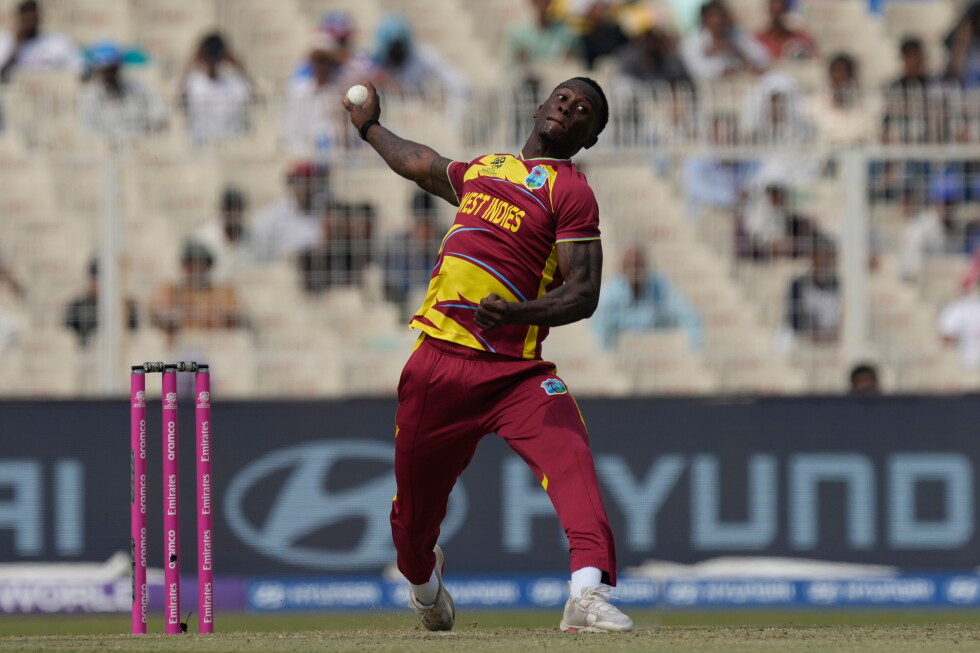
    In a thrilling conclusion to their three-match Twenty20 International series in Kingston, Jamaica, the West Indies pulled off a last-over five-wicket win against Sri Lanka on Sunday, clinching the series 2-1 with just two deliveries remaining. The dramatic run chase, capped by batter Sherfane Rutherford’s unbeaten half-century, capped a seesaw contest that kept spectators on the edge of their seats from the first over to the last.

    After winning the pre-match toss, West Indies captain made the tactical call to send Sri Lanka into bat first, a decision vindicated by seamer Shamar Joseph’s career-best player-of-the-match performance. The fast bowler picked up five wickets for just 33 runs, including two strikes in the sixth over and three more in the final over of Sri Lanka’s batting innings, narrowly missing out on a hat-trick twice.

    Sri Lanka got off to a fast start, reaching 49 for one after just five overs, but the momentum shifted abruptly when Joseph claimed wickets on back-to-back deliveries. First, opener Pathum Nissanka (26 off 17) top-edged a pull to Roston Chase after sharing a 43-run second-wicket stand, before Pavan Rathnayake was trapped lbw on the very next ball. The host’s fielding also delivered early: Matthew Forde pulled off a spectacular one-handed catch off his own bowling to remove dangerous batter Kusal Mendis for just five in the ninth over of the match.

    A late lower-order rally led by Dunith Wellalage dragged Sri Lanka to a competitive total of 169 all out. Wellalage anchored the recovery with a 28-ball 43, and shared a 49-run seventh-wicket partnership with Wanindu Hasaranga, but the stand was broken when Hasaranga was run out in the 19th over. Wellalage became the first of three Sri Lankan wickets to fall in the 20th over, closing out the visitors’ innings and setting the West Indies a target of 170 runs for victory.

    The West Indies chase got off to a shaky start, losing opener Shai Hope to Dunith Wellalage on just the third delivery of the innings. The hosts recovered quickly to reach 52 for one, before a collapse that saw three wickets fall for just one run in a 12-ball period handed the momentum back to Sri Lanka. Rutherford, who would eventually become the innings hero, combined with captain Rovman Powell to rebuild the chase, putting on an 81-run fifth-wicket partnership that got the West Indies back on track for victory.

    The contest turned chaotic in the 17th over, bowled by Sri Lankan paceman Dushmantha Chameera. The over stretched to nine deliveries after a no-ball and two wides, yielded 24 runs for the West Indies, and ended with Powell being dismissed for 33 off the final ball. After the over, the West Indies still needed 36 runs from the final three overs, with the equation narrowing to 29 runs from 12 balls by the start of the 19th over.

    All-rounder Jason Holder turned the game irreversibly in the West Indies’ favor in the penultimate over, smashing three sixes off Chameera in just four deliveries. The blitz cut the required runs down to just six for victory heading into the final over, with Rutherford still at the crease. Rutherford, who had benefited from two costly dropped catches by Sri Lankan fielders earlier in his innings, hit the winning runs to bring up his half-century off 40 balls, finishing unbeaten on 54. Holder ended the innings on 21 not out from just five deliveries, as the West Indies reached 170 for five to seal the series.

    The series win for the West Indies comes after the first two matches were split: the hosts won the opening fixture by seven wickets, before Sri Lanka claimed a 37-run victory in the second match on Saturday to leave the series tied heading into the decider. Prior to the T20I series, Sri Lanka claimed the preceding three-match ODI series 1-0, after the final two matches were washed out by rain following a 41-run win in the opening fixture. The two sides will next face off in a two-match Test series, scheduled to get underway on June 25 in Antigua.

  • Spain at a Tennessee boarding school, Iraq in a rural West Virginia town: Where World Cup teams live

    Spain at a Tennessee boarding school, Iraq in a rural West Virginia town: Where World Cup teams live

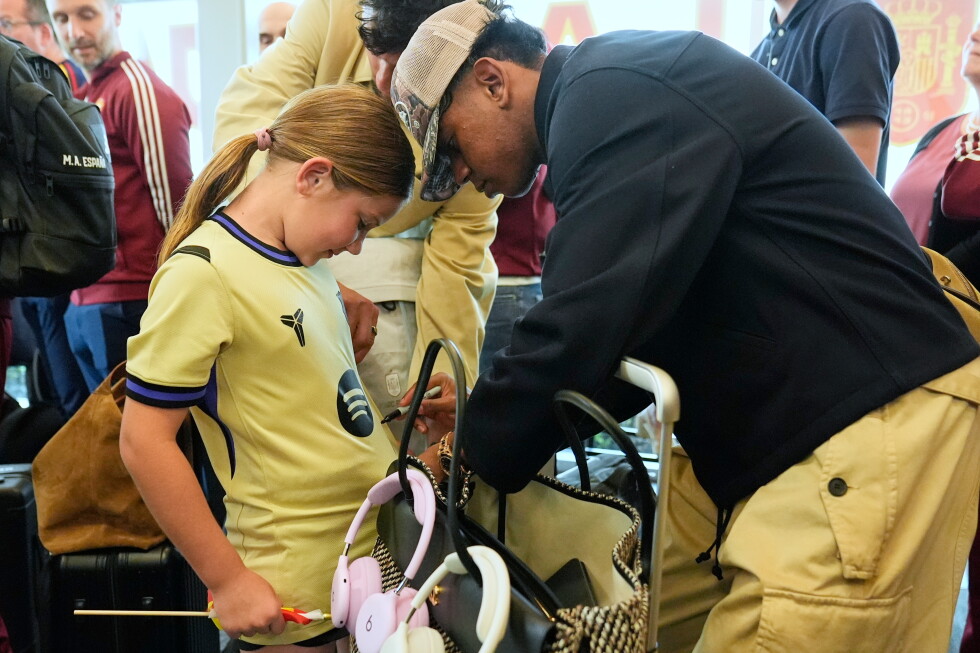
    Nestled in the shadow of Tennessee’s iconic Signal and Lookout Mountains, 8-year-old Beckham McClure balanced precariously on a wooden fence for more than three hours on a warm summer day. Clutching a crumpled handwritten note addressed to Spanish soccer stars Pedri and Lamine Yamal, the young fan waited patiently for the Spain national men’s team to step out of their team bus and onto Chattanooga soil. The note read simply: “I love you and I look up to you. Thanks for coming to my city. I hope you win the World Cup.” When the world-famous athletes finally jogged onto the training pitch, Beckham’s eyes went wide with disbelief. “Dad,” he whispered, “they’re real.”

    For Beckham’s father Jaxon McClure, a Marine Corps veteran and lifelong local soccer coach who named his son after the legendary David Beckham, that moment of childhood wonder encapsulated everything this World Cup experience has meant for small Southern American communities. This summer marks 32 years since the United States first hosted the FIFA World Cup, and for the 2026 iteration co-hosted by the U.S., Mexico and Canada, dozens of small to mid-sized cities across the South have stepped into the global spotlight as official base camps for competing nations, where teams can settle in, train, and prepare between matches.

    Tournament favorites Spain set up their training headquarters at Baylor School, a private boarding academy nestled along the Tennessee River in Chattanooga; the Iraq national team has taken up residence at a remote mountain resort town in West Virginia that counts fewer than 3,000 full-time residents; and four-time World Cup champions Germany have made their home in Winston-Salem, North Carolina, where historic cobblestone streets and repurposed tobacco warehouses now stand side-by-side with German national flags and roaming television crews.

    Across these communities, classic Southern hospitality is on full display for visiting teams. In Chattanooga, the 144-foot underground waterfall tucked beneath Lookout Mountain is lit up in Spain’s signature red, and the downtown Embassy Suites where the squad is staying is draped in the red-and-yellow Spanish flag, la Rojigualda. Giant welcome banners emblazoned with “Bienvenidos a Chattanooga” and portraits of star players greeted the team the moment they touched down at Chattanooga Airport. Local resident Skip Schwartz, who now serves on Baylor’s board of trustees, notes that Spanish jerseys are everywhere you turn. “You don’t know if they’re traveling fans from Spain hoping to get a glimpse, or locals who have jumped on the La Roja bandwagon,” Schwartz said.

    Demand to watch the world’s best players train up close has been overwhelming: roughly 25,000 local fans entered a public lottery for just 1,000 available spots to watch Spain’s open practice at Baylor. In Winston-Salem, all tickets to see Germany train at Wake Forest University sold out in just four minutes.

    Local businesses have also leaned into the excitement. Savannah Lahey, who manages Small Batch Beer Co., a popular soccer-focused bar in downtown Winston-Salem, extended opening hours to host public watch parties and created a special German-inspired menu for the tournament, featuring schnitzel sandwiches and sauerbraten ahead of Germany’s opening match. “It’s just fun to see everyone start to care about something they didn’t care about before,” Lahey said. “It makes our visiting friends feel at home, even when they’re thousands of miles away.”

    At West Virginia’s historic Greenbrier Resort, a luxury property that has hosted U.S. presidents and foreign leaders for more than a century, Iraqi and American flags fly side-by-side as the Iraq national team settles into their training camp.

    Spain’s decision to choose Chattanooga over larger American hubs like Chicago and Los Angeles comes down to the quality of Baylor School’s world-class soccer facilities. Under FIFA rules, higher-ranked national teams get first pick of approved base camps across North America, and the Spanish federation selected Baylor after FIFA inspectors gave top marks to the academy’s grass pitches, drainage, irrigation systems, and on-site operations. To keep the natural grass pitches in perfect condition for the Spanish team, Baylor’s own high school soccer team moved their entire spring training schedule to artificial turf, a sacrifice the senior class accepted without hesitation, said Sam Green, the school’s operations and systems director.

    Tucked behind a dense line of trees, two pristine grass pitches form the core of Spain’s daily routine. The training ground is just minutes from both the airport and the team’s downtown hotel, and Atlanta, where Spain will play two of their group-stage matches, is an easy drive away. After their first official training session, players headed straight to the school’s campus pool to relax and cool off ahead of their next workout.

    For Schwartz, the local trustee who played soccer at Baylor back in the late 1980s and early 1990s, when he and his teammates helped lay the Bermuda sod for the school’s first dedicated soccer field, the moment feels almost surreal. That original field has since been replaced by an indoor tennis center that now serves as Spain’s on-site media center, and the school has grown to boast three full soccer pitches and one of the top youth soccer programs in the region. “If somebody had told me then that 40 years later Spain would be using this campus as the foundation for a World Cup, I wouldn’t even have tried to fathom it,” he said.

    Local excitement has turned even casual fans into diehard La Roja supporters. At Spain’s open practice, hundreds of fans chanted “Vamos, España!” after nearly every touch of the ball, and even fans with other rooting interests have found themselves swept up in the energy. Seventeen-year-old Baylor midfielder Heath Techasiriwan, a Filipino American lifelong Lionel Messi fan who supported Argentina in the 2022 World Cup, said there’s no question who he’s backing this tournament. “Without a doubt, I’m cheering for Spain,” he said. “I can’t see players like Pedri, Gavi and Lamine Yamal literally right in front of me and not cheer for them.”

    Before the open practice, Baylor students snuck into the team locker room to snap photos of stalls freshly labeled with Spain’s biggest stars, joking and debating which player had ended up with “their” locker. Sixteen-year-old goalkeeper Mathew Ramirez, who commutes an hour each way from Calhoun, Georgia to train with Baylor, grew up watching Barcelona with his Guatemalan immigrant father. After the practice, 18-year-old star Lamine Yamal signed his custom Barcelona jersey. Ramirez told the young prodigy in Spanish: “Watching you play gives me happiness.” Ramirez says he plans to watch all of Spain’s matches this tournament surrounded by family and friends, eating traditional carne asada together.

    For young Beckham McClure, the day ended with signatures, selfies, and a new Spain jersey that his father says he insisted on sleeping in that night. After meeting his heroes, Beckham kept repeating the same thought: “Wait, Dad. They’re real. Lamine Yamal is a real person. I just thought they were like superheroes. They’re only on TV.”

    For Jaxon McClure, who grew up playing pickup soccer in Chattanooga neighborhoods using trash cans as goalposts and now coaches roughly 850 local children, moments like these prove how far the city’s soccer culture has come. Today, Chattanooga is home to both professional men’s and women’s soccer teams. “They could have gone anywhere in this country,” McClure said of Spain. “And they chose us.”

  • Israel bombs Beirut, allegedly hoping to sabotage US-Iran deal

    Israel bombs Beirut, allegedly hoping to sabotage US-Iran deal

    On a Sunday that was meant to bring new momentum to long-stalled diplomatic negotiations between the United States and Iran, an unexpected Israeli military strike on the southern suburbs of Beirut upended fragile hopes for a breakthrough, leaving at least three people dead and triggering widespread accusations that Israeli Prime Minister Benjamin Netanyahu’s government is deliberately working to derail the emerging diplomatic agreement.

    According to Lebanese security officials, the airstrike targeted a five-story residential apartment building in the densely populated suburb. Netanyahu defended the operation immediately after the strike, framing it as a proportional response to recent rocket fire launched by Hezbollah into northern Israeli territory.

    The bombing came just hours after U.S. President Donald Trump announced that he expected a preliminary memorandum of understanding (MOU) to be finalized and signed as early as that same Sunday. The document is intended to lay the foundational framework for broader negotiations to end the offensive military campaign that Trump launched against Iran in late February. While Iranian officials pushed back on Trump’s timeline for an immediate Sunday signing, Iranian Foreign Minister affirmed just two days prior that a preliminary agreement had never been closer to completion.

    A reporting from The Associated Press published Sunday emphasized that the new Israeli strikes pose a significant threat to the negotiating process, noting that the current draft of the MOU has already been a source of deep disappointment for Netanyahu’s right-wing government. This is not the first time an Israeli strike on Beirut’s southern suburbs has triggered a major escalation: just one week before this latest attack, a similar strike sparked the most severe confrontation between Iran and Israel since a fragile ceasefire took effect across the region on April 7.

    Multiple high-profile observers have echoed the accusation that the attack was a deliberate act of sabotage. Kenneth Roth, the former executive director of Human Rights Watch, took to social media to highlight the striking timing of the strike, noting that the attack came just as a U.S.-Iran agreement appeared within reach. “As a US-Iranian deal seems like it might be closer, Israel predictably bombs the Beirut suburbs, evidently hoping to sabotage the deal,” Roth wrote, adding a sharp question directed at the Trump administration: “Why does Trump put up with this and continue to arm and fund such obstructionism?”

    Iranian officials have echoed this criticism, arguing that the strike exposes a failure of the United States to control its closest regional ally. Mohammad Bagher Ghalibaf, Iran’s chief negotiator and speaker of the Iranian parliament, said that the Israeli strike signals the U.S. “either does not have the will or the ability to fulfill its obligations.” He added, “The good cop, bad cop routine has become old. If you do not have the will or the ability to fulfill your commitments, then there is no basis for talking about continuing down this path.”

    While the full text of the draft MOU has not been released to the public, key details of its broad provisions have been confirmed by multiple media outlets and senior officials from both sides in recent days. According to a Sunday report from Reuters, the final draft covers a sweeping set of core issues, ranging from limits on Tehran’s nuclear program to the reopening of the strategic Strait of Hormuz and U.S. waivers on Iranian oil sanctions. The MOU would set a 60-day window after the preliminary agreement is signed for both sides to negotiate a final, comprehensive deal.

    Under the reported terms of the draft, Iran would immediately reopen the Strait of Hormuz — a critical chokepoint for global oil supplies that Iran had restricted in recent months — and the U.S. would end its ongoing illegal blockade of Iranian ports. Additionally, the U.S. would agree to lift sanctions on Iranian oil exports and unfreeze $25 billion in Iranian assets that have been held overseas, while Iran would agree to maintain the current status of its nuclear program, refraining from further uranium enrichment and any expansion of existing nuclear facilities. Iranian Foreign Minister Abbas Araghchi confirmed in a televised interview Friday that the 60-day ceasefire extension outlined in the MOU would also extend to Lebanon, where Hezbollah and Israeli forces have exchanged regular fire for months.

    Axios reporting has revealed that Netanyahu has been largely sidelined from the recent progress in U.S.-Iran talks, with the Israeli prime minister “finding himself in the dark” as negotiations advanced. In recent days, he has reportedly reached out to close allies within the Trump administration repeatedly to try to gather intelligence on the draft agreement’s terms.

    In an extraordinary public rebuke following Sunday’s airstrike, President Trump lashed out at Netanyahu in comments to Axios reporter Barak Ravid, saying the Israeli prime minister “has no fucking judgment.” Trump added, “I passed this message on to him – that I am very unhappy with the attack in Beirut.” The criticism comes even as the Trump administration has approved billions of dollars in new weapons sales to Netanyahu’s government in recent months.

    Trita Parsi, executive vice president of the Quincy Institute for Responsible Statecraft, warned that the airstrike is unlikely to be the last act of sabotage unless the Trump administration takes concrete action to penalize Israel for the attack. “Netanyahu knows exactly what he is doing and is judging that an attack on Beirut – rather than southern Lebanon – is exactly what’s needed to derail the pending US-Iran deal,” Parsi argued.

  • Russian strikes kill nine in Ukraine and damage historic cathedral, officials say

    Russian strikes kill nine in Ukraine and damage historic cathedral, officials say

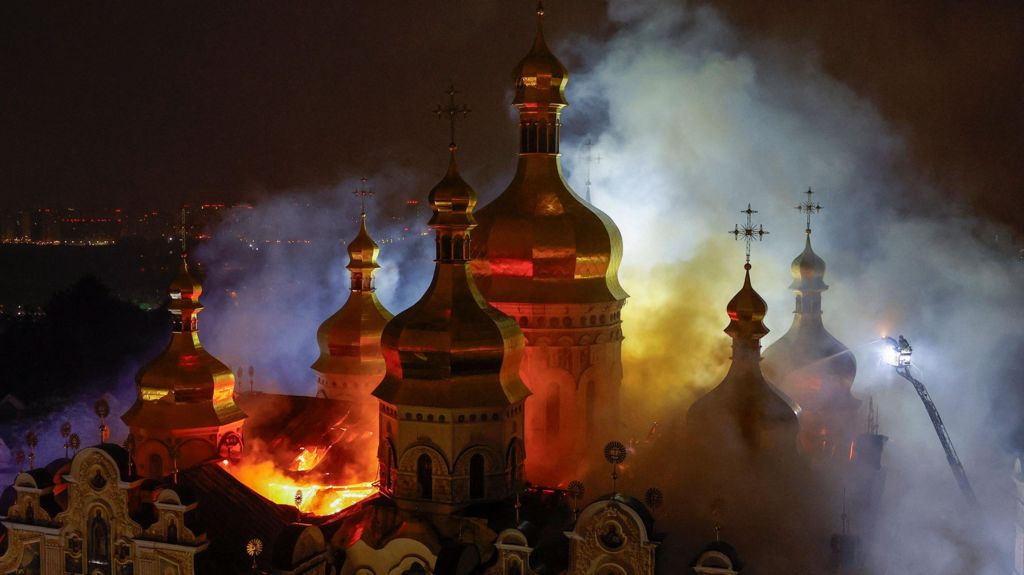
    In a sharp escalation of cross-border hostilities between Russia and Ukraine on Monday, a coordinated wave of Russian strikes across Ukraine has left at least nine people dead, multiple others injured, and inflicted severe damage on one of Ukraine’s most cherished cultural and religious landmarks, the 11th-century Dormition Cathedral.

    Ukrainian officials confirmed the death toll breakdown: four civilians were killed in attacks targeting the capital Kyiv, while five rescue workers lost their lives while responding to a blaze sparked by a Russian strike in the northeastern city of Kharkiv. In Kyiv, drone and missile barrages set multiple residential buildings, vehicles and infrastructure ablaze, cutting electricity access to more than 140,000 residents across the capital. Air raid sirens blared across nearly the entire country, forcing Kyiv residents to seek shelter in underground metro stations and other bomb-proof facilities. The Kyiv strikes alone wounded 23 people, with an additional five people injured in Kharkiv.

    The most culturally devastating loss from the attacks is the significant damage to Dormition Cathedral, a core site within the Kyiv Pechersk Lavra monastery complex that stands as a defining symbol of Ukrainian national and religious identity. Ukrainian Prime Minister Yulia Svyrydenko condemned the attack as a deliberate, brutal assault against both the Ukrainian people and their irreplaceable cultural heritage. In response, Ukrainian Foreign Minister Andrii Sybiha announced that Kyiv would immediately launch formal procedures through UNESCO and other global international bodies to demand accountability for what he called “state barbarism” targeting cultural sites.

    The violence was not confined to Ukrainian territory: Russian officials in Tula, a city south of Moscow, reported that a Ukrainian drone strike on the city killed three people and wounded three more, including a one-year-old child.

    Regional tensions spilled beyond Ukraine’s borders as neighboring Poland, a key NATO ally of Kyiv, took precautionary defensive measures: the country scrambled fighter jets and activated all ground-based air defense systems in response to the Russian strike wave, in a move designed to safeguard its own territory.

    The latest outbreak of deadly fighting comes just days before a scheduled G7 summit in France, where the ongoing Ukraine war is a top item on the meeting’s agenda. The strikes also follow a high-level conversation Sunday between Ukrainian President Volodymyr Zelensy and former U.S. President Donald Trump focused on exploring paths to end the full-scale conflict that Russian President Vladimir Putin launched in February 2022.

  • Rape trial verdict due in the case of Norwegian crown princess’ eldest son

    Rape trial verdict due in the case of Norwegian crown princess’ eldest son

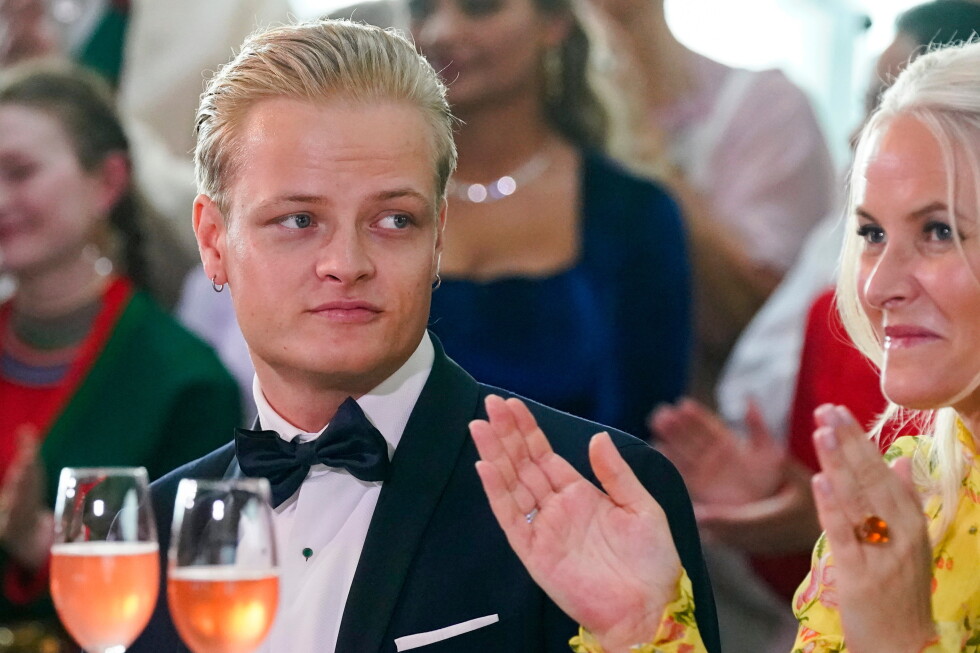
    On Monday, a Norwegian district court will deliver its long-awaited verdict and sentence in the high-profile criminal trial of Marius Borg Høiby, the 29-year-old eldest son of Crown Princess Mette-Marit, wrapping up a legal proceeding that has captured public attention across the Scandinavian nation and drawn widespread international scrutiny.

    Høiby, who was born from Crown Princess Mette-Marit’s pre-marital relationship with a commoner and grew up in the royal household alongside heir to the throne Crown Prince Haakon, but holds no official royal title or ceremonial duties, faces a total of 40 separate criminal charges. The most serious accusations against him include four counts of rape, alongside additional allegations of violence, threats, and abusive behavior spanning from 2018 to 2024. Prosecutors allege that in each of the four rape cases, the accusers were either asleep or severely incapacitated and unable to consent at the time of the alleged incidents.

    Høiby has issued a full denial of all four rape charges and pushed back on key details of many other allegations against him. He has only admitted to a series of less severe offenses, including drug-related violations, traffic misdemeanors, and violating the terms of a previously issued restraining order. Prosecutors have formally requested that Oslo District Court hand down a seven-year and seven-month prison sentence, while Høiby’s defense team has argued for the dismissal of all rape charges, and asked that any sentence for the crimes their client has admitted to not exceed 18 months of incarceration.

    The six-week trial concluded back in March after testimony from four separate accusers, alongside the submission of extensive evidence, including digital communications, images and video files recovered from Høiby’s personal cellphone. In the weeks leading up to Monday’s ruling, public interest has been further amplified by the declining health of Høiby’s mother, Crown Princess Mette-Marit, who lives with pulmonary fibrosis and is currently waiting for a life-saving lung transplant. Legal debates unfolded over whether Høiby should be granted temporary release from pre-verdict custody to see his mother, but appeals courts ultimately ruled that he must remain detained through the conclusion of the case. Legal analysts broadly note that regardless of how the court rules on the most severe rape charges, Høiby is still widely expected to receive a prison sentence for the lesser offenses he has already admitted.

    The case has gained outsized attention both domestically and globally due to Høiby’s direct ties to Norway’s royal family, and it comes at a time when the monarchy is already facing increased public scrutiny. Recently, public disclosures revealed that Crown Princess Mette-Marit maintained past social contacts with Jeffrey Epstein, the deceased American financier and convicted sex offender. The crown princess has publicly apologized for the connection, acknowledged that she exercised poor judgment in continuing her relationship with Epstein, and has not been accused of any criminal wrongdoing in connection with the Epstein disclosures.

    Editor’s note: This report includes discussion of sexual violence. For individuals in the U.S. seeking support for sexual assault experiences, contact the National Sexual Assault Hotline at 1-800-656-4673. For survivors based in Norway, the national sexual abuse victim helpline can be reached at +47 800 57 000.

  • Trump’s track record of insults and awkward moments with the G7 leaders he’s meeting in France

    Trump’s track record of insults and awkward moments with the G7 leaders he’s meeting in France

    As U.S. President Donald Trump prepares to depart Washington for France on Monday to attend the upcoming G7 summit, the gathering of the world’s most powerful Western democratic leaders is shaping up to be defined by underlying friction rather than collaborative unity. Despite ideological differences that separate the assembled heads of government, every attending leader shares one common experience: each has either been the target of public criticism from Trump, or has navigated awkward, unscripted confrontations with the U.S. commander-in-chief in recent months.

    Over three days of closed-door and public talks set against the scenic backdrop of the French Alps, leaders are scheduled to tackle a packed agenda that includes the newly announced ceasefire agreement aimed at ending the recent Iran war, ongoing trade tensions with China, and the lingering aftermath of Russia’s full-scale invasion of Ukraine. Beyond policy negotiations, the summit also presents a critical opportunity for global leaders to assess the future of their bilateral relationships with Trump, at a time when the U.S. president has doubled down on his “America First” unilateral approach to major global issues.

    Max Bergmann, a senior analyst at the Center for Strategic and International Studies, framed the summit’s dynamic as comparable to a tense family holiday gathering. “It’s like having an uncle you don’t quite like,” Bergmann explained. “No one wants to initiate a full confrontation, even when interactions turn passive-aggressive. But there’s always a risk that something snaps, and the gathering could spiral into a very dramatic public clash.”

    Ahead of the summit, a look back at recent high-profile frictions between Trump and his fellow G7 leaders highlights how far relations have strained across the alliance:

    ### United Kingdom: Starmer Draws Unflattering Churchill Comparison
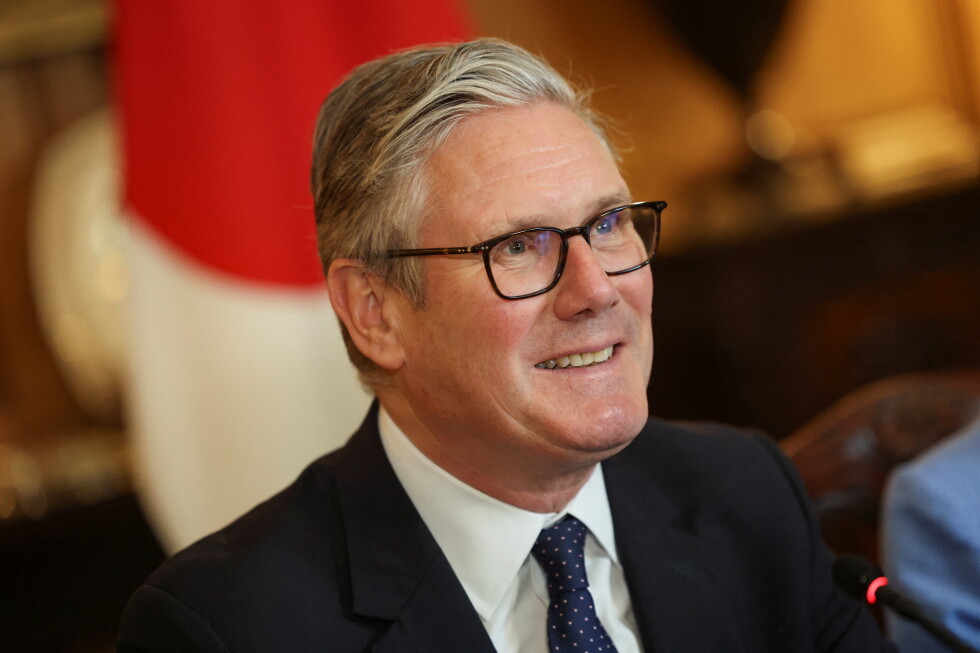
    British Prime Minister Keir Starmer has become a repeated target of Trump’s criticism, centered on three core points: the UK’s reluctance to back U.S. military strikes against Iran, its national immigration policies, and its expanded renewable energy agenda.
    Trump’s sharpest rebuke came after Starmer initially refused U.S. military access to a British Indian Ocean base for Iran bombardment missions. “This is not Winston Churchill that we’re dealing with,” Trump remarked, contrasting Starmer unfavorably with the UK’s iconic World War II prime minister.
    Trump also publicly lashed out at Starmer after the UK placed the HMS Prince of Wales aircraft carrier on advanced readiness for potential Middle East deployment in the early days of the Iran war. “We don’t need people that join wars after we’ve already won!” Trump wrote on social media.

    ### Canada: “Governor” Carney Draws Ire Over Condemnation of Great Power Coercion
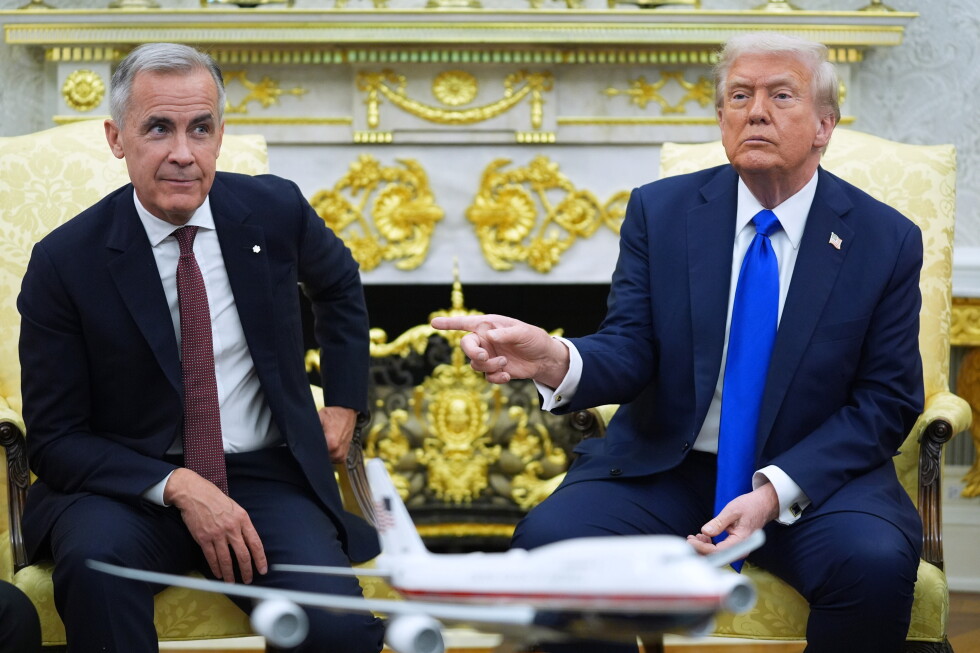
    Trump has long railed against trade imbalances with the U.S.’s northern neighbor, and has repeatedly made offhand comments about annexing Canada to make it America’s “51st state.” In recent months, he has taken to habitually referring to Canadian Prime Minister Mark Carney as “governor” rather than by his official title.
    The most public clash between the two leaders came earlier this year at the World Economic Forum in Davos, after Carney condemned great power coercion of smaller nations without naming Trump directly. “Canada lives because of the United States,” Trump fired back during his own remarks in Davos. “Remember that, Mark, the next time you make your statements.”
    Carney has opted for a calm response to repeated jabs, telling reporters earlier this month that Trump was an “exceptionally active user of social media” and that he would not waste time responding to every provocative post.

    ### France: Personal Jabs at Macron’s Marriage Over Iran War Opposition
    At an Easter lunch at the White House in April, Trump launched criticism of France and other NATO countries for refusing to join the U.S.-led war effort against Iran. In a shocking aside, he referenced viral footage from a 2023 Vietnamese state visit that captured First Lady Brigitte Macron appearing to nudge President Emmanuel Macron’s face away as the couple exited a plane.
    Trump told attendees Brigitte treats Macron “extremely badly” and joked the French president was “still recovering from the right to the jaw.” Macron later clarified the interaction was just a private joke between the couple, and called Trump’s comments “neither elegant nor appropriate.”
    Trump has also repeatedly mimicked Macron’s accent in public rallies and speeches when recounting trade negotiations, claiming the French president always quickly capitulates to U.S. demands in order to frame himself as a master dealmaker.

    ### Italy: Once-Praised Meloni Loses Trump’s Favor Over Non-Alignment
    Until this year, Italian conservative Prime Minister Giorgia Meloni was one of the few G7 leaders held in high public regard by Trump. When world leaders gathered in Egypt for a post-Gaza war summit last October, Trump publicly called Meloni “a very successful, very successful politician” and even praised her as “beautiful.”
    But Trump has completely reversed his stance after Italy refused to join the U.S. war against Iran, and after Meloni publicly criticized Trump’s high-profile feud with Pope Leo XIV over the conflict. “Do people like her? I can’t believe it,” Trump told Italian newspaper Corriere della Sera. He added, “I thought she had courage. I was wrong.”

    ### Japan: Awkward Pearl Harbor Joke Leaves New Prime Minister Reeling
    Trump has not launched direct public criticism of Japan’s Prime Minister Sanae Takaichi, who took office last October, but an offhand comment during her first White House visit left Takaichi in an extremely awkward diplomatic position.
    When a Japanese reporter asked why Trump failed to alert European and Asian allies before launching strikes on Iran, Trump casually invoked the 1941 Pearl Harbor attack to defend his choice to act unilaterally. Standing right beside Takaichi, he joked, “Who knows better about surprise than Japan? Why didn’t you tell me about Pearl Harbor, OK?”
    The comment sparked widespread shock in Japan, where it is longstanding convention for U.S. presidents to avoid provocative discussion of the attack that dragged the U.S. into World War II, with previous presidents instead focusing on strengthening the post-war U.S.-Japan alliance. Takaichi, a hard-line conservative, faced a mixed reaction at home for her muted response: she simply glanced at her assembled ministers and let the comment pass without public pushback.

    ### Germany: Merz’s Iran War Critique Draws Trump’s Retribution
    German Chancellor Friedrich Merz triggered a major public feud with Trump in April, when he argued the U.S. was “being humiliated” by Iran and criticized the Trump administration for launching the war without a clear end strategy, a move he said made a ceasefire harder to achieve.
    Trump hit back on social media the next day, saying Merz “should spend more time on ending the war with Russia/Ukraine” and “fixing his broken Country, especially Immigration and Energy.” Days later, the Pentagon announced it would withdraw roughly 5,000 U.S. troops from German territory, and Trump hinted he would seek even deeper cuts to the U.S. military presence in the country.
    The two leaders also navigated an awkward historical exchange during Merz’s 2023 White House visit, which fell on the eve of the D-Day anniversary. As Merz noted the historic occasion, which marked the start of the liberation of Western Europe from Nazi dictatorship, he argued the U.S. should again take a leading role in resolving the conflict in Ukraine. Trump interjected that D-Day was “not a pleasant day for you,” before acknowledging Merz’s point that the day also marked Germany’s liberation from Nazi rule.

    As leaders prepare to gather in the Alps, the question remains not whether friction will emerge, but how the group will manage long-simmering tensions when they are face to face on the global stage.

  • British leader expected to impose teen social media ban that goes further than Australia’s

    British leader expected to impose teen social media ban that goes further than Australia’s

    LONDON – On Monday, United Kingdom Prime Minister Keir Starmer is scheduled to announce a far-reaching ban on social media use for children under the age of 16, a policy crafted to shield young people from toxic online content and reduce the public health risks linked to excessive screen time. The planned regulatory move positions Britain as the latest country in a rapidly expanding global coalition working to strengthen online safety protections for minors, with multiple nations already rolling out or developing similar age-based access restrictions.

    The initiative comes at a tense moment for Starmer, who has faced growing internal criticism from members of his own party, with many calling for his resignation over what they characterize as ineffective leadership. Framing the upcoming policy as a “world-leading” intervention to protect children, Starmer noted it will go further than Australia’s existing under-16 social media ban to limit underage access to major platforms.

    Across the world, the push for stricter youth online safeguards has gained consistent momentum in recent years. Australia, Canada, Brazil and Indonesia have already enacted formal legislation or introduced binding age-based restrictions for social media access, while France, Spain, Denmark, Thailand and South Korea are currently in the process of researching or drafting their own parallel regulatory frameworks.

    In a pre-announcement statement released Sunday, Starmer framed the policy as a defining moral choice for the government. “How we keep kids safe online is one of the biggest debates of our time,” he said. “This is a choice about whose side we’re on: families across the country, or a status quo that isn’t working.”

    According to reporting from The Sunday Times, the under-16 ban will apply to all of the world’s largest social media platforms, including TikTok, Instagram, Facebook, X (formerly Twitter), YouTube, Snapchat, Threads, Twitch, Kick and Reddit. Beyond the core under-16 ban, the paper also reported additional planned restrictions: new rules for chatbot tools, limits on social media-style features integrated into popular gaming apps, and a targeted late-night curfew to stop older teenagers from scrolling social media during overnight hours.

    The upcoming announcement is the culmination of a months-long public consultation process that drew an extraordinary 116,000 responses from parents, tech industry stakeholders, and children and young people themselves. This level of public engagement ranks second only to the 2012 public consultation on equal marriage in the UK, reflecting the intense public interest in the issue of youth online safety. Culture Secretary Lisa Nandy confirmed that an overwhelming majority of respondents, including young people, supported implementing an under-16 ban. Nandy emphasized that the ban will be paired with additional complementary safeguards, rather than standing as a standalone solution. “I don’t think banning social media on its own is the silver bullet solution, but I do think Australia has shown very clearly that it has a significant role to play,” Nandy told the BBC on Sunday.

    The new regulations have already sparked diplomatic tension with the United States. In a public statement, the U.S. Embassy in London warned that overly broad UK regulations could violate international free speech commitments, and expressed concern that the new rules would impose disproportionate regulatory costs on major U.S.-based technology companies.

    Not all experts have backed the planned ban, however. Jon Crowcroft, a professor of communications systems at the University of Cambridge, argued that while proponents of the ban act with good intentions, the policy is likely to backfire. He noted that overly broad access restrictions could cut off young people from legitimate, beneficial online resources, and carry a real risk of pushing underage users onto unregulated, less safe platforms that operate outside mainstream oversight. “There is a real risk this will drive some users to worse sites and policing devices is close to impossible technically,” Crowcroft said. “Policing platforms is far easier, if only regulators would bother.”