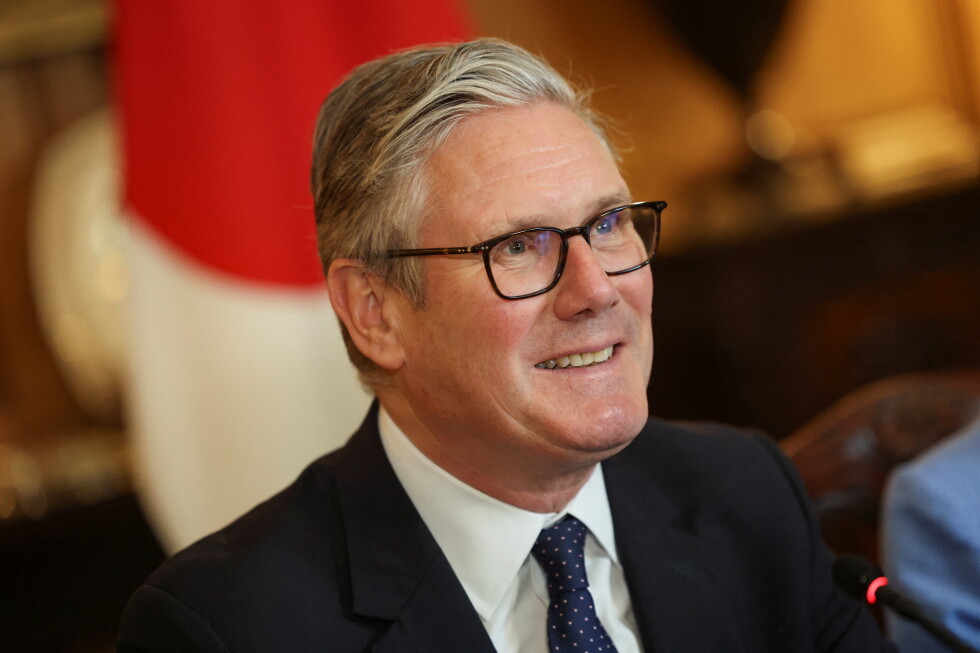
LONDON – On Monday, United Kingdom Prime Minister Keir Starmer is scheduled to announce a far-reaching ban on social media use for children under the age of 16, a policy crafted to shield young people from toxic online content and reduce the public health risks linked to excessive screen time. The planned regulatory move positions Britain as the latest country in a rapidly expanding global coalition working to strengthen online safety protections for minors, with multiple nations already rolling out or developing similar age-based access restrictions.
The initiative comes at a tense moment for Starmer, who has faced growing internal criticism from members of his own party, with many calling for his resignation over what they characterize as ineffective leadership. Framing the upcoming policy as a “world-leading” intervention to protect children, Starmer noted it will go further than Australia’s existing under-16 social media ban to limit underage access to major platforms.
Across the world, the push for stricter youth online safeguards has gained consistent momentum in recent years. Australia, Canada, Brazil and Indonesia have already enacted formal legislation or introduced binding age-based restrictions for social media access, while France, Spain, Denmark, Thailand and South Korea are currently in the process of researching or drafting their own parallel regulatory frameworks.
In a pre-announcement statement released Sunday, Starmer framed the policy as a defining moral choice for the government. “How we keep kids safe online is one of the biggest debates of our time,” he said. “This is a choice about whose side we’re on: families across the country, or a status quo that isn’t working.”
According to reporting from The Sunday Times, the under-16 ban will apply to all of the world’s largest social media platforms, including TikTok, Instagram, Facebook, X (formerly Twitter), YouTube, Snapchat, Threads, Twitch, Kick and Reddit. Beyond the core under-16 ban, the paper also reported additional planned restrictions: new rules for chatbot tools, limits on social media-style features integrated into popular gaming apps, and a targeted late-night curfew to stop older teenagers from scrolling social media during overnight hours.
The upcoming announcement is the culmination of a months-long public consultation process that drew an extraordinary 116,000 responses from parents, tech industry stakeholders, and children and young people themselves. This level of public engagement ranks second only to the 2012 public consultation on equal marriage in the UK, reflecting the intense public interest in the issue of youth online safety. Culture Secretary Lisa Nandy confirmed that an overwhelming majority of respondents, including young people, supported implementing an under-16 ban. Nandy emphasized that the ban will be paired with additional complementary safeguards, rather than standing as a standalone solution. “I don’t think banning social media on its own is the silver bullet solution, but I do think Australia has shown very clearly that it has a significant role to play,” Nandy told the BBC on Sunday.
The new regulations have already sparked diplomatic tension with the United States. In a public statement, the U.S. Embassy in London warned that overly broad UK regulations could violate international free speech commitments, and expressed concern that the new rules would impose disproportionate regulatory costs on major U.S.-based technology companies.
Not all experts have backed the planned ban, however. Jon Crowcroft, a professor of communications systems at the University of Cambridge, argued that while proponents of the ban act with good intentions, the policy is likely to backfire. He noted that overly broad access restrictions could cut off young people from legitimate, beneficial online resources, and carry a real risk of pushing underage users onto unregulated, less safe platforms that operate outside mainstream oversight. “There is a real risk this will drive some users to worse sites and policing devices is close to impossible technically,” Crowcroft said. “Policing platforms is far easier, if only regulators would bother.”