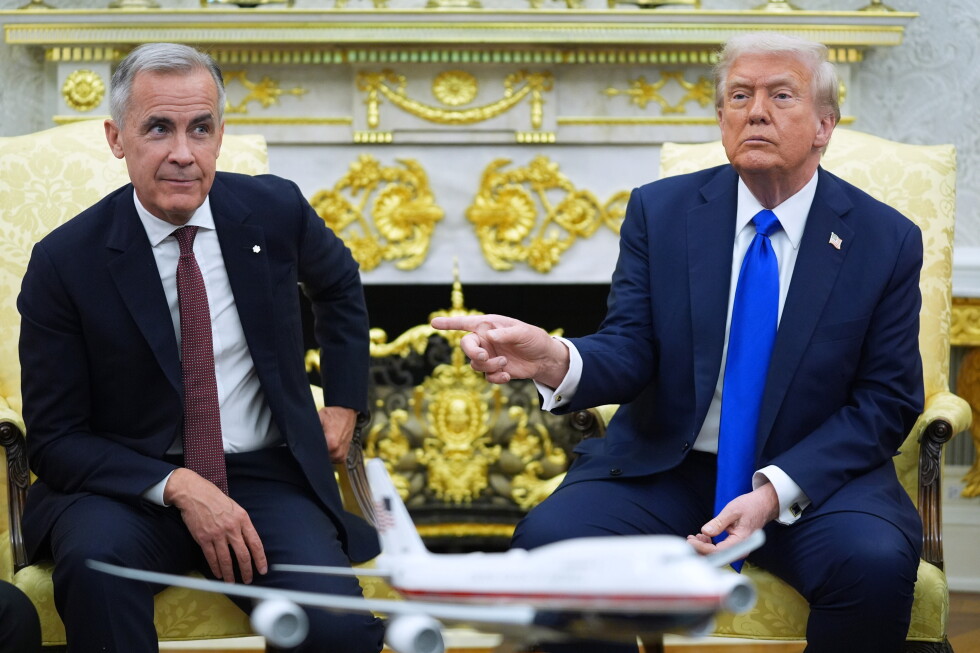
As U.S. President Donald Trump prepares to depart Washington for France on Monday to attend the upcoming G7 summit, the gathering of the world’s most powerful Western democratic leaders is shaping up to be defined by underlying friction rather than collaborative unity. Despite ideological differences that separate the assembled heads of government, every attending leader shares one common experience: each has either been the target of public criticism from Trump, or has navigated awkward, unscripted confrontations with the U.S. commander-in-chief in recent months.
Over three days of closed-door and public talks set against the scenic backdrop of the French Alps, leaders are scheduled to tackle a packed agenda that includes the newly announced ceasefire agreement aimed at ending the recent Iran war, ongoing trade tensions with China, and the lingering aftermath of Russia’s full-scale invasion of Ukraine. Beyond policy negotiations, the summit also presents a critical opportunity for global leaders to assess the future of their bilateral relationships with Trump, at a time when the U.S. president has doubled down on his “America First” unilateral approach to major global issues.
Max Bergmann, a senior analyst at the Center for Strategic and International Studies, framed the summit’s dynamic as comparable to a tense family holiday gathering. “It’s like having an uncle you don’t quite like,” Bergmann explained. “No one wants to initiate a full confrontation, even when interactions turn passive-aggressive. But there’s always a risk that something snaps, and the gathering could spiral into a very dramatic public clash.”
Ahead of the summit, a look back at recent high-profile frictions between Trump and his fellow G7 leaders highlights how far relations have strained across the alliance:
### United Kingdom: Starmer Draws Unflattering Churchill Comparison
British Prime Minister Keir Starmer has become a repeated target of Trump’s criticism, centered on three core points: the UK’s reluctance to back U.S. military strikes against Iran, its national immigration policies, and its expanded renewable energy agenda.
Trump’s sharpest rebuke came after Starmer initially refused U.S. military access to a British Indian Ocean base for Iran bombardment missions. “This is not Winston Churchill that we’re dealing with,” Trump remarked, contrasting Starmer unfavorably with the UK’s iconic World War II prime minister.
Trump also publicly lashed out at Starmer after the UK placed the HMS Prince of Wales aircraft carrier on advanced readiness for potential Middle East deployment in the early days of the Iran war. “We don’t need people that join wars after we’ve already won!” Trump wrote on social media.
### Canada: “Governor” Carney Draws Ire Over Condemnation of Great Power Coercion
Trump has long railed against trade imbalances with the U.S.’s northern neighbor, and has repeatedly made offhand comments about annexing Canada to make it America’s “51st state.” In recent months, he has taken to habitually referring to Canadian Prime Minister Mark Carney as “governor” rather than by his official title.
The most public clash between the two leaders came earlier this year at the World Economic Forum in Davos, after Carney condemned great power coercion of smaller nations without naming Trump directly. “Canada lives because of the United States,” Trump fired back during his own remarks in Davos. “Remember that, Mark, the next time you make your statements.”
Carney has opted for a calm response to repeated jabs, telling reporters earlier this month that Trump was an “exceptionally active user of social media” and that he would not waste time responding to every provocative post.
### France: Personal Jabs at Macron’s Marriage Over Iran War Opposition
At an Easter lunch at the White House in April, Trump launched criticism of France and other NATO countries for refusing to join the U.S.-led war effort against Iran. In a shocking aside, he referenced viral footage from a 2023 Vietnamese state visit that captured First Lady Brigitte Macron appearing to nudge President Emmanuel Macron’s face away as the couple exited a plane.
Trump told attendees Brigitte treats Macron “extremely badly” and joked the French president was “still recovering from the right to the jaw.” Macron later clarified the interaction was just a private joke between the couple, and called Trump’s comments “neither elegant nor appropriate.”
Trump has also repeatedly mimicked Macron’s accent in public rallies and speeches when recounting trade negotiations, claiming the French president always quickly capitulates to U.S. demands in order to frame himself as a master dealmaker.
### Italy: Once-Praised Meloni Loses Trump’s Favor Over Non-Alignment
Until this year, Italian conservative Prime Minister Giorgia Meloni was one of the few G7 leaders held in high public regard by Trump. When world leaders gathered in Egypt for a post-Gaza war summit last October, Trump publicly called Meloni “a very successful, very successful politician” and even praised her as “beautiful.”
But Trump has completely reversed his stance after Italy refused to join the U.S. war against Iran, and after Meloni publicly criticized Trump’s high-profile feud with Pope Leo XIV over the conflict. “Do people like her? I can’t believe it,” Trump told Italian newspaper Corriere della Sera. He added, “I thought she had courage. I was wrong.”
### Japan: Awkward Pearl Harbor Joke Leaves New Prime Minister Reeling
Trump has not launched direct public criticism of Japan’s Prime Minister Sanae Takaichi, who took office last October, but an offhand comment during her first White House visit left Takaichi in an extremely awkward diplomatic position.
When a Japanese reporter asked why Trump failed to alert European and Asian allies before launching strikes on Iran, Trump casually invoked the 1941 Pearl Harbor attack to defend his choice to act unilaterally. Standing right beside Takaichi, he joked, “Who knows better about surprise than Japan? Why didn’t you tell me about Pearl Harbor, OK?”
The comment sparked widespread shock in Japan, where it is longstanding convention for U.S. presidents to avoid provocative discussion of the attack that dragged the U.S. into World War II, with previous presidents instead focusing on strengthening the post-war U.S.-Japan alliance. Takaichi, a hard-line conservative, faced a mixed reaction at home for her muted response: she simply glanced at her assembled ministers and let the comment pass without public pushback.
### Germany: Merz’s Iran War Critique Draws Trump’s Retribution
German Chancellor Friedrich Merz triggered a major public feud with Trump in April, when he argued the U.S. was “being humiliated” by Iran and criticized the Trump administration for launching the war without a clear end strategy, a move he said made a ceasefire harder to achieve.
Trump hit back on social media the next day, saying Merz “should spend more time on ending the war with Russia/Ukraine” and “fixing his broken Country, especially Immigration and Energy.” Days later, the Pentagon announced it would withdraw roughly 5,000 U.S. troops from German territory, and Trump hinted he would seek even deeper cuts to the U.S. military presence in the country.
The two leaders also navigated an awkward historical exchange during Merz’s 2023 White House visit, which fell on the eve of the D-Day anniversary. As Merz noted the historic occasion, which marked the start of the liberation of Western Europe from Nazi dictatorship, he argued the U.S. should again take a leading role in resolving the conflict in Ukraine. Trump interjected that D-Day was “not a pleasant day for you,” before acknowledging Merz’s point that the day also marked Germany’s liberation from Nazi rule.
As leaders prepare to gather in the Alps, the question remains not whether friction will emerge, but how the group will manage long-simmering tensions when they are face to face on the global stage.