作者: admin

  • Europol task force nets 280 arrests as ‘violence for hire’ spreads across Europe

    Europol task force nets 280 arrests as ‘violence for hire’ spreads across Europe

    THE HAGUE, Netherlands — In a landmark first year of operations targeting an emerging dangerous trend in European organized crime, an international law enforcement task force focused on dismantling ‘violence as a criminal service’ networks has secured 280 arrests, Europol, the European Union’s law enforcement cooperation agency, announced Wednesday.

    The widespread arrests have pulled back the curtain on a growing cross-continental criminal pattern: criminal organizations are increasingly recruiting people — disproportionately young people — through social media platforms and encrypted messaging apps to carry out violent attacks, from brutal physical assaults to targeted assassinations. Europol officials have framed this model as a disturbing, illicit twist on the gig economy, where violence is contracted out on demand rather than planned and executed by established local criminal gangs alone.

    In an official statement, Europol emphasized that this shifting criminal landscape has moved far beyond the traditional boundaries of isolated, local incidents of violence. “Violence is no longer confined to isolated acts or local dynamics. It is increasingly offered as a service: accessible, scalable and driven by online ecosystems that enable recruitment, coordination, and execution across borders,” the agency noted.

    Launched one year ago, the task force brings together specialized law enforcement units from 11 European nations: Belgium, Denmark, Finland, France, Germany, Iceland, the Netherlands, Norway, Spain, Sweden, and the United Kingdom. Over its first 12 months of coordinated investigations, the joint operation has identified more than 1,400 individuals tied to these transnational violence-for-hire networks.

    Among the high-profile arrests made through the task force’s work are a Dutch national charged with acting as a getaway driver for two minors suspected of carrying out a series of explosions across Germany in mid-2025. In a separate cross-border case, a minor was taken into custody in Sweden earlier this year in connection with a shooting outside a prison in the Dutch city of Alphen aan den Rijn.

    Beyond the arrests already completed, Europol has added three top suspected network leaders to Europe’s most-wanted online portal. Two of the men are Swedish nationals, and the third is German. All three are wanted on charges including murder, large-scale drug trafficking, and money laundering for their alleged leadership roles within the illicit violence-as-a-service structure.

  • Diving robot explores mystery of France’s deepest shipwreck

    Diving robot explores mystery of France’s deepest shipwreck

    Nearly 1.5 miles beneath the Mediterranean surface off the French Riviera, a remotely operated diving robot has begun the first archaeological investigation of France’s deepest recorded shipwreck, revealing a remarkably preserved 16th-century merchant vessel that could rewrite key details of early modern Mediterranean trade. The wreck, dubbed “Camarat 4”, was discovered entirely by accident last year during a routine French navy seabed survey off the coast of Ramatuelle, a short distance from the iconic resort town of Saint-Tropez. Though the deep location makes unauthorized access virtually impossible, navy officials have kept the exact coordinates of the site classified to protect the fragile archaeological remains from looting and disturbance.

    Before dawn on the first day of the mission, the expedition’s navy tugboat anchored above the wreck, carrying the specialized diving robot, a team of marine archaeologists from the French culture ministry’s underwater archaeology department, and two converted shipping containers that serve as mobile on-deck workspaces. Operated via a long fiber-optic cable linking the robot to the surface vessel, the craft — rated for dives as deep as 4,000 meters, well beyond the wreck’s 2,500-meter depth — began its slow descent, with every movement tracked in real time by a team of experts watching live monitoring screens. Navy officer Sebastien, who withheld his last name for security protocols, emphasized the extreme care required for the operation: every movement of the robot’s pincers must be deliberate and precise to avoid damaging fragile artifacts or stirring up clouds of sediment that would obscure visibility and disrupt the intact site.

    After a one-hour descent, the robot glided over the dark seabed, revealing a trove of well-preserved artifacts that have rested undisturbed for more than 400 years. High-resolution cameras captured clear footage of a cast-iron cannon, hundreds of intact ceramic pitchers and decorative plates, many adorned with hand-painted floral motifs, crosses and fish symbols. Over three hours of continuous scanning, the robot captured 86,000 individual images at a rate of eight frames per second; these images will later be stitched together to create a full, high-fidelity 3D model of the entire wreck site that researchers can study without disturbing the remains.

    Lead archaeologist Franca Cibecchini expressed surprise at the excellent condition of the site, noting that exceptional water clarity has made the survey far more productive than initial projections: “The visibility is excellent. You almost can’t tell it’s so deep.” Cibecchini and her team have concluded the vessel was almost certainly a merchant trading ship hailing from the Liguria region of northwest Italy, likely loaded with ceramic goods in the major trading ports of Genoa or nearby Savona before it sank en route to its destination. The team believes the ship was carrying a bulk cargo of glazed ceramics and raw metal bars when it went down.

    On the first day of excavation, the robot carefully maneuvered a small intact pitcher into a protective recovery cradle, moving with extreme slowness to avoid the cracks and breaks that ruin roughly one-third of all ceramics recovered from deep-sea shipwrecks, according to lead field archaeologist Marine Sadania. By the end of the first mission phase, the team successfully brought several jugs and plates to the surface, where they were transported to a dedicated marine archaeology laboratory in the southern French port city of Marseille for cleaning and analysis. Examining one recovered pitcher in the lab, Sadania pointed out the distinctive decorative work: dark blue outlines form rectangular panels across the rounded vessel, with some panels filled in turquoise and marked with saffron-yellow geometric symbols.

    Sadania emphasized the enormous historical significance of the find, noting that it fills a major gap in scholarly understanding of 16th-century Mediterranean maritime trade: “We don’t have very detailed texts about merchant ships in the 16th century, so this is a valuable source of information on maritime history.” As the first full-scale investigation of a shipwreck at this depth in French territorial waters, the mission also sets a new benchmark for deep-sea archaeological exploration, demonstrating how remotely operated robots can unlock historical secrets that were once permanently out of reach for researchers.

  • Colombians are divided over the fate of hippos linked to Pablo Escobar

    Colombians are divided over the fate of hippos linked to Pablo Escobar

    Nestled along the banks of Colombia’s Magdalena River, the quiet riverside town of Puerto Triunfo holds an unexpected, dangerous legacy left by one of the world’s most infamous drug kingpins: a rapidly growing colony of invasive hippopotamuses that have divided local communities, spurred national debate, and put environmental policymakers in an impossible position.

    For local fishermen like Wilinton Sánchez, the semi-aquatic giants are a constant, deadly threat. Capable of charging 30 kilometers per hour across land and 8 kilometers per hour through water, hippos can surge from the river’s murky, tea-colored currents without warning. “We were out Saturday when one lunged … reared up and swung its jaws wide,” Sánchez recalled. “If it ever gets hold of you, it’ll tear you to pieces.”

    Álvaro Molina, another longtime fisherman who has lived along the river for decades, says dangerous run-ins have become routine. Around 11 years ago, the first two hippos settled on the nearby “Island of Silence,” a vegetated river island that offered ideal living conditions: no natural predators, a stable drought-free climate, and abundant vegetation far different from their native African range. Today, their population has surged, and Molina says encounters are so common he barely blinks anymore. A few years back, his boat drifted directly atop two resting hippos, which capsized the vessel in their surprise. Molina escaped unharmed, but he says the hippos have destroyed the local fishing industry, as fear has driven dozens of workers away from the water entirely. “Whether they are killed or taken away, it does us a favor,” he said.

    But for many other local residents, the hippos have become an unexpected economic lifeline. Several days a week, tour boats carrying domestic and international tourists crowd the river, visitors scanning the shoreline and murky water for a glimpse of the giants. Even the occasional sudden charge that sends boatloads of tourists screaming has done little to dampen the popularity of “hippo-watching” excursions.

    Diana Hincapié, a 48-year-old restaurant owner located on the banks of the Cocorná Sur River, a Magdalena tributary, says nearly 200 tourists visit her business each month, most traveling to the area specifically to see the hippos. She argues the animals have put down roots in Colombia after three decades of reproduction, saying, “They aren’t African anymore; they are Colombian, born and bred here for over 30 years.” If the government moves forward with its plan to cull the population, Hincapié says she is ready to join mass street protests, warning that losing the hippos would decimate Puerto Triunfo’s tourism economy.

    The hippo colony traces its origin back to the 1980s, when notorious drug lord Pablo Escobar imported four hippos to add to his private menagerie at Hacienda Nápoles, his sprawling, fortified valley estate. After Escobar’s death in 1993, the hippos escaped confinement and gradually spread across the Magdalena river basin. Today, the population numbers roughly 200, and Colombia’s Environment Ministry projects that without aggressive intervention, that number will surge past 500 by 2030, covering more than 43,000 square kilometers of river territory.

    To curb the unsustainable growth, the Colombian government recently approved a management plan that approves three main strategies: long-term confinement of local hippo populations, transfer of animals to international zoos or wildlife sanctuaries, and euthanasia, which is framed as a last resort for cases where non-lethal options are unworkable. The plan calls for euthanizing approximately 80 hippos starting in the second half of 2024.

    The announcement ignited immediate outrage across the country and beyond. Animal welfare activists have labeled the plan “mass murder” and “extermination.” Colombian Senator Andrea Padilla has called on the government to prioritize relocation over culling, arguing that responding to Escobar’s reckless illegal importation with mass killing is unacceptable. “This is a legacy left to us by a drug trafficker,” Padilla said. “How can we possibly close this chapter in the exact same way — by shooting the hippos?”

    Scientists who back the cull as a necessary environmental measure have even received death threats amid the public backlash. Daniel Cadena, dean of sciences at the University of the Andes, explains that hippos are large, impactful herbivores that fundamentally alter local ecosystem structure, posing long-term risks to native Colombian wildlife. He supports a mixed strategy that includes euthanasia as a necessary component to stop uncontrolled population growth.

    Euthanasia is also logistically challenging, under official government protocol: hippos must first be lured into corrals with food, immobilized, then given a lethal injection. Alternately, they may be shot with high-powered long-range rifles, as the species’ famously thick skin makes penetration difficult for lower-powered weapons.

    Efforts to pursue non-lethal relocation have so far hit a dead end. The Environment Ministry confirmed that while some countries initially expressed interest in accepting transferred hippos, no nation has formally committed to taking in the animals. High transportation and care costs, as well as legal restrictions on importing invasive species, have deterred potential hosts, leaving the controversial cull plan on the table as the government weighs its options to address a problem decades in the making.

  • Outrage after Indian man carries his sister’s skeleton to a bank to prove her death

    Outrage after Indian man carries his sister’s skeleton to a bank to prove her death

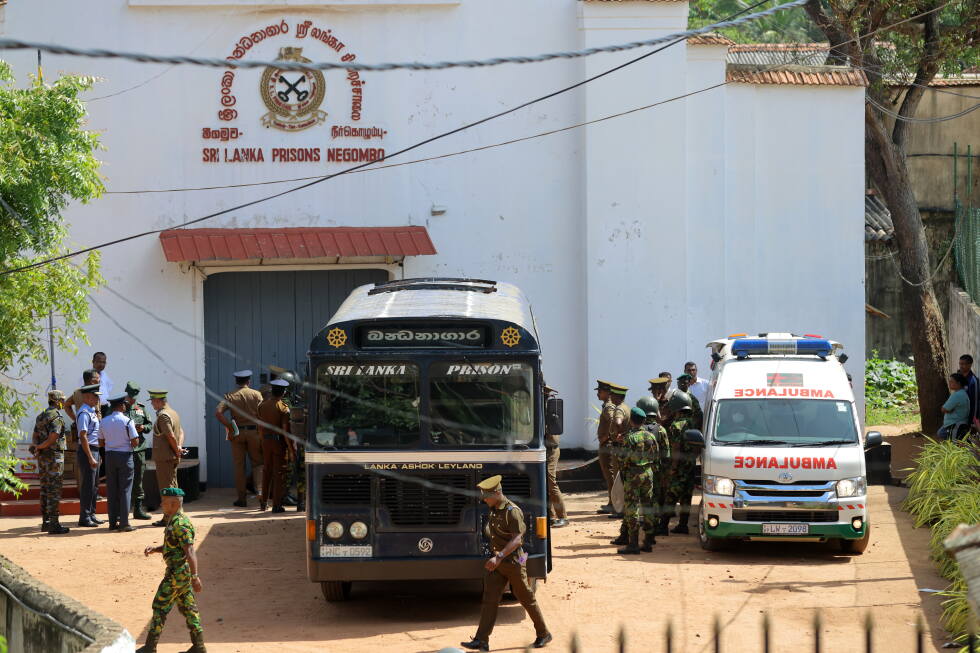
    A shocking incident from the eastern Indian state of Odisha has captured national attention this week, after a 52-year-old man named Jitu Munda went to extreme lengths to claim his late sister’s savings: he carried her exhumed skeletal remains to his sister’s local bank branch to prove she had died. The graphic footage of the act quickly spread across social media platforms, sparking widespread public outrage over systemic bureaucratic barriers and the struggles of low-income rural families navigating India’s formal financial system.

    According to Munda’s account, the ordeal began earlier this year when his 56-year-old sister Kalara passed away. A daily wage laborer who had returned to her maternal home following the deaths of her husband and only son, Kalara had sold her livestock a few months before her death and deposited roughly 19,300 rupees (equivalent to around $203) into her bank account at Odisha Grameen Bank, a regional rural financial institution operated by Indian Overseas Bank. After her death, Munda attempted multiple times to withdraw the funds to settle her final affairs, but was repeatedly turned away for lack of official death documentation— a requirement to access funds when an account holder dies without naming a formal nominee.

    Frustrated by repeated refusals and unresponsive bank staff, Munda made the decision to exhume his sister’s remains from her burial ground and carry the bundled skeleton to the bank branch in Keonjhar district on Monday. The viral video, filmed by an unknown person, shows Munda placing the sack-wrapped remains at the entrance of the bank building. Within hours, the footage spread widely across Indian social media, drawing immediate condemnation from the public and senior officials alike.

    The bank has pushed back against Munda’s account of the incident. In an official statement, the institution denied ever requesting the physical remains as proof of death, claiming that it only asked for standard legally-mandated documentation to process the claim. Bank representatives added that the incident appeared to stem from Munda’s lack of awareness of required procedures, and alleged that he first arrived at the branch in an inebriated, disruptive state before returning with the remains. Sushant Kumar Sethi, the branch manager at the center of the controversy, also disputed key details of Munda’s claims: he told BBC Hindi that staff had even offered to visit Kalara at home when Munda initially claimed she was paralyzed, that Munda had not visited the branch in the two months prior to the incident, and that conflicting claims from other potential heirs prompted the request for formal documentation.

    Public backlash following the video’s spread quickly forced intervention from local authorities. Odisha’s Revenue Minister Suresh Pujari announced that a formal investigation into the incident was underway, and confirmed that disciplinary action would be taken against the branch manager for his alleged conduct. The Keonjhar district administration also issued a statement expressing “deep concern” over the incident, affirming that protecting the rights and dignity of local residents is its top priority.

    Police and local administrative officials ultimately intervened to de-escalate the situation, persuading Munda to return his sister’s remains to the burial ground and guaranteeing that his claim would be processed immediately. Officials also offered Munda a one-time assistance payment of 30,000 rupees to compensate for his ordeal. By Wednesday, just two days after the incident made headlines, local authorities had issued the required death certificate and legal heir documentation, and the bank confirmed that the full deposit amount had been released to Kalara’s legal family heirs.

    The incident has reignited longstanding conversations about the persistent bureaucratic hurdles that disproportionately impact low-income and rural communities across India. Under current Indian banking rules, when an account holder dies without naming a nominee, surviving family members must produce a formal death certificate and legal heirship documentation to access funds. For residents of remote villages, obtaining these official documents can take weeks or even months, as government offices are often far removed from local communities and administrative processes remain slow and paper-heavy. Many commentators have pointed to the Odisha incident as a stark example of how rigid procedural requirements can dehumanize vulnerable families during an already devastating time of loss.

  • Two dead after small plane crashes into Australia airport hangar

    Two dead after small plane crashes into Australia airport hangar

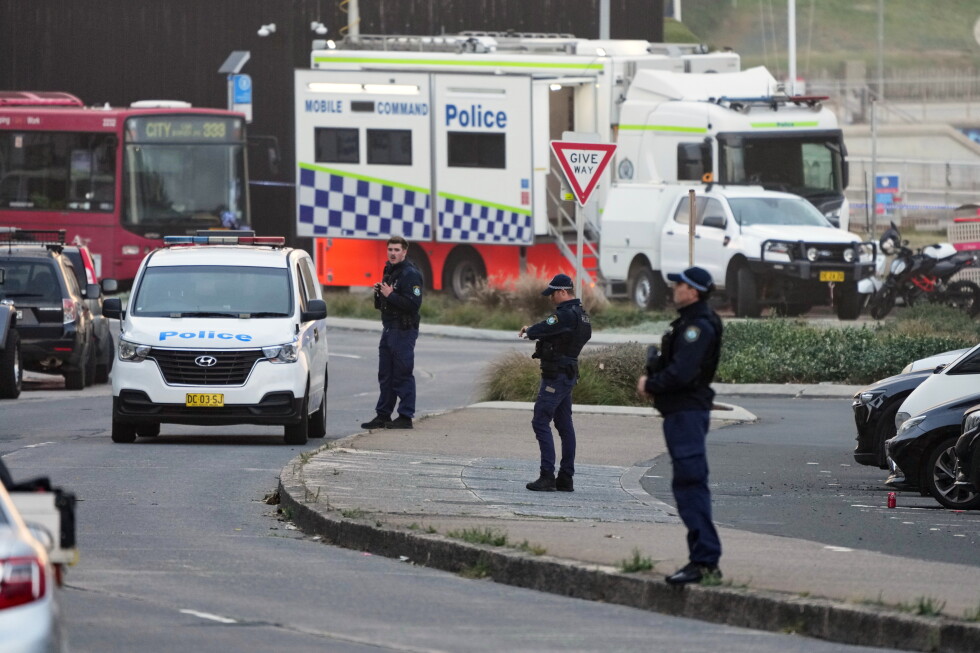
    A devastating aviation incident has left two people dead after a light aircraft crashed into an airport hangar and erupted in flames in Adelaide, South Australia, local authorities confirmed. The crash unfolded on Wednesday afternoon local time at Parafield Airport, triggering an immediate large-scale emergency response.

    According to reporting from Australia’s ABC News, the aircraft involved in the accident is a twin-engine Diamond DA42, a model manufactured by Diamond Aircraft Industries. The manufacturer’s official website notes the plane is designed to carry a maximum of four passengers and crew.

    Local media outlets have confirmed that additional people sustained injuries in the incident, though the exact count of wounded individuals has not been finalized as of the latest updates.

    In an official statement, South Australia Police confirmed that the immediate surrounding area of the crash site was evacuated shortly after the incident to ensure public safety as first responders worked to contain the emergency. Parafield Airport administration also released a public statement via its social media channels, acknowledging the serious event and confirming that the airport is extending full logistical and operational support to emergency teams working on the response.

    The Australian Transport Safety Bureau, the nation’s lead agency for aviation accident investigations, has launched a formal probe into the circumstances that led to the crash.

    Peter Malinauskas, the Premier of South Australia, released a public comment via social media expressing his condolences for the tragedy. “My thoughts are with the families and loved ones of those who have passed away, and with everyone affected by this devastating event,” Malinauskas wrote.

    The premier also confirmed that the fire that broke out in the hangar following the crash has been fully extinguished by emergency crews. Parafield Airport remains closed to all air traffic as the investigation and cleanup operations continue, with emergency personnel still on site working with professional urgency to process the scene. Malinauskas commended first responders for their rapid, professional response to the incident.

  • South Korean court sentences ex-President Yoon to 7 years for charges including resisting arrest

    South Korean court sentences ex-President Yoon to 7 years for charges including resisting arrest

    A key ruling on Wednesday from a South Korean appellate court delivered another heavy legal blow to impeached former president Yoon Suk Yeol, sentencing him to seven years in prison for obstruction of justice and a series of procedural violations tied to his short-lived 2024 declaration of martial law. The new conviction comes on top of a life sentence Yoon already received earlier for rebellion charges stemming from the unprecedented authoritarian power grab that pushed South Korea’s democracy into its most severe crisis in decades.

    The Seoul High Court’s judge Yoon Sung-sik laid out the details of the guilty verdict in court, documenting that the conservative former leader intentionally skipped a legally required full Cabinet meeting before announcing martial law on December 3, 2024. To hide the violation of constitutional procedure, Yoon falsified official government documents, the court ruled. It also found that after Yoon was impeached and removed from office, he deployed presidential security personnel as what the ruling described as “a private army” to block law enforcement from executing an arrest warrant against him. Yoon stood silent throughout the verdict delivery and offered no public comment after the ruling.

    This appellate decision reverses an earlier ruling from a lower court issued in January. The lower court had originally sentenced Yoon to five years in prison, but partially cleared him of abuse-of-power charges connected to the Cabinet meeting procedural violation, ruling he could not be held responsible for the absence of two invited Cabinet members. The Seoul High Court overturned that partial acquittal, convicting Yoon on all counts before the court. The judge emphasized that by convening only a small selection of loyalists to simulate a full Cabinet meeting, Yoon violated the constitutional rights of nine Cabinet members who were either uninvited or unable to attend the sham gathering.

    Yoon’s short-lived martial law decree sent immediate shockwaves through South Korea’s political and economic systems. The move triggered weeks of national turmoil that paralyzed domestic lawmaking, disrupted high-stakes diplomatic operations, and caused significant volatility in South Korea’s financial markets. The political crisis only began to stabilize after liberal opposition leader Lee Jae Myung won a snap presidential election in June 2025.

    The timeline of Yoon’s removal and legal process began on December 14, 2024, when the liberal-controlled National Assembly voted to impeach Yoon and suspend him from presidential powers. The Constitutional Court formally removed him from office in April 2025. After his suspension, Yoon refused to comply with a Seoul District Court detention warrant for questioning, leading to a tense public standoff in early January 2025. When dozens of criminal investigators arrived at the presidential residence to execute the warrant, they were turned away by barricades and Yoon’s security detail. Yoon was finally taken into custody later that month, only to be released by a separate court in March, and re-arrested on new charges in July. He has remained in custody since July, as a series of overlapping criminal trials against him continue to move through South Korean courts.

    Wednesday’s ruling comes one day after the same Seoul High Court issued an upward adjustment to the prison sentence of Yoon’s wife, Kim Keon Hee, increasing her original term to four years. Kim was convicted on charges including accepting bribes in the form of luxury gifts from the Unification Church, a religious organization that sought favorable political treatment from Yoon’s administration, and participating in a multi-million dollar stock price manipulation scheme.

    In a separate ongoing criminal trial last week, federal prosecutors formally requested a 30-year prison sentence for Yoon over another serious allegation: that he ordered South Korean military drones to conduct provocative flights over Pyongyang in 2024 to intentionally escalate cross-border tensions with North Korea. Prosecutors argue Yoon engineered the crisis to create a domestic pretext that would justify his declaration of martial law.

  • Former NFL player Mauro dies aged 35

    Former NFL player Mauro dies aged 35

    The global American football community is in mourning this week after news broke that former National Football League defensive end Josh Mauro has passed away at the age of 35. His father, Greg Mauro, confirmed the news of his son’s death on social media last Thursday, though no details have been released regarding the cause of death at this time.

    Born in St Albans, United Kingdom, while his father was working in the country, Mauro moved back to the United States with his family when he was just three years old. He went on to build an eight-year NFL career that spanned from 2014 to 2021, during which he took the field for 80 regular season games. Over the course of his professional tenure, he recorded impressive defensive stats including 150 total tackles and five quarterback sacks.

    Mauro spent the majority of his career with the Arizona Cardinals, the franchise where he made his biggest long-term impact. The Cardinals released an official statement in response to his passing, expressing the organization’s deep grief over the loss. “We are heartbroken to learn of the passing of Josh Mauro,” the statement read. “Our thoughts are with his family, friends and all who knew him. We extend our deepest condolences to everyone grieving this loss.”

    Beyond his time with the Cardinals, Mauro also had stints playing for three other NFL franchises: the New York Giants, Oakland Raiders, and Jacksonville Jaguars. Colleagues and former team executives have remembered him as a reliable, dedicated teammate who brought consistent preparation and professionalism to every practice and game.

    Adrian Wilson, a former Cardinals player and front office executive who worked with Mauro under head coach Bruce Arians, shared fond memories of the late defensive end. “I had the opportunity to be around Josh for several years [with coach Bruce Arians],” Wilson said. “[Josh was] always in shape, always ready to go wherever he got that call. One of the things I respected most about him, you could depend on him.” As tributes continue to flow from across the league, the football community honors Mauro’s legacy as a hardworking player and valued teammate.

  • ‘Historic homecoming’ as endangered antelopes flown to Kenya from Czech Republic zoo

    ‘Historic homecoming’ as endangered antelopes flown to Kenya from Czech Republic zoo

    In a landmark step toward reversing the decline of one of the world’s most endangered large mammals, four male mountain bongos – a rare antelope species endemic to Kenya’s central highland forests – have touched down in Nairobi after being transported from a Czech zoo, kicking off a new phase of a decades-long species recovery initiative.

    The rare arrivals were formally welcomed at Nairobi’s main international airport on Tuesday night by Kenya’s Cabinet Secretaries for Foreign Affairs and Tourism, alongside senior wildlife conservation officials. Following their entry, the antelopes were immediately transferred to the Mount Kenya Wildlife Conservancy (MKWC), a private protected reserve located at the base of Mount Kenya in central Kenya, where they will undergo a carefully structured acclimatization process before eventual release into the wild.

    Kenya Wildlife Service (KWS), the government agency leading the national recovery effort, framed the translocation as a historic homecoming that represents a meaningful milestone for the species’ long-term survival in its native habitat. Once numbering around 500 wild individuals in the 1970s, current estimates place the total remaining wild mountain bongo population at fewer than 100 – a lower count than the global population held in zoos and captive breeding facilities around the world, per KWS data.

    “This is a moment of hope, responsibility, and renewed commitment to securing the future of one of the world’s rarest large mammals,” said KWS Director-General Erustus Kanga in remarks following the arrival.

    Native exclusively to Kenya’s isolated highland forest ecosystems, the mountain bongo is a visually distinct large antelope defined by its rich chestnut-red coat, narrow vertical white stripes along its flanks, and striking long spiral horns. For decades, KWS and global conservation partners have collaborated on a coordinated program of captive breeding and repatriation to reverse steep population declines driven by habitat loss, poaching, and disease.

    The latest translocation builds on two prior large-scale repatriation efforts: an initial group of 18 antelopes was flown to Kenya in 2004 to launch the program, followed by 17 more repatriated from the Rare Species Conservation Foundation in Florida last year. Currently, around 400 mountain bongos are held in captive breeding facilities across North America, with additional populations housed in European zoos such as Prague Zoo, which supplied the four new arrivals.

    Before captive-bred bongos can be released into the wild, they must complete a multi-stage adaptation process designed to help them build the natural immunity required to withstand wild pathogens and environmental conditions. Ahead of their departure from the Czech Republic, Prague Zoo confirmed that each bongo would undergo acclimatization and continuous health monitoring as part of MKWC’s established breeding program, with the new individuals expected to boost the genetic diversity of Kenya’s growing founder population.

    By Wednesday morning, KWS confirmed via a social media post accompanied by photos of the new arrivals that the antelopes had reached their destination safely, and are “now settling in under close care.” The agency added that the translocation marks “a quiet but vital step in strengthening their population and securing their future.”

    The recovery effort has already shown promising early results: in 2022, MKWC told local media that previously repatriated bongos have successfully integrated into wild habitats and begun breeding naturally. That said, the program has faced setbacks, with some repatriated individuals succumbing to tick-borne diseases, a key risk for captive-bred animals new to wild ecosystems.

    Kenya’s national mountain bongo recovery plan, led by KWS, sets an ambitious target of growing the wild population to approximately 700 individuals by 2050, a goal that will require continued translocations of captive-bred bongos from global conservation institutions and expanded protection of the species’ native highland forest habitat.

  • Ferragamo expands leather mapping efforts as EU sustainability rules take shape

    Ferragamo expands leather mapping efforts as EU sustainability rules take shape

    MILAN – Iconic Italian luxury fashion house Ferragamo has announced a landmark progress for the global fashion industry: it has successfully mapped the country of origin for more than 80% of the leather used in its signature footwear and handbag lines, marking one of the most ambitious early moves toward full material traceability amid incoming European Union sustainability regulations.

    The milestone, detailed in the brand’s 2025 sustainability report released on March 31, represents the first time Ferragamo has published formal traceability data for its core material – a particularly challenging resource to track compared to common textile fibers like cotton, according to industry experts. The development comes as a growing wave of EU sustainability legislation is ratcheting up pressure on all fashion brands to map every step of their supply chains, from raw material extraction to end-of-life product disposal.

    A century-old family legacy of innovation
    Founded in Florence in 1927 by Salvatore Ferragamo, who built his reputation as a shoemaker for A-list Hollywood stars including Marilyn Monroe and Judy Garland after years working in the United States, the brand has long adapted to material constraints. During World War II, widespread leather shortages pushed the founder to experiment with unconventional alternatives, using wicker as a leather substitute and cork for shoe soles, notes James Ferragamo, the founder’s grandson and the brand’s current chief transformation and sustainability officer.

    Today, leather goods and footwear remain Ferragamo’s core business, accounting for 86% of the company’s 2025 total sales of €976.5 million ($1.1 billion). The brand first launched its leather traceability pilot in 2024, starting with the calf leather used for its iconic Fiamma handbag, tracking the material all the way from cattle breeding to final product assembly.

    Building traceability to meet upcoming regulatory demands
    For 2025, Ferragamo partnered with its key strategic tanneries – which collectively supply 80% of the hides the brand purchases – to roll out the origin mapping project, relying on standardized supplier declarations to document where raw materials are sourced. Across all materials, including cotton, silk and nylon, 81% of Ferragamo’s inputs are already third-party certified under global sustainability standards. The vast majority of the brand’s traced leather originates in Europe, and the company’s approach has already brought it further along the compliance path than many peers in the luxury sector.

    “Currently, there is no one-size-fits-all technological solution that can trace every single piece of leather all the way back to the individual birth farm of the cow,” explained Davide Triacca, Ferragamo’s sustainability director. “We achieved this result through a consistent, highly targeted effort, and today we can trace the origin of more than 80% of all the leather we source.”

    James Ferragamo emphasized that leather, when sourced responsibly, can be a leading sustainable material for fashion. “Most of our partner tanneries already manage water use responsibly, maintain fair labor practices, audit their own upstream suppliers to avoid sourcing from regions impacted by deforestation, and adhere to strict standards for animal welfare and responsible cattle breeding,” he said.

    Industry context: Traceability as the foundation of circular fashion
    Sustainability experts frame traceability as the non-negotiable first step for the fashion industry as it adapts to the EU’s upcoming sweeping sustainability framework, which will eventually require brands to prove their products are sustainable across every stage of their lifecycle, with compliance phased in over the coming years. Full implementation of the new rules will eventually require the industry to shift to a fully circular economy, with mandates to extend product lifespans through repair services, improve end-of-life management via recycling and upcycling, and ban the destruction of unsold inventory for large companies generating more than €40 million in annual revenue.

    “Traceability is an absolutely essential factor, but it is not the end goal on its own,” explained Francesca Rinaldi, a sustainability scholar at Milan’s Bocconi University and director of the Monitor for Circular Fashion. “It is the foundational requirement that makes broader sustainability and circularity practices possible. Any company that cannot trace its materials does not truly understand its own supply chain, and opens itself up to valid criticism of greenwashing.”

    Experts note that Ferragamo’s country-level origin mapping is an early-stage milestone, not full chain-of-custody traceability that the EU may eventually require, and the bloc does not currently mandate leather traceability at all. Still, the move positions Ferragamo ahead of regulatory deadlines and industry trends.

    Continuing experimentation for future sustainable materials
    Ferragamo’s traceability project is just the latest step in the brand’s decade-plus work on sustainability, which has included annual sustainability reporting for more than 10 years and ongoing experimentation with alternative materials. Past innovations include a 2017 capsule collection using silky textiles derived from orange citrus fibers, the Nova men’s tote crafted from nylon made from castor oil rather than fossil fuels, and the Back to Earth collection, which features the brand’s popular Hug handbag dyed with plant-based vegetable dyes.

    “Our research and development work is ongoing – it’s a constant process that never stops,” James Ferragamo said. “We are always testing new approaches and new materials, and not every experimental material will be ready for commercial release right away. But that doesn’t mean we stop experimenting.”

  • Afghanistan women can return to competition

    Afghanistan women can return to competition

    In a landmark decision that has been widely hailed as a victory for athlete rights and gender equity, global football governing body Fifa has formally approved the return of Afghanistan’s women’s national football team to official international competition, opening a new chapter for hundreds of displaced Afghan female players who have been barred from the sport since the Taliban returned to power in 2021.

    Afghanistan’s women’s team has not competed in an official international fixture since December 2018. Following the Taliban’s takeover in 2021, the group implemented sweeping restrictions on women’s public life, including a total ban on women’s sports participation. This forced dozens of elite Afghan female footballers to flee the country and seek asylum across Europe, North America, Australia and the Middle East.

    Prior to the recent vote, Fifa’s internal governance rules barred the organization from officially recognizing a national team that was not endorsed by its local member association — in this case, the Afghanistan Football Federation, which operates under the Taliban-led government’s restrictions. But at a Fifa council meeting held in Vancouver on Tuesday, members approved a key amendment to these regulations. The change allows Fifa to register national or representative teams “under exceptional circumstances”, ensuring that no group of players is locked out of international football due to situations outside of their control.

    This regulatory shift means Afghan female players will now be able to formally represent their country in official Fifa-sanctioned matches with full international recognition. Former Afghanistan women’s national team captain Khalida Popal, who has led lobbying efforts for the team’s reinstatement, says the squad will stand as a global “symbol of resilience” for women trapped under restrictive rule inside Afghanistan.

    “Our team has always been known as an activist team,” Popal told reporters. “But this opportunity, with the right support from Fifa, will be the time for us to also show some skills and develop the youth talent in the diaspora. I know it’s going to be tough because Afghan women inside Afghanistan will struggle to be part of that. But if we can still be the voice for them to send out hope messages and show them our support that you are not forgotten, then we will continue to use our platform.”

    Fifa’s formal approval builds on the successful 2025 launch of Afghan Women United, a refugee-backed squad that the organization approved for a one-year pilot program back in May 2025, after years of advocacy from displaced Afghan players. The team already competed in three friendly matches as part of the Fifa United Women’s Series in Morocco between October and November 2025, notching their first ever win against Libya in November.

    While the team will not be eligible to compete for a spot in the 2027 Women’s World Cup, they are cleared to enter qualifying for the 2028 Olympic Games, and are scheduled to return to formal competitive action as early as June 2026. Right now, more than 80 Afghan female footballers are based across host countries, including 25 players who held national team contracts before the 2021 Taliban takeover. Fifa is currently hosting regional selection camps in England and Australia, to be followed by a centralized training camp in New Zealand in June ahead of the team’s first official fixture.

    Fifa president Gianni Infantino praised the decision in remarks following the council vote, saying: “We are proud of the beautiful journey initiated by Afghan Women United and, with this initiative, we aim to enable them, as well as other Fifa member associations that may not be able to register a national or representative team for a Fifa competition, to make the next step.”