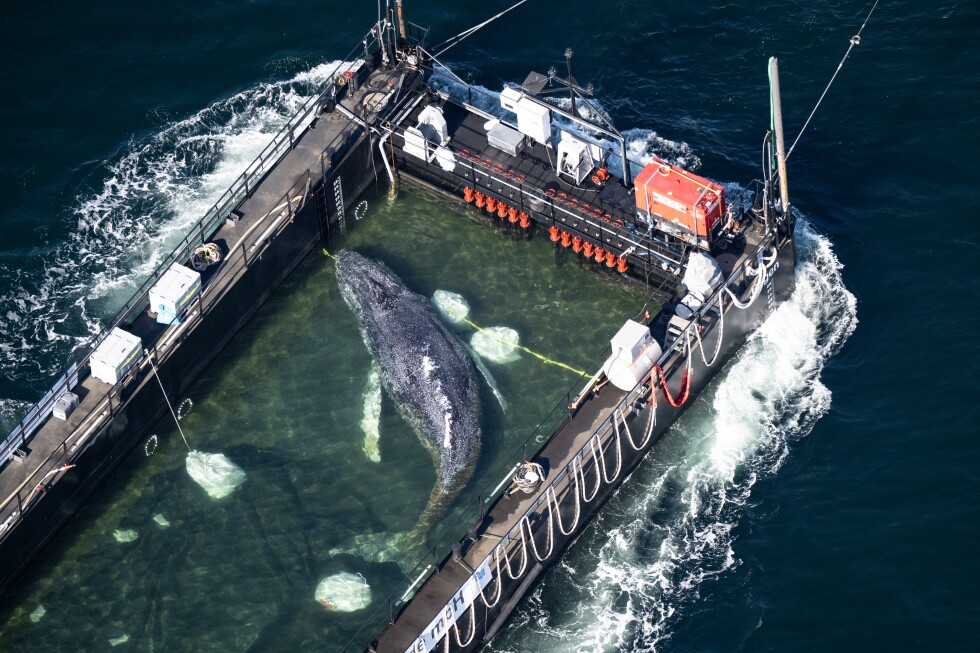
BERLIN – For nearly five months, a wayward humpback whale that wandered hundreds of kilometers off its natural migration route has captured global public attention, and on Wednesday, a long-planned rescue operation finally moved the ailing animal one step closer to its intended home in the Atlantic Ocean.
Nicknamed Timmy by German media outlets, the young humpback was first spotted off Germany’s Baltic Sea coast on March 3, thousands of kilometers from the cool Atlantic waters that make up the species’ native habitat. Since its unexpected arrival, Timmy has faced repeated stranding events in the region’s shallow coastal waters, and its overall health has steadily declined. Multiple earlier attempts to guide the whale out to deeper open water failed, with every step of these efforts streamed live to audiences around the world, turning the stranded mammal into an international headline maker.
According to Germany’s national press agency dpa, rescuers worked for hours on Tuesday to secure the whale with heavy-duty straps and pull it through a specially dredged channel onto a flooded cargo barge, marking the start of the most ambitious rescue attempt to date. By early Wednesday morning, the barge had already reached the northern German island of Fehmarn, which sits just a short distance from Danish territorial waters. From there, the vessel will travel around the northern tip of Denmark, through the Skagerrak Strait, before reaching the North Sea, where the whale is scheduled to be released to make its own way back to the Atlantic.
The high-stakes operation has sparked widespread public and scientific debate across Germany, dividing experts, officials and animal welfare activists over the best course of action for the ailing whale. Till Backhaus, environment minister for the northeastern state of Mecklenburg-Vorpommern, where Timmy has been stranded, publicly threw his support behind the private rescue initiative that planned the transport, even saying Tuesday that he was “on the verge of jumping into the water to help the whale get through the last few meters.” Despite warnings from some scientific experts that the stress of the transport could be fatal for the already weakened animal, Backhaus greenlit the operation following sustained pressure from activists, who held public protests on Wismar beaches demanding the whale be rescued and returned to its natural habitat.
Critics of the operation, however, argue that repeated rescue attempts have only caused unnecessary suffering for Timmy, who many scientists confirm is severely ill. Thilo Maack, a marine biologist with the environmental organization Greenpeace, told the Associated Press earlier in the month that the ongoing interventions have already placed extreme, harmful stress on the animal. “I believe the whale will die very soon now. And I would also like to raise the question: What is actually so bad about that?” Maack said. “Yes, animals live, animals die. This animal is really, really very, very, very sick. And it has decided to seek rest.” Many scientists have echoed this position, noting that Timmy likely sought out shallow coastal waters intentionally because his declining health left him too weak to swim further and he needed to rest. Still, the veterinary team working with the private rescue initiative maintains that the whale is healthy enough to withstand the multi-day journey to the North Sea, leaving the final outcome uncertain as the barge continues north.