Nearly 1.5 miles beneath the Mediterranean surface off the French Riviera, a remotely operated diving robot has begun the first archaeological investigation of France’s deepest recorded shipwreck, revealing a remarkably preserved 16th-century merchant vessel that could rewrite key details of early modern Mediterranean trade. The wreck, dubbed “Camarat 4”, was discovered entirely by accident last year during a routine French navy seabed survey off the coast of Ramatuelle, a short distance from the iconic resort town of Saint-Tropez. Though the deep location makes unauthorized access virtually impossible, navy officials have kept the exact coordinates of the site classified to protect the fragile archaeological remains from looting and disturbance.
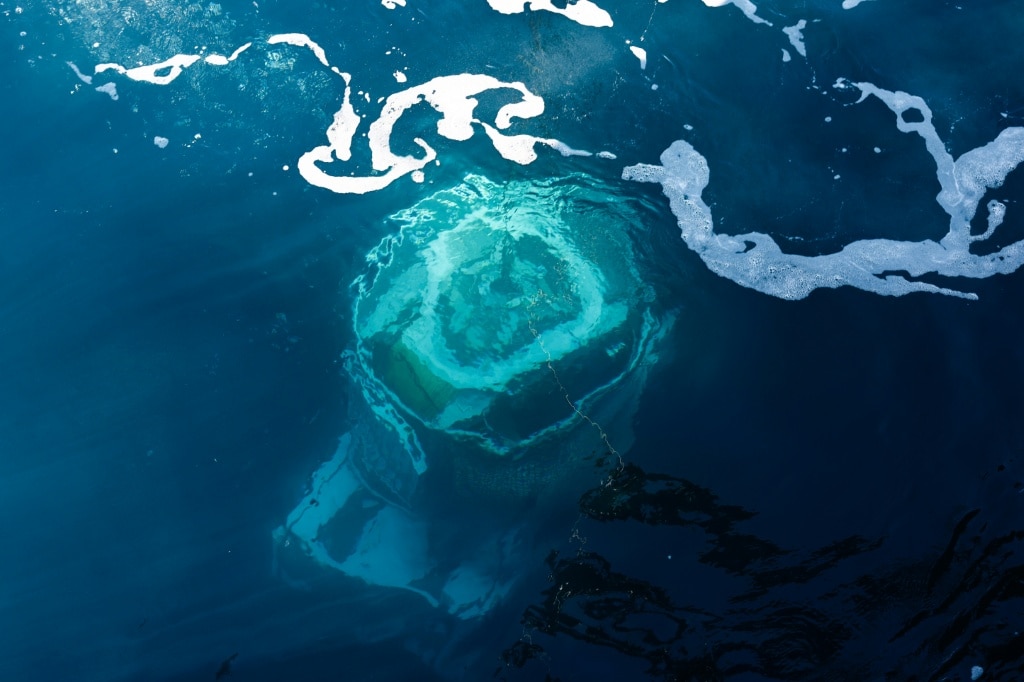
Before dawn on the first day of the mission, the expedition’s navy tugboat anchored above the wreck, carrying the specialized diving robot, a team of marine archaeologists from the French culture ministry’s underwater archaeology department, and two converted shipping containers that serve as mobile on-deck workspaces. Operated via a long fiber-optic cable linking the robot to the surface vessel, the craft — rated for dives as deep as 4,000 meters, well beyond the wreck’s 2,500-meter depth — began its slow descent, with every movement tracked in real time by a team of experts watching live monitoring screens. Navy officer Sebastien, who withheld his last name for security protocols, emphasized the extreme care required for the operation: every movement of the robot’s pincers must be deliberate and precise to avoid damaging fragile artifacts or stirring up clouds of sediment that would obscure visibility and disrupt the intact site.
After a one-hour descent, the robot glided over the dark seabed, revealing a trove of well-preserved artifacts that have rested undisturbed for more than 400 years. High-resolution cameras captured clear footage of a cast-iron cannon, hundreds of intact ceramic pitchers and decorative plates, many adorned with hand-painted floral motifs, crosses and fish symbols. Over three hours of continuous scanning, the robot captured 86,000 individual images at a rate of eight frames per second; these images will later be stitched together to create a full, high-fidelity 3D model of the entire wreck site that researchers can study without disturbing the remains.
Lead archaeologist Franca Cibecchini expressed surprise at the excellent condition of the site, noting that exceptional water clarity has made the survey far more productive than initial projections: “The visibility is excellent. You almost can’t tell it’s so deep.” Cibecchini and her team have concluded the vessel was almost certainly a merchant trading ship hailing from the Liguria region of northwest Italy, likely loaded with ceramic goods in the major trading ports of Genoa or nearby Savona before it sank en route to its destination. The team believes the ship was carrying a bulk cargo of glazed ceramics and raw metal bars when it went down.
On the first day of excavation, the robot carefully maneuvered a small intact pitcher into a protective recovery cradle, moving with extreme slowness to avoid the cracks and breaks that ruin roughly one-third of all ceramics recovered from deep-sea shipwrecks, according to lead field archaeologist Marine Sadania. By the end of the first mission phase, the team successfully brought several jugs and plates to the surface, where they were transported to a dedicated marine archaeology laboratory in the southern French port city of Marseille for cleaning and analysis. Examining one recovered pitcher in the lab, Sadania pointed out the distinctive decorative work: dark blue outlines form rectangular panels across the rounded vessel, with some panels filled in turquoise and marked with saffron-yellow geometric symbols.
Sadania emphasized the enormous historical significance of the find, noting that it fills a major gap in scholarly understanding of 16th-century Mediterranean maritime trade: “We don’t have very detailed texts about merchant ships in the 16th century, so this is a valuable source of information on maritime history.” As the first full-scale investigation of a shipwreck at this depth in French territorial waters, the mission also sets a new benchmark for deep-sea archaeological exploration, demonstrating how remotely operated robots can unlock historical secrets that were once permanently out of reach for researchers.