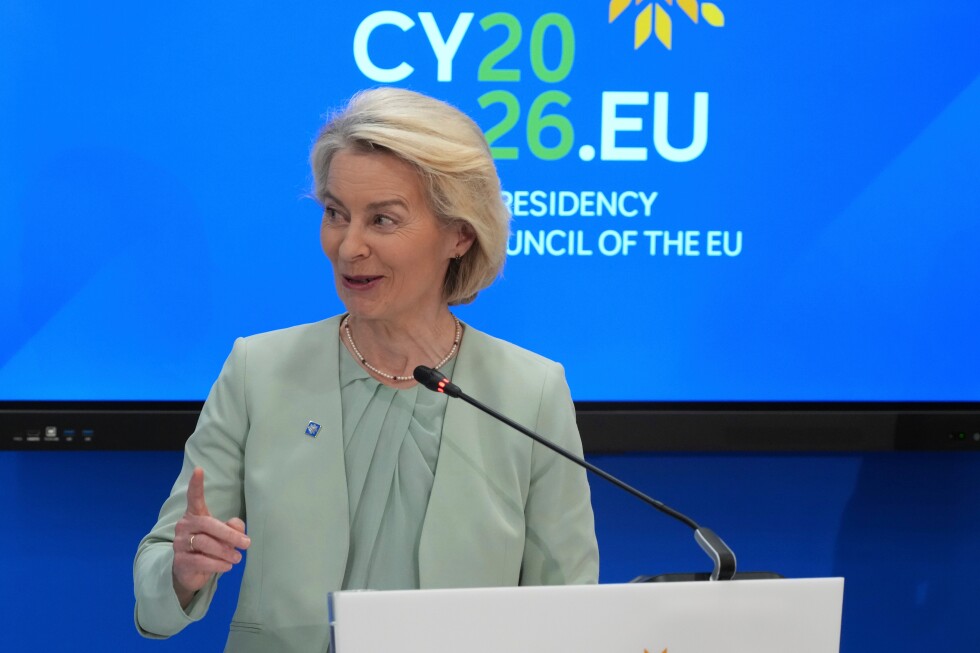
STRASBOURG, France – As escalating Middle East tensions roil global oil and gas markets, European Commission President Ursula von der Leyen has issued a urgent warning to European Union member states: billions of euros in energy relief will go to waste unless aid is prioritized exclusively for vulnerable households and energy-reliant industries. Speaking to EU lawmakers in Strasbourg on Wednesday, von der Leyen framed the new energy volatility sparked by Middle East conflict as a critical test of the bloc’s ability to learn from costly mistakes made during the 2022 Russian energy crisis.
The ongoing conflict in the Middle East, compounded by potential disruption to shipping through the Strait of Hormuz — a critical chokepoint through which roughly a fifth of the world’s daily oil supplies pass — is already extracting a heavy economic toll from the 27-nation bloc. Current estimates put the daily cost of elevated energy prices at close to 500 million euros (equivalent to $600 million), pushing up retail fuel prices for consumers and triggering widespread warnings that jet fuel supplies could run critically low within weeks.
Von der Leyen stressed that the EU cannot repeat the missteps of 2022, when Russia cut natural gas exports to Europe in retaliation for the bloc’s support of Ukraine. At that time, member states allocated more than 350 billion euros to broad, untargeted energy relief programs that strained national budgets without delivering support to the groups that needed it most. “So let us not make the same mistake again, and let’s focus our support where it matters most,” she told the assembled legislators.
Beyond short-term relief policy, von der Leyen used the address to double down on the bloc’s push for full energy independence, noting that just as Europe successfully broke its reliance on Russian fossil fuels after 2022, it must now cut broader dependence on imported fossil fuels by scaling up domestic low-carbon energy sources. “Our over dependency on imported fossil fuels makes us vulnerable,” she said, pointing to wind, solar, and nuclear power as the core of a secure domestic energy future.
Progress in cutting Russian energy reliance already speaks to what the bloc can achieve, von der Leyen noted. Since 2022, Russian gas imports to the EU have plummeted from 45% of total imports to just 12% in 2023. Coal imports from Russia were fully eliminated via sanctions, while oil imports have dropped from 27% of the bloc’s total in 2022 to just 2% today — with only Hungary and Slovakia continuing to receive Russian crude under limited exemptions.
Von der Leyen warned that the economic ripple effects of the current Middle East energy shock “may echo for months or even years to come.” The only long-term solution, she argued, is expanding “homegrown, affordable, clean energy supply from renewables to nuclear.” She called on member states to transition more end-uses — from passenger and air transport to residential heating and industrial production — to electricity generated from domestic low-carbon sources, a shift that would undercut global fossil fuel price volatility. Currently, electricity accounts for less than a quarter of the EU’s total final energy consumption, leaving massive room for expansion.
The gravity of the current crisis has been clear from top EU energy officials for days. Last week, EU Energy Commissioner Dan Jørgensen emphasized that the current shock is far more than a temporary minor price blip. “This is a crisis that is probably as serious as the 1973 and the 2022 crises combined,” he said, noting that Europe has been forced into a defensive position with limited control over geopolitical developments in the Middle East. “Even in a best-case scenario, it’s still bad,” Jørgensen added. “Whether or not we will be in a security of supply crisis is primarily a result of what goes on in the Middle East. What we can do is to try and prevent, and limit the damage.”
EU chief warns billions could be wasted if energy aid is not well targeted as the Iran war bites