作者: admin

  • Russian paramilitary carried out air strikes in Mali as rebels advanced, footage shows

    Russian paramilitary carried out air strikes in Mali as rebels advanced, footage shows

    Mali has been plunged into a dramatic new phase of its decade-long insurgency after a coordinated multi-group rebel offensive killed the country’s top defense official and forced a strategic retreat by Russian-backed government forces, newly verified video and satellite evidence confirms.

    On Saturday, a coalition of jihadist fighters from Jama’at Nusrat al-Islam wal-Muslimin (JNIM), an al-Qaeda-linked group, and Tuareg separatists from the Azawad Liberation Front (FLA) launched simultaneous attacks across multiple regions of the West African nation. The deadliest strike targeted the residence of Defense Minister Sadio Camara in the garrison town of Kati, located just 12 miles outside the capital Bamako. A suicide bomber drove an explosive-laden vehicle into the compound, sparking a fierce firefight that left Camara dead, according to a Malian government spokesperson. Satellite imagery of the aftermath confirms the entire residence was leveled in the blast, with widespread damage to adjacent properties in the neighborhood.

    In response to the Kati attack, the Kremlin-controlled Africa Corps — the Russian paramilitary force that backs Mali’s ruling military junta — launched a series of retaliatory air strikes against rebel positions near the capital. Verified footage posted by the Africa Corps shows attack helicopters launching missiles at ground targets, while drone footage captures a direct missile strike on a rebel convoy speeding along an outer Kati highway, triggering a massive fireball. BBC Verify’s geolocation analysis confirmed all clips were filmed in the Kati area, matching the group’s claims of offensive operations near Bamako.

    Despite this show of force, the Africa Corps and Malian government forces have confirmed they have fully withdrawn from Kidal, a strategically critical northern hub that served as the center of government counterinsurgency operations in the region. Kidal was captured by joint Wagner Group and Malian forces in a bloody 2023 battle, and hosted a large heavily armed garrison for over a year. However, intensifying rebel attacks in recent weeks left the base increasingly untenable.

    Before the official withdrawal announcement, BBC Verify verified footage showing military convoys evacuating the Kidal base. The Africa Corps claimed it removed all heavy equipment ahead of the pullout, but footage posted by advancing rebels shows multiple armored personnel carriers, patrol vehicles and jeeps were abandoned during the hasty retreat. Verified video from the base after the withdrawal shows rebel fighters freely roaming the abandoned facility. Malian forces have also withdrawn from the more northerly town of Tessalit, and scattered clashes have been reported on the outskirts of Bamako near the Africa Corps’ main headquarters in the capital.

    Mali has been mired in a widespread insurgency for more than a decade, and the current military junta seized power in a 2020 coup, arguing the previous civilian government had failed to contain the growing rebel threat. Since the junta took power, it cut security ties with Western nations including France, which pulled all its peacekeeping and counterinsurgency troops out of the country by 2022, and turned to Russian mercenary forces first the Wagner Group and after restructuring of Russian irregular forces, the Kremlin-controlled Africa Corps. Under the terms of the partnership, the Africa Corps provides security support to the junta in exchange for cash and access to Mali’s valuable natural resource reserves.

    However, the paramilitary force has been unable to reverse the growing momentum of rebel groups across the country, with a senior French military official estimating last year that the Africa Corps only has around 2,500 personnel deployed across Mali. Late last year, Bamako itself was placed under a rebel blockade, and Saturday’s offensive marks a major new escalation in the conflict, according to regional analysts.

    “This is a major escalation of the conflict between the military government and rebel groups,” said Jean-Hervé Jezequel, Sahel director for the International Crisis Group. “Where JNIM originally focused on seizing rural and peripheral areas, it is now directly targeting major population centers.” BBC Verify has confirmed 22 separate videos of rebel movements across seven Malian locations since Saturday’s offensive began, confirming the broad scope of the attacks. The Africa Corps has claimed that as many as 12,000 rebel fighters participated in the coordinated offensive, a figure that has not been independently verified.

    Analysts warn the fall of Kidal and the death of Camara represent significant strategic setbacks for both the Malian junta and the Russian Africa Corps model of security partnership. “Other countries that have hired the Africa Corps are watching this very closely,” said Dr. Sorcha MacLeod, a former member of the UN working group on mercenaries and a lecturer at the University of Copenhagen. “The model Moscow offers isn’t working, and it’s already costing poor countries millions of dollars in natural resources. It’s unsustainable.”

    Charlie Werb, an analyst with Aldebaran Threat Consultants, noted that while the loss of abandoned armored vehicles will be a tangible loss for the Malian military, it remains unclear whether rebel groups will be able to integrate the heavy equipment into their speed and maneuver-focused insurgent tactics. The setbacks in Mali have already raised new questions about the long-term viability of Russia’s irregular security partnerships across the Sahel, as rebel groups continue to expand their control of territory across the region.

  • Irish government announces further fuel supports after protests

    Irish government announces further fuel supports after protests

    Weeks after widespread public demonstrations against skyrocketing fuel prices brought major Irish infrastructure to a standstill, the Irish government has formally announced a new €220 million (£191 million) targeted relief package designed to ease cost pressures on commercial transport operators, farmers, agricultural contractors and fishers. The government has emphasized that policy work on the support framework began long before protests kicked off early in April, when demonstrators blocked key motorways across the country and paralyzed Dublin’s main commercial thoroughfare.

    This new package marks the latest round of government intervention to address volatile fuel costs, following earlier cuts to excise duty on both petrol and diesel rolled out in preceding months. Details of the two new targeted schemes were laid out by cabinet ministers on Wednesday at Dublin’s Government Buildings.

    The first initiative, the €120 million Road Transporters Supports Scheme, is tailored for road hauliers, bus companies and coach operators. The program will be backdated to March, covering the period when average national diesel prices surged past the €1.90 per litre benchmark – a threshold the government identifies as the point where fuel costs become unsustainable for commercial transport operators. Payments under the scheme are structured on a graduated sliding scale tied to the number of vehicles an operator holds on their license: operators with five or fewer vehicles will receive €1,350 per vehicle, those with 6 to 20 vehicles get €790 per vehicle, and businesses with more than 21 vehicles will receive €300 per vehicle. Applications for the scheme will open in May 2026.

    The second initiative, the €100 million Fuel Support Scheme, targets farmers, agricultural contractors and commercial fishers, who rely heavily on green diesel – a marked fuel priced lower for agricultural use that has seen significant cost hikes in recent months. This program is also backdated to March and will run through the end of July, providing support equal to roughly 20 euro cents per litre of green diesel (€200 per 1,000 litres), based on verified fuel usage from 2025.

    Alongside the two sector-specific support schemes, the government is launching a public communications campaign to share guidance for households and small businesses looking to manage rising energy and fuel costs. Counting this latest announcement and all prior excise cuts, the Irish government has now allocated a total of €755 million (£654 million) to fuel-related relief measures in recent months. It has also paused scheduled annual increases to the national carbon tax to avoid further pushing up fuel costs for consumers and businesses.

    Speaking at the announcement, Irish Transport Minister Darragh O’Brien framed the new package as targeted and time-limited, noting that while the government retains flexibility to introduce additional support if needed, it must maintain sustainable management of public finances. Agriculture Minister Martin Heydon added that the package reflects the government’s commitment to responding in real time to the cost challenges facing key sectors of the Irish economy.

  • Read the complete transcript of King Charles III’s speech to Congress

    Read the complete transcript of King Charles III’s speech to Congress

    WASHINGTON — In a landmark address to a joint meeting of the U.S. Congress, King Charles III has delivered a sweeping, history-rooted speech celebrating the centuries-long interconnected destiny of Britain and the United States, while calling for renewed collective action to confront modern global crises against a backdrop of widespread international uncertainty.

    Opening his remarks, the King extended sincere gratitude to congressional members and the American public for the opportunity to speak during his first visit to the U.S. as monarch and head of the Commonwealth, marking the 250th anniversary of the U.S. Declaration of Independence. He began with a lighthearted nod to the shared cultural ties between the two nations, quoting Oscar Wilde’s famous quip: “We have really everything in common with America nowadays except, of course, language.”

    King Charles acknowledged the precarious global moment the address was delivered in, noting ongoing conflicts stretching from Europe to the Middle East that have created ripple effects felt in communities on both sides of the Atlantic. He also directly referenced the recent violent incident near the Capitol that targeted U.S. national leadership and sought to sow division, stating with unwavering conviction that such acts of aggression will never undermine democratic resolve. “Whatever our differences, whatever disagreements we may have, we stand united in our commitment to uphold democracy, to protect all our people from harm, and to salute the courage of those who daily risk their lives in the service of our countries,” he affirmed.

    The monarch traced the deep historical roots of the bilateral relationship, noting that the modern connection between the two nations stretches back more than four centuries, and he is the 19th British sovereign to follow U.S. affairs closely. He paid tribute to Congress as a “citadel of democracy” founded to advance universal rights and freedoms, and recalled his late mother Queen Elizabeth II’s 1991 address to the same chamber, drawing a throughline of diplomatic friendship between the two nations. He even added a touch of gentle humor referencing the ancient British parliamentary tradition of holding a member of parliament hostage at Buckingham Palace during the State Opening of Parliament, prompting a light response from assembled lawmakers.

    Reflecting on the foundational dispute of American independence, King Charles framed the conflict as a testament to the shared democratic roots that bind the two countries today. The core principle of “no taxation without representation,” he noted, grew from democratic values inherited from British legal and political tradition, turning an early disagreement into the foundation of a resilient partnership. Citing former U.S. President Donald Trump’s 2019 remarks during a state visit to the UK, he echoed that the kinship between the U.S. and UK is “priceless and eternal. It is irreplaceable and unbreakable.”

    He further traced shared ideological origins back to the 1215 signing of Magna Carta, noting that the foundational document’s principles of checks and balances on executive power have been cited in more than 160 U.S. Supreme Court cases since 1789. He pointed to the shared memorial stone at Runnymede, where an acre of the historic Magna Carta site was gifted to the U.S. by the British people in memory of President John F. Kennedy, as a lasting symbol of shared commitment to liberty.

    Against the current era of global turbulence, King Charles called for a revitalization of the transatlantic alliance, echoing Henry Kissinger’s framing of an Atlantic partnership built on twin pillars of Europe and America, a partnership he says is more critical today than at any point in history. Recalling his grandfather King George VI’s 1939 visit to the U.S. on the cusp of World War II, he noted that while the geopolitical context has shifted dramatically, the shared values that united the two nations then remain just as vital today.

    Addressing modern security challenges, King Charles announced the UK’s commitment to the largest sustained increase in defense spending since the Cold War, a transformation he said is necessary to address evolving global threats. He also marked the upcoming 25th anniversary of the 9/11 terrorist attacks, noting that he and Queen Camilla would pay their respects to victims and their families during their stop in New York, reaffirming that Britain stood with the U.S. then and continues to stand with the nation today. He recalled the unified global response after the attacks, when NATO invoked Article V for the first time in its history, as a testament to the centuries-long history of shared sacrifice between the two nations.

    The King reaffirmed unwavering support for Ukraine and its people, calling for continued collective resolve to secure a just and lasting peace. He outlined deep integrated defense cooperation between the U.S. and UK, from joint production of F-35 fighter jets to the groundbreaking AUKUS submarine partnership with Australia, noting these projects are built not on sentiment alone but on a shared commitment to long-term regional and global security.

    Beyond security, King Charles highlighted the deep economic and technological ties that bind the two economies, noting $430 billion in annual bilateral trade and $1.7 trillion in mutual investment that supports millions of jobs on both sides of the Atlantic. He outlined new partnerships in cutting-edge fields including nuclear fusion, quantum computing, artificial intelligence, and pharmaceutical discovery, partnerships he said hold the promise of saving millions of lives around the globe.

    He also drew attention to shared environmental responsibility, noting that the ancient Appalachian and Scottish mountain ranges were once a single continuous landmass, a natural reminder of the shared global fate of the two nations in confronting climate change and biodiversity collapse. He emphasized that the collapse of natural systems threatens both global prosperity and national security, a risk the world cannot afford to ignore.

    Closing his historic address, King Charles framed the U.S.-UK relationship as one of the most consequential alliances in human history, forged from early division into a partnership that has shaped global order for decades. He called on both nations to reject inward-looking nationalism and reaffirm their shared commitment to defending democratic values alongside global partners. Echoing Abraham Lincoln’s Gettysburg Address, he noted that the world will remember actions more than words, and called for a rededication of the two nations to serving their people and all the people of the world. He closed with a simple, heartfelt toast to the enduring friendship between the two nations: “God bless the United States and God bless the United Kingdom.”

  • Beijing clamps down on drones: Sales banned citywide from May 1

    Beijing clamps down on drones: Sales banned citywide from May 1

    The Chinese capital Beijing will enact a complete ban on all drone operations and sales across its entire administrative area beginning May 1, according to an announcement from city authorities. This sweeping new regulation, formally approved by the city government in late March, codifies and expands long-standing informal restrictions that have barred private drone flights within Beijing’s core and outer city limits for years.

    Beyond prohibiting unauthorized flights, the new rules also require all commercial retailers to clear existing drone stock from their inventories ahead of the ban’s implementation. Checks on major Chinese e-commerce platform Taobao confirm that customers entering a Beijing delivery address are already blocked from completing checkout for any drone product, reflecting early compliance with the regulatory change. A staff member at a Beijing retail outlet of DJI, the world’s leading consumer drone manufacturer headquartered in China, told domestic state-affiliated media Jiemian that the location has been ordered to liquidate all remaining drone stock by this week.

    Under the terms of the new policy, narrow exceptions are permitted for drones used for academic research by universities and research institutions, as well as for public safety and government operations. However, all exempted users are required to obtain official written approval from local police departments before operating any unmanned aerial vehicles within city boundaries. Individual violators caught operating unapproved drones face penalties of up to 500 Chinese yuan, equal to roughly $73, along with potential confiscation of their equipment.

    This latest regulatory move builds on pre-existing national drone governance frameworks that already require all drone operators across China to register their devices and complete mandatory identity verification through an official government platform before flying.

    The policy also comes amid growing global scrutiny of Chinese drone dominance in the global consumer and commercial unmanned aerial vehicle market. Chinese manufacturers control over 70% of the global consumer drone market, a position that has triggered national security concerns in multiple Western countries, most notably the United States. The U.S. Federal Communications Commission has already moved to ban the import and sale of new models of Chinese-manufactured drones over data security risks.

    Beijing has a long-standing pattern of maintaining stricter security and entry restrictions than most other regions of China, particularly in areas involving connected or sensor-equipped consumer technology. Prior similar restrictions include limits on Tesla electric vehicles, which have been barred from parking in certain sensitive government compounds and key infrastructure sites including airports, over concerns that the vehicles’ built-in camera systems could be exploited for espionage activities.

  • Another Russian oil facility burns after Zelenskyy touts Ukraine’s drone reach

    Another Russian oil facility burns after Zelenskyy touts Ukraine’s drone reach

    In a significant escalation of Kyiv’s cross-border long-range strike campaign, Ukraine has confirmed it carried out a drone attack on a critical oil facility deep in the Ural Mountains of Russia, more than 1,500 kilometers from Ukrainian territory, marking one of the farthest-reaching strikes in the more than four-year-old full-scale invasion. The target, located in Russia’s Perm region, was an oil pumping station operated by Transneft, Russia’s state-owned pipeline monopoly, which serves as a key hub for the country’s oil transportation network. Ukraine’s security service, the SBU, confirmed it orchestrated the strike as part of Kyiv’s systematic effort to disrupt Russia’s energy infrastructure and cut off revenue that funds its invasion.

    Multiple Russian sources have acknowledged the incident, though local authorities have offered limited details. Perm Governor Dmitry Makhonin only confirmed that an unspecified industrial site was hit by a drone, triggering a large blaze. This strike follows closely on the heels of a third attack on Russia’s Tuapse oil refinery and Black Sea terminal in less than two weeks, which forced mass civilian evacuations and prompted Russian President Vladimir Putin to warn of potential severe environmental damage. By Wednesday, Russian officials stated the Tuapse fire had been contained.

    Ukrainian President Volodymyr Zelenskyy publicly acknowledged the expanding scope of Kyiv’s long-range strike operations in a Telegram post Wednesday, alongside unverified footage showing a massive column of black smoke rising over a rural area near an urban settlement. Though he did not explicitly name the Perm facility, Zelenskyy made clear Ukraine is entering a new phase of targeting Russian war capacity. “We will continue to increase these ranges,” he stated, noting the 1,500-kilometer straight-line distance of the Perm strike and framing the attacks as a tactic to cut off the Kremlin’s access to critical oil revenue that sustains its war effort. Zelenskyy later praised the SBU for the precision of the operation, echoing claims from the security service that most oil storage tanks at the Perm hub were engulfed in flames. To date, none of Ukraine’s claims about the strike’s scale or damage have been independently verified by third-party outlets.

    The Washington-based Institute for the Study of War (ISW) released an analysis this week noting that Kyiv’s escalating strikes on Russian energy infrastructure are specifically designed to block unexpected financial gains Moscow has secured from a U.S. sanctions waiver, at a time when global energy supplies remain constrained by geopolitical conflict. The think tank added that Ukraine is effectively exploiting a key structural vulnerability of Russia: its vast territory stretches thousands of kilometers, creating an enormous attack surface that Russia’s overstretched air defense systems cannot fully cover. “Ukrainian forces will likely continue to exploit the large attack surface of Russia’s deep rear and overstretched Russian air defenses to launch more frequent and larger strikes against Russian oil infrastructure and military assets, supported by increased Ukrainian domestic drone production,” the ISW’s analysis read.

    This strike comes amid a landmark shift in Ukraine’s defense production capacity. After relying heavily on Western military aid for the first years of the war, Kyiv has now ramped up domestic drone manufacturing to the point that it is reporting a surplus of some weapons systems, and is poised to share drone technology and expertise with partner nations around the world. In a Telegram post Tuesday, Zelenskyy confirmed that Ukraine is now producing a surplus of up to 50% for some types of weapons, and that military cooperation projects are already active with partners across the Middle East, Gulf states, Europe, and the Caucasus. These partnerships cover joint production and supply of drones, missiles, related software, and defense technology, Zelenskyy said, adding that Kyiv has also submitted a formal proposal to the U.S. for expanded joint cooperation on drones, multi-domain defense systems, and other weaponry.

    On the same day as the Perm strike, the Russian Defense Ministry claimed its air defenses intercepted 98 Ukrainian drones overnight across multiple Russian regions and Crimea, the Ukrainian peninsula Moscow illegally annexed in 2014. Meanwhile, Russia continued its own campaign of near-nightly long-range strikes on Ukrainian civilian infrastructure, killing and wounding civilians across multiple regions. In Ukraine’s northeastern Kharkiv region, regional prosecutors confirmed eight people were wounded in an overnight attack. In neighboring Sumy region, officials reported a 60-year-old woman died from carbon monoxide poisoning caused by a Russian strike. In the southern Odesa region, Russian forces hit the port city of Izmail, damaging critical infrastructure and a district hospital. Ukraine’s air force reported it intercepted 154 of the 171 drones Russia launched in the overnight wave of attacks.

  • A barge carrying Timmy the humpback whale begins journey to the North Sea

    A barge carrying Timmy the humpback whale begins journey to the North Sea

    BERLIN – For nearly five months, a wayward humpback whale that wandered hundreds of kilometers off its natural migration route has captured global public attention, and on Wednesday, a long-planned rescue operation finally moved the ailing animal one step closer to its intended home in the Atlantic Ocean.

    Nicknamed Timmy by German media outlets, the young humpback was first spotted off Germany’s Baltic Sea coast on March 3, thousands of kilometers from the cool Atlantic waters that make up the species’ native habitat. Since its unexpected arrival, Timmy has faced repeated stranding events in the region’s shallow coastal waters, and its overall health has steadily declined. Multiple earlier attempts to guide the whale out to deeper open water failed, with every step of these efforts streamed live to audiences around the world, turning the stranded mammal into an international headline maker.

    According to Germany’s national press agency dpa, rescuers worked for hours on Tuesday to secure the whale with heavy-duty straps and pull it through a specially dredged channel onto a flooded cargo barge, marking the start of the most ambitious rescue attempt to date. By early Wednesday morning, the barge had already reached the northern German island of Fehmarn, which sits just a short distance from Danish territorial waters. From there, the vessel will travel around the northern tip of Denmark, through the Skagerrak Strait, before reaching the North Sea, where the whale is scheduled to be released to make its own way back to the Atlantic.

    The high-stakes operation has sparked widespread public and scientific debate across Germany, dividing experts, officials and animal welfare activists over the best course of action for the ailing whale. Till Backhaus, environment minister for the northeastern state of Mecklenburg-Vorpommern, where Timmy has been stranded, publicly threw his support behind the private rescue initiative that planned the transport, even saying Tuesday that he was “on the verge of jumping into the water to help the whale get through the last few meters.” Despite warnings from some scientific experts that the stress of the transport could be fatal for the already weakened animal, Backhaus greenlit the operation following sustained pressure from activists, who held public protests on Wismar beaches demanding the whale be rescued and returned to its natural habitat.

    Critics of the operation, however, argue that repeated rescue attempts have only caused unnecessary suffering for Timmy, who many scientists confirm is severely ill. Thilo Maack, a marine biologist with the environmental organization Greenpeace, told the Associated Press earlier in the month that the ongoing interventions have already placed extreme, harmful stress on the animal. “I believe the whale will die very soon now. And I would also like to raise the question: What is actually so bad about that?” Maack said. “Yes, animals live, animals die. This animal is really, really very, very, very sick. And it has decided to seek rest.” Many scientists have echoed this position, noting that Timmy likely sought out shallow coastal waters intentionally because his declining health left him too weak to swim further and he needed to rest. Still, the veterinary team working with the private rescue initiative maintains that the whale is healthy enough to withstand the multi-day journey to the North Sea, leaving the final outcome uncertain as the barge continues north.

  • France urges citizens to leave Mali after rebel attacks

    France urges citizens to leave Mali after rebel attacks

    Over the weekend of late April 2026, Mali was thrown into a fresh state of crisis after a wave of coordinated large-scale attacks launched by separate separatist and jihadist militant groups rocked multiple regions across the West African nation, prompting former colonial ruler France and the United Kingdom to issue urgent evacuation orders for all their citizens still present in the country.

    Witnesses reported loud explosions echoing across neighborhoods and sustained bursts of automatic gunfire in multiple locations starting Saturday. The violence stretched from the capital city of Bamako to northern frontier regions and central population hubs, marking one of the most broad coordinated assaults on Malian state positions in recent years. Among the most high-profile casualties was Malian Defence Leader Sadio Camara, who was killed in a targeted suicide bombing in the garrison town of Kati, which hosts a major military base just outside Bamako. In the far north, separatist fighters from the Azawad Liberation Front (FLA), an ethnic Tuareg group pushing for an independent breakaway state, successfully seized full control of the strategic city of Kidal, with clashes continuing into Sunday even after the initial assault.

    Official accounts confirm the attacks were coordinated between two distinct factions: FLA separatists focused on capturing northern territory aligned with their decades-long independence campaign, while Jama’at Nusrat al-Islam wal-Muslimin (JNIM), an al-Qaeda-linked jihadist network, carried out simultaneous bombings and raids on military and government targets across the country. The coordinated nature of the assault exposed critical gaps in the military junta’s security promises, after it seized power in a 2020 coup under the leadership of Gen Assimi Goïta.

    In his first public address since the attacks delivered Tuesday evening, Goïta sought to reassure the public, claiming that Malian armed forces had inflicted a “violent blow” to the attackers and that overall security across the country had been brought back under government control. His claims have not been independently verified, and ongoing tensions in Kidal and other northern areas cast doubt on the junta’s assertion.

    On Wednesday, France’s foreign ministry issued an updated advisory leveling its strongest warning yet for French citizens in Mali. “French nationals are advised to make arrangements to leave Mali temporarily as soon as possible on the commercial flights that are still available,” the statement read, adding that all travel to Mali, regardless of purpose, is strongly discouraged. For citizens who cannot immediately depart, the advisory orders them to shelter in place, restrict all non-essential movement, and stay in constant contact with their families and local authorities.

    The United Kingdom echoed France’s warning, maintaining evacuation guidelines that were first implemented over the weekend. The UK Foreign Office advises against all travel to Mali due to the highly unpredictable security landscape, and urges all British citizens already in the country to depart immediately via remaining commercial routes, if they assess it is safe to do so. The advisory explicitly warns against overland travel to neighboring countries, calling the route “too dangerous” due to consistent threats of terrorist attacks along major national highways. “If you choose to remain in Mali, you do so at your own risk,” the UK statement adds, noting that British citizens cannot rely on UK government support for emergency evacuation in the region.

    Mali’s current political landscape has been shaped by nearly a decade of overlapping insurgency and political upheaval. The Tuareg rebellion that first broke out in northern Mali in 2012 was quickly hijacked by Islamist militant groups, sparking a long-running security crisis that has destabilized large swathes of the country. Goïta’s military junta seized power in 2020 on a platform of restoring national security and pushing back armed insurgents, earning broad popular support at the time for its pledges to end the chronic instability. After the junta took control, UN peacekeeping forces and French counter-insurgency troops that had been deployed to the region withdrew from the country, and the military government turned to Russian mercenary groups to assist with counter-insurgency operations. Despite this partnership, jihadist insurgency has continued to spread, and large portions of northern and eastern Mali remain outside the control of the central government in Bamako.

  • EU chief warns billions could be wasted if energy aid is not well targeted as the Iran war bites

    EU chief warns billions could be wasted if energy aid is not well targeted as the Iran war bites

    STRASBOURG, France – As escalating Middle East tensions roil global oil and gas markets, European Commission President Ursula von der Leyen has issued a urgent warning to European Union member states: billions of euros in energy relief will go to waste unless aid is prioritized exclusively for vulnerable households and energy-reliant industries. Speaking to EU lawmakers in Strasbourg on Wednesday, von der Leyen framed the new energy volatility sparked by Middle East conflict as a critical test of the bloc’s ability to learn from costly mistakes made during the 2022 Russian energy crisis.
    The ongoing conflict in the Middle East, compounded by potential disruption to shipping through the Strait of Hormuz — a critical chokepoint through which roughly a fifth of the world’s daily oil supplies pass — is already extracting a heavy economic toll from the 27-nation bloc. Current estimates put the daily cost of elevated energy prices at close to 500 million euros (equivalent to $600 million), pushing up retail fuel prices for consumers and triggering widespread warnings that jet fuel supplies could run critically low within weeks.
    Von der Leyen stressed that the EU cannot repeat the missteps of 2022, when Russia cut natural gas exports to Europe in retaliation for the bloc’s support of Ukraine. At that time, member states allocated more than 350 billion euros to broad, untargeted energy relief programs that strained national budgets without delivering support to the groups that needed it most. “So let us not make the same mistake again, and let’s focus our support where it matters most,” she told the assembled legislators.
    Beyond short-term relief policy, von der Leyen used the address to double down on the bloc’s push for full energy independence, noting that just as Europe successfully broke its reliance on Russian fossil fuels after 2022, it must now cut broader dependence on imported fossil fuels by scaling up domestic low-carbon energy sources. “Our over dependency on imported fossil fuels makes us vulnerable,” she said, pointing to wind, solar, and nuclear power as the core of a secure domestic energy future.
    Progress in cutting Russian energy reliance already speaks to what the bloc can achieve, von der Leyen noted. Since 2022, Russian gas imports to the EU have plummeted from 45% of total imports to just 12% in 2023. Coal imports from Russia were fully eliminated via sanctions, while oil imports have dropped from 27% of the bloc’s total in 2022 to just 2% today — with only Hungary and Slovakia continuing to receive Russian crude under limited exemptions.
    Von der Leyen warned that the economic ripple effects of the current Middle East energy shock “may echo for months or even years to come.” The only long-term solution, she argued, is expanding “homegrown, affordable, clean energy supply from renewables to nuclear.” She called on member states to transition more end-uses — from passenger and air transport to residential heating and industrial production — to electricity generated from domestic low-carbon sources, a shift that would undercut global fossil fuel price volatility. Currently, electricity accounts for less than a quarter of the EU’s total final energy consumption, leaving massive room for expansion.
    The gravity of the current crisis has been clear from top EU energy officials for days. Last week, EU Energy Commissioner Dan Jørgensen emphasized that the current shock is far more than a temporary minor price blip. “This is a crisis that is probably as serious as the 1973 and the 2022 crises combined,” he said, noting that Europe has been forced into a defensive position with limited control over geopolitical developments in the Middle East. “Even in a best-case scenario, it’s still bad,” Jørgensen added. “Whether or not we will be in a security of supply crisis is primarily a result of what goes on in the Middle East. What we can do is to try and prevent, and limit the damage.”

  • War in the Middle East: latest developments

    War in the Middle East: latest developments

    Just 13 minutes ago, Agence France-Presse released a comprehensive update on the rapidly unfolding conflict across the Middle East, capturing multiple interconnected developments that ripple across global politics, energy markets and human rights. The update comes as the war, sparked by US-Israeli strikes in late February, continues to reshape regional dynamics and send shockwaves through the global economy.

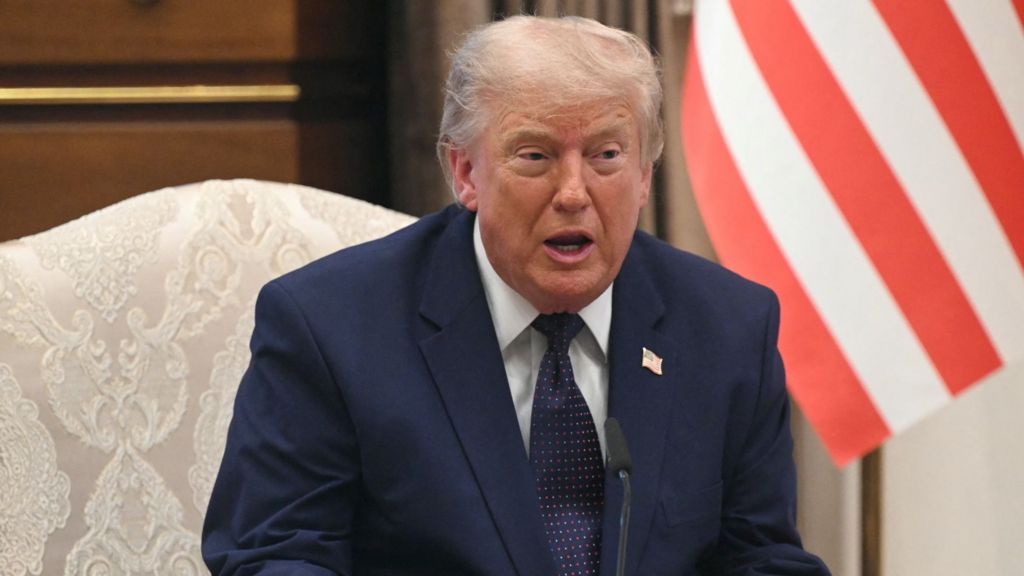
    At the heart of US strategy toward Iran, former President Donald Trump has directed American national security officials to draw up plans for a sustained naval blockade of Iranian ports, according to reporting from the Wall Street Journal. The push for a long-term blockade stems from Trump’s deep skepticism that Tehran is negotiating in good faith on its nuclear program. The US administration’s core demands include a 20-year full suspension of uranium enrichment, followed by permanent stringent oversight and restrictions on Iran’s nuclear activities. Trump doubled down on this hardline stance in a post to his Truth Social platform, writing: “Iran can’t get their act together. They don’t know how to sign a nonnuclear deal. They better get smart soon!” The post included a graphic of Trump holding an assault rifle emblazoned with the phrase “NO MORE MR. NICE GUY!”.

    Trump made his first public remarks on the conflict’s trajectory during a White House state dinner honoring Britain’s King Charles III on Tuesday, claiming that Iran had been “militarily defeated”. “We have militarily defeated that particular opponent,” Trump told attendees, adding, “Charles agrees with me even more than I do — we’re never going to let that opponent have a nuclear weapon.”

    On the human rights front, the United Nations has issued sharp criticism of Iran, confirming that at least 21 people have been executed and more than 4,000 arrested across the country since the outbreak of the wider Middle East war. The UN Office of the High Commissioner for Human Rights detailed that nine of those executed were connected to anti-government protests held in January 2026, 10 were accused of membership in opposition groups, and two were executed on charges of espionage. The UN described the Iranian government’s crackdown as “harsh and brutal” against its own population.

    In Congress, US Defense Secretary Pete Hegseth is set to face intense bipartisan scrutiny Wednesday during his first congressional testimony since the war began. Appearing before the House Armed Services Committee to discuss Trump’s $1.5 trillion defense budget request, Hegseth will face tough questions over the administration’s handling of the conflict with Iran. Top US military officer General Dan Caine will also testify, and the hearing is widely expected to be fiery, as lawmakers from both major parties have already voiced deep frustration over the lack of transparency in classified briefings on the war’s progress.

    Violence continues to flare in southern Lebanon despite a fragile ceasefire implemented on April 17. Lebanon’s health ministry confirmed Tuesday that new Israeli strikes killed eight people, including several civilian civil defense rescuers, and wounded two Lebanese soldiers. Israel has been engaged in active ground combat with the Iran-backed Hezbollah militant group since early March, and low-intensity clashes have persisted despite the formal ceasefire agreement.

    For global energy markets, the conflict has already delivered significant financial windfalls for major fossil fuel producers. French energy giant TotalEnergies announced that its first-quarter net profit surged 51% year-over-year to hit $5.8 billion, a new record, driven largely by the sharp rise in crude oil prices tied to Middle East supply chain disruptions. The company noted that expanded oil and gas production in Brazil and Libya fully offset lost output from the Gulf region, which normally accounts for 15% of TotalEnergies’ total hydrocarbon production. The company highlighted its resilience, noting it has been able to capitalize on elevated global prices to boost its bottom line.

    In a separate operational update, TotalEnergies confirmed it has restarted operations at the Satorp refinery in Saudi Arabia, a joint venture with Saudi Aramco. The facility was shut down as a safety precaution after airstrikes in early April damaged three of its processing units. As of April 14, the refinery has returned to full operational capacity, processing 230,000 barrels of crude per day, with undamaged units brought back online to restart production.

    Global oil prices jumped sharply this week following two key developments: reports that Trump is unlikely to accept an Iranian proposal to reopen the Strait of Hormuz to commercial shipping traffic, and a warning from Qatar that the conflict could devolve into a protracted “frozen conflict”. By Tuesday, West Texas Intermediate crude breached the $100 per barrel mark for the first time in two weeks, while Brent crude climbed above the price point it reached before a temporary ceasefire was announced in early April. On Wednesday, both contracts continued their upward climb, with Brent holding above $113 per barrel and WTI trading above $101 per barrel.

  • Europol task force nets 280 arrests as ‘violence for hire’ spreads across Europe

    Europol task force nets 280 arrests as ‘violence for hire’ spreads across Europe

    THE HAGUE, Netherlands — In a landmark first year of operations targeting an emerging dangerous trend in European organized crime, an international law enforcement task force focused on dismantling ‘violence as a criminal service’ networks has secured 280 arrests, Europol, the European Union’s law enforcement cooperation agency, announced Wednesday.

    The widespread arrests have pulled back the curtain on a growing cross-continental criminal pattern: criminal organizations are increasingly recruiting people — disproportionately young people — through social media platforms and encrypted messaging apps to carry out violent attacks, from brutal physical assaults to targeted assassinations. Europol officials have framed this model as a disturbing, illicit twist on the gig economy, where violence is contracted out on demand rather than planned and executed by established local criminal gangs alone.

    In an official statement, Europol emphasized that this shifting criminal landscape has moved far beyond the traditional boundaries of isolated, local incidents of violence. “Violence is no longer confined to isolated acts or local dynamics. It is increasingly offered as a service: accessible, scalable and driven by online ecosystems that enable recruitment, coordination, and execution across borders,” the agency noted.

    Launched one year ago, the task force brings together specialized law enforcement units from 11 European nations: Belgium, Denmark, Finland, France, Germany, Iceland, the Netherlands, Norway, Spain, Sweden, and the United Kingdom. Over its first 12 months of coordinated investigations, the joint operation has identified more than 1,400 individuals tied to these transnational violence-for-hire networks.

    Among the high-profile arrests made through the task force’s work are a Dutch national charged with acting as a getaway driver for two minors suspected of carrying out a series of explosions across Germany in mid-2025. In a separate cross-border case, a minor was taken into custody in Sweden earlier this year in connection with a shooting outside a prison in the Dutch city of Alphen aan den Rijn.

    Beyond the arrests already completed, Europol has added three top suspected network leaders to Europe’s most-wanted online portal. Two of the men are Swedish nationals, and the third is German. All three are wanted on charges including murder, large-scale drug trafficking, and money laundering for their alleged leadership roles within the illicit violence-as-a-service structure.