作者: admin

  • Australia’s budget ‘sugar hits’ are running out, economists warn

    Australia’s budget ‘sugar hits’ are running out, economists warn

    Australia’s national debt has posted an unexpected near-term decline, but leading economic analysts warn this seemingly positive trend rests on fragile, temporary factors rather than lasting fiscal progress – and the nation is running out of good luck to prop up its budget.

    The temporary drop in debt has been fueled by two external shocks: the ongoing conflict in the Middle East (Iran) and skyrocketing cost-of-living pressures that have lifted inflation across the country. According to the latest Deloitte Access Economics Budget Monitor report, these forces have delivered what senior partners describe as “sugar hits” to government revenue: higher prices across energy and commodities translate directly into higher tax collections, which have shrunk near-term deficits and allowed for a one-off $40 billion debt repayment in April 2026. Total gross national debt currently sits at $962.6 billion following this repayment.

    Deloitte Access Economics partner Stephen Smith argues that these one-off revenue gains have papered over deep, long-standing structural flaws that leave Australia in a precarious fiscal position. “Higher inflation and the Middle East conflict are all quite good for the budget in the short term because higher prices mean more tax revenue,” Smith explained in an interview with NewsWire. But this quick boost to revenue carries major long-term risks, he warned: a sustained oil supply shock from regional conflict could sharply slow domestic demand, while persistent inflation may force the Reserve Bank of Australia to raise interest rates even higher than markets currently expect. These risks will only grow if the government opts for heavy-handed short-term household relief in the upcoming budget, Smith added.

    The short-term fiscal picture has indeed improved more than many forecasters expected. Deloitte projects the underlying cash deficit will come in at $33.2 billion, a $3.6 billion improvement from the Mid-Year Economics and Fiscal Outlook (MYEFO) projections. Commonwealth Bank (CBA) is even more optimistic, forecasting the deficit will fall to $29 billion this fiscal year and $22 billion the next, marking a significant upgrade to the nation’s fiscal outlook.

    But despite these near-term gains, Deloitte warns upward cost pressures will erase much of the revenue windfall in coming years. Elevated inflation automatically lifts indexed federal payments, including welfare support for jobseekers and age pensions, while higher interest rates also increase the government’s debt servicing costs. Even with strict controls on new spending, growth in existing mandatory spending will offset most of the extra revenue, Smith noted. The fastest-growing spending areas – defense, the National Disability Insurance Scheme (NDIS), aged care, health, and debt interest – are all core government responsibilities, but their current growth rates are outpacing revenue at an unsustainable pace.

    To rein in runaway NDIS costs, the federal government has already proposed legislative changes to crack down on “scheme inflation,” tighten eligibility rules, and root out system rorting. Current projections show the scheme would cost more than $70 billion annually by 2030, but the reforms are expected to cut that figure by $15 billion over the forward estimates period.

    CBA chief economist Luke Yeaman identifies three core challenges the government must address in its upcoming budget to put public finances on a sustainable path: tax system reform to spread the burden more fairly across generations, avoiding new spending that would further stoke already high inflation, and managing growing uncertainty from the ongoing Iran conflict. “Achieving all of this in one budget – major reform, big spending cuts, national resilience and supporting households – is quite the ask,” Yeaman said. “We expect the government to try to thread the needle. To pull this off, they will need to meet several tests.”

    Treasurer Jim Chalmers has already acknowledged the difficult context, describing the government’s budget strategy as “hostage to economic turmoil.” He has pledged the upcoming budget will deliver substantial savings while remaining ambitious, with a core focus on addressing intergenerational inequity in the tax and housing sectors.

    A growing number of analysts expect the government will finally advance long-discussed reforms to the capital gains tax (CGT) discount and negative gearing, long considered untouchable “sacred cows” of Australian tax policy. Currently, investors receive a flat 50% discount on capital gains for assets held longer than one year, a policy that disproportionately benefits wealthy asset holders. Reports indicate the government will shift to an indexation model that only taxes real inflation-adjusted capital gains, a change framed as a measure to improve housing affordability and intergenerational equity rather than a broad tax increase. CBA projects the reform could save the budget around $2 billion over four years if implemented as rumored.

    While Deloitte calls CGT reform a solid first step, the firm argues the government needs to go further with broader structural tax reform: shifting the tax burden away from income taxes toward consumption and land taxes. Under Deloitte’s proposal, the tax-free threshold would be raised to $35,000, with a 33% marginal rate for incomes up to $300,000 and a 40% rate for incomes above that threshold. “From an economics point of view if you are taxing income you are discouraging people from working, so the less we can tax labour the more we encourage people to work and that can really boost the economy,” Smith said. He added that the current system is unfair to younger generations: as Australia’s population ages, wealthy retirees pay a disproportionately small share of total tax, while working-age Australians bear the bulk of income tax burdens. Taxes like the GST are far more efficient, he noted, because they are shared across all members of society regardless of age or employment status.

  • ‘How are we going to get back home?’ Islamist group tightens blockade on Mali capital

    ‘How are we going to get back home?’ Islamist group tightens blockade on Mali capital

    For over a decade, Mali’s national military has waged a persistent, bloody conflict against Islamist insurgent groups across the West African nation. Now, that conflict has tightened its grip on the heart of the country: Bamako, the bustling capital and key regional hub home to more than 3 million residents, is currently under a rolling partial blockade by Jama’at Nusrat al-Islam wal-Muslimin (JNIM), one of the country’s most active Islamist militant factions. The blockade comes just days after a high-profile assassination of Mali’s defense minister within the city’s borders, deepening the sense of crisis gripping the nation.

    Stranded motorists and travelers on the Bamako-Kéniéba highway, one of the capital’s primary arterial routes, have described days of uncertainty and fear. One mother of two, who traveled outside the city to visit aging parents, told the BBC she has been barred from re-entering Bamako for nearly 24 hours. “Our army isn’t capable of protecting us, how are we going to get back home?” she asked, echoing the anxiety shared by hundreds of other stranded people along major inbound routes. JNIM fighters issued an explicit public warning Wednesday that “no-one will be allowed in any more” to the capital, a sharp escalation of tactics the group has used to pressure the ruling military junta.

    This tightening blockade marks a significant escalation from the group’s 2025 fuel blockade, which crippled supply chains, caused widespread fuel shortages, and sent prices for essential goods soaring across Bamako. Today, eyewitnesses confirm that at least three of the six main access roads leading into the capital are closed for hours at a time, as militants rotate positions across different routes to avoid counterattacks. During gaps between militant presence, small numbers of civilian vehicles are able to sneak through, but movement remains severely restricted and unpredictable.

    The current crisis follows a coordinated nationwide offensive launched last weekend by a newly formed alliance of jihadist fighters and separatist rebels from the Azawad Liberation Front (FLA), whose stated goal is to overthrow the military regime led by General Assimi Goïta. Goïta seized control of Mali in a 2020 coup and has since shifted the country’s foreign security alliances dramatically, expelling French counterterrorism forces that had supported the government for nearly a decade and turning instead to the Russia-aligned Africa Corps, a paramilitary force that emerged from the remnants of the Wagner Group following the death of its founder Yevgeny Prigozhin.

    Despite this new partnership, the insurgent offensive has already scored major gains. The FLA alliance forced African Corps and Malian government troops to withdraw from the key northern city of Kidal, which is now fully under separatist control. Following the capture of Kidal, FLA leaders have announced plans to advance on other northern population centers and issued an ultimatum demanding the full withdrawal of all Africa Corps forces from Malian territory.

    The Kremlin has repeatedly reaffirmed its commitment to maintaining a presence in the country. “Russian forces will remain in Mali to combat extremism, terrorism and other harmful phenomena and will continue to provide assistance to the current government,” a Kremlin spokesperson stated Thursday, pushing back against claims that the withdrawal from Kidal signals weakening Russian commitment to the junta.

    For ordinary civilians caught in the crossfire, the situation has grown increasingly desperate. A long-haul lorry driver who has worked Malian trade routes for decades told the BBC he had never experienced a crisis of this scale. “I’m stuck here and it sounds dangerous. I would rather run away to save my life than fight for the goods I have to deliver. I’ve never thought like this before,” he said. Just 50 miles from Bamako, the regional town of Ségou is already under a full insurgent blockade, where hundreds of commercial trucks, passenger buses, and private cars have been trapped for days. A local reporter confirmed that stranded passengers, including whole families and small-scale traders, are already facing critical shortages of clean drinking water and food.

    Mali’s junta leadership has responded with vows of harsh retribution. Following an emergency meeting of the country’s security council Wednesday, state media quoted Goïta saying that Malian armed and security forces have already inflicted “heavy losses” on insurgent forces and would continue to ramp up counteroffensives to restore order.

    Independent security analysts warn that the current offensive exposes deep vulnerabilities in the junta’s grip on power. “Those moves show that the regime is weak and can’t restore security,” explained Alain Antil, director of the Sub-Saharan Africa Centre at Ifri, a leading French foreign affairs think tank. Antil noted that the current trajectory echoes 2013, when a similar alliance of jihadists and Tuareg separatists advanced on Bamako, prompting a large-scale French military intervention that pushed insurgents back but failed to fully resolve the country’s instability. Despite Goïta’s decision to oust French forces and align with Russia, the security situation has continued to deteriorate, culminating in last weekend’s coordinated offensive.

    International governments have already begun issuing warnings to their citizens. France, Canada, and the United Kingdom have all issued formal advisories urging their nationals to leave Mali immediately, while the United States recommends that all U.S. citizens in the country stay in secure locations and avoid non-essential travel. Even amid the warnings, some long-term foreign residents have refused to flee, pointing to deep personal ties to the country. “I won’t leave,” one Frenchwoman who has lived in Mali since 2002 told the BBC. “I love Mali. It has become a part of me since I came here in 2002. We’ll stay with my family. We know things will be OK.”

  • Pakistan commissions first Hangor-class submarine in China

    Pakistan commissions first Hangor-class submarine in China

    In a landmark moment for Pakistan’s military modernization and its deepening defense partnership with Beijing, the South Asian nation formally commissioned its first of eight planned Hangor-class submarines at a ceremony hosted in China on Thursday, Pakistan’s military confirmed in an official statement.

    The high-profile commissioning event took place in Sanya, the major southern Chinese port city, with Pakistani President Asif Ali Zardari serving as the chief guest. The gathering also brought together Pakistan’s Naval Chief Admiral Naveed Ashraf and senior military delegations from both countries, marking another high-level diplomatic engagement between the two long-time allies—Zardari and other top Pakistani officials have undertaken multiple visits to China in recent years amid growing bilateral cooperation.

    Speaking during his official visit to China, Zardari framed the induction of this cutting-edge submarine as a transformative “historic milestone” for Pakistan’s Navy. He emphasized that the new addition strengthens Islamabad’s commitment to upholding a credible, balanced defense posture, and underlined that Pakistan now holds enhanced capability to defend its territorial sovereignty, safeguard its critical maritime interests, and secure its core economic lifelines that run through regional sea lanes.

    Widely reported to be developed based on China’s advanced Type 039B submarine design, the Hangor-class platform is engineered to accommodate a core crew of 38, with additional space allocated for special operations personnel. It is outfitted with a modern arsenal including heavyweight torpedoes and anti-ship missiles, granting it multi-mission strike capability. Under Pakistan’s original agreement for the eight-vessel fleet, the first four are being constructed in China, while the remaining four will be built domestically at the Karachi Shipyard & Engineering Works, located in Pakistan’s southern coastal hub.

    For decades, Pakistan has positioned its submarine fleet as a core component of its strategic deterrence posture against neighboring India, a rival with whom it has fought three full-scale wars since achieving independence in 1947. Tensions between the two nuclear-armed neighbors remain high, particularly over the disputed Kashmir region; during a 2024 border standoff, Pakistan deployed Chinese-built J-10C fighter jets and claimed to have downed multiple Indian aircraft, including French-made Rafale jets, a claim that India has never corroborated.

    Addressing attendees at the commissioning, Admiral Ashraf highlighted growing global security risks stemming from disruptions to critical maritime choke points, which increasingly threaten the stability of global trade flows and international energy security. This shifting security landscape, he noted, makes the development of advanced, capable naval forces more urgent than ever. The new Hangor-class submarines, fitted with state-of-the-art sensors, advanced weapon systems, and air-independent propulsion technology that allows for extended underwater endurance, will play a key role in preserving regional stability and securing critical shipping routes across the Arabian Sea and the broader Indian Ocean, Ashraf added.

    The admiral also drew attention to the historical significance of the “Hangor” class name, which honors a Pakistani submarine that sank an Indian warship during the 1971 Indo-Pakistani War—marking the first successful submarine sinking of an enemy warship since the end of World War II. Beyond military advancements, Ashraf emphasized that the commissioning opens a new chapter in the decades-long defense collaboration between Pakistan and China. This deepening defense partnership runs parallel to growing economic ties: just last year, Islamabad and Beijing reaffirmed their commitment to expanding bilateral economic cooperation and investment under the China-Pakistan Economic Corridor, the flagship infrastructure project of China’s global Belt and Road Initiative.

  • New ‘bluster’ from Trump? Germany faces new threat about reduced US military presence in Europe

    New ‘bluster’ from Trump? Germany faces new threat about reduced US military presence in Europe

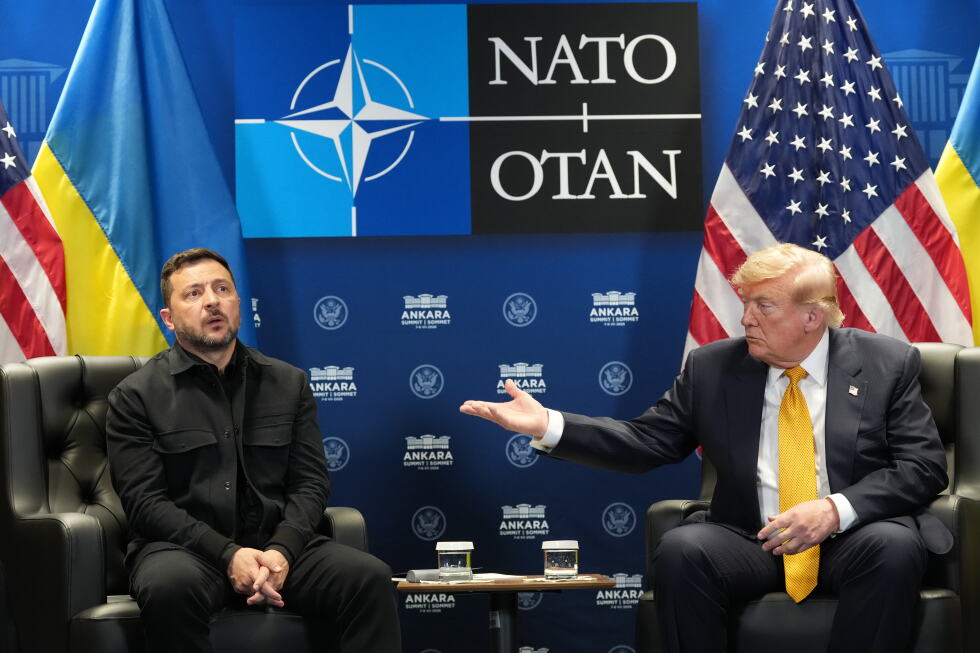
    Fresh transatlantic friction has emerged after former President Donald Trump reignited longstanding threats to cut the United States military footprint in Germany, NATO’s leading European hub and the EU’s biggest economy. The renewed warning comes on the heels of critical remarks from German Chancellor Friedrich Merz, who claimed the U.S. was being publicly humiliated by Tehran amid its slow-rolling diplomatic negotiations tied to the ongoing U.S.-Israel conflict with Iran.

    Talk of reducing American troop levels in Germany is far from new. For years, Trump has openly pondered pulling back U.S. military assets from the country, and in recent months he has repeatedly lashed out at NATO for declining to back the U.S. in its two-month military campaign against Iran. Ever since Trump took office, NATO allies have braced for potential troop withdrawals, with repeated warnings that European nations would ultimately have to take full ownership of their own security, including defense support for Ukraine.

    Currently, between 80,000 and 100,000 U.S. military personnel are stationed across Europe, a number that fluctuates with ongoing operations, training exercises and rotational deployments. NATO allies widely expect that the additional U.S. troops deployed to the continent after Russia’s 2022 full-scale invasion of Ukraine would be the first to depart if drawbacks move forward. Germany hosts some of the U.S. military’s most critical European infrastructure: this includes the dual headquarters for U.S. European Command and U.S. Africa Command, Ramstein Air Base, the Landstuhl Regional Medical Center that treats wounded service members from conflicts across the Middle East and South Asia, as well as deployed American nuclear missiles.

    Ed Arnold, a European security specialist at London’s Royal United Services Institute (RUSI), a leading defense think tank, argues that a full or large-scale withdrawal is highly unlikely, pointing out that the U.S. derives enormous strategic benefit from its German bases, which enable critical logistics and support for combat operations across the Middle East. Arnold labeled Trump’s latest threat as nothing more than political bluster, noting a long-standing gap between civilian political rhetoric and U.S. military priorities. “The issue with some of these threats is that they are not quite as galling as they were a couple of years ago,” he explained, pointing to growing European familiarity with Trump’s patterned rhetorical outbursts.

    Neither NATO nor the German federal government issued immediate official responses to Trump’s social media post. During a visit to a military training site in Munster, northern Germany on Thursday, Merz did not directly reference Trump’s comments, but obliquely pushed back by referencing longstanding transatlantic cooperation. “We work shoulder to shoulder for mutual benefit and in deep trans-Atlantic solidarity,” Merz said, adding that his government has made significant progress over the past year to bolster Germany’s own national security.

    Arnold notes that European allies are far more concerned about more immediate shifts in U.S. defense policy: the redeployment of American Patriot missile systems and stockpiled ammunition from Germany to the Middle East, as well as official notifications to Eastern NATO allies including Estonia that U.S. weapons orders will be delayed amid Washington’s new priority of supporting operations against Iran. A senior Western official, speaking to the Associated Press on condition of anonymity to discuss sensitive diplomatic matters, said there is no record of any active discussions between the U.S., Germany or other NATO allies about imminent troop reductions in Germany. The official added that Europe, and Germany in particular, have already stepped up to take greater responsibility for continental security following the release of Berlin’s new national military strategy.

    This is not the first time unexpected U.S. defense announcements have roiled transatlantic security planning. Last October, Washington confirmed it would cut between 1,500 and 3,000 troops from NATO deployments along the alliance’s border with Ukraine. The last-minute announcement unsettled Romanian officials, who host a key NATO air base on the country’s eastern flank. A full review of U.S. military posture across Europe and other global regions was launched by the Trump administration early last year, with findings originally scheduled for public release in late 2025 that have yet to be published. The U.S. has, however, given allies a formal commitment to provide advance notice of any posture changes to avoid creating dangerous security gaps at a time when Russia grows increasingly confrontational.

    Many senior European leaders hold the assessment that Russian President Vladimir Putin could launch an offensive attack on another European nation by the end of the decade, particularly if Russia secures a victory in its ongoing war in Ukraine. The outbreak of the U.S.-Iran conflict has only heightened speculation that U.S. troop withdrawals from Europe could move forward, with a flurry of closed-door meetings held between Trump administration officials, NATO Secretary-General Mark Rutte and European leaders since hostilities began on February 28. Over the past year, European NATO members and Canada have already begun adjusting to a new strategic reality, where they will bear primary responsibility for Europe’s conventional defense, with the U.S. shifting its NATO contribution to primarily nuclear deterrence and a smaller forward-deployed troop presence.

    Beyond the current uncertainty over troop levels, European allies have largely grown accustomed to Trump’s frequent public outbursts. In recent months, they have weathered insults labeling them as cowards and seen Trump brand NATO a “paper tiger.” Repeated threats of full withdrawal over issues like alliance defense spending targets have left allies desensitized to social media announcements hinting at potential action. The most lasting damage to NATO cohesion, many officials agree, has come from Trump’s ongoing public fixation on annexing Greenland, a semiautonomous territory of NATO member Denmark, which has included trips to the island by Trump’s family members and senior administration officials. In September, an announced freeze on some security assistance funding for European states bordering Russia also sowed widespread confusion, after Baltic defense leaders confirmed they had received no official advance notification of the policy shift.

  • War in the Middle East: latest developments

    War in the Middle East: latest developments

    In the hours following fresh military activity across the Middle East that has sent shockwaves through global energy markets and sparked diplomatic fallout across continents, multiple world leaders have issued stark responses to unfolding events, while new economic and military data highlights the growing human and financial cost of ongoing conflict.

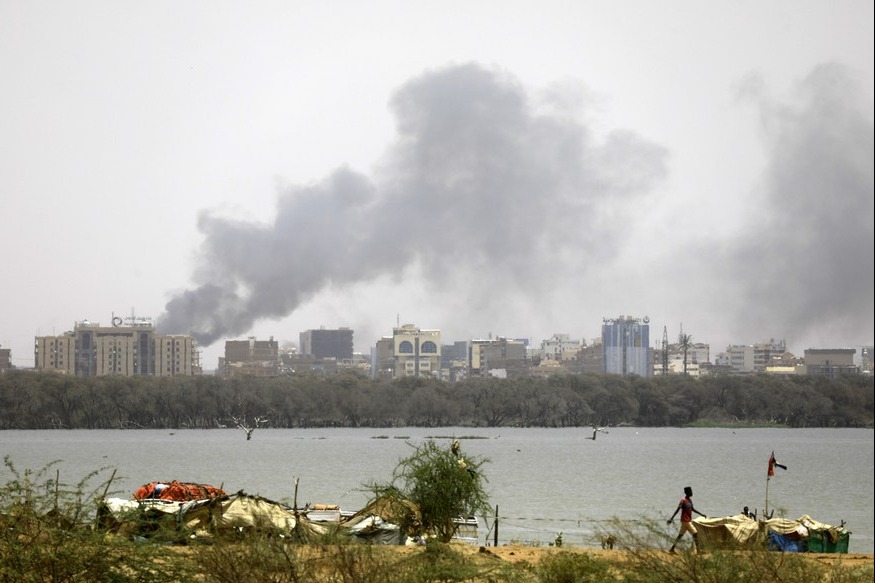
    From southern Lebanon, where Israeli shelling has continued despite an existing ceasefire agreement, Lebanese President Joseph Aoun issued a firm condemnation of sustained Israeli incursions into the country’s southern territories. In his statement, Aoun detailed that ceasefire violations have included the destruction of civilian residential properties and religious sites, with casualty numbers climbing steadily each day. He called on the international community to bring coordinated pressure to bear on Israel, demanding that the country uphold longstanding international law and conventions, and end targeted attacks on civilian populations, medical first responders, civil defense teams, and humanitarian relief and health organizations. The strike on the village of Yohmor sent thick plumes of smoke visible across the border from the Lebanese district of Marjeyoun, underscoring the persistent risk of a wider regional spillover from ongoing hostilities.

    Beyond the immediate military conflict, the upheaval has created major ripple effects for global energy markets and climate policy. Speaking at an International Energy Agency (IEA) event focused on energy transition in Paris, Turkey’s climate minister Murat Kurum—who is also the president-designate for the upcoming COP31 UN climate conference—argued that the current energy crisis triggered by Middle East conflict makes clear that the global economy must accelerate its shift away from fossil fuels to renewable clean energy. Kurum emphasized that the crisis has exposed the critical need for a complete overhaul of the global energy paradigm.

    IEA executive director Fatih Birol echoed those concerns, warning that the world is currently grappling with one of the most severe energy and economic challenges in modern history. In the wake of Middle East hostilities, international oil prices have spiked dramatically, bringing unprecedented economic pressure to nations across every income bracket, Birol explained. As of Thursday, benchmark crude prices hit multi-year highs: Brent crude for June delivery jumped more than 7% to peak at $126.41 a barrel, while U.S. West Texas Intermediate crude climbed 3.4% to reach $110.31, before both benchmarks partially pulled back from their intraday gains.

    Iranian President Masoud Pezeshkian pushed back against recent threats of a U.S. naval blockade of Iranian ports, arguing that any such restrictive measure would not only violate core principles of international law but also deepen regional instability in the Persian Gulf while failing to achieve Washington’s strategic goals. “Any attempt to impose a maritime blockade or restrictions is contrary to international law… and is doomed to fail,” Pezeshkian said in an official statement.

    Diplomatic tensions have also spilled into transatlantic relations, with U.S. President Donald Trump confirming that Washington is considering significant cuts to its troop deployment in Germany over Chancellor Friedrich Merz’s refusal to join the U.S.-led conflict against Iran. Currently, the U.S. maintains between 35,000 and 50,000 military personnel stationed across Germany. The threat to draw down troops aligns with Trump’s long-running criticism of NATO burden-sharing, and was triggered after Merz claimed earlier this week that Iran was “humiliating” Washington at ongoing negotiating talks.

    Shortly after Trump’s announcement, European Union officials pushed back on the suggestion of a drawdown. EU spokeswoman Anitta Hipper noted that the ongoing deployment of U.S. troops across Europe serves core national security interests for the United States, adding that NATO allies are already increasing their collective defense spending at a pace never seen before.

    In a high-stakes phone conversation between Russian President Vladimir Putin and U.S. President Donald Trump on Wednesday, Putin issued a clear warning against any resumption of large-scale military attacks on Iran. Kremlin foreign policy aide Yuri Ushakov told reporters that Putin outlined that new military action would bring “inevitable and extremely damaging consequences” for the Middle East region and the entire global community. In his own remarks on the call, Trump claimed that Putin had offered to help mediate an end to the U.S.-Israeli conflict against Iran, but that he had demanded Russia first withdraw its military forces from Ukraine to move forward.

    On Capitol Hill, U.S. Defense Secretary Pete Hegseth faced a fiery congressional hearing Wednesday where lawmakers pressed him on the financial cost of 60 days of ongoing U.S. military involvement in the conflict. Hegseth confirmed that total estimated costs to date have remained under $25 billion. He also pushed back against widespread concerns that the conflict has depleted the U.S.’s stockpiles of critical munitions to alarming levels, accusing critics of spreading misinformation that amounts to propaganda for U.S. adversaries.

    In a closing provocative message posted to his Truth Social platform Thursday, Trump doubled down on his hardline stance toward Iran. “Iran can’t get their act together. They don’t know how to sign a nonnuclear deal. They better get smart soon!” he wrote, alongside a graphic of himself holding an assault rifle emblazoned with the caption “NO MORE MR. NICE GUY!”

  • Gaza flotilla organisers say 211 activists ‘kidnapped’ by Israel

    Gaza flotilla organisers say 211 activists ‘kidnapped’ by Israel

    A major diplomatic and humanitarian controversy has erupted after Israeli military forces intercepted a flotilla of pro-Palestinian aid vessels heading to the blockaded Gaza Strip in international waters off the Greek island of Crete, with organizers and Israeli officials clashing sharply on the scope and legality of the operation.

    Organizers with the Global Sumud Flotilla, a coalition of 48 national delegations that launched the voyage from ports in France, Spain and Italy over recent weeks, announced Thursday that Israeli commandos had stormed at least 22 of the coalition’s 58 vessels in an operation that took place hundreds of kilometers from Israeli shores — a distance organizers described as unprecedented. In a graphic account of the raid, the group detailed that Israeli military speedboats approached the unarmed aid vessels, pointing laser weapons and semi-automatic assault weapons at activists, ordering crew members to crawl to the fronts of their boats with their hands and knees on the deck. The operation also included jamming of the flotilla’s communications systems, prompting activists to issue an emergency SOS distress call.

    Per the coalition’s accounts, a total of 211 activists have been taken into Israeli custody, an outcome organizers frame as an arbitrary kidnapping in violation of international law. Among the detainees are Paris Communist municipal councillor Raphaelle Primet and 10 other French citizens, with crew members representing all 48 participating national delegations believed to be held. Helene Coron, a spokesperson for Global Sumud France, confirmed the details of the interception during an online news conference, noting that the operation occurred far closer to Crete than to Israeli territorial waters. Yasmine Scola, an activist still aboard one of the remaining flotilla vessels anchored near Crete, echoed the organizers’ claim that the detained activists had been kidnapped by Israeli forces.

    Israeli officials have offered a conflicting account of the operation. The Israeli foreign ministry put the number of detainees at 175, and derisively labeled the initiative a “condom flotilla” — a reference to prophylactics found in a previous aid convoy — adding that 20 of the intercepted vessels were already traveling peacefully to Israeli ports. Activists counter that their vessels were carrying only civilian humanitarian aid, including school supplies and food for Gazan residents who have faced catastrophic shortages of basic goods for decades.

    A spokesperson for the Greek coast guard confirmed to Agence France-Presse that authorities responded to the flotilla’s SOS distress signal, but once a Greek patrol boat reached the interception zone, crews were told no further assistance was needed. As of Thursday, the 36 remaining vessels from the original flotilla remain anchored off the coast of Crete, and organizers have not yet announced what next steps the remaining crews will take.

    This interception marks the second high-profile voyage by the Global Sumud Flotilla targeting Israel’s blockade of Gaza. The coalition’s first voyage in the summer and autumn of 2025 also drew global attention after Israeli forces intercepted the flotilla off the coasts of Egypt and Gaza in early October of that year. That operation, which Amnesty International and organizers labeled a violation of international law, sparked widespread international condemnation after high-profile participants including climate activist Greta Thunberg were arrested and expelled by Israeli authorities.

    The confrontation comes against a long-running backdrop of humanitarian crisis in Gaza. Israel has controlled all land, air and sea entry points to Gaza since 2007, when the territory came under the governance of Hamas. The United Nations and leading international non-governmental organizations have repeatedly accused Israel of strangling the flow of goods into Gaza, a crisis that deepened dramatically after the outbreak of war between Israel and Hamas in October 2023. According to official Israeli figures compiled by AFP, Hamas’s cross-border attack on October 7, 2023 killed 1,221 people, most of them civilians. Retaliatory Israeli military operations in Gaza have killed more than 72,000 people in the territory, the majority of them civilians, per data from the Gaza Ministry of Health. A fragile ceasefire has been in place since October 2025, ending two years of devastating armed conflict, but severe shortages of food, clean water, medicine and fuel continue to plague the 2 million residents of Gaza.

  • Zelenskyy says he’s seeking details of Putin’s May 9 ceasefire proposal

    Zelenskyy says he’s seeking details of Putin’s May 9 ceasefire proposal

    Diplomatic developments have intersected with continuing frontline violence in Ukraine this week, after Russian President Vladimir Putin floated a short-term ceasefire proposal to former U.S. President Donald Trump during a Wednesday phone call, drawing a cautious request for details from Ukrainian President Volodymyr Zelenskyy.

    According to the Kremlin, Putin suggested the ceasefire would align with Russia’s May 9 Victory Day, the national holiday marking the Soviet Union’s defeat of Nazi Germany in World War II. While senior Putin aide Yuri Ushakov confirmed the ceasefire was discussed during the call, Kremlin spokesperson Dmitry Peskov clarified Thursday that no final agreement or concrete terms have been finalized, with all final decisions remaining with Putin.

    In a public Telegram post Thursday, Zelenskyy announced that Ukrainian diplomatic representatives had been ordered to reach out to Trump’s team to pin down the specifics of the proposal. The Ukrainian leader cast doubt on the plan’s purpose, suggesting it could merely be a temporary security measure for a Moscow parade rather than a meaningful step toward de-escalation, and reiterated Ukraine’s preference for a far longer ceasefire to reduce civilian harm.

    Parallel to these diplomatic negotiations, active hostilities have continued unabated across the region. Overnight Russian airstrikes targeted two major Ukrainian cities: in the central city of Dnipro, a drone strike killed one civilian and injured five others, damaging a local shop, residential apartment blocks and parked vehicles, Dnipropetrovsk regional governor Oleksandr Hanzha confirmed. In the southern Black Sea port of Odesa, waves of Russian drone strikes left 20 people wounded. Though Ukrainian air defense forces intercepted a large share of the incoming drones, falling debris and direct hits damaged civilian sites including residential buildings, a hotel, a kindergarten and an administrative building, sparking multiple fires that emergency crews have since contained.

    For a second consecutive day, Ukraine has carried out retaliatory drone strikes on industrial infrastructure deep inside Russian territory. A senior Ukrainian security official confirmed Thursday that the country’s Security Service (SBU) targeted the Lukoil-Permnefteorgsintez oil refinery in Perm, a region in the Ural Mountains more than 1,500 kilometers from the Ukrainian border, disrupting operations at the facility. Russian regional governor Dmitry Makhonin acknowledged an industrial site was hit but downplayed damage and reported no casualties. Farther west, in the Krasnodar region, authorities said a two-day fire at the Tuapse Black Sea oil refinery—ignited by a Ukrainian drone strike—has been extinguished, though crude oil products spilled onto local city streets during the blaze.

    Ukraine’s Navy also announced a separate overnight strike in the Kerch Strait, which connects the Black Sea and Sea of Azov adjacent to the 2018 Crimean Bridge linking illegally annexed Crimea to mainland Russia. The service said sea drones damaged two Russian vessels: a patrol boat named *Sobol* and a smaller craft named *Grachonok*.

    In a separate diplomatic win for Kyiv, a vessel accused of carrying grain stolen by Russia from occupied Ukrainian territories departed Israel’s Haifa Port early Thursday without unloading its cargo, after a week of escalating tension between the two countries. The ship had been anchored off Haifa for several days, but Israel’s largest grain import firm refused to accept the shipment over its disputed origin, the Israel Grain Importers Association confirmed, forcing the Russian supplier to seek an alternative port to unload.

    Zelenskyy had threatened to impose sanctions on Israel earlier this week if the vessel offloaded the stolen grain, and Israeli Foreign Minister Gideon Saar noted the country’s tax authority had launched a formal investigation into the shipment. Ukrainian Foreign Minister Andrii Sybiha hailed the outcome, saying it proved the effectiveness of Kyiv’s legal and diplomatic efforts to block the trade of stolen Ukrainian agricultural goods.

  • Why is China banning drone sales in Beijing?

    Why is China banning drone sales in Beijing?

    In recent weeks, new regulations restricting unauthorised drone operations and sales in Beijing have drawn international attention, with observers seeking clarity on the drivers behind the policy shift. Veteran BBC correspondent Laura Bicker has conducted on-the-ground reporting to unpack the motivations behind China’s decision to tighten drone oversight across the capital. According to Chinese authorities, the core impetus for the new rules is rooted in escalating public safety risks that have emerged as consumer and commercial drone ownership has skyrocketed across the country in recent years. Over the past decade, drones have moved from niche hobbyist equipment to widely accessible tools for photography, logistics, and industrial work, with millions of units now in operation nationwide. This rapid proliferation has brought growing safety challenges: unregulated drone flights have disrupted commercial air traffic at major airports, posed collision risks to manned aircraft, and enabled unauthorised surveillance that infringes on personal privacy. In densely populated urban areas like Beijing, the stakes of unsafe drone operation are even higher, with rogue units creating hazards for pedestrians and critical infrastructure. Bicker’s reporting notes that while the new restrictions have sparked some discussion among domestic drone hobby groups, the policy aligns with a broader global trend of governments updating aviation and technology regulations to address the risks posed by the fast-growing drone industry. Chinese regulatory bodies have emphasised that the restrictions are not a blanket ban on all drone activity in Beijing – rather, they are targeted at unregistered sales and unauthorised flights, with provisions for legitimate commercial and recreational operators who complete required registration and safety certification. As drone technology continues to advance and become more accessible, policymakers across the globe are grappling with how to balance innovation and public access with the need to protect communities and critical assets, and Beijing’s new regulatory framework represents one major government’s approach to that balancing act.

  • ‘Once in a lifetime opportunity’ – Kansas City readies for World Cup influx

    ‘Once in a lifetime opportunity’ – Kansas City readies for World Cup influx

    Tucked along the banks of the Missouri River, straddling the state line between Kansas and Missouri, the Kansas City metropolitan area stands as one of the smallest host cities for the 2026 FIFA World Cup, with a population of just 2.5 million. Though it does not rank among the 30 largest urban regions in the United States, this Midwestern hub punches far above its weight in the sporting world: it is home to the recently dominant Kansas City Chiefs NFL franchise, hosts the prestigious Big 12 college basketball tournament, and will take on a critical role in the planet’s biggest soccer tournament this summer.

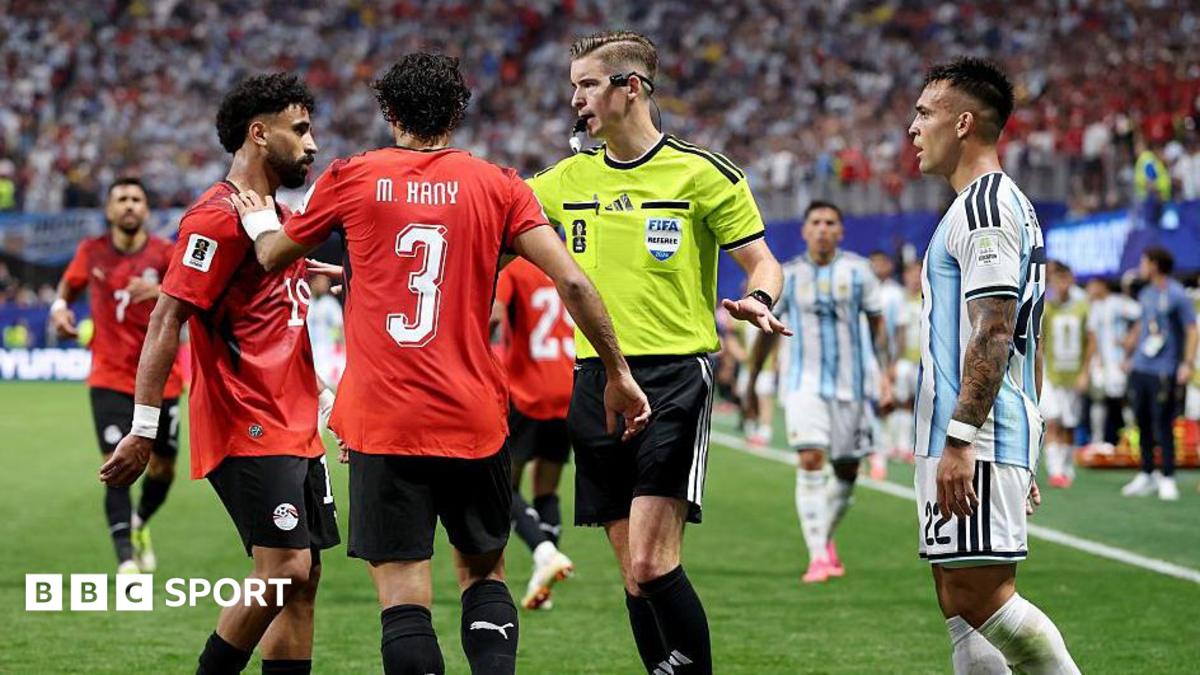
    Kansas City will play host to six World Cup matches, including a round-of-32 fixture and a high-stakes quarter-final, and will serve as the training base for four competing nations: Algeria, defending champions Argentina, England, and the Netherlands. For long-time locals who have watched the region’s soccer culture grow from humble beginnings, this opportunity feels nothing short of historic.

    Héctor Solorio, a 26-year Kansas City resident and lifelong supporter of MLS side Sporting Kansas City, called the chance to welcome the world to his hometown a once-in-a-lifetime moment. “I never imagined the World Cup coming to my city,” he said, noting he is eager to prove Kansas City’s reputation as a globally recognized soccer city – even as he remains skeptical about the U.S. Men’s National Team’s tournament prospects. Fellow local Alejandro Cabero echoed that excitement, recalling how different the region’s soccer scene was when he first arrived: when the franchise, then called the KC Wizards, drew fewer than 3,000 fans to matches. “It’s amazing how far we’ve come,” he said.

    Local and tournament officials frame the 2026 World Cup as a transformative chance to showcase everything the Midwestern region has to offer beyond sports. “We’re a city that has always punched above our weight in barbecue, in African American music, in sports, in the warmth of our people,” Quinton Lucas, mayor of Kansas City, Missouri, told the BBC. “This summer is our chance to share that with the world on the biggest possible stage.”

    Anticipation has been building for months across the city, with locals already finalizing plans for match week. Solorio has secured a ticket to the opening group stage match between Argentina and Algeria on June 16, while Cabero – who owns a local empanada manufacturing business – is organizing a traditional Argentinian banderazo, a pre-game street celebration, the day before. He is preparing food for an estimated 600 attendees, but expects crowds as large as 10,000 fans to join the party.

    Beyond local fan events, organizers have rolled out large-scale preparations to welcome the expected influx of global visitors. Working in partnership with FIFA and officials from both Kansas and Missouri, KC 2026 organizers have planned a free, 18-day official fan festival at the National WWI Museum and Memorial, one of the city’s most iconic landmarks. The festival will feature live match broadcasts, community-led events, and neighborhood watch parties open to all attendees.

    To ensure small, locally owned businesses can capitalize on the surge in visitors, KC 2026 CEO Pam Kramer and her team launched the KC Game Plan initiative. The program provides a free playbook, available in both English and Spanish, that offers small business owners cyber security training, demographic data on projected visitors, and hospitality guidance, among other resources. “Our goal is to guarantee that when visitors arrive, they encounter Kansas City businesses that are ready to meet demand and confident in showcasing what makes them unique,” Kramer explained. For Cabero, that means crafting new empanada flavors inspired by the competing nations, including takes on paella, bratwurst, and shepherd’s pie, to welcome visiting fans.

    Over the past 15 years, the Kansas City metro has invested nearly $700 million into soccer-specific infrastructure, part of a long-term strategy to position the region as a major soccer destination. The recently renovated Berkley Riverfront esplanade, redeveloped in 2021 by Port KC and NWSL side KC Current, will serve as Argentina’s base during the tournament, and local leaders expect the presence of Lionel Messi and the world champions to deliver a major boost to the area’s economy, with increased foot traffic and sales for nearby local businesses. Port KC communications director Patrick Pierce projects that up to two million visitors will visit the riverfront in 2026, a surge driven largely by World Cup demand.

    Kansas City has also gone out of its way to welcome smaller, less high-profile nations competing in their first ever World Cup. Caribbean nation Curacao will play its group stage match against Ecuador in Kansas City on June 20, and will stay in the city for two nights during their historic tournament run. Curacao Football Federation president Gilbert Martina noted an unexpected cultural connection between the two regions: both share a deep love of jazz, with Curacao hosting the world-famous North Sea Jazz Festival. Martina added that the Midwestern values of resilience, community, and pride that define Kansas City are qualities that resonate deeply with the people of Curacao.

    For all the widespread excitement, not all locals share the confidence that Kansas City is fully prepared for the influx of fans and the economic and social impacts of the tournament. Local community leaders have raised three key concerns: a shortage of available hotel rooms, limited public transportation access to match venues for fans on the Kansas side of the Missouri River, and worries over increased immigration enforcement presence during the tournament.

    Most notably, Doug Langner, executive director of local homeless shelter Hope Faith and a lifelong soccer fan, warned that the city’s unhoused population of roughly 2,000 people could be pushed out of critical support systems. Many hotels that partner with the city to provide temporary housing for unhoused residents will be fully booked by traveling fans, he explained, leaving vulnerable populations without accommodation. With hundreds of millions of dollars invested in tournament infrastructure and security, Langner questioned why marginalized communities have not been prioritized to benefit from the event. “How do we connect the people who could use that bump the most to those opportunities?” he asked, adding that it remains unclear how working-class locals will share in the projected economic benefits of the tournament.

    While Mexico City will host the tournament’s opening match and New York will welcome fans for the final, Kansas City is poised to carve out its own unique place in the 2026 FIFA World Cup. The city’s challenge now is to deliver a world-class tournament that celebrates every competing nation, from global giants to first-time underdogs, while addressing the lingering concerns of local communities to ensure the tournament benefits all Kansas City residents.

  • Inflation hits 3% in Europe as Iran war spreads oil price shock

    Inflation hits 3% in Europe as Iran war spreads oil price shock

    FRANKFURT, Germany — The ongoing conflict between Iran and coalition forces has sent global oil markets into turmoil, creating a toxic economic mix for the 21-nation eurozone that pushes the bloc closer to stagflation, new official data shows.

    On Thursday, the European Union’s statistical body Eurostat released figures showing annual inflation across the euro currency area climbed to 3.0% in April, up from 2.6% recorded in March. The sharp uptick was almost entirely driven by a 10.9% month-over-month jump in energy prices, triggered by massive supply disruptions stemming from the Iran war. Since the outbreak of hostilities on February 28, international benchmark crude prices have surged from around $73 per barrel to above $120 a barrel, as Iran’s blockade of the Strait of Hormuz cut off a critical global oil chokepoint. Approximately 20% of the world’s total oil trade passes through the waterway, connecting Persian Gulf producing nations to global markets. The price shock has already hit consumers directly, with higher costs showing up immediately at gasoline pumps and in jet fuel prices for air travel.

    Alongside the unwelcome inflation surge, the eurozone also delivered underwhelming growth figures for the first quarter of 2025. The bloc recorded only a marginal 0.1% increase in output compared to the final quarter of 2024, a result that fell far short of analyst expectations.

    This dual pressure of stagnant growth and above-target inflation has put the European Central Bank (ECB) in an extremely difficult policy position. The ECB has a long-standing inflation target of 2%, and conventional economic policy calls for raising benchmark interest rates to cool overheating prices. However, hiking borrowing costs would further dampen already weak economic growth, creating a risk of a full-blown recession.

    Policymakers widely expect the ECB to leave its key benchmark interest rate unchanged at its Thursday meeting, a position that aligns with other major global central banks that have also hit a policy pause amid the uncertainty. The U.S. Federal Reserve and the Bank of Japan both held interest rates steady at their respective monetary policy meetings earlier this week, and the Bank of England is also projected to keep rates unchanged as it assesses the ongoing fallout from the Iran war. The ECB has kept its main policy rate fixed at 2% since June 2025.

    The dilemma for central bankers hinges on whether the current inflation surge will prove temporary. If price pressures are transitory, moving to hike rates now would unnecessarily harm growth, as interest rate changes take months to filter through to the broader economy. But if policymakers wait too long, higher energy costs could push up prices for food, manufactured goods and prompt demands for higher wages, embedding persistent inflation into the economy. Once inflation becomes entrenched, central banks are forced to implement even more aggressive, economically painful rate hikes to bring prices back under control.

    Right now, major central banks around the world remain stuck in a holding pattern, cautiously monitoring the inflation shock as it works its way through the global economy, with no room to either cut or raise rates in the current uncertain environment.