作者: admin

  • Oil strikes 4-year peak, stocks rise

    Oil strikes 4-year peak, stocks rise

    Global financial markets swung through volatile trading on Thursday, driven by dual forces: escalating geopolitical tensions in the Middle East that pushed crude oil prices to a four-year high, and mixed signals from central bank policy and quarterly corporate earnings that left major stock indexes split across regions.

    Crude prices surged more than 7% early in the session, lifting the international benchmark Brent crude to $126 per barrel—its highest level since Russia’s 2022 invasion of Ukraine—before retreating. By 1330 GMT, Brent had fallen 3.7% to $113.72 a barrel, while U.S. West Texas Intermediate crude dropped 2.5% to $104.23 per barrel.

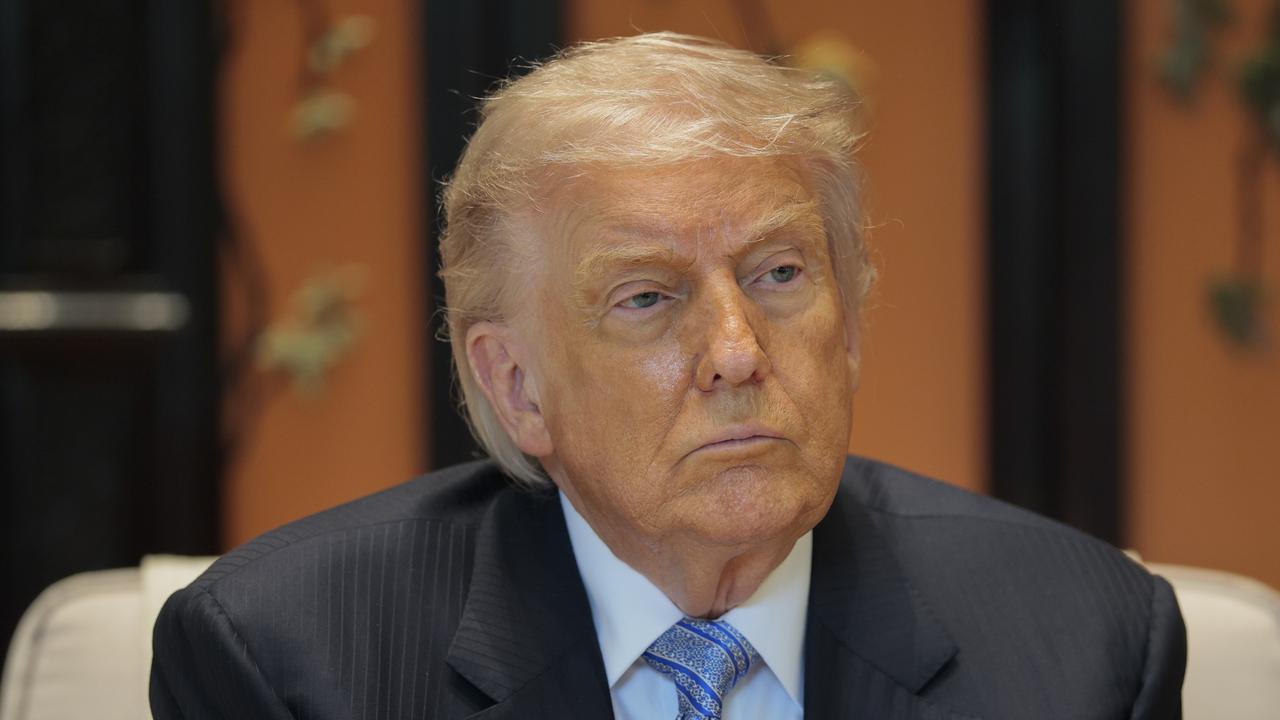
    The sharp run-up in energy prices stemmed from growing fears that Middle East hostilities will escalate and disrupt global oil supplies. Multiple sources confirmed to Axios that U.S. President Donald Trump is set to receive a briefing from U.S. Central Command head Admiral Brad Cooper on plans for potential new military strikes against Iran, while Trump has warned that an ongoing U.S. blockade of Iranian ports could extend for months. Negotiations over Iran’s nuclear program remain completely stalled, and Iran maintains full control over the Strait of Hormuz, the strategic waterway that carries roughly one-fifth of the world’s daily oil trade.

    “With no sign of any peace talks and fears mounting about an escalation, oil prices have continued their gains,” Jim Reid, Deutsche Bank managing director, noted ahead of the price peak. “Investors are pricing in a more protracted conflict,” he added.

    Beyond energy markets, investor attention remained fixed on major central bank decisions, one day after the U.S. Federal Reserve announced it would hold interest rates steady in the face of war-fueled elevated inflation. The European Central Bank and Bank of England followed the Fed’s lead on Thursday, also keeping rates unchanged. However, the ECB warned that risks to the eurozone’s growth and inflation outlooks have “intensified” due to Middle East tensions and energy supply disruptions, while the Bank of England downgraded its forecast for UK economic growth.

    Fresh economic data released Thursday reflected the growing ripple effects of the conflict. Eurozone first-quarter growth slowed to just 0.1%, while U.S. gross domestic product expanded at a 2% annual rate—slower than analysts had projected—as consumer spending cooled. The Federal Reserve’s preferred inflation gauge also rose 3.5% in March, driven largely by spiking energy costs. Even with the slowdown, Briefing.com analyst Patrick O’Hare said the U.S. data reinforced confidence in the economy’s resilience despite rising prices.

    On Wall Street, major U.S. stock indices opened higher and ended the day in positive territory, lifted by stronger-than-expected quarterly corporate earnings. The Dow Jones Industrial Average gained 0.5% to close at 49,108.93, the S&P 500 added 0.4% to 7,167.28, and the Nasdaq Composite rose 0.6% to 24,829.53. Big tech stocks delivered a mixed performance: Alphabet, Google’s parent company, saw shares jump more than 5% after investors praised the firm’s successful AI transition and strong revenue across core divisions, while Meta shares slumped more than 9% over concerns about its massive planned AI investment.

    Overall, quarterly results have beaten analyst expectations by a wide margin, pushing the estimated average earnings growth for large U.S. companies from 15% to 26%, O’Hare said. “That is just massive, and it is the trajectory that has had the stock market looking confident in the face of the Middle East tumult and rising oil prices,” he added.

    European markets were similarly split: London’s FTSE 100 rose 1.4% and Frankfurt’s DAX gained 0.8%, while Paris’s CAC 40 dipped less than 0.1%. Most Asian markets closed lower, with Tokyo’s Nikkei 225 falling 1.1% and Hong Kong’s Hang Seng Index dropping 1.3%; only Shanghai’s Composite index eked out a 0.1% gain.

    In currency markets, the Japanese yen surged more than 2% against the U.S. dollar after Japan’s finance minister strongly signaled that Tokyo was prepared to intervene in currency markets to prop up the yen, which had fallen to its lowest level against the dollar since mid-2024. By the end of the trading window, the dollar fell to 156.69 yen from 160.23 yen on Wednesday.

  • Massive sea lion makes rare appearance in San Francisco

    Massive sea lion makes rare appearance in San Francisco

    On a surprising day along the Northern California coast, wildlife enthusiasts and beachgoers in San Francisco were treated to an extraordinary, once-in-a-blue-moon encounter: a massive Steller sea lion, a species rarely spotted this far south of its typical range, made an unexpected appearance in local waters.

    Native to the frigid, nutrient-rich waters stretching from Alaska down through the Pacific Northwest, Steller sea lions rarely venture as far south as the San Francisco Bay Area. Their natural habitat centers on colder coastal ecosystems, where abundant fish populations support their large size—adult males can grow up to 11 feet long and weigh more than 2,500 pounds, making them one of the largest sea lion species on Earth.

    Local marine biologists note that while individual Steller sea lions have been recorded occasionally wandering south for extended foraging trips, confirmed sightings of large adults in the Bay Area remain incredibly uncommon. The unexpected visitor has drawn crowds of curious onlookers, who have kept a respectful distance per local wildlife guidelines to avoid disturbing the animal during its stay. For many residents and visitors alike, the rare sighting offers a unique reminder of the diverse marine life that inhabits California’s coastlines, even in more populated urban areas.

  • US first-quarter growth rebounds less than expected as inflation surges

    US first-quarter growth rebounds less than expected as inflation surges

    New government data released Thursday reveals that U.S. economic growth rebounded less than analysts projected in the first quarter of 2026, as soaring inflation driven by Middle East conflict-related energy price shocks cooled consumer spending and exposed deep divides in the country’s economic performance.

    The world’s largest economy saw gross domestic product expand at an annualized rate of 2.0% between January and March, according to the Commerce Department’s advance estimate. That marks a sharp improvement from the 0.5% growth recorded in the final quarter of 2025, but still underperforms the 2.2% expansion economists had predicted ahead of the report.

    The uptick in overall growth was primarily fueled by a jump in business investment and a rebound in federal government spending, which recovered after a disruptive government shutdown in the fourth quarter of 2025. White House spokesperson Kush Desai quickly framed the result as a win for the Trump administration’s policy agenda, crediting the president’s tax cuts and deregulation efforts for driving what he called an “astonishing surge in business investment.”

    Despite the headline growth number, economic observers warn that strengths in the economy are narrowly concentrated in the booming AI sector, while millions of ordinary households are already showing signs of financial fatigue from rising costs. The conflict-driven energy shock that began after U.S.-Israeli strikes on Iran on February 28, which prompted Tehran to block traffic through the strategic Strait of Hormuz – a critical global transit chokepoint for energy and fertilizer – has sent energy prices soaring worldwide. Data from the American Automobile Association shows the average price for a gallon of regular gasoline in the U.S. has already spiked to $4.30, eating into household budgets that were already stretched.

    Inflation data released alongside the GDP report confirms the sharp upward shift in prices: the personal consumption expenditures (PCE) price index, the Federal Reserve’s preferred inflation metric, jumped to 3.5% year-over-year in March, up from 2.8% in February. Even when stripping out volatile food and energy prices, core inflation still rose 3.2% annually, far above the Fed’s long-term 2% target.

    Heather Long, chief economist at Navy Federal Credit Union, described the current landscape as a “split-screen economy.” On one side, AI-focused companies and investors are thriving, driving the capital investment boom that lifted the headline GDP number. On the other, middle- and low-income households are grappling with persistent cost-of-living increases. Long noted that nearly half of larger annual tax refunds issued this year have already gone toward covering higher fuel costs for most families, and flagged the slowdown in consumer spending growth to just 1.6% in the first quarter as a “big warning sign” of deeper trouble ahead.

    Oliver Allen, senior U.S. economist at Pantheon Macroeconomics, echoed this assessment, pointing out that underlying economic momentum is “anemic” outside of the AI investment surge. He added that multiple headwinds are already weighing on U.S. consumers: a cooling labor market, subdued consumer confidence, sluggish growth in real household income, and the depletion of excess savings accumulated during the COVID-19 pandemic have all combined to dampen spending.

    The combination of slowing consumption and rising inflation also carries significant political risks, as the Republican Party prepares to defend its majority in November’s midterm elections. Steeper everyday costs are likely to become a top campaign issue for voters, and could erode support for the incumbent administration.

    While some financial analysts, including Chris Zaccarelli, chief investment officer at Northlight Asset Management, believe the U.S. economy has enough resilience to absorb short-term global shocks, Zaccarelli cautioned that growing risks point to a much more challenging outlook for the global economy in the coming months, raising concerns about broader spillover effects from the Middle East energy crisis.

  • Turkey is Iran war’s biggest winner — without firing a shot

    Turkey is Iran war’s biggest winner — without firing a shot

    Two months after joint US-Israeli airstrikes on Iran that killed Supreme Leader Ali Khamenei and eliminated much of Tehran’s senior leadership in late February, Ankara’s carefully calibrated response to the conflict has positioned Turkey to claim unprecedented regional influence in modern times — a shift that comes with substantial unresolved risks.

    When the strikes first occurred, Turkish President Recep Tayyip Erdogan drew a clear line: he condemned the attack as a blatant violation of international law, shut Turkish airspace to US military forces, and extended official condolences following Khamenei’s assassination. Yet Erdogan’s administration simultaneously moved to distance itself from the fallen Iranian regime, openly criticizing Tehran’s retaliatory strikes on Gulf states and blaming Iranian hardline intransigence for the collapse of diplomatic talks that predated the war. This deliberate, balanced stance — what senior Turkish officials privately term “active neutrality,” signaling Ankara opposed the war but would not align with either belligerent bloc — has delivered compounding strategic dividends as a fragile Pakistani-brokered ceasefire has held since early April.

    The most immediate and visible win for Turkey has been its new centrality in regional diplomacy. The four-nation de-escalation format convened in Islamabad on March 29, bringing together Turkey, Saudi Arabia, Egypt, and Pakistan, operates in practice as a Turkey-led initiative. Well before the summit, Reuters reported on March 25 that Ankara had already served as a secret intermediary for backchannel communications between Iran and the US, testing Washington’s negotiating positions while warning Tehran against expanding the scope of the conflict. European Commission President Ursula von der Leyen publicly backed Turkey’s mediation efforts as early as March 1, and the long-standing personal rapport between Erdogan and former US President Donald Trump has lent Ankara’s mediating role a credibility that smaller Gulf hubs like Doha or Muscat cannot match. While Turkish leaders do not expect to broker a full, permanent regional peace settlement, the role of mediator grants Ankara permanent “right of access” to all high-level negotiations that will shape the post-war Middle East order.

    Beyond diplomatic clout, the conflict has triggered a deep structural shift in regional geopolitics that plays directly to Turkey’s advantage. For 40 years, Iran served as the core institutional anchor of the so-called “resistance axis” stretching across Iraq, Syria, Lebanon, and the Gulf. After incremental Israeli dismantling of that network starting in 2023, the February decapitation strikes have left the axis completely eviscerated. Combined with Russia’s severely weakened global position following years of grinding attrition in Ukraine, the long-standing Russia-Turkey-Iran triangle that guided Syrian diplomacy through the Astana process has effectively collapsed. This leaves Turkey as the only functioning major power remaining in the format, a shift that has boosted Ankara’s diplomatic influence far beyond Syria’s borders.

    These changes are already visible on the ground. After the fall of the Assad regime in late 2024, Turkish-aligned political and military actors hold the central role in Syria’s post-war negotiations, and Ankara’s quiet deconfliction channel with Israel is now the primary mechanism preventing direct armed clashes in Idlib and northeastern Syria. In Iraq, Turkish Foreign Minister Hakan Fidan has announced that Ankara will expand its regional focus beyond Syria to address control of the Qamishli–Sinjar corridor, where Iranian-backed militias have lost the political protection Tehran once provided. Critically, two major infrastructure and trade projects long held up by regional tensions are now newly viable: the $17 billion Development Road project through Iraq, which will connect Turkey and Europe directly to the Persian Gulf, and the Zangezur Corridor through the South Caucasus, which links Turkey to Central Asia while completely bypassing Iranian territory. Once completed, these corridors will redirect a significant share of global East-West trade through Turkish-controlled territory, representing a generational geopolitical realignment rather than a short-term tactical gain.

    The Iran war has also accelerated a shift in Gulf security planning that began years before the February strikes, opening new defense and economic opportunities for Ankara. After years of watching Iranian missiles strike civilian infrastructure in Saudi Arabia, the United Arab Emirates, and Qatar despite long-standing US security guarantees, Gulf monarchies have increasingly moved away from exclusive reliance on Washington and are diversifying their regional security partnerships. Turkey is the most natural alternative: over the past decade, Ankara has evolved from a major arms importer to a self-sufficient global defense exporter, with 80% of its military equipment produced domestically by 2026. Key Turkish defense exports include the widely popular Bayraktar unmanned aerial vehicles, the new KAAN fifth-generation fighter jet, and a growing fleet of advanced naval vessels built under the domestic MILGEM program. Multiple confidential defense agreements signed throughout March indicate Ankara is already converting Gulf security anxiety into long-term contracts and deep embedded political partnerships. This momentum is set to grow when Turkey hosts the July NATO summit, where Erdogan will arrive with far more leverage than he held in January: as the alliance’s most strategically exposed frontline state, an indispensable regional mediator, and a credible candidate for reintegration into Western defense-industrial frameworks from which Washington previously sought to exclude him.

    For all these structural gains, Turkey’s rising influence carries significant tactical and long-term risks that threaten to undo Ankara’s progress. In the immediate aftermath of the US-Israeli strikes, for example, the Borsa Istanbul stock exchange plummeted 7% on March 2 as global investors reacted to the conflict, and spiking energy costs have worsened Turkey’s already severe domestic inflation. Historically, Iran has supplied roughly 14% of Turkey’s total natural gas imports, and war-related disruptions to this supply have directly translated to rising domestic energy prices for Turkish consumers. By mid-March, NATO air defenses had already intercepted three Iranian missiles reportedly targeting Turkish territory, a stark reminder that Turkey’s geographic proximity to the conflict cannot be mitigated by diplomacy alone.

    The most dangerous threat, however, lies in emerging shifts around Kurdish autonomy. Recent reports indicate Washington is exploring new partnerships with Iranian Kurdish opposition groups, particularly the Party for a Free Life in Kurdistan (PJAK), an offshoot of the Kurdistan Workers’ Party (PKK) — a development that strikes at the core of Turkey’s most sensitive national security concerns. In Ankara’s view, the establishment of a Kurdish autonomous zone in western Iran would complete a continuous arc of Kurdish self-governance stretching from the Mediterranean Sea to the Zagros Mountains, a development no Turkish government can accept. It would also likely collapse the fragile domestic peace process with the PKK, which had begun moving toward disarmament in 2025.

    The growing rivalry with Israel compounds these risks. In comments made in February 2026, former Israeli Prime Minister Naftali Bennett labeled Turkey “the new Iran” and warned of an emerging Turkish threat to Israeli regional security. While this framing has not become official Israeli government policy, it is no longer limited to fringe political rhetoric. With Iran reduced to a weakened state, regional observers increasingly view the next great Middle Eastern power rivalry as one between Ankara and Jerusalem.

    In sum, Turkey’s gains from the post-Iran war order are provisional. Ankara is unambiguously more powerful today than it was on February 27, the day before the strikes, but its new position depends entirely on outcomes outside of Turkish control: that Iran remains weakened but not fully fragmented, that Kurdish regional ambitions remain contained, and that the post-war order rewards neutral mediators rather than belligerent powers. Erdogan’s immediate priority between now and the July NATO summit is to lock in Turkey’s structural advantages — including new Gulf defense ties, control of key trade corridors through Iraq and the Caucasus, and permanent mediation status amid the power vacuum in Tehran — before uncontrollable geopolitical shifts undermine his gains. For the moment, though, a striking paradox remains: the country that most openly opposed the war, refused to join the fighting, and worked to prevent the conflict is the power that has clearly emerged stronger from its aftermath.

  • Roblox to require facial scans for children under 16 in Indonesia due to new social media rules

    Roblox to require facial scans for children under 16 in Indonesia due to new social media rules

    JAKARTA, Indonesia – In a move that marks one of the strictest youth safety policies the global gaming platform has ever enacted, Roblox confirmed Thursday it will require mandatory facial scanning for all Indonesian users under the age of 16 to verify their age, a change implemented to comply with Indonesia’s sweeping new regulatory framework governing minor access to social media and digital services.

    Roblox Vice President and Global Head of Public Policy Nicky Jackson Colaco unveiled the new requirements during a Jakarta press conference, noting that the tailored rules for the Indonesian market outpace most other age-verification policies the platform has rolled out across its global operations. To align with national regulations, the company has restructured its Indonesian user accounts into two age-specific tiers: Roblox Kids, designed for children aged 5 to 12, which removes all in-platform chat functionality entirely; and Roblox Select, for teens aged 13 to 15, which restricts chat interactions exclusively to connections pre-approved by parents or family members.

    The rollout will automatically reclassify the platform’s 23 million existing Indonesian accounts that were self-identified as belonging to users under 16, requiring all of these accounts to complete facial scanning-based age verification to retain their current access settings. Any under-16 user that fails to complete the facial scan process will be automatically downgraded to a restricted Roblox Kids account, with all chat functionality permanently disabled until verification is completed.

    The age verification process requires users to capture a short video selfie to generate an estimated age assessment. Jackson Colaco emphasized that all biometric data collected during the process is deleted immediately after verification is complete, with no user data stored on Roblox servers long-term. According to Indonesian Communication and Digital Affairs Minister Meutya Hafid, Roblox has a total user base of roughly 45 million people in Indonesia, with just over half – around 23 million users – falling under the 16-year age threshold.

    Notably, Roblox is the only gaming platform classified as a “high-risk” service by the Indonesian government, requiring it to implement more stringent youth access restrictions than most other major social media platforms operating in the country. Beyond account classification and restricted interaction limits, Roblox will also sort its game library by age appropriateness and enforce mandatory screen time limits to address widespread public concerns over youth gaming addiction. Parents will also be able to set custom daily usage caps aligned with their household rules, Hafid added.

    Indonesia’s new national regulation on minor digital access took effect in late March, banning all users under 16 from accessing high-risk digital platforms that may expose young people to harms including gaming addiction, explicit content, online fraud, and cyberbullying. Out of eight major high-risk platforms operating in the country – which include YouTube, TikTok, Facebook, Instagram, Threads, X, and Bigo Live – seven have already committed to rolling out compliant age-based access restrictions. Alongside access limits, Indonesian regulators are pushing all digital platforms to publish regular disclosures of how many under-16 accounts have been restricted or suspended as part of the new policy’s implementation.

  • Australia’s budget ‘sugar hits’ are running out, economists warn

    Australia’s budget ‘sugar hits’ are running out, economists warn

    Australia’s national debt has posted an unexpected near-term decline, but leading economic analysts warn this seemingly positive trend rests on fragile, temporary factors rather than lasting fiscal progress – and the nation is running out of good luck to prop up its budget.

    The temporary drop in debt has been fueled by two external shocks: the ongoing conflict in the Middle East (Iran) and skyrocketing cost-of-living pressures that have lifted inflation across the country. According to the latest Deloitte Access Economics Budget Monitor report, these forces have delivered what senior partners describe as “sugar hits” to government revenue: higher prices across energy and commodities translate directly into higher tax collections, which have shrunk near-term deficits and allowed for a one-off $40 billion debt repayment in April 2026. Total gross national debt currently sits at $962.6 billion following this repayment.

    Deloitte Access Economics partner Stephen Smith argues that these one-off revenue gains have papered over deep, long-standing structural flaws that leave Australia in a precarious fiscal position. “Higher inflation and the Middle East conflict are all quite good for the budget in the short term because higher prices mean more tax revenue,” Smith explained in an interview with NewsWire. But this quick boost to revenue carries major long-term risks, he warned: a sustained oil supply shock from regional conflict could sharply slow domestic demand, while persistent inflation may force the Reserve Bank of Australia to raise interest rates even higher than markets currently expect. These risks will only grow if the government opts for heavy-handed short-term household relief in the upcoming budget, Smith added.

    The short-term fiscal picture has indeed improved more than many forecasters expected. Deloitte projects the underlying cash deficit will come in at $33.2 billion, a $3.6 billion improvement from the Mid-Year Economics and Fiscal Outlook (MYEFO) projections. Commonwealth Bank (CBA) is even more optimistic, forecasting the deficit will fall to $29 billion this fiscal year and $22 billion the next, marking a significant upgrade to the nation’s fiscal outlook.

    But despite these near-term gains, Deloitte warns upward cost pressures will erase much of the revenue windfall in coming years. Elevated inflation automatically lifts indexed federal payments, including welfare support for jobseekers and age pensions, while higher interest rates also increase the government’s debt servicing costs. Even with strict controls on new spending, growth in existing mandatory spending will offset most of the extra revenue, Smith noted. The fastest-growing spending areas – defense, the National Disability Insurance Scheme (NDIS), aged care, health, and debt interest – are all core government responsibilities, but their current growth rates are outpacing revenue at an unsustainable pace.

    To rein in runaway NDIS costs, the federal government has already proposed legislative changes to crack down on “scheme inflation,” tighten eligibility rules, and root out system rorting. Current projections show the scheme would cost more than $70 billion annually by 2030, but the reforms are expected to cut that figure by $15 billion over the forward estimates period.

    CBA chief economist Luke Yeaman identifies three core challenges the government must address in its upcoming budget to put public finances on a sustainable path: tax system reform to spread the burden more fairly across generations, avoiding new spending that would further stoke already high inflation, and managing growing uncertainty from the ongoing Iran conflict. “Achieving all of this in one budget – major reform, big spending cuts, national resilience and supporting households – is quite the ask,” Yeaman said. “We expect the government to try to thread the needle. To pull this off, they will need to meet several tests.”

    Treasurer Jim Chalmers has already acknowledged the difficult context, describing the government’s budget strategy as “hostage to economic turmoil.” He has pledged the upcoming budget will deliver substantial savings while remaining ambitious, with a core focus on addressing intergenerational inequity in the tax and housing sectors.

    A growing number of analysts expect the government will finally advance long-discussed reforms to the capital gains tax (CGT) discount and negative gearing, long considered untouchable “sacred cows” of Australian tax policy. Currently, investors receive a flat 50% discount on capital gains for assets held longer than one year, a policy that disproportionately benefits wealthy asset holders. Reports indicate the government will shift to an indexation model that only taxes real inflation-adjusted capital gains, a change framed as a measure to improve housing affordability and intergenerational equity rather than a broad tax increase. CBA projects the reform could save the budget around $2 billion over four years if implemented as rumored.

    While Deloitte calls CGT reform a solid first step, the firm argues the government needs to go further with broader structural tax reform: shifting the tax burden away from income taxes toward consumption and land taxes. Under Deloitte’s proposal, the tax-free threshold would be raised to $35,000, with a 33% marginal rate for incomes up to $300,000 and a 40% rate for incomes above that threshold. “From an economics point of view if you are taxing income you are discouraging people from working, so the less we can tax labour the more we encourage people to work and that can really boost the economy,” Smith said. He added that the current system is unfair to younger generations: as Australia’s population ages, wealthy retirees pay a disproportionately small share of total tax, while working-age Australians bear the bulk of income tax burdens. Taxes like the GST are far more efficient, he noted, because they are shared across all members of society regardless of age or employment status.

  • ‘How are we going to get back home?’ Islamist group tightens blockade on Mali capital

    ‘How are we going to get back home?’ Islamist group tightens blockade on Mali capital

    For over a decade, Mali’s national military has waged a persistent, bloody conflict against Islamist insurgent groups across the West African nation. Now, that conflict has tightened its grip on the heart of the country: Bamako, the bustling capital and key regional hub home to more than 3 million residents, is currently under a rolling partial blockade by Jama’at Nusrat al-Islam wal-Muslimin (JNIM), one of the country’s most active Islamist militant factions. The blockade comes just days after a high-profile assassination of Mali’s defense minister within the city’s borders, deepening the sense of crisis gripping the nation.

    Stranded motorists and travelers on the Bamako-Kéniéba highway, one of the capital’s primary arterial routes, have described days of uncertainty and fear. One mother of two, who traveled outside the city to visit aging parents, told the BBC she has been barred from re-entering Bamako for nearly 24 hours. “Our army isn’t capable of protecting us, how are we going to get back home?” she asked, echoing the anxiety shared by hundreds of other stranded people along major inbound routes. JNIM fighters issued an explicit public warning Wednesday that “no-one will be allowed in any more” to the capital, a sharp escalation of tactics the group has used to pressure the ruling military junta.

    This tightening blockade marks a significant escalation from the group’s 2025 fuel blockade, which crippled supply chains, caused widespread fuel shortages, and sent prices for essential goods soaring across Bamako. Today, eyewitnesses confirm that at least three of the six main access roads leading into the capital are closed for hours at a time, as militants rotate positions across different routes to avoid counterattacks. During gaps between militant presence, small numbers of civilian vehicles are able to sneak through, but movement remains severely restricted and unpredictable.

    The current crisis follows a coordinated nationwide offensive launched last weekend by a newly formed alliance of jihadist fighters and separatist rebels from the Azawad Liberation Front (FLA), whose stated goal is to overthrow the military regime led by General Assimi Goïta. Goïta seized control of Mali in a 2020 coup and has since shifted the country’s foreign security alliances dramatically, expelling French counterterrorism forces that had supported the government for nearly a decade and turning instead to the Russia-aligned Africa Corps, a paramilitary force that emerged from the remnants of the Wagner Group following the death of its founder Yevgeny Prigozhin.

    Despite this new partnership, the insurgent offensive has already scored major gains. The FLA alliance forced African Corps and Malian government troops to withdraw from the key northern city of Kidal, which is now fully under separatist control. Following the capture of Kidal, FLA leaders have announced plans to advance on other northern population centers and issued an ultimatum demanding the full withdrawal of all Africa Corps forces from Malian territory.

    The Kremlin has repeatedly reaffirmed its commitment to maintaining a presence in the country. “Russian forces will remain in Mali to combat extremism, terrorism and other harmful phenomena and will continue to provide assistance to the current government,” a Kremlin spokesperson stated Thursday, pushing back against claims that the withdrawal from Kidal signals weakening Russian commitment to the junta.

    For ordinary civilians caught in the crossfire, the situation has grown increasingly desperate. A long-haul lorry driver who has worked Malian trade routes for decades told the BBC he had never experienced a crisis of this scale. “I’m stuck here and it sounds dangerous. I would rather run away to save my life than fight for the goods I have to deliver. I’ve never thought like this before,” he said. Just 50 miles from Bamako, the regional town of Ségou is already under a full insurgent blockade, where hundreds of commercial trucks, passenger buses, and private cars have been trapped for days. A local reporter confirmed that stranded passengers, including whole families and small-scale traders, are already facing critical shortages of clean drinking water and food.

    Mali’s junta leadership has responded with vows of harsh retribution. Following an emergency meeting of the country’s security council Wednesday, state media quoted Goïta saying that Malian armed and security forces have already inflicted “heavy losses” on insurgent forces and would continue to ramp up counteroffensives to restore order.

    Independent security analysts warn that the current offensive exposes deep vulnerabilities in the junta’s grip on power. “Those moves show that the regime is weak and can’t restore security,” explained Alain Antil, director of the Sub-Saharan Africa Centre at Ifri, a leading French foreign affairs think tank. Antil noted that the current trajectory echoes 2013, when a similar alliance of jihadists and Tuareg separatists advanced on Bamako, prompting a large-scale French military intervention that pushed insurgents back but failed to fully resolve the country’s instability. Despite Goïta’s decision to oust French forces and align with Russia, the security situation has continued to deteriorate, culminating in last weekend’s coordinated offensive.

    International governments have already begun issuing warnings to their citizens. France, Canada, and the United Kingdom have all issued formal advisories urging their nationals to leave Mali immediately, while the United States recommends that all U.S. citizens in the country stay in secure locations and avoid non-essential travel. Even amid the warnings, some long-term foreign residents have refused to flee, pointing to deep personal ties to the country. “I won’t leave,” one Frenchwoman who has lived in Mali since 2002 told the BBC. “I love Mali. It has become a part of me since I came here in 2002. We’ll stay with my family. We know things will be OK.”

  • Pakistan commissions first Hangor-class submarine in China

    Pakistan commissions first Hangor-class submarine in China

    In a landmark moment for Pakistan’s military modernization and its deepening defense partnership with Beijing, the South Asian nation formally commissioned its first of eight planned Hangor-class submarines at a ceremony hosted in China on Thursday, Pakistan’s military confirmed in an official statement.

    The high-profile commissioning event took place in Sanya, the major southern Chinese port city, with Pakistani President Asif Ali Zardari serving as the chief guest. The gathering also brought together Pakistan’s Naval Chief Admiral Naveed Ashraf and senior military delegations from both countries, marking another high-level diplomatic engagement between the two long-time allies—Zardari and other top Pakistani officials have undertaken multiple visits to China in recent years amid growing bilateral cooperation.

    Speaking during his official visit to China, Zardari framed the induction of this cutting-edge submarine as a transformative “historic milestone” for Pakistan’s Navy. He emphasized that the new addition strengthens Islamabad’s commitment to upholding a credible, balanced defense posture, and underlined that Pakistan now holds enhanced capability to defend its territorial sovereignty, safeguard its critical maritime interests, and secure its core economic lifelines that run through regional sea lanes.

    Widely reported to be developed based on China’s advanced Type 039B submarine design, the Hangor-class platform is engineered to accommodate a core crew of 38, with additional space allocated for special operations personnel. It is outfitted with a modern arsenal including heavyweight torpedoes and anti-ship missiles, granting it multi-mission strike capability. Under Pakistan’s original agreement for the eight-vessel fleet, the first four are being constructed in China, while the remaining four will be built domestically at the Karachi Shipyard & Engineering Works, located in Pakistan’s southern coastal hub.

    For decades, Pakistan has positioned its submarine fleet as a core component of its strategic deterrence posture against neighboring India, a rival with whom it has fought three full-scale wars since achieving independence in 1947. Tensions between the two nuclear-armed neighbors remain high, particularly over the disputed Kashmir region; during a 2024 border standoff, Pakistan deployed Chinese-built J-10C fighter jets and claimed to have downed multiple Indian aircraft, including French-made Rafale jets, a claim that India has never corroborated.

    Addressing attendees at the commissioning, Admiral Ashraf highlighted growing global security risks stemming from disruptions to critical maritime choke points, which increasingly threaten the stability of global trade flows and international energy security. This shifting security landscape, he noted, makes the development of advanced, capable naval forces more urgent than ever. The new Hangor-class submarines, fitted with state-of-the-art sensors, advanced weapon systems, and air-independent propulsion technology that allows for extended underwater endurance, will play a key role in preserving regional stability and securing critical shipping routes across the Arabian Sea and the broader Indian Ocean, Ashraf added.

    The admiral also drew attention to the historical significance of the “Hangor” class name, which honors a Pakistani submarine that sank an Indian warship during the 1971 Indo-Pakistani War—marking the first successful submarine sinking of an enemy warship since the end of World War II. Beyond military advancements, Ashraf emphasized that the commissioning opens a new chapter in the decades-long defense collaboration between Pakistan and China. This deepening defense partnership runs parallel to growing economic ties: just last year, Islamabad and Beijing reaffirmed their commitment to expanding bilateral economic cooperation and investment under the China-Pakistan Economic Corridor, the flagship infrastructure project of China’s global Belt and Road Initiative.

  • New ‘bluster’ from Trump? Germany faces new threat about reduced US military presence in Europe

    New ‘bluster’ from Trump? Germany faces new threat about reduced US military presence in Europe

    Fresh transatlantic friction has emerged after former President Donald Trump reignited longstanding threats to cut the United States military footprint in Germany, NATO’s leading European hub and the EU’s biggest economy. The renewed warning comes on the heels of critical remarks from German Chancellor Friedrich Merz, who claimed the U.S. was being publicly humiliated by Tehran amid its slow-rolling diplomatic negotiations tied to the ongoing U.S.-Israel conflict with Iran.

    Talk of reducing American troop levels in Germany is far from new. For years, Trump has openly pondered pulling back U.S. military assets from the country, and in recent months he has repeatedly lashed out at NATO for declining to back the U.S. in its two-month military campaign against Iran. Ever since Trump took office, NATO allies have braced for potential troop withdrawals, with repeated warnings that European nations would ultimately have to take full ownership of their own security, including defense support for Ukraine.

    Currently, between 80,000 and 100,000 U.S. military personnel are stationed across Europe, a number that fluctuates with ongoing operations, training exercises and rotational deployments. NATO allies widely expect that the additional U.S. troops deployed to the continent after Russia’s 2022 full-scale invasion of Ukraine would be the first to depart if drawbacks move forward. Germany hosts some of the U.S. military’s most critical European infrastructure: this includes the dual headquarters for U.S. European Command and U.S. Africa Command, Ramstein Air Base, the Landstuhl Regional Medical Center that treats wounded service members from conflicts across the Middle East and South Asia, as well as deployed American nuclear missiles.

    Ed Arnold, a European security specialist at London’s Royal United Services Institute (RUSI), a leading defense think tank, argues that a full or large-scale withdrawal is highly unlikely, pointing out that the U.S. derives enormous strategic benefit from its German bases, which enable critical logistics and support for combat operations across the Middle East. Arnold labeled Trump’s latest threat as nothing more than political bluster, noting a long-standing gap between civilian political rhetoric and U.S. military priorities. “The issue with some of these threats is that they are not quite as galling as they were a couple of years ago,” he explained, pointing to growing European familiarity with Trump’s patterned rhetorical outbursts.

    Neither NATO nor the German federal government issued immediate official responses to Trump’s social media post. During a visit to a military training site in Munster, northern Germany on Thursday, Merz did not directly reference Trump’s comments, but obliquely pushed back by referencing longstanding transatlantic cooperation. “We work shoulder to shoulder for mutual benefit and in deep trans-Atlantic solidarity,” Merz said, adding that his government has made significant progress over the past year to bolster Germany’s own national security.

    Arnold notes that European allies are far more concerned about more immediate shifts in U.S. defense policy: the redeployment of American Patriot missile systems and stockpiled ammunition from Germany to the Middle East, as well as official notifications to Eastern NATO allies including Estonia that U.S. weapons orders will be delayed amid Washington’s new priority of supporting operations against Iran. A senior Western official, speaking to the Associated Press on condition of anonymity to discuss sensitive diplomatic matters, said there is no record of any active discussions between the U.S., Germany or other NATO allies about imminent troop reductions in Germany. The official added that Europe, and Germany in particular, have already stepped up to take greater responsibility for continental security following the release of Berlin’s new national military strategy.

    This is not the first time unexpected U.S. defense announcements have roiled transatlantic security planning. Last October, Washington confirmed it would cut between 1,500 and 3,000 troops from NATO deployments along the alliance’s border with Ukraine. The last-minute announcement unsettled Romanian officials, who host a key NATO air base on the country’s eastern flank. A full review of U.S. military posture across Europe and other global regions was launched by the Trump administration early last year, with findings originally scheduled for public release in late 2025 that have yet to be published. The U.S. has, however, given allies a formal commitment to provide advance notice of any posture changes to avoid creating dangerous security gaps at a time when Russia grows increasingly confrontational.

    Many senior European leaders hold the assessment that Russian President Vladimir Putin could launch an offensive attack on another European nation by the end of the decade, particularly if Russia secures a victory in its ongoing war in Ukraine. The outbreak of the U.S.-Iran conflict has only heightened speculation that U.S. troop withdrawals from Europe could move forward, with a flurry of closed-door meetings held between Trump administration officials, NATO Secretary-General Mark Rutte and European leaders since hostilities began on February 28. Over the past year, European NATO members and Canada have already begun adjusting to a new strategic reality, where they will bear primary responsibility for Europe’s conventional defense, with the U.S. shifting its NATO contribution to primarily nuclear deterrence and a smaller forward-deployed troop presence.

    Beyond the current uncertainty over troop levels, European allies have largely grown accustomed to Trump’s frequent public outbursts. In recent months, they have weathered insults labeling them as cowards and seen Trump brand NATO a “paper tiger.” Repeated threats of full withdrawal over issues like alliance defense spending targets have left allies desensitized to social media announcements hinting at potential action. The most lasting damage to NATO cohesion, many officials agree, has come from Trump’s ongoing public fixation on annexing Greenland, a semiautonomous territory of NATO member Denmark, which has included trips to the island by Trump’s family members and senior administration officials. In September, an announced freeze on some security assistance funding for European states bordering Russia also sowed widespread confusion, after Baltic defense leaders confirmed they had received no official advance notification of the policy shift.

  • War in the Middle East: latest developments

    War in the Middle East: latest developments

    In the hours following fresh military activity across the Middle East that has sent shockwaves through global energy markets and sparked diplomatic fallout across continents, multiple world leaders have issued stark responses to unfolding events, while new economic and military data highlights the growing human and financial cost of ongoing conflict.

    From southern Lebanon, where Israeli shelling has continued despite an existing ceasefire agreement, Lebanese President Joseph Aoun issued a firm condemnation of sustained Israeli incursions into the country’s southern territories. In his statement, Aoun detailed that ceasefire violations have included the destruction of civilian residential properties and religious sites, with casualty numbers climbing steadily each day. He called on the international community to bring coordinated pressure to bear on Israel, demanding that the country uphold longstanding international law and conventions, and end targeted attacks on civilian populations, medical first responders, civil defense teams, and humanitarian relief and health organizations. The strike on the village of Yohmor sent thick plumes of smoke visible across the border from the Lebanese district of Marjeyoun, underscoring the persistent risk of a wider regional spillover from ongoing hostilities.

    Beyond the immediate military conflict, the upheaval has created major ripple effects for global energy markets and climate policy. Speaking at an International Energy Agency (IEA) event focused on energy transition in Paris, Turkey’s climate minister Murat Kurum—who is also the president-designate for the upcoming COP31 UN climate conference—argued that the current energy crisis triggered by Middle East conflict makes clear that the global economy must accelerate its shift away from fossil fuels to renewable clean energy. Kurum emphasized that the crisis has exposed the critical need for a complete overhaul of the global energy paradigm.

    IEA executive director Fatih Birol echoed those concerns, warning that the world is currently grappling with one of the most severe energy and economic challenges in modern history. In the wake of Middle East hostilities, international oil prices have spiked dramatically, bringing unprecedented economic pressure to nations across every income bracket, Birol explained. As of Thursday, benchmark crude prices hit multi-year highs: Brent crude for June delivery jumped more than 7% to peak at $126.41 a barrel, while U.S. West Texas Intermediate crude climbed 3.4% to reach $110.31, before both benchmarks partially pulled back from their intraday gains.

    Iranian President Masoud Pezeshkian pushed back against recent threats of a U.S. naval blockade of Iranian ports, arguing that any such restrictive measure would not only violate core principles of international law but also deepen regional instability in the Persian Gulf while failing to achieve Washington’s strategic goals. “Any attempt to impose a maritime blockade or restrictions is contrary to international law… and is doomed to fail,” Pezeshkian said in an official statement.

    Diplomatic tensions have also spilled into transatlantic relations, with U.S. President Donald Trump confirming that Washington is considering significant cuts to its troop deployment in Germany over Chancellor Friedrich Merz’s refusal to join the U.S.-led conflict against Iran. Currently, the U.S. maintains between 35,000 and 50,000 military personnel stationed across Germany. The threat to draw down troops aligns with Trump’s long-running criticism of NATO burden-sharing, and was triggered after Merz claimed earlier this week that Iran was “humiliating” Washington at ongoing negotiating talks.

    Shortly after Trump’s announcement, European Union officials pushed back on the suggestion of a drawdown. EU spokeswoman Anitta Hipper noted that the ongoing deployment of U.S. troops across Europe serves core national security interests for the United States, adding that NATO allies are already increasing their collective defense spending at a pace never seen before.

    In a high-stakes phone conversation between Russian President Vladimir Putin and U.S. President Donald Trump on Wednesday, Putin issued a clear warning against any resumption of large-scale military attacks on Iran. Kremlin foreign policy aide Yuri Ushakov told reporters that Putin outlined that new military action would bring “inevitable and extremely damaging consequences” for the Middle East region and the entire global community. In his own remarks on the call, Trump claimed that Putin had offered to help mediate an end to the U.S.-Israeli conflict against Iran, but that he had demanded Russia first withdraw its military forces from Ukraine to move forward.

    On Capitol Hill, U.S. Defense Secretary Pete Hegseth faced a fiery congressional hearing Wednesday where lawmakers pressed him on the financial cost of 60 days of ongoing U.S. military involvement in the conflict. Hegseth confirmed that total estimated costs to date have remained under $25 billion. He also pushed back against widespread concerns that the conflict has depleted the U.S.’s stockpiles of critical munitions to alarming levels, accusing critics of spreading misinformation that amounts to propaganda for U.S. adversaries.

    In a closing provocative message posted to his Truth Social platform Thursday, Trump doubled down on his hardline stance toward Iran. “Iran can’t get their act together. They don’t know how to sign a nonnuclear deal. They better get smart soon!” he wrote, alongside a graphic of himself holding an assault rifle emblazoned with the caption “NO MORE MR. NICE GUY!”