作者: admin

  • Banksy confirms behind new London statue of man blinded by flag

    Banksy confirms behind new London statue of man blinded by flag

    The notoriously anonymous British street artist Banksy has officially stepped forward to confirm he is the creator of a provocative new public sculpture that has sparked widespread public intrigue and media buzz in the heart of London this week.

    The life-sized bronze-style work first appeared unexpectedly under cover of darkness in the early hours of Wednesday morning on a vacant traffic island on Pall Mall, a historic central thoroughfare located in London’s prestigious Waterloo Place. The piece depicts a formally dressed man in a business suit mid-stride, stepping off the edge of a stone plinth into empty space. A flag wrapped completely around his head obscures his vision, leaving him unaware of the drop looming ahead. Banksy’s signature is hand-scrawled directly onto the base of the plinth, an early clue to the work’s origins that sent street art fans and passersby speculating within hours of its discovery.

    In a brief official comment to Agence France-Presse, a spokesperson for Banksy confirmed the uncommissioned monument was installed by the artist’s team, noting Banksy himself selected the specific site because “there was a bit of a gap” on the traffic island. To document the surprise installation, Banksy shared behind-the-scenes footage on his official Instagram account — the platform the artist regularly uses to authenticate his new works — showing the piece being lifted into place overnight by heavy construction machinery.

    The new sculpture comes just over a month after a Reuters investigation claimed to definitively unmask Banksy’s long-hidden identity, supporting a 20-year-old claim from Britain’s Mail on Sunday that the artist is 52-year-old British native Robin Gunningham, who has since changed his legal name to David Jones. The report drew on a 2000 New York arrest record and witness testimony from Banksy’s high-profile 2022 trip to war-torn Ukraine, where he painted a series of murals supporting the Ukrainian people. Banksy himself has never commented publicly on the identity claims, maintaining his long-standing commitment to anonymity as part of his artistic persona.

    As word of the new sculpture spread, dozens of art enthusiasts and curious Londoners flocked to Waterloo Place to see the work for themselves, joining long lines for photos and debating its possible meaning. The site is no accident: the traffic island sits steps from existing iconic memorials, including monuments to King Edward VII, pioneering nurse Florence Nightingale, and the British soldiers killed in the Crimean War, placing Banksy’s provocative contemporary work in direct conversation with London’s traditional public memorial culture.

    Visitors to the sculpture have offered a wide range of reactions. 23-year-old student Ollie Isaac, who traveled across London to see the piece, called it “brilliant” and offered his own interpretation of the work’s political subtext, suggesting it critiques the rising tide of nationalism across the globe and within the UK. “That suit screams politician,” Isaac noted, echoing the observations of many other onlookers. Other visitors, like 55-year-old teacher Lynette Cloraleigh, who made the trip after seeing the work shared on Instagram, praised the piece for its quiet audacity. “It’s intriguing how it got here,” she said. Not all feedback was positive, however: the behind-the-scenes video shared by Banksy included a clip of an elderly passerby rejecting the work outright, saying he preferred the traditional historic monuments standing nearby.

    This is not Banksy’s first unsanctioned public statue in London. Back in 2004, the artist installed *The Drinker*, a satirical reimagining of Auguste Rodin’s iconic *The Thinker* that showed the famous figure leaning on a public toilet instead of his knee, just a few blocks away on Shaftesbury Avenue. That work was stolen within days of its unveiling and became the subject of a years-long legal battle over ownership that continues to this day.

    Unlike many of Banksy’s temporary street works, the new sculpture looks set to remain in place for the foreseeable future. Officials from Westminster City Council, which manages public spaces in central London, released a statement welcoming the unexpected addition to the city’s public art scene. “We’re excited to see Banksy’s latest sculpture… making a striking addition to the city’s vibrant public art scene,” the council said, adding that officials have already taken preliminary steps to protect the work while keeping it open and accessible for the public to visit and enjoy. Many visitors noted that Banksy’s public works are almost always temporary, with many removed or destroyed within weeks of their unveiling, making the council’s decision to preserve the piece a rare and welcome outcome for fans.

  • Wada investigation finds 300 Russian doping cases

    Wada investigation finds 300 Russian doping cases

    The World Anti-Doping Agency (Wada) has announced the final results of its landmark anti-doping investigation Operation Lims, revealing that more than 300 sanctions have been issued against Russian athletes following the 2019 seizure of data from Moscow’s accredited doping laboratory. After years of global scrutiny and investigative work, the agency has formally closed the probe, confirming that 291 Russian athletes have received disciplinary action, with a total of 302 separate sanctions imposed across 22 different Olympic and non-Olympic sports.

    Among the sanctioned athletes, 107 are weightlifters – more than from any other sport – followed by 93 track and field athletes, marking these two disciplines as the most heavily affected by the state-sponsored doping scheme uncovered by investigators. Eleven athletes have been penalized multiple times for repeated anti-doping code violations, while four additional cases remain open, with final rulings still pending as of the announcement. Twenty-three independent national and international anti-doping bodies collaborated to hand down the penalties, reflecting the global coordination behind the investigation.

    Operation Lims traces its origins back to 2015, when Wada first exposed the existence of a systemic, state-orchestrated doping program operating within Russian elite sports. Following the revelation, Wada formally declared the Russian Anti-Doping Agency (Rusada) non-compliant with global anti-doping rules, a status that remained in place until September 2018, when Wada’s executive committee voted to reinstate Rusada under a strict set of compliance conditions.

    That controversial reinstatement drew widespread condemnation from clean sport advocates at the time, with one prominent critic describing the decision as “the greatest treachery against clean athletes in Olympic history.” But Wada has defended the move, noting that it was a calculated strategic choice that allowed investigators to access and retrieve 24 terabytes of raw laboratory data from the Moscow facility in early 2019.

    “Put simply, Operation Lims is the most successful investigation in anti-doping history,” Wada President Witold Banka said in a statement following the conclusion of the probe. “The decision taken in 2018 to reinstate Rusada under strict conditions – despite opposition from a vocal minority of critics – was made precisely in order to get to the truth and formed part of a sophisticated investigative strategy. Without that decision, we would never have been able to obtain the critical evidence from the Moscow laboratory needed to prosecute these cases. I am pleased to say that history has shown this approach to be effective and that the entire process has been a remarkable success in ensuring fairness for athletes around the world.”

    During the review of the seized Moscow laboratory data, investigators discovered that portions of the evidence had been deliberately manipulated to cover up positive doping tests, a finding that ultimately led the Court of Arbitration for Sport to issue Russia a four-year ban from all major international sporting events in 2019. That ban expired in 2023, but Russian athletes have remained largely barred from top-level competition under their own national flag and anthem following international sporting bodies’ collective response to Russia’s full-scale invasion of Ukraine in 2022. In recent months, however, a small number of international sports governing bodies have begun to allow individual Russian competitors to return to competition under their national flag, a shift that has reignited debate over the inclusion of sanctioned Russian athletes in global sport.

    The breakdown of sanctioned athletes across all 22 sports included in Operation Lims is as follows: aquatics (7), archery (1), athletics (93), biathlon (9.5, with the decimal accounting for a joint biathlon-cross-country skiing case), bobsleigh and skeleton (9), boxing (5), canoe (4), football (3), ice hockey (4), judo (6), kettlebell (1), modern pentathlon (2), powerlifting (9), rowing (5), sambo (1), skating (2), skiing (2.5), taekwondo (3), triathlon (1), volleyball (8), weightlifting (107) and wrestling (19).

  • Mali holds funeral for key junta figure killed in militant assaults

    Mali holds funeral for key junta figure killed in militant assaults

    DAKAR, Senegal — On Thursday, thousands gathered to honor the life of former Malian Defense Minister General Sadio Camara, the central architect of Mali’s ruling military junta’s controversial security partnership with Russia, just one week after he was killed in the largest coordinated militant assault the West African nation has seen in more than 10 years. Camara’s unexpected death, which comes on the heels of a string of major military setbacks for Malian government forces and their Russian mercenary allies, has sparked new analysis of potential internal rifts within the junta and raised widespread questions about the future of the country’s close alignment with Moscow.

    Following two days of official national mourning declared by the junta, the funeral ceremony was led by junta leader General Assimi Goita and aired live across Malian national television to allow citizens across the country to pay their respects. Camara’s casket was wrapped in the national flag of Mali — its iconic green, yellow, and red stripes on full display — while large, formal portraits of the late general lined the walls of the ceremony venue for attendees to view.

    Born in 1979 in Kati, a garrison town located just outside Mali’s capital Bamako, Camara died in the same community Saturday when a militant car bomb detonated outside his personal residence. His military career began decades earlier: in the late 2000s, he served as a field officer deployed to northern Mali, where rising insurgent activity led by armed factions with ties to Al-Qaeda had plunged the region into instability. After graduating from Mali’s national military academy, Camara traveled abroad for advanced military training, including a posting at a prestigious Russian military academy — a formative experience that would shape the trajectory of his later political career.

    Mali’s general public first gained widespread recognition of Camara in August 2020, when he appeared as a colonel on national television alongside four other senior military officers who had just successfully overthrown democratically elected President Ibrahim Boubacar Keita. The group of coup leaders accused Keita of being overly reliant on French political backing and failing to address the growing wave of militant attacks that had devastated large swathes of the country. They campaigned on a promise to restore national security and stability, a pledge that resonated with many Malians frustrated by years of unaddressed insurgency.

    In the wake of the 2020 coup, the new military government quickly pivoted away from Mali’s long-standing Western security partnerships, turning toward Russia as its primary alternative security ally, and moving to expel French counterterrorism troops and United Nations peacekeeping forces from the country. Camara emerged almost immediately as the most central figure in forging this new relationship, serving as defense minister in both of Mali’s successive military governments — first after the 2020 coup, and then being reappointed to the role following a second coup in May 2021 that brought Goita to full executive power.

    Ulf Laessing, head of the Sahel program at the Germany-based Konrad Adenauer Foundation, described Camara as the undisputed “architect of cooperation with Russia.” According to Laessing, it was Camara who first proposed the 2021 deployment of Russian mercenary forces to Mali and pushed for the expulsion of the U.N. peacekeeping mission MINUSMA, a long-standing international presence in the country. Frequent trips to Moscow to meet with Russian defense officials solidified his role as the main bridge between the Malian junta and the Kremlin, and even as the country’s security situation deteriorated steadily under his tenure, Camara remained an irreplaceable leader for the ruling military faction, Laessing noted.

    Recent weeks have brought major new setbacks for the Russian-Malian alliance. Just days before Camara’s assassination, the newly formed Russian Africa Corps — a regular Russian military unit that answers directly to Moscow’s defense ministry, estimated to have roughly 2,000 troops deployed across Mali — announced it had withdrawn its forces from the key northern city of Kidal. The withdrawal came just two days after separatist insurgent groups declared they had seized full control of the strategic city.

    Rida Lyammouri, a senior fellow at the Morocco-based Policy Center for the New South, argues that Camara’s death, combined with growing frustration among both ordinary Malians and senior military leaders over the failure of Russian forces to curb the ongoing insurgency, could push the junta to open a formal review of its partnership with Moscow. Even before Camara’s killing, discontent over Russian strategy had been quietly building within military circles, Lyammouri said.

    Adding to speculation about a potential policy shift, Laessing noted that Goita met with Russia’s ambassador to Mali on Tuesday this week, but has also signaled he is “open to collaboration with some Western countries, such as the United States” going forward. For now, the future of Mali’s security alliances remains uncertain, as the junta navigates the loss of its most prominent pro-Russia leader and growing pressure to reverse years of deteriorating security.

  • Man sentenced to death for murder of toddlers at Ugandan nursery

    Man sentenced to death for murder of toddlers at Ugandan nursery

    In a landmark ruling that drew public cheers, a Ugandan High Court judge has sentenced 38-year-old dual Ugandan-American citizen Christopher Okello Onyum to death by hanging for the brutal slaying of four one- to two-year-old toddlers at a Kampala nursery school earlier this year.

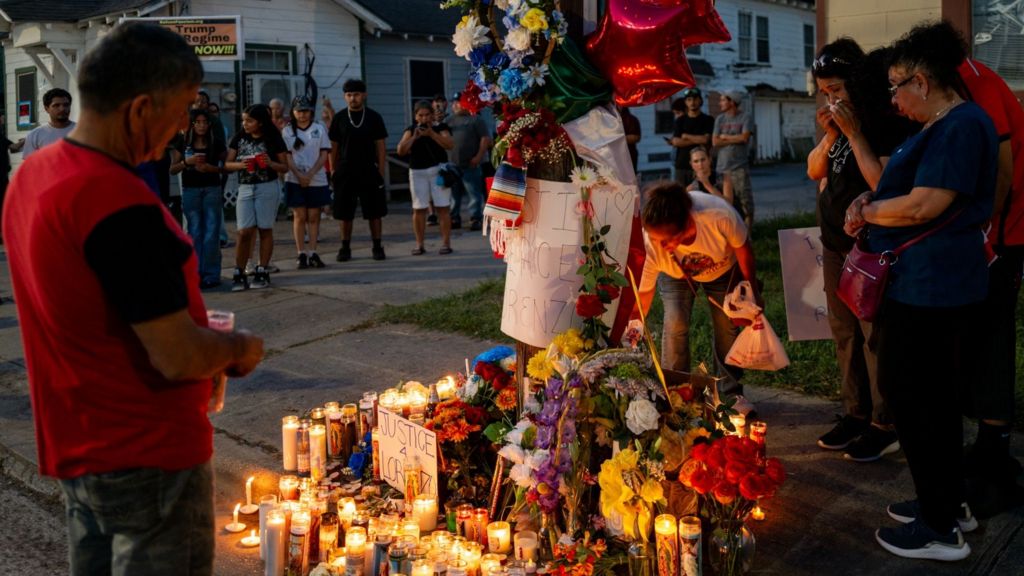
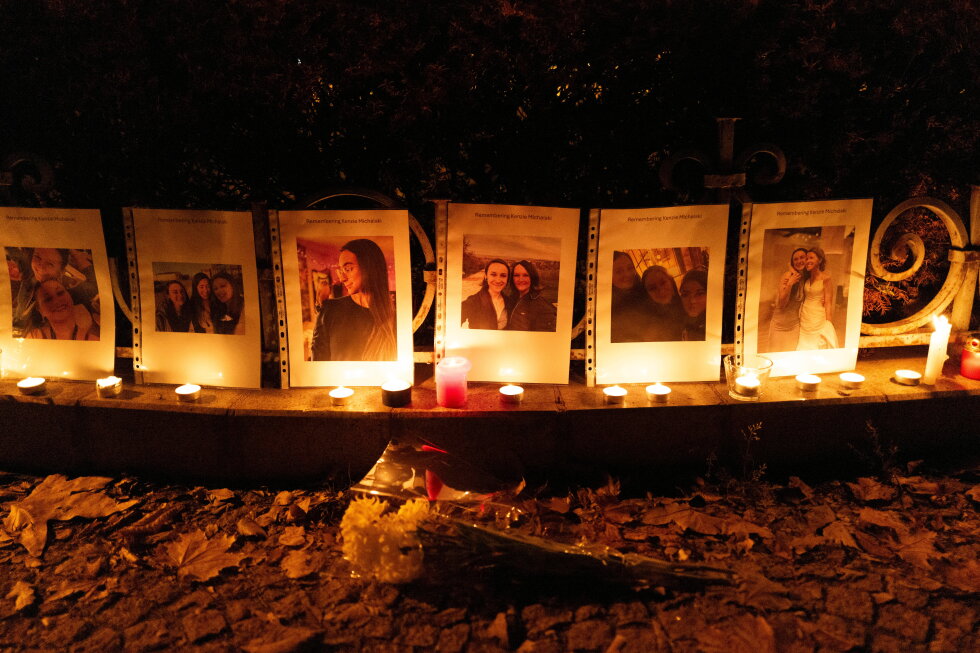
    The horrific attack unfolded on April 2, when Onyum gained entry to the Ggaba Early Childhood Development Program and fatally stabbed all four young children: Eteku Gideon, Keisha Agenorwoth, Sseruyange Ignatius and Odeke Ryan. The crime shocked communities across the East African nation, prompting authorities to hold the trial in a makeshift community courtroom located near the site of the killings to allow local residents to follow proceedings.

    During the trial, prosecutors laid out a overwhelming multi-source case against Onyum, built from 18 witness testimonies, forensic DNA evidence linking the defendant to the handle of the murder weapon (a kitchen knife), closed-circuit television footage that tracked his movements in the hours leading up to the attack, and telecommunications data that placed him at the nursery during the time of the killings. Two daycare workers also told the court they directly observed Onyum assaulting the defenseless children.

    Case records show Onyum initially confessed to the killings to investigators, claiming the attack was a deliberate human sacrifice he carried out in the belief it would bring him wealth. However, he later reversed that plea, entered a not guilty plea, and claimed he was suffering from a severe mental health crisis at the time of the attack that stripped him of the ability to form intent to kill. He urged the court to acquit him on the grounds of legal insanity.

    Delivering the final judgment, Justice Alice Komuhangi Khauka rejected the insanity defense, concluding that Onyum was fully legally sane when he carried out the attacks. In her ruling, she condemned the brutality of the crime, noting that Onyum deliberately targeted children in their most vulnerable state, slaughtered them in a cruel manner without any regard for human life, and had never shown any remorse for his actions. “I have also considered that the convict has not shown any remorse at all, because I would have at least expected an apology from him to the families of the babies,” Justice Khauka stated in her ruling, according to Agence France-Presse.

    Following the judge’s announcement of the death sentence, the crowd of local residents gathered in the courtroom erupted in cheers.

    Uganda has not abolished capital punishment, though the practice has been extremely rare in recent decades: the last officially recorded execution in the country took place more than 20 years ago, in 2005. Onyum now has a 14-day window to file an appeal against his conviction and sentence with a higher court.

  • Mexico demands evidence behind US drug charges against governor

    Mexico demands evidence behind US drug charges against governor

    In a major development that has escalated cross-border diplomatic friction, Mexico’s President Claudia Sheinbaum has publicly stated that Mexico will only act on a potential extradition request for a sitting state governor if Washington provides irrefutable evidence to back up unprecedented U.S. drug trafficking charges. The bombshell accusations were announced Wednesday by the U.S. Department of Justice, which named Sinaloa Governor Ruben Rocha Moya and nine other individuals as co-conspirators collaborating with the infamous Sinaloa Cartel to smuggle massive volumes of illicit narcotics into the United States. Rocha Moya, who has led the violence-plagued northern Mexican state since 2021, is a prominent member of Sheinbaum’s own left-leaning Morena party and a close political ally of former president Andres Manuel Lopez Obrador, the movement’s founder. With a 40-year career in Mexican public service, the 76-year-old governor has previously served as a state legislator, president of the University of Sinaloa, senior advisor to two prior Sinaloa governors, and the state party leader for Morena. Speaking at her regular morning press briefing on Thursday, Sheinbaum laid out a clear legal framework for moving forward: if Mexico’s Attorney General’s Office receives conclusive, lawfully compliant evidence from U.S. authorities, or uncovers evidence of criminal wrongdoing through its own independent investigation, it will fulfill its obligations under any extradition request. However, Sheinbaum added that if sufficient evidence never materializes, it will become clear that the Justice Department’s allegations are rooted in political motives rather than legal fact. Hours after the charges were made public, Rocha Moya took to social media to reject the accusations outright, framing them as a deliberate political attack on Morena, Mexico’s ruling populist movement. Notably, all other nine individuals facing U.S. charges are also affiliated with the Morena party. Sheinbaum emphasized that this marks the first occasion in history that the United States has publicly unsealed narcotrafficking charges against a sitting Mexican governor or any similarly high-ranking sitting Mexican official. Reaffirming her government’s commitment to accountability, the president stressed “We aren’t going to protect anyone.” This unprecedented legal action comes at a moment when bilateral relations between Mexico and the Trump administration are already stretched thin. Recent weeks have seen tensions rise following the death of two U.S. agents, widely reported to be CIA personnel, during an operation linked to a drug seizure. The pair died in a car crash in the northern border state of Chihuahua, and Mexican authorities confirmed the agents had never obtained formal permission from Sheinbaum’s government to conduct operations on Mexican soil. The Sinaloa Cartel, one of Mexico’s most powerful transnational criminal organizations, is among six Mexican drug trafficking groups that the Trump administration has formally designated as foreign terrorist organizations. For months, Washington has pressured Sheinbaum to approve expanded U.S. counter-cartel intervention inside Mexico, including proposals for unilateral drone strikes and the deployment of U.S. military personnel. While the Mexican president has expressed openness to deeper bilateral cooperation on intelligence sharing, she has repeatedly rejected any deployment of U.S. armed forces on Mexican territory, calling such a move a direct violation of Mexico’s national sovereignty and political independence.

  • Telegraph and Politico owner says journalists must support Israel or resign

    Telegraph and Politico owner says journalists must support Israel or resign

    A fierce debate over journalistic independence has erupted across global media properties owned by German media giant Axel Springer, after CEO Mathias Dopfner explicitly told staffers that unwavering support for Israel is a non-negotiable core condition of employment at the company’s outlets, including Politico and the newly acquired Telegraph. The confrontation has thrown a harsh spotlight on the ideological direction of Axel Springer’s expanding international media empire, raising urgent questions about whether top-down political demands will skew impartial news coverage of the ongoing Israel-Gaza conflict.

    The controversy came to a head this week during a charged internal company meeting, convened after a group of Politico journalists submitted an open letter to incoming editor-in-chief Jonathan Greenberger. In the letter, the journalists accused Dopfner — a media magnate long nicknamed “Germany’s Rupert Murdoch” for his outsized political influence and consolidated media holdings — of leveraging the publication to advance his personal partisan political agenda. The letter noted that Dopfner’s recent public opinion pieces have already put Politico’s hard-won reputation as an impartial, trusted political news outlet at serious risk, according to reporting from Jewish Insider.

    Axel Springer first acquired Politico, the leading U.S. and European political news platform, in a 2021 deal, and only secured regulatory approval to purchase the iconic UK title The Daily Telegraph earlier this month. That acquisition has amplified industry and newsroom concerns that the ideological mandates set by company leadership will reshape editorial standards and coverage lines across all of Axel Springer’s properties, particularly its coverage of Israel. Israel is currently facing allegations of genocide at the International Court of Justice, stemming from its military campaign in Gaza that has killed at least 72,599 people and injured more than 172,410 others to date.

    During the meeting, Dopfner doubled down on his stance, framing loyalty to Israel as a central component of the company’s five publicly stated core values, which it calls the “essentials”: freedom, free markets, individual autonomy, freedom of speech, and explicit support for Israel. He placed support for Israel immediately after the four foundational principles, and made clear that anyone who questions this mandate is not aligned with the company’s identity. “If that is something that somebody wants to question, then we are really reaching the very fundamental principles of our values,” Dopfner told assembled staff. “And that then may lead simply to the decision that, because we are very transparent about it, it is then an individual decision whether Axel Springer and somebody who has so fundamentally different beliefs is really a good fit.”

    This mandate is far from an out-of-character statement for Dopfner: it follows a years-long pattern of provocative pro-Israel rhetoric that has sparked controversy. Last year, a leaked internal email published by German outlet Die Zeit ended with the line: “Zionism uber alles. Israel my country.” The phrase “Zionism uber alles” carries uniquely toxic baggage in Germany, as the identical wording opened the national anthem during the Nazi era, and became a symbol of ideological supremacism. The remark drew widespread condemnation across German political and media circles when it was leaked.
    The controversy has also drawn attention to Dopfner’s close ties to the Israeli government: in October 2023, Israeli President Isaac Herzog awarded Dopfner the Israeli Presidential Medal of Honor, alongside Miriam Adelson, a prominent casino billionaire, major pro-Israel political donor, and owner of the NHL’s Dallas Stars.

    During the internal meeting, journalists pushed back directly against Dopfner’s pattern of editorial intervention, calling for stricter fact-checking and evidentiary standards for opinion pieces written by the CEO himself. In one specific exchange, staffers criticized Dopfner for an opinion piece that referred to Iran as an aggressor systematically pursuing nuclear weapons, arguing the claim was misleading and required additional context and clarification. Iran has consistently and repeatedly denied any plans to develop a nuclear weapon, a fact that went unmentioned in Dopfner’s piece. Notably, while Dopfner described the claim that America is the world’s largest democracy as a self-evident fact that requires no proof, global demographic rankings widely recognize India, with a population of 1.4 billion, as the world’s largest democracy.

    Dopfner rejected the criticism entirely, arguing that his claims about Iran were beyond debate. “I think you have to qualify or prove arguments or points if they are new or if they are debatable – but for me at least, these two facts – that the Iranians are working on the nuclear bomb and that they are aggressors for decades – are so obvious, so proven for many times, they are almost – it’s like saying America is the biggest democracy in the world,” he said. “I don’t have to prove that.” He closed by confirming that he plans to expand his opinion writing, not scale it back, telling staff he intends to “write more in the future, not less.”

    The ongoing confrontation has intensified broader scrutiny of media consolidation and top-down ideological control in global news, as newsroom advocates warn that mandatory loyalty oaths for journalists set a dangerous precedent that undermines the public’s trust in independent news coverage.

  • Will UAE’s exit spell the end of OPEC?

    Will UAE’s exit spell the end of OPEC?

    After nearly six decades as a core member of the Organization of the Petroleum Exporting Countries (OPEC), the United Arab Emirates’ decision to withdraw from the oil cartel is far more than a symbolic rupture. This unprecedented move lays bare a widening rift between major producing nations over how to adapt to a rapidly shifting global energy landscape, and it will fundamentally erode the bloc’s ability to regulate international crude supplies.

    In the immediate term, the practical impact of the UAE’s departure will remain muted. Global markets still crave every available barrel of oil, and the UAE accounts for just 3 to 4 percent of total worldwide output. But the underlying forces driving the decision carry far greater weight than the exit itself, shaped by a convergence of long-simmering economic tensions and shifting geopolitical priorities that have been accelerated by the ongoing war in Iran.

    For more than a decade, the UAE has poured roughly $150 billion into expanding its crude production capacity, pushing its maximum potential daily output to nearly 5 million barrels. Yet OPEC’s quota system, which is overwhelmingly shaped by de facto bloc leader Saudi Arabia, has barred the UAE from fully utilizing this expanded capacity. Restricted to a daily output of around 3.5 million barrels to keep global supplies tight and prices elevated, the country has been forced to leave more than 1.5 million barrels of daily production capacity idle.

    This mismatch between investment and output has created deep, unresolved tension within the cartel: why pour billions into expanding production if regulatory limits prevent you from selling the extra oil?

    Abu Dhabi’s approach to this question stems from its fundamentally different economic model compared to other major Gulf producers. Unlike Saudi Arabia, which requires an oil price of roughly $90 per barrel to balance its national budget, the UAE can balance its fiscal accounts at prices just below $50 per barrel. This lower break-even point removes much of the incentive for the UAE to support production caps. Instead, the country has centered its strategy on maximizing oil export volumes in the near term.

    This priority is also rooted in long-term projections for global energy demand. as major economies including China rapidly accelerate the transition to electric transportation, long-standing steady growth in oil demand is slowing and is projected to plateau in the coming decades. The UAE is also further along in its own energy transition planning than Saudi Arabia, with a net-zero emissions target for 2050 compared to Riyadh’s 2060 target. From Abu Dhabi’s perspective, the greatest long-term risk is not falling oil prices, but leaving valuable untapped crude in the ground that will never find a buyer as demand declines.

    The timing of the exit is not driven by economics alone. It also reflects a major shift in the UAE’s political and security calculations, particularly in the wake of sustained heavy attacks on the country’s energy infrastructure during the war in Iran. In Abu Dhabi, a growing consensus has emerged that key regional partnerships such as the Gulf Cooperation Council (GCC) offered very little tangible support to the country during this period of crisis.

    Anwar Gargash, a senior presidential adviser to the UAE government, framed this disillusionment publicly when speaking to reporters. “The GCC’s stance was the weakest historically, considering the nature of the attack and the threat it posed to everyone,” Gargash said, adding “I expected such a weak stance from the Arab League … But I don’t expect it from the GCC, and I am surprised by it.”

    This experience has reinforced the UAE’s push for a more independent foreign policy. Over recent years, the country has deepened security and economic ties with the United States and Israel, building on the 2020 Abraham Accords it signed alongside other Gulf states. Abu Dhabi views its relationship with Israel not only as a direct bilateral economic and security partnership, but also as a key channel for expanding its influence within U.S. political circles. At the same time, bilateral relations between the UAE and Saudi Arabia have grown increasingly strained, with public divisions emerging over both regional conflicts in Yemen and Somalia and conflicting national energy strategies. Against this backdrop, exiting OPEC serves both as an economic adjustment and a clear signal of the UAE’s growing geopolitical independence.

    The UAE’s departure also raises urgent questions about the future cohesion and relevance of OPEC itself. At the height of its power, the cartel controlled more than half of global crude production. Today, that share has fallen to no more than 35 percent, and internal disagreements over production quotas have grown far more pronounced. Quotas, which have long been the core of OPEC’s collective strategy, are increasingly viewed by smaller members as unfair, uneven constraints rather than shared commitments that benefit the entire bloc. Today, only Saudi Arabia holds significant spare production capacity, giving it disproportionate influence over the bloc’s decision-making. The result is an organization that still shapes global market sentiment, but is far less cohesive and unified than it was in previous decades.

    Contrary to some analysis, the UAE’s exit is not an unambiguous win for the United States. Many observers have framed the move as a victory for former U.S. President Donald Trump, who repeatedly criticized OPEC for keeping crude prices elevated. A weaker, more fragmented OPEC would likely lead to higher overall output and lower gasoline prices for U.S. consumers in the short term. However, sustained lower prices would also put significant pressure on higher-cost U.S. shale producers, which have emerged as one of OPEC’s most formidable competitors in recent years. U.S. producers actually benefited from the cartel’s production restraint, which kept prices high enough to support the high costs of shale extraction. What looks like a short-term geopolitical win could therefore turn into a major economic challenge for the U.S. oil sector over time.

    For the moment, the UAE’s exit will not dramatically reshape global oil markets. Current demand is strong enough to absorb the extra supply the UAE can bring online, particularly as global markets rebuild inventories following the reopening of the Strait of Hormuz after the war in Iran. But the deeper significance of the decision lies in what it reveals about the coming transformation of global oil markets.

    Oil producers are no longer united around a single collective strategy. Some, led by Saudi Arabia, continue to prioritize managing scarcity to keep prices elevated. Others, like the UAE, are racing to monetize their existing reserves before demand peaks and their oil becomes stranded, unusable assets. This strategic divergence is only expected to deepen in the coming years, and it may ultimately prove more consequential for global energy markets than any single country’s departure from the OPEC cartel.

    This analysis is by Adi Imsirovic, a lecturer in energy systems at the University of Oxford, republished with permission under a Creative Commons license.

  • ‘It’s just ridiculous’: Michigan residents react to gas prices

    ‘It’s just ridiculous’: Michigan residents react to gas prices

    In the region just north of Detroit, the beating heart of America’s automotive sector, local residents are growing increasingly frustrated with sky-high gasoline prices that are squeezing household budgets across the state. As the auto industry remains the primary engine of Michigan’s economy, most workers and families rely heavily on personal vehicles to commute to jobs, shuttle kids to school, and carry out daily tasks – leaving them disproportionately vulnerable to sudden spikes at the pump. What was already a tight financial situation for many working-class households has been made even worse by the unrelenting rise in fuel costs, prompting sharp pushback from community members. Many locals are describing the current price levels as simply unjustifiable, with one resident summing up the widespread frustration by calling the situation “just ridiculous”. The growing discontent among Michigan residents highlights how fuel price inflation hits regions built around auto manufacturing particularly hard, where car ownership is not a luxury but an absolute necessity for everyday life.

  • Trainee driver crashes bus into River Seine

    Trainee driver crashes bus into River Seine

    On a Thursday morning just south of Paris, a startling incident unfolded when a bus under the control of a trainee driver careened off the road, collided with a parked vehicle, and ended up submerged in the Seine River. The accident took place in the commune of Juvisy-sur-Orge, located roughly 20 kilometers outside the French capital, at a point when the trainee was approaching the final stages of her hands-on practical driving training, regional transport officials confirmed.

    Initial toxicology screenings for both drugs and alcohol have returned negative results, a spokesperson for Île-de-France Mobilités, the local transport governing body, announced. With no obvious impairment identified, the root cause of the sudden loss of control remains under active investigation as of the latest updates.

    At the time of the crash, the trainee was accompanied in the bus by an experienced lead driving instructor and two additional passengers, bringing the total number of people on board to four. Immediately after the vehicle plunged into the river, a massive multi-agency emergency response was launched, drawing in more than 90 personnel including firefighters, specialist divers, and police officers. France’s national river brigade also joined the rescue effort, with teams deploying multiple rescue boats, an aerial drone, and helicopters to search the site and extract those trapped inside the submerged bus.

    All four people on the bus were successfully pulled from the water, local mayor Lamia Bensara Reda confirmed in a public statement posted to Facebook. “Everyone was quickly rescued and, thankfully, is safe and sound,” Reda said, noting that the driver lost control of the vehicle near a riverside station before it dragged the parked car into the Seine with it. Local politician Claire Lejeune echoed this update in a post to social platform X, thanking first responders for their rapid, effective intervention.

    As of 11:00 a.m. local time on the day of the incident, the wrecked bus remained visible in the river, according to reporting from French news agency Agence France-Presse. Regional authorities from the L’Esson prefecture stated that details around potential casualties are still being finalized, while the head of Île-de-France Mobilités has ordered an internal administrative investigation alongside the official probe to unpack the full circumstances of the crash.

  • Ukraine expands oil strikes on Russia as Putin proposes brief ceasefire

    Ukraine expands oil strikes on Russia as Putin proposes brief ceasefire

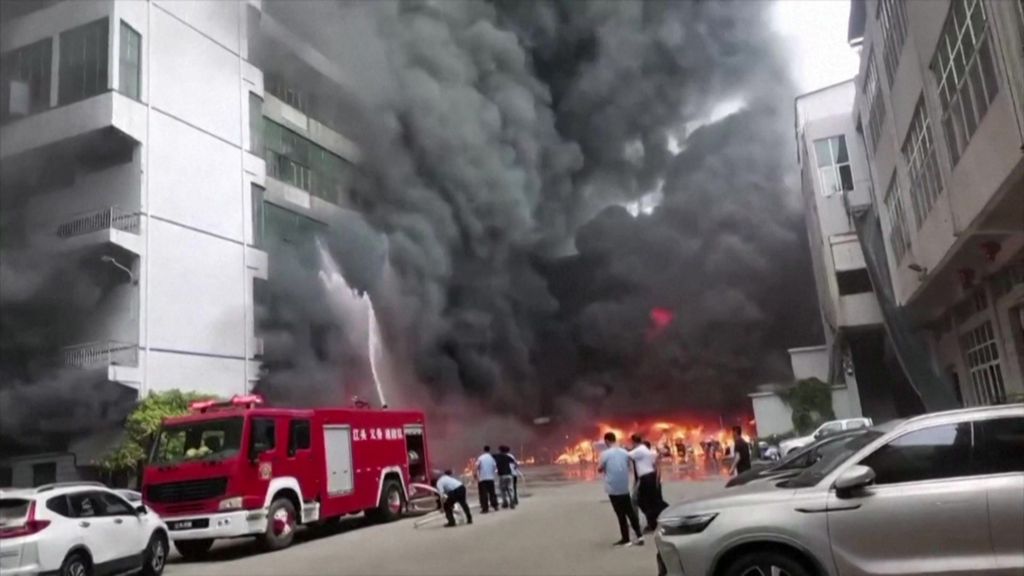
    In a significant escalation of cross-border strikes amid the ongoing four-year full-scale invasion of Ukraine, Ukrainian drones have targeted a major Lukoil oil pumping and refining complex near Perm, a city in central Russia more than 1,500 kilometers from the active front line, triggering a massive smoke plume that was captured in dramatic social media footage.

    Ukraine’s Security Service (SBU) confirmed it carried out the attack on the facility, one of Russia’s largest oil refining hubs. Visuals shared across online platforms showed towering columns of black smoke and visible flames billowing from the site, and an initial chemical emergency alert was issued for multiple districts of Perm. Local city officials later walked back the alert, framing it as a routine safety test, a move aligned with a broader pattern of Russian authorities downplaying the impact of Ukrainian strikes on domestic infrastructure.

    This Perm strike is the second attack on critical Russian energy infrastructure in the same region within a single week. Earlier this week, the SBU announced it had disabled a key strategic hub for Russia’s national oil pipeline network, also located in Perm. Further north along the Black Sea coast, multiple strikes on oil facilities in Tuapse earlier this month caused extensive oil contamination, with local residents sharing images on Telegram of oil slicks spreading across coastal waters, black petroleum puddles on local roads, and wild animals coated in sticky oil residue.

    The increasing frequency of deep-penetration drone attacks on Russian territory has become an unavoidable source of concern for the Kremlin, even as official statements continue to minimize their strategic impact. This mounting security threat has already forced tangible policy changes: on Wednesday, the Kremlin announced it would scale back its annual May 9 Victory Day military parade, the iconic holiday marking the defeat of Nazi Germany in World War II, explicitly citing “terrorist threats” originating from Ukraine.

    Later that same day, Russian President Vladimir Putin held a 90-minute phone call with former U.S. President Donald Trump, during which Putin put forward a proposal for a one-day ceasefire to coincide with the Victory Day holiday. Yuri Ushakov, Putin’s senior diplomatic advisor, confirmed that Trump had expressed active support for the initiative, noting that the holiday represents a shared victory over Nazi Germany between the two countries.

    Ukrainian President Volodymyr Zelensky responded cautiously to the offer, saying Kyiv would seek additional clarification from U.S. officials on the details of the proposal. “We will clarify what exactly this is about — a few hours of security for a parade in Moscow, or something more,” Zelensky said, adding that Ukraine remains committed to its original proposal for a long-term ceasefire and a lasting, sovereign peace.

    This proposed temporary truce follows a long pattern of limited, short-lived ceasefires that have been implemented since the full-scale invasion began in 2022. Most of these prior truces have been tied to major holidays, restricted solely to energy infrastructure, or limited to the Black Sea grain initiative. Ukraine has repeatedly pushed for a comprehensive permanent peace agreement, while Russia has refused to enter into such talks unless Kyiv agrees to cede control of occupied sovereign Ukrainian territories to Moscow.

    During the call, Ushakov said Trump asked Putin to share his assessment of frontline conditions in Ukraine. Putin claimed to the former U.S. president that Russian forces maintain the strategic initiative and are continuing to push back Ukrainian positions. This characterization directly contradicts independent assessments from military analysts and recent on-the-ground developments.

    Over the past several months, Ukrainian forces have retaken portions of occupied Russian territory, capitalizing on technological advances in long-range strike capabilities and slowed Russian recruitment efforts that have stretched Moscow’s frontline forces thin. The U.S.-based Institute for the Study of War (ISW) noted in a recent analysis that Kyiv’s military operations are inflicting mounting casualties and operational costs on Russian troops. The ISW added that the Kremlin is likely overstating its progress to frame the conflict as nearing a Russian victory, in an effort to mitigate growing international and domestic pressure over the mounting costs of the war.

    The background of this latest strike is rooted in Russia’s ongoing regular aerial bombardment of Ukrainian civilian areas. Just on Wednesday night, a new Russian airstrike on Ukrainian population centers killed at least three civilians and injured 79 more, including one child, continuing a pattern of attacks that has killed thousands of Ukrainian civilians and displaced millions more since the full-scale invasion began.