作者: admin

  • Telegraph and Politico owner says journalists must support Israel or resign

    Telegraph and Politico owner says journalists must support Israel or resign

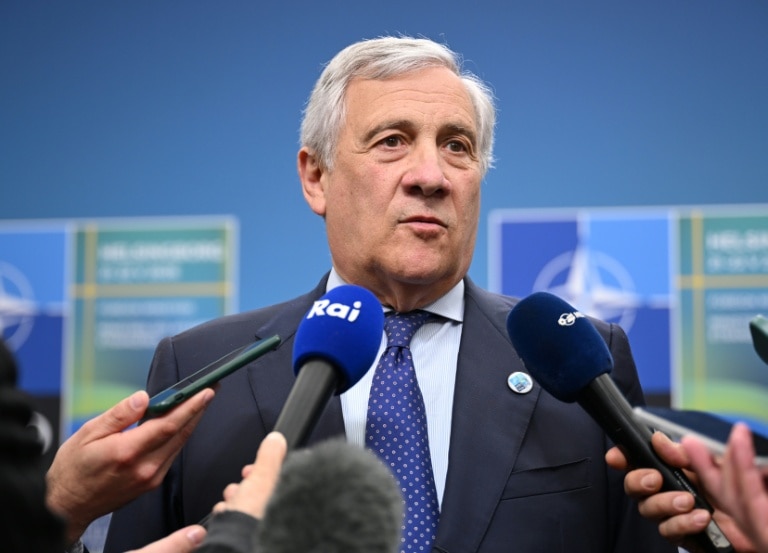
    A fierce debate over journalistic independence has erupted across global media properties owned by German media giant Axel Springer, after CEO Mathias Dopfner explicitly told staffers that unwavering support for Israel is a non-negotiable core condition of employment at the company’s outlets, including Politico and the newly acquired Telegraph. The confrontation has thrown a harsh spotlight on the ideological direction of Axel Springer’s expanding international media empire, raising urgent questions about whether top-down political demands will skew impartial news coverage of the ongoing Israel-Gaza conflict.

    The controversy came to a head this week during a charged internal company meeting, convened after a group of Politico journalists submitted an open letter to incoming editor-in-chief Jonathan Greenberger. In the letter, the journalists accused Dopfner — a media magnate long nicknamed “Germany’s Rupert Murdoch” for his outsized political influence and consolidated media holdings — of leveraging the publication to advance his personal partisan political agenda. The letter noted that Dopfner’s recent public opinion pieces have already put Politico’s hard-won reputation as an impartial, trusted political news outlet at serious risk, according to reporting from Jewish Insider.

    Axel Springer first acquired Politico, the leading U.S. and European political news platform, in a 2021 deal, and only secured regulatory approval to purchase the iconic UK title The Daily Telegraph earlier this month. That acquisition has amplified industry and newsroom concerns that the ideological mandates set by company leadership will reshape editorial standards and coverage lines across all of Axel Springer’s properties, particularly its coverage of Israel. Israel is currently facing allegations of genocide at the International Court of Justice, stemming from its military campaign in Gaza that has killed at least 72,599 people and injured more than 172,410 others to date.

    During the meeting, Dopfner doubled down on his stance, framing loyalty to Israel as a central component of the company’s five publicly stated core values, which it calls the “essentials”: freedom, free markets, individual autonomy, freedom of speech, and explicit support for Israel. He placed support for Israel immediately after the four foundational principles, and made clear that anyone who questions this mandate is not aligned with the company’s identity. “If that is something that somebody wants to question, then we are really reaching the very fundamental principles of our values,” Dopfner told assembled staff. “And that then may lead simply to the decision that, because we are very transparent about it, it is then an individual decision whether Axel Springer and somebody who has so fundamentally different beliefs is really a good fit.”

    This mandate is far from an out-of-character statement for Dopfner: it follows a years-long pattern of provocative pro-Israel rhetoric that has sparked controversy. Last year, a leaked internal email published by German outlet Die Zeit ended with the line: “Zionism uber alles. Israel my country.” The phrase “Zionism uber alles” carries uniquely toxic baggage in Germany, as the identical wording opened the national anthem during the Nazi era, and became a symbol of ideological supremacism. The remark drew widespread condemnation across German political and media circles when it was leaked.
    The controversy has also drawn attention to Dopfner’s close ties to the Israeli government: in October 2023, Israeli President Isaac Herzog awarded Dopfner the Israeli Presidential Medal of Honor, alongside Miriam Adelson, a prominent casino billionaire, major pro-Israel political donor, and owner of the NHL’s Dallas Stars.

    During the internal meeting, journalists pushed back directly against Dopfner’s pattern of editorial intervention, calling for stricter fact-checking and evidentiary standards for opinion pieces written by the CEO himself. In one specific exchange, staffers criticized Dopfner for an opinion piece that referred to Iran as an aggressor systematically pursuing nuclear weapons, arguing the claim was misleading and required additional context and clarification. Iran has consistently and repeatedly denied any plans to develop a nuclear weapon, a fact that went unmentioned in Dopfner’s piece. Notably, while Dopfner described the claim that America is the world’s largest democracy as a self-evident fact that requires no proof, global demographic rankings widely recognize India, with a population of 1.4 billion, as the world’s largest democracy.

    Dopfner rejected the criticism entirely, arguing that his claims about Iran were beyond debate. “I think you have to qualify or prove arguments or points if they are new or if they are debatable – but for me at least, these two facts – that the Iranians are working on the nuclear bomb and that they are aggressors for decades – are so obvious, so proven for many times, they are almost – it’s like saying America is the biggest democracy in the world,” he said. “I don’t have to prove that.” He closed by confirming that he plans to expand his opinion writing, not scale it back, telling staff he intends to “write more in the future, not less.”

    The ongoing confrontation has intensified broader scrutiny of media consolidation and top-down ideological control in global news, as newsroom advocates warn that mandatory loyalty oaths for journalists set a dangerous precedent that undermines the public’s trust in independent news coverage.

  • Will UAE’s exit spell the end of OPEC?

    Will UAE’s exit spell the end of OPEC?

    After nearly six decades as a core member of the Organization of the Petroleum Exporting Countries (OPEC), the United Arab Emirates’ decision to withdraw from the oil cartel is far more than a symbolic rupture. This unprecedented move lays bare a widening rift between major producing nations over how to adapt to a rapidly shifting global energy landscape, and it will fundamentally erode the bloc’s ability to regulate international crude supplies.

    In the immediate term, the practical impact of the UAE’s departure will remain muted. Global markets still crave every available barrel of oil, and the UAE accounts for just 3 to 4 percent of total worldwide output. But the underlying forces driving the decision carry far greater weight than the exit itself, shaped by a convergence of long-simmering economic tensions and shifting geopolitical priorities that have been accelerated by the ongoing war in Iran.

    For more than a decade, the UAE has poured roughly $150 billion into expanding its crude production capacity, pushing its maximum potential daily output to nearly 5 million barrels. Yet OPEC’s quota system, which is overwhelmingly shaped by de facto bloc leader Saudi Arabia, has barred the UAE from fully utilizing this expanded capacity. Restricted to a daily output of around 3.5 million barrels to keep global supplies tight and prices elevated, the country has been forced to leave more than 1.5 million barrels of daily production capacity idle.

    This mismatch between investment and output has created deep, unresolved tension within the cartel: why pour billions into expanding production if regulatory limits prevent you from selling the extra oil?

    Abu Dhabi’s approach to this question stems from its fundamentally different economic model compared to other major Gulf producers. Unlike Saudi Arabia, which requires an oil price of roughly $90 per barrel to balance its national budget, the UAE can balance its fiscal accounts at prices just below $50 per barrel. This lower break-even point removes much of the incentive for the UAE to support production caps. Instead, the country has centered its strategy on maximizing oil export volumes in the near term.

    This priority is also rooted in long-term projections for global energy demand. as major economies including China rapidly accelerate the transition to electric transportation, long-standing steady growth in oil demand is slowing and is projected to plateau in the coming decades. The UAE is also further along in its own energy transition planning than Saudi Arabia, with a net-zero emissions target for 2050 compared to Riyadh’s 2060 target. From Abu Dhabi’s perspective, the greatest long-term risk is not falling oil prices, but leaving valuable untapped crude in the ground that will never find a buyer as demand declines.

    The timing of the exit is not driven by economics alone. It also reflects a major shift in the UAE’s political and security calculations, particularly in the wake of sustained heavy attacks on the country’s energy infrastructure during the war in Iran. In Abu Dhabi, a growing consensus has emerged that key regional partnerships such as the Gulf Cooperation Council (GCC) offered very little tangible support to the country during this period of crisis.

    Anwar Gargash, a senior presidential adviser to the UAE government, framed this disillusionment publicly when speaking to reporters. “The GCC’s stance was the weakest historically, considering the nature of the attack and the threat it posed to everyone,” Gargash said, adding “I expected such a weak stance from the Arab League … But I don’t expect it from the GCC, and I am surprised by it.”

    This experience has reinforced the UAE’s push for a more independent foreign policy. Over recent years, the country has deepened security and economic ties with the United States and Israel, building on the 2020 Abraham Accords it signed alongside other Gulf states. Abu Dhabi views its relationship with Israel not only as a direct bilateral economic and security partnership, but also as a key channel for expanding its influence within U.S. political circles. At the same time, bilateral relations between the UAE and Saudi Arabia have grown increasingly strained, with public divisions emerging over both regional conflicts in Yemen and Somalia and conflicting national energy strategies. Against this backdrop, exiting OPEC serves both as an economic adjustment and a clear signal of the UAE’s growing geopolitical independence.

    The UAE’s departure also raises urgent questions about the future cohesion and relevance of OPEC itself. At the height of its power, the cartel controlled more than half of global crude production. Today, that share has fallen to no more than 35 percent, and internal disagreements over production quotas have grown far more pronounced. Quotas, which have long been the core of OPEC’s collective strategy, are increasingly viewed by smaller members as unfair, uneven constraints rather than shared commitments that benefit the entire bloc. Today, only Saudi Arabia holds significant spare production capacity, giving it disproportionate influence over the bloc’s decision-making. The result is an organization that still shapes global market sentiment, but is far less cohesive and unified than it was in previous decades.

    Contrary to some analysis, the UAE’s exit is not an unambiguous win for the United States. Many observers have framed the move as a victory for former U.S. President Donald Trump, who repeatedly criticized OPEC for keeping crude prices elevated. A weaker, more fragmented OPEC would likely lead to higher overall output and lower gasoline prices for U.S. consumers in the short term. However, sustained lower prices would also put significant pressure on higher-cost U.S. shale producers, which have emerged as one of OPEC’s most formidable competitors in recent years. U.S. producers actually benefited from the cartel’s production restraint, which kept prices high enough to support the high costs of shale extraction. What looks like a short-term geopolitical win could therefore turn into a major economic challenge for the U.S. oil sector over time.

    For the moment, the UAE’s exit will not dramatically reshape global oil markets. Current demand is strong enough to absorb the extra supply the UAE can bring online, particularly as global markets rebuild inventories following the reopening of the Strait of Hormuz after the war in Iran. But the deeper significance of the decision lies in what it reveals about the coming transformation of global oil markets.

    Oil producers are no longer united around a single collective strategy. Some, led by Saudi Arabia, continue to prioritize managing scarcity to keep prices elevated. Others, like the UAE, are racing to monetize their existing reserves before demand peaks and their oil becomes stranded, unusable assets. This strategic divergence is only expected to deepen in the coming years, and it may ultimately prove more consequential for global energy markets than any single country’s departure from the OPEC cartel.

    This analysis is by Adi Imsirovic, a lecturer in energy systems at the University of Oxford, republished with permission under a Creative Commons license.

  • ‘It’s just ridiculous’: Michigan residents react to gas prices

    ‘It’s just ridiculous’: Michigan residents react to gas prices

    In the region just north of Detroit, the beating heart of America’s automotive sector, local residents are growing increasingly frustrated with sky-high gasoline prices that are squeezing household budgets across the state. As the auto industry remains the primary engine of Michigan’s economy, most workers and families rely heavily on personal vehicles to commute to jobs, shuttle kids to school, and carry out daily tasks – leaving them disproportionately vulnerable to sudden spikes at the pump. What was already a tight financial situation for many working-class households has been made even worse by the unrelenting rise in fuel costs, prompting sharp pushback from community members. Many locals are describing the current price levels as simply unjustifiable, with one resident summing up the widespread frustration by calling the situation “just ridiculous”. The growing discontent among Michigan residents highlights how fuel price inflation hits regions built around auto manufacturing particularly hard, where car ownership is not a luxury but an absolute necessity for everyday life.

  • Trainee driver crashes bus into River Seine

    Trainee driver crashes bus into River Seine

    On a Thursday morning just south of Paris, a startling incident unfolded when a bus under the control of a trainee driver careened off the road, collided with a parked vehicle, and ended up submerged in the Seine River. The accident took place in the commune of Juvisy-sur-Orge, located roughly 20 kilometers outside the French capital, at a point when the trainee was approaching the final stages of her hands-on practical driving training, regional transport officials confirmed.

    Initial toxicology screenings for both drugs and alcohol have returned negative results, a spokesperson for Île-de-France Mobilités, the local transport governing body, announced. With no obvious impairment identified, the root cause of the sudden loss of control remains under active investigation as of the latest updates.

    At the time of the crash, the trainee was accompanied in the bus by an experienced lead driving instructor and two additional passengers, bringing the total number of people on board to four. Immediately after the vehicle plunged into the river, a massive multi-agency emergency response was launched, drawing in more than 90 personnel including firefighters, specialist divers, and police officers. France’s national river brigade also joined the rescue effort, with teams deploying multiple rescue boats, an aerial drone, and helicopters to search the site and extract those trapped inside the submerged bus.

    All four people on the bus were successfully pulled from the water, local mayor Lamia Bensara Reda confirmed in a public statement posted to Facebook. “Everyone was quickly rescued and, thankfully, is safe and sound,” Reda said, noting that the driver lost control of the vehicle near a riverside station before it dragged the parked car into the Seine with it. Local politician Claire Lejeune echoed this update in a post to social platform X, thanking first responders for their rapid, effective intervention.

    As of 11:00 a.m. local time on the day of the incident, the wrecked bus remained visible in the river, according to reporting from French news agency Agence France-Presse. Regional authorities from the L’Esson prefecture stated that details around potential casualties are still being finalized, while the head of Île-de-France Mobilités has ordered an internal administrative investigation alongside the official probe to unpack the full circumstances of the crash.

  • Ukraine expands oil strikes on Russia as Putin proposes brief ceasefire

    Ukraine expands oil strikes on Russia as Putin proposes brief ceasefire

    In a significant escalation of cross-border strikes amid the ongoing four-year full-scale invasion of Ukraine, Ukrainian drones have targeted a major Lukoil oil pumping and refining complex near Perm, a city in central Russia more than 1,500 kilometers from the active front line, triggering a massive smoke plume that was captured in dramatic social media footage.

    Ukraine’s Security Service (SBU) confirmed it carried out the attack on the facility, one of Russia’s largest oil refining hubs. Visuals shared across online platforms showed towering columns of black smoke and visible flames billowing from the site, and an initial chemical emergency alert was issued for multiple districts of Perm. Local city officials later walked back the alert, framing it as a routine safety test, a move aligned with a broader pattern of Russian authorities downplaying the impact of Ukrainian strikes on domestic infrastructure.

    This Perm strike is the second attack on critical Russian energy infrastructure in the same region within a single week. Earlier this week, the SBU announced it had disabled a key strategic hub for Russia’s national oil pipeline network, also located in Perm. Further north along the Black Sea coast, multiple strikes on oil facilities in Tuapse earlier this month caused extensive oil contamination, with local residents sharing images on Telegram of oil slicks spreading across coastal waters, black petroleum puddles on local roads, and wild animals coated in sticky oil residue.

    The increasing frequency of deep-penetration drone attacks on Russian territory has become an unavoidable source of concern for the Kremlin, even as official statements continue to minimize their strategic impact. This mounting security threat has already forced tangible policy changes: on Wednesday, the Kremlin announced it would scale back its annual May 9 Victory Day military parade, the iconic holiday marking the defeat of Nazi Germany in World War II, explicitly citing “terrorist threats” originating from Ukraine.

    Later that same day, Russian President Vladimir Putin held a 90-minute phone call with former U.S. President Donald Trump, during which Putin put forward a proposal for a one-day ceasefire to coincide with the Victory Day holiday. Yuri Ushakov, Putin’s senior diplomatic advisor, confirmed that Trump had expressed active support for the initiative, noting that the holiday represents a shared victory over Nazi Germany between the two countries.

    Ukrainian President Volodymyr Zelensky responded cautiously to the offer, saying Kyiv would seek additional clarification from U.S. officials on the details of the proposal. “We will clarify what exactly this is about — a few hours of security for a parade in Moscow, or something more,” Zelensky said, adding that Ukraine remains committed to its original proposal for a long-term ceasefire and a lasting, sovereign peace.

    This proposed temporary truce follows a long pattern of limited, short-lived ceasefires that have been implemented since the full-scale invasion began in 2022. Most of these prior truces have been tied to major holidays, restricted solely to energy infrastructure, or limited to the Black Sea grain initiative. Ukraine has repeatedly pushed for a comprehensive permanent peace agreement, while Russia has refused to enter into such talks unless Kyiv agrees to cede control of occupied sovereign Ukrainian territories to Moscow.

    During the call, Ushakov said Trump asked Putin to share his assessment of frontline conditions in Ukraine. Putin claimed to the former U.S. president that Russian forces maintain the strategic initiative and are continuing to push back Ukrainian positions. This characterization directly contradicts independent assessments from military analysts and recent on-the-ground developments.

    Over the past several months, Ukrainian forces have retaken portions of occupied Russian territory, capitalizing on technological advances in long-range strike capabilities and slowed Russian recruitment efforts that have stretched Moscow’s frontline forces thin. The U.S.-based Institute for the Study of War (ISW) noted in a recent analysis that Kyiv’s military operations are inflicting mounting casualties and operational costs on Russian troops. The ISW added that the Kremlin is likely overstating its progress to frame the conflict as nearing a Russian victory, in an effort to mitigate growing international and domestic pressure over the mounting costs of the war.

    The background of this latest strike is rooted in Russia’s ongoing regular aerial bombardment of Ukrainian civilian areas. Just on Wednesday night, a new Russian airstrike on Ukrainian population centers killed at least three civilians and injured 79 more, including one child, continuing a pattern of attacks that has killed thousands of Ukrainian civilians and displaced millions more since the full-scale invasion began.

  • Oil strikes 4-year peak, stocks rise

    Oil strikes 4-year peak, stocks rise

    Global financial markets swung through volatile trading on Thursday, driven by dual forces: escalating geopolitical tensions in the Middle East that pushed crude oil prices to a four-year high, and mixed signals from central bank policy and quarterly corporate earnings that left major stock indexes split across regions.

    Crude prices surged more than 7% early in the session, lifting the international benchmark Brent crude to $126 per barrel—its highest level since Russia’s 2022 invasion of Ukraine—before retreating. By 1330 GMT, Brent had fallen 3.7% to $113.72 a barrel, while U.S. West Texas Intermediate crude dropped 2.5% to $104.23 per barrel.

    The sharp run-up in energy prices stemmed from growing fears that Middle East hostilities will escalate and disrupt global oil supplies. Multiple sources confirmed to Axios that U.S. President Donald Trump is set to receive a briefing from U.S. Central Command head Admiral Brad Cooper on plans for potential new military strikes against Iran, while Trump has warned that an ongoing U.S. blockade of Iranian ports could extend for months. Negotiations over Iran’s nuclear program remain completely stalled, and Iran maintains full control over the Strait of Hormuz, the strategic waterway that carries roughly one-fifth of the world’s daily oil trade.

    “With no sign of any peace talks and fears mounting about an escalation, oil prices have continued their gains,” Jim Reid, Deutsche Bank managing director, noted ahead of the price peak. “Investors are pricing in a more protracted conflict,” he added.

    Beyond energy markets, investor attention remained fixed on major central bank decisions, one day after the U.S. Federal Reserve announced it would hold interest rates steady in the face of war-fueled elevated inflation. The European Central Bank and Bank of England followed the Fed’s lead on Thursday, also keeping rates unchanged. However, the ECB warned that risks to the eurozone’s growth and inflation outlooks have “intensified” due to Middle East tensions and energy supply disruptions, while the Bank of England downgraded its forecast for UK economic growth.

    Fresh economic data released Thursday reflected the growing ripple effects of the conflict. Eurozone first-quarter growth slowed to just 0.1%, while U.S. gross domestic product expanded at a 2% annual rate—slower than analysts had projected—as consumer spending cooled. The Federal Reserve’s preferred inflation gauge also rose 3.5% in March, driven largely by spiking energy costs. Even with the slowdown, Briefing.com analyst Patrick O’Hare said the U.S. data reinforced confidence in the economy’s resilience despite rising prices.

    On Wall Street, major U.S. stock indices opened higher and ended the day in positive territory, lifted by stronger-than-expected quarterly corporate earnings. The Dow Jones Industrial Average gained 0.5% to close at 49,108.93, the S&P 500 added 0.4% to 7,167.28, and the Nasdaq Composite rose 0.6% to 24,829.53. Big tech stocks delivered a mixed performance: Alphabet, Google’s parent company, saw shares jump more than 5% after investors praised the firm’s successful AI transition and strong revenue across core divisions, while Meta shares slumped more than 9% over concerns about its massive planned AI investment.

    Overall, quarterly results have beaten analyst expectations by a wide margin, pushing the estimated average earnings growth for large U.S. companies from 15% to 26%, O’Hare said. “That is just massive, and it is the trajectory that has had the stock market looking confident in the face of the Middle East tumult and rising oil prices,” he added.

    European markets were similarly split: London’s FTSE 100 rose 1.4% and Frankfurt’s DAX gained 0.8%, while Paris’s CAC 40 dipped less than 0.1%. Most Asian markets closed lower, with Tokyo’s Nikkei 225 falling 1.1% and Hong Kong’s Hang Seng Index dropping 1.3%; only Shanghai’s Composite index eked out a 0.1% gain.

    In currency markets, the Japanese yen surged more than 2% against the U.S. dollar after Japan’s finance minister strongly signaled that Tokyo was prepared to intervene in currency markets to prop up the yen, which had fallen to its lowest level against the dollar since mid-2024. By the end of the trading window, the dollar fell to 156.69 yen from 160.23 yen on Wednesday.

  • Massive sea lion makes rare appearance in San Francisco

    Massive sea lion makes rare appearance in San Francisco

    On a surprising day along the Northern California coast, wildlife enthusiasts and beachgoers in San Francisco were treated to an extraordinary, once-in-a-blue-moon encounter: a massive Steller sea lion, a species rarely spotted this far south of its typical range, made an unexpected appearance in local waters.

    Native to the frigid, nutrient-rich waters stretching from Alaska down through the Pacific Northwest, Steller sea lions rarely venture as far south as the San Francisco Bay Area. Their natural habitat centers on colder coastal ecosystems, where abundant fish populations support their large size—adult males can grow up to 11 feet long and weigh more than 2,500 pounds, making them one of the largest sea lion species on Earth.

    Local marine biologists note that while individual Steller sea lions have been recorded occasionally wandering south for extended foraging trips, confirmed sightings of large adults in the Bay Area remain incredibly uncommon. The unexpected visitor has drawn crowds of curious onlookers, who have kept a respectful distance per local wildlife guidelines to avoid disturbing the animal during its stay. For many residents and visitors alike, the rare sighting offers a unique reminder of the diverse marine life that inhabits California’s coastlines, even in more populated urban areas.

  • US first-quarter growth rebounds less than expected as inflation surges

    US first-quarter growth rebounds less than expected as inflation surges

    New government data released Thursday reveals that U.S. economic growth rebounded less than analysts projected in the first quarter of 2026, as soaring inflation driven by Middle East conflict-related energy price shocks cooled consumer spending and exposed deep divides in the country’s economic performance.

    The world’s largest economy saw gross domestic product expand at an annualized rate of 2.0% between January and March, according to the Commerce Department’s advance estimate. That marks a sharp improvement from the 0.5% growth recorded in the final quarter of 2025, but still underperforms the 2.2% expansion economists had predicted ahead of the report.

    The uptick in overall growth was primarily fueled by a jump in business investment and a rebound in federal government spending, which recovered after a disruptive government shutdown in the fourth quarter of 2025. White House spokesperson Kush Desai quickly framed the result as a win for the Trump administration’s policy agenda, crediting the president’s tax cuts and deregulation efforts for driving what he called an “astonishing surge in business investment.”

    Despite the headline growth number, economic observers warn that strengths in the economy are narrowly concentrated in the booming AI sector, while millions of ordinary households are already showing signs of financial fatigue from rising costs. The conflict-driven energy shock that began after U.S.-Israeli strikes on Iran on February 28, which prompted Tehran to block traffic through the strategic Strait of Hormuz – a critical global transit chokepoint for energy and fertilizer – has sent energy prices soaring worldwide. Data from the American Automobile Association shows the average price for a gallon of regular gasoline in the U.S. has already spiked to $4.30, eating into household budgets that were already stretched.

    Inflation data released alongside the GDP report confirms the sharp upward shift in prices: the personal consumption expenditures (PCE) price index, the Federal Reserve’s preferred inflation metric, jumped to 3.5% year-over-year in March, up from 2.8% in February. Even when stripping out volatile food and energy prices, core inflation still rose 3.2% annually, far above the Fed’s long-term 2% target.

    Heather Long, chief economist at Navy Federal Credit Union, described the current landscape as a “split-screen economy.” On one side, AI-focused companies and investors are thriving, driving the capital investment boom that lifted the headline GDP number. On the other, middle- and low-income households are grappling with persistent cost-of-living increases. Long noted that nearly half of larger annual tax refunds issued this year have already gone toward covering higher fuel costs for most families, and flagged the slowdown in consumer spending growth to just 1.6% in the first quarter as a “big warning sign” of deeper trouble ahead.

    Oliver Allen, senior U.S. economist at Pantheon Macroeconomics, echoed this assessment, pointing out that underlying economic momentum is “anemic” outside of the AI investment surge. He added that multiple headwinds are already weighing on U.S. consumers: a cooling labor market, subdued consumer confidence, sluggish growth in real household income, and the depletion of excess savings accumulated during the COVID-19 pandemic have all combined to dampen spending.

    The combination of slowing consumption and rising inflation also carries significant political risks, as the Republican Party prepares to defend its majority in November’s midterm elections. Steeper everyday costs are likely to become a top campaign issue for voters, and could erode support for the incumbent administration.

    While some financial analysts, including Chris Zaccarelli, chief investment officer at Northlight Asset Management, believe the U.S. economy has enough resilience to absorb short-term global shocks, Zaccarelli cautioned that growing risks point to a much more challenging outlook for the global economy in the coming months, raising concerns about broader spillover effects from the Middle East energy crisis.

  • Turkey is Iran war’s biggest winner — without firing a shot

    Turkey is Iran war’s biggest winner — without firing a shot

    Two months after joint US-Israeli airstrikes on Iran that killed Supreme Leader Ali Khamenei and eliminated much of Tehran’s senior leadership in late February, Ankara’s carefully calibrated response to the conflict has positioned Turkey to claim unprecedented regional influence in modern times — a shift that comes with substantial unresolved risks.

    When the strikes first occurred, Turkish President Recep Tayyip Erdogan drew a clear line: he condemned the attack as a blatant violation of international law, shut Turkish airspace to US military forces, and extended official condolences following Khamenei’s assassination. Yet Erdogan’s administration simultaneously moved to distance itself from the fallen Iranian regime, openly criticizing Tehran’s retaliatory strikes on Gulf states and blaming Iranian hardline intransigence for the collapse of diplomatic talks that predated the war. This deliberate, balanced stance — what senior Turkish officials privately term “active neutrality,” signaling Ankara opposed the war but would not align with either belligerent bloc — has delivered compounding strategic dividends as a fragile Pakistani-brokered ceasefire has held since early April.

    The most immediate and visible win for Turkey has been its new centrality in regional diplomacy. The four-nation de-escalation format convened in Islamabad on March 29, bringing together Turkey, Saudi Arabia, Egypt, and Pakistan, operates in practice as a Turkey-led initiative. Well before the summit, Reuters reported on March 25 that Ankara had already served as a secret intermediary for backchannel communications between Iran and the US, testing Washington’s negotiating positions while warning Tehran against expanding the scope of the conflict. European Commission President Ursula von der Leyen publicly backed Turkey’s mediation efforts as early as March 1, and the long-standing personal rapport between Erdogan and former US President Donald Trump has lent Ankara’s mediating role a credibility that smaller Gulf hubs like Doha or Muscat cannot match. While Turkish leaders do not expect to broker a full, permanent regional peace settlement, the role of mediator grants Ankara permanent “right of access” to all high-level negotiations that will shape the post-war Middle East order.

    Beyond diplomatic clout, the conflict has triggered a deep structural shift in regional geopolitics that plays directly to Turkey’s advantage. For 40 years, Iran served as the core institutional anchor of the so-called “resistance axis” stretching across Iraq, Syria, Lebanon, and the Gulf. After incremental Israeli dismantling of that network starting in 2023, the February decapitation strikes have left the axis completely eviscerated. Combined with Russia’s severely weakened global position following years of grinding attrition in Ukraine, the long-standing Russia-Turkey-Iran triangle that guided Syrian diplomacy through the Astana process has effectively collapsed. This leaves Turkey as the only functioning major power remaining in the format, a shift that has boosted Ankara’s diplomatic influence far beyond Syria’s borders.

    These changes are already visible on the ground. After the fall of the Assad regime in late 2024, Turkish-aligned political and military actors hold the central role in Syria’s post-war negotiations, and Ankara’s quiet deconfliction channel with Israel is now the primary mechanism preventing direct armed clashes in Idlib and northeastern Syria. In Iraq, Turkish Foreign Minister Hakan Fidan has announced that Ankara will expand its regional focus beyond Syria to address control of the Qamishli–Sinjar corridor, where Iranian-backed militias have lost the political protection Tehran once provided. Critically, two major infrastructure and trade projects long held up by regional tensions are now newly viable: the $17 billion Development Road project through Iraq, which will connect Turkey and Europe directly to the Persian Gulf, and the Zangezur Corridor through the South Caucasus, which links Turkey to Central Asia while completely bypassing Iranian territory. Once completed, these corridors will redirect a significant share of global East-West trade through Turkish-controlled territory, representing a generational geopolitical realignment rather than a short-term tactical gain.

    The Iran war has also accelerated a shift in Gulf security planning that began years before the February strikes, opening new defense and economic opportunities for Ankara. After years of watching Iranian missiles strike civilian infrastructure in Saudi Arabia, the United Arab Emirates, and Qatar despite long-standing US security guarantees, Gulf monarchies have increasingly moved away from exclusive reliance on Washington and are diversifying their regional security partnerships. Turkey is the most natural alternative: over the past decade, Ankara has evolved from a major arms importer to a self-sufficient global defense exporter, with 80% of its military equipment produced domestically by 2026. Key Turkish defense exports include the widely popular Bayraktar unmanned aerial vehicles, the new KAAN fifth-generation fighter jet, and a growing fleet of advanced naval vessels built under the domestic MILGEM program. Multiple confidential defense agreements signed throughout March indicate Ankara is already converting Gulf security anxiety into long-term contracts and deep embedded political partnerships. This momentum is set to grow when Turkey hosts the July NATO summit, where Erdogan will arrive with far more leverage than he held in January: as the alliance’s most strategically exposed frontline state, an indispensable regional mediator, and a credible candidate for reintegration into Western defense-industrial frameworks from which Washington previously sought to exclude him.

    For all these structural gains, Turkey’s rising influence carries significant tactical and long-term risks that threaten to undo Ankara’s progress. In the immediate aftermath of the US-Israeli strikes, for example, the Borsa Istanbul stock exchange plummeted 7% on March 2 as global investors reacted to the conflict, and spiking energy costs have worsened Turkey’s already severe domestic inflation. Historically, Iran has supplied roughly 14% of Turkey’s total natural gas imports, and war-related disruptions to this supply have directly translated to rising domestic energy prices for Turkish consumers. By mid-March, NATO air defenses had already intercepted three Iranian missiles reportedly targeting Turkish territory, a stark reminder that Turkey’s geographic proximity to the conflict cannot be mitigated by diplomacy alone.

    The most dangerous threat, however, lies in emerging shifts around Kurdish autonomy. Recent reports indicate Washington is exploring new partnerships with Iranian Kurdish opposition groups, particularly the Party for a Free Life in Kurdistan (PJAK), an offshoot of the Kurdistan Workers’ Party (PKK) — a development that strikes at the core of Turkey’s most sensitive national security concerns. In Ankara’s view, the establishment of a Kurdish autonomous zone in western Iran would complete a continuous arc of Kurdish self-governance stretching from the Mediterranean Sea to the Zagros Mountains, a development no Turkish government can accept. It would also likely collapse the fragile domestic peace process with the PKK, which had begun moving toward disarmament in 2025.

    The growing rivalry with Israel compounds these risks. In comments made in February 2026, former Israeli Prime Minister Naftali Bennett labeled Turkey “the new Iran” and warned of an emerging Turkish threat to Israeli regional security. While this framing has not become official Israeli government policy, it is no longer limited to fringe political rhetoric. With Iran reduced to a weakened state, regional observers increasingly view the next great Middle Eastern power rivalry as one between Ankara and Jerusalem.

    In sum, Turkey’s gains from the post-Iran war order are provisional. Ankara is unambiguously more powerful today than it was on February 27, the day before the strikes, but its new position depends entirely on outcomes outside of Turkish control: that Iran remains weakened but not fully fragmented, that Kurdish regional ambitions remain contained, and that the post-war order rewards neutral mediators rather than belligerent powers. Erdogan’s immediate priority between now and the July NATO summit is to lock in Turkey’s structural advantages — including new Gulf defense ties, control of key trade corridors through Iraq and the Caucasus, and permanent mediation status amid the power vacuum in Tehran — before uncontrollable geopolitical shifts undermine his gains. For the moment, though, a striking paradox remains: the country that most openly opposed the war, refused to join the fighting, and worked to prevent the conflict is the power that has clearly emerged stronger from its aftermath.

  • Roblox to require facial scans for children under 16 in Indonesia due to new social media rules

    Roblox to require facial scans for children under 16 in Indonesia due to new social media rules

    JAKARTA, Indonesia – In a move that marks one of the strictest youth safety policies the global gaming platform has ever enacted, Roblox confirmed Thursday it will require mandatory facial scanning for all Indonesian users under the age of 16 to verify their age, a change implemented to comply with Indonesia’s sweeping new regulatory framework governing minor access to social media and digital services.

    Roblox Vice President and Global Head of Public Policy Nicky Jackson Colaco unveiled the new requirements during a Jakarta press conference, noting that the tailored rules for the Indonesian market outpace most other age-verification policies the platform has rolled out across its global operations. To align with national regulations, the company has restructured its Indonesian user accounts into two age-specific tiers: Roblox Kids, designed for children aged 5 to 12, which removes all in-platform chat functionality entirely; and Roblox Select, for teens aged 13 to 15, which restricts chat interactions exclusively to connections pre-approved by parents or family members.

    The rollout will automatically reclassify the platform’s 23 million existing Indonesian accounts that were self-identified as belonging to users under 16, requiring all of these accounts to complete facial scanning-based age verification to retain their current access settings. Any under-16 user that fails to complete the facial scan process will be automatically downgraded to a restricted Roblox Kids account, with all chat functionality permanently disabled until verification is completed.

    The age verification process requires users to capture a short video selfie to generate an estimated age assessment. Jackson Colaco emphasized that all biometric data collected during the process is deleted immediately after verification is complete, with no user data stored on Roblox servers long-term. According to Indonesian Communication and Digital Affairs Minister Meutya Hafid, Roblox has a total user base of roughly 45 million people in Indonesia, with just over half – around 23 million users – falling under the 16-year age threshold.

    Notably, Roblox is the only gaming platform classified as a “high-risk” service by the Indonesian government, requiring it to implement more stringent youth access restrictions than most other major social media platforms operating in the country. Beyond account classification and restricted interaction limits, Roblox will also sort its game library by age appropriateness and enforce mandatory screen time limits to address widespread public concerns over youth gaming addiction. Parents will also be able to set custom daily usage caps aligned with their household rules, Hafid added.

    Indonesia’s new national regulation on minor digital access took effect in late March, banning all users under 16 from accessing high-risk digital platforms that may expose young people to harms including gaming addiction, explicit content, online fraud, and cyberbullying. Out of eight major high-risk platforms operating in the country – which include YouTube, TikTok, Facebook, Instagram, Threads, X, and Bigo Live – seven have already committed to rolling out compliant age-based access restrictions. Alongside access limits, Indonesian regulators are pushing all digital platforms to publish regular disclosures of how many under-16 accounts have been restricted or suspended as part of the new policy’s implementation.