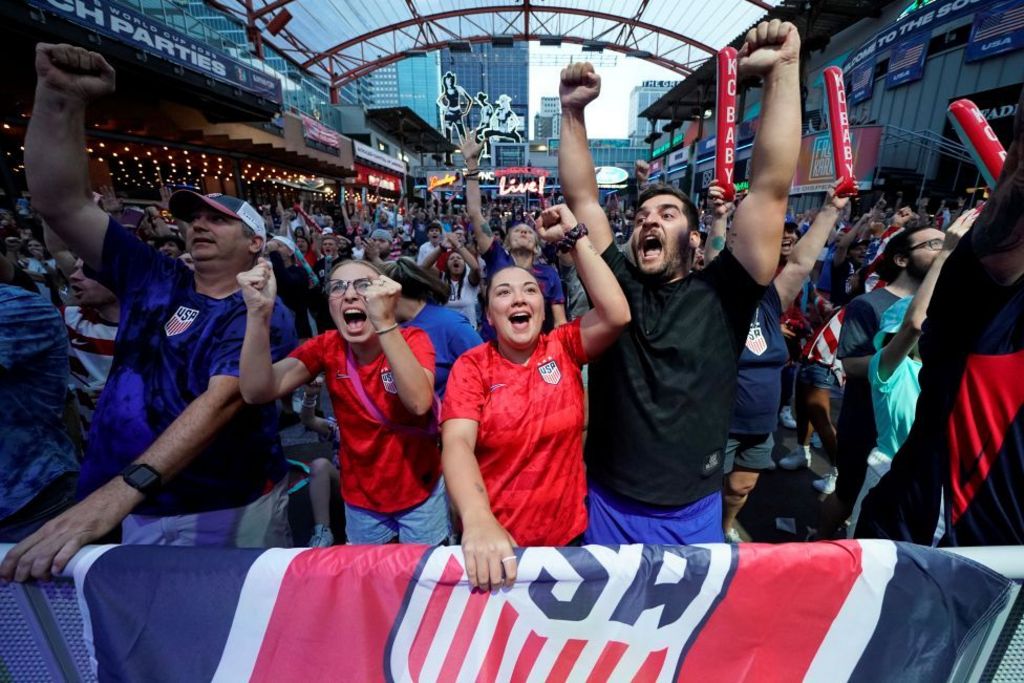
Tucked along the banks of the Missouri River, straddling the state line between Kansas and Missouri, the Kansas City metropolitan area stands as one of the smallest host cities for the 2026 FIFA World Cup, with a population of just 2.5 million. Though it does not rank among the 30 largest urban regions in the United States, this Midwestern hub punches far above its weight in the sporting world: it is home to the recently dominant Kansas City Chiefs NFL franchise, hosts the prestigious Big 12 college basketball tournament, and will take on a critical role in the planet’s biggest soccer tournament this summer.
Kansas City will play host to six World Cup matches, including a round-of-32 fixture and a high-stakes quarter-final, and will serve as the training base for four competing nations: Algeria, defending champions Argentina, England, and the Netherlands. For long-time locals who have watched the region’s soccer culture grow from humble beginnings, this opportunity feels nothing short of historic.
Héctor Solorio, a 26-year Kansas City resident and lifelong supporter of MLS side Sporting Kansas City, called the chance to welcome the world to his hometown a once-in-a-lifetime moment. “I never imagined the World Cup coming to my city,” he said, noting he is eager to prove Kansas City’s reputation as a globally recognized soccer city – even as he remains skeptical about the U.S. Men’s National Team’s tournament prospects. Fellow local Alejandro Cabero echoed that excitement, recalling how different the region’s soccer scene was when he first arrived: when the franchise, then called the KC Wizards, drew fewer than 3,000 fans to matches. “It’s amazing how far we’ve come,” he said.
Local and tournament officials frame the 2026 World Cup as a transformative chance to showcase everything the Midwestern region has to offer beyond sports. “We’re a city that has always punched above our weight in barbecue, in African American music, in sports, in the warmth of our people,” Quinton Lucas, mayor of Kansas City, Missouri, told the BBC. “This summer is our chance to share that with the world on the biggest possible stage.”
Anticipation has been building for months across the city, with locals already finalizing plans for match week. Solorio has secured a ticket to the opening group stage match between Argentina and Algeria on June 16, while Cabero – who owns a local empanada manufacturing business – is organizing a traditional Argentinian banderazo, a pre-game street celebration, the day before. He is preparing food for an estimated 600 attendees, but expects crowds as large as 10,000 fans to join the party.
Beyond local fan events, organizers have rolled out large-scale preparations to welcome the expected influx of global visitors. Working in partnership with FIFA and officials from both Kansas and Missouri, KC 2026 organizers have planned a free, 18-day official fan festival at the National WWI Museum and Memorial, one of the city’s most iconic landmarks. The festival will feature live match broadcasts, community-led events, and neighborhood watch parties open to all attendees.
To ensure small, locally owned businesses can capitalize on the surge in visitors, KC 2026 CEO Pam Kramer and her team launched the KC Game Plan initiative. The program provides a free playbook, available in both English and Spanish, that offers small business owners cyber security training, demographic data on projected visitors, and hospitality guidance, among other resources. “Our goal is to guarantee that when visitors arrive, they encounter Kansas City businesses that are ready to meet demand and confident in showcasing what makes them unique,” Kramer explained. For Cabero, that means crafting new empanada flavors inspired by the competing nations, including takes on paella, bratwurst, and shepherd’s pie, to welcome visiting fans.
Over the past 15 years, the Kansas City metro has invested nearly $700 million into soccer-specific infrastructure, part of a long-term strategy to position the region as a major soccer destination. The recently renovated Berkley Riverfront esplanade, redeveloped in 2021 by Port KC and NWSL side KC Current, will serve as Argentina’s base during the tournament, and local leaders expect the presence of Lionel Messi and the world champions to deliver a major boost to the area’s economy, with increased foot traffic and sales for nearby local businesses. Port KC communications director Patrick Pierce projects that up to two million visitors will visit the riverfront in 2026, a surge driven largely by World Cup demand.
Kansas City has also gone out of its way to welcome smaller, less high-profile nations competing in their first ever World Cup. Caribbean nation Curacao will play its group stage match against Ecuador in Kansas City on June 20, and will stay in the city for two nights during their historic tournament run. Curacao Football Federation president Gilbert Martina noted an unexpected cultural connection between the two regions: both share a deep love of jazz, with Curacao hosting the world-famous North Sea Jazz Festival. Martina added that the Midwestern values of resilience, community, and pride that define Kansas City are qualities that resonate deeply with the people of Curacao.
For all the widespread excitement, not all locals share the confidence that Kansas City is fully prepared for the influx of fans and the economic and social impacts of the tournament. Local community leaders have raised three key concerns: a shortage of available hotel rooms, limited public transportation access to match venues for fans on the Kansas side of the Missouri River, and worries over increased immigration enforcement presence during the tournament.
Most notably, Doug Langner, executive director of local homeless shelter Hope Faith and a lifelong soccer fan, warned that the city’s unhoused population of roughly 2,000 people could be pushed out of critical support systems. Many hotels that partner with the city to provide temporary housing for unhoused residents will be fully booked by traveling fans, he explained, leaving vulnerable populations without accommodation. With hundreds of millions of dollars invested in tournament infrastructure and security, Langner questioned why marginalized communities have not been prioritized to benefit from the event. “How do we connect the people who could use that bump the most to those opportunities?” he asked, adding that it remains unclear how working-class locals will share in the projected economic benefits of the tournament.
While Mexico City will host the tournament’s opening match and New York will welcome fans for the final, Kansas City is poised to carve out its own unique place in the 2026 FIFA World Cup. The city’s challenge now is to deliver a world-class tournament that celebrates every competing nation, from global giants to first-time underdogs, while addressing the lingering concerns of local communities to ensure the tournament benefits all Kansas City residents.