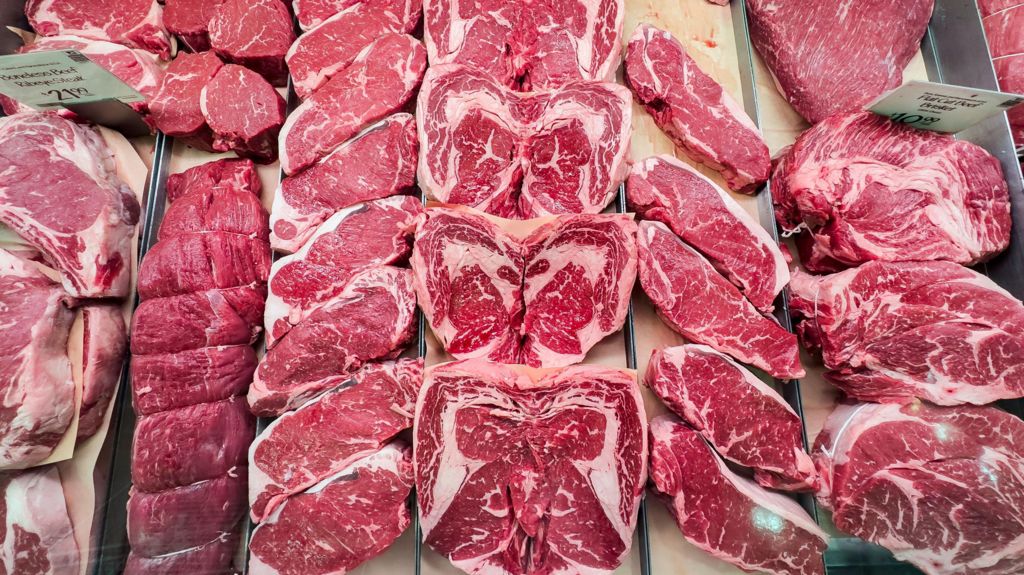
US President Donald Trump has urged the Justice Department to investigate meat-packing companies, alleging their role in driving up beef prices through ‘illicit collusion, price fixing, and price manipulation.’ Trump’s call for an antitrust probe comes as soaring beef prices have become a political liability, threatening to undermine his promises to reduce food costs for American consumers. The announcement follows Republican losses in key elections, where concerns over the cost of living and Trump’s economic policies bolstered Democratic candidates. Trump has consistently highlighted beef prices as a central issue in his messaging on food inflation. However, his recent proposals to lower prices, including urging ranchers to reduce cattle prices and suggesting increased beef imports from Argentina, have sparked backlash from the ranching community. Ranchers argue that such measures could harm their livelihoods without significantly impacting retail prices. Trump’s latest focus on the meat-packing industry, which is dominated by four major firms—Tyson, JBS, Cargill, and National Beef—signals a potential shift in strategy. These companies control over 80% of the beef slaughtering and packing market and have faced lawsuits alleging price manipulation. Government data shows that retail prices for beef mince and steaks have risen by 12.9% and 16.6%, respectively, over the past year, outpacing general food inflation. Economists attribute the price surge to supply constraints, including a decades-long contraction in the cattle industry exacerbated by drought conditions, as well as robust demand for beef. The Biden administration had previously targeted corporate consolidation in the food supply chain, but Trump revoked those measures earlier this year. As the debate over beef prices continues, the investigation into the meat-packing industry could have significant implications for both consumers and producers.
作者: admin
-

Guangxi FTZ strengthens global ties, creates new opportunities with ASEAN
The China (Guangxi) Pilot Free Trade Zone (FTZ) has emerged as a pivotal hub for international collaboration, leveraging its strategic location and institutional openness to foster global partnerships. At its 2025 special promotion conference in Shanghai on November 5, the zone showcased its commitment to deepening ties with ASEAN and beyond, attracting over 150 participants, including diplomatic representatives from Germany, the UK, South Korea, Canada, and Pakistan, as well as executives from more than 80 foreign enterprises. Notable attendees included DP World, a Middle East-based supply chain solutions provider, and Louis Dreyfus North Asia, a leading agricultural trader and processor. The event highlighted Guangxi’s ambitious plans for cross-border industrial and supply chain development, particularly in sectors like artificial intelligence (AI), healthcare, and smart home technologies. Lu Xinning, vice-chairperson of Guangxi, emphasized the region’s 10-billion-yuan ($1.4 billion) AI industry fund, which has already drawn interest from tech firms in Beijing, Shanghai, and Guangzhou. Yang Yihang of the China Investment Promotion Agency reaffirmed support for Guangxi FTZ, pledging to enhance its business environment for global investors. Jonathan School of AHK Greater China noted the alignment between Guangxi’s industrial focus and German expertise, signaling opportunities for targeted cooperation. The conference yielded tangible outcomes, including the release of two key lists guiding cross-border trade, new energy, and ASEAN-focused tech alignment. Agreements for healthcare, AI, and smart home projects were signed, advancing an innovative model where technology is researched in China’s major hubs, assembled in Guangxi, and applied in ASEAN. Since its inception six years ago, Guangxi FTZ has registered over 120,000 new enterprises and sustained double-digit economic growth. Post-conference, visits to AI enterprises in Shanghai will further solidify Guangxi’s role as a global connector and opportunity creator.
-

More than just a horse race: What to expect at Dubai Racing Carnival 2025
The Dubai Racing Carnival, a hallmark of equestrian excellence, is set to celebrate its 30th anniversary in 2025 with a grand season commencing on November 7. Spanning 17 races until March 28, 2026, the event promises a blend of high-octane competition and cultural festivities. Held at the iconic Meydan Racecourse, the Carnival transcends the traditional image of horse racing, attracting a diverse audience from all walks of life. Beyond the thrill of the races, attendees can immerse themselves in a variety of entertainment options, including carnival games, food pop-ups, and interactive activities. Ticket prices are designed to be inclusive, ranging from Dh10 for general admission to Dh695 for premium private suites. The season will feature four major event days, including Festive Friday, Fashion Friday, Emirates Super Saturday, and the grand finale, the Dubai World Cup. Among the attendees is Zainab A., a 75-year-old wheelchair-bound enthusiast from Sudan, who returns for her second Carnival, accompanied by her daughter Shahad Abdullah, experiencing the event for the first time. The Dubai Racing Carnival is not just a sporting event but a celebration of community, culture, and the enduring allure of horse racing.
-

China to repeal suspension of some US imports
In a significant move to ease trade tensions, China’s General Administration of Customs (GAC) announced on Friday the revocation of its earlier suspension on soybean exports from three US companies, including CHS Inc. The decision, effective from November 10, reinstates the export eligibility of these firms. This development follows a thorough evaluation of corrective measures implemented by the US, aligning with China’s domestic laws, regulations, and international phytosanitary standards. Additionally, the GAC declared the termination of the import suspension on US logs, also effective from November 10. These actions mark a positive step in bilateral trade relations, reflecting mutual efforts to address trade disputes and foster economic cooperation.
-
‘They went and never came back’: Honouring Kenya’s forgotten World War soldiers
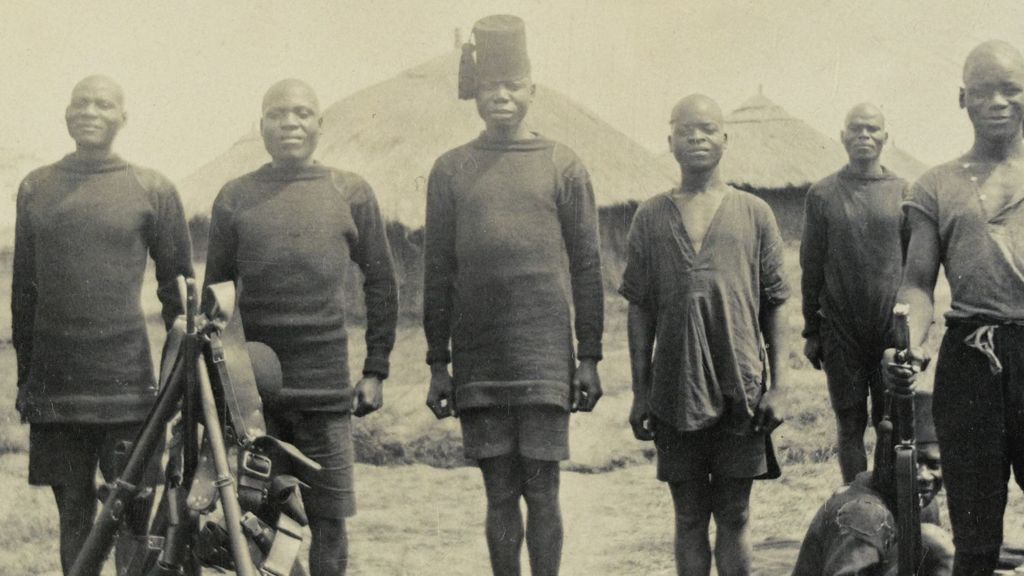
Nearly eight decades after his disappearance, the fate of Mutuku Ing’ati, a Kenyan soldier who fought in the British army during World War Two, has come to light. Ing’ati, who vanished from his village of Syamatani in southern Kenya, was discovered through British military records to have enlisted as a private with the East African Scouts. Tragically, he was killed in action on June 13, 1943, though the exact circumstances and location of his death remain unknown. His family, who had spent years searching for him, only learned of his fate recently through the efforts of the Commonwealth War Graves Commission (CWGC).
The CWGC, dedicated to commemorating those who died in the world wars, has been working to uncover the stories of thousands of Kenyan soldiers like Ing’ati who served in the British forces. These soldiers, many of whom were never officially recognized or commemorated, played a significant role in the global conflicts. The CWGC, in collaboration with the Kenyan Defence Force, has unearthed a trove of colonial-era military records, shedding light on the lives and sacrifices of over 3,000 East African soldiers.
Among the records are stories of individuals like George Williams, a decorated sergeant major with the King’s African Rifles, and Abdulla Fadlumulla, a Ugandan soldier who enlisted at just 16 years old. Both died in combat, their contributions largely forgotten until now. Historians like Patrick Abungu, whose own great uncle was conscripted and never returned, emphasize the emotional toll on families who were left without answers for decades.
The CWGC aims to build memorials to honor these soldiers and integrate their stories into Kenya’s educational curriculum, ensuring future generations understand the pivotal role Africans played in the world wars. As George Hay, a CWGC historian, notes, ‘These are not just dusty files—they are personal stories.’ The organization’s efforts to recover and commemorate these forgotten heroes will continue indefinitely, ensuring their sacrifices are never erased from history.
-
Rare footage shows sucker fish as they whale-surf in the ocean’s wildest joyride
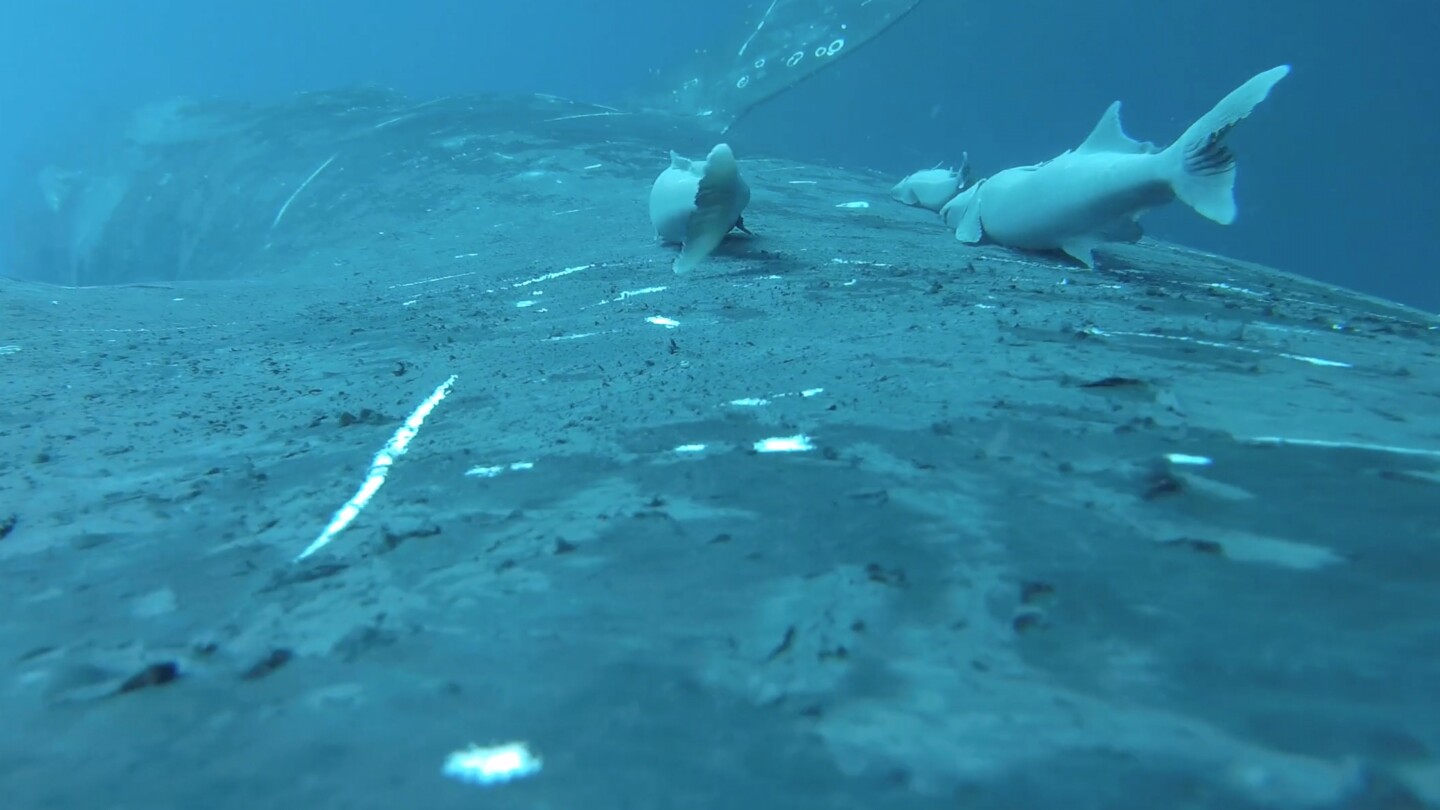
In a remarkable display of marine symbiosis, scientists have captured rare footage of remoras, also known as sucker fish, engaging in high-speed whale surfing off the coast of Australia. These hitchhiking fish, known for their adhesive head plates that create a vacuum seal, cling to humpback whales as they migrate from Antarctica to the warmer waters of Queensland. The footage, recorded by marine scientist Olaf Meynecke from Griffith University, reveals the remoras’ precision in detaching just before the whale breaches and reattaching moments later, showcasing their remarkable instincts. While remoras benefit from feeding on the whales’ dead skin and sea lice, the footage suggests that the whales may find their clingy companions somewhat irritating. Meynecke’s research, initially aimed at studying whale behavior, has inadvertently highlighted the complex relationship between these two species. The study also raises questions about the remoras’ lifecycle, particularly how much of the humpbacks’ 10,000-kilometer migratory journey they accompany their hosts. In the absence of whales, remoras seek other large marine creatures, including manta rays, dolphins, and even scuba divers, to avoid predators. This fascinating interaction underscores the intricate dynamics of marine ecosystems and the adaptability of species within them.
-

South Korean solar firm cuts pay and hours for Georgia workers as US officials detain imports
Qcells, a South Korean solar energy company and subsidiary of Hanwha Solutions, has announced temporary pay reductions and reduced working hours for approximately 1,000 of its 3,000 employees in Georgia. The decision comes as U.S. Customs and Border Protection continues to detain imported components essential for solar panel production, citing concerns over potential forced labor in China. Additionally, the company will lay off 300 workers from staffing agencies at its facilities in Dalton and Cartersville, both located northwest of Atlanta.
-
Nigeria’s army chief promises to step up anti-terror operations
In a decisive address to troops in Maiduguri, the capital of Nigeria’s Borno State, newly appointed Chief of Army Staff (COAS), Lt. Gen. Waidi Shaibu, pledged to escalate military operations against terrorist factions in the country’s volatile northern region. This announcement comes less than a week after U.S. President Donald Trump threatened to intervene militarily if Nigeria failed to curb attacks on its Christian population. Shaibu emphasized that the military’s renewed efforts must succeed, declaring that failure is “not an option” as the nation enters a critical phase in its decade-long conflict with extremist groups. He assured troops that all necessary resources, including new combat platforms, have been deployed to ensure victory. Trump’s recent threats to cut aid and designate Nigeria as “a country of particular concern” for alleged Christian persecution have drawn sharp criticism from Nigerian President Bola Ahmed Tinubu. Experts argue that Trump’s characterization of the conflict oversimplifies the complex dynamics of Nigeria’s security challenges, which include religiously motivated violence, farmer-herder clashes, and ethnic rivalries. While Christians are among the victims, the majority of those targeted by armed groups are Muslims in the predominantly Muslim north.
-
Blame game over Air India crash goes on
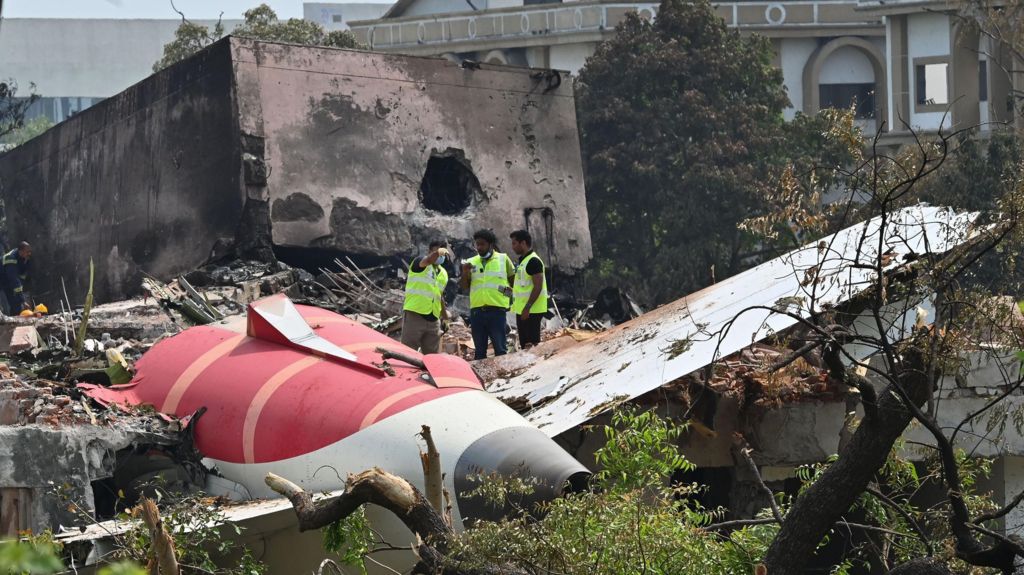
Nearly five months after the tragic crash of Air India Flight 171, which claimed 260 lives, the investigation has become embroiled in controversy, with India’s Supreme Court now weighing in. The flight, en route from Ahmedabad to London on June 12, crashed into a building just 32 seconds after takeoff. An interim report released in July has drawn criticism for allegedly focusing on pilot actions rather than potential aircraft malfunctions. Recently, a Supreme Court judge emphasized that no blame should be placed on the aircraft’s captain, echoing comments from Air India’s CEO, Campbell Wilson, who asserted that initial investigations found no issues with the aircraft or its engines. The investigation, led by India’s Air Accident Investigation Bureau (AAIB) with U.S. involvement due to the aircraft’s American origins, has faced scrutiny over its preliminary report. The report highlighted that fuel cutoff switches were moved shortly after takeoff, leading to engine shutdown, but did not conclusively determine the cause. Speculation has arisen over whether the pilots, Captain Sumeet Sabharwal and First Officer Clive Kunder, were responsible, with some experts suggesting an electrical fault may have triggered the shutdown. Critics argue that the investigation has been biased, with incomplete technical data and undue focus on pilot error. The Supreme Court is considering a petition from Captain Sabharwal’s father for an independent inquiry. Meanwhile, the U.S.-based Foundation for Aviation Safety has called for reforms in investigation protocols, citing systemic failures. As the investigation continues, the aviation community awaits the final report to uncover the true cause of the disaster.
-
Mexico and France announce plan to boost economic and cultural ties after leaders meet
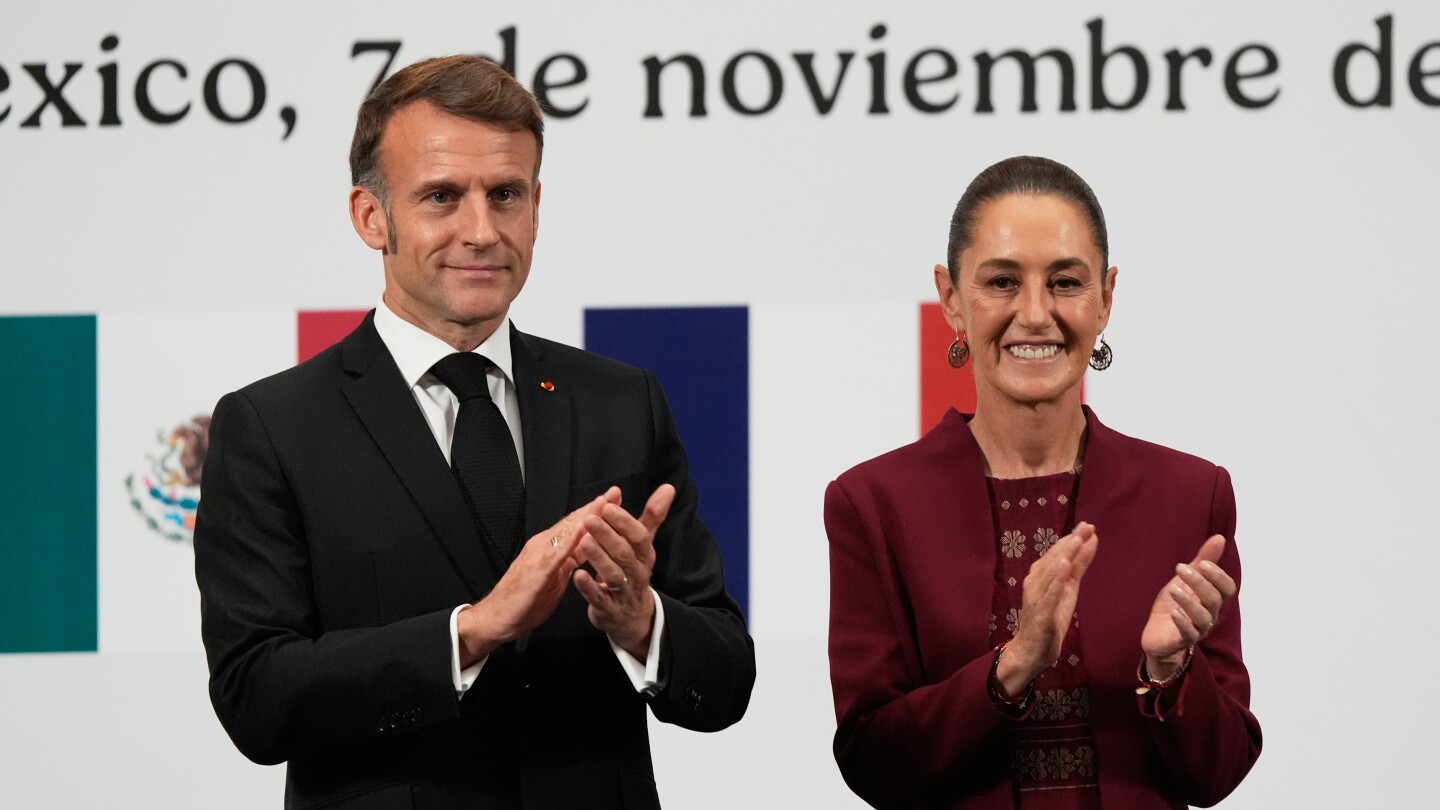
Mexico and France have unveiled ambitious plans to enhance their economic and cultural collaboration, marking a significant step in Mexico’s strategy to diversify its trade partnerships beyond the United States. The announcement followed a historic meeting between Mexican President Claudia Sheinbaum and French President Emmanuel Macron at Mexico City’s National Palace, Macron’s first official visit to the country. This move comes as Mexico grapples with persistent trade tensions with the US, which has imposed tariffs of up to 50% on key Mexican exports, including steel, copper, and tomatoes, outside the scope of the USMCA agreement. Macron emphasized the deepening of the strategic alliance, stating, ‘Today we begin a new chapter in our strategic alliance, one that demands — and that we want to be — even more global.’ He highlighted the role of 700 French companies operating in Mexico, particularly in the aerospace sector, which collectively generate 150,000 direct jobs and 700,000 indirect jobs. Sheinbaum underscored the importance of next year’s renewal of the EU-Mexico Free Trade Agreement, coinciding with the bicentennial of diplomatic relations between the two nations. Additionally, both leaders celebrated the reciprocal temporary exhibition of pre-Hispanic codices, including the Azcatitlan and Boturini manuscripts, which hold immense historical significance for Mexico. These efforts reflect a shared commitment to strengthening bilateral ties and fostering mutual cultural appreciation.