作者: admin

  • Saudi angle as new clues suggest why Trump took secret documents

    Saudi angle as new clues suggest why Trump took secret documents

    Congressional Democrats on the House Judiciary Committee have launched a forceful confrontation with the Justice Department, demanding full transparency regarding former Special Counsel Jack Smith’s investigation into Donald Trump’s handling of classified materials. The escalating conflict centers on newly revealed evidence suggesting Trump may have retained sensitive documents to advance his business interests.

    Representative Jamie Raskin (D-Md.), the committee’s ranking member, sent a detailed communiqué to Attorney General Pam Bondi condemning the Department’s selective disclosure of materials related to Smith’s probe. The investigation examined Trump’s retention of classified documents at his Mar-a-Lago estate in Florida and Bedminster golf club in New Jersey after his presidential term concluded.

    According to disclosed materials, federal prosecutors identified a January 2023 memorandum stating the FBI had determined Trump retained documents “would be pertinent to certain business interests,” establishing a potential motive for their retention. One particularly sensitive document was reportedly accessible to only six government officials, including the president, before being moved to private property.

    The controversy deepened with allegations that Trump showed a classified map to individuals aboard his private aircraft in June 2022. Flight manifests indicate 14 people were present, though all names remain redacted. Notably, this period coincided with Trump’s business engagements with Saudi-backed entities, including LIV Golf and real estate firm Dar al Arkan.

    Raskin’s letter emphasized the national security implications, stating: “If this map is related to our military posture in the Middle East, and it was shown to any foreign official, that would amount to an unforgivable betrayal of our men and women in uniform.”

    The Justice Department responded aggressively on social media, accusing Raskin and Smith of being “blinded by hatred of President Trump” and dismissing the inquiry as a “cheap political stunt.” This exchange occurs against the backdrop of US District Judge Aileen Cannon’s decision to permanently block release of Smith’s final report on the documents case.

    Government watchdog American Oversight characterized the situation as “one of the most serious national security scandals in American history,” while committee Democrats accused the administration of “legal gymnastics” to prevent public access to the full findings.

  • Somalia football slowly becomes a women’s game

    Somalia football slowly becomes a women’s game

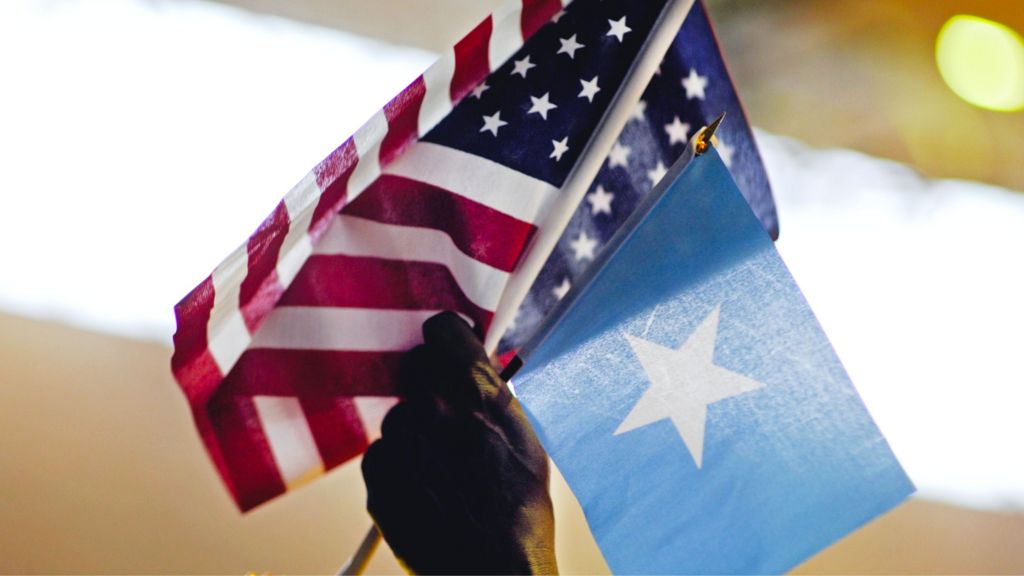
    In a remarkable transformation for one of the world’s most conservative nations, Somalia is witnessing the unprecedented rise of women’s football. The recent championship match in Mogadishu drew hundreds of enthusiastic spectators who cheered as young female athletes competed on the pitch—a scene that would have been unthinkable just years ago in the conflict-ravaged country.

    The development represents a significant cultural shift in a nation where the Al-Shabaab militant group, affiliated with Al-Qaeda, has historically prohibited entertainment activities including football, particularly for women. Despite the group’s continued influence behind the scenes, improved security conditions have created space for this sporting revolution to emerge.

    From humble beginnings in 2024 with just 80 participants, Somalia’s women’s football league has expanded exponentially to include 600 athletes across 10 teams, drawing players not only from the capital but from various regions nationwide. The growth defies previous extremist declarations that labeled football as ‘un-Islamic’—a prohibition that once applied even to male players.

    Ali Abdi Mohamed, president of the Somali Football Federation, expressed amazement at the rapid progress: ‘No one could have imagined that one day Somali women would play football in their country where even men were forbidden to play by fighters. But something we couldn’t even dream of has become a reality.’

    The national women’s team, known as the ‘Ocean Queens,’ is preparing for its first international tournament—an under-17s event in Tanzania this May. While not yet ranked by FIFA, the team played its inaugural friendly match in Djibouti last October, marking another milestone in their development.

    Players like 17-year-old midfielder Ramas Abdi Salah demonstrate how the sport is adapting to cultural norms. ‘For women to play football is not shameful or taboo,’ she explained, noting that she wears thick tights, long-sleeved shirts, and a headscarf during matches. ‘I’m fully covered except for my face and my hands. I haven’t received any bad comments.’

    Though conservative attitudes persist and not all families permit their daughters to participate, the movement has faced surprisingly limited opposition. The players themselves remain undeterred by challenges, with goalkeeper Najma Ali Ahmed expressing determination after a tough match: ‘I’m sending a message to female footballers to work toward the dream of joining the national team.’

  • Northern China sees unusual warm spell

    Northern China sees unusual warm spell

    Meteorological authorities report that Northern China is currently experiencing an extraordinary warm spell, with temperatures forecasted to reach unprecedented seasonal highs of approximately 25°C (77°F) in specific regions this week. The unusual warming phenomenon began manifesting across most northern territories on Tuesday, with numerous urban centers already recording temperatures exceeding 20°C (68°F).

    According to Weather China, the official platform of China Meteorological Administration, the thermal peak is projected to occur during Wednesday and Thursday. The 20°C isotherm—a meteorological boundary indicating equal temperature points—is anticipated to extend unusually northward, reaching northern Hebei province and western Liaoning province. This pattern suggests central and southern North China along with northern Huanghuai region may experience midday temperatures approaching 25°C.

    Notable milestones include Hohhot in Inner Mongolia Autonomous Region potentially recording its first 20°C reading of 2026, while Jinan in Shandong Province might reach 25°C—temperatures typically characteristic of late April or early May in climatological records. Nocturnal temperatures will similarly rise, with central and southern North China and Huanghuai region expected to experience minimum temperatures above 10°C by Thursday.

    Meteorological analyst Tang Xiaojing attributes this anomalous warming to optimal atmospheric conditions: “The warming effect is particularly pronounced in North China, Huanghuai region and Northeast China due to predominantly clear skies or limited cloud cover, which significantly enhances daytime radiative heating.”

    Conversely, southern China remains largely unaffected by this thermal anomaly, with temperatures aligning with seasonal averages. Weather models indicate a potential temperature inversion phenomenon around Wednesday, where northeastern cities including Shenyang, Changchun and Harbin might paradoxically experience higher daytime temperatures than southeastern urban centers like Shanghai, Hangzhou and Nanjing, where highs may not exceed 15°C due to cloud cover and precipitation.

    Residents in northern regions are advised to implement layered clothing strategies as substantial diurnal temperature variations—exceeding 10-15°C—will persist despite daytime warmth. Northeastern areas will maintain near-freezing overnight temperatures while North China experiences single-digit nocturnal readings.

    The China Meteorological Administration confirms that suppressed cold air activity through March’s conclusion will facilitate the persistence and intensification of this unusual early spring warmth across northern territories.

  • India’s fertiliser supplies under strain as war disrupts shipments

    India’s fertiliser supplies under strain as war disrupts shipments

    India’s agricultural sector faces mounting pressure as Middle East shipping disruptions jeopardize critical fertilizer supplies, potentially triggering cascading effects on food production and pricing. The world’s second-largest fertilizer consumer relies heavily on Gulf-region imports that transit through the strategically vital Strait of Hormuz, where ongoing conflict has severely compromised maritime logistics.

    Current government data indicates urea reserves of approximately 6.2 million tonnes as of mid-March, which analysts consider adequate for the imminent June-September monsoon sowing season under normal conditions. However, industry experts warn that prolonged supply chain disruptions could rapidly deplete these reserves, creating significant shortages during peak agricultural periods.

    The crisis extends beyond inventory concerns to fundamental production challenges. Natural gas—the primary feedstock for urea manufacturing—faces import constraints, with Indian plants currently receiving only 70% of their required volumes following recent government directives. This shortfall has already forced some manufacturers to curtail production operations.

    Farmers in Punjab and Haryana, India’s crucial grain-producing regions, report adequate immediate supplies through cooperative networks and distributor warehouses. Yet agricultural stakeholders express deepening anxiety about long-term availability. “We cannot predict how existing stocks will sustain if geopolitical tensions persist,” noted Manpreet Singh Grewal of a Punjab Agricultural University-affiliated farmers’ collective.

    Global market dynamics exacerbate domestic concerns. International fertilizer prices have surged dramatically in recent weeks, with urea benchmarks and Asian gas prices climbing simultaneously. This trend may substantially increase government subsidy burdens, as New Delhi maintains controlled pricing for agricultural inputs.

    While experts suggest short-term yield impacts might remain limited due to historical over-application in some regions, Siraj Hussain, former federal agriculture secretary, emphasizes that “the government must prepare for potential monsoon harvest shortages.” The situation demands urgent diversification of import sources and enhanced domestic production capabilities, measures Prime Minister Narendra Modi confirms are already underway.

    The ultimate agricultural and economic impact hinges critically on conflict duration, with analysts noting that normalized shipping could stabilize supply chains within weeks. Nevertheless, the episode underscores India’s vulnerability to global geopolitical shocks and the intricate connections between international conflicts, agricultural security, and food price inflation.

  • White House threatens to ‘unleash hell’ on Iran

    White House threatens to ‘unleash hell’ on Iran

    The White House has delivered a formidable warning to Tehran, with Press Secretary Karoline Leavitt declaring that President Donald Trump stands ready to ‘unleash hell’ should Iran continue to resist diplomatic resolutions to the ongoing military confrontation. This stern pronouncement came during a Wednesday press briefing, emphasizing the administration’s unwavering stance.

    Leavitt asserted that any further escalation of violence would stem directly from Iran’s refusal to acknowledge its defeated position and engage in constructive negotiations. ‘President Trump does not bluff and he is prepared to unleash hell,’ she stated, characterizing the conflict as being on a predetermined timeline of four to six weeks since its inception on February 28.

    The administration maintained secrecy regarding its diplomatic channels, with Leavitt declining to specify Washington’s negotiation counterparts, citing the sensitive nature of ongoing discussions.

    Contradicting the White House’s narrative, Iranian Foreign Ministry spokesman Esmail Baghaei explicitly denied any existing negotiations with the United States during an exclusive interview with India Today. Baghaei referenced Iran’s ‘catastrophic experience’ with previous U.S. diplomacy, particularly concerning nuclear negotiations that coincided with American military actions.

    Further amplifying Tehran’s position, Ebrahim Zolfaghari, spokesperson for Iran’s Khatam al-Anbiya Central Headquarters, dismissed U.S. claims as self-negotiation driven by internal political strife. Zolfaghari characterized American assertions of potential agreements as mere disguises for strategic defeat, claiming that the enemy’s boasted power has transformed into strategic failure.

  • Iran’s FM says messages exchanged with US through intermediaries, but no talks held

    Iran’s FM says messages exchanged with US through intermediaries, but no talks held

    Iranian Foreign Minister Seyed Abbas Araghchi has disclosed that diplomatic communications between Tehran and Washington have occurred through third-party channels in recent days, while firmly maintaining that no direct negotiations have taken place. The minister’s statements, delivered during an interview with state-run IRIB TV on Wednesday, come amid ongoing regional tensions following last month’s joint US-Israeli military operations against Iranian targets.

    Araghchi clarified the nature of these communications, stating, ‘The American side has initiated the transmission of various messages through multiple intermediaries. When friendly nations relay these communications to us and we respond by articulating our positions or issuing necessary warnings, this constitutes neither negotiation nor dialogue. It represents merely an exchange of messages through our allies, during which we have consistently reaffirmed our principled stances.’

    The Foreign Minister revealed that some messages contained Iranian warnings against potential US attacks on critical infrastructure, which he claims prompted Washington to retract its threat to strike Iranian power facilities within a 48-hour window. Araghchi emphasized Iran’s defensive posture, asserting, ‘We did not initiate this conflict and seek its conclusion, but in a manner that prevents its recurrence.’

    Significantly, Araghchi rejected the concept of a ceasefire, describing it as part of a ‘vicious circle’ of negotiation, warfare, and temporary truce. Instead, he stated Iran’s objective is ‘to end this war on our own terms.’ The minister outlined Iran’s current policy as one of continued resistance and national defense, explicitly denying any plans for formal negotiations.

    Regarding the strategically vital Strait of Hormuz, Araghchi characterized the waterway as part of Iranian and Omani territorial waters and indicated Tehran is evaluating ‘new arrangements for safe passage through the strait.’ These comments follow claims by US President Donald Trump that Tehran is negotiating with Washington and desires a settlement to terminate hostilities.

    The backdrop to these diplomatic developments includes the late February joint US-Israeli offensive against Tehran and other Iranian cities, which resulted in the death of then-Supreme Leader Ali Khamenei alongside senior military officials and civilians. Iran responded with missile and drone strikes targeting Israeli and US assets throughout the Middle East, while implementing strict control measures over Strait of Hormuz transit, prohibiting passage to vessels affiliated with Israel or the United States.

  • What to look out for in European World Cup play-offs

    What to look out for in European World Cup play-offs

    The European World Cup play-offs commence on Thursday, featuring sixteen nations competing for four coveted spots in this summer’s global tournament across the United States, Canada, and Mexico. This high-stakes competition brings together twelve teams that finished second in their qualifying groups alongside four top-performing Nations League group winners who missed direct qualification.

    The playoff structure consists of four distinct paths, each featuring four teams engaging in single-elimination semi-finals followed by finals. Among the notable matchups, Wales will host Bosnia-Herzegovina at Cardiff City Stadium, while Northern Ireland faces a formidable challenge against Italy in Bergamo. The Republic of Ireland travels to face the Czech Republic, creating an unprecedented scenario where all three Celtic nations plus the Republic of Ireland could potentially qualify for the same World Cup for the first time in history.

    Northern Ireland, absent from World Cup competition since Mexico 1986, confronts an Italian squad desperate to return to global football’s biggest stage after a twelve-year absence. Manager Michael O’Neill believes the selection of Atalanta’s home ground in Bergamo rather than iconic venues like San Siro could benefit his underdog squad.

    Meanwhile, Wales manager Craig Bellamy characterized Bosnia-Herzegovina as a ‘different beast’ despite his team’s historical advantage in their previous encounters. The Welsh side aims for consecutive World Cup appearances following their 2022 campaign in Qatar.

    Sweden presents another compelling narrative under manager Graham Potter, who returns to Scandinavian football after tumultuous tenures at Chelsea and West Ham. Despite boasting talents like Alexander Isak, Viktor Gyokeres, and Anthony Elanga, the Swedes finished bottom of their qualifying group and now face Ukraine at a neutral venue in Valencia due to the ongoing conflict.

    Italian manager Gennaro Gattuso, a 2006 World Cup winner, expressed frustration with the revised qualification format, noting that in his playing days, the best runners-up advanced directly. His managerial future hangs in the balance as Italy attempts to avoid another apocalyptic failure after missing the 2018 and 2022 tournaments.

    Poland’s veteran striker Robert Lewandowski seeks his third World Cup appearance as his team hosts Albania. The 37-year-old Barcelona forward, Poland’s all-time leading scorer with 88 goals, remains in formidable form with three goals and four assists in his last seven international appearances.

    The winners of these crucial semi-final matchups will advance to next week’s playoff finals, determining which European nations complete the tournament field for the expanded 2026 World Cup.

  • Blackout: Freak storm could delay the start of Thursday night footy as 4 Pines Park power goes out ahead of DCE return

    Blackout: Freak storm could delay the start of Thursday night footy as 4 Pines Park power goes out ahead of DCE return

    A severe weather system of unprecedented intensity descended upon Sydney’s northern beaches, plunging 4 Pines Park into darkness and casting serious doubt over the highly anticipated NRL showdown between Manly Sea Eagles and Sydney Roosters. The atmospheric turmoil arrived just as emotional tensions were set to peak with Daly Cherry-Evans’ first appearance at Brookvale Oval since his controversial offseason departure.

    Meteorological chaos unfolded approximately ninety minutes before the scheduled 8pm kickoff, with torrential rainfall, continuous lightning strikes, and cyclonic-grade winds battering the stadium infrastructure. The extreme conditions triggered a complete power failure throughout the facility, while hurricane-force winds ripped away protective tarpaulins covering musical equipment destined for pre-game ceremonies.

    The stadium’s structural integrity faced severe testing as roofing elements groaned under the deluge’s intensity, creating concerning auditory effects for those sheltering inside. Playing surface conditions deteriorated rapidly, accumulating substantial water buildup that raised legitimate concerns regarding athlete safety and match viability.

    This meteorological drama overshadowed the significant narrative surrounding Cherry-Evans’ homecoming. The veteran playmaker’s transition to the Tri-Colours followed protracted contract discussions with Manly management that ultimately collapsed. Despite organizational pleas for respectful reception, former NRL standout James Maloney publicly advocated for traditional rivalrous enthusiasm, stating: ‘While respecting his legacy, supporters should recognize he now represents opposition interests during gameplay.’

    Stadium officials and NRL representatives convened emergency meetings to evaluate options regarding timing modifications or potential postponement, prioritizing spectator and participant welfare above competitive considerations.

  • In one of country’s poorest states, Venezuelans hope for post-Maduro boom

    In one of country’s poorest states, Venezuelans hope for post-Maduro boom

    In the sweltering heat of Guaca, a Venezuelan fishing town, residents cluster around rusted propane canisters—the first gas delivery since December. This scene encapsulates the daily struggles in Sucre, one of Venezuela’s most impoverished states, where basic necessities like cooking fuel, running water, and gasoline remain scarce despite the country’s vast oil reserves.

    The recent arrest of Nicolás Maduro in January and subsequent restoration of U.S. relations with interim leader Delcy Rodríguez has sparked discussions of foreign investment in Caracas. However, in remote Sucre—hundreds of kilometers from the capital—these developments feel distant. For ordinary Venezuelans, the pressing question is whether promised American oil investments will translate into tangible improvements in their lives.

    In Cumaná, Sucre’s capital, residents have endured two weeks without running water. While state officials blame a pipeline damaged in last month’s earthquake, locals maintain that water shortages have persisted for years due to chronic underinvestment. Some resort to collecting water from polluted streams, highlighting the infrastructure collapse.

    The fishing industry—Sucre’s economic backbone—exemplifies the economic devastation. Fisherman Pablo Marín explains the cruel economics: “In Ecuador, catching 100kg of fish earns $500 enough to cover fuel with money left over. Here, you must catch another 100kg just to break even.” Hyperinflation has rendered the bolivar nearly worthless, forcing businesses to dollarize while wages remain in local currency.

    Yurmari Martínez, a local fisherwoman, recalls Sucre being “a place with potential” two decades ago when processing plants and diverse industries thrived. Today, fuel shortages, nationalizations, and decaying infrastructure have hollowed out the economy. This degradation has even eroded educational aspirations—Martínez’s 23-year-old son abandoned university, convinced that “no qualification can lead anywhere” in contemporary Venezuela.

    Amidst this despair, Shell’s recently approved “Dragon” natural gas project—located between Venezuela and Trinidad and Tobago—represents a glimmer of hope. U.S. Secretary of the Interior Doug Burgum’s visit earlier this month culminated in signed development agreements. While the gas will be processed in Trinidad for export, Shell claims Venezuelans will benefit.

    However, experts urge tempered expectations. Christopher Sabatini of Chatham House warns that such projects typically create limited local jobs and short-term cash injections without generating broader development. “Companies come in, extract the resources, oftentimes with foreign equipment and engineers, then ship it,” he notes, emphasizing that lasting benefits require effective government revenue reinvestment.

    The U.S. now oversees much of Venezuela’s oil revenue—an “unprecedented” situation according to Sabatini—raising questions about fund allocation. Even with proper management, Sabatini stresses that rebuilding infrastructure, electricity, and housing “can’t be turned around simply in months.”

    Omar Zambrano, chief economist at Anova Policy Research, cites 1990s evidence showing oil investment reduced poverty and improved education when the industry welcomed private companies. But after “25 years of degradation of the country’s institutional, productive, and social fabric” under Hugo Chávez and Maduro, conditions for successful implementation are far less favorable.

    This degradation manifests starkly in Güiria, three hours east of Guaca along potholed roads with no mobile service. Here, the U.S.’s aggressive anti-narcotics campaign—which claims to target “narco-terrorists”—has left dozens dead in boat strikes. Locals insist many victims were not cartel members but poverty-driven individuals seeking survival.

    Diannys, a mother of five whose husband died in an October strike, acknowledges the moral complexity: “People take the wrong path out of necessity… risking their lives to give their family a better future.” An anonymous resident who lost his brother echoes this sentiment, revealing his brother—a fisherman and farmer—was recruited by traffickers offering $10,000 for a sea journey. “I earn $10 weekly, enough for three meals,” he explains, contextualizing the temptation.

    As Venezuela navigates its political transition two months after Maduro’s ousting, Sucre’s residents remain cautiously skeptical. While foreign investment promises economic revival, years of broken promises and institutional decay have forged resilient pragmatism. The path forward requires not just extracting resources but rebuilding the very fabric of Venezuelan society—a task far more complex than signing oil deals.

  • ‘I have no recollection of anything’ – Epstein survivor says she was drugged and raped

    ‘I have no recollection of anything’ – Epstein survivor says she was drugged and raped

    In a profound and harrowing first-person account to BBC Newsnight, a survivor of Jeffrey Epstein’s sexual abuse has come forward, detailing her traumatic experience and issuing a powerful call for transparency and healing. The woman, identified pseudonymously as Nicky, described a systematic pattern of manipulation and assault that began when she was a 19-year-old model.

    Nicky’s initial encounters with the disgraced financier at his Palm Beach, Florida, mansion followed a now-notorious pattern: she was hired to provide massages. During a subsequent visit, the situation escalated violently. Epstein attempted to remove her clothing and proceeded to masturbate in front of her. To extricate herself, Nicky falsely claimed she was menstruating.

    The most disturbing part of her testimony concerns a drink of water Epstein offered her after that encounter. After consuming it, Nicky blacked out for a minimum of twelve hours. She awoke feeling disoriented and ill, with physical evidence suggesting she had been sexually assaulted while unconscious. Her attempts to retrieve the memory through psychotherapy have been unsuccessful, leaving her with what she describes as a logical, horrifying assumption of the truth.

    Epstein later confirmed her suspicions by referencing her earlier lie about her period, indicating he had intimate knowledge of her body that he could only have gained while she was incapacitated. The psychological aftermath was severe, leading Nicky to experience suicidal ideation, questioning if her children would be better off without her.

    Her decision to speak out now is driven by the courage of other survivors. Her primary demand is directed at the U.S. Department of Justice: release all remaining two million files from its Epstein investigations, but do so ethically, with proper redactions to protect victims’ identities—a failure that previously drew bipartisan criticism following earlier document dumps.

    Nicky expressed fury that full transparency required an act of Congress, the ‘Epstein Transparency Act,’ which she lambasts as a ‘complete waste’ of taxpayer money. She finds the very name of the legislation offensive, arguing it perpetuates the glorification of a ‘monster’ instead of honoring the survivors, suggesting alternatives like the ‘Survivors Act.’

    Ultimately, Nicky articulates the immense difficulty of healing when the specter of her abuser remains a constant feature in media and political discourse, reducing survivors to ‘pawns.’ Her poignant final plea is for the space and justice necessary for true recovery: ‘I would love for us to be able to heal.’