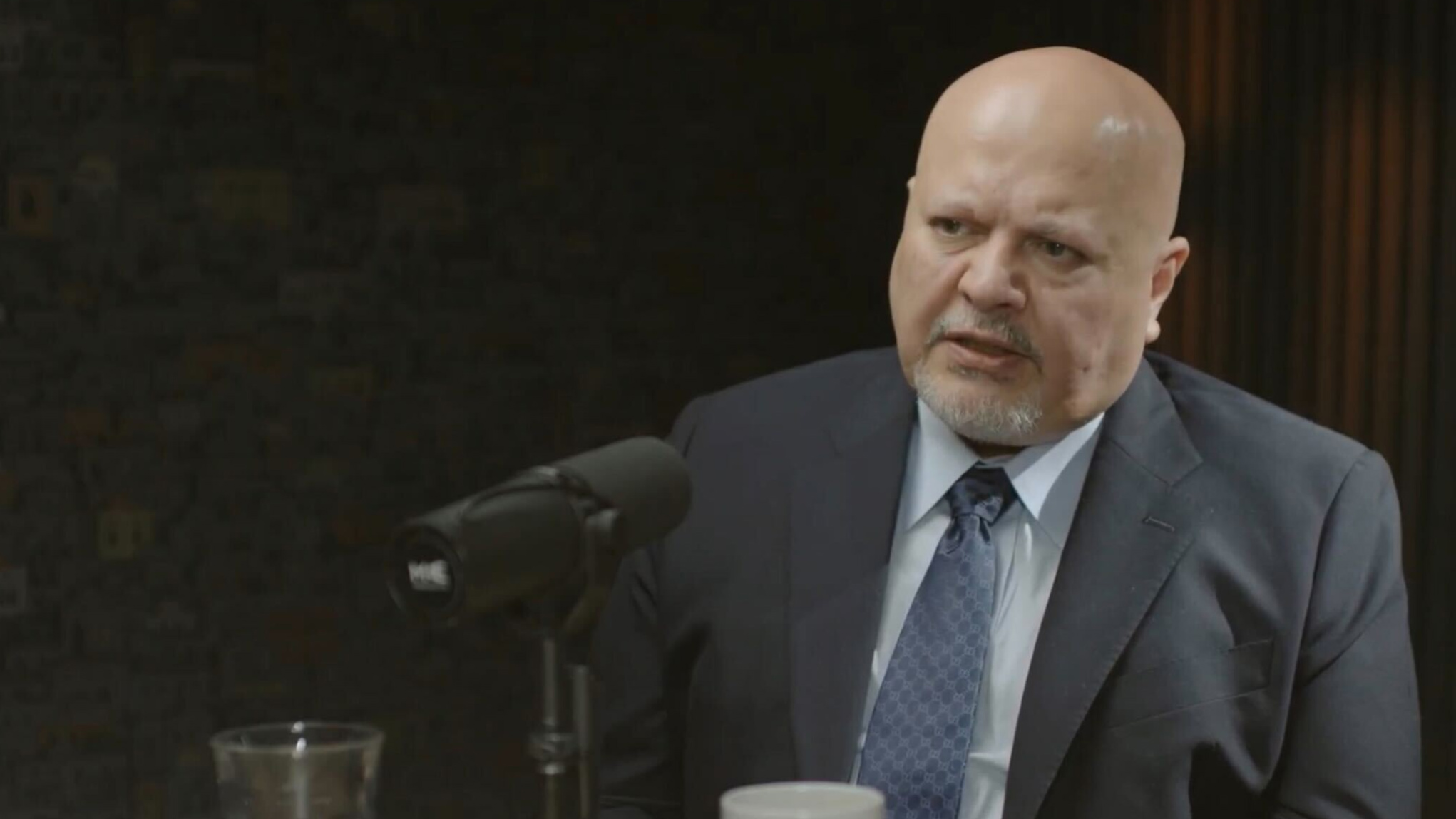
In an explosive exclusive interview with Middle East Eye, Karim Khan, the Chief Prosecutor of the International Criminal Court, has lifted the veil on what he calls a dangerous, politically motivated smear campaign to force him out of office. The unprecedented campaign, he alleges, is rooted in backlash over his office’s groundbreaking push for arrest warrants targeting Israeli Prime Minister Benjamin Netanyahu and former Israeli Defense Minister Yoav Gallant over alleged war crimes in Gaza, and it has twisted unfounded sexual misconduct allegations to sideline him.
Khan’s investigation into Gaza war crimes led his office to request arrest warrants for the two Israeli leaders in May 2024, with the court officially issuing the warrants that November. Almost immediately, the pressure campaign escalated: Khan, his two deputy prosecutors, and multiple ICC judges have since been hit with United States sanctions, and prominent Western politicians have delivered direct threats to force the court to back down. Khan confirmed to MEE that U.S. Senator Lindsey Graham threatened consequences against him if he moved forward with the warrants, while then-U.K. Foreign Secretary David Cameron warned that the U.K. would withdraw from the court and cut off funding if the prosecutions proceeded. In a 2024 April phone call, Cameron told Khan he had “lost the plot” for advancing the warrants, and made clear that Western powers would create major political and financial difficulties for the ICC if he refused to back down.
The internal campaign against Khan has centered on unsubstantiated sexual misconduct claims filed against him in 2024. The ICC’s Assembly of State Parties Bureau commissioned the United Nations Office of Internal Oversight Services to investigate the allegations, and a panel of independent ICC judges appointed to review the OIOS probe unanimously concluded in March 2025 that there was no evidence of misconduct or breach of duty by Khan. Despite this clear ruling, a bloc of mostly Western and European states on the 21-member ASP Bureau voted to ignore the judges’ finding, reopen the investigation, and keep Khan suspended from his post – a move Khan says violates core legal and procedural norms.
Khan has repeatedly and strenuously denied all allegations against him, noting that he has always maintained professional and appropriate relationships with all ICC staff. What makes the ongoing process even more unfair, he argues, is the blatant bias and breach of confidentiality that has marked it from the start. Unlike previous ICC officials investigated for misconduct, who were granted full anonymity during proceedings, ASP Bureau President Paivi Kaukoranta, a Finnish diplomat, confirmed Khan’s name and the details of the allegations to the press in October 2024, a move he calls a clear breach of the body’s confidentiality obligations. He also accused one of the ASP’s two vice presidents of holding an off-process meeting with his accuser, a step that violates all standards of due process.
Khan filed a motion to disqualify three biased Bureau members from participating in the decision on his future. While one member voluntarily recused themselves, the Bureau rejected his request to remove the other two, whose identities he has not publicly disclosed. Former U.N. OIOS Assistant Secretary-General Ben Swanson, who oversaw the original investigation before leaving his post in February 2025, has submitted new evidence backing Khan: Swanson confirmed that neither the final investigation report nor any underlying material meets the required standard of proof to support a finding of misconduct. Khan points out that the proof standard applied was set by the ASP Bureau itself, and has been used for all ICC staff and elected officials throughout the court’s history.
The ICC prosecutor has been on indefinite leave for nearly a year while the investigation dragged on, and he chose to remain silent throughout the process to respect procedural confidentiality. Now that the U.N. investigation is complete, he has broken his silence to warn that the ongoing campaign has pushed the court into uncharted, dangerous territory. If political appointees and diplomats can subvert a clear, independent investigation to remove an elected ICC official based on unfounded claims, Khan argues, this will set a catastrophic precedent that allows any future elected leader at the court to be ousted for political reasons.
“This is a template for getting rid of any elected official, now or in the future, on spurious or flimsy or fabricated or unfounded grounds,” Khan told MEE. He added that the bureau’s process “seems to be moving from legality to political considerations.” If the Bureau ultimately rules against him and the full ASP votes to remove him from office, Khan says he will immediately appeal the decision to the International Labour Organisation Appeals Tribunal to challenge the fairness of the process.
Internal divisions have already emerged within the Bureau: the vote to reopen the investigation was the first non-consensus decision in the body’s recent history, with a number of member states arguing the case should be closed and the judges’ ruling honored. The states that voted to disregard the panel of judges include Belgium, Bolivia, Brazil, Chile, Cyprus, Ecuador, Finland, Italy, Japan, Latvia, New Zealand, Poland, Slovenia, South Korea, and Switzerland.
Khan also revealed new details of the broader intimidation campaign against him: he has received intelligence that he is under close surveillance by both Russian and Israeli intelligence agencies, a claim he has passed to Dutch authorities. Last year, MEE reporting revealed that a Mossad surveillance team was operating in The Hague near ICC headquarters, raising fears for Khan’s safety, and that a parallel media campaign had been launched to destroy his reputation and split the ICC prosecutor’s office. Khan acknowledges that the campaign has already done significant harm to his reputation, but says he is confident its underlying goal – to derail the Gaza war crimes investigation – will not succeed.
Against the backdrop of growing Western pressure on the ICC, particularly since the return of U.S. President Donald Trump to office in January 2025, Khan says the court is facing the most concerted attack on international judicial institutions in modern history. He was the first ICC official targeted with U.S. sanctions shortly after Trump took office, with his deputy prosecutors sanctioned later in 2025. This pattern of targeting ICC prosecutors is not new: during Trump’s first term, Khan’s predecessor Fatou Bensouda was also sanctioned over an investigation into U.S. war crimes in Afghanistan, before being delisted during the Biden administration. The ultimate goal of the pressure campaign, Khan says, is to force the ICC to abandon any investigation into crimes committed in Palestinian territories.
Despite growing skepticism about the future of a rules-based international order, and longstanding criticism that the ICC has disproportionately focused on African cases while holding Western powers unaccountable, Khan argues that the court and multilateral judicial institutions remain irreplaceable. “There is a concerted attempt in some quarters to erode confidence in these structures, in these institutions, because they may, from one vantage point, be viewed as an impediment to power,” he said. “And that’s exactly why we need them.”
Khan rejects the idea that these flaws mean the global community should abandon the pursuit of equal international justice. Instead, he says, they should inspire greater effort to build a fairer system. Humanity is a work in progress in law, just as it is in science, technology and every other field, he notes, and the future of international justice depends on the commitment of ordinary people around the world. “Do they want their children to live in a world governed by brute power or a world regulated by law?” Khan asked. “Justice is too important to leave to the lawyers. It’s too important to leave to the prosecutor of the ICC, or even to the judges of the ICC. Everybody should say they’ve got a stake in justice, whether they’re affected or they’re not.”