
Australian consumers are bracing for steeper grocery bills, after a confluence of geopolitical tensions in the Middle East, spiking oil prices and global supply chain disruptions has created a ‘perfect storm’ that is raising costs across every segment of the domestic food supply network. In a stark public warning issued this week, the Australian Food and Grocery Council (AFGC) confirmed that the ongoing United States-Iran conflict has created persistent instability in global energy markets, keeping crude oil and fuel prices at elevated levels that have not receded despite widespread market expectations for stabilization.\n\nAFGC chief executive Colm Maguire explained that the ripple effects of the Middle East crisis have touched every node of the food and grocery supply chain, from agricultural production to retail shelves. ‘This is a fundamental shift in the cost of doing business. From the fertilisers used on our farms to the fuel in the trucks that transport goods and the energy powering our factories, every single link in the chain is more expensive,’ Maguire told NewsWire in an interview.\n\nThe industry body, which represents more than 200 food, beverage and grocery manufacturers across Australia, is currently conducting a granular, product-by-product assessment to quantify how the ongoing oil crisis will translate to higher shelf prices for consumers. ‘There is no simple answer to how much prices will rise, it is a very complex scenario,’ Maguire noted. ‘The inputs we are dealing with range from fertiliser and oil through to transport, energy production and plastic packaging costs. We will be facing this elevated cost environment for a considerable period of time.’\n\nUnlike broad-based pricing adjustments that can be rolled out quickly, Maguire said supermarkets cannot simply apply a uniform percentage price hike across all products to offset the oil price shock. Instead, individual producers and suppliers must calculate the unique impact of the crisis on their own operating margins before passing adjusted costs through to retailers and end consumers.\n\nThe sharp rise in fuel costs was triggered in March, when activity through the Strait of Hormuz – the critical global chokepoint through which roughly 20% of the world’s daily crude oil consumption passes – was effectively blocked, creating massive bottlenecks that cut global supply volumes significantly. Before the Middle East conflict escalated in January, benchmark crude traded at approximately $US56 ($A78) per barrel. In the months since, prices have fluctuated between $US100 and $US110 ($A138 to $A152) per barrel, with every $10 per barrel increase translating to an extra 10 cents per litre for Australian motorists and freight operators.\n\nWhile higher transport costs are the most obvious impact for most consumers, Maguire emphasized that the cost pressures extend far beyond moving goods across the country. ‘It is complex even for us. From a consumer perspective or even a leadership perspective, it is hard to understand the sheer number of products and processes that oil and petrochemicals touch,’ he said. ‘Everything from the wrapping that goes around the bread to the bottles that hold milk through to tissue boxes and nappies sees broad impacts. Early on, the focus was all on fuel and petrol prices, but the flow-on effects for oil-dependent packaging – which is incredibly important in the grocery industry – are an inevitable added cost.’\n\nFor months, Australian manufacturers, suppliers and retailers absorbed as much of these increased costs as possible to shield consumers already grappling with a widespread cost-of-living crisis, but Maguire warned that the cumulative pressure has become too great to absorb, meaning price hikes are now unavoidable for consumers.\n\nThe strain is already visible across Australia’s agricultural sector, where producer margins are being stretched to breaking point. A separate new report from Rabobank finds that Australian dairy producers are entering the 2026/27 production season with a ‘limited margin for error’ as compounding input costs continue to squeeze profitability.\n\nRaboResearch senior dairy analyst Michael Harvey said that while seasonal growing conditions have improved across most major dairy regions, these modest gains are not enough to offset the persistent upward pressure on production costs. ‘Pressure is building across the broader value chain,’ Harvey explained. ‘Processors are facing higher packaging costs, driven by a spike in global resin prices directly linked to the global oil supply crisis. At the same time, energy and processing costs have increased, as have distribution costs, reflecting higher energy and freight prices, further adding to the cost of getting products to market.’\n\nDairy producers have already begun implementing price hikes to cope with the rising pressure. In late April, Norco chief executive Michael Hampson confirmed that the farmer-owned dairy cooperative would increase milk prices by five cents per litre to cover elevated freight costs. ‘This increase is expected to add about 30c per week to the average household grocery bill, but it will deliver an additional $1m per month back to struggling farmers,’ Hampson said. The announcement came as industry groups warn that broader milk price surges are on the horizon.\n\nMajor national retailers and processors have already adjusted producer payments in response to the crisis. Woolworths announced it would increase payments to farmers supplying its private-label Farmers Own Brand by 10 cents per litre, supporting around 20 small-scale producers. Lactalis, Australia’s largest dairy company which owns popular brands including Ice, Oak and Pauls, will add an extra five cents per litre to payments for more than 800 farm suppliers starting May 1. The industry peak body Australian Dairy Farmers is calling for a permanent 20% across-the-board increase in milk prices, arguing that after suppliers, retailers and government take their respective cuts, the increase would leave producers with enough additional revenue to cover rising costs.\n\nHarvey confirmed that Australian consumers have already started seeing higher milk prices at the checkout due to these compounding input cost pressures. ‘A renewed cycle of food price inflation, including for dairy, would further test consumer resilience,’ he said. ‘Households are already adjusting their shopping behaviour, increasingly trading down to lower-cost private-label products and prioritizing value over well-known brands.’\n\nHarvey added that price increases beyond the farm gate have left processors with little remaining capacity to absorb additional cost shocks, increasing the risk of broader food inflation that could put upward pressure on interest rates in the coming months.
作者: admin
-
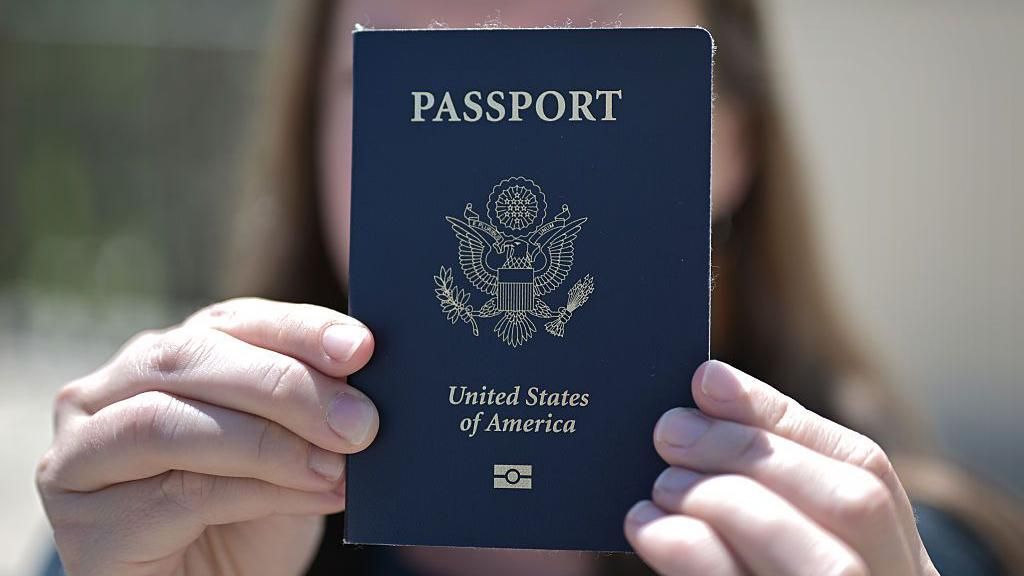
US to revoke passports of parents with child support debt
A major new enforcement policy targeting delinquent child support payments is set to launch from the U.S. State Department, which will begin revoking passports from American parents who carry significant outstanding child support debt. Under the updated rules, any parent with unpaid child support obligations exceeding $2,500 (equal to roughly €1,844) could face the consequences, with enforcement efforts focused specifically on holders of large, unresolved debt balances. In an official statement, the State Department emphasized that the policy leverages what it calls commonsense tools to uphold the well-being of American families and boost compliance with existing federal legislation, reinforcing that all parents carry both legal and moral obligations to provide financial support for their children. The agency has urged anyone matching the debt criteria to immediately arrange full or structured payment with their relevant state child support enforcement agency to avoid having their travel documents revoked. Once a passport is revoked, it immediately becomes invalid for any international travel, and affected individuals will remain ineligible to apply for a new passport until their entire outstanding child support debt is cleared in full. The policy itself is rooted in a 1996 federal law that has long allowed passport restrictions for delinquent child support payers, but the provision has been rarely enforced in decades since its passage. Previously, the penalty of passport denial was only applied when an individual with outstanding child support debt attempted to renew their existing passport. Under the revamped approach, the State Department will partner closely with the U.S. Department of Health and Human Services to proactively identify individuals with unresolved child support debt over the $2,500 threshold, moving beyond the reactive model of the past to actively revoke currently valid passports. While the State Department has not publicly announced an official start date for the new enforcement, the Associated Press has reported that the policy will formally go into effect this Friday. The BBC has reached out to the State Department to confirm the timeline and additional details of the rollout. For Americans who happen to be traveling outside the United States at the time their passport is revoked, the AP notes that affected individuals will be required to visit a U.S. embassy or consulate to obtain a limited emergency travel document that only permits them to return to the country. State Department officials stressed that the action is designed to hold delinquent payers accountable for their obligations while directly supporting the financial and general welfare of children across the United States, implementing tangible consequences for noncompliance that have long been permitted under federal law but underutilized for decades.
-
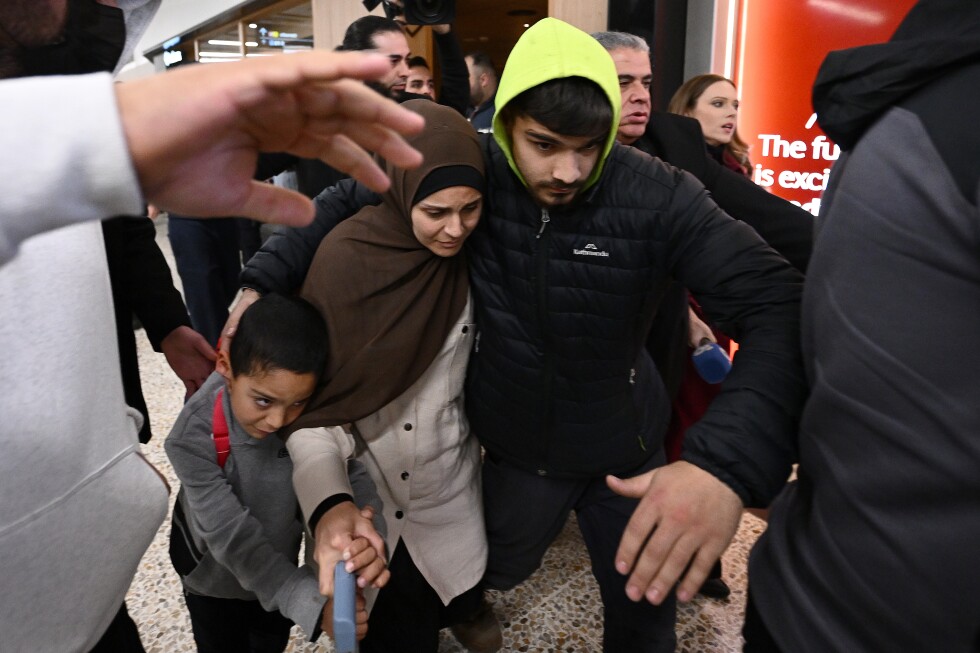
3 Australian women back from Syria face slavery and terrorism charges over alleged IS links
On a Thursday late last week, four Australian women and nine children touched down in Melbourne on two Qatar Airways flights originating from Doha, capping years of detention in the squalid, desert-side Roj Camp in northern Syria. What made their homecoming extraordinary was the fact it came despite explicit warnings from the Australian federal government that any citizens linked to the Islamic State (IS) group returning from the former IS caliphate would face immediate prosecution. By the following day, three of those four women had been arrested and slapped with serious slavery, terrorism and crimes against humanity charges that carry decades of potential prison time.
The most severe allegations center on 53-year-old Kawsar Abbas and her 31-year-old daughter Zeinab Ahmed, who appeared in a Melbourne Magistrates Court on Friday following their arrival. According to official statements released by Australian police, the entire Abbas family migrated from Australia to Syria in 2014, when IS declared its self-styled caliphate centered on the northern Syrian city of Raqqa. Investigators allege the family purchased a young Yazidi woman as a slave for $10,000 USD, and held the captive in their family home while they resided in IS-controlled territory. Kawsar Abbas is accused of being an active accomplice in the purchase and unlawful detention of the enslaved woman.
As a result of the allegations, Abbas faces four separate counts of crimes against humanity under Australian federal law, while Ahmed faces two counts of slavery offenses. Each individual charge carries a maximum penalty of 25 years behind bars, meaning both women could face life sentences if convicted. Their legal representation confirmed the pair will submit formal bail applications at a scheduled hearing on the following Monday.
The third woman charged, a 32-year-old who was taken into custody at Sydney Airport after the group’s arrival, faces a separate set of terrorism-related charges. Police allege she traveled to Syria to join her partner, who was an active IS fighter. Under Australian law in place between 2014 and 2017, travel to Raqqa – the former IS stronghold – without a valid official reason was a criminal offense. She is charged with being a member of a designated terrorist organization and knowingly entering and remaining in territory controlled by the group. Each of those charges carries a 10-year maximum prison sentence, and she is scheduled to appear in a Sydney court for a bail hearing later the same day.
The three women had been held in Kurdish custody since 2019, when IS’s territorial rule collapsed across northern Syria and Iraq, and had remained detained at Roj Camp ever since. The Australian government has repeatedly condemned citizens who traveled to Syria to support IS, and it refused to provide any official assistance to facilitate the group’s repatriation. Still, this arrival marks only the latest in a series of returns of Australian citizens held in Syrian detention camps: the federal government has organized two formal repatriation operations in recent years, and other citizens have made their own way back to Australia without state support.
Currently, 21 more Australian citizens – 11 women and 10 children – remain detained in Roj Camp, located in northeast Syria just kilometers from the Iraqi border. Advocacy groups supporting the detainees have confirmed they are working to secure the repatriation of this remaining group within the next several weeks. Among those still held is one woman who is currently blocked from returning to Australia under a temporary exclusion order, a legal tool introduced in 2019 legislation designed to bar high-risk former IS affiliates from re-entering the country. The order allows the government to bar eligible citizens from returning for up to two years, and this marks one of the first times the power has been used since it was enacted. Temporary exclusion orders cannot be applied to children under the age of 14, and Australian officials have ruled out separating children from their mothers to enforce the orders, leaving the government with little option but to allow the entire family unit to remain detained if the mother is barred.
-

Rebel labelled ‘fantastical liar’ whose own witnesses ‘destroyed’ her credit as her blockbuster defamation trial closes
One of Hollywood’s most high-profile legal disputes, a defamation lawsuit brought by actor Charlotte MacInnes against A-lister Rebel Wilson over claims made during production of Wilson’s directorial debut *The Deb*, has reached its final stage after two weeks of hearings at Sydney’s Federal Court. As Justice Elizabeth Raper prepares to issue a ruling, closing arguments delivered Friday painted sharply conflicting portraits of the two stars at the center of the case.
The dispute traces back to an incident at Bondi Beach in September 2023, when producer Amanda Ghost suffered a sudden medical episode that left her with severe hives and uncontrollable shaking. After the incident, Ghost and MacInnes — Wilson’s co-star in the upcoming musical comedy — took a bath together in swimwear to help ease Ghost’s symptoms.
Wilson has claimed that MacInnes privately told her she felt uncomfortable following the bath, before later retracting the complaint to advance her acting career. In a series of 2024 Instagram posts, Wilson publicly shared these claims, moves Sue Chrysanthou SC, MacInnes’ barrister, described as a public takedown of the young rising actor. MacInnes has repeatedly denied ever raising a complaint of discomfort or misconduct, saying the entire narrative was fabricated by Wilson.
In her closing submissions, Chrysanthou delivered a blistering attack on Wilson’s credibility, arguing that testimony from the Hollywood star’s own witnesses had completely undermined her version of events. “She is a fantastical liar who has made up terrible, terrible allegations against multiple people, and her own witnesses have discredited her,” Chrysanthou told the court. She further argued that any claim of sexualized misconduct was inherently illogical, given the context of the emergency incident: “On the question of inappropriate and sexual behaviour, when one accepts the circumstances of why they were in the bathroom in their swimmers, freezing, one could hardly imagine a less sexy environment for some kind of harassment to occur. Shaking and hives…it’s not exactly an environment where one would accept some kind of sexual approach. It defies logic.”
Chrysanthou highlighted key inconsistencies in Wilson’s testimony, most notably her claim that she reported the alleged complaint to local film producer Greer Simpkin the day after the incident and was instrumental in the decision to move MacInnes out of the shared Bondi penthouse. Simpkin — called as a witness by Wilson’s legal team — testified that she first learned of the incident a full week later, when Ghost approached her to arrange the move, directly contradicting Wilson’s account. Chrysanthou called Simpkin’s testimony “devastating” for Wilson, saying the entire narrative of Wilson taking prompt responsible action as director was a deliberate fabrication, not an innocent mistake. “This is a concoction by Ms Wilson … that she apparently took responsible steps as a director and reported it to the local producer, and then took advice from her to raise it with Ms Ghost. This is not an error, this is a concoction,” she said.
Rebuffing the claim that Simpkin’s testimony destroyed Wilson’s credibility, Dauid Sibtain SC, Wilson’s lawyer, argued the producer did not have a clear, flawless recollection of the timeline of events, and had simply given the best testimony she could offer. Sibtain pushed back against the assertion that Wilson had invented the story, arguing there was no logical motive for his client to disrupt production harmony and create conflict between Ghost and MacInnes. He maintained that Wilson is a “witness of truth” who accurately reported the complaint she received, noting “A senior producer and a junior actor being in a bath together, if anyone heard that and no other facts, one would assume a complaint would be imminent.” He also counterclaimed that MacInnes had given false testimony under oath, pointing to what he described as evasive answers about the professional benefits MacInnes had received through her connection to Ghost.
Chrysanthou rejected the defense’s arguments outright, retorting: “That’s what she does. She is a liar who makes up stories about people, it’s hard to explain why.” She also told the court that the lawsuit had taken a devastating toll on the young actor, who has not received new acting work since the dispute became public and has suffered from severe anxiety that has disrupted her sleep and appetite. “It’s actually beggars belief my friends have suggested that my client is living her dreams,” Chrysanthou said. “No young woman dreams to be pulled into the spotlight by a celebrity…and lied about.”
After closing arguments concluded, Justice Raper reserved her decision, with no timeline for a ruling released as of yet.
-

North Korea will deploy new artillery guns targeting Seoul and commission its 1st destroyer
Tensions on the Korean Peninsula have escalated sharply in recent days, after North Korea announced plans to roll out advanced long-range artillery systems capable of striking the Seoul capital region and commission its first purpose-built naval destroyer by mid-year — moves that come on the heels of a sweeping constitutional change that abandons decades of official commitment to Korean unification.
The developments mark the most visible escalation of Pyongyang’s hard-line stance under leader Kim Jong Un, who has spent years steadily moving away from the goal of a single Korean state and redefining South Korea as the country’s primary permanent enemy.
North Korea’s state-run Korean Central News Agency (KCNA) detailed Kim’s two-day inspection tour of military facilities this week. On Wednesday, Kim visited a munitions factory to oversee production of new 155-mm self-propelled gun-howitzers, which are set to be deployed to artillery units stationed along the southern border with South Korea before the end of 2024. According to KCNA, Kim confirmed these large-caliber rifled weapons have a maximum striking range exceeding 60 kilometers, or roughly 37 miles. The North Korean leader framed the enhanced capability as a transformative advantage for his military’s ground operations, noting that “such a rapid extension of striking range and remarkable improvement of striking capability will provide a great change and advantage in the land operations of our army.” Kim added that a suite of other tactical and operational missile systems, along with advanced multiple rocket launchers, are also scheduled for deployment along the inter-Korean border in coming months.
While North Korea’s ballistic missile program has dominated global headlines and drawn repeated United Nations sanctions, its large conventional artillery force positioned near the border has long been considered one of the most immediate threats to South Korea. The Seoul capital region, home to more than 10 million South Korean citizens, sits just 40 to 50 kilometers from the inter-Korean border — putting the entire area well within range of the newly announced artillery systems.
On Thursday, a day after the factory inspection, Kim traveled to North Korea’s west coast to review sea trials of the country’s first newly built navy destroyer, the Choe Hyon. Kim praised the completion of all pre-commissioning tests, and ordered military officials to formally transfer the warship to the North Korean navy by mid-June, as originally planned.
Notably, Kim’s teenage daughter accompanied him during the destroyer inspection, marking another high-profile public appearance together that fuels ongoing speculation about her position as Kim’s intended successor. Last month, South Korea’s National Intelligence Service publicly assessed that she could be formally recognized as the next heir to North Korea’s ruling family. The Choe Hyon, first unveiled to great fanfare in 2023, is North Korea’s largest and most technologically advanced surface warship to date. Pyongyang began construction on a second destroyer of the same class shortly after, but that vessel suffered significant damage during a botched launching ceremony. Kim has publicly called for the construction of two additional destroyers of the class to modernize the North Korean navy.
Kim’s series of military inspections came just days after South Korea confirmed that North Korea’s recently amended constitution has removed all official language referencing peaceful unification with the South, and redefined Pyongyang’s national territory as only the northern half of the Korean Peninsula. The constitutional change codifies a dramatic shift in North Korea’s long-standing policy, breaking with the position held by Kim’s predecessors, who prioritized the goal of eventual unification under northern rule. Since the start of 2024, Kim has repeatedly declared South Korea a hostile state, and ordered the constitutional rewrite to eliminate all official concepts of shared Korean statehood.
The hardening of North Korea’s position represents a major setback for South Korea’s liberal government, which has prioritized reengaging in dialogue with Pyongyang and taken proactive steps to reduce cross-border tensions — including ending the controversial propaganda loudspeaker broadcasts that South Korea historically operated along the inter-Korean border.
The current escalation comes after a years-long stagnation in diplomatic efforts: North Korea has refused all formal dialogue with both South Korea and the United States since 2019, when high-profile nuclear diplomacy between Kim Jong Un and then-U.S. President Donald Trump collapsed. Since the breakdown of talks, Pyongyang has focused heavily on expanding its nuclear and conventional military arsenals, steadily increasing the threat it poses to regional security.
-

EU monitor says sea temperatures near all-time highs as El Nino looms
Against a backdrop of accelerating long-term human-caused global warming, the European Union’s official climate monitoring body has warned that global sea surface temperatures are on the cusp of hitting unprecedented all-time highs, as the planet moves toward the formation of a potentially powerful El Nino weather event.
-
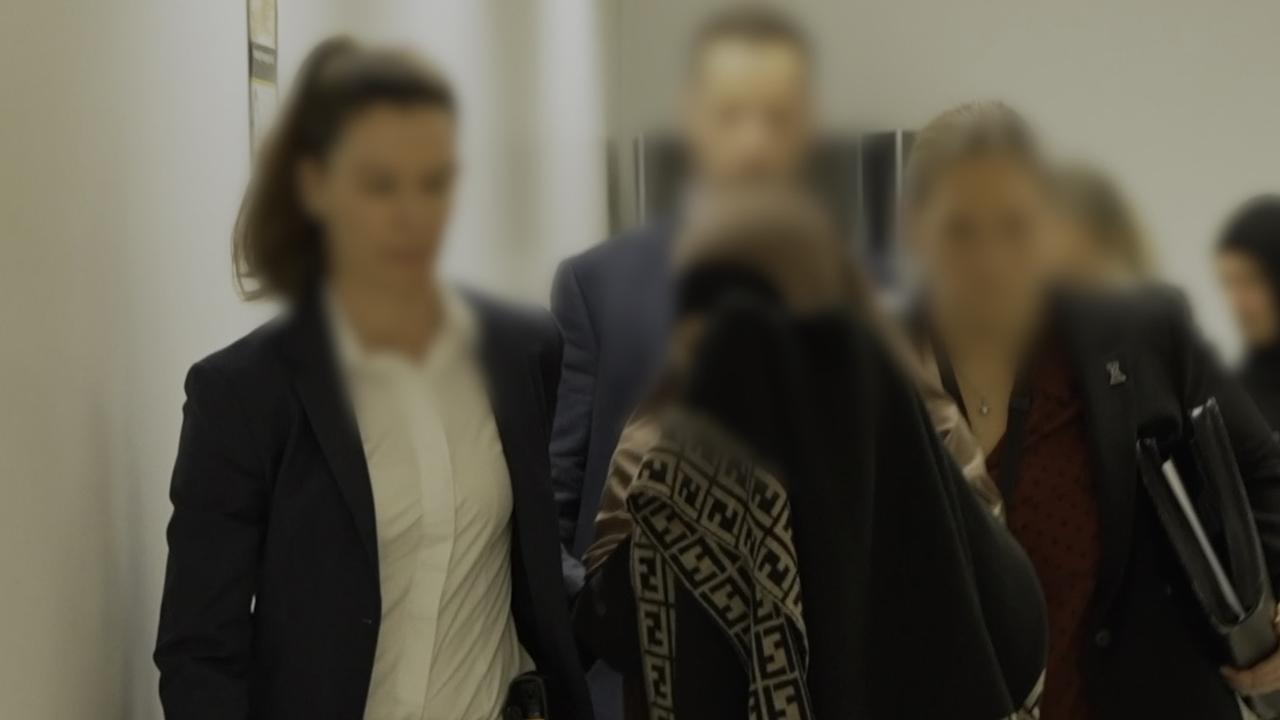
Kawsar Ahmad, Zeinab Ahmad: Women charged after returning from Syrian camp appear in Australian courts
A 53-year-old woman and her 31-year-old daughter made their first court appearance in Melbourne on Friday, just hours after being taken into custody upon their arrival back in Australia from Syria, with legal teams confirming plans to apply for bail for both defendants early next week.
Kawsar Ahmad, who also goes by the name Kawsar Abbas, faces four separate charges linked to crimes against humanity: enslavement, possession of a slave, use of a slave, and participation in slave trafficking. Her daughter Zeinab Ahmad, alternatively recorded as Zeinab Ahmed, faces two counts of enslavement and use of a slave. Every charge carried by the pair carries a maximum 25-year prison sentence if convicted.
The two women were among a group of 13 Australian citizens — four adult women and nine children — repatriated from northern Syria this week, landing on Australian soil on Thursday evening. They were taken into custody by authorities immediately after clearing customs at Melbourne Airport. A third daughter of Kawsar Ahmad, Zahra Ahmad, who is the widow of notorious killed Islamic State recruiter Muhammad Zahab, was allowed to leave the airport without arrest.
Before the pair were taken into custody, chaotic confrontations broke out at the airport between supporters of the repatriated group and members of the media, as supporters escorted the group to a waiting minibus to leave the terminal.
Investigative allegations from Australian police outline that the two women first traveled to Syria with their extended family back in 2014, and had been held by Kurdish-led forces at the Al Roj displacement camp in northern Syria since March 2019. Authorities allege that while the family was living in Syria, they held captive and enslaved multiple Yazidi women, members of an ethnic minority group native to northern Iraq who were targeted by the Islamic State for systematic enslavement and genocide.
When the case was called at Melbourne Magistrates’ Court on Friday morning, the public gallery was filled to capacity with journalists, legal observers, and supporters of the two women. Around 10 additional attendees were forced to stand along the perimeter walls of the gallery due to the lack of available seating. Court observers noted that Kawsar Ahmad scanned the room after taking her place at the defense table, before locking eyes with her group of supporters and smiling. Both women remained in the clothing they wore when they were arrested on Thursday.
Bill Doogue, legal counsel for Kawsar Ahmad, informed the court that the defense would formally submit a bail application on the coming Monday. Minutes later, Maya George, Zeinab Ahmad’s attorney, confirmed her team would also pursue bail for her client in line with the same timeline.
-
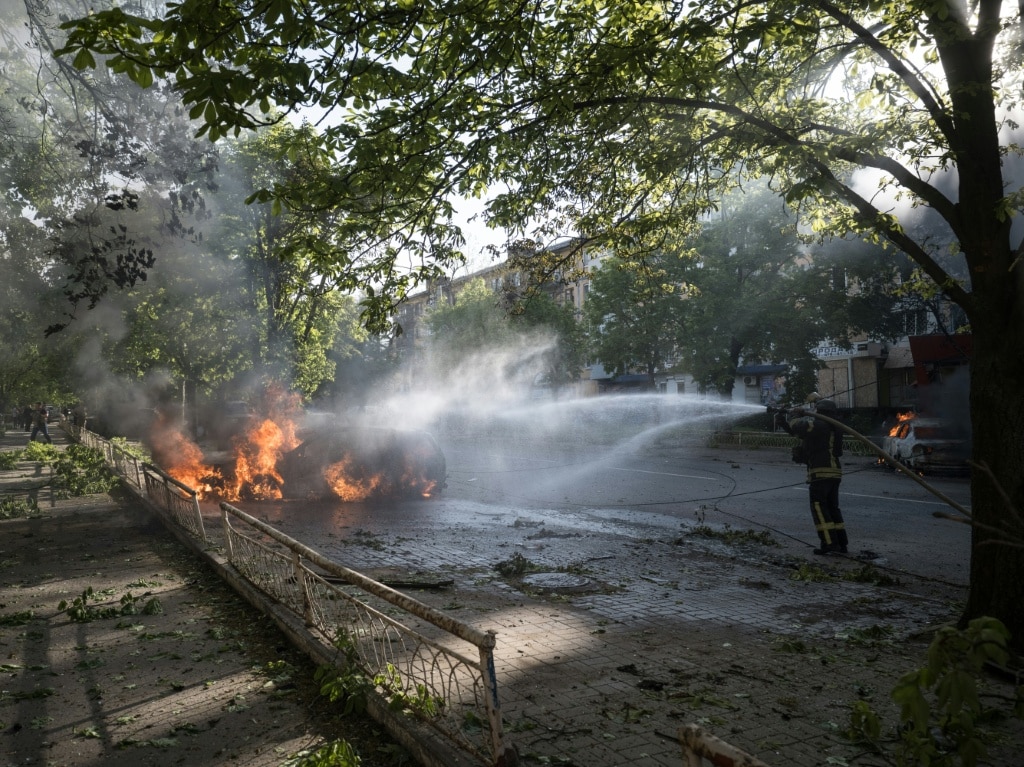
Russia says intercepted drones as its unilateral truce begins
Just hours after Russia launched its unilateral two-day ceasefire to coincide with its annual World War II Victory Day holiday celebrations, Russian authorities announced they had intercepted multiple drones targeting the capital Moscow on Friday, while escalating threats of retaliatory strikes against Kyiv that have drawn sharp international backlash.
The temporary ceasefire has been dismissed by Ukrainian leadership as nothing more than a propaganda tactic designed to secure Russia’s iconic May 9 Red Square military parade – one of the most symbolically charged patriotic events in Russian President Vladimir Putin’s 25-year tenure in power. Putin has anchored much of his political narrative to the memory of the Soviet Union’s victory over Nazi Germany, even invoking that legacy to justify his full-scale invasion of Ukraine in 2022.
In remarks ahead of the ceasefire taking effect, Ukrainian President Volodymyr Zelensky issued a stark warning to allied nations considering sending representatives to attend the Moscow parade. “We have also received messages from some states close to Russia, saying that their representatives plan to be in Moscow… A strange desire… in these days. We do not recommend it,” Zelensky stated. He went on to accuse Russia of seeking a temporary pause in fighting only to protect its ceremonial event before resuming military aggression: “They want from Ukraine a permit to hold their parade so that they can go out onto the square safely for one hour once a year, and then go on killing.”
Zelensky’s own earlier proposal for a reciprocal Ukrainian ceasefire starting May 6 has gone unanswered by the Kremlin. In the final days leading up to the unilateral truce, Russian forces intensified their attacks on Ukrainian positions, with Ukraine launching counterstrikes of its own. On Thursday, Russia’s defense ministry claimed its forces had destroyed nearly 350 Ukrainian drones in overnight operations. Per updates posted by Moscow Mayor Sergei Sobyanin on Russian social platform Max, an additional 20 drones were intercepted in the first two hours after Russia’s ceasefire went into effect.
In the lead-up to the holiday, the Russian defense ministry issued an urgent formal call for Kyiv residents and foreign diplomatic personnel to evacuate the Ukrainian capital, warning of impending retaliatory strikes should Ukraine continue offensive operations during the truce. “We remind the civilian population of Kyiv and staff at foreign diplomatic missions once again of the need to leave the city in good time,” the ministry said, echoing a similar evacuation warning for diplomats issued by the Russian foreign ministry late Wednesday.
International reaction to the Russian threats was swift and critical. The United Kingdom’s foreign office called Moscow’s warnings “unwarranted, irresponsible and completely unjustified,” noting that any attack on foreign diplomatic premises would represent a dangerous new escalation of the ongoing conflict. German Foreign Ministry official Johann Wadephul confirmed to Bloomberg TV that Berlin has no plans to withdraw its embassy staff from Kyiv, while a senior anonymous source close to Zelensky told Agence France-Presse that the Ukrainian president would remain in Kyiv through the weekend.
Under the terms of Russia’s unilateral ceasefire, the defense ministry pledged a “complete” halt to offensive fire along the entire front line and an end to long-range strikes on Ukrainian military infrastructure, while warning that any failure by Ukraine to match the pause would prompt a proportional Russian response. In a reflection of growing security unease ahead of this year’s event, Moscow has announced multiple unusual changes to the annual parade: for the first time in nearly two decades, no heavy military hardware such as tanks and ballistic missiles will be displayed along Red Square, a shift that comes as Ukraine has expanded its long-range drone strike capacity and stepped up attacks on Russian territory far from the front lines in recent weeks.
Attendance from foreign leaders has also plummeted. According to the Kremlin, only the heads of state of Belarus, Malaysia, and Laos will attend the event, alongside leaders of two Russia-backed breakaway Georgian regions that lack United Nations recognition. Moscow has also implemented intermittent city-wide internet shutdowns that will remain in place through Saturday, further signaling heightened security concerns.
The conflict, which has grown into the most devastating armed confrontation in Europe since World War II, remains at a stalemate, with diplomatic negotiations to end the hostilities making little to no progress and largely overshadowed by rising tensions in the Middle East tied to the Iran conflict. Moscow’s core peace demand – that Ukraine withdraw its forces from four eastern and southern regions Russia claims as its own – remains completely unacceptable to the Kyiv government.
-
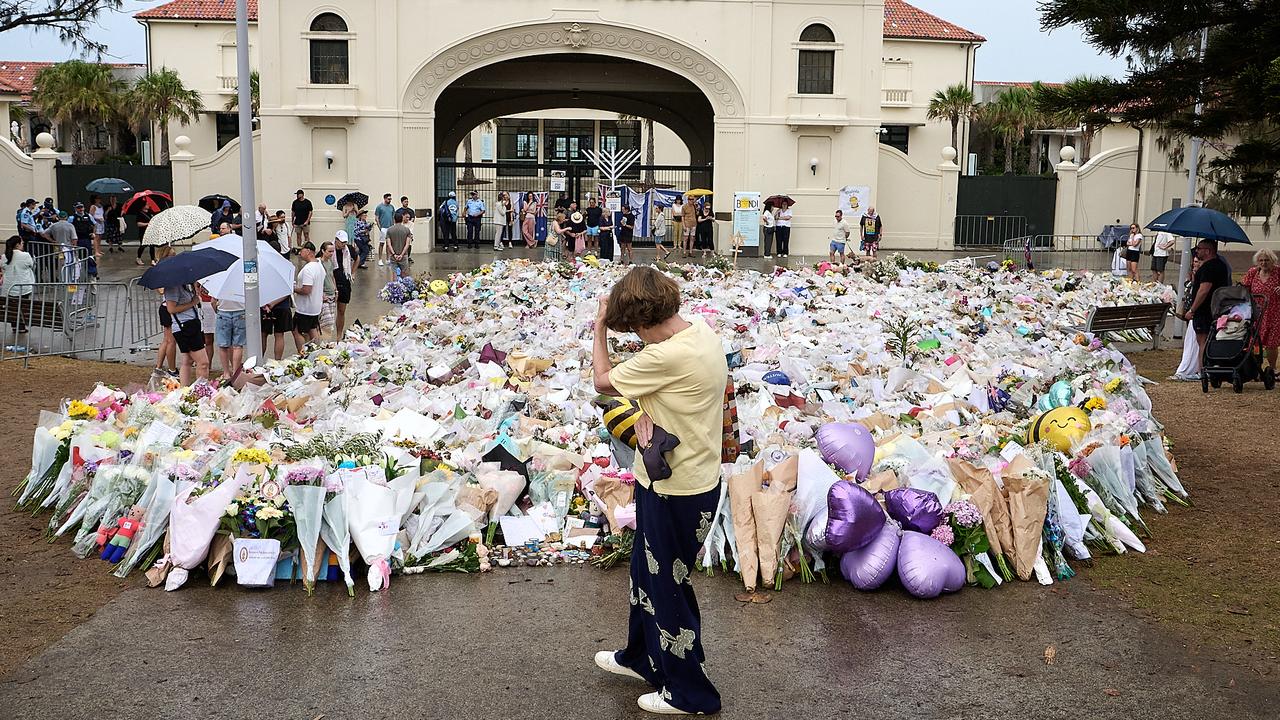
Man tells inquiry he faced more prejudice for converting to Judaism than being gay
On the opening day of Friday’s sitting of Australia’s Royal Commission into Anti-Semitism and Social Cohesion, the first witness to take the stand, a librarian identified only as Benjamin F, delivered a harrowing emotional testimony that laid bare the rising toxicity of anti-Jewish prejudice in the country. Raised in a Christian household, Benjamin shared that he faced surprisingly little hostility when he came out as gay to his loved ones, receiving widespread acceptance and support from friends and family that allowed him to live openly without persistent prejudice. That warm reception stood in stark contrast to the bigotry he encountered after he formally completed his conversion to Judaism in 2022, an experience he described as “horrific” as he choked back tears throughout his address. Benjamin told the commission that converting to his new faith has cost him decades-long close friendships, with many lifelong companions abandoning him entirely after learning of his religious choice. The isolation has left him feeling deeply lonely and adrift, he said, adding that the level of hatred directed at him since his conversion has been far more severe than any bias he faced after coming out. “I feel alone. There’s been times you’ve had life-long friendships that have disintegrated. It’s lonely,” he told the commission through sobs. He also explained that any mention of his Jewish identity or topics related to Judaism inevitably gets tied back to the Israeli-Palestinian conflict by others, regardless of context. Beyond broken social bonds, Benjamin has faced direct verbal slurs and has even had the validity of his religious conversion repeatedly questioned by critics. The most striking moment of his testimony came when he described his experience attending a recent Sydney Mardi Gras parade, where he required police escort for his safety. He told the commission that he felt a genuine, unprecedented fear for his life during the event — a terror he never experienced even as a young gay man coming out in a less accepting era. Benjamin’s testimony marks one of the first firsthand accounts of rising anti-Semitism shared at the royal commission, which was convened to examine the state of religious prejudice and social cohesion across Australia. More witness statements and findings are expected to be released as the commission’s proceedings continue.
-

New York governor orders US immigration agents to unmask
A high-stakes conflict over US immigration enforcement erupted this week after New York Governor Kathy Hochul announced sweeping new restrictions on Immigration and Customs Enforcement (ICE) operations across the state, including an unprecedented order requiring federal agents to stop concealing their identities during raids.