作者: admin

  • Southeastern Australia settles in for cold snap as ‘hazardous conditions’ belt the coastline

    Southeastern Australia settles in for cold snap as ‘hazardous conditions’ belt the coastline

    Southeastern Australia is confronting its inaugural significant cold outbreak of the year, with meteorological authorities issuing severe weather alerts for potentially dangerous conditions persisting through the weekend. A prolonged period of chilly, precipitation-heavy weather continues to dominate Australia’s southeastern states, with persistently low temperatures and rapidly worsening coastal situations.

    The Bureau of Meteorology has enacted hazardous weather advisories spanning extensive sections of the New South Wales coastline, expected to remain active throughout Friday and Saturday. Meteorological officials have released storm-force wind alerts for multiple coastal regions including the Hunter, Sydney, Illawarra, and Batemans coastlines. Concurrently, enclosed waters adjacent to Sydney and the Macquarie Coast have received gale-force wind warnings.

    Projections indicate the Illawarra and Batemans coastlines will endure sustained storm-force winds continuing into Saturday, while Sydney’s enclosed waters, Macquarie Coast, Hunter, Sydney, and Eden coasts are forecast to experience slightly reduced but still significant gale-force conditions. Coastal areas are anticipating average wave heights ranging between 5-11 meters, creating exceptionally dangerous marine environments.

    Meteorological modeling suggests damaging surf conditions will initially develop near Lord Howe Island, with forecasts predicting ‘large and powerful waves’ surpassing 5 meters by Saturday morning. Coastal conditions along the NSW seaboard from Seal Rocks near Forster to the Victorian border are expected to intensify throughout Friday before gradually weakening Saturday morning.

    NSW Police Detective Chief Inspector Anthony Brazzill has issued urgent safety recommendations, strongly advising seafarers, surfers, and beach visitors to avoid water activities this weekend. ‘We’re emphatically urging anyone considering water activities to reconsider their plans. The anticipated strong winds and powerful surf present significant risks not only to the public but also to emergency response teams,’ Mr. Brazzill stated.

    The police official further emphasized that despite possessing high-performance resources including police boats, dive teams, aviation assets, and specialized rescue personnel, severe weather conditions would likely impair emergency response capabilities in certain situations. The clear recommendation remains continuous weather monitoring and maintaining distance from coastal waters throughout the weekend, with public safety representing the paramount concern.

  • Three charts that are warning signs flashing for Trump on Iran war

    Three charts that are warning signs flashing for Trump on Iran war

    President Donald Trump’s second-term administration faces mounting political headwinds as economic pressures and military engagement in Iran trigger declining approval ratings. Since returning to the White House in January 2025, Trump has witnessed a steady erosion of public support, particularly regarding economic management—a concerning trend for Republicans approaching midterm elections.

    Current polling data reveals a pronounced deterioration in economic confidence. Ipsos metrics indicate Trump’s economic approval plummeted from 43% at his second-term inauguration to 35% by June 2025, with subsequent declines pushing this figure to a concerning 29%—below any approval rating recorded during Joe Biden’s presidency despite post-pandemic inflation challenges.

    The Iran conflict has dramatically exacerbated economic strains, with gasoline prices surging to nearly $4 per gallon within three weeks of military engagement. This economic-pressure catalyst has contributed to Trump’s overall approval rating drop from 52% to 40% according to Nate Silver’s polling average, placing the administration in precarious territory seven months before congressional elections.

    At the Conservative Political Action Conference in Texas, Republican leaders expressed urgency about protecting their agenda. Michael Whatley, North Carolina Senate candidate and former RNC chairman, warned attendees: ‘We cannot let the left win this election cycle and take away this agenda we are fighting for every single day.’

    Despite broader public skepticism, Trump maintains strong support within his base. A Quinnipiac poll shows 86% of Republicans endorse military action in Iran, with 80% approving of Trump’s handling of the conflict. This contrasts sharply with the general electorate, where support drops to 39% and 34% respectively.

    Independent voters—crucial to Trump’s 2024 victory—now show signs of defection. This shifting political dynamic, combined with Democratic overperformance in special elections (averaging 13% better than 2024 results according to The Downballot analysis), suggests potential challenges for Republican congressional majorities in the upcoming midterms.

  • AFL 2026: North Melbourne coach Alastair Clarkson is expecting a fired up Essendon

    AFL 2026: North Melbourne coach Alastair Clarkson is expecting a fired up Essendon

    A critical Australian Football League (AFL) showdown looms this Saturday at Marvel Stadium as the winless Essendon Bombers confront a resurgent North Melbourne Kangaroos. Both clubs enter the match under immense pressure, though from starkly different circumstances in the nascent 2024 season.

    Essendon’s campaign is in crisis mode after just two rounds, suffering heavy consecutive defeats to Hawthorn and Port Adelaide. This dismal start, compounded by a horror finish to their previous season, has placed coach Brad Scott under mounting scrutiny. The Bombers’ upcoming fixture list presents a formidable challenge, intensifying the significance of this match.

    Conversely, North Melbourne experienced a promising season opener with a victory but suffered a shocking setback last week with a loss to the wooden spooner West Coast Eagles. Despite being installed as heavy favourites for the upcoming clash, veteran coach Alastair Clarkson is issuing stern warnings to his squad. He emphatically dismissed any notion of facing a demoralized opponent, instead preparing for Essendon’s strongest possible response.

    “Anyone who has got their backs to the wall are usually (fired up); we’re expecting Essendon’s best,” Clarkson stated. He elaborated that game tape revealed patches of high-quality football from Essendon despite their losses, noting that “the Essendon best will trouble anyone.”

    In team news, North Melbourne welcomes back hard-nosed midfielder George Wardlaw alongside Aidan Corr and Callum Coleman-Jones. They replace omitted players Jack Darling and Jacob Konstanty, and the injured Griffin Logue. Clarkson confirmed Wardlaw will play under managed minutes despite being fully fit, leveraging the league’s fifth interchange rule to manage his workload effectively.

    The outcome carries substantial weight for both franchises. A loss for Essendon would deepen an early-season crisis, while a defeat for North Melbourne would undermine their positive start and rekindle doubts about their consistency. The final siren will undoubtedly trigger a wave of intense analysis for one of these historic clubs.

  • Italy stay in World Cup hunt as Wales, Ireland suffer penalty heartbreak

    Italy stay in World Cup hunt as Wales, Ireland suffer penalty heartbreak

    The European pathway to the 2026 World Cup witnessed a night of intense drama and contrasting fortunes as several national teams battled in the play-off semi-finals. In a decisive performance, Italy secured a vital 2-0 victory over Northern Ireland in Bergamo. Goals from Newcastle United’s Sandro Tonali, with a powerful drive, and Moise Kean’s excellent finish in the second half propelled the four-time champions closer to ending their 12-year World Cup absence. Under manager Gennaro Gattuso, the Azzurri acknowledged the challenge. ‘We had to work hard because it was not easy tonight,’ Gattuso stated, adding that the focus is now on recharging for the final play-off against Bosnia and Herzegovina.

    The narrative was one of heartbreak for other nations. In Cardiff, Wales saw a late equalizer shatter their hopes. A superb Dan James opener was canceled out by 40-year-old Edin Dzeko’s header for Bosnia, forcing extra time and ultimately a penalty shootout. Bosnia emerged victorious 4-2, leaving Welsh captain Ethan Ampadu ‘lost for words’ despite his team’s valiant effort.

    Similarly, the Republic of Ireland endured a crushing defeat in Prague. After establishing a 2-0 lead through a Troy Parrott penalty and an own goal from Czech goalkeeper Matej Kovar, Ireland conceded two late goals. A Patrik Schick penalty and an 86th-minute header from Ladislav Krejci leveled the match. The Czech Republic then triumphed in the shootout, with Kovar redeeming himself with two crucial saves. Ireland’s manager Heimir Hallgrimsson described the collective feeling as ‘just pain.’

    Elsewhere, Sweden, powered by a Viktor Gyokeres hat-trick, defeated a displaced Ukraine 3-1 in Valencia. Poland, inspired by Robert Lewandowski, came from behind to defeat Albania 2-1. Denmark showcased a dominant 4-0 win over North Macedonia, while Kosovo edged Slovakia 4-3 in a thrilling contest to move one step away from their first-ever major tournament. Turkey also advanced with a 1-0 win over Romania, keeping their World Cup dreams alive.

  • US currency to bear Trump’s signature, Treasury says

    US currency to bear Trump’s signature, Treasury says

    In an unprecedented departure from tradition, the US Treasury Department announced Thursday that American paper currency will soon feature President Donald Trump’s signature alongside that of Treasury Secretary Scott Bessent. This landmark decision marks the first time a sitting US president’s signature will appear on the nation’s banknotes, coinciding with America’s 250th anniversary celebrations.

    The Treasury’s announcement overturns the long-established convention where currency signatures were exclusively reserved for the Treasurer of the United States and the sitting Treasury Secretary. Secretary Bessent justified the historic move by stating, ‘Under President Trump’s leadership, we are on a path toward unprecedented economic growth, lasting dollar dominance, and fiscal strength and stability.’ He further emphasized the symbolic significance, calling it ‘the most powerful way to recognize the historic achievements of our great country and President Donald J. Trump.’

    This currency redesign forms part of a broader pattern of Trump administration initiatives placing the president’s imprint on national symbols. Last week, a presidential advisory commission approved designs for a commemorative gold coin featuring Trump’s image—another break with tradition that has drawn criticism from Democratic opponents. The coin depicts Trump standing with clenched fists on a desk on one side, with the reverse showing an eagle with spread wings perched on a bell-like structure.

    Although these commemorative coins lack monetary value and their pricing remains undisclosed, similar collector items from the US Mint typically command prices exceeding $1,000. The administration is also advancing additional controversial designs, including a temporary $1 circulation coin bearing Trump’s likeness—a move that challenges federal regulations prohibiting living presidents from appearing on US currency.

  • ‘True miracle’: Napoleon’s long-lost hat to go on display

    ‘True miracle’: Napoleon’s long-lost hat to go on display

    In an extraordinary historical discovery, a meticulously preserved bicorne hat worn by Napoleon Bonaparte during his final exile on Saint Helena has been authenticated and prepared for public exhibition. The black beaver felt headpiece, long forgotten in museum storage, will serve as the centerpiece of a forthcoming exhibition at the Château de Chantilly’s Condé Museum north of Paris.

    Mathieu Deldicque, director of the Condé Museum, described the find as nothing short of a ‘true miracle,’ emphasizing the hat’s remarkable preservation through two centuries. ‘This hat is a revelation,’ Deldicque stated during Thursday’s media presentation. ‘We can trace its complete provenance from Napoleon’s exile directly to the present day.’

    Historical authentication was conducted by Jean-Guillaume Parich of the Army Museum, who confirmed this as one of only four hats the deposed emperor carried to his Atlantic island exile. The hat’s intimate connection to Napoleon is evidenced by poignant details including visible perspiration stains on its silk lining. ‘These marks create a visceral connection to the emperor in his final years,’ Parich noted.

    Crafted by Napoleon’s official hatmaker Poupard, the artifact displays definitive characteristics of imperial headwear: distinctive proportions, a small tricolour cockade, and silk-taffeta lining. Historical records indicate Napoleon commissioned between 60-80 such hats during his reign, wearing them sideways unlike contemporary officers to create his iconic battlefield silhouette.

    The hat’s journey through history reveals a tragic narrative. Bequeathed to his son Napoleon II in the emperor’s 1821 will, the inheritance never reached the young king who died prematurely in 1832. Instead, the imperial estate passed to Napoleon’s sister Caroline Murat in 1836, eventually entering the Condé Museum’s collections in 1904 before being consigned to storage obscurity.

    Only during preparations for the upcoming exhibition on Napoleon’s sister’s art collections did researchers successfully authenticate and trace the hat’s complete history. Of approximately 15 fully authenticated Napoleon hats existing today, this discovery represents a significant addition to Napoleonic heritage. The exhibition opens in early June, offering public access to a personal artifact that survived two centuries of historical turbulence.

  • ‘Affordability is the biggest thing’ – Conservatives mixed on economy under Trump

    ‘Affordability is the biggest thing’ – Conservatives mixed on economy under Trump

    At the annual Conservative Political Action Conference (CPAC) in Texas, a notable divergence of opinions emerged among attendees regarding the current economic climate. While the event traditionally serves as a rallying point for conservative unity, economic assessments revealed a spectrum of perspectives rather than a unified front.

    Multiple interviews conducted on the conference floor demonstrated that affordability concerns dominated conservative discourse. Many attendees pointed to persistent inflation and rising costs of everyday essentials as primary pain points affecting household budgets. These economic pressures appear to be creating a complex landscape for conservative voters who otherwise support broader Republican economic policies.

    Several delegates expressed frustration with the pace of economic recovery, particularly highlighting challenges in the housing market and energy sector. The cost of living crisis appears to be transcending traditional political allegiances, with even staunch conservatives acknowledging significant economic headwinds.

    Conversely, other conference participants pointed to positive indicators including stock market performance and business growth in certain sectors. This created a bifurcated narrative where macroeconomic indicators told a different story than personal economic experiences. The disparity between statistical economic measurements and ground-level financial realities emerged as a central theme in conversations.

    The mixed responses suggest that economic perceptions may influence conservative voting patterns in upcoming elections, with affordability concerns potentially outweighing partisan loyalty for some voters.

  • Wes Streeting accused of dog whistle politics over campaign letter

    Wes Streeting accused of dog whistle politics over campaign letter

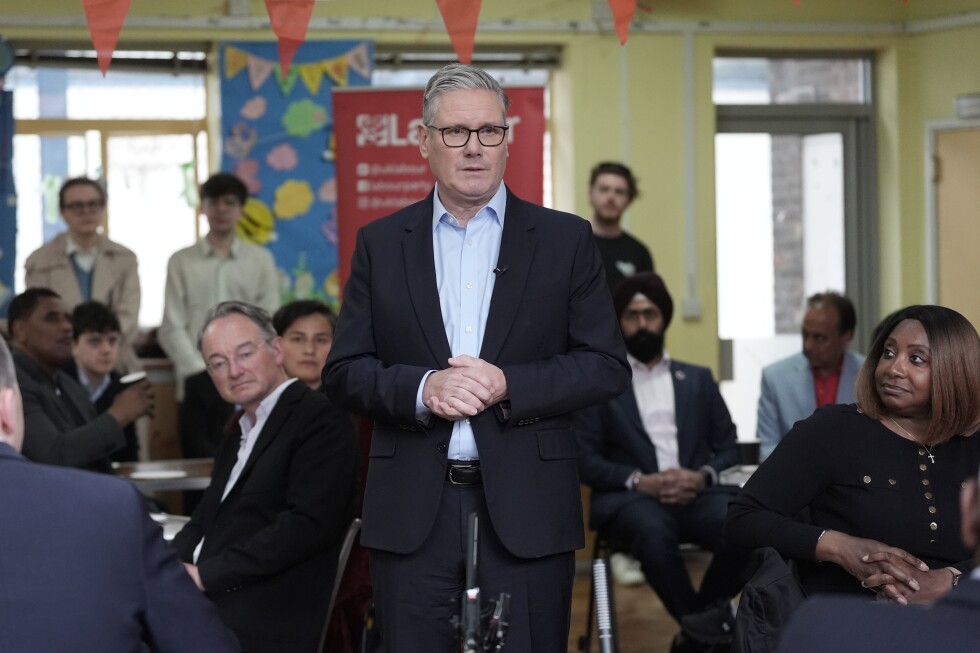
    British Health Secretary Wes Streeting has ignited a political firestorm following the distribution of a controversial campaign letter in his Ilford North constituency. The correspondence, bearing Streeting’s signature and distributed by Redbridge Labour, characterizes independent candidates as promoting ‘divisive politics’ and alleges they prioritize ‘foreign conflicts over fixing potholes.’

    The communication emerges amid heightened political tensions in East London, where Labour faces significant challenges from the Redbridge Independent party in upcoming local elections. The group has garnered support from former Labour leader Jeremy Corbyn, creating a complex political dynamic in the constituency.

    Criticism has mounted from across the political spectrum. Labour MP John McDonnell condemned the letter’s language, suggesting it verged on ‘dog whistle politics’ reminiscent of Reform UK tactics. McDonnell emphasized the need for unity rather than divisive campaigning strategies.

    The controversy gains additional complexity from Streeting’s previous private communications with disgraced peer Peter Mandelson, wherein the Health Secretary reportedly described Israel’s actions as ‘war crimes’ and ‘rogue state behavior’—contrasting sharply with his public stance against foreign policy-focused campaigning.

    Leanne Mohamad, the 23-year-old British Palestinian independent who nearly unseated Streeting in 2024, criticized the Health Secretary for focusing on political positioning rather than addressing constituent concerns about living costs, struggling high streets, and strained public services.

    The letter specifically references Tower Hamlets as a ‘rotten borough’—an 18th-century term denoting corrupt political practices—drawing indirect criticism of independent Mayor Lutfur Rahman, who has faced similar accusations of sectarianism.

    This political maneuvering occurs against the backdrop of Labour’s recent by-election loss to the Green Party in Greater Manchester, where Prime Minister Keir Starmer similarly accused opponents of ‘sectarian’ politics. Streeting’s recent comments condemning attempts to ‘delegitimize Muslim voters’ appear to signal a distancing from Starmer’s approach, highlighting internal party tensions over campaign strategy and messaging.

  • The spiky cactus fruit giving Indian farmers a cash boost

    The spiky cactus fruit giving Indian farmers a cash boost

    Across India’s agricultural landscape, a remarkable transformation is underway as farmers increasingly pivot toward cultivating dragon fruit, an exotic cactus species offering superior profitability and sustainability compared to traditional crops. This strategic shift represents both an economic opportunity and a response to changing environmental conditions.

    Arun Srinivas exemplifies this trend, having abandoned his finance career in 2020 to revolutionize his family’s Karnataka farm. After conducting exhaustive research—visiting nearly 100 farms and analyzing cultivation methods with financial scrutiny—Srinivas transitioned from coconuts and mangoes to dragon fruit. His calculated risk has yielded substantial returns, with 11 acres now producing approximately 220 tonnes annually.

    The dragon fruit, a climbing cactus native to Central America, presents unique cultivation characteristics. Typically grown on concrete pillars with circular support rings, these plants feature nocturnal blooming flowers that require specialized pollination techniques. While some farmers employ honey bees for natural pollination, others in wildlife-rich regions like Wayanad have turned to self-pollinating varieties to avoid dangerous nocturnal encounters with snakes, boars, and even leopards.

    India’s dragon fruit journey began around 2009, with serious research initiatives commencing in 2013-14 under Dr. G Karunakaran at the Indian Institute of Horticultural Research. The industry received significant momentum in 2020 when Prime Minister Modi publicly commended Gujarat farmers for their export success. Media coverage thereafter sparked widespread adoption, with cultivation spreading “like mobile phones” once farmers recognized the income potential.

    Unlike seasonal crops, dragon fruit offers continuous harvesting over six months, providing farmers with steady monthly income. A single acre can yield up to 15 tonnes annually, manageable by one family unit. The Indian market has developed distinct preferences, favoring large red-flesh varieties for their visual appeal, richer flavor, and premium pricing.

    Dr. Sunila Kumari of Dragonflora Farms has been instrumental in identifying elite plant varieties suited to Indian conditions. After nationwide sample collection and analysis, her company has developed promising lines specifically selected for superior yield and fruit size. However, Kumari emphasizes that India stands at a critical crossroads, needing to transition from volume-focused production to precision-driven export strategies.

    Current challenges include yield disparities—Indian farms produce 15-25 tonnes per hectare compared to international standards exceeding 30 tonnes—and infrastructure limitations. Kumari advocates for moving beyond basic cultivation methods toward high-density trellis systems and investing in solar-powered pre-cooling units with specialized cold-chain logistics to access premium international markets.

    For farmers like Cheradeep Ma in Kerala, dragon fruit has provided crucial income diversification, buffering against coffee and pepper price fluctuations. Ma maintains 80-100 varieties, selling the most climate-resilient specimens to other farmers alongside his fruit production.

    The dragon fruit revolution represents more than agricultural diversification—it symbolizes a fundamental mindset shift toward treating this crop as a high-value horticultural asset rather than a hardy cactus that survives neglect. As India positions itself to compete with global leaders like Vietnam, this innovative approach to tropical fruit cultivation promises both economic prosperity and agricultural sustainability.

  • Mysterious death of Hayley McClenahan-Ernst to be reinvestigated after 9 years

    Mysterious death of Hayley McClenahan-Ernst to be reinvestigated after 9 years

    Australian authorities have reignited the investigation into the tragic and unresolved death of Hayley McClenahan-Ernst, a 21-year-old pregnant woman discovered unresponsive in her Kingswood residence in May 2017. Despite being treated as a suspicious homicide from the outset, no criminal charges have ever been filed in connection with her demise.

    The case, initially investigated under Strike Force Fielding, has experienced a significant development with Nepean Police Command detectives launching a fresh review. This renewed effort has led to the identification and interviewing of new witnesses who may possess crucial information previously withheld from investigators. Acting Superintendent Michael Cantrell publicly emphasized that even the smallest detail could prove instrumental in finally solving the cold case and delivering long-awaited closure to the victim’s grieving family.

    Central to the mystery are the circumstances presented by Max Spencer, McClenahan-Ernst’s boyfriend who was present at the scene. Spencer claimed her death was accidental, resulting from a fall where she struck her head on a table. This account was scrutinized during a 2025 coronial inquest, which was subsequently suspended and its findings referred to the Office of the Director of Public Prosecutions for further evaluation. Court documents from the inquest also revealed Spencer had previously threatened to kill McClenahan-Ernst and was charged with contravening an apprehended violence order related to the incident.

    The emotional toll on the family was articulated by Lisa Ernst, the victim’s mother, who described her daughter as ‘deeply loved’ and mourned the enduring pain of unanswered questions. Police are now making a public appeal for any individuals with information to come forward and contact Crime Stoppers, hoping that renewed public attention will break the eight-year silence surrounding this tragedy.