After 16 years of nationalist leadership under Viktor Orban, Hungary is on the cusp of a historic political shift this Saturday, as pro-European conservative Peter Magyar prepares to be sworn in as the country’s new prime minister, fulfilling his campaign promise of widespread “regime change”.
Magyar, a 45-year-old former insider of Orban’s government who rose to prominence as a fierce critic of the long-serving leader, secured a landslide victory in the April 12 parliamentary election. His Tisza Party captured 141 of the 199 seats in Hungary’s national legislature, granting the party a commanding two-thirds majority — a threshold large enough to rewrite the country’s constitution and push through the sweeping anti-corruption and institutional reforms Magyar campaigned on.
A core pillar of Magyar’s policy agenda is rolling back the structural changes Orban implemented over his tenure to consolidate state control over key independent sectors, including the judiciary, mainstream media, and academia. Orban, a 62-year-old leader who built close political ties with both former U.S. President Donald Trump and Russian President Vladimir Putin, centered his rule on building what he called an “illiberal democracy” that rolled back many liberal democratic rights in the Central European nation of 9.5 million people. Following his election defeat, Orban announced last month that he would step back from legislative politics — leaving the parliamentary seat he won vacant, a break from his continuous participation in parliament since Hungary’s 1990 democratic transition. He has stated he will now focus on reorganizing his conservative nationalist political camp.
Top of Magyar’s immediate policy priorities is unlocking billions of euros in European Union cohesion funds that Brussels has frozen over longstanding concerns about rule of law erosion under Orban’s government. Last week, ahead of his inauguration, Magyar held high-stakes talks with European Commission President Ursula von der Leyen in Brussels to move the process forward.
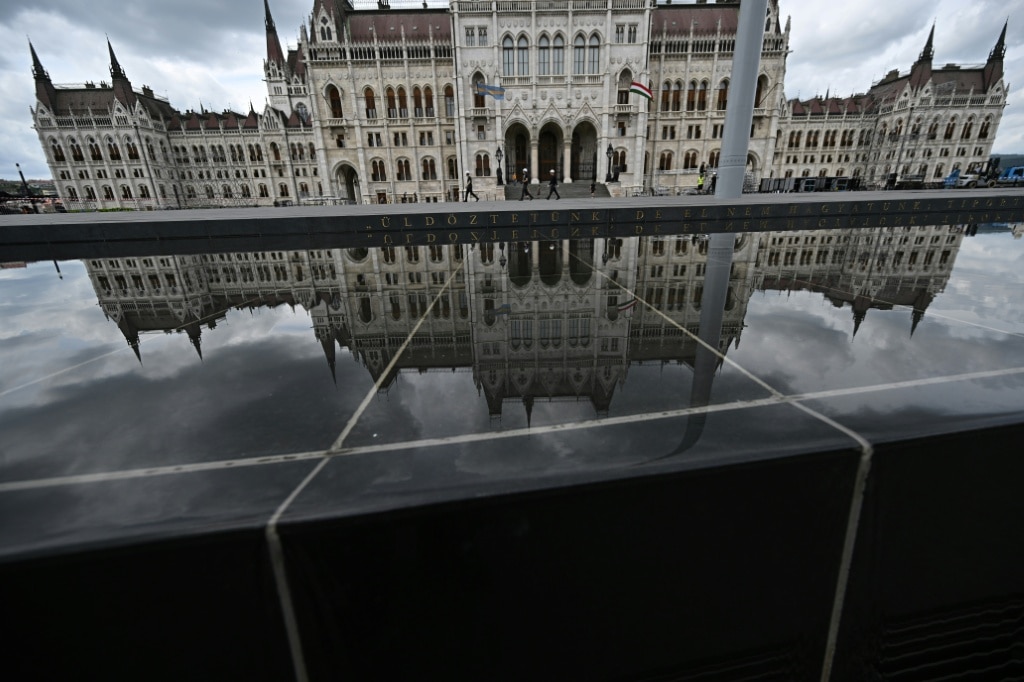
The inauguration proceedings will kick off at 10 a.m. local time (8 a.m. GMT) during the new parliament’s opening inaugural session, with the ceremony live-streamed on large public screens installed around the Budapest parliamentary building. Lawmakers will hold a formal vote to confirm Magyar as prime minister in the afternoon, after which he is expected to deliver remarks to assembled supporters gathered outside the legislature.
Magyar’s new administration has already signaled a clear break from Orban’s government in terms of representation. Lawmakers are set to confirm hotelier Agnes Forsthoffer as the new parliament speaker, one of dozens of women tapped by Tisza for senior leadership roles. Other historic nominations include Vilmos Katai-Nemeth, a lawyer set to serve as social and family affairs minister — Hungary’s first ever visually impaired cabinet member — and Krisztian Koszegi, a Roma history teacher nominated for deputy parliament speaker. Saturday’s inauguration ceremonies, both inside and outside parliament, are intentionally crafted to carry strong symbolic meaning: the event features branding and music that honors Hungary’s EU membership, the country’s large Roma minority community, and ethnic Hungarian populations living in neighboring nations.
Hungary faces steep structural challenges entering the new era, including years of stagnant economic growth and declining quality of core public services that analysts say will require long-term overhauls. Expectations among Hungarian voters are exceptionally high, with broad public goodwill toward the new government matched by pressure to deliver tangible changes quickly. “There is a lot of patience and goodwill toward the new government, but the expectations are through the roof and need to be met in the short-term as well,” Andrea Virag, strategy director at the Budapest-based liberal think tank Republikon Institute, told Agence France-Presse.
As part of his “regime change” agenda, Magyar has already called on Orban-aligned President and other senior allies of the former leader to resign from their posts. He has also urged Hungarian authorities to block Orban’s close associates from moving financial assets abroad ahead of the leadership transition.
Virag noted that the inclusive framing of the inauguration is intentional: it underscores Magyar’s mission of national unity and reconciliation after years of polarizing, divisive politics under Orban. “Magyar seeks to show that he represents a form of national unity and reconciliation after Orban’s politics of division,” Virag said. “With the festivities he also wants to show that it was not a mere change of government, but a start of a new era.”
Notably, the new parliament will mark the first time since 1990 that left-of-center and liberal opposition parties will have no representation in the legislature, following the election results.