作者: admin

  • Wes Streeting accused of dog whistle politics over campaign letter

    Wes Streeting accused of dog whistle politics over campaign letter

    British Health Secretary Wes Streeting has ignited a political firestorm following the distribution of a controversial campaign letter in his Ilford North constituency. The correspondence, bearing Streeting’s signature and distributed by Redbridge Labour, characterizes independent candidates as promoting ‘divisive politics’ and alleges they prioritize ‘foreign conflicts over fixing potholes.’

    The communication emerges amid heightened political tensions in East London, where Labour faces significant challenges from the Redbridge Independent party in upcoming local elections. The group has garnered support from former Labour leader Jeremy Corbyn, creating a complex political dynamic in the constituency.

    Criticism has mounted from across the political spectrum. Labour MP John McDonnell condemned the letter’s language, suggesting it verged on ‘dog whistle politics’ reminiscent of Reform UK tactics. McDonnell emphasized the need for unity rather than divisive campaigning strategies.

    The controversy gains additional complexity from Streeting’s previous private communications with disgraced peer Peter Mandelson, wherein the Health Secretary reportedly described Israel’s actions as ‘war crimes’ and ‘rogue state behavior’—contrasting sharply with his public stance against foreign policy-focused campaigning.

    Leanne Mohamad, the 23-year-old British Palestinian independent who nearly unseated Streeting in 2024, criticized the Health Secretary for focusing on political positioning rather than addressing constituent concerns about living costs, struggling high streets, and strained public services.

    The letter specifically references Tower Hamlets as a ‘rotten borough’—an 18th-century term denoting corrupt political practices—drawing indirect criticism of independent Mayor Lutfur Rahman, who has faced similar accusations of sectarianism.

    This political maneuvering occurs against the backdrop of Labour’s recent by-election loss to the Green Party in Greater Manchester, where Prime Minister Keir Starmer similarly accused opponents of ‘sectarian’ politics. Streeting’s recent comments condemning attempts to ‘delegitimize Muslim voters’ appear to signal a distancing from Starmer’s approach, highlighting internal party tensions over campaign strategy and messaging.

  • The spiky cactus fruit giving Indian farmers a cash boost

    The spiky cactus fruit giving Indian farmers a cash boost

    Across India’s agricultural landscape, a remarkable transformation is underway as farmers increasingly pivot toward cultivating dragon fruit, an exotic cactus species offering superior profitability and sustainability compared to traditional crops. This strategic shift represents both an economic opportunity and a response to changing environmental conditions.

    Arun Srinivas exemplifies this trend, having abandoned his finance career in 2020 to revolutionize his family’s Karnataka farm. After conducting exhaustive research—visiting nearly 100 farms and analyzing cultivation methods with financial scrutiny—Srinivas transitioned from coconuts and mangoes to dragon fruit. His calculated risk has yielded substantial returns, with 11 acres now producing approximately 220 tonnes annually.

    The dragon fruit, a climbing cactus native to Central America, presents unique cultivation characteristics. Typically grown on concrete pillars with circular support rings, these plants feature nocturnal blooming flowers that require specialized pollination techniques. While some farmers employ honey bees for natural pollination, others in wildlife-rich regions like Wayanad have turned to self-pollinating varieties to avoid dangerous nocturnal encounters with snakes, boars, and even leopards.

    India’s dragon fruit journey began around 2009, with serious research initiatives commencing in 2013-14 under Dr. G Karunakaran at the Indian Institute of Horticultural Research. The industry received significant momentum in 2020 when Prime Minister Modi publicly commended Gujarat farmers for their export success. Media coverage thereafter sparked widespread adoption, with cultivation spreading “like mobile phones” once farmers recognized the income potential.

    Unlike seasonal crops, dragon fruit offers continuous harvesting over six months, providing farmers with steady monthly income. A single acre can yield up to 15 tonnes annually, manageable by one family unit. The Indian market has developed distinct preferences, favoring large red-flesh varieties for their visual appeal, richer flavor, and premium pricing.

    Dr. Sunila Kumari of Dragonflora Farms has been instrumental in identifying elite plant varieties suited to Indian conditions. After nationwide sample collection and analysis, her company has developed promising lines specifically selected for superior yield and fruit size. However, Kumari emphasizes that India stands at a critical crossroads, needing to transition from volume-focused production to precision-driven export strategies.

    Current challenges include yield disparities—Indian farms produce 15-25 tonnes per hectare compared to international standards exceeding 30 tonnes—and infrastructure limitations. Kumari advocates for moving beyond basic cultivation methods toward high-density trellis systems and investing in solar-powered pre-cooling units with specialized cold-chain logistics to access premium international markets.

    For farmers like Cheradeep Ma in Kerala, dragon fruit has provided crucial income diversification, buffering against coffee and pepper price fluctuations. Ma maintains 80-100 varieties, selling the most climate-resilient specimens to other farmers alongside his fruit production.

    The dragon fruit revolution represents more than agricultural diversification—it symbolizes a fundamental mindset shift toward treating this crop as a high-value horticultural asset rather than a hardy cactus that survives neglect. As India positions itself to compete with global leaders like Vietnam, this innovative approach to tropical fruit cultivation promises both economic prosperity and agricultural sustainability.

  • Mysterious death of Hayley McClenahan-Ernst to be reinvestigated after 9 years

    Mysterious death of Hayley McClenahan-Ernst to be reinvestigated after 9 years

    Australian authorities have reignited the investigation into the tragic and unresolved death of Hayley McClenahan-Ernst, a 21-year-old pregnant woman discovered unresponsive in her Kingswood residence in May 2017. Despite being treated as a suspicious homicide from the outset, no criminal charges have ever been filed in connection with her demise.

    The case, initially investigated under Strike Force Fielding, has experienced a significant development with Nepean Police Command detectives launching a fresh review. This renewed effort has led to the identification and interviewing of new witnesses who may possess crucial information previously withheld from investigators. Acting Superintendent Michael Cantrell publicly emphasized that even the smallest detail could prove instrumental in finally solving the cold case and delivering long-awaited closure to the victim’s grieving family.

    Central to the mystery are the circumstances presented by Max Spencer, McClenahan-Ernst’s boyfriend who was present at the scene. Spencer claimed her death was accidental, resulting from a fall where she struck her head on a table. This account was scrutinized during a 2025 coronial inquest, which was subsequently suspended and its findings referred to the Office of the Director of Public Prosecutions for further evaluation. Court documents from the inquest also revealed Spencer had previously threatened to kill McClenahan-Ernst and was charged with contravening an apprehended violence order related to the incident.

    The emotional toll on the family was articulated by Lisa Ernst, the victim’s mother, who described her daughter as ‘deeply loved’ and mourned the enduring pain of unanswered questions. Police are now making a public appeal for any individuals with information to come forward and contact Crime Stoppers, hoping that renewed public attention will break the eight-year silence surrounding this tragedy.

  • Trump’s signature to appear on US dollars in first for sitting president

    Trump’s signature to appear on US dollars in first for sitting president

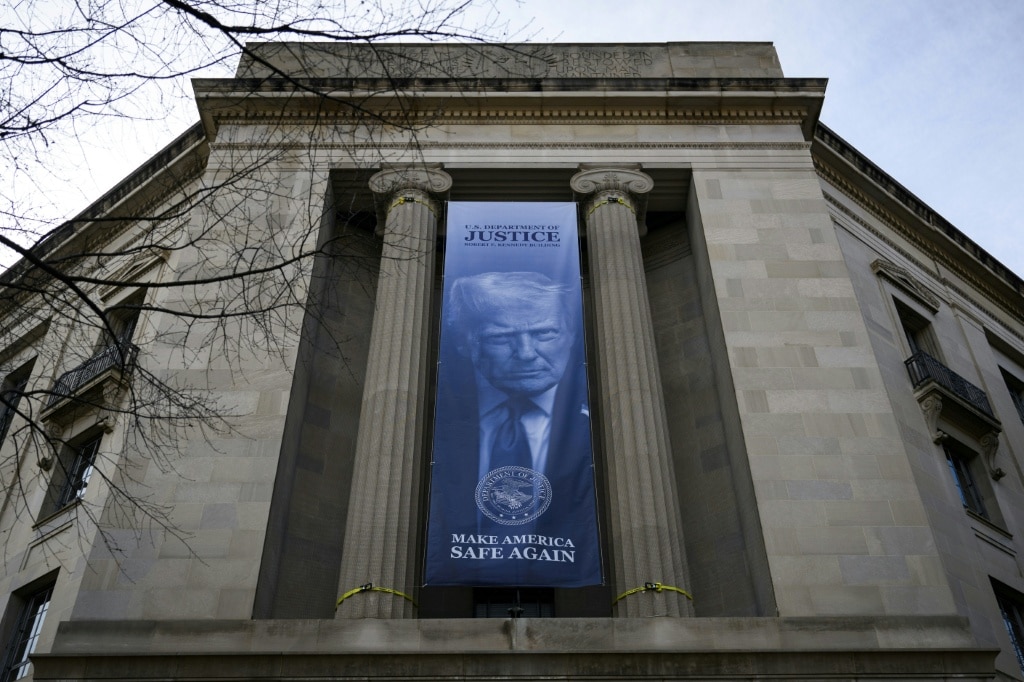
    In an unprecedented departure from longstanding tradition, the US Treasury Department has announced that President Donald Trump will become the first sitting commander-in-chief to have his signature printed on American banknotes. The controversial decision, revealed by Treasury Secretary Scott Bessent, forms part of the administration’s commemorative plans for America’s 250th anniversary celebrations in 2026.

    Secretary Bessent characterized the move as “the most powerful way to recognize the historic achievements of our great country and President Donald J. Trump.” This breaks with the established convention wherein only Treasury officials’ signatures appear on currency. The new $100 bills featuring both Trump’s and Bessent’s signatures are scheduled for production beginning June 2026, with other denominations to follow progressively.

    The announcement has ignited immediate political controversy. California Governor Gavin Newsom, a prominent Democratic critic, launched a scathing response on social media, stating: “Now Americans will know exactly who to blame as they’re paying more for groceries, gas, rent, and health care.”

    This currency initiative represents the latest in a series of administration efforts to associate Trump’s name with government institutions. Previous attempts have faced significant public opposition, most notably the proposed renaming of Washington’s Kennedy Center to the Trump-Kennedy Center, which prompted several artists to cancel performances.

    The Treasury Department confirmed that current banknotes bearing signatures from former Treasury Secretary Janet Yellen and Treasurer Lynn Malerba will remain in circulation. This move terminates a tradition dating back to 1861 wherein only the Treasury Secretary and Treasurer’s signatures appeared on US currency.

    Current US Treasurer Brandon Beach defended the decision, asserting that American currency will “continue to stand as a symbol of prosperity, strength, and the unshakable spirit of the American people.” The administration previously drew attention during the COVID-19 pandemic when Trump’s name appeared on economic stimulus checks distributed to millions of citizens.

  • Met Police accused of reversing Palestine Action policy to fit previous arrests

    Met Police accused of reversing Palestine Action policy to fit previous arrests

    London’s Metropolitan Police stands accused of retroactively modifying its enforcement policies regarding Palestine Action protests to justify recent arrests under terrorism legislation. This controversy follows a February High Court ruling that declared the government’s ban on the direct action group unlawful.

    Initially, the Met responded to the court’s decision by announcing it would cease arresting supporters of Palestine Action and those protesting its proscription under terrorism laws, opting instead to gather evidence for potential future prosecutions. However, in a significant reversal, the police force subsequently described this position as “interim” and announced a revised approach.

    According to campaign organization Defend our Juries (DOJ), since the February 13th ruling, Metropolitan Police have conducted at least two arrests under Section 13 of the Terrorism Act for individuals holding signs supporting the proscribed group. One protester, identified as Ams, reported being arrested at London’s annual Al-Quds Day rally on March 15th while holding a sign stating: “I still oppose genocide, I still support Palestine Action.”

    Ams described being surrounded by police shortly after a member of the pro-Israel group Campaign Against Antisemitism photographed her and shared the image with authorities. Despite police issuing pre-protest warnings about arresting individuals expressing support for Palestine Action, Ams noted that her arresting officers appeared confused about proper procedure, requiring multiple radio consultations to determine whether her actions constituted an arrestable offense.

    DOJ reported writing to Met Commissioner Mark Rowley seeking policy clarification following Ams’ arrest, receiving no response until after announcing planned further protests. The police response ultimately referenced their new public statement reversing previous policy, with Deputy Assistant Commissioner James Harman characterizing this as self-explanatory.

    Tim Crosland, a former government lawyer, criticized the police’s inconsistency, noting: “You would expect the police to have to be consistent with what they published. They’ve not felt the need to justify this in any way.” Crosland drew parallels to the original proscription being struck down due to the home secretary’s failure to follow proper policy.

    A second protester, identified as Liesbeth, reported being arrested while awaiting a Eurostar train at St Pancras station on February 13th for allegedly supporting Palestine Action at a previous protest, despite already being arrested for the same offense and awaiting charges. She was held overnight before being released due to unprepared charge documentation.

    With the Court of Appeal scheduled to hear the government’s appeal against the High Court ruling in late April, DOJ anticipates further mass arrests under terrorism legislation at an upcoming April 11th vigil. Home Office figures indicate over 1,600 people have been arrested under terrorism legislation for expressing support for Palestine Action since its July 2025 proscription, accounting for the majority of approximately 1,800 terrorism arrests that year—representing a 660 percent year-on-year increase.

    Multiple rights organizations have warned that these actions constitute misuse of counterterrorism legislation and risk undermining fundamental human rights including freedom of expression and peaceful assembly.

  • Maduro makes second appearance at New York courthouse

    Maduro makes second appearance at New York courthouse

    Venezuelan President Nicolas Maduro appeared for the second time before a New York federal court on Thursday, continuing his legal challenge against U.S. charges that include allegations of drug trafficking. The hearing marked the latest development in an extraordinary international case that began with Maduro’s controversial apprehension by U.S. military forces during a raid in Caracas in early January.

    During the proceedings, Maduro’s defense team vigorously argued for the dismissal of all charges, contending that the United States is violating the Venezuelan leader’s constitutional rights by preventing access to Venezuelan government funds for his legal defense. The defense maintained that Maduro was effectively ‘kidnapped’ from his official residence and remains the legitimate president of Venezuela despite his current detention.

    While the presiding judge expressed skepticism regarding Washington’s justification for blocking Maduro from utilizing Venezuelan state funds, the court ultimately denied the motion to dismiss the case. This decision ensures the controversial legal proceedings will continue against the detained leader and his wife, Cilia Flores, who remains similarly incarcerated at the Metropolitan Detention Center in Brooklyn.

    The case has generated significant international attention and condemnation, with protesters gathering outside the heavily guarded courthouse to demand the immediate release of the Venezuelan leaders. Demonstrators chanted slogans and carried signs criticizing what they characterized as U.S. overreach and violation of international norms.

    Jacoe Muldoon, one of the protesters interviewed by media, articulated the sentiment of many demonstrators: ‘We’re here today standing with Nicolas Maduro and Cilia Flores. We believe the charges should be dismissed and that they should be freed immediately.’ Another protester emphasized that the United States had no legitimate authority to apprehend an elected leader of a sovereign nation, noting that the Venezuelan people remain united in facing these challenges.

    The situation has broader geopolitical implications, with some observers drawing connections to other international tensions. Muldoon suggested connections between the situations in Venezuela and Iran, positing that U.S. actions represent attempts to maintain global hegemony through overseas aggressions aimed at securing resources. ‘More and more countries are standing up against the United States as it tries to maintain its dominance over the world,’ he remarked.

  • US plans ‘final blow’ against Iran as Trump demands Tehran make a deal

    US plans ‘final blow’ against Iran as Trump demands Tehran make a deal

    The U.S. Department of Defense is actively developing comprehensive military contingency plans for a potential decisive strike against Iran, according to an exclusive Axios report. These plans reportedly encompass both ground troop deployments and extensive aerial bombardment campaigns, signaling a significant escalation in preparedness amid ongoing diplomatic friction.

    The strategic blueprint outlines four primary military options under consideration. The first involves either a full-scale invasion or naval blockade of Kharg Island, which serves as the export hub for approximately 90% of Iran’s oil production. Alternatively, forces could seize Larak Island, situated adjacent to Iran’s heavily fortified Qeshm Island, which Iran has recently used as a security screening point for vessels transiting the Strait of Hormuz.

    Additional options include the potential seizure of Abu Musa and two smaller islands (Greater Tunb and Lesser Tunb) in the Persian Gulf—territories historically disputed between Iran and the United Arab Emirates since the Shah’s occupation in 1971. The fourth option contemplates intercepting and seizing Iranian oil tankers navigating through the critical Strait of Hormuz.

    This military planning coincides with substantial troop movements to the region. The New York Times reports approximately 5,000 U.S. personnel are deploying to the Gulf, including 3,000 elite paratroopers from the 82nd Airborne Division alongside 2,500 additional soldiers redirected from Asian postings.

    While the White House maintains its commitment to diplomatic resolution, officials have issued increasingly stark warnings. Press Secretary Karoline Leavitt declared Wednesday that the U.S. would “unleash hell” on Iran if Tehran refuses to accept Washington’s terms, adding that President Trump would ensure they are “hit harder than they have ever been hit before.” The president himself asserted that Iran is “begging” for a deal while threatening an “onslaught” if negotiations fail.

    Iran has firmly rejected the U.S. proposal, which contains 15 specific points for conflict resolution. Instead, Iranian officials presented a five-point counterproposal demanding war reparations, security guarantees for itself and allies, and maintained control over the Strait of Hormuz. Foreign Minister Abbas Araghchi explicitly stated that “no negotiations have taken place” and affirmed Iran’s intention to continue its current course.

  • What happened at Maduro’s second court appearance

    What happened at Maduro’s second court appearance

    In a significant development in the ongoing legal proceedings against former Venezuelan leader Nicolás Maduro, a New York courtroom became the stage for a critical debate over financial resources for his defense team. During his second court appearance, Maduro’s legal representatives presented arguments seeking judicial approval to utilize Venezuelan government funds to finance his defense against multiple charges. The BBC, having secured access to the proceedings, provided exclusive coverage of the courtroom dynamics where prosecutors and defense attorneys engaged in intense legal wrangling. The central contention revolved around whether state assets could be legitimately employed for personal legal defense in international courts, particularly given current sanctions and diplomatic tensions between Venezuela and the United States. Legal experts observing the case suggest the outcome could establish important precedents regarding sovereign immunity claims and the financial autonomy of state leaders facing international prosecution. The presiding judge reportedly scrutinized both sides’ arguments meticulously, requesting additional documentation before rendering a decision on the funding matter, which could significantly impact Maduro’s ability to mount a robust defense in subsequent proceedings.

  • West Bank Palestinians face Israel’s interceptor debris with no protection

    West Bank Palestinians face Israel’s interceptor debris with no protection

    A silent trauma has gripped Hadeel al-Masalmeh, a 23-year-old Palestinian woman who retreats into isolation, refusing to speak after surviving a catastrophic strike that killed her cousin and business partner. The beauty salon they co-owned near Hebron in the occupied West Bank was shattered by missile shrapnel on March 19, claiming four lives including two pregnant women, while Hadeel sustained injuries requiring further surgery.

    Her father, Walid al-Masalmeh, describes his once-cheerful daughter as “a different person” who desperately needs psychological support. “What happened was horrific – a tragedy,” he told Middle East Eye, noting how she remains haunted by everyday noises that trigger memories of explosions.

    This personal tragedy reflects a broader crisis across the West Bank where Palestinian communities face falling debris from Israel’s interceptions of Iranian missiles. According to Palestinian police spokesman Luay Irziqat, 198 incidents of falling rocket debris were recorded by March 21, resulting in five fatalities and nine injuries since the US-Israeli campaign against Iran began in late February. Property damage has been documented in at least 27 cases.

    The defensive measures, primarily protecting Israeli settlements and cities, leave Palestinian towns vulnerable to raining shrapnel. Unlike Israeli communities equipped with sirens and Iron Dome protections, West Bank residents receive no warnings and have no access to shelters.

    Settlement expert Jamal Juma asserts this disparity reflects systematic neglect: “Israel has a clear strategic plan based on racism inherent in the Zionist project. They don’t care what happens to Palestinians as a result of rocket fire.”

    The Palestinian Civil Defence has advised residents to limit movement and avoid gatherings, while educational institutions have shifted to remote learning. However, many Palestinians accuse authorities of inadequate protection and support.

    Shadi Muqbel, a resident north of Ramallah, described how missile fragments destroyed his home on March 4, nearly killing his parents. “I’ve already spent 40,000 shekels to repair damage,” he said. “Where are the authorities? Next time, we could be killed by shrapnel, and no one would care.”

    Complicating emergency response, approximately 1,000 Israeli military checkpoints and iron gates across the West Bank impede ambulance and rescue access. Dalia Nimri, a mother from Rawabi, opposes returning to in-person classes: “We are living in a state of war and facing everything alone, without any protection.”

    As the conflict continues, Palestinians navigate a landscape of invisible threats where safety remains elusive and protection nonexistent, their lives collateral damage in a broader regional confrontation.

  • ‘Kill crew’ suspects charged months after horror killing of Sydney mum Thi Kim Tran

    ‘Kill crew’ suspects charged months after horror killing of Sydney mum Thi Kim Tran

    In a significant development in a harrowing organized crime case, Australian authorities have apprehended five individuals connected to the abduction and murder of Sydney mother Thi Kim Tran, whose life was brutally ended in April of last year. The arrests, occurring between December 2025 and March 2026, point to a sophisticated, cross-state criminal operation.

    Investigations reveal that the 45-year-old victim was targeted in a ruthless home invasion in Bankstown, where assailants armed with a firearm also assaulted her eight-year-old son with a baseball bat before forcibly taking her. Her body was discovered hours later in a burned-out vehicle in Beverley Hills, bound, gagged, and bearing gunshot wounds.

    Police allege the motive stemmed from her partner’s purported involvement with a Victorian-based criminal network. The operation involved two distinct ‘kill crews.’ While one Sydney-based group executed the kidnapping, a second team allegedly lay in wait at a rural Victorian property with the intention of murdering Ms. Tran’s husband. When he failed to appear, the Sydney crew is believed to have kidnapped and killed Ms. Tran in a bid to force his compliance.

    The charged individuals, men aged 18 to 30, face a litany of charges including murder, conspiracy to murder, and participating in a criminal group. Arrests were made in various locations, including Sydney’s suburbs, Sydney Airport, and Lithgow. All cases remain before the courts as the investigation continues, highlighting the severe and far-reaching tactics of organized criminal entities.