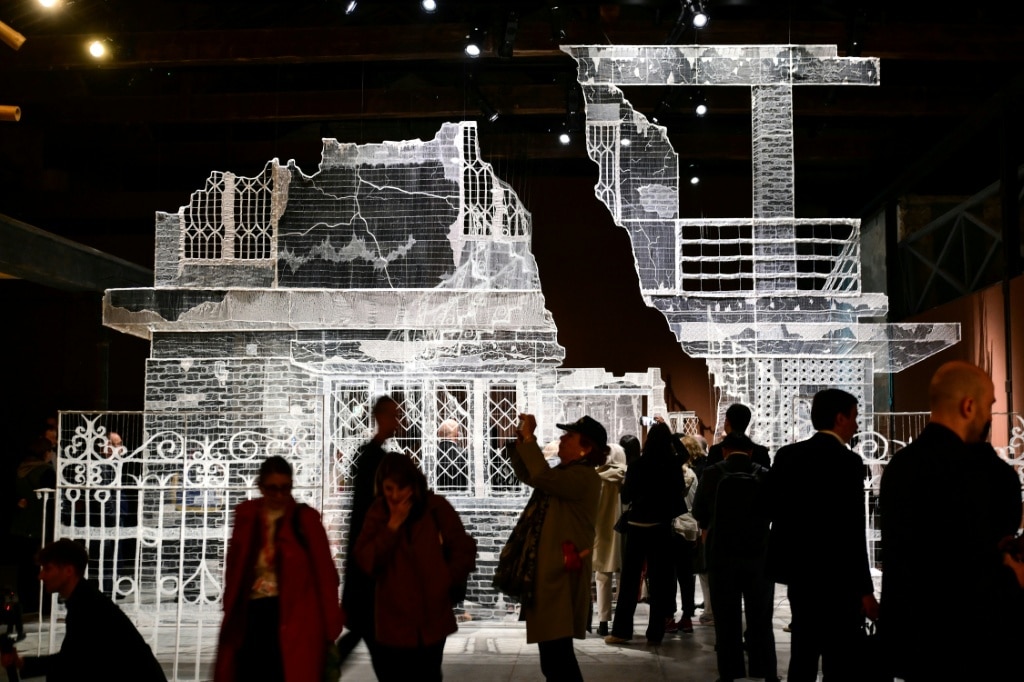
The world’s most prestigious contemporary art gathering, the Venice Biennale, opens its doors to the public this Saturday against a backdrop of searing global geopolitical tension, as competing representations of warring nations have turned the iconic event into a flashpoint for international conflict. The proximity of participating pavilions for Russia, Ukraine, Israel, and Palestinian artistic collectives has sparked heated debate, with one key stakeholder comparing the arrangement to hosting a violent offender at a private gathering of friends. Just meters from Russia’s exhibition space in the Biennale’s central gardens sits a deer sculpture recovered from active front lines in Ukraine, a quiet but visceral symbol of the war that has split the artistic community since Moscow’s full-scale invasion in February 2022. Russia’s return to the Biennale, after a two-year absence following the invasion, triggered widespread international condemnation when the participation was announced in early March. Speaking on the ground in Venice Thursday, Ukrainian Culture Minister Tetiana Berejna delivered a scathing rebuke of the decision to allow Russia to participate. “Having them here in the Biennale is like inviting a serial killer to a dinner with your friends,” Berejna said, rejecting arguments that art should remain a space separate from geopolitics and welcome all participants regardless of state actions. She added that more than 340 Ukrainian artists have been killed by Russian forces since the start of the full-scale invasion, and that Russian forces have deliberately targeted Ukrainian cultural infrastructure. “When Russia comes to our country, they destroy our libraries, they burn our books, they destroy our museums,” she said. “Culture is targeted during this war.” The friction extends far beyond the ongoing war in Ukraine, as multiple other regions in active conflict have a presence at this year’s event. The United States and Israel, which launched a targeted strike on Iranian territory in late February, both maintain official pavilions; Iran, which was originally slated to participate, ultimately pulled out of the exhibition. Israel’s pavilion at the Arsenale, the Biennale’s sprawling secondary exhibition space housed in a former 19th-century shipyard, sits just a short walk from Ukraine’s national pavilion. While Palestine does not hold official state recognition from Italy and thus cannot host its own official national pavilion, a dedicated group exhibition focused on Gaza is being held at Venice’s Palazzo Mora, titled “Gaza – No Words – See the Exhibit”. Curator Faisal Saleh, founder of the Palestine Museum based in Connecticut, United States, said the exhibition was created to amplify Palestinian experiences amid ongoing military operations in Gaza. “There’s really no way to describe the horror that was inflicted upon the Palestinians in Gaza, and I don’t think we would want to be in the same place as the people who did that,” Saleh said. The heightened tensions have forced Italian authorities to deploy a permanent police presence near the Russian, Israeli, and U.S. pavilions, a visible reminder that the rifts from global war have the potential to spill over into the art event. According to Italian national news agency Ansa, roughly 2,000 protesters gathered in Venice Friday for a pro-Palestinian demonstration calling for the removal of Israel’s official pavilion from the Biennale. Earlier in the week, Russia’s pavilion became the site of a high-profile joint protest by members of Russian dissident group Pussy Riot and Ukrainian feminist collective Femen, where demonstrators marched with covered faces and bare chests to oppose Moscow’s participation. Biennale President Pietrangelo Buttafuoco defended the decision to include all participating entities, arguing that barring artists based on their nationality would undermine the event’s core purpose. “If the Biennale were to start selecting not works but affiliations, not visions but passports, it would cease to be what it has always been: the place where the world comes together, and all the more so when the world is torn apart,” Buttafuoco said Wednesday. That view is shared by many artists and Italian political leaders who argue art should not be reduced to a tool of political division. Israeli sculptor Belu-Simion Fainaru, whose installation “The Rose of Nothingness” features a water basin fed by a slow drip irrigation system, said the growing political rifts are eroding art’s fundamental mission. “The divisions at the Biennale were destroying the meaning of art… to unite people,” Fainalu told AFP. “I don’t think we should reduce the art world to a political arena.” Italian Deputy Prime Minister Matteo Salvini echoed that sentiment during a visit to the Biennale Friday, noting that individual artists should not be treated as official spokespeople for their governments’ military or political actions. “I don’t think American, Chinese, Israeli, or Russian artists are spokespeople for ongoing conflicts,” Salvini said. At the Palazzo Mora Gaza exhibition, around 100 hand-embroidered works created by Palestinian women living in refugee camps bring to life the experiences of people in Gaza over the past two years, with Saleh noting the pieces carry a raw power that outstrips even journalistic photography. In a bid to de-escalate tensions and center the theme of coexistence, event organizers scheduled three evenings of reflection focused on the theme of peace during the pre-opening week, featuring appearances by exiled Russian filmmaker Alexander Sokurov and prominent Palestinian writer and architect Suad Amiry.
作者: admin
-
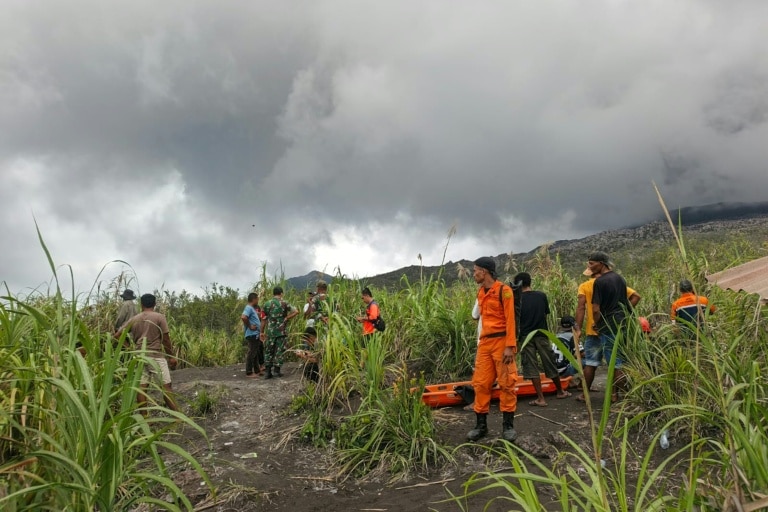
Indonesia rescuers retrieve hiker’s body after volcanic eruption
Three hikers are dead after a sudden eruption of one of Indonesia’s most active volcanoes, and rescuers have recovered the first of the victims’ remains as hazardous conditions forced a temporary pause in search operations, Indonesian disaster management officials confirmed this weekend.
Mount Dukono, located on Indonesia’s Halmahera Island in North Maluku, erupted Friday, blasting a dense ash plume 10 kilometers (6 miles) into the atmosphere. The eruption did not threaten populated areas nearby, with no towns or villages located close enough to face immediate danger, according to geological officials. However, the blast hit a group of 20 hikers who had entered the closed exclusion zone surrounding the volcano’s crater.
Local police chief Erlichson Pasaribu confirmed Friday that three hikers were killed: two citizens of Singapore and one Indonesian national. The remaining 17 members of the hiking group, including seven other Singaporeans, were evacuated from the dangerous area unharmed, authorities said.
On Saturday, a joint team of search and rescue personnel recovered the body of one victim, found alongside the hiker’s backpack at approximately 2:30 p.m. local time (0530 GMT), said Iwan Ramdani, head of the local search and rescue agency. Ramdani did not release the victim’s nationality prior to formal identification. The remains were transferred to a nearby local hospital for official identification processing. Photos released by the rescue agency show the recovery team carrying the victim, sealed in a black body bag, down the volcanic slope on a hand-built stretcher.
Search operations for the two remaining victims have been temporarily suspended due to heavy rainfall and persistent volcanic ash in the area, Ramdani added. Teams are scheduled to resume their search on Sunday, weather conditions permitting.
Indonesia’s national Centre for Volcanology and Geological Hazard Mitigation reported that Mount Dukono continued to experience fresh eruptions through Saturday, including one blast that sent an ash column 3 kilometers (1.8 miles) into the sky. Abdul Muhari, spokesman for Indonesia’s national disaster mitigation agency, said preliminary positioning data places the two remaining Singaporean victims roughly 20 to 30 meters (65 to 100 feet) from the volcano’s crater rim.
Singapore’s Ministry of Foreign Affairs confirmed it is coordinating with the country’s embassy in Jakarta to provide consular support to affected citizens and their families, according to local Singaporean media reports.
Mount Dukono has been classified at level two on Indonesia’s four-tiered volcanic alert system since 2008, marking it as an active, potentially dangerous volcano. In December 2024, Indonesian geological authorities expanded and enforced a 4-kilometer (2.5-mile) exclusion zone around the volcano’s crater, restricting all public access to the dangerous area, confirmed Lana Saria, head of the national Geology Agency.
Despite repeated warnings, the group of hikers intentionally ignored both official warning signs posted at the trail entrance and public appeals shared on social media to stay out of the restricted zone, police chief Pasaribu said Friday.
As a sprawling archipelagic nation located along the Pacific Ring of Fire, the geologically active boundary where multiple tectonic plates collide, Indonesia experiences hundreds of seismic and volcanic events every year. The country is home to roughly 130 active volcanoes, making it one of the most volcanically active regions on Earth.
-

Liverpool frustrated by Chelsea draw, Man Utd held at Sunderland
The penultimate stretch of the English Premier League season delivered a raft of dramatic results that shook up the race for European spots and the title fight on Saturday.
At Anfield, defending champions Liverpool saw a golden opportunity to move to the brink of next season’s Champions League qualification slip through their fingers, forced to share the points in a 1-1 draw with Chelsea. The hosts got off to a flying start just six minutes into the contest, as Ryan Gravenberch curled a perfectly placed strike past Chelsea’s goalkeeper to open the scoring. But the Blues responded before half time: Enzo Fernandez’s 35th-minute long-range free kick evaded every Liverpool player in the box and nestled into the bottom corner of the net, leveling the score.
By full time, boos rang out around Anfield, a reflection of fan frustration with another underwhelming performance from the side. The result still moves fourth-placed Liverpool closer to securing Champions League football, holding a four-point advantage over sixth-place Bournemouth. Addressing fan discontent after the match, Liverpool manager Arne Slot said he remains confident he can win back supporter backing — but not during the current campaign. “Not this season by the way. This season they will have their opinion and it will not change,” Slot explained. “If we can have the summer that we are planning to have, then I’m 100 percent convinced that we will be a different team next season than we are now.”
For Chelsea, the draw comes at a point where the club can no longer mathematically clinch a top-five finish, leaving them stuck in ninth place in the table. The Blues had entered the match on Merseyside having dropped six straight Premier League results, which ended their own European qualification hopes. Still, a far more organized, resolute performance offered interim head coach Calum McFarlane a much-needed boost heading into next weekend’s FA Cup final against Manchester City.
Elsewhere, third-place Manchester United, who had already locked in their own Champions League spot for next season after beating Liverpool a week prior, were held to a dour goalless draw at Sunderland’s Stadium of Light. The lackluster showing came as no surprise, with United with little left to fight for in the remaining league fixtures. The stalemate marked the first time the Red Devils had failed to score a league goal since November.
The biggest drama of the day unfolded in west London, where Bournemouth kept their stunning dream of Champions League qualification alive with a 1-0 away win over Fulham. The match was turned on its head before half time, with VAR intervention forcing two red cards: Bournemouth’s Ryan Christie saw an initial yellow card for a dangerous foul on Timothy Castagne upgraded to a red, while Fulham defender Joachim Andersen also walked after a similar VAR review upgraded his booking for a foul on Adrien Truffert. Reduced to 10 men apiece, it was 19-year-old Brazilian winger Rayan who claimed the winning goal for the Cherries in the 53rd minute, curling a clinical finish from the edge of the penalty area past Fulham’s keeper. Unbeaten in their last 16 consecutive league matches, Bournemouth is chasing a first-ever European qualification in the club’s history.
Brighton & Hove Albion also boosted their own European bid with a comprehensive 3-0 demolition of already-relegated Wolverhampton Wanderers at the Amex Stadium. Jack Hinshelwood put the Seagulls ahead just 37 seconds into the match with a headed finish, before captain Lewis Dunk doubled the lead with another header just five minutes later. Yankuba Minteh put the icing on the cake with a thunderous long-range strike in the 86th minute to complete the rout. With two matches remaining, Brighton sit just two points behind Bournemouth in seventh place.
The permutations for European spots remain tight this season: a sixth-place finish could deliver either Champions League or Europa League football, depending on the outcome of the Europa League final. If current fifth-place Aston Villa beats Freiburg in next month’s final, the sixth-placed side will earn a Champions League berth.
In the title race, second-place Manchester City were set to host Brentford in Saturday’s late kickoff, looking to chip into leaders Arsenal’s advantage. Pep Guardiola’s side sit five points behind Arsenal, who travel to take on 18th-place West Ham United on Sunday. City hold one game in hand over the leaders, but a damaging 3-3 draw at Everton earlier this week means the destiny of the title is no longer in City’s hands. Mikel Arteta’s Arsenal, who have also reached the Champions League final against Paris Saint-Germain, will secure their first top-flight English title in 22 years if they win all three of their remaining matches.
-
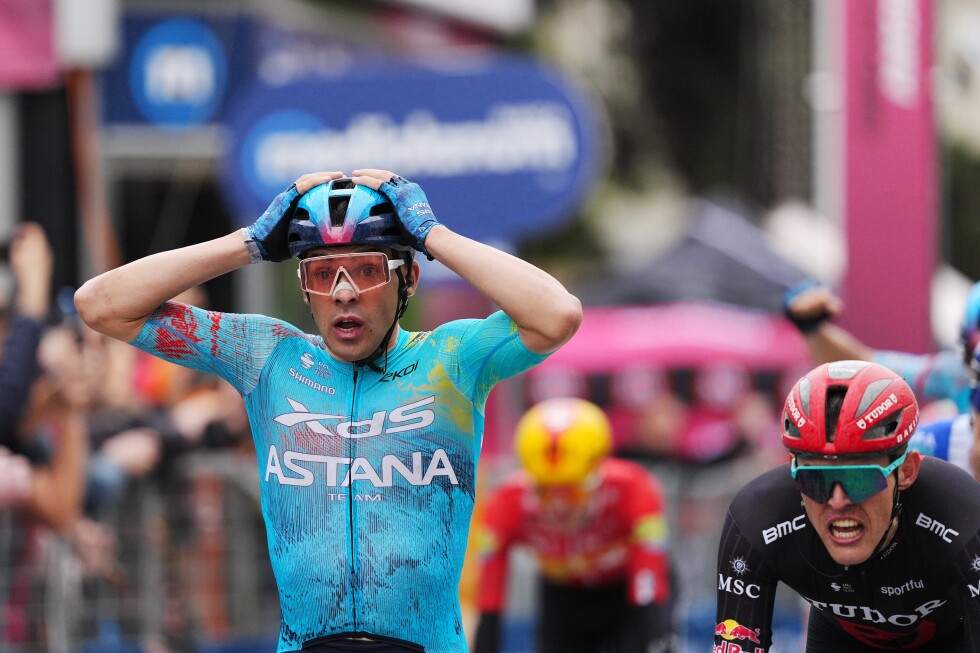
Uruguay’s Guillermo Silva wins crash-marred stage 2 of Giro and claims overall lead
VELIKO TARNOVO, Bulgaria — Cycling history was written in Bulgaria Saturday, as Uruguayan rider Guillermo Silva claimed a dramatic sprint victory in a crash-disrupted second stage of the 109th Giro d’Italia, seizing the overall general classification lead and becoming the first Uruguayan to ever win a Giro stage and wear the coveted maglia rosa.
The 137-mile hilly route from coastal Burgas to the historic north-central Bulgarian city of Veliko Tarnovo, marked by three moderate climbs, concluded after five and a half hours of racing. A wet road surface turned the late stages of the route into a dangerous test of skill and luck, with a large crash taking down roughly 15 riders just 20 kilometers from the finish line.
Among those caught in the incident was British rider Adam Yates, twin brother of retired defending champion Simon Yates. Even with blood and mud covering his face, Yates pushed on to complete the stage, though he finished nearly 14 minutes behind Silva, ending his realistic chances of contending for the overall title. Two riders — Australia’s Jay Vine and UAE Team Emirates teammate Marc Soler — were not able to continue, and were taken from the course via ambulance. Race organizers paused competition for several minutes to allow medical teams to assist injured riders scattered across the roadside, with several athletes thrown over steel barriers in the impact.
Prior to the crash, Italian Mirco Maestri and Spaniard Diego Pablo Sevilla launched an early breakaway that held off the peloton for more than 100 kilometers, before being caught with 27 kilometers remaining. The pair ended their joint effort with a gesture of good sportsmanship, patting each other on the back before rejoining the main group.
Pre-race favorite and two-time Tour de France champion Jonas Vingegaard avoided the late crash, positioning himself at the front of the peloton in the closing kilometers to stay clear of trouble and capitalize on his climbing strength on the uphill run to the finish. The Dane, who is attempting to become one of the few riders to win all three of cycling’s Grand Tours in a career after taking the 2022 and 2023 Tours de France and 2023 Vuelta a España, ended up in the leading group of four on the home stretch. However, the breakaway was reeled in by a large group of sprinters with just 300 meters left to the line.
Silva’s XDS Astana teammate Christian Scaroni delivered a critical lead-out, putting the Uruguayan in the perfect position to launch his sprint. Silva held off late challenges from Germany’s Florian Stork, who crossed second, and Italian climbing specialist Giulio Ciccone, who finished third, to take the historic win.
In a post-race interview, the Maldonado-born rider said he could barely believe his career-defining result, saying, “I’m over the moon. It’s only my second stage at the Giro d’Italia and I’ve already managed to win and even take the maglia rosa. I was feeling good but I never imagined I could achieve something like this.” He also highlighted his teammate’s contribution, adding, “I have to thank Christian Scaroni, who helped me both in the chase to the leaders and in setting up the sprint. I don’t think I’ll ever forget this day.” As he crossed the finish line, Silva held his head in his hands in disbelief before playfully sticking out his tongue in celebration of the biggest win of his professional career.
Silva took the overall lead and the pink jersey from French rider Paul Magnier, who won the opening Giro stage Friday. That first of three planned Giro stages in Bulgaria also ended with a major crash at the finish line. After Saturday’s race, Silva held a four-second advantage over second-place Stork and third-place Colombian Egan Bernal in the general classification. Vingegaard sits 10 seconds off the lead in 15th place overall.
Racing continues Sunday with the third stage, a mostly flat 175-kilometer route starting in Plovdiv, one of the oldest continuously inhabited cities in Europe, and ending in Bulgaria’s capital city of Sofia. The 109th men’s Giro d’Italia will conclude on May 31 in Rome. The women’s Giro is scheduled to run from May 30 to June 7, with Italian star Elisa Longo Borghini returning to defend her 2023 title.
-
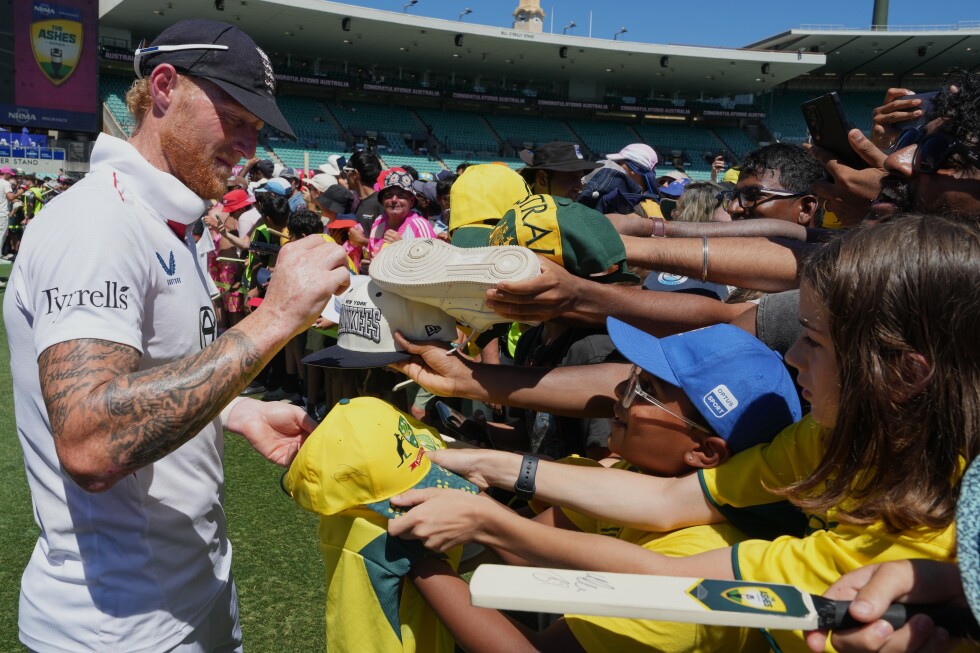
England captain Ben Stokes takes 2 wickets and completes 20 overs for Durham on injury comeback
In a promising development for English cricket ahead of a packed summer Test schedule, star all-rounder and national captain Ben Stokes made a successful return to competitive play on Saturday, turning out for county side Durham in a second-tier County Championship clash against Worcestershire in Worcester, England.
The 34-year-old last featured in professional cricket back in early January, during the fifth and final Ashes Test against Australia. In February, a devastating training accident left Stokes with a broken cheekbone: he was struck in the face by a cricket ball while coaching players at Durham’s academy, forcing him to undergo emergency surgery. Speaking to the England and Wales Cricket Board in an internal interview last month, Stokes admitted he considered himself lucky to have survived the incident with no more severe damage.
On Saturday, Stokes defied recovery expectations to bowl a full 20 overs for his side, finishing with impressive, economical figures of 2 wickets for 54 runs. He opened the bowling for Durham, displaying both his signature raw pace and characteristic seam movement that has made him one of the world’s most feared fast bowlers. This strong performance has put Stokes firmly in contention to open the English attack in the first Test against New Zealand, scheduled to kick off at Lord’s on June 2. While Stokes has opened the bowling twice previously for England, he has not done so since a 2022 clash against Pakistan.
Stokes’ successful comeback comes at a critical moment for English cricket. The national team is still reeling from a 4-1 series defeat to Australia in the recent Ashes, a result that left the side facing heavy public criticism. Beyond the on-field loss, the tour was marred by reports of player indiscipline, with the leadership of head coach Brendon McCullum and managing director Rob Key coming under intense scrutiny from fans and pundits alike. England now faces a high-stakes summer of cricket, with a three-Test series against New Zealand followed by another three-match series against Pakistan, starting at Headingley in Leeds on August 19, as the side works to rebuild its form and win back public support.
-

Crunch Clasico as Barca look to pounce on Real unrest
El Clasico, the most anticipated fixture in Spanish football, is never just another 90 minutes of action. But this Sunday’s Nou Camp meeting between Barcelona and Real Madrid carries far higher stakes than most, as the Catalan side stands just one result away from securing back-to-back domestic titles, while Real enters the clash mired in damaging internal conflict.
Barcelona holds an 11-point advantage at the top of the La Liga table heading into the fixture. A win or even a draw on home soil will formally seal their second consecutive championship, capping a season of near-total dominance across Spain’s top flight. For head coach Hansi Flick’s squad, the build-up to the match has been marked by calm confidence, with the club framing its camp as a unified push to claim the title in front of its own supporters.
The narrative around Real Madrid, by contrast, has been dominated by off-pitch chaos rather than on-pitch preparation. A dressing-room altercation between star midfielders Federico Valverde and Aurelien Tchouameni earlier this week has thrown the club into crisis, leaving Valverde sidelined for El Clasico with concussion symptoms and resulting in a 500,000 euro fine for both players after an internal investigation.
Tchouameni returned to training Friday and is available for selection, but interim head coach Alvaro Arbeloa refused to confirm whether the French international will start. Addressing reporters at his pre-match press conference Saturday, Arbeloa attempted to downplay the severity of the incident, noting that internal disputes are not unprecedented in elite football. The 43-year-old, who took over the role in January following Xabi Alonso’s departure, even recalled a well-documented 2007 incident from his time at Liverpool, where Craig Bellamy confronted John Arne Riise with a golf club during a training camp dispute.
“These are situations that have always happened, although I’m certainly not justifying it,” Arbeloa told reporters. “It was an incident and we were unfortunate that Fede ended up with a gash. It was more bad luck than anything else. What happens in the Real Madrid dressing room should stay in the Real Madrid dressing room, and that’s what hurts me the most. The players have acknowledged their mistake, expressed their regret and asked for forgiveness. That’s enough for me. If you want to blame someone, here I am.”
Arbeloa’s position at the club is already precarious, with Spanish media linking high-profile candidates including Jose Mourinho to the permanent head coach role for next season. Pressure is also mounting on long-time Real president Florentino Perez, who has overseen a turbulent two-year stretch that has seen three different managers in charge and no major trophy won. The upcoming permanent head coach appointment is widely seen as one of the most critical decisions of Perez’s 20-plus year presidency, as the club works to rebuild stability and competitiveness after a messy season. Arbeloa, however, defended the 79-year-old, arguing no leader is better positioned to turn the club’s fortunes around.
“There is no-one more prepared than Florentino Perez to turn this situation around,” he said. “I remember how the club was before his arrival. He is the president with the most titles in Real Madrid history and he brought the club back to where it belongs. We all have to fight together.”
Despite the off-pitch chaos, Arbeloa insisted his squad remains focused on claiming three points Sunday. “We face the Clasico with the ambition to do things well and go to win,” he added.
Over at Barcelona’s training ground, the mood has been strikingly different. The club has shared multiple upbeat updates from training throughout the week, featuring photos and videos of relaxed, connected players, with one social media post describing the squad as “One big family”. Flick echoed that unified tone in his pre-match press conference, saying his side is eager to secure the title at home in front of their supporters.
“We want to win our second title in a row. I think it’s amazing. It’s not normal here in Spain,” Flick said. “We are very clear in how we want to play. We want to win this at home. The fans are supporting us. This is why the Clasico is so important for everyone. We are here because we have played a fantastic season as a team and this is what I want to see tomorrow. The tension is very high. Everyone in the world is watching, but in the end it’s about us. We want to play as a team and a unit.”
Asked for his reaction to Real Madrid’s dressing-room dispute, Flick downplayed the news, saying such incidents are not unique to any club. “Things like this happen all over the world, so I don’t think it’s something exclusive to Real Madrid,” he said. “Was I surprised? Maybe a little, but in the end I don’t really care, because it’s not my club and not my team, so I shouldn’t be thinking about it.” He added that the key to Barcelona’s success this season has been the squad’s shared focus and internal unity: “The most important thing in this club is that we are all going in the same direction. When something happens, we respond together. In football and in life, these things can happen, but you have to manage them.”
Flick did reserve praise for Real star Kylian Mbappe when asked about the French forward, describing him as “one of the best players in the world” and highlighting his exceptional finishing quality in the penalty area.
The first El Clasico of this campaign, played back in October at the Santiago Bernabeu, ended in a 2-1 win for Real, when the title race was still wide open and the club was under different management with far less public internal tension. This time around, the stakes could not be clearer: Barcelona can lift the trophy on home soil just 90 minutes after kickoff, while Real is only playing to delay the inevitable and preserve its season’s pride.
A victory would also put Barcelona on course to match La Liga’s all-time record of 100 points in a single season, moving the Catalan side to 91 points with just three matches remaining. The 100-point mark has only been hit twice before – by Mourinho’s Real Madrid in 2011-12, and Tito Vilanova’s Barcelona a year later – and no side has reached the milestone since. For Flick’s dominant squad, matching that record would be the final confirmation of their status as the best team in Spain this season. But before that history can be written, they must first get past their biggest rivals on Sunday.
-

Frontier Airlines plane hit and killed a person on the runway at Denver airport
Late Friday night, a fatal incident unfolded at Denver International Airport (DIA) when a Frontier Airlines commercial flight bound for Los Angeles International Airport struck and killed an unauthorized individual who had illegally accessed an active runway, United States aviation and transportation authorities confirmed.
According to official statements from the airport, the unidentified person — who is not an airport employee, and has not yet been named by investigators — scaled DIA’s perimeter security fence roughly two minutes before walking onto the runway where Flight was beginning its takeoff roll around 23:00 local time (06:00 UTC+1 BST). A preliminary inspection of the fence after the incident found the main structure to remain fully intact, DIA officials added.
Unsealed air traffic control audio from the incident reveals that moments after a controller cleared the flight for departure and wished the crew a good night, the pilot immediately radioed the tower to report a collision and an ongoing emergency. “We’re stopping on the runway,” the pilot told controllers. “We just hit somebody. We have an engine fire.” The pilot later confirmed there had been a person walking across the active runway as the aircraft accelerated to takeoff speed. U.S. Transportation Secretary Sean Duffy confirmed the plane was traveling at high speed at the time of the impact.
The collision sparked a small engine fire that was rapidly extinguished by responding Denver Fire Department crews, per airport officials. Passengers reported visible smoke filling the aircraft cabin in videos and photos shared with CBS News, the BBC’s U.S. partner, which also showed visible damage including what appears to be blood on the affected engine.
As a standard precautionary measure, all 224 passengers and crew on board were immediately evacuated via the plane’s deployed inflatable emergency slides. Once evacuated, passengers were transported by bus back to the main airport terminal. Twelve passengers sustained minor injuries related to the emergency evacuation, with five individuals transported to local medical facilities for evaluation and treatment. Most passengers have since re-booked onto alternate Frontier Airlines flights and departed Denver as planned, airport authorities confirmed.
Both Frontier Airlines and DIA have released statements expressing profound sorrow over the fatal event. “We are deeply saddened by this event,” a Frontier spokesperson said. DIA’s official statement echoed that sentiment, noting: “We are extremely saddened by this incident and express our sympathies to those involved.” Secretary Duffy emphasized that runway trespassing poses unacceptable risk to all parties, saying: “No one should EVER trespass on an airport.”
The active runway involved in the incident has been temporarily closed while two leading U.S. aviation safety agencies — the Federal Aviation Administration and the National Transportation Safety Board — conduct a full on-site investigation to determine the full timeline and circumstances of the event.
-
WHO chief reassures Tenerife residents ahead of hantavirus cruise ship arrival
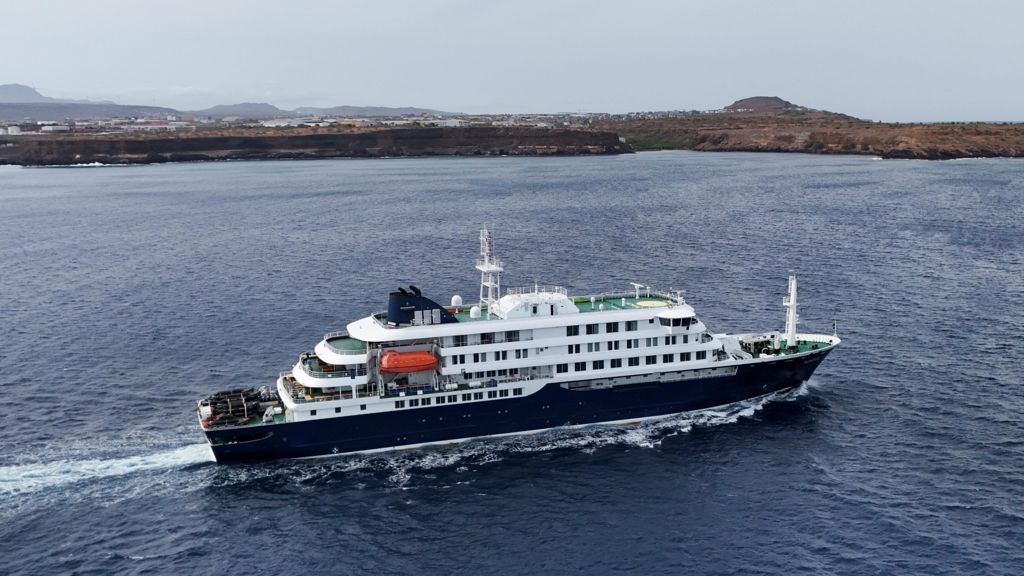
Tensions are running high on the Spanish Canary Island of Tenerife this weekend, as public health authorities and local emergency services finalize strict containment protocols for the imminent arrival of the MV Hondius — a Dutch cruise vessel grappling with a deadly hantavirus outbreak that has already claimed three lives.
As residents voiced deep anxiety, with lingering trauma from the 2020 COVID-19 cruise ship outbreaks still fresh for many, World Health Organization Director-General Tedros Ghebreyesus delivered a direct public message to ease community fears, stressing that this event poses far lower public health risk than the coronavirus pandemic.
“I know you are worried,” Tedros told Tenerife residents in a public address Saturday. “I know that when you hear the word ‘outbreak’ and watch a ship sail toward your shores, memories surface that none of us have fully put to rest. The pain of 2020 is still real, and I do not dismiss it for a single moment. But I need you to hear me clearly: this is not another Covid. The current public health risk from hantavirus remains low.”
Six confirmed cases of hantavirus have been linked to the voyage, which originated in South America. Three passengers have died from the infection to date: the first fatality was recorded on April 11, a second on May 2, and a 69-year-old Dutch passenger who disembarked in St. Helena on April 24 died in South Africa two days later. Two infected British passengers are currently receiving care in the Netherlands and South Africa, while a third Briton is undergoing treatment for a suspected case on the remote Atlantic island of Tristan da Cunha, where the ship made a mid-April stopover.
The MV Hondius is scheduled to dock at Granadilla Port between 4:00 a.m. and 6:00 a.m. GMT Sunday, Spanish Health Minister Mónica García confirmed at a press briefing Saturday. The decision to allow the vessel to dock in Tenerife has been deeply controversial: regional president Fernando Clavijo has openly opposed the move, questioning why the vessel could not complete its outbreak response at its previous stop in Cape Verde. Far-right Spanish party Vox has attacked the national central government over the call, and local protests have broken out across the island in recent days. In contrast, Tedros praised Spanish Prime Minister Pedro Sánchez for the decision, framing it as “an act of solidarity and moral duty,” noting that Tenerife was selected specifically for its robust medical infrastructure, emergency response capacity, and ability to facilitate safe repatriation of passengers.
To eliminate any risk of community spread, Spanish authorities have put in place a rigorous set of containment measures. All passengers will remain quarantined aboard the vessel while initial health screenings are conducted, and no one will be permitted to disembark until a repatriation flight is waiting on the island’s tarmac to carry them directly back to their home countries. Repatriation flights are arranged for passengers from the United Kingdom, United States, France, Germany, Belgium, and Ireland, with Spanish passengers prioritized for disembarkation and repatriation.
All people who interact with passengers during transfer — including bus drivers and logistics staff — will be required to wear FFP2 masks, and passengers will only be permitted to bring a small, sealed bag of essential items such as identification documents, mobile devices and chargers, and basic personal necessities when disembarking. Notably, the body of the passenger who died aboard the vessel will not be unloaded in the Canary Islands; the ship will continue onward to the Netherlands after repatriations are complete, where the remains and personal belongings will be disinfected before being removed.
Health experts explain that hantaviruses are most commonly carried by wild rodents, and the strain detected in this outbreak — the Andes strain — can spread between humans, a mode of transmission that has raised targeted concerns. All infected passengers are believed to have contracted the virus during pre-voyage travel through Argentina, Chile, and Uruguay, where they visited areas with populations of rodent species known to carry the pathogen, Tedros confirmed. As of this publication, the exact origin of the outbreak remains unclear, and public health teams have not yet confirmed whether any additional crew or asymptomatic passengers have been exposed to the virus. A WHO expert is already aboard the vessel to monitor conditions, and Tedros has announced he will travel to Tenerife personally to observe the response operation first-hand. Symptoms of hantavirus infection range from mild flu-like effects including fever, muscle aches, fatigue, and abdominal pain to severe respiratory distress in advanced cases.
-

‘Ghost of the forest’ returns to Kenya as conservationists reintroduce rare antelope into the wild
Deep within the dense, mist-shrouded forests of Kenya, an elusive creature once known only as the “ghost of the forest” is one step closer to making a lasting comeback. The mountain bongo, a rare striped antelope unique to East Africa’s highland woodlands, has teetered on the edge of extinction for decades, but a dedicated team of Kenyan conservationists is working to reverse its decline through a carefully managed captive breeding and rewilding initiative.
Characterized by its rich chestnut-brown coat, distinct vertical white stripes, and spiraled horns, the mountain bongo is a master of camouflage, able to disappear into thick undergrowth in seconds. This shy nature helped it evade predators for centuries, but it could not escape the dual threats of disease outbreak and habitat loss that collapsed its wild population by the late 20th century. Today, fewer than 100 mountain bongos remain in undisturbed wild habitats across Kenya, making the conservation program at the 1,250-acre Mount Kenya Wildlife Conservancy—perched on the forested slopes of Mount Kenya near Nanyuki—one of the most critical endangered species recovery efforts on the African continent.
Last week, the initiative gained a major boost with the arrival of four new male bongos, imported from the European Association of Zoos and Aquaria via the Czech Republic. The new arrivals are currently undergoing strict quarantine and round-the-clock veterinary monitoring, before they are integrated into the conservancy’s existing breeding population. Their addition is intentional: the conservancy’s existing herd traces its roots to 18 bongos imported from the United States in 2004, and introducing new genetic lines will eliminate the risk of harmful inbreeding, a common threat to small captive populations of endangered animals.
Dr. Robert Aruho, head of the Mount Kenya Wildlife Conservancy, emphasized that genetic diversity is as important as overall population size for long-term survival. “We want bongos that are not only strong in body, but strong in the genes they pass to the next generation,” he explained. This focus on genetic health builds on a recovery plan that stretches back to the 1980s, when conservationist Don Hunt made the controversial decision to export 36 wild mountain bongos to U.S. zoos as an “insurance population” after disease outbreaks in the 1960s had killed thousands of individuals in Kenya. That proactive move saved the species from total extinction, creating a global captive population that could be used to rebuild wild herds once habitat conditions improved. When the conservancy launched its formal program in 2004, it received the first 18 descendants of those original exported bongos, growing the captive herd to 102 individuals today. The long-term goal is bold: establish a sustainable wild population of 750 mountain bongos across their native range by 2050.
Before any bongo is released into the wild, the conservancy’s team puts each candidate through months of rigorous training and monitoring to prepare it for life outside human care. Captive-bred bongos must learn to forage for their own food, recognize and escape native predators, and build natural immunity to wild diseases—skills their wild ancestors knew instinctively. Program officials also prioritize shyer, more elusive individuals for release: more docile bongos are far more likely to fall prey to leopards and other predators in the open forest.
That preparation is already paying off. In 2022, the conservancy made history by releasing the first 10 bongos into the Mount Kenya Forest, the first time the species had roamed its native slopes here since the last confirmed wild sighting in 1994. Today, those released bongos thrive among the orange climber vines and dense shrubs they prefer, and the program celebrated a major milestone last year with the birth of the fourth wild bongo calf on conservancy-managed protected land. For the team, that calf’s birth was more than a win for the bongo—it was proof that rewilding works.
Beyond its importance for the species itself, the recovery of the mountain bongo is deeply tied to Kenya’s environmental health. The antelope is native to four key Kenyan forest ecosystems: Mount Kenya, Aberdare, Eburu, and Mau, all of which are critical sources of the country’s fresh water supply. Protecting habitat for the bongo also safeguards these vital watersheds that support millions of Kenyans. The project has also changed local perspectives on the rare antelope: for Caroline Makena, a gardener at the conservancy who grew up in the Mount Kenya region, she only heard stories of bongos as a traditional source of bush meat from her grandmother, until she saw the animals in person at the conservancy. “I never knew the bongos were this beautiful, and I think my community loved them not just for the meat but because of their beauty,” she said.
Challenges remain: mountain bongos have a nine-month gestation period, which slows population growth, and the species is far more sensitive to changes in vegetation and weather than other antelope species that share its ecosystem. The conservancy team continues to supplement the diet of released and captive bongos with nutrient-dense pellets to support their health. But for conservationists, local community members, and the thousands of tourists who visit the conservancy each year to catch a glimpse of the “ghost of the forest,” the slow progress offers hope: a species once written off can return to its native home, if humans act proactively to save it.
-
AFL 2026: Collingwood coach Craig McRae confirms Scott Pendlebury’s milestone game
AFL side Collingwood is standing firm on its controversial pre-planned strategy to rest veteran star Scott Pendlebury for an upcoming clash against ladder-topping Sydney, doubling down on its commitment to stage his historic record-breaking match in front of a home crowd at the iconic MCG the following week.
Head coach Craig McRae made the stance clear in the aftermath of the Magpies’ lopsided 54-point defeat at the hands of Geelong on Saturday night, a result that has left Collingwood’s 2024 season prospects hanging by a thread. Even with a critical matchup against competition leaders Sydney looming next round, McRae says the club will not waver from its long-held plan to hold Pendlebury out to set up his milestone game against West Coast on home turf.
“No, Scott won’t play next week, we’re unashamed in our plans to play him the week after all going to plan with his body,” McRae told reporters post-match. Over the weekend, Pendlebury tied the all-time VFL/AFL record of 432 career games, jointly held by retired Kangaroos star Brent Harvey, in the round clash against Geelong.
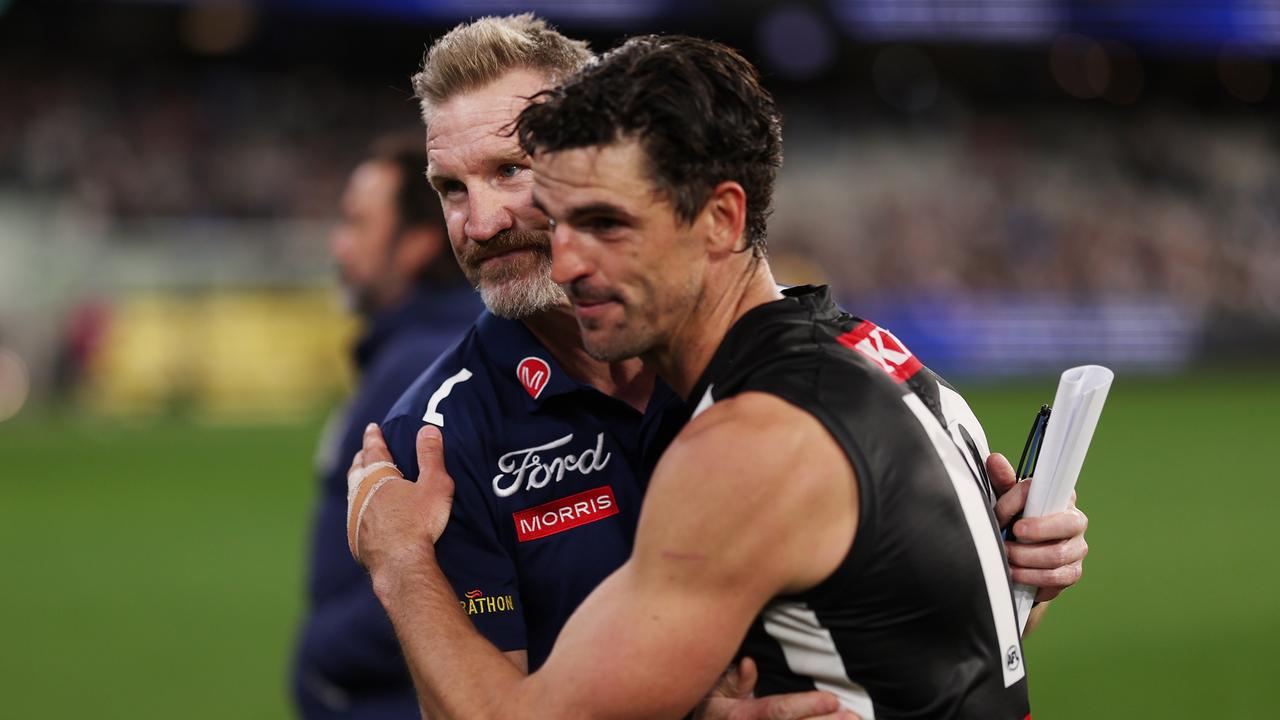
The veteran leader was captured sharing an emotional embrace with former Collingwood captain and coach Nathan Buckley after the final siren, a moment that underscored his standing as one of the club’s greatest ever products. McRae argued that prioritizing a home celebration for this once-in-a-career milestone is a fitting call for one of the sport’s modern greats, even amid a tight run of fixtures and a rocky season for the club.
“This is a plan we stick to, high-performance but also rewarding and celebrating one of the greats of our game,” McRae said. “We’re excited for what that looks like in a couple of weeks time, we’ll sit in this now and have a shallow loss, dust ourselves off quickly and get up to Sydney, put on a good performance for our fans because it wasn’t good enough tonight.”
McRae added that the club will name a full 22 plus interchange to face the Swans, and is fully focused on putting up a competitive performance that the club’s supporter base can be proud of, even without their veteran playmaker.
Beyond the Pendlebury plan, Collingwood is also facing fresh injury concerns: starting captain Darcy Moore was forced out of the Geelong clash before halftime after sustaining a concussion in a heavy collision with Geelong midfielder Oisin Mullin, ruling him out of contention for the Sydney matchup as well.
McRae conceded that the absence of both Moore and Pendlebury will exacerbate a long-running problem for the Magpies: poor performance in winning and defending centre clearances, an issue that was brutally exposed by Geelong on Saturday night. The Cats kicked six goals directly from centre bounce possessions, a stat McRae admitted is well below the standard his side needs to compete against top opposition.
“Six goals tonight (from centre bounce) is just not at a level against teams like Geelong, we can’t afford to have that,” he said. “The numbers balance around, it was pretty even, I think it was 13-apiece but it’s a little bit of inability to stop scoring out of that source.”
McRae also acknowledged that Geelong’s dominant performance exposed uncharacteristic flaws in Collingwood’s usually solid defensive system, marking the first time this season the club’s defensive structures have been tested so severely. Geelong recorded more than 20 marks inside Collingwood’s 50-metre arc, a sign that the Magpies’ defensive pressure was not up to its usual standard for the full 80 minutes.