作者: admin

  • ‘Shooting gallery’: How a US invasion of Iranian islands might unfold

    ‘Shooting gallery’: How a US invasion of Iranian islands might unfold

    A potential US military operation to capture Iranian islands in the Gulf would confront American forces with a hazardous combat environment characterized by vulnerable supply lines and ambiguous strategic objectives, according to former US military officials and analysts interviewed by Middle East Eye.

    The operational blueprint would commence with electronic warfare campaigns to disrupt Iranian radar and communications, followed by intensive aerial bombardment to dismantle coastal defenses. Seth Krummrich, former chief of staff for US special operations in the Middle East, emphasized the necessity of preliminary isolation efforts before any ground assault.

    Primary targets under consideration include Kharg Island, responsible for 90% of Iran’s oil exports; Abu Musa and its associated islands, subject to territorial disputes with the UAE; and Qeshm Island, the largest and most fortified location containing tunnel networks for drones and missiles.

    Military strategists note significant operational challenges distinct from historical Pacific island campaigns. Daniel Davis, former US Army lieutenant colonel, asserts that Iran’s control over the Strait of Hormuz would necessitate airborne insertion rather than amphibious landing due to the vulnerability of naval vessels. Potential transportation would involve V-22 Osprey aircraft, Chinook, and Black Hawk helicopters deploying troops from bases in Gulf partner nations.

    The invasion force would comprise approximately 2,500 Marines from expeditionary units and 3,000 paratroopers from the 82nd Airborne Division. However, analysts highlight the critical dependency on basing rights from Gulf states including Saudi Arabia, UAE, and Kuwait—cooperation that remains politically complex.

    Military experts draw concerning parallels to Britain’s 1982 Falklands campaign while noting more severe contemporary challenges. The geographical compression of the Gulf region and advancements in drone warfare create particularly adverse conditions. Kalev Sepp of the US Naval Postgraduate School noted that technological and geographical factors make such an operation more difficult than historical precedents.

    Upon establishment of beachheads, US forces would face Iran’s decentralized ‘mosaic defense’ structure implemented by the Islamic Revolutionary Guard Corps. This guerrilla warfare approach, featuring 31 provincial commands with autonomous strike capabilities, would prevent conventional engagement and necessitate sustained defensive support from already stretched air and naval assets.

    Logistical complications present another critical vulnerability. The requirement of approximately nine support personnel for every combat soldier—excluding maritime control and air cover—creates massive supply chain vulnerabilities under the umbrella of Iranian missile and drone capabilities. US bases throughout the Gulf have demonstrated vulnerability to Iranian strikes, with reporting indicating significant damage to regional facilities.

    Experts suggest Iran could escalate through proxy forces like the Houthis targeting strategic waterways including the Bab al-Mandeb Strait, potentially triggering global energy price spikes. Additionally, seizure of economically critical islands like Kharg could prompt Iranian counter-escalation against regional energy infrastructure despite damaging their own economic interests.

    Analysts conclude that most Iranian islands offer minimal strategic advantage unavailable through existing US bases in the region, questioning the fundamental operational rationale while highlighting extreme risks to personnel and regional stability.

  • Minnesota staging flagship ‘No Kings’ protest against Trump, with rallies in Europe, DC

    Minnesota staging flagship ‘No Kings’ protest against Trump, with rallies in Europe, DC

    ST. PAUL, Minn. — A massive wave of organized dissent is sweeping across the United States and beyond as the ‘No Kings’ movement prepares for what could become one of the largest protest events in American history. With its national flagship event centered at the Minnesota Capitol, the movement has registered over 3,100 coordinated demonstrations spanning all 50 states and multiple international locations.

    The protests represent a multifaceted rejection of President Donald Trump’s policies and governing style, with participants expressing opposition to aggressive immigration enforcement, transgender rights rollbacks, and military engagements in Iran. In Washington D.C., hundreds marched past iconic monuments carrying signs reading ‘Put down the crown, clown’ and chanting anti-authoritarian slogans.

    Minnesota emerged as the symbolic heart of the resistance following fatal shootings by federal agents during immigration operations. The St. Paul rally expects approximately 100,000 attendees and will feature performances by Bruce Springsteen, who penned ‘Streets of Minneapolis’ in response to recent casualties, alongside appearances by Joan Baez, Jane Fonda, and Senator Bernie Sanders.

    International solidarity events are occurring across Europe, Australia, and Latin America, with participants in Paris, Rome, and London expressing parallel concerns about rising authoritarianism. Organizers from Indivisible report significant registration surges in traditionally conservative states including Idaho, Wyoming, and Montana, suggesting broadening discontent beyond urban centers.

    The Trump administration dismissed the events as ‘Trump Derangement Therapy Sessions’ funded by leftist networks, while Republican officials labeled them ‘Hate America Rallies.’ Despite this criticism, organizers emphasize the cross-demographic nature of the participation, noting substantial involvement from suburban and rural communities.

  • China targets US trade barriers amid Section 301 probes

    China targets US trade barriers amid Section 301 probes

    In a significant escalation of trade tensions, China has initiated dual investigations into United States trade practices that Beijing alleges are disrupting global supply chains and unfairly targeting its green technology exports. The Chinese Ministry of Commerce announced on March 27 that these probes will examine whether US measures—including import restrictions, export controls, and investment limitations—have adversely affected Chinese enterprises and hindered the development of renewable energy sectors.

    The investigations represent a direct response to the US Trade Representative’s recent Section 301 investigations launched in early March, which targeted 16 economies for industrial overcapacity in steel, semiconductors, and automobiles, plus 60 additional economies over alleged forced labor practices. Although framed as broad actions, analysts note these measures predominantly focus on China.

    China’s commerce ministry spokesperson expressed strong opposition to the US actions, stating: “China is strongly dissatisfied with and firmly opposed to the USTR’s actions. We will proceed with investigations according to China’s Foreign Trade Law and take corresponding measures to safeguard our legitimate rights and interests.”

    Two primary investigation areas have been identified:

    1. Global Supply Chain Disruptions: Preliminary evidence suggests the US has implemented measures restricting Chinese market access, limiting high-tech exports to China, and curbing bilateral investment in critical sectors.

    2. Green Trade Barriers: Initial findings indicate US actions have restricted green product exports, delayed renewable energy project deployment, and limited technological cooperation in sustainable industries.

    The ministry contends these practices may violate WTO regulations and bilateral trade agreements, potentially causing significant harm to Chinese commercial interests. Investigation methods will include questionnaires, hearings, and on-site inspections, with completion expected within six months (extendable to nine months in special circumstances).

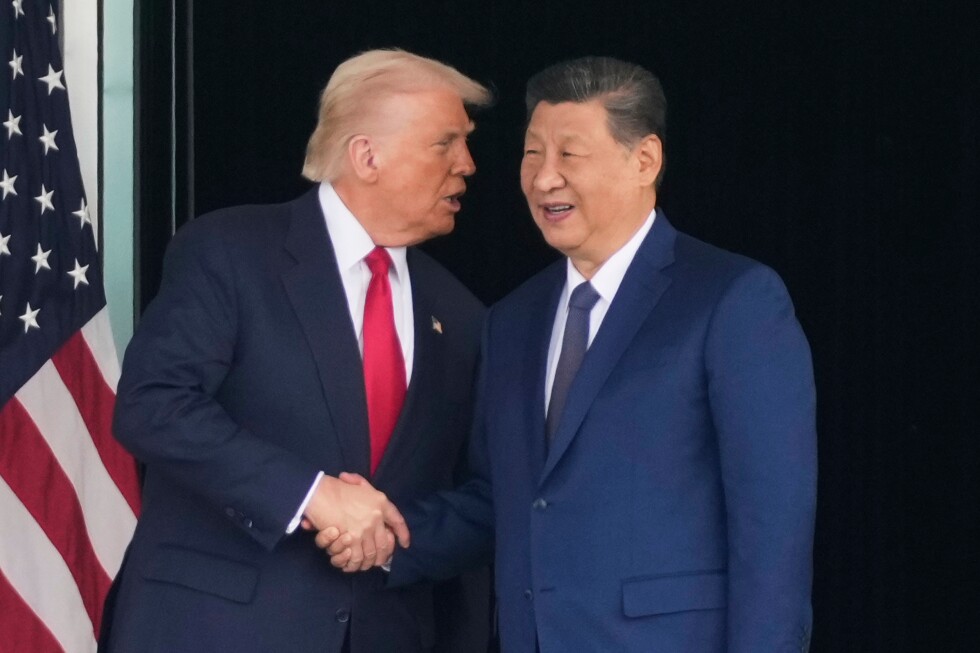
    This development follows President Trump’s March 26 social media announcement of planned China visits on May 14-15, though Beijing hasn’t confirmed these dates. The original March 31 meeting was postponed following US-Israeli strikes against Iran.

    Analysts suggest China’s investigation strategy leverages its substantial market influence—with 2025 goods trade totaling $6.3 trillion—and increasingly diversified trade relationships with ASEAN, Africa, and Latin America, reducing US dependency and enhancing resilience against trade restrictions.

    The current trade truce between Trump and Xi, set to expire November 10, 2026, coincides with US midterm elections on November 3, creating political pressure to avoid escalating tensions that might destabilize the economy and impact Republican congressional control.

    This isn’t China’s first trade-barrier investigation against the US. A 2011 probe into American renewable energy subsidies concluded the measures violated WTO rules, though subsequent US tariffs on Chinese solar panels prompted manufacturers to relocate production to Southeast Asia.

    The announcement follows China’s recent completion of a separate trade investigation into Mexico’s tariff increases (up to 35%) on imports from non-free-trade agreement countries, which particularly affected China’s automotive sector with estimated $9 billion losses. Mexico’s alignment with US trade objectives reflects the complex dynamics of North American supply chain integration under the US-Mexico-Canada Agreement.

  • Formula 1: Antonelli and Russell 1-2 in qualifying for the Japanese Grand Prix

    Formula 1: Antonelli and Russell 1-2 in qualifying for the Japanese Grand Prix

    SUZUKA, Japan — Mercedes’ teenage sensation Kimi Antonelli continued his spectacular emergence in Formula 1 by capturing pole position for Sunday’s Japanese Grand Prix, building on his breakthrough victory just two weeks prior in China. The 19-year-old Italian clocked a blistering 1:28.778 on Suzuka’s challenging 5.8-kilometer circuit during Saturday’s qualifying session.

    Antonelli will be joined on the front row by teammate George Russell, who secured the season-opening victory in Australia, cementing Mercedes’ early supremacy in the 2026 championship. The second row features an intriguing mix of McLaren’s Oscar Piastri—making his first start this season after technical setbacks—alongside Ferrari’s Charles Leclerc. The third row positions Lando Norris (McLaren) beside Lewis Hamilton (Ferrari).

    Reflecting on his performance, Antonelli remarked: ‘It was a clean session with strong car feel. I’m thoroughly satisfied with our execution and now shift focus to race strategy.’

    The qualifying gap proved significant by F1 standards, with Antonelli outpacing Russell by three-tenths of a second—a substantial margin under the new technical regulations. Russell acknowledged his teammate’s excellence despite grappling with inconsistent car performance throughout the session.

    This season introduces revolutionary technical specifications, with powertrains now equally split between battery and combustion energy, coupled with more compact, agile chassis designs. These changes have facilitated overtaking in initial races, though Suzuka’s traditional layout—characterized by narrow passages and limited straights—presents distinct challenges.

    Antonelli anticipates strategic complexity: ‘The racing could remain engaging but undoubtedly more demanding than in China or Melbourne. Overtaking opportunities will be scarce, making initial positioning critical.’

    Notable developments include Red Bull’s four-time champion Max Verstappen qualifying a disappointing 11th after reporting fundamental handling issues, while Piastri celebrates McLaren’s competitive resurgence after earlier mechanical misfortunes.

    Optimal spring conditions graced Saturday’s proceedings, with similar weather forecast for Sunday’s main event.

  • How Trump and the oil markets move in sync: a tango in five charts

    How Trump and the oil markets move in sync: a tango in five charts

    A month into the ongoing military engagement between the United States and Israel against Iran, market analysts are observing a significant shift in how financial markets respond to presidential communications. Whereas President Donald Trump’s social media posts and statements once triggered immediate and substantial fluctuations in oil prices, traders are increasingly adopting a more skeptical stance toward the predictive value of his commentary.

    Crude oil has experienced considerable volatility since the commencement of strikes on February 28th. Starting from approximately $72 per barrel pre-conflict, prices surged to a peak of $118 on March 19th before settling around $112 by Friday afternoon—marking a substantial increase from pre-war levels despite recent fluctuations.

    Investment professionals note that energy prices have effectively become a barometer for broader geopolitical risks. Jonathan Raymond, Investment Manager at Quilter Cheviot, observes that “markets are rightfully sensitive to those signals, given the big economic risks that come with rising oil prices.” He characterizes market movements not as confusion but as attempts to “manage event risk in real time, with oil sitting right at the centre of that.”

    The relationship between presidential rhetoric and market response appears to be weakening. Brian Szytel of the Bahnsen Group suggests that some presidential comments seem strategically aimed at influencing oil prices rather than communicating substantive policy, noting that “the first casualty of war is truth” and suspecting that rhetoric about productive talks often centers around moving oil prices.

    This skepticism was evident last Thursday when, minutes after US stock markets experienced their sharpest decline since the conflict began, Trump announced that talks with Iran were progressing “very well” and that military strikes on Iranian energy infrastructure would be delayed until at least April 6th. Contrary to historical patterns, oil prices continued their upward trajectory despite these conciliatory statements.

    Jane Foley, Head of FX Strategy at Rabobank, attributes the muted market reactions to the “huge gap” between Trump’s reassurances and Tehran’s lack of acknowledgment. She notes that “given the optics, many investors cannot see an early end to the conflict and markets remain anxious.”

    Russ Mould, Investment Director at AJ Bell, adds that markets have grown accustomed to Trump “often changing tack at signs of political or stock market or economic trouble,” resulting in “a degree of scepticism, or even downright cynicism, creeping in at the edges” of market psychology.

  • Nepal police arrest former prime minister and former home minister over September protest deaths

    Nepal police arrest former prime minister and former home minister over September protest deaths

    Nepalese authorities have taken former Prime Minister Khadga Prasad Oli into custody alongside ex-Home Minister Ramesh Lekhak, marking a significant development in the pursuit of accountability for September’s lethal protest suppression. The arrests occurred during early morning operations at their Kathmandu residences, where specialized police units transported both officials to district headquarters for processing.

    This judicial action follows the conclusive findings of an official government commission that recommended substantial prison sentences—potentially extending to a decade—for those responsible for authorizing lethal force against demonstrators. The September uprising, characterized by widespread youth mobilization against systemic corruption and governance failures, resulted in 76 fatalities and over 2,300 casualties while culminating in the arson of multiple government facilities.

    Home Minister Sudan Gurung emphasized the constitutional nature of these arrests through official social media channels, stating: ‘Legal accountability transcends political status. This constitutes neither vendetta nor retaliation, but rather the foundational implementation of judicial fairness.’

    The timing coincides with the inauguration of a new administration led by Balendra Shah, whose Rastriya Swatantra Party achieved a decisive electoral victory this month. This political transition represents Nepal’s first national election since the revolutionary events of September, which previously compelled high-ranking officials to evacuate via military aircraft amid widespread civil unrest.

    Notably, the protest movement catalyzed the historic appointment of Sushila Karki as Nepal’s inaugural female prime minister, who presided over the interim government until these recent elections. The current administration has prioritized justice for victims and institutional reform as central governance objectives.

  • Nepal’s ex-PM arrested over fatal protest crackdown

    Nepal’s ex-PM arrested over fatal protest crackdown

    In a significant political development, Nepal’s former Prime Minister KP Sharma Oli has been taken into custody alongside ex-Home Minister Ramesh Lekhak for their alleged roles in authorizing lethal force against demonstrators during last year’s widespread civil unrest. The arrests follow conclusive recommendations from an independent investigative commission that found both officials culpable of criminal negligence during the September crisis.

    The fatal crackdown resulted in over 70 casualties, predominantly protesters fatally shot by law enforcement personnel. The initial demonstrations erupted in response to a government-imposed social media blackout but rapidly escalated into mass protests fueled by deep-seated public frustration over systemic corruption and dire economic conditions.

    Police authorities confirmed the detentions occurred Saturday morning, though formal charges have not yet been filed. The investigation panel has additionally recommended prosecuting former police chief Chandra Kuber Khapung for his command decisions during the civil disturbances.

    This dramatic political shift follows the recent inauguration of new Prime Minister Balen Shah, a former rapper whose election was directly precipitated by last year’s crisis. The new administration has signaled its commitment to accountability, with recently appointed Home Minister Sudan Gurung—a prominent figure during the protests—publicly endorsing the arrests on social media. Minister Gurung emphasized these actions represent the foundational application of justice rather than political retribution.

  • Argentina beats Mauritania 2-1 as fans roar for Messi to chase a sixth World Cup

    Argentina beats Mauritania 2-1 as fans roar for Messi to chase a sixth World Cup

    BUENOS AIRES, Argentina — The Argentine national football team secured a 2-1 victory against Mauritania in an international friendly match at La Bombonera stadium on Friday. The encounter served dual purposes: allowing coach Lionel Scaloni to assess his squad ahead of the upcoming World Cup and providing fans an opportunity to voice their overwhelming support for captain Lionel Messi.

    The match unfolded with Enzo Fernández opening the scoring in the 17th minute, capitalizing on a precise cross from Atlético Madrid right-back Nahuel Molina. Nicolás Paz doubled Argentina’s advantage in the 32nd minute with a brilliantly executed left-footed free kick that penetrated Mauritania’s defensive wall, leaving goalkeeper Babacar Diop with no chance of intervention.

    The atmosphere intensified dramatically when Messi emerged for his warm-up routine, triggering passionate chants of “With Leo Messi leading the way, we’re all going to celebrate” from the Argentine supporters. A massive banner proclaiming “The best of the century” was unfurled from one of the stands, underscoring the emotional connection between the 38-year-old icon and his adoring public.

    Messi entered the match in the second half alongside Franco Mastantuono, a promising Real Madrid talent competing for a World Cup roster spot. The Inter Miami star created Argentina’s clearest scoring opportunity in the 55th minute with a powerful long-range effort that required an impressive save from Diop.

    This friendly was arranged as an emergency replacement after Argentina’s scheduled Finalissima match against European champions Spain in Qatar was canceled due to geopolitical tensions in the Middle East. With limited options available, the world champions settled on matches against Mauritania (ranked 115th by FIFA) and Zambia (91st) to complete their World Cup preparations.

    National teams face a May 30 deadline to submit their final 26-player rosters for the tournament. Argentina, drawn in Group J, will begin their title defense against Algeria on June 16 in Kansas City, followed by matches against Austria on June 22 and Jordan on June 27.

  • From jammed broadcasts to a blocked website: BBC Russian’s 80 years of defiance

    From jammed broadcasts to a blocked website: BBC Russian’s 80 years of defiance

    For eight decades, the BBC Russian service has navigated evolving censorship barriers in its mission to deliver uncensored information to Russian audiences. What began as short-wave radio jamming during the Cold War has transformed into sophisticated digital blocking in the modern era, creating what analysts now term a ‘digital Iron Curtain’.

    The historical struggle dates to March 24, 1946, when the BBC launched its first regular Russian-language broadcasts aimed at providing Soviet citizens an alternative to state propaganda. By 1949, signal jamming became standard practice, forcing inventive listeners to develop creative workarounds. Former BBC presenter Natalia Rubinstein recalls how enthusiasts would take radios on cross-country skiing trips to escape urban jamming zones, creating surreal scenes of individuals listening to forbidden broadcasts in snowy forests.

    Cold War-era broadcasting involved intricate cat-and-mouse games. The BBC would repeat its 90-minute Russian bulletin three times weekly to ensure some content reached listeners. While cultural programming often bypassed censorship, discussions of global conflicts or socialist bloc politics faced immediate jamming. A notable victory occurred in 1982 when the service unexpectedly resumed broadcasting after midnight to report Leonid Brezhnev’s death, temporarily outmaneuvering jamming teams who had ended their shifts.

    The Glasnost era brought dramatic changes. In 1987, jamming ceased officially during Mikhail Gorbachev’s reforms, allowing unprecedented direct engagement. The 1988 live broadcast featuring UK Prime Minister Margaret Thatcher answering Soviet citizen questions generated over 800 calls from across the USSR.

    Modern challenges have intensified following Russia’s 2022 invasion of Ukraine. The BBC Russian website was blocked on March 4, 2022, accused of spreading ‘false information,’ while new laws criminalized describing the conflict as a ‘war.’ The service relocated to Riga, Latvia, as eight journalists were designated ‘foreign agents’—a designation echoing Soviet-era persecution tactics.

    Despite these obstacles, weekly audience numbers have grown to 12 million through VPN usage and alternative platforms. However, Russia’s internet watchdog systematically blocks popular VPN services, while widespread mobile outages and proposed ‘whitelist’ systems threaten to create Iranian-style information control. Messaging apps like Telegram and WhatsApp face restrictions favoring government-backed alternatives.

    BBC News Russian head Jenny Norton notes the particular significance of their mission today: ‘A new generation of Russians are now having to fight to stay connected to the world. Our team must battle internet blocking and shutdowns to maintain this vital connection,’ underscoring the continuing relevance of the service’s 80-year mission.

  • Noah Wyle is back in A&E with new drama The Pitt: ‘I hope people watch with empathy’

    Noah Wyle is back in A&E with new drama The Pitt: ‘I hope people watch with empathy’

    The acclaimed HBO Max medical drama ‘The Pitt’ has arrived in the UK, offering British audiences a stark portrayal of America’s healthcare system through the lens of a Pittsburgh emergency department. The series stars Noah Wyle as Dr. Robby, a lead physician grappling with trauma yet maintaining profound empathy amidst systemic pressures.

    Unlike typical medical dramas, ‘The Pitt’ directly confronts the realities of America’s for-profit healthcare model. In one compelling storyline, construction worker Orlando Diaz develops severe diabetes complications after rationing insulin due to overwhelming medical debt—a scenario virtually unheard of in the UK’s NHS system.

    Wyle, who also serves as executive producer and writer, explains the series emerged from pandemic-era conversations with healthcare workers. ‘First responders were being hit extremely hard during COVID,’ he notes. ‘I received extensive correspondence from medical professionals describing their experiences, which inspired this contemporary examination of healthcare challenges.’

    The drama explores numerous critical issues including measles outbreaks, festival shootings, opioid addiction, medical abortion access, racial disparities in maternal care, and homelessness. Wyle describes emergency rooms as ‘the catch-all of society’s bad choices,’ while raising the poignant question: ‘Who helps the helpers when these professionals attend the worst day of someone’s life four times an hour?’

    Dr. Robby’s character embodies the psychological toll of frontline healthcare work, suffering from unrecognized PTSD—a metaphor for broader societal trauma following COVID-19. ‘He’s on a mental health journey he doesn’t know he’s on,’ Wyle reveals, noting the character serves as an avatar for many struggling with unrecognized pandemic-related trauma.

    The series has already earned critical acclaim in the US, winning multiple Emmy and Golden Globe awards. Early UK reviews in major publications have awarded four- and five-star ratings, suggesting the show’s themes resonate despite healthcare system differences.

    All episodes of Season One are currently available for streaming on HBO Max in the UK and Ireland, with Season Two episodes releasing weekly.