作者: admin

  • ‘The gravest crime against humanity’: What does the UN vote on slavery mean?

    ‘The gravest crime against humanity’: What does the UN vote on slavery mean?

    In a landmark decision with profound historical significance, the United Nations General Assembly has overwhelmingly endorsed a resolution characterizing the transatlantic slave trade as “the gravest crime against humanity.” The resolution, which garnered 123 votes in favor with only three nations opposed and 52 abstentions, represents a pivotal moment in international recognition of slavery’s enduring legacy.

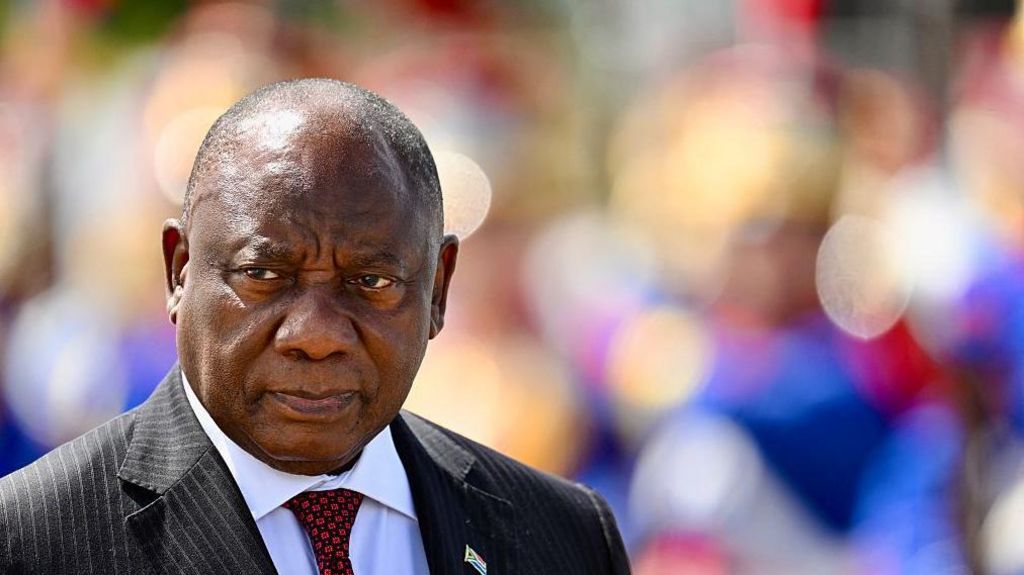
    UN Secretary-General Antonio Guterres welcomed the adoption, emphasizing that the economic foundations of numerous Western nations were “built on stolen lives and stolen labour.” He described the institution as extending beyond forced labor to encompass “a machinery of mass exploitation and deliberate dehumanization of men, women and children” maintained through barbaric punishments including shackles, flogging, and sexual violence.

    The resolution, championed by African and Caribbean nations, carries symbolic rather than legal force but establishes crucial political momentum for ongoing reparations discussions. Almaz Teffera, a senior racism researcher at Human Rights Watch, noted that while the declaration possesses primarily symbolic value, it constitutes “a huge and significant step” that could accelerate progress on compensation debates.

    Historical context reveals the staggering scale of the transatlantic slave trade, which forcibly transported approximately 12-15 million Africans to the Americas between the 15th and 19th centuries. An estimated two million perished during the horrific Middle Passage aboard slave ships. European colonial powers including Spain, Portugal, France, and Britain systematically profited from this exploitation.

    The contemporary ramifications of centuries of enslavement remain starkly evident. In Brazil, which received nearly 4.9 million enslaved Africans primarily under Portuguese rule, official statistics indicate black citizens are twice as likely to experience poverty compared to white counterparts.

    The resolution urges member states to consider formal apologies and contributions to a reparations fund, though opposition remains substantial. The United States, Israel, and Argentina voted against the measure, with Deputy US Ambassador Dan Negrea expressing concern that creating a hierarchy of historical crimes “diminishes the suffering of countless victims.” The United Kingdom and European Union members were among those abstaining.

    Reparations advocates emphasize that financial compensation constitutes only one dimension of restorative justice. Dr. Esther Xosei, a prominent British scholar and activist, cautioned that while the UN declaration represents a “good victory,” the “real battle will be fought on the streets” where public understanding of slavery’s legacy remains inadequate.

    Historical precedent exists for reparations, notably Germany’s payment of over $80 billion to Jewish victims of the Nazi regime. However, no nation has provided compensation to descendants of enslaved Africans, despite 19th-century payments to slave owners following abolition—Britain allocated the modern equivalent of $21 billion to compensate proprietors after ending slavery in the 1830s.

    The CARICOM bloc of 15 Caribbean nations has advanced a comprehensive 10-point plan for reparatory justice, estimating that former colonial powers owe at least $33 trillion. International Court of Justice judge Patrick Robinson has proposed an even higher figure of $107 trillion from 31 nations. These astronomical sums far exceed practical implementation possibilities, with the entire US federal budget for 2025 totaling $7.1 trillion.

    Beyond financial considerations, advocates stress the importance of formal apologies, educational reforms, and historical acknowledgment. Verene Shepherd, vice-chair of the CARICOM Reparations Commission, notes that European governments have predominantly issued “statements of regret” rather than full apologies, impeding the healing process for descendants.

    As Dr. Celeste Martinez, a specialist in Spanish colonialism, summarizes: “The most important thing to understand is that nobody is trying to change the past, but to address its consequences in the present.” The UN resolution represents a critical step toward acknowledging that slavery’s legacies endure through contemporary racism and inequality, demanding comprehensive reckoning and restorative action.

  • ‘Suicide of a Nation’: Matt Goodwin’s AI-assisted screed on Muslims and Britain

    ‘Suicide of a Nation’: Matt Goodwin’s AI-assisted screed on Muslims and Britain

    Matt Goodwin’s latest literary endeavor, ‘Suicide of a Nation: Immigration, Islam, Identity,’ immediately confronts readers with an unconventional typographical presentation that some might find visually challenging. The self-published work, which has achieved bestseller status on Amazon, carries a dedication to what the author terms the ‘Forgotten Majority’—a telling preface to the controversial content that follows.

    Dr. Goodwin, formerly respected for his academic rigor demonstrated in his 2018 work ‘National Populism: The Revolt Against Liberal Democracy,’ has undergone a remarkable transformation from dispassionate political scientist to active participant in right-wing politics. His recent unsuccessful parliamentary campaign as a Reform UK candidate for the Gorton and Denton constituency, followed by his current role as a GB News presenter, marks this dramatic shift in professional trajectory.

    The book’s methodology raises significant questions about academic integrity. With merely twelve footnotes throughout the entire volume—two containing ChatGPT source code and five referencing his own Substack publications—the work departs dramatically from scholarly standards. More troubling still, multiple quotations attributed to historical figures including Cicero, Friedrich Hayek, and Sir Roger Scruton have been identified as potentially fabricated.

    Goodwin’s central thesis revolves around what he characterizes as deliberate ‘demographic replacement’ orchestrated by unnamed elites. He presents alarming projections suggesting Muslims will constitute one-quarter of Britain’s population by 2100, while the white British majority will lose its numerical dominance among young people by 2050. These demographic shifts, Goodwin argues, threaten to erase Britain’s cultural distinctiveness and historical continuity.

    Notably absent from his analysis is any substantive discussion of the British Empire’s role in shaping modern British identity—a curious omission given how imperial history fundamentally influenced Britain’s multicultural dimensions. The work further demonstrates conceptual confusion regarding British identity, simultaneously insisting ethnic minorities must integrate while suggesting they cannot achieve the same ‘instinctive, emotional connection’ as those with multi-generational British ancestry.

    The book contains numerous factual inaccuracies, including misrepresented quotations from politicians, incorrect political context regarding Boris Johnson’s position in 2019, and unverified claims about classrooms with minimal English speakers. These errors substantially undermine the work’s credibility.

    Contrary to Goodwin’s portrayal of segregated Muslim communities with limited integration, recent polling data from Opinium reveals British Muslims demonstrate stronger support for democratic principles (85%) than the general population (71%), greater endorsement of equal treatment under the law (94% versus 80%), and higher reported loyalty to the UK (70% versus 50%). Additionally, 80% report frequent interactions with non-Muslims.

    Despite these empirical contradictions, Goodwin concludes with apocalyptic warnings about Britain’s imminent cultural demise, employing rhetoric that frames criticism as elite persecution while proposing restrictive measures targeting religious dress in public spaces—a position that would impact multiple religious communities.

    The transformation of an academic once praised for balanced analysis into a purveyor of alarmist ethnic politics represents a concerning development in British political discourse, particularly given Goodwin’s continued media platform and influence within right-wing circles.

  • Indonesia starts implementing social media restrictions for children under 16

    Indonesia starts implementing social media restrictions for children under 16

    JAKARTA, Indonesia — Indonesia has initiated a groundbreaking digital protection measure, enforcing a comprehensive ban on social media and gaming platform access for children under 16. The new regulation, officially implemented this Saturday, represents Southeast Asia’s first major governmental intervention against digital risks facing minors.

    The policy targets prominent platforms including YouTube, TikTok, Facebook, Instagram, Threads, X, Bigo Live, and Roblox. This strategic move aligns with global efforts—following Australia’s precedent last year—to reclaim parental authority from technology conglomerates and safeguard adolescent wellbeing.

    Communication and Digital Affairs Minister Meutya Hafid revealed the measure will impact approximately 70 million Indonesian children within the nation’s 280-million population. High-risk platforms were identified through rigorous assessment criteria evaluating exposure to strangers, predatory risks, harmful content prevalence, exploitation vulnerabilities, and data security threats.

    Despite the progressive intent, Minister Hafid acknowledged implementation complexities. ‘This is certainly a task. But we must take steps to save our children,’ she stated, emphasizing the challenges of ensuring platform compliance and monitoring under-16 account deactivations.

    The policy has generated mixed reactions among its intended beneficiaries. Maura Munthe, a 13-year-old social media user, expressed ambivalence: ‘I feel kind of 50-50 about it.’ While concerned about losing entertainment access, she recognized the protective rationale.

    Parental perspectives reflect broader societal concerns. Leni Sinuraya, a 47-year-old mother, observed: ‘Nowadays, when we see kids sitting in a restaurant, they have a phone right in front of them. Mealtime is supposed to be for chatting with people around us.’

    Child protection experts emphasize balanced approaches. Diena Haryana of Jakarta-based SEJIWA foundation noted digital platforms’ educational benefits while advocating for ‘right time, right age, and right guidance’ principles. She predicted initial confusion but urged parents and schools to ‘encourage children to engage with the real world.’

    Platform responses have been cautiously compliant. X explicitly references Indonesia’s 16-year age requirement on its safety page, while YouTube expressed support for ‘risk-based frameworks addressing online harms.’

    This development positions Indonesia within an international movement—including Spain, France, and the UK—considering similar restrictions amid growing concerns about unregulated social media’s impact on youth mental health.

  • ‘We’re having a moment’ – fear and denial in Silicon Valley over social media addiction trial

    ‘We’re having a moment’ – fear and denial in Silicon Valley over social media addiction trial

    A seismic legal verdict has sent shockwaves through Silicon Valley, with a Los Angeles jury delivering a landmark decision against tech behemoths Meta and YouTube. The ruling found both companies legally responsible for designing intentionally addictive platforms that caused significant mental health harm to a 20-year-old plaintiff identified only as Kaley.

    Following nine days of intensive deliberation, jurors sided unanimously with the plaintiff on all counts, awarding $3 million in compensation plus an additional $3 million in punitive damages. The case represents a potential turning point in how social media companies are perceived legally and ethically.

    Kaley’s legal team successfully argued that platform algorithms amplified her pre-existing personal struggles, leading to severe body dysmorphia, depression, and suicidal thoughts. Meta countered by highlighting Kaley’s family difficulties and school challenges that predated her Instagram use beginning at age nine.

    Both tech giants have announced plans to appeal the verdict. Meta expressed disappointment, having entered the trial confident in its legal position. A company spokesperson contended that reducing complex teen mental health issues to a single cause risks overlooking broader societal challenges.

    Legal experts recognize the case’s profound implications. Attorney Jayne Conroy noted, ‘It was a clean sweep with respect to liability against both Google and Meta. It will matter.’ She predicted intensive calculations occurring in boardrooms across Meta, Google, Snap, and TikTok as they anticipate thousands of similar cases.

    The verdict challenges tech companies’ fundamental business models that prioritize user engagement and time spent on platforms. Former Twitter executive Bruce Daisley explained that big tech firms derive value from outperforming stock market growth, creating inherent pressure to maximize user screen time.

    This case represents the first of several bellwether trials testing the novel legal theory that social media companies caused personal injury through addictive design choices pursued for profit. While TikTok and Snap settled before trial, they face upcoming similar litigation.

    The ruling coincides with another significant legal blow against Meta—a separate $375 million verdict in New Mexico where prosecutors convinced a jury the company enabled child exploitation on its platforms.

    Despite the substantial financial penalties, some legal observers caution against overinterpreting the verdict’s immediate impact. Santa Clara University Professor Eric Goldman noted the non-unanimous jury decision and prolonged deliberations, while acknowledging the potentially existential threat such cases pose to social media business models.

    As appeals proceed and additional cases advance through courts, all parties will refine their legal arguments in what appears to be the beginning of a protracted legal reckoning for social media companies.

  • UAE has an active role in Iran war and will be pounded if US invades, Iranian sources say

    UAE has an active role in Iran war and will be pounded if US invades, Iranian sources say

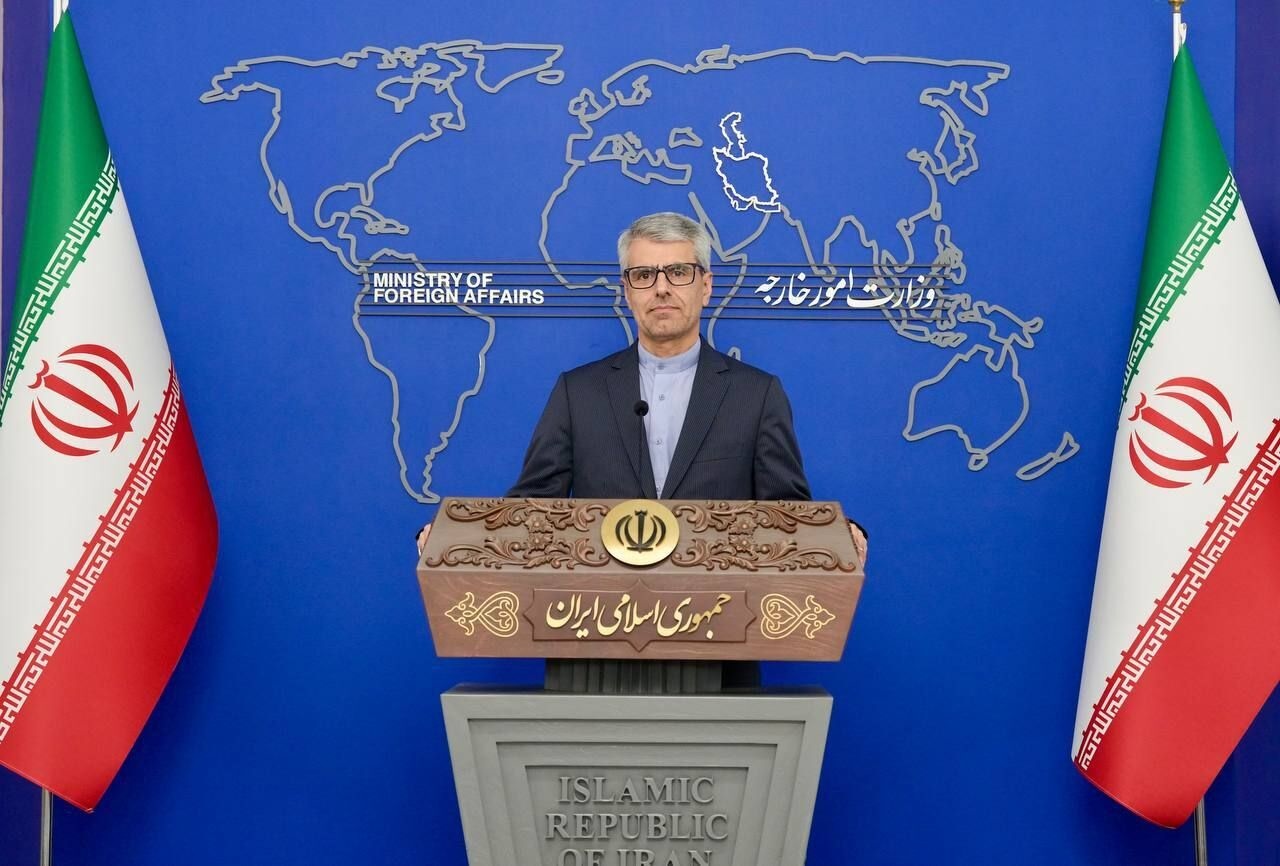
    Iranian authorities have issued a stark warning to the United Arab Emirates, threatening comprehensive military retaliation against Emirati state assets if Abu Dhabi continues its alleged support for US-Israeli operations against Tehran. According to senior Iranian security and diplomatic sources who spoke with Middle East Eye, Iran’s leadership has concluded that the UAE has transitioned from merely hosting US military facilities to actively participating in offensive operations.

    Intelligence assessments from Tehran indicate the UAE has provided air facilities for anti-Iran operations, served as an advanced platform for Israeli regional interests, and even facilitated deception operations including false-flag attacks designed to appear as Iranian aggression. Most notably, Iranian officials allege the UAE has employed advanced AI infrastructure to support US and Israeli targeting intelligence collection, including data on Iranian figures and strategic sites.

    The escalating tensions occur as the conflict enters its second month, with global energy markets experiencing significant disruption. Attention has focused on the Strait of Hormuz, where approximately 30% of the world’s oil passed pre-conflict, and strategic islands including Kharg Island (handling 90% of Iran’s oil exports) and Qashm Island.

    Despite twice delaying promised attacks to allow for diplomatic negotiations, the United States is reportedly preparing additional troop deployments to the region. Iranian officials interpret these delays not as genuine diplomatic efforts but as preparation for a new phase of conflict, potentially including ground operations launched from UAE territory.

    Iran has maintained a policy of limited retaliation thus far, targeting primarily US military installations and intelligence facilities while avoiding treatment of host nations as full enemy states. However, Iranian diplomats warn this restraint would immediately end if any ground invasion occurs or Iranian territory is occupied, with retaliation expanding to include all state institutions and commercial assets with Emirati government investment stakes.

    The warning follows increasingly combative rhetoric from UAE officials, including a Wall Street Journal column by the Emirati ambassador to the US advocating for a ‘conclusive outcome’ that addresses Iran’s ‘full range of threats’ rather than merely pursuing ceasefire agreements.

  • ‘I’m not shocked’: Palestinian activist’s home targeted in foiled firebombing plot

    ‘I’m not shocked’: Palestinian activist’s home targeted in foiled firebombing plot

    Federal authorities have apprehended a New Jersey man accused of orchestrating a planned firebomb attack against the residence of a prominent Palestinian-American activist, uncovering a disturbing domestic terrorism plot that was thwarted through an extensive undercover operation.

    Alexander Heifler of Hoboken, New Jersey, now faces serious federal charges including unlawful possession and manufacturing of firearms following his arrest on Thursday. The criminal complaint reveals the FBI initiated an investigation in early February after Heifler joined a video call seeking instructions for constructing homemade incendiary devices, specifically referencing ‘Molotovs’—improvised explosive devices typically consisting of glass bottles filled with flammable liquids and rag wicks.

    The investigation escalated when Heifler met personally with an undercover law enforcement officer, during which he detailed his sinister blueprint to attack the home of Nerdeen Kiswani, founder of the Palestine advocacy organization Within Our Lifetime. Court documents indicate Heifler emphasized operational secrecy, stating ‘No IDs, no phones… In and out’ regarding his planned approach.

    Over subsequent weeks, the undercover officer collaborated with Heifler in acquiring components for Molotov cocktails at Heifler’s residence. The suspect additionally discussed establishing a hideout immediately following the attack before fleeing the country. The operation reached its critical juncture on March 26 when investigators determined the attack was imminent after Heifler prepared saturated rags and positioned them beside bottles, prompting the FBI to raid his home.

    Nerdeen Kiswani informed Middle East Eye that FBI agents visited her New York-area residence late Thursday to notify her family of the threat to her life, assuring them the suspect had been neutralized. ‘I’m at a loss,’ Kiswani expressed. ‘I’m not shocked, but you know, it’s still something that does shake me to my core.’

    While officials haven’t disclosed a specific motive, Kiswani has endured persistent threats due to her vocal activism for Palestinian rights. She recently filed litigation against far-right Jewish-American group Betar USA, alleging months of violent intimidation campaigns. Her legal representatives describe how the organization offered cash rewards for anyone who would deliver her a beeper—a sinister reference to Israel’s 2024 use of exploding pagers against Hezbollah operatives in Lebanon.

    The case emerges amid heightened tensions surrounding pro-Palestine activism in the United States, highlighting concerning patterns of targeted harassment against Muslim, Arab, and Palestinian advocates. Betar’s New York chapter recently ceased operations following a state attorney general investigation that found the group systematically targeted individuals based on faith and ethnic origin.

  • Pakistan easing regulation to boost food exports to Iran

    Pakistan easing regulation to boost food exports to Iran

    In a significant policy shift, Pakistan has relaxed stringent financial regulations governing export transactions with Iran, creating new opportunities for trade expansion despite international sanctions. The decision, reported by Pakistan’s Profit magazine, eliminates previous requirements for letters of credit or advance payments for specific commodity exports.

    The revised framework permits exporters to ship food items, agricultural products, and select manufactured goods—including seafood, pharmaceuticals, potatoes, meat, onions, and citrus fruits—without utilizing traditional banking channels that had become problematic due to U.S. and UN sanctions against Iran. This regulatory exemption will remain effective for an initial three-month period.

    Concurrently, Pakistan has authorized rice exports to Central Asian Republics and Azerbaijan to transit through Iranian territory, recognizing Iran’s growing importance as a transit corridor. This development gains particular significance amid ongoing tensions between Islamabad and Afghanistan, where military confrontations with the Taliban have complicated traditional trade routes.

    The policy adjustment occurs against the backdrop of regional geopolitical tensions, including the U.S.-Israeli conflict with Iran. Prime Minister Shehbaz Sharif recently instructed authorities to accelerate food exports to Gulf countries following the closure of the Strait of Hormuz, highlighting Pakistan’s strategic positioning efforts.

    Pakistan is simultaneously pursuing expanded flight operations and enhanced port efficiency to capitalize on emerging regional opportunities. The country has demonstrated unusual navigation capabilities, with the Pakistan-flagged vessel Lorax (also known as Karachi) recently becoming the first non-Iranian crude carrier to successfully transit the Strait of Hormuz with active tracking systems enabled. This achievement has prompted some international vessels to consider reflagging under Pakistani registration.

    While Pakistan stands to benefit from increased shipping and food export opportunities, the nation simultaneously faces significant challenges from reduced Gulf energy exports. Fuel rationing measures have already been implemented, including a four-day government work week and temporary school closures, illustrating the complex economic balancing act Pakistan must maintain between neighboring Iran and its crucial Gulf financial partners.

  • With US TV debut, women’s pro ice hockey hopes to cash in big

    With US TV debut, women’s pro ice hockey hopes to cash in big

    This Saturday marks a watershed moment for women’s professional hockey as the Professional Women’s Hockey League (PWHL) makes its historic US national television debut. The groundbreaking broadcast will feature the New York Sirens facing off against Montreal Victoire from Detroit’s Little Caesars Arena, reaching over 126 million American households through Scripps Sports’ ION network.

    The monumental broadcast represents the culmination of decades of growth in women’s sports, accelerated by the US team’s gold-medal victory against Canada at the 2026 Winter Olympics. That championship game attracted over five million viewers, setting a record as the most-watched women’s hockey game in US history.

    For pioneers like Kate Hoos, who witnessed the sport’s first Olympic appearance in 1998, this national exposure signifies a dramatic transformation. “There are a lot of people who could be seeing it for the first time, just flipping through the channels,” Hoos noted. “It’s great exposure.”

    The television debut coincides with unprecedented commercial momentum for women’s sports. Recent McKinsey & Company analysis reveals that between 2022 and 2024, revenue from women’s sports grew 4.5 times faster than men’s sports. Projections indicate women’s sports could generate $2.5 billion in value for US rights holders by 2030—a 250% increase from 2024 figures.

    Kendall Coyne Schofield, Minnesota Frost player and Olympic gold medalist, emphasizes the significance of sustained visibility: “For as long as I can remember, women’s hockey went silent after the Olympics. Now there’s no more ifs, ands or buts—it’s coming back. The awareness, the visibility, it matters.”

    The league’s growing appeal is evident in sold-out arenas at Madison Square Garden and TD Garden, while small businesses report surging demand for women’s hockey merchandise. Artist Alex Douglas, who creates player portraits, reports female athletes outsell male counterparts four-to-one.

    Though currently a one-time broadcast arrangement, experts believe national television exposure creates vital sponsorship opportunities and fan engagement. Thayer Lavielle of The Collective think tank observes: “When you’re opening it up to millions more people to watch, it creates viability, sponsor awareness. It’s an entirely new set of variables for the sport.”

  • Iran war splits older and younger conservatives – as pressure builds for Trump to find exit ramp

    Iran war splits older and younger conservatives – as pressure builds for Trump to find exit ramp

    DALLAS – As the U.S.-Israeli military campaign in Iran concludes its fourth week, deepening fissures are emerging within the American conservative movement regarding the conflict’s justification and trajectory. The annual Conservative Political Action Conference (CPAC) in Texas, traditionally a bastion of unwavering support for former President Donald Trump, revealed significant concerns about wartime transparency, economic consequences, and strategic ambiguity.

    Multiple attendees expressed reservations to BBC journalists about the administration’s approach. Samantha Cassell from Dallas emphasized the need for clearer communication: “I just wish there was more transparency on why we’re doing what we’re doing, that way you could send your loved one overseas and be OK with that.” Her companion Joe Bolick questioned the fundamental objectives: “I don’t see an endgame yet. What are we actually trying to achieve? Is it true regime change? I think we kind of got ourselves stuck.”

    The conference highlighted a generational divide within conservative ranks. Younger participants like Toby Blair, a 19-year-old University of South Florida student, articulated skepticism: “I don’t like that it’s become America’s job to find bad people and get rid of them, especially when you have so many people at home that can’t afford basic things.” His friend Shashank Yalamanchi, a first-year law student, noted that many young conservatives initially supported Trump precisely because he promised to avoid foreign entanglements.

    This contrasted sharply with older attendees like Michael Manuel-Reaud, founder of the “Trump Tribe of Texas,” who asserted: “If there’s a threat for the United States getting bombed with a nuclear bomb, who can say no to that? [Trump] can’t just quit. He’s not going to stop until he finishes.”

    The event witnessed emotional displays from Iranian-American activists celebrating the military operation. Attendees chanted “Thank you Trump” during panels and filled hallways with shouts of “regime change for Iran” while holding photographs of Reza Pahlavi, son of the late Shah of Iran. Nima Poursohi, wearing a “Persians for Trump” T-shirt, expressed gratitude: “No other president dealt with Iran or had even the courage to take a step forward like President Trump has.”

    Despite this enthusiasm, prominent conservative voices expressed caution. Former Congressman Matt Gaetz warned that a ground invasion would make the U.S. “poorer and less safe,” predicting higher fuel and food prices. Erik Prince, founder of military contractor Blackwater, dismissed administration optimism about a rapid resolution, noting Iran hasn’t been conquered since Alexander the Great.

    Recent Pew Research data reveals concerning trends for the administration: while 79% of Republicans approve of Trump’s war handling, only 49% strongly approve. Support drops to 22% among those who “lean” Republican and to 49% among Republicans aged 18-29. Trump’s pollster Jim McLaughlin dismissed these divisions as temporary, predicting quick resolution and economic normalization.

    The gathering suggested growing pressure for a substantive debate about the conflict’s future. As former White House adviser Steve Bannon told the CPAC audience: “You have to be convinced that this is the right thing to do, particularly now that we are on the eve, potentially, of the insertion of American combat troops. This is a debate that has to happen.”

  • Maldives tells UK it does not recognise Chagos Islands deal

    Maldives tells UK it does not recognise Chagos Islands deal

    The Maldives has formally declared its opposition to the United Kingdom’s agreement to transfer sovereignty of the Chagos Islands to Mauritius, escalating a complex territorial dispute in the Indian Ocean. President Mohamed Muizzu’s administration has submitted two written objections to the British government and raised concerns directly with UK Deputy Prime Minister David Lammy during a December phone call, characterizing the bilateral arrangement as “deeply concerning” and insufficiently attentive to Maldivian interests.

    This diplomatic confrontation stems from the Maldives’ assertion of historical sovereignty over the strategically significant archipelago, which the UK has administered as the British Indian Ocean Territory since the 19th century. The Muizzu government maintains that geographical proximity and centuries-old administrative ties grant the Maldives superior territorial claims over both Mauritius and the United Kingdom.

    The controversy emerges against the backdrop of international legal developments. Both the International Court of Justice (2019) and the International Tribunal for the Law of the Sea (2023) have issued rulings supporting Mauritius’ claims, determining that Britain’s 1965 separation of the islands from Mauritian territory violated international law. While these opinions are non-binding, they carried significant diplomatic weight, leading to a near-unanimous UN General Assembly resolution demanding the islands’ return to Mauritian control.

    Complicating matters further, the UK-Mauritius agreement—which includes provisions for continued operation of the joint UK-US military base on Diego Garcia—now faces multiple challenges. Former US President Donald Trump has publicly urged Prime Minister Keir Starmer to abandon the transfer, creating unexpected political pressure despite official State Department support for the arrangement. Additionally, the deal has drawn criticism from Chagossian diaspora communities seeking right of return and faces opposition from British political parties including the Conservatives and Reform UK.

    The Maldives has indicated it will pursue “all available avenues” for formal submission to international judicial bodies, potentially including a case before the ICJ. Such legal action would further complicate the already delayed implementation of the UK-Mauritius agreement, which remains in legislative limbo without confirmation in British law.

    President Muizzu’s administration expresses hope for “meaningful dialogue” with the UK based on “mutual respect and historical accuracy,” but simultaneously prepares for legal confrontation to protect what it considers vital national interests in the strategically crucial waters of the Indian Ocean.