作者: admin

  • ‘If there’s a body, someone killed him’: Huge fears for injured duo, but Ivan Cleary insists Mitch Kenny sin bin was the wrong call

    ‘If there’s a body, someone killed him’: Huge fears for injured duo, but Ivan Cleary insists Mitch Kenny sin bin was the wrong call

    A contentious officiating decision and a severe injury crisis have overshadowed the Penrith Panthers’ commanding victory over the Parramatta Eels, igniting a fresh debate around the NRL’s interpretation of the hip-drop tackle.

    Panthers coach Ivan Cleary has launched a robust defense of hooker Mitch Kenny, who was sin-binned for a tackle that forced Eels fullback Isaiah Iongi from the field with a suspected syndesmosis injury. Cleary contends the current definition of an illegal hip-drop has drastically shifted from its original intent, arguing Kenny’s effort was a legitimate attempt to stop a ‘very fast, powerful player.’

    The incident occurred early in the second half, compounding a dire situation for the Eels. They also lost forward Matt Doorey to a suspected season-ending ACL tear, just one week after J’maine Hopgood suffered an identical campaign-ending injury from a hip-drop tackle by Dragons forward Ryan Couchman, who received a four-match ban.

    Eels coach Jason Ryles acknowledged the misfortune, stating, ‘Someone else gets an opportunity at their misfortune.’ While Ryles has been vocal about the dangers of such tackles, attributing them to a faster game pace due to increased set restarts, he also noted players do not intentionally cause harm.

    Cleary expressed sympathy for Iongi, a former Panther, but remained baffled by the sin-bin decision. He detailed his perspective, highlighting that Kenny’s legs never left the ground—a former key indicator of a hip-drop. ‘I’ll go back to when the hip drop was first introduced, and it was totally different to that… it feels like we’ve gone back to if there’s a body, someone killed him,’ Cleary stated, criticizing what he perceives as a results-based punishment system where an injury dictates the penalty.

    Kenny now faces a nervous wait for the NRL’s match review committee verdict, with a potential suspension looming. This places the undefeated Panthers in a precarious position, potentially requiring another judiciary defense from Cleary, who successfully overturned a charge for Nathan Cleary earlier this year.

  • Extreme heat to test India’s power supply

    Extreme heat to test India’s power supply

    India’s critical infrastructure systems brace for unprecedented strain as meteorological forecasts predict an exceptionally severe heatwave season in 2026. New analytical research indicates that soaring temperatures will simultaneously test the nation’s electricity grid and urban water networks, exposing systemic vulnerabilities in essential services.

    The India Meteorological Department has issued warnings indicating numerous regions will experience above-average hot days throughout the upcoming summer. This climatic pattern follows 2024’s record-breaking temperatures that pushed electricity demand to approximately 250 gigawatts in May, triggering nationwide power disruptions. Although 2025 witnessed a marginal decrease to 240 gigawatts during early June, current projections suggest 2026 demand is already surpassing expectations due to unseasonably early warmth after the planet’s fifth-warmest February documented in modern records.

    According to the Council on Energy, Environment and Water (CEEW), intensifying thermal conditions are dramatically accelerating electricity consumption for cooling purposes, which currently constitutes roughly 20% of India’s peak load according to International Energy Agency metrics. Senior program lead Disha Agrawal projects summer demand could reach 260 gigawatts—equivalent to exceeding the total generation capacity of multiple mid-sized nations combined.

    India’s installed capacity of 500 gigawatts, with nearly half derived from non-fossil sources including solar, wind, hydroelectric, and nuclear installations, faces operational challenges. While renewable infrastructure has expanded significantly, intermittent generation patterns render coal plants—which contribute approximately 75% of actual electricity output—indispensable for baseline supply. Natural gas facilities, though constituting merely 2% of overall generation, provide critical 8-gigawatt support during demand surges.

    Geopolitical instability compounds these challenges, prompting government directives for coal plants to maximize output and postpone maintenance schedules. Renewable resources are prioritized for daytime demand fulfillment, yet researchers identify fundamental obstacles including variable clean energy production, insufficient battery storage solutions, and aging grid infrastructure.

    Agrawal emphasizes that “scaling clean energy rapidly remains imperative for reliably and affordably satisfying India’s escalating power requirements.” Current trajectories suggest India might require 600 gigawatts of non-fossil capacity by 2030 if electricity consumption continues outpacing projections.

    Parallel strains emerge in water management systems, particularly in urban centers with constrained freshwater resources. Central Pollution Control Board data reveals only 28% of generated wastewater undergoes treatment, leaving most municipalities without functional water reuse mechanisms for industrial, agricultural, or non-potable applications. Delhi authorities have implemented expanded water tanker fleets, enhanced monitoring protocols, and emergency hydration centers as provisional countermeasures.

    Climate transformation is fundamentally altering thermal profiles across the subcontinent. A recent study indicates over 50% of India’s districts—inhabited by 76% of the population—demonstrate high vulnerability to extreme heat. Experts note that most urban administrations continue relying on temporary measures like cooling shelters, public water kiosks, and health advisories rather than implementing the long-term infrastructural adaptations necessary for enduring temperature escalation.

  • Think tanks explore global cooperation

    Think tanks explore global cooperation

    Amid escalating global fragmentation, leading U.S. think tanks convened urgent discussions this week to address the deteriorating state of international cooperation. The Peterson Institute for International Economics and Brookings Institution hosted parallel sessions examining critical challenges in climate policy, taxation, and security alliances.

    At the Peterson Institute, renowned economist Kimberly Clausing delivered a stark assessment of existing global agreements. While acknowledging the Paris Agreement as a foundational moral framework for climate action, she highlighted its critical deficiency: “The pact lacks enforceable compliance mechanisms or concrete incentives for participation.” Clausing pointed to Europe’s carbon border adjustment mechanism as a potential model for balancing environmental protection with domestic industry interests.

    Notably, Clausing singled out China’s climate progress as exceptionally significant, stating: “China’s achievement of peak emissions at their current development stage represents an impressive feat.” This assessment aligns with Carbon Brief’s analysis confirming China’s stabilized or declining CO2 emissions over 21 consecutive months through early 2026. International Energy Agency and UN Environment Programme reports attribute this success to massive renewable energy expansion and strategic industrial reforms.

    The dialogue expanded to international taxation, where Clausing warned about multinational profit shifting eroding national tax bases. She characterized the OECD/G20 minimum tax agreement as an imperfect but necessary step toward addressing free-rider problems, despite implementation challenges across divergent national systems.

    Concurrently, Brookings Institution experts presented a grim outlook on Western alliances. Lawrence Freedman, Emeritus Professor of War Studies at King’s College London, described how traditional partners are developing hedging strategies amid declining confidence in U.S. leadership. “When certainty about your primary ally diminishes, nations inevitably pursue alternative options,” Freedman observed, noting European nations’ reluctant moves toward greater autonomy while maintaining security dependencies.

    Security analyst Mara Karlin noted that current U.S. policies have created strategic openings for competing global powers. Joshua Rovner employed a powerful metaphor, comparing the international situation to an aircraft experiencing severe turbulence with unpredictable outcomes. He emphasized concerning disconnects between tactical military successes and long-term strategic stability, particularly referencing recent U.S. operations in Iran.

    Both forums converged on a critical conclusion: addressing global collective-action problems requires inclusive frameworks that incorporate emerging powers across climate governance, economic policy, and security architecture. The discussions underscored that neither environmental sustainability nor international stability can be achieved through fragmented approaches in an increasingly multipolar world.

  • Beijing schools launch student sports leagues citywide

    Beijing schools launch student sports leagues citywide

    In a sweeping citywide initiative aligned with China’s Health First education strategy, Beijing has launched an extensive network of student sports leagues this month. The ‘banchao’ program, encompassing primary and secondary schools across the capital, represents one of the most comprehensive youth sports mobilization efforts in recent memory.

    At Hepingjie No. 1 Middle School in Chaoyang District, students are actively participating in diverse athletic competitions including soccer, basketball, and handball. Yang Yan, president of the Hepingjie No. 1 Middle School Education Group, confirmed that all 11 campuses under their administration are participating, with approximately 8,300 students engaged in competitions expected to continue through December.

    The movement has gained equal momentum at the primary school level. The primary school affiliated with the Beijing Academy of Education Sciences anticipates organizing over 400 banchao matches, ensuring inclusive participation across all grade levels.

    Thirteen-year-old student Li Yiren expressed enthusiasm for the initiative, stating: ‘These games bring me joy and have opened doors to higher-level competitive opportunities.’

    According to Beijing education authorities, the ambitious program is projected to host up to 400,000 competitions throughout the year, creating over 10 million participation opportunities. This massive undertaking aims to cultivate a robust culture of health consciousness, teamwork, and active living among the city’s youth population, marking a significant step in promoting holistic student development through physical education.

  • House Republicans reject Senate deal, prolonging partial government shutdown

    House Republicans reject Senate deal, prolonging partial government shutdown

    A severe political deadlock over immigration policy has plunged the U.S. Department of Homeland Security (DHS) into a prolonged funding crisis, triggering widespread travel chaos and leaving thousands of airport security agents unpaid. The situation escalated dramatically when House Republicans rejected a bipartisan Senate proposal and instead passed their own funding bill, ensuring the legislative impasse will continue for weeks.

    The core conflict centers on immigration enforcement funding. House Republicans, led by Speaker Mike Johnson who dismissed the Senate bill as a ‘joke,’ demand that any DHS funding legislation must include full financing for immigration agencies. Their approved measure would fund DHS at current levels—including Immigration and Customs Enforcement (ICE)—for 60 days. ‘Republicans are not going to be any part of any effort to reopen our borders or to stop immigration enforcement,’ Johnson stated.

    Meanwhile, Senate Democrats have taken a firm stance against providing what they characterize as a ‘blank check’ for immigration agencies without significant reforms. These demanded reforms include prohibiting ICE agents from wearing masks, banning racial profiling practices, and requiring judicial warrants before agents can enter private property. The debate intensified following the controversial shootings of U.S. citizens Renee Good and Alex Pretti by federal agents in Minneapolis earlier this year.

    The human and operational consequences have been severe. Approximately 50,000 TSA agents have worked without pay since mid-February, leading to reduced staffing levels as many cannot afford to report for work. According to Jim Szczesniak, aviation director for the Houston Airport System, only 33-50% of TSA checkpoints are currently operational, creating hours-long security queues and widespread travel disruptions nationwide.

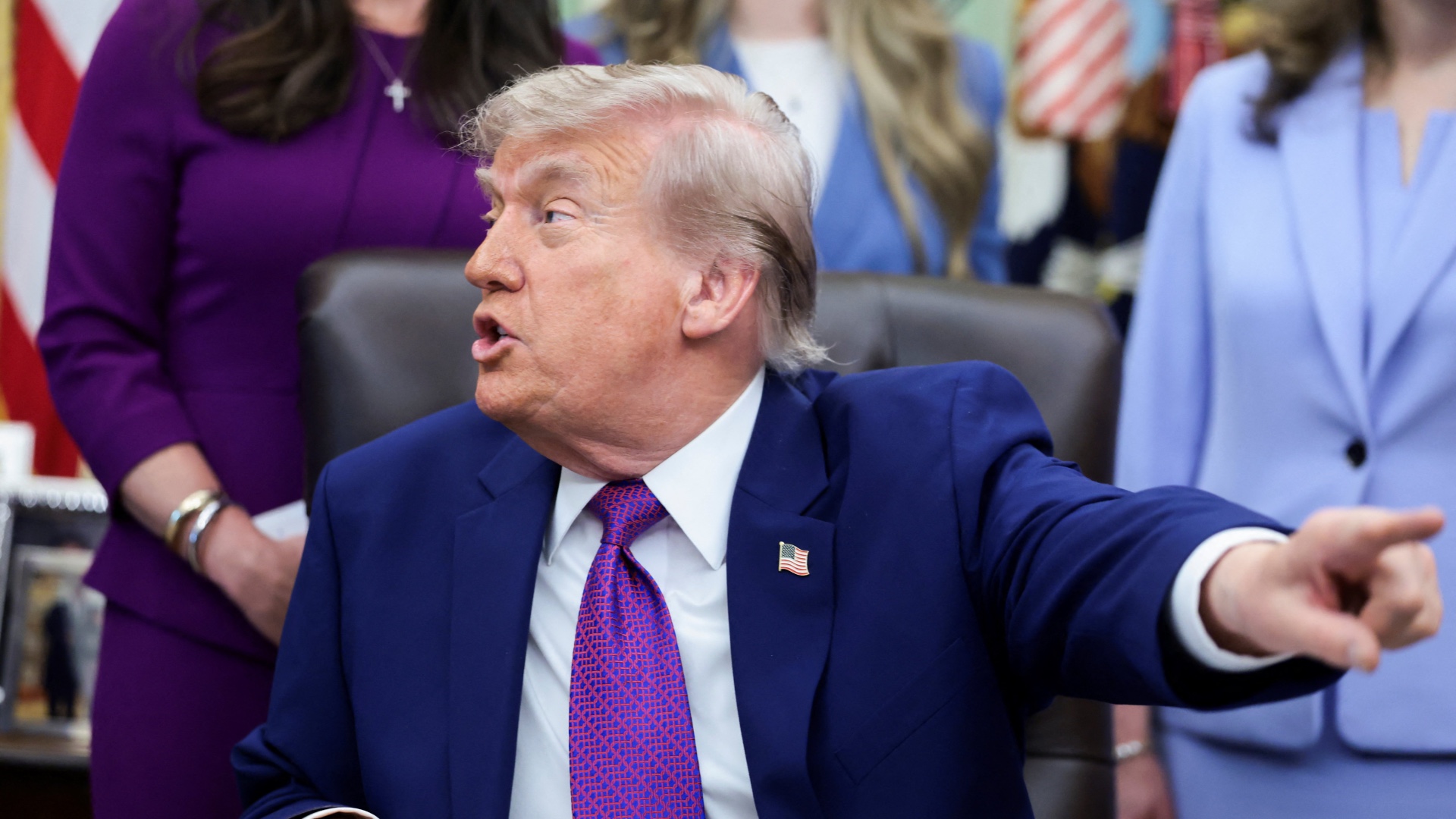
    In an unprecedented move, President Donald Trump signed an executive order directing his administration to pay TSA agents directly, with the DHS announcing agents might receive paychecks as early as March 30. However, this action faces potential legal challenges as the U.S. Constitution explicitly grants Congress the power to authorize federal spending.

    With Congress now beginning a two-week recess, the funding crisis appears intractable in the immediate term. The House-approved bill faces almost certain rejection in the Senate, where Majority Leader Chuck Schumer has already declared it ‘dead on arrival.’ The political standoff ensures that the travel chaos and financial hardship for DHS employees will continue indefinitely.

  • Pope Leo XIV visits Monaco to urge its people to use their faith and wealth for good

    Pope Leo XIV visits Monaco to urge its people to use their faith and wealth for good

    MONACO — In a landmark visit marking the first papal journey to the Mediterranean principality since 1538, Pope Leo XIV arrived in Monaco on Saturday with a powerful message about the moral responsibilities that accompany faith and privilege. The pontiff’s meticulously planned nine-hour itinerary commenced with an official welcome at the Monaco heliport, where Prince Albert II and Princess Charlene greeted him amidst ceremonial cannon fire and under brilliant Mediterranean skies.

    The papal helicopter, operated by the Italian military, touched down just minutes behind schedule—a detail the Pope humorously acknowledged upon arrival. The strategic visit emphasized how smaller states like Monaco and the Holy See can exert substantial influence on global affairs, particularly in promoting traditional Catholic values regarding the sanctity of human life during times of international conflict.

    Monaco, among the few European nations with Catholicism as its official state religion, recently reaffirmed its religious commitments when Prince Albert rejected legislation to legalize abortion. This decision, while largely symbolic given Monaco’s geographical encirclement by abortion-legal France, aligns with other European Catholic royals who have maintained doctrinal positions on an increasingly secular continent. The Prince’s stance echoes the historic 1990 abdication of Belgium’s King Baudouin, who temporarily stepped down rather than approve abortion legislation—an act that recently placed him on the path to potential sainthood.

    The Pope’s agenda included private meetings with the princely family at the royal palace, where female members of the court awaited in traditional black attire with lace head coverings. Additional events featured an engagement with Monaco’s Catholic community at the cathedral and a public Mass held at the principality’s sports stadium.

    Despite its modest size of 2.2 square kilometers and population of 38,000—only 20% of whom are actual citizens—Monaco maintains outsized global recognition as a tax-friendly haven for the wealthy, home to megayachts, the Formula 1 Grand Prix, and a glamorous royal lineage that includes American actress Grace Kelly’s descendants. Prince Albert, her son, demonstrated his multilingual fluency by greeting the Pope in impeccable, unaccented English.

    The visit underscored the unique intersection of faith, wealth, and global influence that characterizes this distinctive Mediterranean microstate.

  • Poster III: Zhengzhou to host storytelling forum

    Poster III: Zhengzhou to host storytelling forum

    Zhengzhou, the capital of China’s Henan province, is set to become the epicenter of cross-cultural narrative discourse this Saturday as it hosts the significant thematic forum ‘Telling Story Well: From Empathetic Communication to Cultural Identity’. This gathering aims to explore the profound power of storytelling in bridging cultural divides and forging stronger collective identities in an increasingly interconnected world.

    The forum will convene a distinguished cohort of twenty international and domestic experts, including renowned academics, veteran journalists, influential social media platform executives, and innovative content creators. These diverse voices will engage in meaningful dialogue, sharing unique perspectives on how effective narrative techniques can enhance empathetic understanding across different societies.

    This event represents a strategic initiative to examine narrative construction not merely as an art form but as a crucial tool for cultural diplomacy and soft power development. Participants will analyze case studies, discuss evolving communication methodologies in the digital age, and explore how stories can shape perceptions and foster mutual respect among global communities.

    The selection of Zhengzhou as host city carries symbolic significance, positioning this ancient historical center as a contemporary forum for cultural exchange. The outcomes of this conference are anticipated to contribute valuable insights to fields ranging from media studies to international relations, highlighting China’s ongoing engagement with global cultural discourse.

  • FM says China supports Pakistan to play mediating role

    FM says China supports Pakistan to play mediating role

    In a significant diplomatic development, Chinese Foreign Minister Wang Yi has expressed Beijing’s firm support for Pakistan’s ongoing mediation efforts to de-escalate tensions between the United States and Iran. During a telephone conversation with Pakistani Deputy Prime Minister and Foreign Minister Mohammad Ishaq Dar on Friday, Wang commended Islamabad’s persistent peace-building initiatives in the Middle East.

    The high-level exchange highlighted the strategic partnership between China and Pakistan, with both nations maintaining coordinated positions on regional conflicts. Minister Wang emphasized that despite the challenges inherent in peace negotiations, dialogue remains the only viable path to prevent further casualties, contain the conflict’s expansion, and ensure the restoration of normal navigation through the critically important Strait of Hormuz.

    This diplomatic engagement marks the second discussion between Wang and Dar within a fortnight, reflecting the urgency of the situation. The Chinese foreign minister has been actively conducting shuttle diplomacy with counterparts from multiple nations since the conflict’s outbreak, consistently advocating for ceasefires and a return to negotiation tables.

    From the Pakistani perspective, Dar provided Wang with a comprehensive update on the evolving situation in Iran and acknowledged China’s endorsement of Pakistan’s mediating role. The Pakistani minister characterized ceasefires, conflict resolution, and peace restoration as shared objectives among all involved parties. Dar emphasized that the current juncture presents a critical window for recommencing talks, urging the international community to encourage both the United States and Iran to reengage in diplomatic discussions.

    Notably, media reports indicate that American officials are leveraging Pakistani mediation channels to explore potential exit strategies from the conflict with Iran. Indirect talks facilitated by Pakistan are reportedly under serious consideration. Dar revealed through social media that substantive communication is already occurring, with the United States having presented 15 specific points currently under deliberation by Iranian authorities.

  • Oil shock impacts Asia’s plastics industry

    Oil shock impacts Asia’s plastics industry

    The Asia-Pacific region’s plastics manufacturing sector is confronting severe supply chain disruptions and escalating production costs as geopolitical tensions in the Middle East continue to destabilize global energy markets. The industry-wide crisis emerged following military engagements between the United States, Israel, and Iran in late February, which precipitated a dramatic surge in oil prices exceeding $118 per barrel and triggered the strategic closure of the Strait of Hormuz.

    This critical maritime chokepoint handles approximately 25% of globally traded chemicals and plastics, with Asian nations importing nearly 60% of their naphtha supplies from Gulf producers. The supply constraint has compelled multiple petrochemical giants across Southeast Asia to declare force majeure and implement production reductions. Significant operators including Singapore’s The Polyolefin Co, Thailand’s Rayong Olefins, and Indonesia’s PT Chandra Asri Pacific have initiated partial plant shutdowns due to critical feedstock shortages.

    Industry reporting from ICIS Chemical Business indicates polyethylene (PE) producers are implementing consecutive contract increases totaling 20 US cents per pound through March and April. PE prices have surpassed $1,500 per metric ton in Vietnam—reaching pandemic-era peaks—with analysts predicting further increases amid sustained supply constraints.

    The crisis is now propagating through downstream value chains, particularly affecting food packaging manufacturers. Major consumer goods producers including Indian bottled water giant Bisleri have implemented 11% price increases to offset packaging cost inflation. The Indonesian Packaging Federation confirms members are actively investigating alternative materials including polyester films and paper-based solutions to replace polypropylene-based packaging.

    According to OECD data, Southeast and East Asia represent the world’s largest plastic polymer producers and consumers, with plastic usage growing ninefold since 1990 to exceed 150 million metric tons annually. This exponential growth—driven by population expansion, urbanization, and rising incomes—has intensified the region’s vulnerability to feedstock supply disruptions.

    Thai industry leaders have urged governmental intervention to secure alternative raw material sources and enhance price monitoring mechanisms as energy costs now constitute up to 50% of operational expenses for heavy industries including petrochemicals, cement, and steel production.

  • Global forensic legend Henry C Lee passes away at 87

    Global forensic legend Henry C Lee passes away at 87

    The international forensic science community is mourning the loss of Dr. Henry C Lee, the legendary Chinese-American forensic scientist who passed away at his home in Henderson, Nevada, at age 87. The announcement came jointly from his family and the University of New Haven, where he served as a distinguished professor for over fifty years.

    Dr. Lee, known in China as Li Changyu, was completing his final literary work—a comprehensive study on missing-persons investigations—during his last days, adding to his remarkable collection of over forty published books throughout his career.

    The forensic luminary gained worldwide recognition through his pivotal involvement in some of history’s most notorious criminal investigations. His expertise proved instrumental in the OJ Simpson murder trial, the JonBenét Ramsey case, the Laci Peterson disappearance, the Elizabeth Smart abduction, and the forensic response to the 9/11 terrorist attacks.

    Born in 1938 in Rugao, Jiangsu province, Lee emigrated to the United States to pursue advanced biochemical studies. His academic journey led him to the University of New Haven in 1975, where he revolutionized forensic education by establishing what began as a modest program with basic fingerprint equipment into the nation’s premier multidisciplinary forensic science department by 1998.

    The program’s growth culminated in 2010 with the inauguration of a cutting-edge 15,000-square-foot facility dedicated to forensic innovation. At its opening, Lee articulated his vision: “This institute will serve as a catalyst uniting professionals worldwide, creating a smaller global community committed to combating crime.”

    Beyond his professional accomplishments, Dr. Lee served as a bridge between Chinese and American forensic science communities, making frequent visits to China over several decades to lecture at universities and strengthen bilateral academic cooperation. His most recent visit occurred in June 2025, when he visited Shanghai University of Political Science and Law to launch an oral history project.

    Lee’s influence extended across all 50 U.S. states and 46 countries worldwide, where he collaborated with more than 600 law enforcement agencies and provided expert testimony in over 1,000 court cases. He also formerly served as Commissioner of the Connecticut Department of Public Safety.

    University of New Haven President Jens Frederiksen memorialized Lee as “an extraordinary individual whose contributions to our institution, forensic science, and global law enforcement remain unparalleled. His profound legacy will continue through the countless students and professionals he inspired throughout his remarkable career.”