作者: admin

  • Pro-Israel PR firm promoting Iranian opposition group

    Pro-Israel PR firm promoting Iranian opposition group

    A confidential email obtained by Middle East Eye has uncovered significant connections between an Iranian opposition coalition and pro-Israel public relations operatives with ties to the American Israel Public Affairs Committee (AIPAC). The Iran Freedom Congress (IFC), presenting itself as an independent initiative organizing Iranian civil and political actors from diverse backgrounds for a London convention, is being promoted by Red Banyan—a crisis PR firm with extensive historical links to the pro-Israel lobby.

    Despite the IFC’s public claims of operating without foreign government or organizational influence, the leaked correspondence reveals that Neil Strauss, an account director at Red Banyan who leads the firm’s ‘Jewish and pro-Israel vertical,’ is actively publicizing the coalition. Strauss, formerly communications director for the Republican Jewish Coalition, has extensive experience in pro-Israel political campaigns according to his professional profile.

    The email promotion offers media interviews with two IFC figures connected to Iran’s monarchist opposition: Mehrdad Marty Youssefiani, former strategic counselor to Reza Pahlavi (son of Iran’s former Shah), and Shahryar Ahy, described as an advocate for democratic transition in Iran. Notably, Pahlavi’s office recently distanced itself from Ahy, issuing a statement clarifying that he does not serve as an adviser.

    IFC Executive Director Majid Zamani told Middle East Eye the organization had no prior knowledge of Strauss or Red Banyan and stated they do not represent the coalition in any capacity. ‘We cannot control or be held responsible for statements, communications, or promotional efforts made by third parties who are not affiliated with us,’ Zamani emphasized.

    The revelation has sparked concern among Iranian diaspora observers. Jamal Abdi, president of the National Iranian American Council, commented: ‘The real story of the Iranian diaspora opposition is the role the Israel lobby is having in shaping it. The trauma and desire for change in Iran has been preyed on in a way that has turned the Iranian diaspora against itself.’

    Red Banyan’s connections to AIPAC run deep. Chief Executive Evan Nierman worked at the pro-Israel lobby group for seven years, and the firm continues extensive collaboration with AIPAC, as confirmed by Jeremy Rider, AIPAC’s communications director, who described Red Banyan as ‘an external, yet essential, part of our communications team.’

    The firm’s website prominently features its pro-Israel work, including rebranding an Israeli non-profit called CyberWell—an organization reported to have deep ties to Israeli government propaganda efforts and significant influence over social media content since the October 2023 Hamas-led attack.

    Human rights organizations have expressed concern about the implications of these connections. Kristyan Benedict, Amnesty International UK’s crisis response manager, noted: ‘Genuine justice and human rights in Iran are not going to come from individuals and organisations aligned with the current Israeli government,’ adding that Israel was ‘committing genocide, apartheid and other international crimes daily.’

    The development raises fundamental questions about foreign influence operations within diaspora opposition movements and the ethical boundaries of crisis public relations in international political contexts.

  • ‘Memory of a generation’: China mourns the sudden death of a controversial education influencer

    ‘Memory of a generation’: China mourns the sudden death of a controversial education influencer

    The sudden passing of Zhang Xuefeng, China’s most influential education consultant with 26 million Douyin followers, has triggered nationwide mourning and profound societal reflection. The 41-year-old phenomenon, who died of cardiac arrest on March 24, 2026, built an empire by guiding Chinese students through the labyrinth of university applications and major selection—a service that tapped directly into the country’s deep-seated education anxiety.

    Zhang’s methodology represented extreme pragmatism in a system where educational choices carry lifelong consequences. His controversial assertions—that journalism was inferior to any other major, that liberal arts constituted a mere “service industry,” and that career success depended more on strategic positioning than academic excellence—made him both revered and reviled. He operated within China’s intensely competitive education landscape, where the gaokao, kaoyan, and kaogong exams determine socioeconomic mobility.

    His rise coincided with China’s dramatic higher education expansion. Between 1998 and 2008, annual college admissions surged from 1 million to 5.99 million, creating unprecedented access but also generating graduate oversupply and diminished employment prospects. Zhang filled the information gap for families overwhelmed by complex admission systems and anxious about diminishing returns on educational investments.

    Through charismatic livestreams that sometimes lasted hours, Zhang provided blunt, formulaic advice: law and accounting over humanities for civil service exam success; advanced degrees required for science careers; and relentless emphasis on practical outcomes over personal passion. His approach resonated particularly with families lacking social capital—those who couldn’t afford what he called “experimentation cost.

    The influencer frequently faced professional backlash. Education experts criticized his one-size-fits-all approach, comparing it to “diagnosing without examination.” Journalism professors condemned his dismissal of their field, while platform bans for “vulgar and offensive language” forced occasional apologies. Yet his supporters maintained he revealed uncomfortable truths about systemic inequalities.

    In death, Zhang has become a symbolic figure representing both the aspirations and anxieties of modern China. His legacy embodies the nation’s conflicted relationship with education—as both mobility engine and source of immense pressure—and prompts crucial conversations about whether pragmatic survival strategies ultimately serve or harm societal development.

  • Tiger Woods arrested, charged with DUI after Florida crash: police

    Tiger Woods arrested, charged with DUI after Florida crash: police

    Golf icon Tiger Woods faces renewed legal troubles after being arrested and charged with driving under the influence following a vehicle collision near his Jupiter Island, Florida residence on Friday. The 50-year-old athlete escaped physical injury but encountered serious legal consequences after his car clipped a truck while attempting an overtaking maneuver on a residential roadway, resulting in the vehicle flipping over before coming to rest.

    Martin County Sheriff John Budensiek reported that Woods exhibited clear signs of impairment at the scene, though initial breathalyzer testing returned negative results for alcohol intoxication. The situation escalated when Woods declined to submit to urinalysis testing, leading authorities to formally charge him with DUI, property damage, and refusal to comply with lawful testing procedures.

    Law enforcement drug recognition specialists who evaluated Woods concluded he was likely impaired by prescription medication or other substances. Sheriff Budensiek noted that while Florida statute permits refusal of urine testing, this decision prevents definitive determination of the exact substances involved. ‘We will never get definitive results as to what he was impaired on at the time of the crash,’ Budensiek stated during a press briefing.

    The sheriff emphasized the potentially catastrophic nature of the incident, noting that the narrow two-lane road could have produced far more severe outcomes had oncoming traffic been present. Photographic evidence indicated significant vehicle sliding before complete stoppage, though precise speed calculations remained undetermined.

    This incident marks Woods’ second DUI-related arrest, following a 2017 case that resulted in a diversion program completion. It also occurs against the backdrop of the athlete’s extensive medical history, including severe right leg injuries from a 2021 California crash that required multiple surgical interventions including pin and rod placements.

    Former President Donald Trump, characterizing Woods as ‘a very close friend’ and ‘amazing person,’ expressed sympathy while acknowledging the golfer’s ‘difficulty’ during remarks in Miami. Under Florida statutes, Woods faced mandatory detention for eight hours before release.

    The arrest arrives as Woods continues rehabilitation from recent Achilles tendon and back procedures, having most recently participated in simulator golf competitions while maintaining potential competitive aspirations. His legendary career includes 15 major championships and 82 PGA Tour victories, though recent performances have been hampered by physical limitations.

  • Germany’s Wirtz destroys Swiss and White caps England return as hero and villain

    Germany’s Wirtz destroys Swiss and White caps England return as hero and villain

    Friday’s international football friendlies provided captivating pre-World Cup action across European stadiums, featuring dramatic comebacks, controversial selections, and standout individual performances.

    In Basel, Germany mounted a spectacular comeback victory against Switzerland in a seven-goal thriller. Liverpool’s Florian Wirtz delivered a masterclass performance, scoring twice and providing two assists as Germany twice recovered from deficits to secure a 4-3 win. The match showcased Germany’s offensive prowess alongside defensive vulnerabilities that require attention before the tournament.

    England’s encounter with Uruguay at Wembley Stadium proved less entertaining, culminating in a 1-1 draw marked by controversy. Arsenal defender Ben White, making his controversial return to the national team four years after his World Cup walkout, became the central figure. White broke the deadlock with a simple finish in the 80th minute, only to concede a stoppage-time penalty that Federico Valverde converted for Uruguay’s equalizer.

    In Villarreal, Spain demonstrated their championship credentials with a commanding 3-0 victory over Serbia. Real Sociedad striker Mikel Oyarzabal stole the show with two exceptional goals, taking his international tally to 26 in 53 appearances. The match was arranged hastily after Spain’s planned fixture against Argentina in Doha was canceled due to Middle East conflicts.

    The Netherlands completed the night’s action with a 2-1 comeback victory against Norway in Amsterdam. Despite Erling Haaland’s absence, Norway took the lead through Andreas Schjelderup before Virgil van Dijk and Tijjani Reijnders secured the win for the Dutch side.

  • One month in, what do American conservatives make of the war in Iran?

    One month in, what do American conservatives make of the war in Iran?

    A month into the ongoing joint military campaign between the United States and Israel against Iran, significant ideological rifts have emerged within American conservative circles. The annual Conservative Political Action Conference (CPAC) in Texas served as a revealing platform where attendees expressed conflicting viewpoints regarding Operation Epic Fury, initiated on February 28th.

    The military operation, characterized by its unprecedented coordination between Washington and Tel Aviv, has sparked intense debate among conservative thought leaders. While some conference participants voiced strong support for the aggressive stance against Iranian targets, others demonstrated notable reservations about the campaign’s strategic objectives and potential long-term consequences.

    This division highlights the evolving nature of conservative foreign policy philosophy in the post-Trump era. The spectrum of opinions ranges from hawkish advocates who emphasize national security imperatives to more cautious voices concerned about mission creep and regional destabilization. These internal disagreements reflect broader tensions within the conservative movement regarding America’s role in Middle Eastern conflicts and the appropriate application of military power.

    The conference discussions revealed particularly nuanced positions on the timing, execution, and geopolitical implications of the operation, suggesting that conservative consensus on foreign interventionism may be undergoing significant redefinition.

  • ‘Strait of Trump’: US president says Iran must open key waterway

    ‘Strait of Trump’: US president says Iran must open key waterway

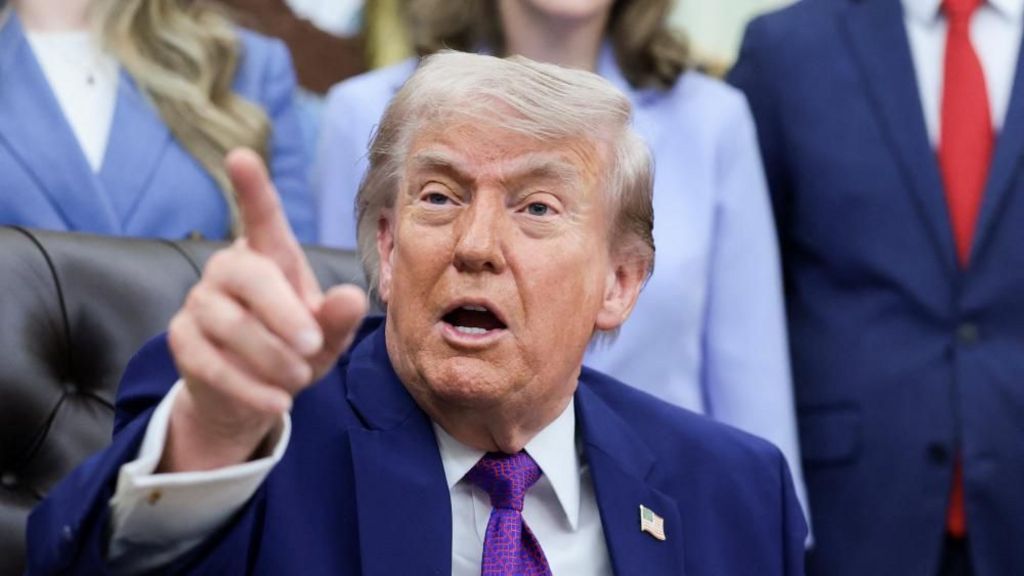
    In a striking declaration at Miami’s FII Priority investment conference, former U.S. President Donald Trump asserted that Iran must guarantee access to the Strait of Hormuz—which he momentarily rebranded as the “Strait of Trump”—as a prerequisite for any peace agreement. The Friday remarks, made during a Saudi-backed forum, included both an immediate retraction and a characteristically unapologetic follow-up, with Trump stating, “there’s no accidents with me.”

    The 79-year-old leader maintained that negotiations were actively underway to resolve the ongoing month-long conflict, despite Tehran’s consistent denials. He claimed Iran was “on the run” and that its military capabilities and nuclear program had sustained substantial damage. These comments align with his administration’s pattern of applying economic pressure, including previous suggestions about seizing Iran’s oil reserves similar to U.S. actions in Venezuela.

    Trump’s propensity for attaching his name to landmarks resurfaced throughout his address. He referenced prior rebrandings of Washington institutions—including the Kennedy Center and a peace institute—and even mentioned briefly renaming the Gulf of Mexico as the “Gulf of America.” The Strait of Hormuz, a critical chokepoint for global oil transit, has been largely closed since hostilities began, contributing to rising worldwide energy prices.

    Earlier on Friday, U.S. Secretary of State Marco Rubio expressed concerns that Iran might attempt to institute a permanent toll system for vessels passing through the strait, which typically handles one-fifth of the world’s oil shipments. The combination of military rhetoric and economic posturing continues to define the tense U.S.-Iran relationship, with Trump’s latest comments adding another layer of diplomatic complexity.

  • US-Israeli strikes on Iran’s oil and gas could poison people and environment for decades

    US-Israeli strikes on Iran’s oil and gas could poison people and environment for decades

    Tehran’s skies turned toxic following a series of airstrikes on March 7th that ignited multiple oil depots and refineries, creating an environmental disaster with dire implications for public health. The attacks, claimed by Israel’s military despite US denials of involvement, resulted in petrochemical fires that raged for five days, engulfing the Iranian capital in thick, poisonous smoke that residents described as hellish visions and ‘black monsters’.

    The aftermath brought acid rain blackened with oil, coating the city’s infrastructure in a tarry residue while millions of citizens inhaled dangerous chemicals with only fabric masks for protection. According to the Conflict and Environment Observatory (CEOBS), a UK-based nonprofit monitoring war’s environmental impacts, this incident represents just one of approximately 300 environmentally risky incidents recorded since hostilities began on February 28th.

    The situation is particularly critical due to Tehran’s geographical constraints. Nestled at the base of the Alborz mountains, the city’s natural topography traps pollution, creating a toxic chamber for its nine million inhabitants. Compounding the problem, years of economic sanctions have forced Iran to rely on mazut—a highly polluting, low-grade fuel—that had already degraded air quality before the conflict.

    Environmental scientists warn that the health consequences will extend far beyond immediate respiratory issues. Professor Shukri al-Hassan, who studied leukemia cases resulting from oil flaring in Iraq’s Basra region, emphasized that microscopic particles from the fires can embed deep in lung tissue, potentially causing cancer years after exposure. ‘Those who do not die directly from the strikes may still have their lives threatened indirectly through exposure to toxic gases,’ Hassan noted.

    The parallels to previous conflicts are alarming. Cultural anthropologist Narges Bajoghli, referencing Iraq’s chemical weapons use during the 1980s Iran-Iraq war, highlighted that toxic harm to civilian populations often goes unpunished when delivered with deniability or attributed to industrial accidents. As attacks expand to target more civilian and industrial infrastructure, including metallurgical plants, the environmental toll continues to mount across the region, creating what experts fear could become permanent sacrifice zones with generational health consequences.

  • In photos: A pesticide tragedy that haunts an Indian state

    In photos: A pesticide tragedy that haunts an Indian state

    A powerful exhibition at the Kochi-Muziris Biennale in Kerala, India, is forcing international attention onto one of the nation’s most devastating environmental health disasters. Through the lens of photojournalist Madhuraj, the showcase presents a harrowing visual chronicle of the intergenerational suffering caused by the pesticide endosulfan in the Kasargod district.

    The crisis originated over two decades ago when the Plantation Corporation of Kerala aerially sprayed the highly toxic pesticide on cashew, tea, and mango plantations. From the 1990s onward, communities living near these fields reported an alarming surge in severe birth defects and neurological disorders in children, including cerebral palsy, epilepsy, and hydrocephalus. Adults developed cancers, asthma, and hormonal issues, with environmental organizations and the state government later attributing these conditions to endosulfan poisoning.

    Despite scientific debate regarding the definitive causal link, the substance was banned in Kerala in 2004. This was followed by a global ban under the Stockholm Convention in 2011 and a nationwide ban ordered by India’s Supreme Court that same year. In 2017, the court mandated compensation of ₹500,000 ($5,400) for approximately 5,000 recognized victims—a promise many families report remains unfulfilled.

    Madhuraj’s photographs, captured over 25 years, document the profound human cost. The images tell stories of families, predominantly from disadvantaged castes and tribal groups, battling debilitating conditions with minimal access to healthcare. One photograph shows Jameela holding a portrait of her daughter Zainaba, who died from hydrocephalus before her first birthday. Another captures Kavitha, who developed severe immunological issues after watching the pesticide-spraying helicopters from her home.

    The exhibition also highlights the relentless activism of affected families. Images from 2012 show mothers marching to government offices with their ailing children, demanding medical facilities and justice. A particularly tragic story is that of Vimala, who allegedly resorted to a murder-suicide in 2022 after struggling for years as the sole caregiver for her disabled daughter, Reshma.

    By bringing this work to a premier contemporary art venue, Madhuraj aims to ensure that this human and environmental catastrophe is neither forgotten nor repeated, serving as a somber reminder of the consequences of corporate and regulatory negligence.

  • US only certain of having destroyed a third of Iran’s missiles

    US only certain of having destroyed a third of Iran’s missiles

    A confidential US intelligence assessment has revealed that American and Israeli forces have successfully destroyed only approximately one-third of Iran’s missile inventory, contradicting President Donald Trump’s public claims of near-total military success. According to five sources with knowledge of the intelligence who spoke with Reuters, the status of an additional third remains uncertain, though these missiles may have been damaged, destroyed, or buried in underground facilities during the ongoing month-long assault. Iran’s drone capabilities have similarly been reduced by about a third.

    The assessment indicates Tehran maintains substantial retaliatory capacity despite the sustained campaign. This evaluation stands in stark contrast to President Trump’s remarks during a Thursday cabinet meeting, where he asserted 99 percent destruction of Iranian missiles while discussing strategic options for the Strait of Hormuz. He justified continued action by stating that even one percent remaining capability posed an unacceptable risk to naval assets.

    US Central Command has declined to provide specific damage assessments, while Israeli military officials disclosed that Iran possessed approximately 2,500 ballistic missiles capable of reaching Israel before hostilities began. A senior Israeli official claimed 335 missile launchers (representing 70% of Iran’s launch capacity) have been neutralized.

    The campaign has come at significant logistical cost. Officials warn that US and Israeli forces are rapidly depleting their missile inventories, with The Washington Post reporting over 850 Tomahawk cruise missiles fired within four weeks—a concerning rate given annual production numbers in the hundreds. Pentagon stockpiles in the Middle East are reportedly ‘alarmingly low.’

    Despite these constraints, Axios reported Thursday that the Department of Defense is drafting plans for a ‘final blow’ involving ground troops and massive bombing campaigns. Potential strategies include invading or blockading Kharg Island (source of 90% of Iran’s oil exports), seizing strategic islands like Larak near Qeshm Island, or occupying disputed territories like Abu Musa and the Tunb islands claimed by the United Arab Emirates. Additional options under consideration involve seizing Iranian oil tankers transiting the Strait of Hormuz.

  • AFL 2026: GWS coach Adam Kingsley laments his side’s efficiency inside 50

    AFL 2026: GWS coach Adam Kingsley laments his side’s efficiency inside 50

    In a perplexing display of inefficiency, the Greater Western Sydney Giants have succumbed to their third consecutive AFL defeat despite controlling territory in their forward half. The 33-point loss to Collingwood at Marvel Stadium on Friday night was characterized by a significant statistical anomaly: the Giants generated 58 inside-50 entries to Collingwood’s 50, yet managed a meager final score of just 54 points.

    Head Coach Adam Kingsley expressed visible frustration in his post-match address, pinpointing the team’s failure to capitalize on scoring opportunities as the primary cause for the defeat. ‘We simply didn’t maximize our entries or our opportunities,’ Kingsley stated. ‘We had clear dominance, particularly in the first half, but couldn’t post a winning score from it. There were too many repeat entries where we just bombed the ball in, relying on Jesse Hogan to take a contested mark, which isn’t working for us at the moment.’

    Beyond the offensive struggles, Kingsley identified second-half centre bounce contests as another costly area. However, he remains confident in the team’s ability to rectify its chemistry and connection issues, noting the club has successfully addressed similar problems in the past.

    The match also delivered a minor injury concern, with winger Ryan Angwin exiting due to a burst eardrum. Kingsley downplayed the severity of the injury, anticipating Angwin’s return after the team’s upcoming bye week. This could see him join a host of other players, including Toby Bedford and Brent Daniels, in returning for the Giants’ next fixture against Richmond on April 12.