作者: admin

  • Known as ‘Sonaldo’ in Mexico, South Korea star Son feeling like a ‘young boy’ entering 4th World Cup

    Known as ‘Sonaldo’ in Mexico, South Korea star Son feeling like a ‘young boy’ entering 4th World Cup

    GUADALAJARA, Mexico — For South Korean captain Son Heung-min, the feeling of stepping into a FIFA World Cup never gets old. As the 33-year-old striker prepares to kick off his fourth consecutive World Cup tournament, he says the excitement matches that of a wide-eyed young player chasing the biggest dream in global soccer. What makes his 2026 campaign even more special? Early signs point to unexpected backing from local Mexican fans ahead of South Korea’s Group E opening match against the Czech Republic this Thursday in Guadalajara.

    Fresh off an illustrious 11-year tenure with English Premier League side Tottenham Hotspur, Son recently made the move to Major League Soccer, where he currently plays for the LA-based LA Galaxy. With a large Mexican community already embracing him in Southern California, the connection has carried over across the border into co-host nation Mexico, where fans have affectionately dubbed him “Sonaldo”. The nickname pays homage to two of the game’s greatest forwards — Portugal’s legendary Cristiano Ronaldo, and Brazil’s iconic two-time World Cup champion Ronaldo Nazário.

    In a press conference Wednesday held through a translator, Son opened up about the warm reception he has received from Mexican supporters. “I’m in L.A. now and there are a lot of Mexicans there,” he explained. “I can feel their passion and love for soccer, and they support me a lot. I’m very thankful and grateful.”

    Despite the flattering comparison, Son pushed back on the nickname, saying he does not feel ready to carry such a lofty title just yet. “It’s not enough [for me] to take that name, at least not yet,” he added.

    That fan support, however, will likely shift for South Korea’s second group-stage match, which will also be held in Guadalajara. Son’s side will face off against co-host Mexico, a fixture where the home crowd will overwhelmingly back the El Tri national side. The team’s final group match will be played further north in Monterrey against South Africa to wrap up the group stage.

    With three previous World Cup appearances under his belt dating back to his debut at Brazil 2014, followed by campaigns in Russia 2018 and Qatar 2022, Son says he still feels the same childlike wonder that made him fall in love with the game as a kid. “Whether it’s the first or fourth World Cup, I feel like a young boy again,” Son said. “It’s my dream stage. I’m happy to be back on a World Cup pitch, it’s what I dreamed of from a very young age.”

    The veteran striker also pushed back against recent widespread speculation that this tournament would mark his final World Cup appearance. “I never said that this would be my last World Cup,” he said. “How I do and perform is the most important thing.”

    As the most experienced member of the current South Korean squad, Son has stepped into a natural leadership role, working to calm the nerves of the younger, first-time World Cup players in the group. “Sometimes I have to calm them, I have to say ’calm down,’” he said. “Hopefully we will have a good result. It would be deserved. We are well prepared.”

    This tournament marks South Korea’s 12th World Cup appearance — more than any other Asian nation in the history of the competition. The country’s historic best run came during the 2002 World Cup, which it co-hosted with Japan, where the side advanced all the way to the semi-finals to finish in fourth place. In every World Cup campaign since 2002, South Korea has failed to advance beyond the round of 16, leaving the squad hungry to break that dry spell this year.

  • Canada proposes teen social media ban – with workaround for tech firms

    Canada proposes teen social media ban – with workaround for tech firms

    As global leaders prepare to gather for next week’s G7 summit in France, where child online safety and AI regulation will top the agenda, Canada has tabled ambitious new legislation that positions it at the center of the global debate over digital youth protection. Unveiled in the House of Commons Wednesday by Canadian Culture Minister Marc Miller, the Safe Social Media Act (officially labeled Bill C-34) proposes a ban on social media access for children and teenagers under the age of 16 – a framework modeled after Australia’s landmark national ban implemented six months ago, but with a key policy difference that sets it apart from other global regimes.

    Unlike Australia’s mandatory prohibition for under-16 users, Canada’s proposal includes a carve-out: tech companies can avoid the full ban if they can formally prove they have implemented robust policies to reduce harm to minor users. The bill goes far beyond social media restrictions, sweeping in broad new regulations for AI chatbots and sweeping powers to crack down on what the legislation defines as harmful online content. To enforce these new rules, the government plans to establish an independent oversight body, the Digital Safety Commission of Canada, whose members will be appointed directly by the federal cabinet. Violators face steep maximum penalties: the greater of CAD 10 million, or 3% of the company’s total global gross annual revenue.

    The proposal comes after two failed attempts by Canada’s previous Liberal government to pass online harm legislation, mounting pressure from child safety advocates and parents, and a high-profile national tragedy that intensified calls for action. In February, a mass shooting at a British Columbia school left eight people dead, including six young children. Investigations later revealed the 18-year-old suspect had used OpenAI’s ChatGPT to discuss gun violence months before the attack, sparking widespread public outrage and criticism of OpenAI for failing to flag the dangerous conversations to law enforcement. OpenAI CEO Sam Altman later issued a formal written apology to the victims’ families in the wake of the incident.

    Minister Miller framed the legislation as an urgent priority for the Canadian government, telling reporters this week that “kids are dying” and that the administration would pursue all reasonable steps to protect young people online. The timing of the bill is deliberate: it lands just one week before G7 leaders gather to discuss coordinated global action on AI safety and child protection, with Canada positioning itself as a policy leader on the issue.

    Not all stakeholders have welcomed the proposal, however. Free speech advocacy groups have raised sharp concerns that the new law will expand government censorship of online content, arguing that harm to minors can be adequately addressed through existing provisions in Canada’s criminal code, rather than new stand-alone legislation. The bill defines seven distinct categories of prohibited harmful content, including material that bullies children, incites violence, or foment racial and ideological hatred, but the Canadian justice and culture ministries did not immediately respond to a BBC request for additional clarity on how these criteria will be implemented and enforced.

    Child safety advocates, however, have struck a largely positive tone on the bill’s unique exemption clause. Sara Austin, CEO of child advocacy group Children First Canada, which has long pushed for federal online harm legislation, noted that the exemption creates a direct incentive for tech companies to implement stronger platform-wide safety protections that will benefit all users, not just children. “While Canada has lagged behind peer nations in rolling out online safety rules, this proposal gives the country an opportunity to set a new global precedent ahead of the G7 summit,” Austin said. She added that the framework “will not only benefit children, but will also benefit all Canadians” who use social media and AI platforms.

    Canada’s move comes as a growing wave of countries adopt or consider age-based restrictions on social media for minors. Six months ago, Australia became the first nation in the world to implement a national ban on under-16 social media use. The law requires platforms to deactivate existing under-16 accounts and block new account creation, and mandates the use of multiple age verification technologies including ID checks, face recognition, and voice recognition. Serious or repeat violations carry fines of up to AUD 49.5 million.

    But Australia’s policy has already faced significant criticism over its effectiveness. A recent Australian government survey of parents found that roughly 70% reported their under-16 children still have active social media accounts, and many noted that platforms had not requested any age verification following the ban’s implementation. To date, the Australian government has opened five formal investigations into alleged non-compliance by major platforms including Facebook, Instagram, Snapchat and TikTok.

    Other nations are moving forward with their own restrictions: the United Kingdom is expected to announce a national ban on under-16 social media use next week, while Greece will implement a ban for users under 15 that goes into effect in January 2026. The UK has already passed a broader Online Safety Act regulating digital content, joining other nations including France and New Zealand that have already enacted national online harm frameworks.

  • The furious dispute over what caused Air India flight 171 to crash

    The furious dispute over what caused Air India flight 171 to crash

    It has been exactly one year since one of the deadliest commercial air disasters in recent Indian history unfolded. On June 12, 2025, Air India Flight 171, a Boeing 787 Dreamliner bound for London carrying 230 passengers and 10 crew members, crashed just 32 seconds after departing Ahmedabad’s Sardar Vallabhbhai Patel Airport. All but one person on board perished in the crash, and an additional 19 people on the ground lost their lives, bringing the total death toll to 260.

    Surveillance footage captured the jet’s final moments: the aircraft appeared to lift off normally, but failed to gain altitude, hovering briefly before gliding downward and disappearing behind a line of buildings and trees. Seconds later, a massive fireball and thick plume of black smoke confirmed the scale of the tragedy, but the footage offered no clear answers about what caused the crash.

    Under the terms of Annex 13 of the Convention on International Civil Aviation, India’s Aircraft Accident Investigation Bureau (AAIB), a division of the nation’s Ministry of Civil Aviation, holds lead responsibility for the official probe. The U.S. National Transportation Safety Board, alongside technical experts from plane manufacturer Boeing, engine builder GE Aerospace, and the U.S. Federal Aviation Administration, joined the investigation as accredited representatives, a standard provision for international air accidents involving foreign-built aircraft.

    The international agreement guiding the investigation clearly states that the sole purpose of air accident probes is to prevent future disasters, not to assign blame or liability. Yet the stakes for all involved parties could not be higher. Boeing is still recovering from years of high-profile safety scandals tied to its 737 MAX program, and the 787 Dreamliner, one of the company’s flagship products, had maintained a flawless safety record before this crash. For Air India, a struggling carrier recently acquired by the Tata Group, any finding of operational or maintenance failure would deliver a devastating blow to its already damaged brand. For the families of the 260 victims, the investigation is the only path to answers about their loved ones’ deaths.

    One month after the crash, the AAIB released a 15-page preliminary report that did not draw final conclusions or issue safety recommendations, but two short paragraphs ignited a firestorm of controversy that still rages today. The report confirmed that flight data showed the aircraft’s two fuel cutoff switches – which control fuel flow to the engines – shifted from the “run” position to the “cutoff” position seconds after takeoff, a move that would immediately cut engine thrust. It added that cockpit audio recorded one pilot asking the other why he had flipped the switches, with the second pilot responding he had not touched them.

    The vague wording of this disclosure sparked immediate international speculation that the crash was an act of deliberate pilot homicide-suicide. Multiple international media outlets cited anonymous sources naming veteran captain Sumeet Sabharwal as the person who had triggered the fuel cut. By the time the AAIB issued a statement condemning irresponsible, selective, and unverified reporting and warned against spreading premature narratives that undermined the investigation, the damage to the pilots’ reputations was already done.

    Critics of the AAIB’s handling of the probe, including the Federation of Indian Pilots (FIP), which represents 6,000 Indian commercial pilots, have condemned the preliminary report as irreparably compromised. FIP president Capt. CS Randhawa argues there is a longstanding pattern of investigators shifting blame to deceased pilots to protect aircraft manufacturers and aviation authorities. The FIP, alongside Sabharwal’s 91-year-old father, have petitioned India’s Supreme Court to order an independent judicial probe into the disaster, arguing the national investigation lacks impartiality.

    While some veteran aviation investigators, including former UK air accident investigator Tim Atkinson, support the pilot suicide theory – noting it removes blame from regulators, the airline, and the manufacturer, making it a convenient conclusion for powerful stakeholders – safety campaigners, pilots, and victims’ lawyers have vigorously pushed back against the narrative. They argue that a catastrophic, unreported electrical failure caused the crash, and point to multiple inconsistencies and anomalies in the AAIB’s preliminary findings to support their case.

    The U.S.-based Foundation for Aviation Safety, led by former Boeing senior manager and whistleblower Ed Pierson, claims the crashed jet, delivered to Air India in 2014, suffered from repeated serious electrical issues throughout its service life. Documents reviewed by the BBC confirm a 2022 incident of burning in one of the plane’s main power panels. Air India says the damage was fully repaired per Boeing-approved maintenance standards and the plane was cleared for service before returning to operation. The preliminary report also confirms the aircraft was allowed to fly with a pre-existing fault in its core network, the central electronic system that connects the plane’s flight computers, often described as the jet’s central nervous system.

    The alternative theory advanced by critics holds that a major electrical failure caused the plane’s flight computers to reboot seconds after takeoff. This, they argue, tricked the aircraft’s automatic safety systems into thinking the jet was still on the ground even as it climbed. The system automatically cut fuel flow to the engines to prevent a dangerous thrust surge on the ground, leading to the rapid loss of altitude that caused the crash. Under this scenario, the flight data recorder registered an electronic command to cut fuel, not a physical movement of the cockpit fuel cutoff switches.

    Investigative journalist Rachel Chitra, who has published detailed technical analysis of the crash, has pointed out multiple inconsistencies in the AAIB’s account of engine performance after the fuel cut. Lawyers representing victims’ families have also highlighted discrepancies around the deployment of the Ram Air Turbine (RAT), the emergency power system that deploys to provide electricity and hydraulic pressure when main systems fail. CCTV footage shows the RAT deployed immediately after takeoff, but the preliminary report claims it deployed five seconds after the fuel switches were cut. Independent simulator tests shared with the BBC show the RAT would take 14 to 18 seconds to deploy after a fuel cut, suggesting the RAT activated while the plane was still on the ground, before any fuel cut occurred – evidence, attorneys argue, of a pre-existing electrical failure.

    “This is a symptom of something that has gone wrong,” explained Mike Andrews, an attorney with the U.S. firm representing 135 victims’ families. “If the RAT deployed before the fuel cut, as our tests indicate, we have to ask why – the pilot suicide narrative cannot answer that question.”

    The AAIB is required by international regulation to release either a final report or an interim update on the first anniversary of the crash, which falls on June 12, 2026. Most observers do not expect a conclusive final report to drop on this date, after India’s civil aviation minister stated in May that the probe was in its final stage and a full report would likely come a month later. Few expect any update will resolve the deep doubts that already surround the investigation, which are rooted in widespread perceptions that powerful corporate and national interests are protecting themselves from liability.

    This controversy has reignited longstanding criticism of the global system for investigating air accidents, which has not been fundamentally updated since it was established in 1944. Critics note that assigning investigation authority to the nation where the crash occurs leaves the process vulnerable to political pressure, corporate influence, and local bureaucratic capture. Even when foreign experts participate, manufacturers’ representatives face overwhelming pressure to deflect blame from their companies.

    The International Civil Aviation Organization (ICAO), the U.N. body that oversees global aviation, has acknowledged these conflict-of-interest risks and recently approved amendments to Annex 13 that will allow nations to delegate accident investigations to independent third parties and increase procedural transparency starting in 2028. But critics say these changes do not go far enough to address the systemic flaws of the current system.

    “Whatever ICAO is trying to change and improve is only trying to reduce the symptoms, but global aviation, global manufacturers and global airlines demand a global answer,” said aviation safety consultant Eckhard Jann. Jann argues the only solution is the creation of a permanent, independent global air accident investigation authority with the power to enforce its safety recommendations.

    Other aviation experts disagree on the need for a full overhaul. Atkinson, who supports the pilot suicide conclusion in the AI171 case, argues that existing systems can work if they embrace far greater transparency at the early stages of investigations, releasing more information to the public sooner rather than allowing leaks and speculation to shape the narrative. Even so, he acknowledges the current model of major accident investigations has fallen short of its core goal of preventing future deaths, with modern safety technology driving most improvements in air travel safety rather than post-crash probes.

    One year on from the disaster that killed 260 people, the only point all sides agree on is that the current controversy surrounding the AI171 investigation has exposed deep flaws in how the world probes major air accidents – and that change is needed to ensure future investigations deliver the answers that victims’ families deserve and keep millions of air passengers safe.

  • Olivia Rodrigo sings about heartbreak but she’s already chosen her wedding song

    Olivia Rodrigo sings about heartbreak but she’s already chosen her wedding song

    It was meant to be an open-air interview at Hampstead Heath, one of Olivia Rodrigo’s most beloved spots in London, but a sudden, torrential downpour derailed the original plan. Within minutes, the filming crew scrambled to pack up lights and cameras and relocated to the stately Victorian kitchen of nearby Kenwood House. By the time 23-year-old Rodrigo arrived, dodging wind and rain from her car to the new indoor set, every strand of her hair was still perfectly in place, and the production was just barely ready to go.

    Even for an early morning call time, the global pop star had already put in a full shift of work. During her drive to the location, she was putting final finishing touches on her upcoming track *Maggots For Brains*, scheduled for release just 10 days later. “I love that song musically, there’s so much going on – layers of harmonies everywhere,” she explained in the interview. “Literally in the car, I was telling them to turn that backing vocal up just one decibel. I was being so picky about it, I know no one else would even notice if I’d left it as it was.”

    Rodrigo has long been drawn to Hampstead Heath for the rare sense of normalcy it gives her: the sprawling open space lets her walk, relax, and blend into the crowd without being hounded for photos or autographs. “It’s just the best place to hang out,” she says. “No one ever acts weird around me, I think because it’s so spread out. One time I even saw a couple get engaged there – I was sitting on a bench, looked over, and all their friends were gathered, it was the sweetest thing.” That quiet, romantic moment lines up with Rodrigo’s own dream proposal: she hopes to one day get engaged in New York’s Central Park, with a custom bench placard that reads “Will you marry me?” “So spread the word… Hopefully my future husband will see this,” she laughs. She’s already picked out her wedding song, too – *I Melt with You* by Modern English, a track she says is perfect for walking back down the aisle after exchanging vows.

    For anyone who has followed Rodrigo’s music career since her breakout 2021 debut *Sour*, and 2023’s *Guts*, it’s no surprise that her first two albums are rooted in the messy, searing pain of catastrophic heartbreak, laced with equal parts confusion, anguish, and unapologetic feminine rage. It wasn’t until 2024 that she wrote her first uncomplicated love song, *So American*, a punchy new wave track inspired by her whirlwind romance with English actor Louis Partridge. The relationship quickly became public: Rodrigo’s Instagram filled with candid shots from Wimbledon trips and rides across London on double-decker buses, and when she headlined Glastonbury Festival last summer with Partridge watching from side stage, she changed a core lyric from “I think I’m in love” to “’Cause I’m in love.”

    When Rodrigo set out to write her third studio album, she expected the project to be a straightforward love letter to the joy of new romance, a sharp departure from the angsty heartbreak of her earlier work. “I really wanted to capture romantic joy and pleasure for the first time, because my last two albums were all heartbroken and really angsty,” she says. But the album’s final title – *You Seem Pretty Sad for a Girl So in Love* – hints that the perfect romance she set out to document did not end as planned. “It’s a love story that falls apart,” she confirms. “It’s a time capsule of a relationship that spanned a few years of my life.”

    The album’s visual concept mirrors this arc: the front cover shows Rodrigo swinging through the air, carefree and giddy with new love, but flip it over, and she’s lying flat on the ground, hair messy and expression heavy with unhappiness. The narrative opens in a London pub, where Rodrigo is so besotted by her new partner, who she compares to “an angel on the walls of Versailles,” that she can barely believe he’s real, convinced she might “drop dead” if he kisses her. By the second track, *Stupid Song*, the pair have settled into a relationship, and Rodrigo is so blindingly happy that she struggles to write a coherent, meaningful lyric about it. “When you’re really deeply in love, it feels like any song is futile,” she explains. “It’s really hard to capture that feeling in a way that feels real to other people.”

    As the tracklist progresses, quiet doubts and persistent anxieties begin to creep into the story, and the narrative unravels around the seventh track, *Purple*. While the lyrics on the surface read as a happy love song, Rodrigo uses intentionally unresolved chords to create an undercurrent of constant instability. “Initially, it was a very sweet, sugary love song,” she says. “A few months after we wrote it, we went back, swapped out the chords, and tweaked the lyrics. It’s definitely the turning point on the album where things start to go sour.”

    A similar revision shaped *What’s Wrong With Me*, a dream duet between Rodrigo and her long-time musical hero, The Cure’s Robert Smith. The track was originally written about the all-consuming ache of missing a partner, but after Rodrigo’s breakup, she rewrote the lyrics to reflect a harder truth: the relationship itself was the source of her unhappiness. The new lyrics cut straight to the pain: “I can’t eat, I can’t sleep / I think you’re what’s wrong with me.”

    Rodrigo and Smith debuted the new track earlier this month at Spain’s Primavera Festival, marking their second collaboration after they shared the Glastonbury stage last summer. Backstage after the set, Smith heaped praise on the young star, telling BBC 6 Music: “She is genuinely fantastic, as a singer, as a songwriter, as a performer. I’m slightly in awe of how easy she makes all of it look.” That Glastonbury headline set, widely hailed as the performance of the weekend, cemented Rodrigo’s status as a generational talent, equally comfortable delivering soft, soaring ballads and high-energy pop-punk anthems that get crowds roaring. But even with that critical acclaim, Rodrigo admits she was crippled with anxiety before the performance. “I remember having a near anxiety attack in the bathroom, thinking ‘How am I going to do this? I don’t know if I’m ready,’” she says. “But the second I stepped on stage and started singing, something just shifted over me. I felt totally calm, totally in my element. I’m not very spiritual or religious, but moments like that make you feel like music is just so magical, you can’t really put it into words.”

    That iconic Glastonbury performance was fueled by an unexpected pre-show ritual: three full bowls of sticky toffee pudding from her hotel restaurant. “I stayed at this hotel that had the best sticky toffee pudding, and I was like, ‘You know what? I gotta do it,’” she laughs. “If the toffee’s really hot and the ice cream melts on top, it’s really good.” Sticky toffee isn’t her only British culinary obsession – she’s also completely hooked on dippy eggs and soldiers, and her friends have gifted her dozens of custom egg cups from all over the world to feed the habit.

    That down-to-earth charm is central to Rodrigo’s appeal. Raised in the entertainment industry, she spent years working on Disney Channel shows before launching her music career, but she’s never been aloof or overly precious about her fame. One of the biggest reasons she loves living part-time in the UK is the sense of normalcy it gives her. “I feel so normal here, very adult. I can walk to the pub and meet friends. It’s a city where spontaneity is really encouraged. People are very social here, in a way that they’re not in Southern California.”

    Despite boasting more than 40 million Instagram followers, Rodrigo has never cared much about conforming to other people’s expectations of how a global pop star should act. She’s been openly vocal about a range of political issues, from the rollback of reproductive rights in the United States to the humanitarian crisis in Gaza. Last year, she publicly called out the Trump administration for using her music in videos promoting ICE deportations, labeling the government’s policies “barbaric and cruel.” She approaches her activism thoughtfully, but says she has no desire to be universally liked. “I definitely try to be careful with my words, but simultaneously, the women I looked up to when I was young were really outspoken, and that was one of the reasons I adored them,” she says. “I don’t think my goal is to be liked by all. And when you stop making that your primary motivation, I think everything becomes a lot more joyful.”

    As the interview wrapped up, Rodrigo answered a series of quick, personal questions that revealed more little-known parts of her life: she has 60% permanent hearing loss in her left ear, she originally dreamed of becoming an obstetrician as a child (and even played obstetrician with her dolls, long before she understood what the job entailed), and if she made a biopic of her life, she’d title it *Olivia Rodrigo Lives the Happiest, Most Joyful Life Any Singer-Songwriter Ever Lived*. If she ever returned to acting, she says she’d jump at the chance to play Juliet in *Romeo and Juliet* – a fitting role for pop music’s most famous chronicler of heartbreak.

    Like Shakespeare’s tragic heroine, Rodrigo has always been mature beyond her years, and she recently took full control of her career, parting ways with her long-time managers to build a hand-picked creative team that lets her call every shot. That autonomy means she can skip high-profile industry events that don’t align with her values, like the Met Gala, which she recently told the *New York Times* doesn’t inspire her or fit with what she cares about.

    It’s clear that unflinching authenticity and uncompromising artistic integrity are the core of Rodrigo’s massive global appeal. Her songs have racked up billions of streams because she doesn’t shy away from the messy, ugly parts of being human: she’s just as willing to write about her own pettiness, jealousy, and insecurity as she is to call out the bad behavior of exes. “That’s one of my favourite things about songwriting,” she says. “I can write a song about being petty or jealous or super insecure, and I get it off my chest in a way that’s actually productive.”

    That honest self-expression is likely why she seems so well-adjusted and grounded even under the relentless pressure of global fame. Even the torrential London rain that derailed our interview didn’t dampen her mood. “It wouldn’t be a proper English summer without it,” she beams, already planning a post-interview swim in Hampstead Heath’s outdoor ponds with her friends. For a girl who just documented a devastating public breakup, she seems, in the end, pretty happy.

  • ‘A little goes a long way’: New York’s candy stores sweeten economic gloom

    ‘A little goes a long way’: New York’s candy stores sweeten economic gloom

    Across the United States, plummeting consumer confidence has created a challenging operating environment for the nation’s retail industry, with many small and large businesses struggling to maintain stable revenue. However, in New York City and its surrounding suburbs, one unexpected niche segment is experiencing unexpected growth: independent candy stores.

    For third-generation business owner Mitchell Cohen, this expansion is no surprise. As the head of Economy Candy, Manhattan’s oldest continuously operating sweet shop located on the Lower East Side, Cohen has long observed a pattern: when economic times turn tough, consumers still carve out room in their budgets for affordable candy. His family’s business itself is a product of economic crisis – it first opened its doors in 1937, at the tail end of the Great Depression, originally as a hat and shoe repair shop. To earn extra income, Cohen’s grandfather added a small candy cart outside the storefront. When cash-strapped New Yorkers stopped spending on repair services, the business pivoted entirely to selling the low-cost treats that still had steady demand. Eighty-nine years later, Economy Candy remains a beloved neighborhood staple, still going strong despite decades of economic ups and downs.

    Recent economic data underscores the challenging broader retail landscape. While official April retail sales figures show a 4.9% year-over-year increase, a closely tracked consumer sentiment survey hit an all-time historic low in May, reflecting widespread anxiety over inflation and economic uncertainty. Candy store entrepreneurs echo Cohen’s analysis, pointing to candy’s low price point as a key advantage during economic downturns: unlike big-ticket purchases that consumers are increasingly likely to postpone, a small sweet is an accessible luxury almost anyone can afford.

    This dynamic aligns with the well-documented “lipstick effect,” an economic theory popularized in the early 2000s that holds that when consumers can’t afford large, expensive purchases, they will treat themselves to smaller, more affordable luxury items instead. For Kate Bolger, a former film producer opening a new candy store called The Village Confectionery in Sleepy Hollow, New York, this logic holds true. “Even when people are feeling the economic pinch, everyone can still partake in a little piece of candy,” she explained.

    Existing candy retailers are also expanding their footprints across the region. BonBon, an upscale confectionery brand founded in 2018 by three Swedish expats, now operates five locations across Manhattan and Brooklyn, plus a store in the Hamptons that opened last summer. The brand specializes in importing Swedish candy, which has grown rapidly in global popularity in recent years, driven by social media buzz and its commitment to strict all-natural ingredient standards. To keep overhead costs low, BonBon intentionally avoids high-rent main shopping avenues, instead opting for smaller storefronts on side streets that allow for lower rent and a cozier customer experience. With a focus on small, unique brand details – like staff uniforms inspired by a popular Stockholm restaurant – the chain is set to open a new location in Greenwich, Connecticut this summer. It is not alone in its U.S. expansion: major Swedish candy chain Candy King opened its first American outlet in Manhattan last December.

    Newer small independent operators are also finding success by adapting to local market needs. In Brooklyn’s Fort Greene neighborhood, Cat Cirino launched Candor Candy’s in March. To boost revenue, she offers a curated selection of pantry staples from local independent producers alongside her core candy inventory, including granola, rice, soft drinks and beef jerky. Cirino notes that candy also offers practical operational advantages for small retailers: it has a long shelf life, requires no temperature control, and the popular pick-and-mix model lets customers handle much of the self-serve process, cutting down on labor costs.

    That said, the sector is not immune to the economic pressures facing all U.S. retailers. Cohen points to rising wholesale costs driven by two key factors: longstanding U.S. import tariffs imposed during the Trump administration, and spiking global shipping costs tied to rising fuel prices stemming from geopolitical tensions. Even iconic American chocolate brand Hershey’s has been impacted: while the company is based in the U.S., it sources all cocoa beans from overseas, and a Hershey bar that cost Economy Candy 62 cents before the COVID-19 pandemic now costs over $1. Cohen adds that one of his longtime United Kingdom-based suppliers stopped shipping to the U.S. entirely after sustained losses from customs and currency fluctuations.

    Despite these headwinds, most candy store owners report growing sales, with many absorbing cost increases rather than passing the full burden on to consumers. For Cohen, the formula for success is simple: in uncertain economic times, a small, affordable sweet goes a long way toward lifting consumer moods – and keeping small businesses afloat.

  • US launches new strikes on Iran after Trump vows to ‘hit them hard’

    US launches new strikes on Iran after Trump vows to ‘hit them hard’

    A sharp escalation in hostilities between the United States and Iran has plunged the Middle East into renewed uncertainty this week, after Washington launched a new round of military strikes ordered by President Donald Trump, who has criticized Tehran for dragging its feet on peace negotiations.

    US Central Command (Centcom) confirmed Wednesday that it had initiated what it described as “additional self-defense strikes” targeting multiple sites across Iranian territory. In an official statement, the command said the operation was a direct response to what it called Iran’s “unwarranted and continued aggression” against US interests in the region.

    The cycle of escalating tit-for-tat attacks began earlier this week, when a US military helicopter was shot down in an assault that US officials have blamed on Iran-backed forces. Shortly after the downing, the Islamic Revolutionary Guard Corps (IRGC) launched retaliatory strikes against multiple US military bases spread across the Middle East, raising the stakes in the rapidly deteriorating standoff.

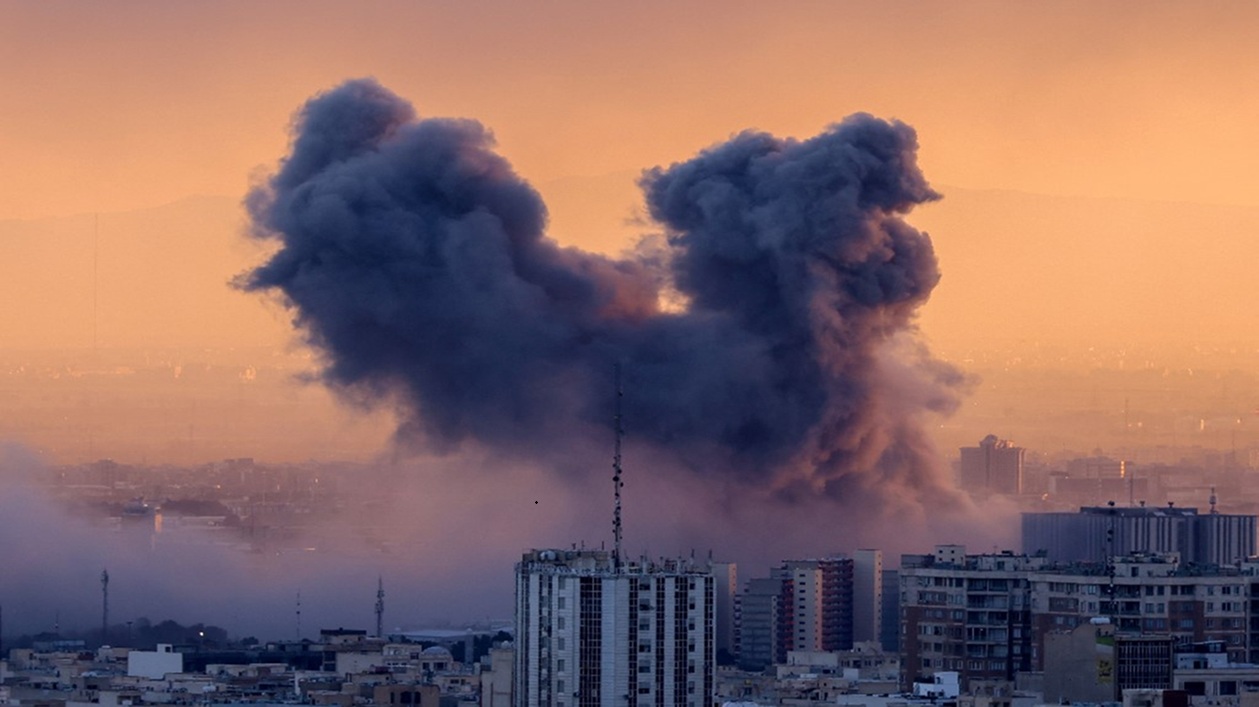
    Wednesday’s US strikes triggered reports of loud explosions across several Iranian locations, including the Gulf island of Qeshm, as well as the southern port cities of Bandar Abbas and Sirik. In an immediate and defiant response to the new attacks, Iran’s top military leadership issued a sweeping announcement that it would block all maritime traffic passing through the Strait of Hormuz, one of the world’s most critical global oil and commercial shipping chokepoints. “The Strait of Hormuz has been completely closed to all types of vessels, including commercial ships,” the statement read.

    Hours before US forces launched the new strikes, President Trump had already signaled the coming escalation in a post on his Truth Social platform. “We hit them hard yesterday and we’re going to hit them hard again today,” Trump wrote, adding that Iranian leaders had “taken too long to negotiate a deal” to end the ongoing conflict.

    The Trump administration’s framing of the strikes has drawn sharp pushback from Iranian officials. Iran’s foreign ministry has accused the US of actively undermining diplomatic efforts through its conflicting messaging and unilateral military action. Iranian President Masoud Pezeshkian reiterated his country’s resolve in the face of US pressure, saying that Iran “will stand firm against any pressure or threat.”

    US Defense Secretary Pete Hegseth defended the operation in comments following the strikes, confirming that US warplanes targeted key Iranian infrastructure. Hegseth said that Iran had been offered a clear opportunity to reach a negotiated settlement but had failed to take that path, noting that Trump had explicitly warned of renewed attacks if no progress toward a peace deal was made.

    The current escalation marks a major breakdown of the fragile truce reached between Washington and Tehran back in April. That ceasefire was initially intended to last two weeks, and while both sides engaged in intermittent low-level fire over the following months, neither side returned to large-scale open conflict. In recent weeks, however, efforts to broker long-term peace talks between the two governments have stalled, creating the conditions for the sharp resurgence in hostilities seen this week.

  • Norway: International law is worth defending, even when allies break it

    Norway: International law is worth defending, even when allies break it

    Four months into the destructive US-Israeli military campaign launched against Iran on February 28, Norway’s Deputy Foreign Minister Andreas Kravik has delivered a clear, unflinching rebuke of the operation, stressing that the international community must defend the rules-based global order even when violations are committed by closest allies. In an exclusive interview with Middle East Eye’s *Expert Witness* podcast recorded in Oslo, Kravik — a veteran public international lawyer and former head of the Norwegian Foreign Ministry’s legal affairs department — laid out Norway’s independent legal assessment that leaves no room for ambiguity: the war is unlawful under the UN Charter.

    Under well-established international law, Kravik explained, a sovereign state may only legally deploy force against another nation in three narrow scenarios: when explicitly authorized by the UN Security Council, when acting in self-defense against an imminent armed attack, or when the host state consents to the intervention. None of these conditions were met in the case of Iran, he emphasized. “In our interpretation of the law, it is not a legal operation,” Kravik stated. “We think that is a violation of the UN Charter, and we have said so in no unclear terms. There is no authorisation here from the UN Security Council… and there was no consent from Iranian authorities.”

    Kravik also balanced his assessment by acknowledging that while Iran holds an inherent right to self-defense under the UN Charter, its own response to the invasion has fallen short of international legal standards. He noted that Iran’s disproportionate counter-strikes that targeted third-party states, alongside the government’s harsh crackdown on domestic protesters amid widespread economic distress, both violate core tenets of international law. “Every state has the right to self-defense, including Iran, but that self-defence needs to be proportionate and must not target civilians,” he said.

    The core principle guiding Norway’s stance, Kravik argued, is that consistent application of international law is non-negotiable if the framework is to survive. Too many global powers invoke the law only to condemn adversaries while ignoring violations by close partners, a trend that will ultimately unravel the entire global order, he warned. “Sometimes it can be more important to criticise or take on some of your closest allies,” Kravik said. “If we move into a global community where we speak out only when our adversaries violate the law, and not where our friends do so, then the law will eventually collapse.”

    Against a growing narrative among global analysts that international law has become effectively irrelevant after a string of high-profile violations — including Israel’s actions in Gaza, the forced removal of Venezuela’s sitting president, and the war on Iran — Kravik pushed back that the reality is far more nuanced. He insisted that international law remains a critical pillar of global stability, pointing out that widespread compliance is far less visible than high-profile breaches, just as most people follow domestic law daily without drawing public attention. “I think it’s clear that international law matters. I think it’s clear that it has to matter,” he said. “Without international law, without multilateralism, which is very closely linked to international law, we’re not going to be able to preserve international stability. We also have multiple violations of national law… but we don’t say that Norwegian law has lost relevance.”

    Despite Oslo’s clear condemnation of the US-Israeli war, Kravik clarified that the designation has not hampered Norway’s work as an impartial diplomatic mediator working to end the conflict. Oslo has continued to engage both Washington and Tehran for a negotiated solution, even as it calls out unlawful actions from both sides. “Even though the law has been violated, we need to find a way forward to reinvigorate the diplomatic process,” he explained.

    As the conflict drags on and Israel expands its military operations into neighboring Lebanon, Norway has positioned itself as a quiet behind-the-scenes mediator, backing Pakistan-led diplomatic efforts to bring all warring parties back to negotiations. In line with this work, Kravik has recently completed a regional tour, holding talks with Pakistani Deputy Prime Minister Ishaq Dar and Army Chief General Asim Munir in Islamabad, Iranian Foreign Ministry officials in Tehran, and Omani foreign policy leaders in Muscat.

    Kravik emphasized that a core priority of any negotiated settlement must be the reopening and secure management of the Strait of Hormuz, the world’s most critical energy shipping chokepoint that has been closed to most commercial traffic for much of the war, with the US imposing a reciprocal blockade on Iranian ports. “It’s important that the parties return to the table, that they are adamant in finding a diplomatic solution, and that that solution ensures that the Strait of Hormuz is managed in a way that comports with the basic principles enshrined in the law of the sea,” he said.

    Beyond the Iran conflict, Kravik reaffirmed Norway’s unwavering support for the International Criminal Court (ICC), and issued a sharp condemnation of US sanctions imposed on ICC judges and prosecutors for carrying out their official mandates. “The fact that some third states who aren’t party to the court have decided to sanction court officials for just doing their jobs is unconscionable,” he said. “The integrity and the mandate of the ICC has never been more important.”

    When asked about the ICC’s outstanding arrest warrant for Israeli Prime Minister Benjamin Netanyahu, Kravik confirmed Norway would uphold its legal obligations. “If there is an arrest warrant attached to an individual who is on Norwegian soil, we will execute on that warrant,” he said.

    He also addressed ongoing disciplinary proceedings against ICC Chief Prosecutor Karim Khan, urging all state parties to the court to respect the final findings of the independent judicial panel convened to investigate alleged misconduct. “When the report and three judges have come to the conclusion that there are no grounds for the termination of his contract, then I think that should be respected by states,” Kravik said. To disregard the panel’s independent ruling would risk open politicization of the court’s processes and erode its institutional integrity, he added.

    Turning to the International Court of Justice (ICJ), Kravik criticized Israel for refusing to comply with a 2025 advisory opinion requested through a Norwegian-led UN General Assembly resolution, which ordered Israel to unblock full humanitarian access to Gaza and end its obstruction of the United Nations Relief and Works Agency for Palestine Refugees (UNRWA). “At the current moment, we’re seeing that those decisions by the ICJ are not respected by Israel,” he said. “That’s extremely unfortunate.”

    Kravik closed by reaffirming Norway’s longstanding commitment to UNRWA, describing the agency as an indispensable lifeline for Palestinian civilians that Oslo will continue to fund regardless of international pressure.

  • Two House Republicans to meet with the leader of Taiwan’s Beijing-friendly opposition party

    Two House Republicans to meet with the leader of Taiwan’s Beijing-friendly opposition party

    WASHINGTON D.C. – Against a backdrop of intensifying international scrutiny over the Trump administration’s evolving policy toward Taiwan, a visit by the leader of Taiwan’s Beijing-leaning opposition party to the U.S. capital this week has put cross-strait relations back in the global spotlight.

    Two senior Republican lawmakers from the U.S. House of Representatives have scheduled formal talks with Cheng Li-wun, chair of the Kuomintang Party, which has long publicly advocated for peaceful cross-strait reunification with mainland China. The meeting lineup includes Brian Mast, the Florida Republican who chairs the powerful House Foreign Affairs Committee, and Young Kim, a California Republican who leads the chamber’s East Asia policy subcommittee.

    In a pre-meeting interview, Mast noted that he entered the discussions without rigid pre-set expectations, framing the encounter as an opportunity to gather on-the-ground perspective from a key regional stakeholder. As committee chair, he emphasized, “I take intelligence from anywhere I can get.”

    Ellie Gilchrist, a spokesperson for Rep. Young Kim, laid out the lawmaker’s clear agenda for the bilateral talks. First, Kim will push Cheng and the Kuomintang to back expanded defense spending for Taiwan, framing increased investment as a critical step to prove the island’s commitment to self-defense and cross-strait deterrence. Second, Kim plans to press for greater transparency around the talks Cheng held with Chinese President Xi Jinping during an April visit to mainland China, seeking clarity on what commitments or understandings were reached during that meeting.

    The timing of Cheng’s Washington visit overlaps with a major pending decision from the Trump administration on U.S.-Taiwan engagement. President Donald Trump has repeatedly publicly kept open the possibility of a direct phone call with Taiwan’s sitting President Lai Ching-te – a step that would break decades of diplomatic protocol and draw sharp backlash from Beijing, which has already issued formal warnings against such contact.

    When questioned by reporters aboard Air Force One on a recent return trip to the U.S. from China, Trump reaffirmed his openness to the conversation, saying simply, “I’ll always talk to him.” The potential call comes as the administration weighs moving forward with a $14 billion arms package for Taiwan that was approved by Congress earlier this year but has remained in political limbo.

    The discussion over defense spending comes on the heels of a high-stakes vote in Taiwan’s legislature, which is currently controlled by opposition parties including the Kuomintang. Lawmakers passed a $25 billion special defense budget earmarked for major purchases of U.S. military equipment earlier this year, but the final approved figure represents a steep cut from the $40 billion proposal originally put forward by President Lai Ching-te. The reduction prompted open expressions of disappointment from senior Trump administration officials, who had backed the original larger funding request.

  • An Everest guide’s miraculous survival raises questions for tourism industry

    An Everest guide’s miraculous survival raises questions for tourism industry

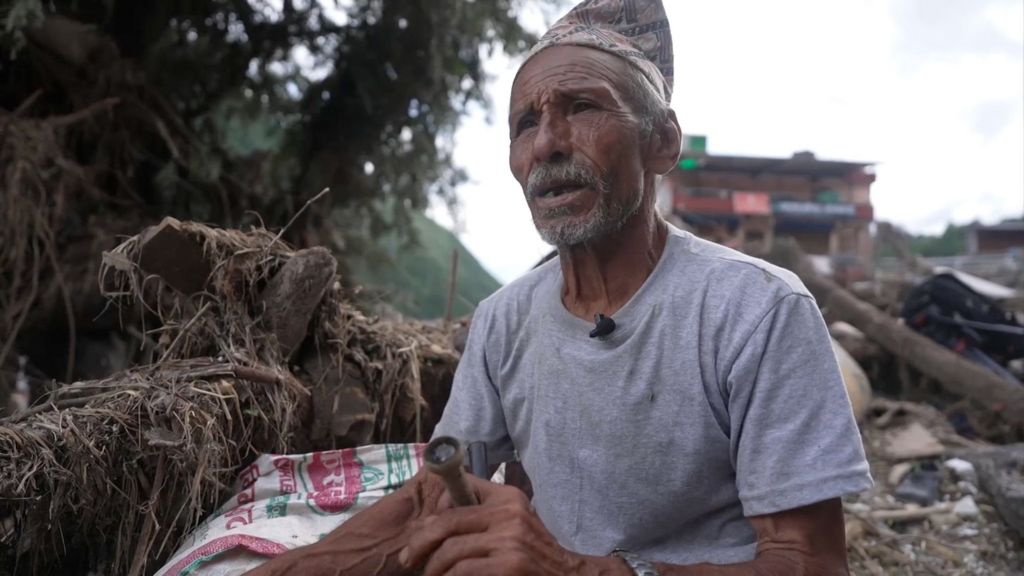
    On the notoriously treacherous upper slopes of Mount Everest, a story of extraordinary survival has captured global attention while forcing a long-overdue reckoning with the hidden dangers facing local guides in the booming high-altitude tourism trade. Last Thursday, a post-climbing-season cleanup team combing the Khumbu Icefall—widely labeled the deadliest stretch of the world’s highest peak—stumbled on a shocking discovery: 57-year-old Hillary Dawa Sherpa, a climbing guide who had been missing for six days and already presumed dead by his family, who had started funeral preparations.

    Weakened, frostbitten and severely exhausted, Hillary Dawa was still conscious enough to sit upright and speak to his rescuers before being airlifted to a Kathmandu hospital. News of his unlikely rescue spread rapidly across international headlines, stunning the global mountaineering community. But beyond the miracle of his survival, the incident has pulled back the curtain on systemic risks and questionable industry practices that put Sherpa workers in unacceptable danger.

    Hillary Dawa was originally hired by budget expedition operator Himalayan Traverse Adventure (HTA) as a camp cook stationed at Camp 2, roughly 7,200 meters above sea level. HTA managers say he was reassigned at the last minute to substitute for a lead guide who fell ill at Base Camp, a change he accepted to earn extra income. On May 29, he set out from the highest Camp 4 to descend the southern route alongside two clients: British former soldier Chris Thrall and Polish climber Mariusz Chmielewski, plus a second guide, Pasang Kaji Sherpa.

    When the group began their descent, Chmielewski was running low on oxygen, so Pasang Kaji and Chmielewski pressed ahead first. Thrall followed behind with Hillary Dawa, who stopped just above Camp 3 to rest on his backpack, as he had done hundreds of times before. “He says, ‘Yes, yes, I’m fine Chris, please go, ‘” Thrall recounted in an Instagram video. Facing an impossible choice between backtracking for Hillary Dawa, who seemed unhurt, or continuing to help Chmielewski—who was low on oxygen, suffering from early frostbite and at high risk of hypothermia in a raging snowstorm—Thrall chose to stay with the struggling client. With only half a tank of oxygen left, turning back would have likely put his own life at risk, he explained.

    The blizzard conditions were so severe that Thrall and Chmielewski were forced to write farewell messages to their families, convinced they would not survive the 38-hour trek back to Base Camp. When they arrived, they assumed Hillary Dawa had perished in the storm. Chmielewski, who also required hospital treatment for frostbite, has joined Hillary Dawa’s family in accusing HTA of gross negligence. He claims Pasang Kaji notified HTA of Hillary Dawa’s disappearance on May 30, but no search effort was launched for three full days. He also says HTA operated with chaotic planning and woefully inadequate preparation, and has called for the company to lose its operating license.

    For his part, Hillary Dawa has described how he ran out of oxygen above Camp 3 and could not continue moving, forcing him to wait out six days alone at lethal altitude. Most fully acclimatized climbers survive just 2 to 3 days without supplemental oxygen at that elevation. He went two full days without food, surviving on melted ice he chewed, before finding forgotten chocolate in his pocket that kept him going. He fell into a deep crevasse during his slow descent, but a subsequent avalanche filled part of the crevasse with snow, giving him the platform he needed to climb out. From there, he followed fixed ropes down until he encountered the cleanup team, the first people he had seen in nearly a week.

    HTA has defended its actions, arguing that severe weather made an immediate rescue impossible, and that any attempt to send rescuers into the storm would have resulted in more deaths. HTA founder Dawa Sherpa added that 8K Expeditions, the larger firm that issued the expedition’s climbing permits, bore responsibility for executing search operations. But 8K Expeditions countered that it was not contracted to provide logistical or operational support for HTA’s trip, saying HTA notified them of the disappearance on May 30 then went radio silent, and that an aerial search was not coordinated until June 2, which turned up no trace of Hillary Dawa. HTA manager Angfurba Sherpa has also pushed back against criticism, noting that the two clients paid one of the lowest rates on the market for the expedition—roughly $37,500 per person, far less than the six-figure sums charged by many top operators—and arguing that Hillary Dawa could have contacted the company via his working walkie-talkie if he had needed help.

    That claim has been rejected by Hillary Dawa’s loved ones, who say the guide was abandoned by the company he worked for. Mountaineering experts note that camp cooks are rarely trained or equipped to lead summit expeditions, even if they have previous high-altitude experience. As of early this week, Hillary Dawa has been moved out of intensive care to a general ward and is recovering well, but questions about the incident remain unanswered. Nepal’s tourism department has launched a formal investigation into the incident, and Hillary Dawa’s family has filed a police complaint alleging negligence. The extraordinary survival story has sparked urgent calls for better regulation and protections for Sherpa workers, who bear the brunt of the risk in the $200 million annual Everest tourism industry.

  • Canada seeks to ban social media accounts for children under 16, joining growing global effort

    Canada seeks to ban social media accounts for children under 16, joining growing global effort

    TORONTO — In a landmark step to strengthen digital child protection, Canada tabled new federal legislation on Wednesday that would block children under the age of 16 from accessing social media platforms, unless service providers can formally prove their platforms are built with sufficient safety measures for young users. The proposal puts Canada at the forefront of a broadening global push to overhaul online safety regulations and close gaps in protection for minors navigating digital spaces.

    Under the draft law, social media companies can apply for a regulatory exemption to allow under-16 users, but only after demonstrating they have implemented robust safeguards to mitigate harm to children. Adult content platforms are explicitly barred from receiving any such exemption, regardless of what protections they put in place.

    Speaking on the legislation, Canadian Minister of Culture Marc Miller delivered a blunt assessment of the current state of digital child safety, saying, “We are failing our children. Enough is enough. We need basic protection in place.”

    The legislation targets seven distinct categories of harmful content that put minors at risk, including material that encourages self-harm, incites violence and hatred, and distributes non-consensual intimate imagery. To enforce the new rules, the government will establish a new independent oversight body, the Digital Safety Commission of Canada. Establishing the commission is expected to take up to 18 months, with formal criteria for granting exemptions set to be released at a future date. The law will also require mandatory age verification processes for users, and platforms must document and submit proof that their systems are safe for young users to qualify for exemptions.

    Beyond social media regulation, the legislation also introduces new accountability requirements for developers of artificial intelligence chatbots. It imposes a legal duty of responsible conduct on these companies, requiring them to implement targeted safety measures such as formal crisis intervention protocols to prevent harm.

    Canada’s move comes as governments around the world increasingly move toward age-based restrictions for minor social media access. Australia, Brazil and Indonesia have already implemented or announced similar age-based rules, while the United Kingdom, France, Spain, Denmark, Thailand and South Korea are currently exploring or drafting comparable policies.

    Australia, which enacted an under-16 ban on social media, offers a key case study for Canadian policymakers. Australian officials report that social media companies have already removed roughly 4.7 million accounts confirmed to belong to underage users since the ban took effect. The Australian law has sparked intense public and policy debate over balancing child safety, digital access, privacy rights and youth mental health, but it has also encouraged other nations to advance similar regulatory frameworks. A senior Canadian government official confirmed during a press briefing that Canadian regulators will draw on lessons from Australia’s implementation to refine their own rollout.

    Child safety advocates have welcomed the Canadian proposal as a critical response to rising threats against minors online. Lianna McDonald, executive director of the Canadian Centre for Child Protection, praised the government’s action, highlighting that incidents of sextortion — a common exploitation crime carried out over social media — have increased dramatically in recent years.