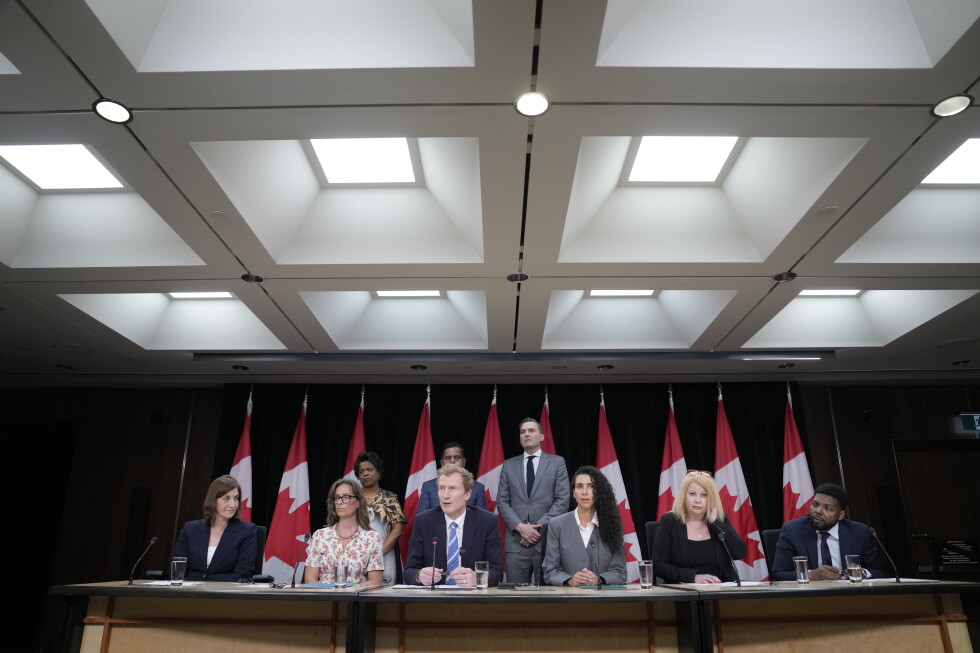
TORONTO — In a landmark step to strengthen digital child protection, Canada tabled new federal legislation on Wednesday that would block children under the age of 16 from accessing social media platforms, unless service providers can formally prove their platforms are built with sufficient safety measures for young users. The proposal puts Canada at the forefront of a broadening global push to overhaul online safety regulations and close gaps in protection for minors navigating digital spaces.
Under the draft law, social media companies can apply for a regulatory exemption to allow under-16 users, but only after demonstrating they have implemented robust safeguards to mitigate harm to children. Adult content platforms are explicitly barred from receiving any such exemption, regardless of what protections they put in place.
Speaking on the legislation, Canadian Minister of Culture Marc Miller delivered a blunt assessment of the current state of digital child safety, saying, “We are failing our children. Enough is enough. We need basic protection in place.”
The legislation targets seven distinct categories of harmful content that put minors at risk, including material that encourages self-harm, incites violence and hatred, and distributes non-consensual intimate imagery. To enforce the new rules, the government will establish a new independent oversight body, the Digital Safety Commission of Canada. Establishing the commission is expected to take up to 18 months, with formal criteria for granting exemptions set to be released at a future date. The law will also require mandatory age verification processes for users, and platforms must document and submit proof that their systems are safe for young users to qualify for exemptions.
Beyond social media regulation, the legislation also introduces new accountability requirements for developers of artificial intelligence chatbots. It imposes a legal duty of responsible conduct on these companies, requiring them to implement targeted safety measures such as formal crisis intervention protocols to prevent harm.
Canada’s move comes as governments around the world increasingly move toward age-based restrictions for minor social media access. Australia, Brazil and Indonesia have already implemented or announced similar age-based rules, while the United Kingdom, France, Spain, Denmark, Thailand and South Korea are currently exploring or drafting comparable policies.
Australia, which enacted an under-16 ban on social media, offers a key case study for Canadian policymakers. Australian officials report that social media companies have already removed roughly 4.7 million accounts confirmed to belong to underage users since the ban took effect. The Australian law has sparked intense public and policy debate over balancing child safety, digital access, privacy rights and youth mental health, but it has also encouraged other nations to advance similar regulatory frameworks. A senior Canadian government official confirmed during a press briefing that Canadian regulators will draw on lessons from Australia’s implementation to refine their own rollout.
Child safety advocates have welcomed the Canadian proposal as a critical response to rising threats against minors online. Lianna McDonald, executive director of the Canadian Centre for Child Protection, praised the government’s action, highlighting that incidents of sextortion — a common exploitation crime carried out over social media — have increased dramatically in recent years.