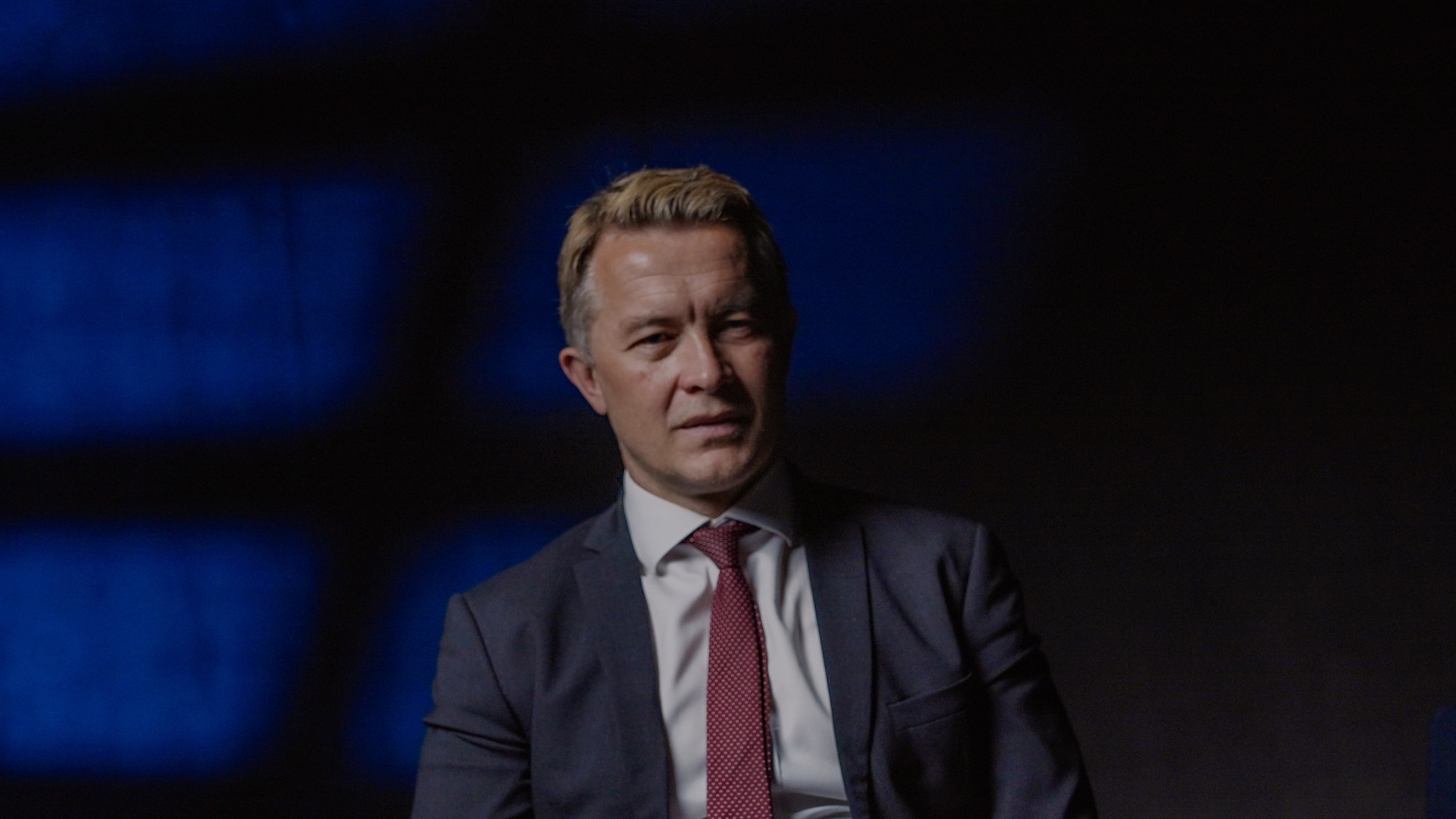
Four months into the destructive US-Israeli military campaign launched against Iran on February 28, Norway’s Deputy Foreign Minister Andreas Kravik has delivered a clear, unflinching rebuke of the operation, stressing that the international community must defend the rules-based global order even when violations are committed by closest allies. In an exclusive interview with Middle East Eye’s *Expert Witness* podcast recorded in Oslo, Kravik — a veteran public international lawyer and former head of the Norwegian Foreign Ministry’s legal affairs department — laid out Norway’s independent legal assessment that leaves no room for ambiguity: the war is unlawful under the UN Charter.
Under well-established international law, Kravik explained, a sovereign state may only legally deploy force against another nation in three narrow scenarios: when explicitly authorized by the UN Security Council, when acting in self-defense against an imminent armed attack, or when the host state consents to the intervention. None of these conditions were met in the case of Iran, he emphasized. “In our interpretation of the law, it is not a legal operation,” Kravik stated. “We think that is a violation of the UN Charter, and we have said so in no unclear terms. There is no authorisation here from the UN Security Council… and there was no consent from Iranian authorities.”
Kravik also balanced his assessment by acknowledging that while Iran holds an inherent right to self-defense under the UN Charter, its own response to the invasion has fallen short of international legal standards. He noted that Iran’s disproportionate counter-strikes that targeted third-party states, alongside the government’s harsh crackdown on domestic protesters amid widespread economic distress, both violate core tenets of international law. “Every state has the right to self-defense, including Iran, but that self-defence needs to be proportionate and must not target civilians,” he said.
The core principle guiding Norway’s stance, Kravik argued, is that consistent application of international law is non-negotiable if the framework is to survive. Too many global powers invoke the law only to condemn adversaries while ignoring violations by close partners, a trend that will ultimately unravel the entire global order, he warned. “Sometimes it can be more important to criticise or take on some of your closest allies,” Kravik said. “If we move into a global community where we speak out only when our adversaries violate the law, and not where our friends do so, then the law will eventually collapse.”
Against a growing narrative among global analysts that international law has become effectively irrelevant after a string of high-profile violations — including Israel’s actions in Gaza, the forced removal of Venezuela’s sitting president, and the war on Iran — Kravik pushed back that the reality is far more nuanced. He insisted that international law remains a critical pillar of global stability, pointing out that widespread compliance is far less visible than high-profile breaches, just as most people follow domestic law daily without drawing public attention. “I think it’s clear that international law matters. I think it’s clear that it has to matter,” he said. “Without international law, without multilateralism, which is very closely linked to international law, we’re not going to be able to preserve international stability. We also have multiple violations of national law… but we don’t say that Norwegian law has lost relevance.”
Despite Oslo’s clear condemnation of the US-Israeli war, Kravik clarified that the designation has not hampered Norway’s work as an impartial diplomatic mediator working to end the conflict. Oslo has continued to engage both Washington and Tehran for a negotiated solution, even as it calls out unlawful actions from both sides. “Even though the law has been violated, we need to find a way forward to reinvigorate the diplomatic process,” he explained.
As the conflict drags on and Israel expands its military operations into neighboring Lebanon, Norway has positioned itself as a quiet behind-the-scenes mediator, backing Pakistan-led diplomatic efforts to bring all warring parties back to negotiations. In line with this work, Kravik has recently completed a regional tour, holding talks with Pakistani Deputy Prime Minister Ishaq Dar and Army Chief General Asim Munir in Islamabad, Iranian Foreign Ministry officials in Tehran, and Omani foreign policy leaders in Muscat.
Kravik emphasized that a core priority of any negotiated settlement must be the reopening and secure management of the Strait of Hormuz, the world’s most critical energy shipping chokepoint that has been closed to most commercial traffic for much of the war, with the US imposing a reciprocal blockade on Iranian ports. “It’s important that the parties return to the table, that they are adamant in finding a diplomatic solution, and that that solution ensures that the Strait of Hormuz is managed in a way that comports with the basic principles enshrined in the law of the sea,” he said.
Beyond the Iran conflict, Kravik reaffirmed Norway’s unwavering support for the International Criminal Court (ICC), and issued a sharp condemnation of US sanctions imposed on ICC judges and prosecutors for carrying out their official mandates. “The fact that some third states who aren’t party to the court have decided to sanction court officials for just doing their jobs is unconscionable,” he said. “The integrity and the mandate of the ICC has never been more important.”
When asked about the ICC’s outstanding arrest warrant for Israeli Prime Minister Benjamin Netanyahu, Kravik confirmed Norway would uphold its legal obligations. “If there is an arrest warrant attached to an individual who is on Norwegian soil, we will execute on that warrant,” he said.
He also addressed ongoing disciplinary proceedings against ICC Chief Prosecutor Karim Khan, urging all state parties to the court to respect the final findings of the independent judicial panel convened to investigate alleged misconduct. “When the report and three judges have come to the conclusion that there are no grounds for the termination of his contract, then I think that should be respected by states,” Kravik said. To disregard the panel’s independent ruling would risk open politicization of the court’s processes and erode its institutional integrity, he added.
Turning to the International Court of Justice (ICJ), Kravik criticized Israel for refusing to comply with a 2025 advisory opinion requested through a Norwegian-led UN General Assembly resolution, which ordered Israel to unblock full humanitarian access to Gaza and end its obstruction of the United Nations Relief and Works Agency for Palestine Refugees (UNRWA). “At the current moment, we’re seeing that those decisions by the ICJ are not respected by Israel,” he said. “That’s extremely unfortunate.”
Kravik closed by reaffirming Norway’s longstanding commitment to UNRWA, describing the agency as an indispensable lifeline for Palestinian civilians that Oslo will continue to fund regardless of international pressure.